When hot water runs out quickly after it used to last long enough for the household, do not immediately assume that the heater has become too small or needs replacement. The problem may be a weak or failed heating element, a thermostat that is no longer controlling properly, sediment or scale affecting performance, a damaged dip tube that allows incoming cold water to mix with hot water incorrectly, or simply a household demand that has increased beyond the heater’s original capability. The most important part of diagnosis is how and when the water temperature falls, because the pattern of the problem often provides the first clue before any component is removed.
Hot Water Runs Out Quickly
When hot water runs out quickly, the first question should not be, “How many gallons is the heater?” The better question is whether this problem has existed since the heater was installed or whether it appeared recently. If the heater served the same family normally for two or three years and then suddenly the second shower starts becoming cold much sooner, a performance fault is more likely than a sudden change in tank capacity. If the problem has existed from the first day, especially whenever several bathrooms are used during the same period, then the heater’s original capacity or performance may simply have been below the household’s actual demand.
The next step is to observe exactly how the temperature drops. Does the water begin extremely hot and then suddenly become cold after a short period? Does it gradually become lukewarm? Does hot water return only after a long wait? These differences matter because each pattern points toward a different group of possible causes. Insufficient hot-water complaints can be associated with a failed heating element, an incorrectly adjusted or defective thermostat, sediment or scale accumulation, high household demand, an undersized heater, or a damaged dip tube.
One practical scenario in electric storage heaters with more than one heating element is that the heater may still provide an initial quantity of hot water while recovery becomes much slower than normal if one heating element is no longer operating correctly. This is why saying, “The heater still heats, so all the elements must be good,” is not always technically correct. The presence of some hot water does not prove that every heating circuit is functioning at full capacity.
It is also important to determine whether the problem affects the entire house or only one bathroom. If the kitchen and several bathrooms show the same behavior, the heater or main hot-water network becomes the stronger suspect. If only one bathroom loses temperature quickly while the rest of the house remains normal, a local mixer valve or cartridge may be more likely than a shortage of stored hot water.
-
If the heater provided a normal amount of hot water in the past and its performance declined without a clear increase in household demand the priority should be inspecting heater performance before purchasing a larger unit
-
A gradual fall in temperature provides different diagnostic information from a sudden change from hot to cold so the timing and shape of the temperature decline are part of the diagnosis
-
If hot water returns after waiting but takes much longer than it used to the Recovery Rate heating elements and controls should be evaluated instead of focusing only on tank size
-
A problem affecting every hot-water outlet is different from a problem isolated to one bathroom because a single-fixture complaint may involve local mixing or cartridge components
-
The heater should not be declared undersized after one inconvenient event because current performance should be compared with its previous behavior and with actual peak household demand
Causes of Hot Water Running Out
The causes of hot water running out can be divided into four main groups so diagnosis does not turn into random part replacement: heating problems, effective storage problems, hydraulic or mixing problems, and increased household demand.
The first group involves the heating process itself. If an electrical heating element no longer operates or a thermostat fails to energize the correct circuit, the heater may still warm some water while failing to recover used hot water at the expected speed. Heating elements, thermostats, and electrical connections are all important when diagnosing insufficient hot water or slow recovery. This explains why a customer can still receive hot water even though part of the heating system is no longer functioning correctly.
The second group involves usable stored hot water. Sediment or mineral scale on heating elements can reduce heat transfer and slow recovery. A damaged dip tube can also allow incoming cold water to mix into the hot-water zone inside the tank in the wrong way, causing the outlet temperature to drop earlier than it should. In this situation, the tank may still contain its full physical volume of water, but the amount of water that remains usefully hot becomes smaller.
The third group is demand. A larger household, a newly installed bathtub, a high-flow shower, longer showers, or two bathrooms being used at the same time can consume the heater’s First Hour Rating faster than before.
The fourth group includes unwanted leakage or cold-water mixing. A small hot-water leak somewhere in the plumbing network can continuously draw from the heater without creating an obvious puddle around the tank. Unwanted crossover from cold to hot plumbing can also reduce the temperature reaching fixtures and make the heater appear to be running out.
-
Heating faults reduce the heater’s ability to replace used hot water even when the tank still provides an initial quantity of properly heated water
-
Sediment and scale can interfere with heat transfer and Recovery so performance may decline gradually instead of the heater failing completely in one moment
-
A damaged dip tube can change how incoming cold water is distributed inside the tank and reduce the amount of usable hot water available before cold water reaches the outlet
-
Increased household consumption is not a heater fault but it can make a system that was previously adequate unable to cover the household’s new Peak Demand
-
A hidden leak or unwanted cold-water crossover can consume or dilute hot water even when there is no visible leakage around the heater itself
Poor Central Water Heater Performance

Poor central water heater performance cannot be evaluated only by asking whether the water becomes hot or not. A heater may still reach the correct temperature but take much longer than normal to recover after use, or it may handle the first shower perfectly and then struggle with the second and third. This is why diagnosis should separate Temperature, Available Hot-Water Volume, and Recovery.
First Hour Rating or FHR is especially useful in understanding performance because it describes how much hot water a storage heater can deliver during the first hour beginning with a fully heated tank. FHR reflects both the stored volume and the heater’s ability to reheat incoming replacement water during that same period. This makes it more informative than tank capacity alone when evaluating whether a heater is performing as expected during concentrated household use.
If a heater originally had a certain level of performance and later begins running out much faster, the technician should compare current performance with what the specific model is expected to provide. Slow hot-water recovery can be associated with sediment or scale on heating elements, defective electrical connections, thermostat problems, or a heating element that is not operating at its correct power.
A more accurate diagnosis can involve observing flow rate and water temperature while a controlled amount of hot water is drawn from the tank. If temperature falls much faster than expected, the result can help direct the technician toward a lower heating element, dip tube, thermostat, or other internal problem. This type of testing is more useful than relying only on the customer’s impression that “the heater feels weak.”
-
A heater that reaches the correct temperature but takes much longer than normal to replace used hot water has a different performance problem from a heater that does not heat at all
-
First Hour Rating gives a stronger picture than tank capacity because it combines stored volume with the heater’s ability to recover during the busiest hour
-
Comparing present performance with how the same heater operated before the complaint helps separate a new fault from capacity that was inadequate from the beginning
-
Slow Recovery can result from heating elements thermostats electrical faults or scale so installing a larger tank will not correct the cause if the existing heater is already operating below its intended capability
-
Professional diagnosis should use temperature flow and Recovery behavior rather than deciding that the heater is weak based only on the duration of one shower
Water Heater Does Not Keep Water Hot
When someone says the water heater does not keep water hot, they usually mean that the water becomes properly hot after waiting but then turns lukewarm or cold much sooner than expected. Technically, however, it is important to separate a tank that is genuinely losing heat too quickly from a tank that contains hot water but cannot deliver its full usable volume because of mixing, internal distribution, or another fault.
If the water loses temperature even when there has been almost no use, the technician should consider abnormal heat loss, a hot-water leak, or a recirculation system that is operating continuously and losing excessive heat through the pipework. If the tank remains hot while standing but cools quickly as soon as the first shower starts, the stronger focus becomes usable storage volume, the dip tube, heating elements, and draw rate.
The dip tube is especially important because it directs incoming cold water toward the correct area of the storage tank instead of allowing it to mix immediately with the hottest water near the outlet. If the tube cracks, shortens, or becomes damaged, incoming cold water can disturb the normal temperature layering inside the tank and reach the hot-water outlet sooner than expected.
A small hot-water leak in the plumbing can also cause the heater to recover continuously and gradually consume stored thermal energy without the homeowner noticing. Similarly, a hot-water recirculation loop that runs continuously through poorly insulated piping can carry heat away from the tank even when no fixture is being used.
-
If the water loses temperature even when there is little or no visible use the technician should investigate leakage heat loss and continuous circulation before assuming the tank is undersized
-
A damaged dip tube can reduce the separation between incoming cold water and stored hot water causing the outlet temperature to drop earlier than normal
-
A recirculation loop should be checked for control strategy and pipe insulation because continuous circulation can increase heat loss significantly
-
A small leak on the hot-water side can continuously draw heat and water from the tank even when there is no visible puddle around the heater
-
The statement that a heater does not keep water hot should be clarified by determining whether the loss happens during Standby or only during active draw because the two conditions point toward different causes
Hot Water Finishes Too Quickly

When a customer says hot water finishes too quickly, the word “quickly” needs to be turned into actual time and usage. Does the hot water last only ten minutes in one shower? Does it disappear after two consecutive showers? Does it run out only after filling a bathtub? Without this information, it is difficult to tell whether the heater is delivering less than it should or whether household consumption is simply greater than expected.
Flow rate has a direct effect on how fast stored hot water is used. A high-flow shower consumes mixed water faster than a low-flow showerhead. The proportion of hot water in that mixture also depends on storage temperature, incoming cold-water temperature, and the temperature selected by the user. This means two homes using the same 80-gallon heater can experience very different hot-water durations when one uses a high-flow rain shower and the other uses a lower-flow showerhead.
Measuring or estimating flow rate is therefore an important part of diagnosing insufficient hot water. The heater cannot be evaluated properly without understanding how quickly water is being removed from the system.
The answer is also not to raise the thermostat to its maximum setting simply to “make the hot water last longer.” Increasing storage temperature can change the amount of mixed usable hot water, but it also increases scalding risk and should only be considered within manufacturer recommendations and with appropriate mixing and safety measures.
Sometimes there is no mechanical fault at all. The household may simply have changed. More residents, longer showers, a new bathtub, or more simultaneous bathroom use can push demand beyond the heater’s original capability.
-
Measuring how many minutes the hot water lasts and how many fixtures are being used provides far more diagnostic value than a general statement that the water runs out quickly
-
A high-flow shower can consume stored hot water much faster even when the heater is operating correctly so GPM and usage pattern should be considered before blaming tank capacity
-
Changes in household size or bathing habits can turn a previously adequate heater into a system that can no longer cover the new peak demand
-
Increasing the temperature is not a universal solution because higher storage temperatures increase scalding risk and any adjustment should follow manufacturer guidance and appropriate safety requirements
-
If the problem appears only when two bathrooms are used simultaneously but disappears during single-fixture use Peak Demand becomes a stronger explanation than a complete heater failure
Heater Capacity Is Not Enough for the Home
Concluding that heater capacity is not enough for the home should come only after confirming that the heater itself is operating at full capability. The reason is simple: if the lower heating element has failed, the dip tube is damaged, or Recovery is slow because of scale, even a large storage heater can behave as though it were much smaller. Replacing it with a larger unit without diagnosing the original fault may hide the symptom while leaving the real technical issue unresolved.
First Hour Rating is one of the most useful performance figures for storage heaters because it reflects both stored hot water and the heater’s ability to continue producing hot water during the first hour. To determine whether capacity is genuinely insufficient, the household’s Peak-Hour Demand should be compared with the specific model’s FHR.
One of the strongest signs of undersizing is a heater that has behaved the same way since installation: it operates correctly, the heating elements and controls test normally, but it consistently runs out during the same high-demand scenario such as three showers taken one after another. In that case, the problem is not deterioration but a demand level that exceeds the heater’s design performance.
By contrast, if the same heater served the same family comfortably for years and suddenly begins running out after one shower, it is difficult to justify calling the tank too small unless household behavior has also changed.
Oversizing should also be avoided. Moving to a much larger tank increases equipment cost, installation space, full operating weight, and potentially standby heat loss. The goal should be adequate capacity, not maximum possible storage.
-
Insufficient capacity should only be confirmed after verifying that heating elements controls and internal water distribution are operating normally because faults can imitate undersizing symptoms
-
A heater that consistently fails only during Peak Demand while otherwise testing correctly is more likely to have an FHR or capacity problem than a heater whose performance suddenly changed
-
Comparing household Peak-Hour Demand with the heater’s FHR gives a stronger basis for increasing capacity than relying only on property size or bathroom count
-
More residents a new bathtub or a major change in bathing habits can justify recalculating heater size even when the heater itself has not changed
-
Jumping directly to the largest available tank can solve a modest capacity shortage in an unnecessarily expensive way and increase space and operating requirements without proportional benefit
Weak Hot Water Storage

Weak hot water storage does not always mean the physical amount of water inside the tank has decreased. It usually means that the amount of usable hot water has become smaller. This distinction is important because the tank can remain completely full while a larger portion of the stored water is cold or lukewarm because of a heating or mixing problem.
A good example is the lower heating element in some electric storage heaters. If the element responsible for heating the lower portion of the tank stops working, the upper section may still become hot and provide a good initial supply. However, the total usable volume can fall quickly because the lower part of the tank never reaches the intended temperature.
Sediment can also reduce practical performance. Heavy accumulation can interfere with heat transfer and make heating elements work under less efficient conditions. From the homeowner’s perspective, the heater may appear to have “lost capacity” even though the physical tank volume remains exactly the same.
A damaged dip tube or unwanted cold-water crossover can create a similar symptom. Incoming cold water can reach the outlet too early or cold water can enter the hot-water line through another plumbing path, reducing the useful temperature before the stored hot water should actually be depleted.
This is why effective hot-water volume should be evaluated by observing how temperature changes during controlled water draw rather than simply reading the 50 or 80-gallon label on the tank.
-
A storage tank can remain physically full while the amount of water that is actually hot enough to use becomes much smaller because of a failed lower element or abnormal temperature distribution
-
A lower heating element fault can leave a hot layer at the top of the tank while significantly reducing the duration of usable hot water
-
Sediment accumulation can affect heat transfer and practical storage performance making the heater appear to have lost part of its effective capacity
-
A damaged dip tube or unwanted cold-water crossover can allow cooler water to reach the hot-water outlet earlier than normal even though nominal tank capacity has not changed
-
Real usable storage should be evaluated from temperature behavior during draw rather than relying only on the capacity printed on the heater label
Causes of Short Hot Water Duration
The causes of short hot water duration become much easier to narrow down when we know when the change started and how it developed. In this type of diagnosis, the timeline can be more useful than a long list of possible replacement parts.
If the hot-water duration becomes much shorter almost overnight, a new electrical fault, thermostat problem, failed heating element, or dip-tube problem becomes more likely than sediment accumulation that would normally develop gradually.
If the available hot-water duration becomes shorter over several months, especially if the heater also develops popping or rumbling noises, sediment or mineral scale becomes a stronger possibility. Gradual buildup can affect heat transfer and Recovery and therefore reduce the amount of useful hot water available during repeated use.
If the problem begins after plumbing work or after a heater replacement, connection direction, dip-tube condition, mixing, and any recently changed valves should be reviewed. Reversed plumbing connections can also produce poor hot-water availability.
If the shortage appears only in the morning or when guests are present but the system is perfectly adequate during lighter periods, high demand becomes more likely.
If the problem exists at only one bathroom while the rest of the property is normal, the diagnostic focus should move toward the local mixer, cartridge, or fixture rather than the central tank.
Using the timeline in this way can prevent unnecessary heater replacement and keep the investigation focused on the most likely group of causes.
-
A sudden decrease in hot-water duration points more strongly toward a new fault than toward a fixed capacity problem that should have existed since installation
-
A slow decline combined with noises from inside the tank increases the likelihood of sediment or scale and should be evaluated before replacing the entire heater
-
A problem that appears immediately after plumbing work makes connection direction valves and mixing behavior an important part of the inspection
-
A shortage that appears only during high-demand periods points more toward demand and Recovery than toward a fault that should also appear during light use
-
Reduced hot-water duration at only one fixture directs the diagnosis toward the local mixer or outlet instead of the entire central water heater
Water Heater Runs Out of Hot Water
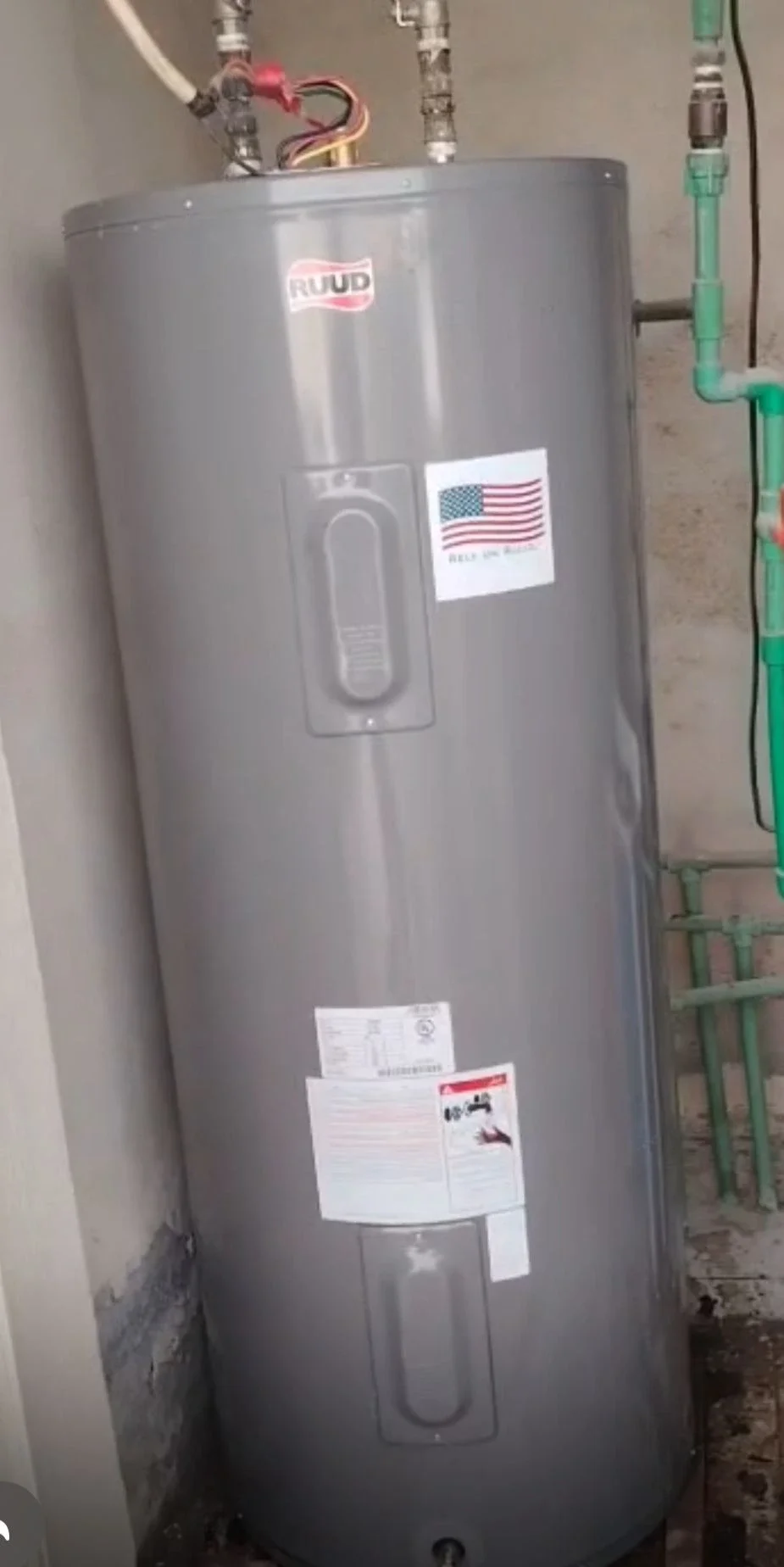
A water heater running out of hot water should be diagnosed in an order that reduces guesswork. The first step is to establish a baseline: what is the heater capacity and model, how long did hot water last previously, and what changed recently? The next step is to determine whether the problem affects the entire property or only one outlet.
The second stage is observing starting temperature. Does the first hot water coming from the system reach a normal temperature? If the water starts lukewarm, the diagnosis is different from a situation where the water begins very hot and then ends too quickly. A low or defective thermostat can reduce available hot-water temperature from the very beginning.
The third stage is Recovery. After a significant amount of hot water is used, how long does the heater take to restore normal hot-water availability? If the Recovery period has become much longer than it used to be, heating elements, controls, electrical supply, and scale should be examined.
The fourth stage is effective volume. If the starting temperature is excellent and Recovery seems normal but the useful hot-water supply still ends earlier than expected, the technician should focus more on the dip tube, mixing, sediment, and draw rate.
Only after these checks should household demand become the final comparison. How many bathrooms were used? What were the flow rates? Was a bathtub filled? Did the number of residents increase? If the heater is mechanically healthy but Peak Demand exceeds its FHR, then a capacity upgrade becomes technically justified.
The key point is that “the heater runs out” is a symptom rather than a diagnosis. Several different faults and usage conditions can create the same complaint.
-
The first diagnostic step should compare present performance with previous performance because the historical change helps separate a new fault from capacity that was insufficient from the beginning
-
Starting hot-water temperature helps determine whether the problem begins with reaching the correct temperature or with losing usable volume after reaching it
-
Recovery time after use provides direct information about the heater’s ability to rebuild stored thermal energy
-
If Recovery is normal but hot water ends too soon the focus moves more toward Effective Volume mixing dip tube condition and draw behavior
-
Increasing heater size should only be considered after confirming the unit is healthy and the household’s real Peak Demand genuinely exceeds its performance
How to Stop Hot Water From Running Out Quickly
The correct solution for hot water running out quickly depends on the cause, which is why there is no single answer such as “flush the heater” or “install a 120-gallon tank.” If testing shows that a heating element has failed, the solution is to repair the heating circuit or replace the element with the correct specification. If the thermostat is not controlling properly, that component should be repaired or replaced according to the exact heater design.
If scale or sediment is affecting heat transfer or usable storage, cleaning or maintenance may be appropriate depending on tank condition and manufacturer guidance. Cleaning should not be performed automatically for every hot-water complaint because a heater with an electrical fault will not be repaired simply by draining the tank.
If the dip tube is damaged, it can be repaired or replaced according to the heater design rather than replacing the entire tank simply because hot water disappears early.
If the problem is high household demand rather than a mechanical fault, the available solutions are different. Shower timing can be spread out, flow can sometimes be reduced at appropriate fixtures, or a replacement heater with a higher FHR can be selected when the system is upgraded. If the family has genuinely outgrown the heater, then increasing capacity becomes reasonable.
Raising the thermostat without proper assessment is not a default solution because higher storage temperature increases scalding risk. Any temperature adjustment should remain within manufacturer guidance and appropriate mixing and safety requirements.
Al Arabi Orchid on 99346138 can begin by diagnosing the heater and related water network before deciding whether the correct solution is maintenance, repair, or a capacity upgrade.
-
A failed heating element or thermostat should be repaired based on testing because installing a larger heater does not compensate for a heating circuit that is already failing
-
Sediment and scale should be treated when inspection shows they are affecting performance rather than flushing every heater automatically whenever hot-water duration becomes shorter
-
A damaged dip tube is a specific diagnosable fault and does not automatically require replacing the complete heater
-
If the problem comes from demand higher than the original design the correct response is to manage Peak Demand or move to a higher-FHR model rather than searching for a mechanical fault that does not exist
-
The best solution is the one that restores the heater to its expected hot-water duration or increases system capability only when real household demand has exceeded the original design
Conclusion
If hot water runs out quickly, the most important thing is not to confuse insufficient heater capacity with poor central water heater performance. The same symptom can result from a failed heating element, thermostat problem, sediment, mineral scale, damaged dip tube, unwanted cold-water mixing, or a real increase in Peak Demand. This is why diagnosis should come before heater replacement.
The strongest diagnostic process begins by comparing current heater performance with its previous behavior. The next steps are checking starting water temperature, how long hot water lasts, Recovery time, and whether the problem affects the entire house or one specific outlet. If the same heater served the same household properly in the past and performance later declined, the fault should be identified before increasing tank size. If the heater is mechanically healthy and the shortage has existed from the beginning during the same high-demand scenario, then its FHR should be compared with actual household Peak Demand.
For central water heater inspection and diagnosis in Kuwait, contact Al Arabi Orchid on 99346138 and provide the heater capacity, brand, approximate hot-water duration, and how many bathrooms are being used when the problem appears. These details give the technician a much better starting point than simply saying that the water runs out quickly.
Frequently Asked Questions
Why does hot water run out faster than before?
If the number of users and household habits have not changed, a sudden reduction in hot-water duration can be related to a heating element, thermostat, dip tube, or another fault that has reduced heater performance. The heater should be inspected before assuming that its tank capacity is no longer enough.
Does running out of hot water mean the heater is too small?
Not always. If the heater served the same household properly in the past and the problem appeared suddenly, inspection should come first. Insufficient capacity is more likely when the heater is mechanically healthy but household Peak-Hour Demand consistently exceeds its First Hour Rating.
Can one failed heating element make hot water run out quickly?
Yes, especially in some electric storage heaters that use more than one heating element. The presence of some hot water does not prove that every element is functioning correctly. A failed element can reduce Recovery and usable hot-water duration significantly.
Can sediment reduce the amount of available hot water?
Yes. Sediment or mineral scale can affect heat transfer and usable hot-water volume and can force heating elements to work harder. Heavy buildup can make the heater behave as though its effective capacity has been reduced.
What is a dip tube and how can it make hot water run out faster?
The dip tube directs incoming cold water toward the correct area inside the storage tank. If it is cracked, shortened, or damaged, incoming cold water can mix with the hot-water zone too early and cause the outlet temperature to fall sooner than expected.
Why does hot water return after I wait for a while?
Because the heater is reheating the cold replacement water that entered the tank after hot water was used. If the waiting period becomes much longer than it used to be, Recovery Rate, heating elements, thermostat operation, and sediment should be evaluated.
Will increasing heater temperature make hot water last longer?
It can change the amount of mixed usable hot water, but it should not be used as a random solution because higher temperatures increase the risk of scalding. Any adjustment should follow the heater manufacturer’s recommendations and appropriate safety and mixing requirements.
How can I tell whether the problem is capacity or a fault?
If the heater has always run out only during heavy simultaneous use and tests show the unit is operating correctly, capacity or FHR may be below household demand. If the problem appeared suddenly after a long period of normal service, a performance fault is more likely.
Does weak hot water in one bathroom mean the central heater is faulty?
Not necessarily. If the rest of the property receives normal hot water, the local mixer valve, cartridge, or bathroom plumbing should be checked before blaming the central heater.
What is the best solution when hot water runs out quickly?
The best solution is to identify the cause first by checking heating elements, thermostat operation, Recovery, sediment, dip-tube condition, unwanted mixing, and household Peak Demand. After diagnosis, the correct action may be repair, maintenance, usage adjustment, or a capacity upgrade. Al Arabi Orchid can be contacted on 99346138 for inspection and service.

