
Water tank cooler maintenance does not mean waiting until the water becomes hot and the entire cooling system stops before starting to replace components. Proper maintenance monitors the complete system, from the tank to the cooling unit, water circulation pump, controls, and piping, then identifies where performance has changed before a small problem develops into a complete summer breakdown. Al Arabi Orchid provides maintenance and repair services for water tank cooling systems in Kuwait through 99346138, covering compressor-based units, fan cooling systems, and water circulation components. The goal of a service visit is not simply to force the equipment to run again. The real objective is to identify the confirmed cause of the problem, repair only the component that actually needs attention, and then test the water temperature after the work to make sure the complete system has returned to stable and effective operation.
Water tank cooler maintenance and repair in Kuwait
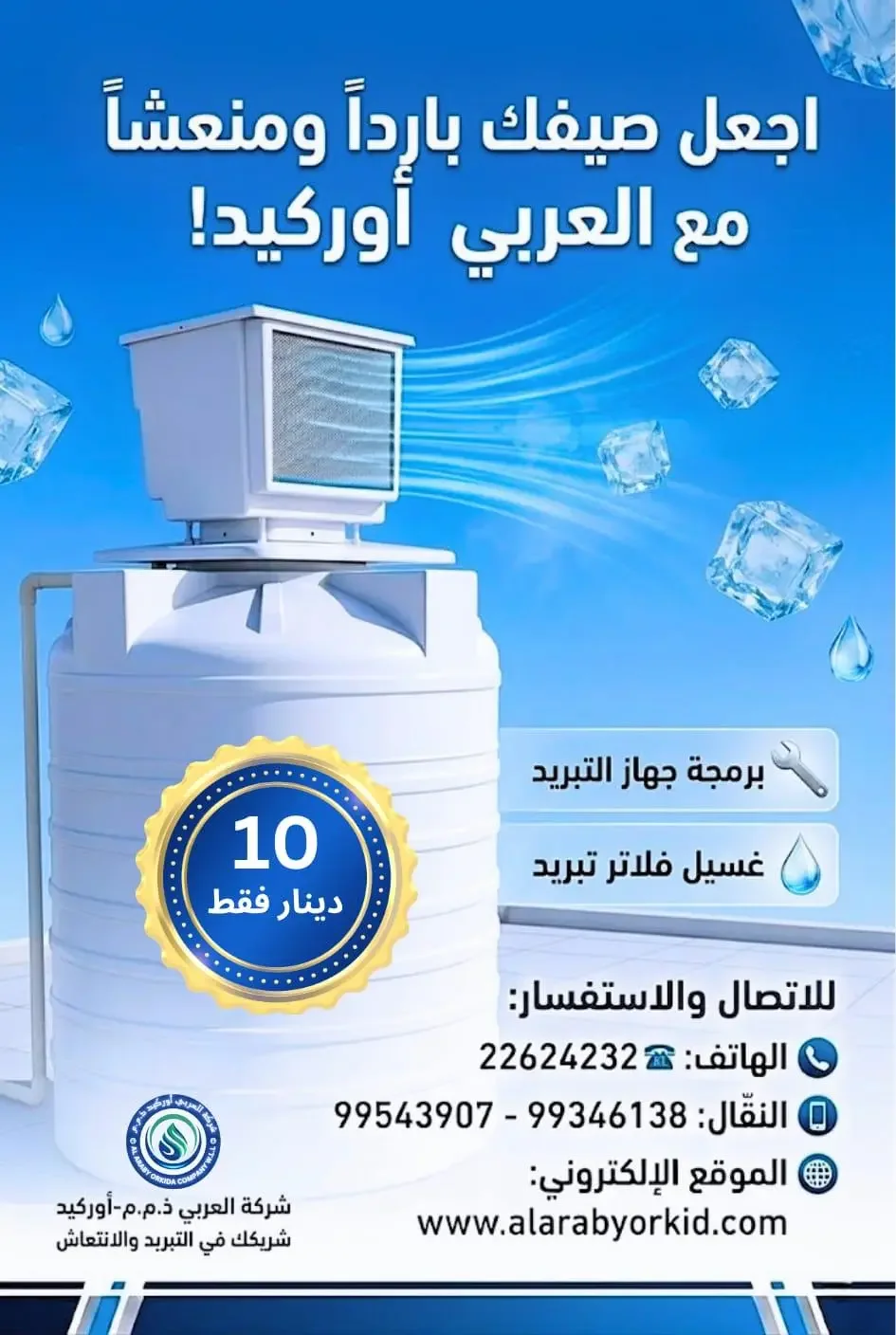
Water tank cooler maintenance and repair in Kuwait requires a different inspection method from servicing an ordinary cooling appliance because a tank cooling system combines refrigeration, water movement, and external heat load at the same time. The cooling unit may be completely healthy while the circulation pump is not providing enough flow. The pump may be operating normally while the condenser is unable to reject heat properly. In another case, every mechanical component may be functioning, but the actual problem may come from incorrect operating times or from a cooling load that has become higher than the system capacity after the tank size or number of users has increased.
For that reason, the first maintenance step is recording the symptoms before touching any component. Is the system completely stopped? Does it operate but provide weak cooling? Does the water become cool at night and hot again during the afternoon? Does the unit run for a very long time without reaching the performance it used to provide? Each symptom directs the inspection toward a different group of possible causes and prevents the technician from starting with the most expensive component simply based on guesswork.
The condition of the tank, cooling-unit location, piping, and circulation pump should then be inspected. A water leak, partially closed valve, or damaged pipe insulation can reduce cooling performance even when there is nothing wrong with the compressor. The same applies if the tank has become more exposed to direct sunlight than before or if a shade structure has been removed, because the thermal load increases and the system may need to operate for longer hours.
With a compressor-based system, the technician then evaluates ventilation, fan condition, condenser performance, refrigeration circuit, refrigerant condition, and control components using appropriate professional testing methods. With tank-mounted fan coolers, the inspection focuses more on the fan motor, blades, mounting, airflow, and mechanical condition. These systems should not be diagnosed in exactly the same way because their components and operating principles are fundamentally different.
What separates genuine maintenance from a quick service call is the test after the repair. If a component is replaced or adjusted, the system should be operated again and the technician should monitor water temperature, circulation performance, and whether the original customer complaint has genuinely disappeared rather than simply confirming that the unit can switch on.
-
Maintenance begins by identifying the symptom and when it appears because a completely dead system requires a different inspection path from a unit that operates but provides weaker cooling
-
Water circulation should be checked as carefully as the cooling unit because insufficient flow can make a healthy cooling system appear as though it has lost capacity
-
Cleaning or repairing a component is not the final objective unless the work produces a measurable improvement in overall system performance and tank-water temperature
-
Compressor cooling systems and fan cooling systems require different maintenance procedures because their operating components are not the same
-
Testing performance after maintenance prevents the customer from being handed back equipment that runs electrically but still fails to cool the tank properly
Water tank cooler repair technician
A good water tank cooler repair technician should not begin the visit by asking the customer which component they want replaced because diagnosing the equipment is not the customer’s responsibility. The technician’s value comes from turning observed symptoms into a structured testing process and proving the cause before replacing anything. Hot water does not automatically mean that the compressor is weak, and a silent unit does not automatically mean that the compressor has failed because the start command itself may not be reaching the equipment.
The technician first identifies the type of cooling system, its approximate age, and whether the problem is new or has existed since the original installation. If the cooler provided excellent performance for several years and then suddenly became weak, something has changed and should be identified. If the system never reached the required water temperature from the first day, the problem may be related to cooling capacity, water circulation design, or poor distribution inside the tank rather than a failed component.
In systems that rely on water circulation, the technician confirms that the pump is operating correctly and that suction and return lines are open without leakage or restrictions that reduce flow. The temperature of the water entering and leaving the cooling unit can then be compared. A suitable temperature difference indicates that the cooling section is actually removing heat, and the next question becomes why that cooling effect is not being distributed through the complete tank. If there is not enough temperature difference, attention shifts toward the cooling unit itself.
Electrical tests such as voltage, current, starting components, protective devices, and compressor-related checks should be carried out by a qualified technician because systems combining water and electricity are not suitable for home experimentation. The same applies to opening the refrigerant circuit, checking refrigeration pressures, or charging refrigerant because these tasks require proper equipment and professional knowledge.
A specialist technician also knows when not to replace a component. If the confirmed fault is a valve, sensor, or circulation pump, replacing the compressor would make no sense. If measurements genuinely prove that the compressor itself has lost performance, then replacement becomes a decision based on evidence rather than assumption.
-
A professional technician combines the history of the problem with current measurements instead of deciding the cause during the first minute of the visit
-
Water circulation should be checked before blaming the compressor because cooling cannot reach the tank properly when the circulation loop is weak
-
Electrical work and refrigeration-circuit work should be carried out by a qualified professional and should not be treated as home diagnostic steps
-
A clear explanation identifying the cause and affected component is more valuable than a list of parts that were replaced without evidence
-
Component replacement should be the result of diagnosis after simpler and more likely causes have been ruled out rather than the first step in the repair
Troubleshooting water tank cooling faults

Troubleshooting water tank cooling faults becomes much easier when the problem is divided according to the way it appears instead of placing every situation under the general description that the cooler is not cooling. The first condition is a system that does not start at all. In this case, the technician checks the power supply, controls, protection devices, timer, and starting components before concluding that the compressor is responsible.
The second condition is a unit that operates while the tank water remains hot. The first question here is whether enough water is actually moving through the system. The compressor may run and the heat exchanger may become cold, but if insufficient water passes through it, that cooling effect will not be transferred to the tank. If water flow is confirmed to be normal, the technician then evaluates refrigeration performance, ventilation, condenser condition, and the refrigerant circuit.
The third condition is good cooling at night but poor performance in the afternoon. This should not immediately be treated as an internal equipment fault. Cooling capacity needs to be compared with the afternoon thermal load while tank insulation, exposed piping, and the amount of new warm water entering during peak demand are checked. The cooling unit may be healthy but operating conditions may have become more difficult than the original system design anticipated.
The fourth condition is frequent starting and stopping. Short cycling can be related to protective controls, temperature, pressure, control settings, or an electrical issue. Repeatedly restarting the unit without identifying the reason does not solve the problem and can place additional stress on the equipment.
The fifth condition involves a new noise or vibration. The technician should identify whether the sound comes from the pump, fan, cooling-unit housing, piping, or mounting. With tank-mounted fan systems in particular, abnormal vibration should not be ignored because mounting quality is part of safe and stable operation.
The sixth situation is a gradual increase in cooling time. In this case, cleaning, ventilation, circulation flow, operating hours, and the current thermal load should all be reviewed before deciding that a major component needs replacement.
-
Classifying the problem according to its symptoms reduces diagnostic time and prevents every weak-cooling condition from being treated with the same solution
-
Continuous operation without satisfactory cooling requires comparison of thermal load water flow and unit performance rather than immediately assuming low refrigerant
-
Poor performance only during the afternoon directs part of the inspection toward insulation sunlight exposure and water consumption instead of focusing only on the cooler
-
Frequent shutdowns or abnormal sounds should lead to proper technical inspection rather than repeated manual restarting
-
A problem that develops gradually often provides warning signs that maintenance can identify before the system reaches complete failure
Home water cooling system maintenance
Home water cooling system maintenance is different from repairing one isolated fault because the objective is to maintain the performance of the complete system throughout the cooling season and identify changes before they interrupt service. A home depends on the tank, cooling unit, pump, piping, and controls as connected parts of one system. Neglecting one of them affects user comfort even if all other components remain in good condition.
Maintenance begins by comparing current-season performance with normal operation. Does the water now take longer to cool? Does the unit run for more hours than before? Does water temperature change significantly between the morning and afternoon? Have new noises appeared from the pump or fan? These observations are more useful than assuming that a component must automatically be replaced during every maintenance visit.
The cooling unit is then inspected and the components that require cleaning are serviced according to the system type while ventilation around the equipment is checked. Items stored around a condenser or heavy dust blocking airflow can make heat rejection more difficult and reduce cooling efficiency. The pump should also be listened to and observed while the technician checks whether circulation remains stable.
Controls also need attention. A timer may lose its settings after a power interruption or manual adjustment, causing the unit to stop before the hottest hours of the day. The customer may then believe that the cooling capacity has declined when the actual problem is simply the operating schedule. If a temperature sensor is used, its reading should also be checked for accuracy so it does not command the system to start or stop at the wrong time.
Tank and pipe insulation should be reviewed as well because every additional amount of heat entering the system increases the work required from the cooler. Intelligent maintenance does not clean the cooling equipment while ignoring a major external source of heat gain.
Maintenance frequency should also not be identical for every property. A home where the cooler operates for many hours and the equipment is exposed to dust and direct sunlight requires a different level of attention from a home where the system operates under lighter conditions.
-
Home maintenance compares current performance with previous performance so changes can be identified before the system reaches complete failure
-
Unit cleanliness and surrounding ventilation affect the system’s ability to reject heat especially during the summer
-
Checking timers and sensors prevents an incorrect operating setting from being mistaken for a mechanical fault
-
Inspecting tank insulation and water piping is part of maintaining the cooling system rather than a completely separate task
-
Maintenance frequency should be based on operating hours environmental exposure and system condition rather than applying one fixed schedule to every home
Repairing the tank cooler circulation system
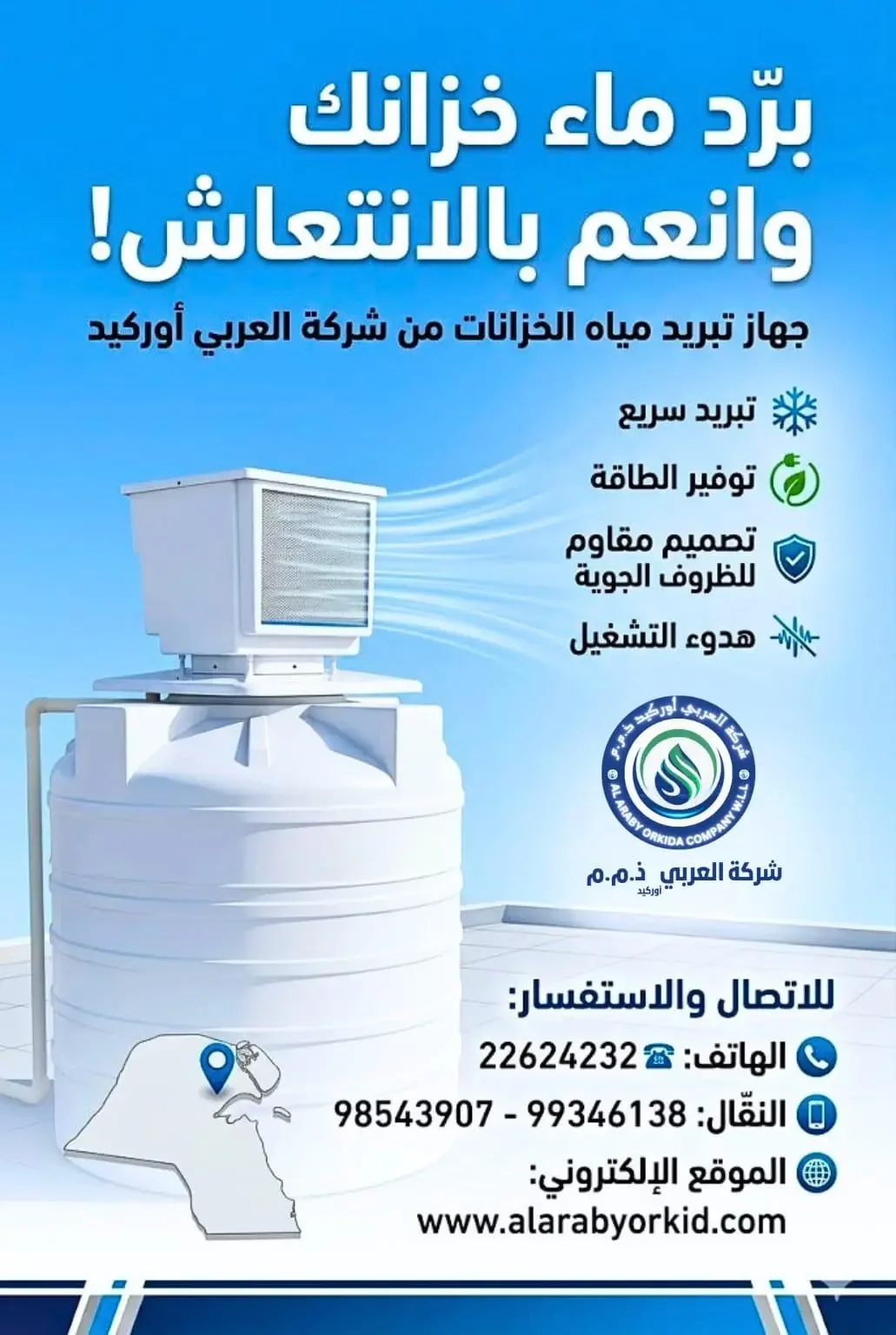
Repairing the tank cooler circulation system first requires identifying which circulation system is actually being discussed because some systems contain a refrigerant circuit inside the cooling unit as well as a separate water circulation loop between the tank and cooler. Confusing the two can result in incorrect diagnosis from the beginning. The refrigeration circuit may be performing perfectly while water circulation is weak, or the water loop may be operating normally while refrigeration performance has declined.
If the problem is in the water circulation loop, the circulation pump, valves, suction and return lines, leaks, restrictions, and trapped air that may interfere with movement should all be checked. The return water should also enter the tank in a way that helps distribute cooling rather than allowing a small volume of water to move repeatedly around the same area. This becomes especially important in large or multiple-tank systems where poor distribution can leave one section significantly warmer than another.
If water flow is confirmed to be suitable but the unit still fails to provide sufficient cooling, the technician then moves to the sealed refrigeration circuit and checks components according to the type of cooling unit and manufacturer requirements. If low refrigerant is confirmed, adding more should not be treated as a permanent repair. A healthy sealed refrigeration system should not normally require regular refrigerant top-ups without an underlying cause, so a genuine loss should lead to investigation and repair of the leak.
Another mistake is automatically replacing the circulation pump with a much more powerful model without proper calculation. Required water flow depends on the heat exchanger, pipe length, and pressure loss in the network. Excessive pump capacity may not solve the original problem.
After any circulation-system repair, the system should be restarted while inlet and outlet temperatures are compared, water movement is observed, and all connections are checked for leakage. Repairing the circulation system is not simply tightening a fitting or adding a material. It means restoring normal heat transfer between the tank and cooling unit.
-
The water circulation loop and refrigeration circuit should be treated separately because each one has its own faults and testing methods
-
Weak water flow requires identification of the underlying cause before purchasing a more powerful pump that may not solve the problem
-
If low refrigerant is confirmed the cause of the loss should be found rather than simply adding refrigerant repeatedly
-
Return-line distribution matters because the cooled water needs to spread through the tank instead of circulating only through a small area around the unit
-
Successful repair should be confirmed by stable flow falling tank temperature and the absence of leakage after the system is restarted
Water tank cooler inspection and maintenance
Water tank cooler inspection and maintenance should ideally follow a consistent sequence so the work does not turn into trial-and-error component replacement. The technician begins with the water itself and records the tank temperature together with the time of measurement. The phrase “the water is hot” can mean different things to different people, while a measured temperature provides a clear reference point that can be compared after maintenance.
The next step is checking the operating condition. Is the cooling unit receiving a start command? Is the timer set correctly? Is the circulation pump running? Is there visible leakage or a new sound? This relatively simple stage can sometimes reveal an operational issue before any refrigeration components need to be inspected.
If the system relies on water circulation, the technician then checks water movement. Suction and return lines should be open, the pump should provide suitable circulation, and there should be no restriction significantly reducing flow. Pipe insulation is also inspected because a line carrying cooled water back toward the tank can lose part of that cooling effect if it is heavily exposed to rooftop heat.
The next step is evaluating the cooling unit’s ability to reject heat. The fan and condenser need sufficient airflow and ventilation because restricted heat rejection directly reduces cooling performance. If these areas are normal, the technician moves on to refrigeration measurements according to the unit type.
Electrical inspection should be carried out by a qualified person and can include the components required by the equipment design without involving the customer in dangerous experimentation. The customer does not need to measure voltage or remove a cover from equipment that combines electricity and water in order to help with diagnosis.
Finally, the measurements should be repeated after maintenance. If tank temperature begins to decrease normally, circulation stabilizes, and the original symptoms disappear, there is clear evidence that the maintenance has achieved its objective.
-
Recording tank temperature before work provides a clear baseline that can be compared with performance after maintenance
-
Following an inspection order from controls to water flow and then refrigeration reduces unnecessary disassembly of components without supporting evidence
-
Pipe insulation should be included in the inspection because heat gain outside the cooling unit can reduce the final result
-
Electrical testing and refrigeration-circuit work belong to a qualified technician and should not require customer involvement
-
Measuring performance again after service is more important than the number of components cleaned or replaced because it confirms whether the original problem has actually been resolved
Water tank cooling unit repair

Water tank cooling unit repair starts by identifying the type of unit because a compressor system is fundamentally different from a cooling fan installed directly on top of the tank. The same fault list should not be applied to both systems, and every weak cooling problem should not be described as a refrigerant issue because a fan-based cooler does not even have the same refrigeration circuit as a compressor unit.
With compressor-based units, the technician observes how the system starts, whether it continues operating normally, the condition of the condenser fan, the ability of the condenser to release heat, and water movement through the heat exchanger. If the unit stops shortly after starting, the reason for the shutdown should be found before repeatedly restarting it. If the system runs for very long periods, actual cooling load should be compared with capacity rather than judging the unit from run time alone.
If an electrical component, fan, sensor, or control device is confirmed to be the cause, it can be repaired or replaced using a suitable part. Compressor replacement should not be the first step because it is one of the more expensive and invasive repairs and requires strong evidence.
With fan cooling units, attention shifts toward motor rotation, fan-blade condition, mounting, vibration, airflow, wiring, and electrical supply. If the fan begins turning slowly or its sound changes, the cause should be diagnosed rather than automatically replacing the entire unit.
The equipment installation environment is also important. A healthy compressor unit installed in a poorly ventilated location or a fan unit mounted insecurely on the tank may still provide unstable performance. Repair therefore sometimes includes correcting the operating conditions around the equipment and not only the equipment itself.
After the unit is repaired, it should be operated under real conditions and the water should be monitored. A technician may successfully eliminate a fan noise, for example, but if the customer originally complained about weak cooling, the final test still needs to show that cooling performance has improved.
-
The type of cooling unit determines the repair method and compressor-system diagnosis should not be applied to fan cooling systems or the other way around
-
Compressor replacement requires technical evidence because ventilation control and flow problems can create similar symptoms
-
A fan cooling unit needs inspection of the blade motor mounting and airflow rather than only checking electrical power
-
Installation conditions around the unit become part of the repair when poor ventilation mounting or heat exposure places additional stress on the system
-
Repair should finish with a real cooling-performance test rather than only confirming that a noise disappeared or the equipment started operating again
Water tank cooler maintenance with spare parts
Water tank cooler maintenance with spare parts should be based on a confirmed need for each component because the availability of spare parts does not mean they should be replaced unnecessarily. Good maintenance protects healthy components and replaces only the part that has been proven faulty or deteriorated enough to affect operation.
Depending on the cooling system, replacement components may involve the circulation pump, controls, fan, starting components, or specific connections. In some cases, the system may only need cleaning and adjustment instead of a new component. The decision should come from inspection and measurements rather than age alone.
If a replacement part is required, it needs to match the cooling-unit specifications. Installing a component with the wrong capacity or dimensions simply because it is cheaper can create another fault. The same applies to circulation pumps because every system has a particular flow and pressure requirement and should not be fitted with whatever pump happens to be available.
After replacing a component, the technician should ask why the original one failed. If a pump motor failed because of poor operating conditions or a restriction in the circulation loop and that root cause remains, the new pump may also fail later. If a fan blade was damaged because mounting vibration was excessive, the mounting problem needs to be corrected instead of replacing the blade alone.
From a cost perspective, it is better to explain the spare-part price and labor cost before replacement whenever possible so the customer knows what they are paying for. If the repair becomes economically unreasonable compared with installing a newer and more reliable unit, the customer should be told instead of entering an endless sequence of spare-part replacements on equipment that has reached the end of its practical life.
-
A spare part should be replaced when testing confirms that it is responsible for the problem or when continued operation would threaten system stability rather than simply because the equipment is old
-
The replacement component should match the cooler or pump specifications so the repair does not create a new problem elsewhere in the system
-
Identifying why the original component failed helps prevent the same fault from returning after the new part is installed
-
Separating component cost from labor gives the customer a clearer view of the repair decision and its financial value
-
If the combined cost of parts and labor approaches the price of a more reliable replacement system overall repair economics should be reviewed instead of continuing to replace one part after another
Villa water tank cooling repair service

Villa water tank cooling repair service requires a deeper understanding of the property’s water-use pattern because villas often have several bathrooms and may contain a ground tank, rooftop tanks, or several tanks connected to the same cooling circulation system. A relatively small water-distribution problem can therefore appear to the customer as if the entire cooling unit has become weak.
The technician first identifies the number and capacity of the tanks and whether the problem affects all areas of the villa or only one part. If one tank is noticeably cooler than another, attention shifts toward circulation balance rather than immediately blaming the main cooling unit. If the entire property experiences the same poor performance, the technician returns to evaluating total cooling performance and overall system load.
Peak demand is extremely important in villas. A system may cool perfectly from midnight until the early morning but struggle after several bathrooms begin using water and a large amount of warmer replacement water enters the tanks. If this only started after the number of residents increased or an additional tank was installed, current thermal load should be compared with the original cooling-system capacity.
Tank and rooftop pipe insulation should also be included in the repair assessment because damaged insulation or newly exposed piping can cause cooled water to regain heat after leaving the cooling unit. Repairing the refrigeration unit without noticing this may provide only limited improvement rather than restoring previous performance.
Some villas also use more than one cooling unit or circulation pump. The technician then needs to check how the units are sequenced and controlled. If one unit is operating while another fails to start during high load, the problem may be related to controls rather than actual refrigeration failure.
The service should finish by monitoring system performance for a suitable period because a large villa tank will not change its complete water temperature within only a few minutes. Temperature difference, rate of cooling, and distribution between tanks should all be observed.
-
The number of tanks and the way they are connected should be part of diagnosis because one warm tank may indicate a circulation-balancing problem rather than cooling-unit failure
-
An increase in residents or the addition of another tank can turn a system that was previously adequate into one operating beyond its original design load
-
Rooftop pipe insulation is important for restoring performance because cooled water can regain heat after leaving the unit
-
Systems using more than one cooling unit need their operating sequence and controls checked during high-demand conditions
-
Villa repair should be judged by improvement in tank temperature over time rather than only the first few minutes after restarting the equipment
Al Arabi Orchid water cooler maintenance
Al Arabi Orchid water cooler maintenance focuses on treating the system as one complete unit because the company’s services include tank cooling, pumps, and water tanks themselves. This is useful when the actual cause of the problem is not obvious from the beginning. A customer may call convinced that the compressor has failed only to discover that the problem is actually the pump or circulation line, and the opposite can also happen.
When contacting 99346138, it is helpful to mention the equipment type if you know it, the number and approximate capacity of the tanks, whether the cooling unit and circulation pump are operating, and when the problem appears. Al Arabi Orchid currently works with compressor cooling systems such as Falcon, LG, and Wansa as well as fan cooling solutions such as Cool Shower, Cool King, and Gold Star, and each type requires a different inspection approach.
One advantage of specialized maintenance is that the technician does not stop as soon as the equipment starts running again. After the cause is identified, the required repair is completed, then water movement, cooling performance, and the rate at which tank temperature falls are checked. If performance has not returned to a suitable level, diagnosis should continue instead of treating component replacement as the end of the job.
The customer should also understand what happened. If a pump was replaced, it is useful to know why the original pump weakened. If a leak in the refrigerant circuit was repaired, the location should be explained. If the problem came from a timer setting, the customer should understand the appropriate operating schedule. Basic knowledge helps the customer notice future changes earlier.
Al Arabi Orchid’s current service information states that the company provides installation and maintenance for water tank cooling systems across Kuwait and offers service throughout the day using the same contact number.
-
Providing clear information about the equipment and tank before the visit helps make the maintenance appointment more focused
-
Handling the cooler circulation pump and tank under one service reduces the problem of responsibility being passed between several technicians
-
Repair should not end when a component is replaced and should always be followed by operation and measurement to confirm that performance has returned
-
Explaining the cause to the customer helps distinguish normal seasonal changes from warning signs that require future maintenance
-
Al Arabi Orchid can be contacted on 99346138 to request water tank cooling maintenance according to the service required
Conclusion
Water tank cooler maintenance and repair should not mean replacing the compressor or adding refrigerant every time the tank water becomes warmer than usual. Proper diagnosis looks at the cooling unit, water circulation pump, tank, piping, controls, insulation, and actual thermal load before deciding what needs to be repaired.
Sometimes the solution is cleaning and improving ventilation. In other situations, a small control or circulation-pump issue may be responsible. In some cases, testing genuinely confirms that a component needs replacement. The important difference is that the decision comes after inspection rather than before it. After every repair, the result should be confirmed using the water itself because the goal is not to hear the equipment running. The goal is for tank temperature to return to a stable downward trend and normal cooling performance.
Al Arabi Orchid provides maintenance and repair services for water tank cooling systems and can be contacted on 99346138. It is better not to wait until the complete system stops if you notice that cooling time has become longer, the unit has started tripping, or the pump sound has changed. Like any piece of equipment, a tank cooler often gives warning signs before reaching the point where it finally says in the middle of summer, “I have done everything I can. The rest is up to you.”
Frequently Asked Questions
What is the Al Arabi Orchid water tank cooler maintenance and repair number?
The contact number for Al Arabi Orchid water tank cooling maintenance and repair services is 99346138. You can explain the cooling-system type and symptoms when calling so the appropriate service can be identified.
How can I tell whether the problem is the compressor or water circulation pump?
If the cooling unit operates but water movement is weak or the cooling effect does not reach the tank properly, the problem may be related to the circulation loop or pump. The technician needs to check both water flow and cooling performance before deciding.
Does every weak cooling problem require refrigerant charging?
No. Weak cooling can result from low water flow, a dirty condenser, poor ventilation, control problems, or increased thermal load. If low refrigerant is genuinely confirmed, the reason for the loss should be investigated before recharging the system.
When should I request tank cooler maintenance before the system stops?
If cooling time becomes noticeably longer, the unit operates for much longer than before, a new sound develops, the system trips repeatedly, or water temperature changes significantly despite similar usage, the system should be inspected.
Does maintenance include checking the water circulation pump?
Yes. If the cooling system relies on water circulation, the pump is an important part of diagnosis because weak pump performance can prevent cooling from being transferred effectively from the unit to the tank.
Can a tank cooling fan be repaired instead of replaced?
It depends on the cause of the fault. The problem may involve the motor, fan blade, mounting, electrical supply, or operating components. The technician determines whether repair is economical or full replacement makes more sense.
Are spare parts automatically replaced during periodic tank cooler maintenance?
No. Parts should be replaced only when testing confirms that they are damaged or no longer performing correctly. Maintenance should not become a reason to replace components that are still in good condition.
Why does the tank cooler run continuously after maintenance?
Possible causes include a high thermal load, unsuitable water flow, incorrect control settings, or cooling capacity that is no longer sufficient for the current tank demand. Continuous operation should therefore be investigated rather than automatically treated as normal.
Is villa water tank cooler maintenance different from smaller homes?
Yes. Villas may have more than one tank, more users, and longer circulation lines, so the technician may need to inspect circulation balance, system load, and performance during peak-demand periods.
Is the cooler tested after repair?
It should be. The system should be operated while water circulation, temperature difference, and the rate at which tank temperature falls are monitored because successful repair is proven by actual performance rather than simply by seeing the new component operate.