
When tank water cooling becomes noticeably weaker in the middle of summer, do not immediately assume that “the refrigerant is low” or that the compressor needs to be replaced. Water tank chiller repair starts by understanding what the system is actually doing: does the unit run without cooling properly? Does the compressor fail to start? Has the fan stopped? Is the water not circulating? Or does the chiller cool for a while and then shut down? Compressor-based tank cooling systems depend on a refrigeration circuit, fan, controls, and in many designs a water circulation system. A fault in any one of these sections can produce the same result at the tap: water that is warmer than usual. Al Arabi Orchid 99346138 approaches the job by identifying the actual cause first and then testing the cooling result after repair rather than replacing parts based on assumptions.
Water Tank Chiller Repair

Proper water tank chiller repair begins by identifying the type of fault before opening the unit or replacing any component. If the chiller does not operate at all, the inspection should begin with the electrical supply, controls, and protective devices before the compressor is blamed. If the unit runs but the water does not cool sufficiently, the diagnosis moves in a different direction and includes condenser airflow, fan condition, cleanliness of the heat-transfer surface, the refrigeration circuit, and water flow through the circulation system when the unit depends on one. A system that will not start and a system that operates but cannot produce enough cooling may look similar to the homeowner, but technically they follow very different diagnostic paths.
At an actual site, a customer may say “the chiller is working” simply because they can hear the outdoor unit making noise. That sound does not prove that the complete refrigeration cycle is operating. The fan may be spinning while the compressor never starts. The compressor may run while the condenser cannot reject enough heat because it is heavily covered with dust or because the fan is weak. In another case, every refrigeration component may be functioning correctly while the circulation pump fails to move enough tank water, leaving the stored water warm even though the cooling unit itself is producing a low temperature.
This is why a skilled technician divides water tank chiller repair into separate stages: electricity and controls first, then airflow and fan operation, then the refrigeration circuit, then water movement, and finally the actual cooling result. There is no value in adding refrigerant to a unit whose real problem is a failed fan, and there is no reason to replace a compressor when the tank water is simply not moving through the circulation circuit.
-
The first diagnosis should determine whether the unit has stopped completely or is operating without enough cooling because each condition requires a different inspection path and they should not be mixed together from the beginning
-
Hearing the unit running does not prove that every component is operating because the fan compressor and circulation pump can each function independently depending on the system design
-
A successful repair should end with a measurable change in water temperature after a suitable operating period rather than simply confirming that the unit makes noise again or that the power light is on
-
Replacing components before measurements are taken turns maintenance into an expensive trial-and-error process while checking electricity refrigeration performance and water circulation in order reduces guesswork and helps locate the actual cause faster
Water Tank Chiller Technician in Kuwait
Choosing a water tank chiller technician in Kuwait is not the same as choosing someone who only knows how to start a compressor or read refrigerant pressure. A tank chiller combines a refrigeration circuit with electrical components and controls and many systems also include a circulation pump or a separate water path through the tank. The technician therefore needs to understand how all these sections interact. Looking at pressure alone without checking airflow, ambient temperature, condenser condition, and water movement can lead to an incomplete conclusion because refrigeration pressures naturally change according to operating conditions.
A professional technician starts by asking the customer about the behavior of the system. When did the cooling become weaker? Is the problem present all day or mainly around midday? Does the electrical breaker trip? Has the fan sound changed? Does the water become cooler for a short time and then warm up again? Was the unit recently cleaned, serviced, or disassembled before the problem began? These questions can shorten diagnosis considerably because a fault that appears suddenly after maintenance is very different from a chiller that has gradually lost performance over two summer seasons.
The practical inspection comes next. The technician should confirm that the electrical supply matches the compressor and fan requirements, that the fan rotates freely, and that there is no abnormal vibration. A stopped fan or heavily blocked condenser can raise condensing conditions and cause poor cooling or short operating cycles. This is where the difference becomes obvious between a technician who measures and one who looks at the unit for a minute and says “the compressor is weak.”
Systems that depend on circulation require an additional level of diagnosis. The technician must evaluate the pump and water path after confirming that the refrigeration unit is actually producing cooling. A system can produce cold temperatures inside the unit but still fail to cool the tank if water circulation is weak or interrupted.
-
A skilled technician asks when the problem appears and how the unit behaved before failure because the timing of the fault can indicate whether the cause is thermal electrical or related to operating load
-
Electrical measurements fan condition and airflow should be checked before the compressor is blamed because an external fault can make a healthy compressor appear weak when it is actually operating under poor conditions
-
Circulation-based systems require inspection of the pump and water path after cooling production is confirmed because refrigeration alone does not help if the tank water is not moving through the system
-
A professional water tank chiller technician in Kuwait should explain what was measured what was found and what changed after repair instead of handing the system back with a vague statement such as “we changed the part and it is fine now”
Water Tank Chiller Maintenance

The purpose of water tank chiller maintenance is not only to prevent complete breakdown. It is also to preserve the chiller’s ability to reject heat during the most demanding part of the summer. A unit can continue operating while its performance gradually declines because of dust on the condenser, restricted airflow, or a fan that is beginning to weaken. The homeowner may not see an obvious fault, but they may notice that the system now needs several more hours to reach the same water temperature it used to achieve much more quickly.
The condenser is one of the most important maintenance areas because its job is to release the heat that the refrigeration circuit has removed from the tank water. When the condenser surface becomes dirty, heat transfer declines and the system has to work harder and longer. This matters especially in Kuwait because outdoor chiller units installed on rooftops are exposed to dust, airborne dirt, and very high ambient temperatures for long periods.
Maintenance, however, is not simply washing the condenser. The technician should also check the fan, listen for changes in motor sound, confirm that the unit is secure, inspect visible electrical wiring and connections, monitor compressor starting and running behavior, and review the timer or thermostat according to the system design. In a system that uses water circulation, the pump should also be checked to confirm that water is moving properly and that no blockage or closed valve is restricting the heat-exchange process.
Timing also matters. It is better not to wait until the first extremely hot day of summer to discover that the system needs parts. Inspection before the heavy season or at the first noticeable change in performance gives more room for proper diagnosis without emergency pressure. There is no need to force one fixed maintenance schedule on every system because dust exposure, operating hours, unit location, and installation conditions differ from one property to another.
-
Cleaning the condenser is important because it is responsible for rejecting heat and any buildup that restricts airflow around it forces the cooling unit to operate under a heavier load
-
Monitoring changes in fan and compressor sound can reveal early problems because new vibration or rubbing noise may appear before the component stops completely
-
Maintenance of a circulation system should include checking water movement because maintaining the refrigeration circuit alone is not enough if the pump cannot transfer cooling to the stored water
-
The best time for inspection is before peak summer or at the first noticeable increase in cooling time because waiting for complete failure limits maintenance options and increases pressure on the repair decision
Repairing a Water Tank Cooling Unit
Repairing a water tank cooling unit requires understanding the operating sequence. In most compressor-based systems, cooling does not begin simply because electricity reaches the unit. The control system must request cooling, then the components start according to the design, the compressor and fan operate, and the refrigeration cycle begins moving heat. In some systems, a water circulation pump is also part of the operating sequence. If the control command, sensor, timer, or protective component fails, the mechanical parts may be healthy while the unit still does not start at the correct time.
One common mistake is jumping directly to the refrigerant circuit. Before doing that, the technician should check the electrical supply, breaker, fuses, wiring, control signal, and fan condition. A disconnected breaker, blown fuse, failed capacitor, contactor problem, or control issue can prevent a perfectly serviceable refrigeration unit from operating.
It is also important to separate “the unit does not run” from “the unit runs but does not reach the required temperature.” The first condition usually points more strongly toward starting, electrical, and control issues. The second requires a full performance analysis. Understanding this difference prevents the replacement of a control board in a unit whose real problem is poor heat rejection or, in the opposite situation, servicing the refrigeration circuit when the control never sends a start command.
After repair, the unit should be started from the beginning and observed through its normal sequence. The technician should confirm that cooling begins without abnormal noise and that water temperature actually responds. If the system includes a timer or temperature control, automatic stopping and restarting should also be tested rather than confirming only that the unit can be switched on manually.
-
Control-system repair starts by confirming that the cooling command actually reaches the unit because a mechanically healthy chiller cannot cool if it never receives a proper start signal
-
The breaker supply wiring and protective components should be checked before the refrigeration circuit is opened because a relatively simple electrical fault can create the same appearance as a failed compressor
-
The technician should test unit startup more than once after repair to confirm that the fault has genuinely been corrected instead of disappearing temporarily and returning during the next cycle
-
If the system uses a timer or thermostat automatic stopping and restarting should be tested because successful manual operation alone does not prove that the full control sequence is healthy
Water Tank Chiller Not Cooling

When the water tank chiller is not cooling even though it appears to be running, diagnosis becomes more detailed. The first question is whether the cooling unit itself is failing to produce enough cooling or whether cooling is being produced but not reaching the tank water. This difference is extremely important. If the refrigeration cycle itself is weak, the technician investigates condenser airflow, fan performance, refrigerant condition, compressor performance, and controls. If the unit is producing cooling but the tank remains warm, attention moves to the circulation pump, water-flow direction, piping arrangement, and possible restrictions.
A refrigeration system that operates but does not reach the required cooling level can have several causes. These may include poor airflow, a dirty condenser, incorrect refrigerant condition, compressor problems, abnormal ambient heat, or a cooling unit that is simply too small for the actual load. This explains why the phrase “it does not cool” is far too broad to identify one replacement component.
The time of day also provides useful information. If the chiller works well at night and becomes weak only during the hottest part of the afternoon, the cooling load may be approaching the system’s limits or the condenser may be struggling to reject heat under high ambient conditions. If the unit cannot cool at any time of day, the fault is more likely connected to a basic operating component or the refrigeration circuit itself.
The current tank temperature should also be compared with the system’s previous normal performance rather than with an unrealistic expectation. If the chiller was originally designed to maintain the tank within a certain temperature range, the important question is whether it has clearly lost performance compared with its own established baseline. A noticeable decline deserves inspection rather than simply increasing operating hours indefinitely.
-
If the cooling unit produces a low temperature but the tank water does not change the diagnosis should move toward the circulation pump and water path instead of continuing to blame the refrigeration circuit
-
Weak performance only around midday has a different meaning from a complete loss of cooling throughout the day because ambient temperature and tank heat load become major factors
-
Low refrigerant is one possible cause but it should not become the automatic answer because the fan condenser compressor controls and water circulation can all reduce cooling performance
-
Measuring tank water temperature before operation and again after a defined period provides better evidence than judging by touch and helps determine whether the unit is genuinely underperforming or the expected result is unrealistic
Water Tank Chiller Compressor Repair
Water tank chiller compressor repair requires careful diagnosis before any expensive decision because the compressor is one of the most important and costly parts of the refrigeration circuit. The fact that the system is not cooling does not prove that the compressor has failed. The technician needs to determine whether the compressor receives the correct voltage, whether it attempts to start, whether electrical current is abnormal, whether a protective device is opening, and whether system pressures make sense under the actual operating conditions.
A compressor can also be affected by problems outside the compressor itself. If the condenser is heavily blocked with dust or the fan has stopped, the condensing conditions rise and the compressor operates under greater stress. A weak or failed fan can therefore make the compressor appear to be the problem when the real cause is poor heat rejection.
This is why a technician should not replace the compressor before the rest of the system has been evaluated. Sometimes the problem lies in a capacitor, contactor, electrical supply, or overload protection. In other cases, the compressor may genuinely have internal mechanical or electrical damage. That judgment should come from measurements rather than assumption.
If the compressor really needs replacement, the reason it failed should also be investigated. Installing a new compressor into a system that still has poor ventilation, a failed fan, incorrect refrigerant condition, or another unresolved fault can simply repeat the same failure pattern. After compressor replacement, the refrigeration circuit should be serviced professionally, including leak checking, evacuation, and charging according to the unit’s requirements.
-
Compressor diagnosis should come after checking the electrical supply protective devices fan and condenser because several surrounding faults can make the compressor look guilty when it is not the original cause
-
High condensing conditions caused by a stopped fan or blocked condenser increase compressor stress so correcting the operating environment is part of protecting the replacement component
-
If the compressor attempts to start and then stops its electrical behavior should be measured instead of repeatedly restarting it because protective shutdown is a message that needs to be understood
-
After compressor replacement the complete refrigeration cycle should be tested because successful startup of the new compressor alone does not prove that refrigerant charge airflow and heat rejection are correct
Water Tank Chiller Fan Repair
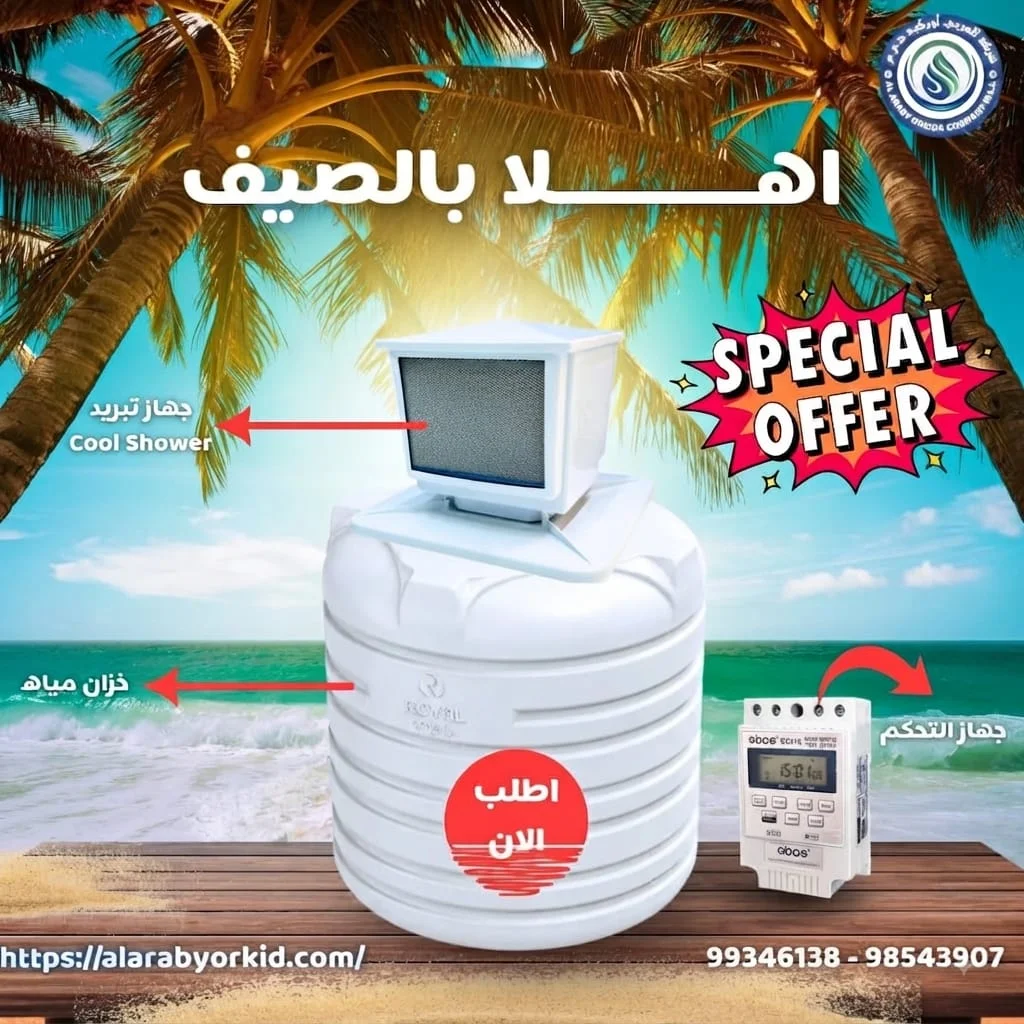
Water tank chiller fan repair is more important than many homeowners realize because the condenser fan does not simply move air for appearance. Its job is to help the condenser release the heat that the refrigeration system removed from the tank water. If the fan stops, slows down significantly, or operates incorrectly, condensing temperature and pressure can rise, cooling performance can decline, and protective devices may eventually interrupt operation.
A fan can stop for several reasons. The electrical supply may be interrupted, a capacitor may fail, the fan motor itself may be damaged, or the blade may be physically obstructed. This is why a stationary fan should not automatically mean that the motor needs complete replacement.
Inspection begins by isolating power safely and then checking whether the blade can rotate freely without rubbing or mechanical obstruction. The technician then evaluates the motor, capacitor, wiring, and control path according to the unit design. Some faults are mechanical while others are electrical.
After repair, airflow should be checked rather than simply watching the blade turn. A fan that rotates too slowly or vibrates heavily may still not perform correctly. The condenser should also be inspected because installing a healthy fan on a condenser completely blocked by dust will not restore full heat rejection.
-
A stopped fan while the compressor continues running should not be ignored because the condenser depends on airflow to reject heat and maintain suitable operating conditions
-
Fan diagnosis includes the motor capacitor blade and freedom of movement because the actual cause can be electrical or mechanical
-
Fan vibration after repair should not be dismissed because it can indicate an unbalanced blade poor mounting or another condition that may shorten motor life
-
After repairing the fan the condenser itself should be checked because restored airflow cannot provide full benefit if the heat-transfer surface remains heavily blocked with dirt
Water Tank Chiller Inspection
A proper water tank chiller inspection should produce a clear diagnostic picture even if the customer never receives a formal written report. The sequence is straightforward: does the unit receive the correct electrical supply or not? Does the control system request cooling or not? Do the fan and compressor start or not? Does the refrigeration circuit produce a measurable temperature change or not? Does water circulation transfer that cooling to the tank or not? Following this order keeps the diagnosis logical.
The technician should first observe the unit before touching anything. Is there a new sound? Does the system start and stop too quickly? Is there unusual frost or visible oil staining? Is the fan rotating correctly? After that, electrical measurements can be taken with the proper instruments, followed by temperature and refrigeration measurements when needed by a qualified technician.
The water side of the system should then be inspected. In circulation-based designs, the inspection is not complete if it ends at the outdoor refrigeration unit. The technician needs to confirm that water enters the cooling path and returns to the tank as intended.
The final stage is measurement after operation. Record the water temperature before starting, allow the system to run for an appropriate period, and measure again while considering tank size and water usage. This turns “I think it feels cooler” into a real baseline that can be compared during future maintenance visits.
-
A structured inspection moves from electricity to controls then mechanical components refrigeration performance and finally water flow so the technician does not jump randomly between unrelated possibilities
-
Any new noise vibration or repeated shutdown should be documented before the unit is opened because some symptoms disappear once the system is stopped and valuable diagnostic information can be lost
-
Circulation systems should be checked for water movement and direction because strong cooling inside the refrigeration unit is useless if water does not pass through at the required rate
-
Measuring water temperature at the beginning and end creates a performance baseline that can be used during future maintenance instead of relying entirely on how cold the water feels to the user
Water Tank Chiller Faults

Water tank chiller faults can be divided into five broad families instead of memorizing a long list of individual parts. The first group involves electrical supply faults such as breakers, wiring, and incoming power. The second involves controls such as timers, sensors, relays, or switching components depending on the design. The third involves heat rejection including the fan and condenser. The fourth covers refrigeration faults such as compressor problems, refrigerant conditions, or expansion-control issues. The fifth group involves water circulation, where the cooling is produced but does not reach the tank effectively.
The benefit of this classification is that one visible symptom can come from several different groups. For example, “the chiller is not cooling” may be caused by a stopped fan, blocked condenser, incorrect refrigerant condition, weak compressor, control problem, or simply a circulation pump that is no longer moving enough water. The symptom alone does not identify the faulty component.
Some faults appear as repeated shutdown rather than direct loss of cooling. High condensing conditions caused by a dirty condenser or failed fan can make the compressor run for a short time before protection interrupts operation. This is why the timing and pattern of the problem provide useful diagnostic clues.
The most important point is not to turn every cooling fault into “refrigerant charging.” If refrigerant is genuinely low, the reason should be investigated and any leak should be located rather than repeatedly adding refrigerant without correcting the cause. If the system does not actually have a low-charge problem, adding refrigerant unnecessarily can create incorrect operating conditions.
-
Dividing faults into electricity controls heat rejection refrigeration and water circulation creates a faster diagnostic path than beginning with an unorganized list of possible components
-
One symptom such as weak cooling can come from several causes so the symptom name alone is not enough to identify the required repair
-
Short compressor cycles may result from protective action caused by abnormal operating conditions which means repeated restarting is not a substitute for determining the cause
-
Adding refrigerant without proving that the charge is low and without finding the reason when a loss is confirmed is not professional maintenance and may allow the problem to return
Water Tank Cooling Maintenance Technician
Choosing a water tank cooling maintenance technician becomes easier when you know what to expect after the technician arrives. The first step should not be “let us add refrigerant and see what happens.” A good technician listens to the complaint, operates the system when it is safe to do so, observes the complete cycle, and then begins measurements. The result should be specific, such as a fan not reaching proper speed, a condenser blocked with dust, a control circuit not sending a command, or a circulation pump that is not moving enough water.
After repair, the technician should prove the result. If the fault involved the fan, airflow and compressor operation should be checked. If the problem involved circulation, the technician should confirm that water movement has returned. If work was performed on the refrigeration circuit, the system should be allowed to operate long enough to confirm stable cooling without unexplained shutdown. “It is running now” is not enough because some faults only appear after operating pressure and temperature rise.
A professional technician should also distinguish between a component that needs cleaning and one that genuinely needs replacement. This matters because some cooling-system components are expensive and the customer should know when a simple airflow or connection problem is the actual cause. On the other hand, if the compressor is genuinely damaged, temporary patchwork that lasts only a few days is not useful.
Al Arabi Orchid provides water tank cooling installation and maintenance services in Kuwait for systems including Falcon, LG, and Wansa. For water tank chiller repair, you can contact Al Arabi Orchid on 99346138 to arrange inspection and diagnosis before any major component is replaced.
-
A good maintenance technician starts with symptoms and measurements before recommending parts because the cost difference between cleaning a condenser and replacing a compressor can be substantial
-
The technician should explain the cause in understandable terms so the customer knows whether the repair corrected the original problem or only restarted the unit temporarily
-
Post-repair testing should continue long enough for the system to reveal its real operating behavior because some protective devices do not activate until temperatures and pressures rise
-
Keeping a record of the replaced component fault cause and water temperature after maintenance helps evaluate future performance instead of starting the diagnosis from zero during every service visit
Conclusion
Water tank chiller repair should not become a process of replacing parts based on probability. The same complaint that “the chiller is not cooling” can come from an electrical issue, a control fault, a failed fan, a dirty condenser, a compressor problem, the refrigeration circuit, or a weak circulation pump. A structured diagnosis therefore saves the customer more time and money than a quick repair based on guessing.
If the unit has stopped completely, diagnosis starts with the electrical supply and controls. If it runs without cooling properly, the technician checks heat rejection and refrigeration performance. If the unit itself produces cooling but the tank remains warm, the investigation moves to water flow and circulation. After every repair, the chiller should be tested under real operating conditions and the actual change in water temperature should be confirmed.
Al Arabi Orchid provides installation and maintenance services for water tank cooling systems in Kuwait including Falcon, LG, and Wansa. To request water tank chiller repair, you can contact 99346138. The objective is not simply to make the unit produce operating noise again. The real goal is to restore stable tank water cooling when you need it most during the summer.
Frequently Asked Questions
Why does my tank chiller run but the water does not cool?
The cause may be poor condenser heat rejection, a fan fault, a refrigeration-circuit issue, compressor weakness, or a circulation system that is not moving the water correctly. The fact that the unit is running does not prove that the complete cooling process is working properly.
Does weak cooling always mean the refrigerant is low?
No. Low refrigerant is only one possibility. Fan problems, a dirty condenser, compressor performance, controls, and water circulation can all reduce cooling, so measurements should be taken before any refrigerant is added.
What happens if the tank chiller fan stops?
The condenser loses the airflow it needs to reject heat, which can raise operating temperature and pressure, reduce cooling performance, and cause protective shutdown depending on the unit design.
Can cleaning the chiller restore cooling performance?
If the problem is caused by a dirty condenser or restricted airflow, proper cleaning can noticeably improve heat transfer and cooling performance. If another component is faulty, cleaning alone will not solve the entire problem.
How do I know whether the water tank chiller compressor has failed?
You should not judge the compressor only because the unit is not cooling. The technician should check voltage, starting behavior, current draw, protective devices, fan condition, condenser condition, and refrigeration performance before confirming compressor failure.
Can running the chiller with a stopped fan damage the system?
Continuing to operate an air-cooled condensing unit without proper airflow is not a normal condition because the fan is necessary to reject heat. A stopped fan can create high operating stress and trigger protective shutdown.
Why is checking the circulation pump important?
In systems that rely on circulation, the pump moves water through the cooling path. A weak or failed pump can allow the refrigeration unit to operate while the cooling never reaches the stored tank water effectively.
When should a water tank chiller be serviced?
It should be inspected when you notice a clear increase in cooling time, new noise, vibration, repeated stopping, a change in fan performance, or before the heavy summer season when the unit operates in dusty conditions.
Is it better to repair or replace the chiller compressor?
It depends on the type of fault, compressor condition, and unit model. Some problems come from external starting components, while confirmed internal mechanical or electrical damage may require compressor replacement. The decision should be based on measurements rather than age alone.
Who repairs water tank chillers in Kuwait?
Al Arabi Orchid provides installation and maintenance services for water tank cooling systems in Kuwait, including Falcon, LG, and Wansa. You can contact 99346138 to request an inspection and identify the actual fault before repair work begins.