
If you are trying to choose between a 3, 5, 6, or 7-stage kitchen water filter, do not assume that the system with the highest number of stages automatically produces better water. The real difference lies in the purpose of each stage, the type of cartridges used, whether the system includes a reverse osmosis membrane or relies only on sediment and carbon filtration, and what problem you actually want to solve. A household that mainly wants to improve taste, odor, and sediment filtration does not necessarily need the same system as a household that wants to reduce dissolved substances. The correct choice therefore starts with water quality, the purpose of the filter, available space under the sink, household consumption, and future cartridge-replacement costs before comparing the number of stages.
3-Stage Kitchen Water Filter
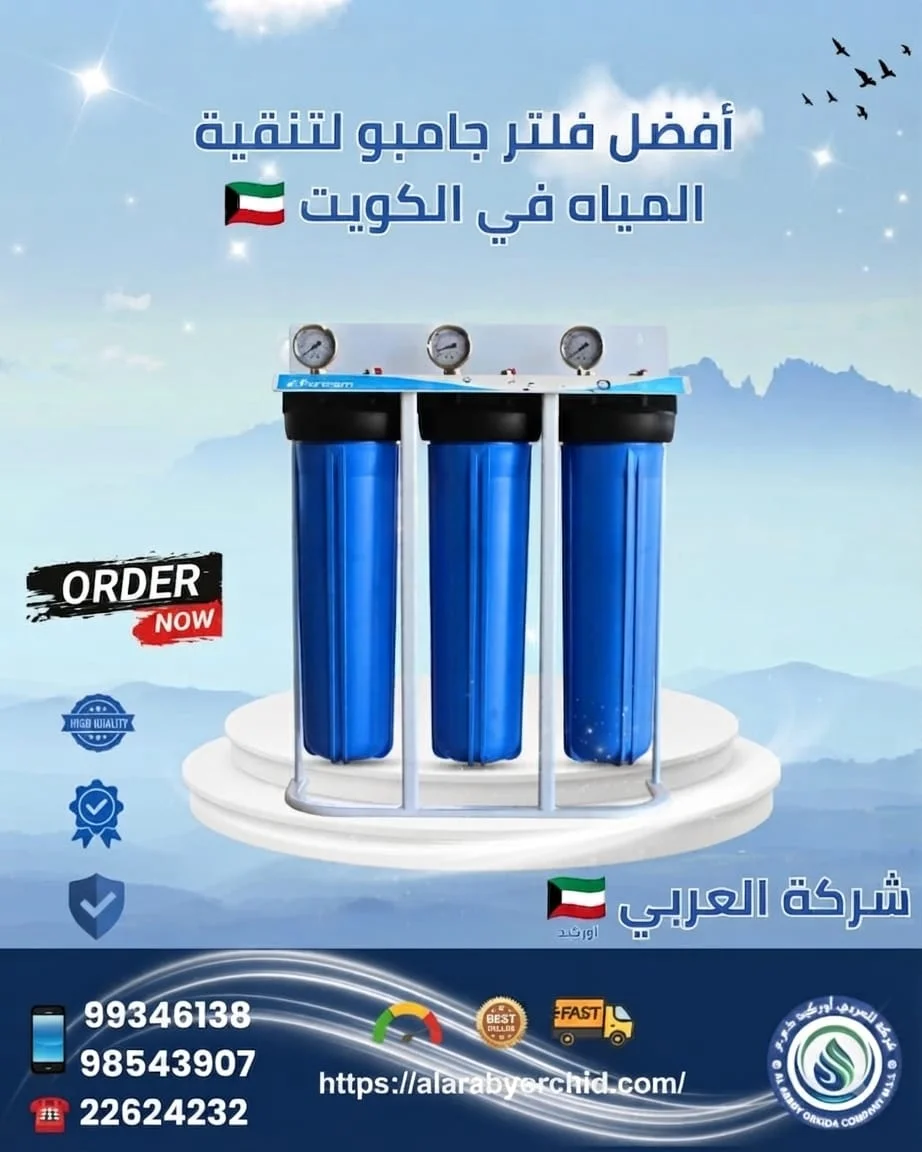
A 3-stage kitchen water filter can be one of the simplest under-sink filtration systems when the three stages are selected for clear functions that match the condition of the water. However, the phrase “3 stages” by itself does not tell you exactly what is inside the system because manufacturers may arrange cartridges differently according to the product design.
In one common configuration, the first stage may use a sediment cartridge that reduces sand, rust, and suspended particles. The second or third stage may then use carbon to address certain taste and odor issues and reduce chlorine according to the specifications and performance claims of the specific cartridge.
An important distinction needs to be made here: this type of system should not automatically be treated as a system for reducing dissolved salts. If the filter does not contain a reverse osmosis membrane or another technology specifically designed for that purpose, using a finer sediment cartridge or adding carbon does not turn the unit into a system that reduces dissolved substances in the same way as reverse osmosis.
For this reason, a 3-stage kitchen filter can be a practical option when the household mainly needs help with light sediment or certain taste and odor concerns that fall within the functions of the installed cartridges. It should not be considered “weaker” simply because it has fewer stages than a 5 or 7-stage system. It may simply perform fewer functions because fewer functions are required.
When Are 3 Stages Enough?
Three stages can be enough when every stage performs a function that the household actually needs and there is no additional water-quality issue requiring another treatment technology.
If the water is already acceptable in terms of dissolved substances and the main objective is improving point-of-use filtration while reducing certain sediment or taste problems according to the cartridges being used, a three-stage system can be simpler to maintain and involve fewer consumable parts.
However, if the customer wants to reduce dissolved substances or specifically needs a function associated with a reverse osmosis membrane, a simple three-stage filter should not be sold as the solution merely because its cartridges appear sophisticated.
What Should You Check Before Buying a 3-Stage Filter?
-
Find out what each cartridge actually does instead of relying only on the phrase “three stages”
-
Ask whether the unit provides basic filtration only or includes another technology designed for dissolved substances
-
Review the expected flow from the dedicated filter faucet
-
Make sure replacement cartridges are available in the correct sizes
-
Ask about the cost of replacing the complete three-cartridge set
-
Choose an installation location that allows the housings to be opened easily during maintenance
-
Do not judge cartridge capability by its color or the appearance of the system
-
Do not assume that a smaller micron rating is always better because finer filtration may clog more quickly depending on the incoming water
The advantage of a three-stage system is that it can be relatively straightforward and easy to maintain when its functions match the household requirement. If the water problem requires something different, changing the treatment technology is often more useful than adding unnecessary stages that provide no new function.
5-Stage Kitchen Water Filter
A 5-stage kitchen water filter does not necessarily have the same configuration from one manufacturer to another because “five stages” describes the number of treatment steps rather than defining exactly what those steps are. Some systems may combine sediment and carbon prefiltration with a reverse osmosis membrane and a final polishing stage, while others may use a different arrangement.
For this reason, the first question should not be “Is five stages better than three?” The better question is: What are the fourth and fifth stages and what practical benefit do they add?
If the system includes a reverse osmosis membrane, there is a fundamental technical difference from a filter that relies only on mechanical sediment and carbon cartridges. The membrane operates differently, has its own pressure and maintenance requirements, and typically produces treated water along with reject water according to the design of the system.
The stages installed before the membrane also serve a purpose. Sediment and carbon cartridges can help prepare the incoming water and protect the membrane from certain materials that may affect its performance, depending on how the complete system has been designed.
After the membrane, another stage may be used according to the product design to polish the water or improve taste before it reaches the drinking-water faucet.
Are Five Stages Better Than Three?
The answer depends on the objective.
If a three-stage system already addresses the required water problem appropriately, there is little value in paying for two additional stages that the household does not need.
If the five-stage system contains technology that the property genuinely requires, such as an appropriate reverse osmosis membrane, then the difference is not simply a higher stage number. It is a different treatment function within the system.
This distinction matters because some customers see a filter with five housings or treatment stages and immediately assume it must be better. The real value depends on the arrangement, specifications, and whether the system is capable of addressing the particular water issue that matters to the household.
Before Choosing a 5-Stage Filter, Check
-
The type and purpose of all five stages
-
Whether a reverse osmosis membrane is included
-
The membrane specifications if one is installed
-
The water pressure required for the system to operate properly
-
Whether a treated-water storage tank is included or required
-
The relationship between produced water and reject water in reverse osmosis systems
-
Cartridge and membrane replacement recommendations based on manufacturer guidance and actual water conditions
-
Availability of replacement cartridges and spare parts in Kuwait
-
The amount of space required under the sink
-
How easy it is to clean and sanitize relevant parts of the system during maintenance
The best five-stage filter is not the one with the greatest number of visible components. It is the system in which every stage performs a clear function that matches the household water requirement.
6-Stage Kitchen Water Filter
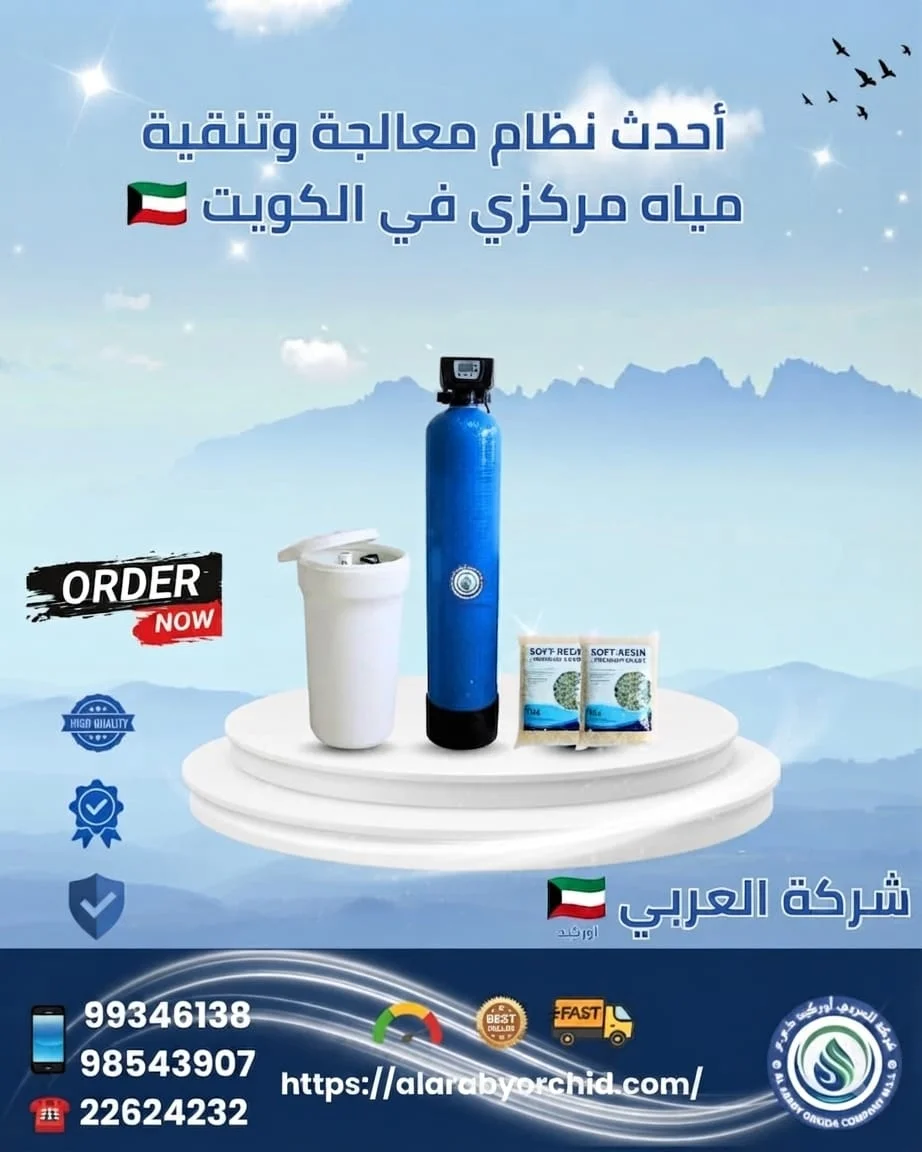
Choosing a 6-stage kitchen water filter requires even more attention to detail because the sixth stage can be completely different from one system to another. There is no universal rule saying that every six-stage filter contains the same components or that the sixth stage always provides the same benefit.
In some systems, the first five stages may consist of pretreatment cartridges, a membrane, and a post-treatment stage, with the sixth stage added for another function defined by the manufacturer. It may use an additional treatment media or be designed to modify a particular characteristic of the treated water, but the function should be evaluated from the specifications instead of relying on the phrase “6 stages.”
This creates an important distinction between a genuine treatment stage with a clearly explained purpose and a stage included mainly to increase the number shown in marketing. If the supplier cannot explain what media is inside the sixth stage, what it does, and when it should be replaced, its presence alone is not a strong reason to pay more.
Some customers look specifically for a six-stage system because they have heard that water coming from reverse osmosis should always have another stage afterward. Such stages do exist in certain designs, but the idea should not be generalized to every system because equipment configurations and incoming water conditions vary.
Is the Sixth Stage Necessary?
Not always.
If the sixth stage performs a clearly defined function that addresses a genuine household requirement and its components and specifications are transparent, it may be a sensible addition.
If a five-stage system already achieves the required treatment objective without that additional stage, the sixth stage may simply increase purchase and maintenance costs.
Water quality should not be judged by stage count alone. You need to understand what every stage reduces or changes and whether the product has suitable specifications and evidence supporting the claims made about its performance.
Before Paying More for Six Stages, Ask
-
What exactly is the sixth stage called?
-
What media is inside it?
-
What function does it add compared with the five-stage system?
-
Does the household water actually need that function?
-
When does the sixth stage need replacement?
-
How much does it add to routine maintenance cost?
-
Does the additional stage affect water flow?
-
Does the manufacturer clearly explain its specifications?
-
Are the other stages themselves suitable for the condition of the incoming water?
-
Is the complete unit practical for the available space under the sink?
The correct choice comes from understanding what you are buying. Six genuinely useful stages can be better than seven stages containing additions you do not need, while a correctly designed five-stage system can also be more appropriate than six stages when the household requirement is simpler.
A 6-stage kitchen filter should therefore be evaluated as a complete treatment system rather than as a number that automatically ranks above three or five stages. Every stage should justify its place and provide a benefit related either to the water-treatment objective or to protecting other components within the system.
7-Stage Kitchen Water Filter
Choosing a 7-stage kitchen water filter should not be based on the assumption that seven is the highest number and therefore automatically better than five or six stages. The seventh stage may be completely different from one model to another, which means you need to understand the purpose of every stage before comparing prices or assuming the system is more advanced.
Some seven-stage systems may be built around sediment and carbon prefilters followed by a reverse osmosis membrane and additional post-treatment stages that vary according to the manufacturer. One stage may be intended to polish taste after the storage tank while another may contain an additional treatment media or provide another manufacturer-defined function. The arrangement is not standardized across every seven-stage filter on the market.
This is where the difference between increasing the number of stages and increasing the system’s ability to solve a specific problem becomes important. If the seventh stage does not perform a function that your household actually needs, its presence does not automatically make the system better than a well-designed five or six-stage unit.
Every additional stage also creates a future maintenance cost. The customer is not only paying the difference in purchase price on the first day. The additional cartridge or media may also require inspection and replacement according to its service life, manufacturer recommendations, and the condition of the incoming water.
If the system uses reverse osmosis, the membrane remains one of the most important components because it performs a fundamentally different role from sediment and carbon cartridges. Additional stages before or after the membrane should have a clear purpose, such as protecting the membrane or performing a defined post-treatment function.
When Is a 7-Stage Filter Appropriate?
It can be appropriate when you understand the purpose of all seven stages and the additional stages serve a genuine need rather than simply appearing as marketing labels.
For example, if the property genuinely requires a reverse osmosis system with suitable pretreatment and clearly defined post-treatment stages, the complete system may make sense. If the requirement is limited to improving certain taste or odor issues and reducing simple sediment, however, a less complex unit may be easier and less expensive to maintain.
What Should You Check Before Buying Seven Stages?
-
Ask for the complete order of stages from the first to the seventh
-
Identify the cartridge or media used at every stage
-
Confirm whether the system includes a reverse osmosis membrane
-
Understand exactly what the sixth and seventh stages do
-
Review water-production capacity if the system uses reverse osmosis
-
Ask about the required operating pressure
-
Determine how much space the system and storage tank require under the sink
-
Calculate the replacement cost of the entire cartridge set rather than only the purchase price
-
Confirm that replacement cartridges and membranes are available in suitable sizes
-
Do not treat the phrase “seven stages” as sufficient proof of quality
A good filtration system is one where the purpose of every stage can be explained clearly in a sentence. If it is difficult to understand what a particular stage actually does, the comparison should return to specifications rather than the number displayed in the advertisement.
Choosing Water Filter Stages
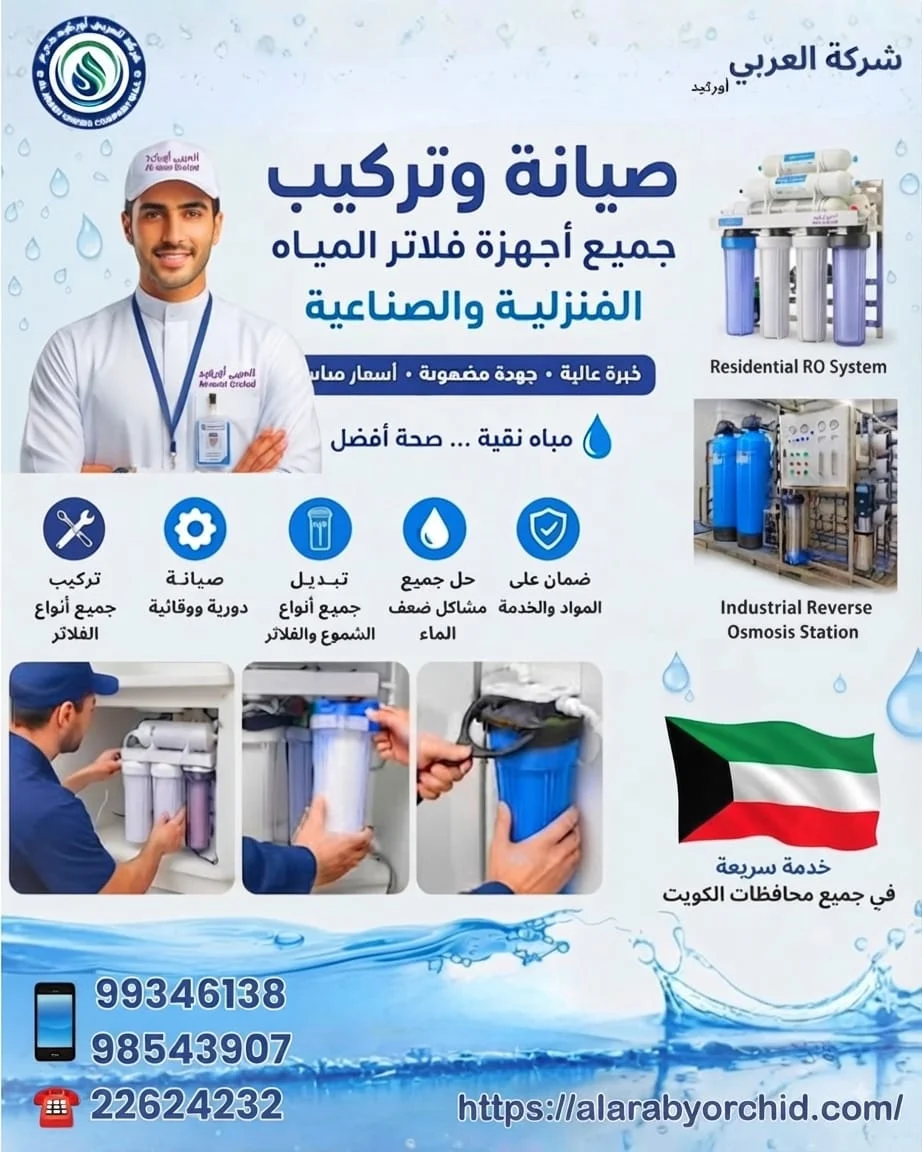
Choosing water filter stages begins with the most important question: what do you actually want the filter to do? Selecting the number of stages before identifying the treatment objective can lead you to compare fundamentally different systems using the wrong criteria.
If the main problem is visible sediment, the system may need stages designed for suspended particles together with carbon if there is a specific requirement related to chlorine, taste, or odor according to the cartridge specifications.
If the objective includes reducing a wider range of dissolved substances, a different technology such as reverse osmosis may become relevant in a system designed for that purpose. Operating pressure, membrane specifications, storage tank capacity, and reject water then become important parts of the decision.
This explains why a seven-stage filter cannot automatically be described as better than a three-stage filter. The three-stage system may be exactly right for one clearly defined problem, while the seven-stage system may contain functions that the household does not need.
Step One: Identify the Problem
Before purchasing any filter, ask:
-
Is there visible sand, rust, or suspended debris?
-
Is the complaint related to taste or odor?
-
Are you trying to reduce dissolved substances?
-
Is the problem limited to drinking water or does it affect the entire property?
-
Is the water pressure under the sink suitable for the chosen technology?
-
How much drinking water does the household typically use each day?
The answers to these questions determine the type of system more accurately than the stage count.
Step Two: Understand the Function of Every Stage
It is not enough for a seller to say that the first cartridge is sediment, the second is carbon, and the third is something else without explaining what result is expected.
You should understand:
-
What type of particles the sediment stage targets
-
What function the carbon stage performs
-
Whether a reverse osmosis membrane is installed
-
Whether there is a post-treatment stage after the storage tank
-
What any additional stage actually does
-
Whether an additional stage has its own replacement schedule
Every stage should have a clear reason for being included.
Step Three: Compare Maintenance Before Buying
A system with more stages normally has more consumable components. That is not necessarily a disadvantage if those stages are useful, but the customer should understand the future maintenance cost.
Ask about the price of the replacement cartridge set, availability of the cartridges, and how each stage is monitored. Cartridge life depends on water quality, water consumption, and manufacturer guidance, so one fixed replacement interval should not automatically be applied to every home.
Step Four: Review Pressure and Production
If the system uses reverse osmosis, performance depends on factors including water pressure, membrane condition, and the condition of the pretreatment stages.
Pressure that is too low for a particular system can reduce production, depending on the design. Some systems may use a booster pump when necessary, but it should not be assumed that every household needs one or that every unit operates effectively under identical conditions.
Step Five: Do Not Choose by Price Alone
The cheapest filter may use hard-to-find cartridges or provide poorly explained specifications. The most expensive unit may include extra stages that the household does not need.
A proper comparison should consider:
-
Stage functions
-
Membrane type when present
-
Housing and connection quality
-
Replacement-part availability
-
Ease of maintenance
-
Water-production rate
-
Pressure requirements
-
Long-term operating cost
Is the Number of Stages a Measure of Quality?
No. The stage count tells you only how many treatment steps are included. It does not guarantee the quality of each stage or its ability to address your actual water problem.
Choosing water filter stages is successful when every stage has a clear technical purpose and the complete system is matched to water quality and household consumption.
Difference Between Kitchen Water Filters
The difference between kitchen water filters goes far beyond comparing three, five, six, or seven stages. Two systems can have the same number of stages and still be fundamentally different in technology, cartridge types, membrane design, production capacity, and maintenance requirements.
For example, a five-stage unit containing reverse osmosis technology is different from another five-stage filter that uses several types of filtration without an RO membrane. Stage count alone therefore cannot be used as a reliable comparison.
Carbon cartridges also vary in design and performance. Two cartridges should not automatically be treated as identical simply because both are described by the general term “carbon.”
System size and installation requirements are another important difference. Some systems require a separate storage tank and a drain connection for reject water, while simpler filtration systems may not require the same components.
Practical Differences Between the Types
|
Type |
What May Distinguish It? |
What Should You Confirm? |
|
3 stages |
A simpler system that may focus on sediment and carbon depending on the design |
Cartridge functions and whether they address the water problem |
|
5 stages |
May include additional treatment stages or reverse osmosis depending on the model |
Whether a membrane is included and what pressure it requires |
|
6 stages |
Adds another stage whose function varies by manufacturer |
What real benefit the sixth stage provides |
|
7 stages |
A more complex system with extra stages depending on the design |
Whether all stages are actually required and justify maintenance cost |
This table provides general direction only because the actual specifications need to be checked for the specific model being considered.
Difference Between Standard Filtration and Reverse Osmosis
Filters based on sediment and carbon perform different functions from a reverse osmosis system.
A sediment cartridge is designed to capture suspended particles within its filtration capability and rating.
Carbon is used for specific functions associated with certain substances such as chlorine and some taste or odor concerns according to the cartridge type and performance claims.
A reverse osmosis membrane works differently because it uses a semi-permeable membrane to reduce a broader range of dissolved substances according to the specifications and efficiency of the complete system.
For this reason, the two technologies should not be compared only by counting stages.
What Is the Difference in Maintenance?
As stage count increases, the number of components requiring monitoring also increases, but they do not necessarily all need replacement at the same time.
The first sediment cartridge receiving the highest contaminant load may lose performance faster than a later stage depending on incoming water quality.
The membrane normally has different operating and maintenance requirements from sediment and carbon prefilters.
A final polishing stage may also require monitoring according to the equipment manufacturer.
Keeping a simple maintenance record with dates and component details can be more reliable than depending on memory or waiting until the taste of the water changes noticeably.
What Is the Difference in Price?
Price can be affected by much more than the number of stages, including:
-
The treatment technology used
-
Whether a reverse osmosis membrane is included
-
Membrane specifications
-
Whether a booster pump is included
-
Whether a storage tank is included
-
Housing and fitting quality
-
Cartridge types
-
Replacement-part availability
-
Installation requirements
-
Future maintenance cost
A seven-stage filter is therefore not automatically a better value than a five-stage system, and the opposite is also true.
The better economic choice is the system that performs the required functions with reasonable purchase and maintenance costs without adding stages the household does not need.
How Should You Choose Between the Types?
Start with the problem, then choose the technology, and only then compare stage count.
Do not reverse that order.
If you start with the number of stages, the comparison quickly becomes marketing-driven. If you start with the water condition and the desired outcome, it becomes much easier to eliminate systems that do not fit your needs even if they advertise more stages.
-
Compare the function of the stages rather than their number
-
Compare treatment technology rather than the appearance of the filter
-
Confirm whether reverse osmosis is included
-
Review required pressure and water-production capacity
-
Estimate maintenance cost based on the actual components in the unit
-
Make sure replacement parts are available
-
Choose a system that fits the space under the sink
-
Do not pay for an extra stage without understanding its benefit
Home Drinking Water Filter in Kuwait
Choosing a home drinking water filter in Kuwait should begin with the understanding that a drinking-water filter is intended for direct kitchen use and is not necessarily designed to treat the entire household plumbing network. Its flow requirements, cartridge arrangement, installation space, and daily use therefore differ from a whole-house inlet filter or central Jumbo system.
The first thing to identify is the source of the water reaching the kitchen. If the water comes through the household storage tank and internal pipework, the concern may involve light sediment, changes in taste or odor, or dissolved substances depending on the source and system condition. Each of these issues requires a different treatment approach and the decision should not be based only on the stage count.
If the main objective is reducing sand, rust, and suspended particles together with certain taste or odor concerns within the capability of the cartridges, a relatively simple system may be enough. If the objective includes reducing a broader range of dissolved substances, you should determine whether the system contains a reverse osmosis membrane and review its actual specifications.
This distinction is particularly important because some customers see the phrase “drinking-water filter” and assume all systems deliver the same result. In reality, a three-stage filter may be completely different from a five-stage reverse osmosis unit, and even two seven-stage filters may perform different functions because of their cartridge and component arrangement.
What Matters Most in a Home Drinking-Water Filter?
The most important thing is that every component has a known function, replacement cartridges and membranes are available in suitable sizes, maintenance is straightforward, and the user understands when the parts require service instead of leaving the system installed for years without monitoring.
Installation quality is also important. Even a small leak under the kitchen sink can create a significant problem, so connections, valves, and the storage tank where present should be installed in an organized way that suits the system.
A dedicated drinking-water faucet can also be useful when the design of the unit requires it rather than mixing the treated-water line with other kitchen uses without proper planning.
Should You Always Choose the Highest Number of Stages?
Not necessarily.
A household that needs a limited number of clearly defined functions can often save money and simplify maintenance by selecting a system matched to those needs rather than buying seven stages simply because seven is the largest number.
On the other hand, if the water condition genuinely requires reverse osmosis, choosing a basic three-stage filter simply because it is cheaper and expecting the same result would not be appropriate.
What Should You Ask the Company Before Installation?
-
What type of filtration system is it exactly?
-
What does every stage do?
-
Does it contain reverse osmosis?
-
What membrane is used if one is included?
-
Does the system require a pump?
-
Does it include a storage tank?
-
What operating pressure does it require?
-
What water-production rate should be expected?
-
Which cartridges require routine replacement?
-
Are replacement parts readily available?
-
How are the system components cleaned or sanitized during maintenance?
-
Is there enough space under the sink for both installation and future servicing?
If you are searching for the best company to install a home drinking-water filter in Kuwait, focus on a provider that clearly explains the difference between filter types and recommends a system according to water condition and household use instead of simply selling the unit with the largest number of stages.
Arabic Orchid offers kitchen filtration systems with different stage counts, allowing the system to be selected according to the actual requirement rather than treating every household as if it needs the same filter.
-
A home drinking-water filter should be selected according to water quality and the intended treatment objective rather than stage count alone
-
Reverse osmosis changes the function of the system significantly compared with a filter using only sediment and carbon
-
Replacement-cartridge and membrane availability matters because the system requires maintenance throughout its operating life
-
Under-sink installation should leave enough room to access the cartridges and storage tank if one is included
-
The best system is not necessarily the one with the most stages but the one that meets household requirements without unnecessary components
-
A proper comparison includes operating and maintenance costs in addition to the initial purchase price
Number of Kitchen Filter Stages

The number of kitchen filter stages is one of the main details customers use when comparing systems, but it is also one of the easiest ways to make the wrong decision when the number is considered by itself.
The word “stage” simply describes one step within the treatment process, but not all stages have equal importance or the same function. A sediment stage is fundamentally different from a carbon stage, and a reverse osmosis membrane performs a completely different function from a final taste-polishing cartridge.
For this reason, a five-stage system can be technically more appropriate than a seven-stage system depending on the components used.
For example, if the five-stage unit contains suitable pretreatment stages, a reverse osmosis membrane, and a clear final polishing stage, while the seven-stage system adds two stages the household does not actually need, the five-stage system may be the smarter choice despite having a lower number.
Conversely, if the additional stages in a six or seven-stage system perform functions that the household genuinely needs and their specifications are clear, their presence can be justified.
How Do You Evaluate the Value of Each Stage?
Ask three questions about every stage:
-
What material or technology is inside it?
-
What is it designed to target?
-
Does my household actually have that problem?
If you cannot get a clear answer to those questions, the stage should not automatically be treated as a benefit.
Do More Stages Produce Purer Water?
Not automatically.
If every stage performs an appropriate function for the incoming water, the overall system may provide better treatment. Simply adding a second or third cartridge of the same general type, however, does not always produce a meaningful improvement.
Some additional stages are intended to modify certain characteristics of the water after treatment rather than remove additional contaminants.
The word “purity” itself also needs to be defined. Are you talking about sediment reduction, taste improvement, chlorine reduction, or reducing dissolved substances? Every objective requires a different technology.
Do All Stages Need Replacement at the Same Time?
Not necessarily.
The service life of each stage depends on:
-
Cartridge type
-
Volume of water used
-
Sediment load
-
Incoming water quality
-
Position of the stage within the system
-
Manufacturer recommendations
-
Membrane condition when present
The first stage may become loaded with sediment faster than the final stage, for example.
The membrane normally follows a different maintenance schedule from sediment and carbon cartridges.
For this reason, maintenance should be based on product guidance, water conditions, and actual use rather than one fixed interval applied to every system.
What Is the Problem With Adding Unnecessary Stages?
Every extra stage means:
-
Another component to monitor
-
Additional future replacement cost
-
More connections inside the system
-
More space required under the sink
-
Potential additional flow resistance depending on the design
-
More complexity during servicing
More stages should therefore only be considered an advantage when the additional stages perform a useful function.
Simple Comparison of Stage Counts
|
Number of Stages |
When It May Make Sense |
What You Should Confirm |
|
3 stages |
When the requirement is simple and basic filtration functions are sufficient |
Cartridge type and the purpose of every stage |
|
5 stages |
When the system adds a useful technology or function such as reverse osmosis depending on design |
Membrane type and operating pressure |
|
6 stages |
When the sixth stage provides a clear benefit that the household needs |
The function of the additional stage |
|
7 stages |
When every additional stage is justified and clearly specified |
Maintenance cost and the benefit of each stage |
This table is not a final buying rule. It simply demonstrates that stage count should be the result of the treatment requirement rather than the starting point.
Under-Sink Water Filter
An under-sink water filter can be a practical option for anyone who wants a dedicated source of drinking and cooking water in the kitchen without installing a large filtration system on the main household inlet. The main advantage is that it focuses on the smaller volume of water used for drinking and cooking rather than treating all water used for bathing, cleaning, and other household purposes.
Available space under the sink becomes an important factor in the selection process. Simpler filters may require relatively little room, while traditional reverse osmosis systems can include several housings, a membrane, a storage tank, and a booster pump depending on the design.
If the kitchen cabinet is small or already contains many items, the space should be measured before purchase rather than discovering after installation begins that the system or storage tank cannot fit in a practical way.
The housings and valves should also remain accessible because the filter requires periodic maintenance. Installing the unit in an extremely tight space makes cartridge replacement more difficult and increases the likelihood that servicing will be delayed.
Does an Under-Sink Filter Affect Water Pressure?
It depends on the system.
Sediment and carbon cartridges create resistance according to their design and condition.
A reverse osmosis system relies on membrane operation and water pressure, and its production rate is different from the unrestricted flow of a normal kitchen faucet. For this reason, many traditional RO systems use a storage tank for treated water according to their design.
If the incoming pressure is low or the cartridges have become heavily loaded with sediment, water production or faucet flow may decline noticeably.
It is important to distinguish between household network pressure and flow from the dedicated filter faucet. An under-sink system is not intended to provide the same unrestricted flow as the main kitchen supply. It delivers treated water through its dedicated outlet according to the capacity of the equipment.
Storage Tank and Pump Location
If the system includes a storage tank, there should be enough permanent space for it without squeezing it into a position that makes future inspection or replacement difficult.
If the system uses a pump, a suitable and safe electrical supply is required away from potential leaks and standing water.
Connections should also be arranged carefully because a small leak under the sink can continue for some time before the homeowner notices it.
What Is the Best Under-Sink Type?
The best option is the system that provides the required treatment with the least unnecessary complexity.
If your requirement is limited to sediment and carbon filtration, there may be no reason to add a membrane, pump, and storage tank when those components do not address a real need.
If the water requirement calls for reverse osmosis, choosing a simpler filter and expecting the same result is equally inappropriate.
Under-Sink Water Filter Prices
Price varies according to:
-
Number of stages
-
Cartridge types
-
Presence of a reverse osmosis membrane
-
Membrane specifications
-
Presence of a booster pump
-
Presence of a storage tank
-
Quality of connections and valves
-
Type of dedicated faucet
-
Installation requirements
-
Future cartridge costs
-
Availability of replacement parts
It is better to calculate the cost of the first full operating period rather than looking only at the initial installation price because some inexpensive systems use costly cartridges or parts that are more difficult to obtain.
What Should You Check After Installation?
After installation:
-
Confirm that there are no leaks
-
Make sure the dedicated faucet works normally
-
Learn where the filter isolation valve is located
-
Know which cartridges are installed
-
Understand the order of the stages
-
Keep the model information
-
Record the maintenance date
-
Know which signs indicate the system should be inspected
If you notice a significant decline in production, a change in taste, a problem with the storage tank, or any leakage, the system should be checked rather than waiting for it to stop working completely.
An under-sink filter is most practical when its design is easy to understand, maintenance is straightforward, and the homeowner knows what every stage does instead of installing a complicated system and later being unsure what components it contains or when they need replacement.
-
Under-sink filtration is designed for drinking and cooking water rather than treating the entire household network
-
Installation space should account for the filter storage tank and pump when they are part of the system
-
Reverse osmosis differs from direct filtration in pressure production and operating method
-
Easy access to the housings reduces problems caused by delayed maintenance
-
Under-sink leaks should be detected quickly so organized installation and reliable valves are important
-
System selection should begin with the treatment objective rather than the largest stage count available
Best Kitchen Water Filtration System
Choosing the best kitchen water filtration system should not begin with the question “Should I buy 3, 5, 6, or 7 stages?” A better starting question is: what water problem do you want the system to address, what type of water enters the kitchen, and what level of maintenance suits your household?
If the primary goal is to reduce sediment and address certain taste or odor issues according to the cartridge specifications, a simpler system may be the most appropriate option. If the objective includes reducing a broader range of dissolved substances, a properly designed reverse osmosis system may be closer to what the household actually needs.
The best system should also have clearly explained components. The customer should know what every cartridge does, whether a membrane is included, what the final stage is, and why it is there. If the reason for a particular stage cannot be explained, that stage should not be treated as a benefit simply because it increases the total count.
Another important point is that the best system is not the one with the longest list of specifications on paper. It is the system you can maintain easily, find replacement cartridges and parts for, and operate without unnecessary problems involving flow, leakage, or restricted access under the sink.
How to Choose the Right System Step by Step
Start by identifying the actual water problem.
If visible sediment is present, focus on filtration suitable for those particles.
If the concern involves taste or odor, review the carbon stage and its intended function.
If your objective involves dissolved substances, examine whether a reverse osmosis membrane is included and review its specifications instead of simply increasing the number of cartridges.
Next, review water pressure because some systems need sufficient pressure to operate properly. If pressure is below the equipment requirement, the system may require a different configuration or a booster pump depending on its design.
Then review kitchen space, drainage access, and electrical availability if a pump is required.
Finally, calculate maintenance cost rather than looking only at the purchase price.
Practical Comparison Before Choosing
|
Factor |
Why It Matters |
|
Type of water problem |
Determines the appropriate treatment technology before stage count |
|
Function of each stage |
Shows whether additional stages provide value or merely increase complexity |
|
Reverse osmosis membrane |
Changes how the system operates and its pressure and maintenance requirements |
|
Water pressure |
Affects the performance of certain systems especially reverse osmosis |
|
Space under the sink |
Determines whether the filter tank and pump can be installed practically |
|
Cartridge availability |
Reduces future maintenance problems |
|
Replacement cost |
Shows the true long-term operating expense |
|
Ease of servicing |
Helps prevent delayed maintenance and avoidable problems |
|
Connection quality |
Important for reducing leakage risk |
|
Clear specifications |
Allows comparison based on actual data instead of marketing language |
Best Types According to the Requirement
There is no single type that can be described as the best for every household, but the decision can be divided practically.
For a simple requirement:
A system with fewer stages can be suitable when the main need is limited sediment filtration and the required carbon functions are sufficient.
When reverse osmosis is needed:
Choose a system with a clearly specified membrane and suitable pretreatment stages together with a storage tank and pump when the design requires them.
When additional stages are desired:
Confirm that the sixth or seventh stage performs a function you genuinely need rather than being described only as an “extra stage” without a technical explanation.
For small kitchens:
Focus on system dimensions and service access because an excellent filter that cannot be maintained conveniently inside the cabinet can become frustrating every time the cartridges need replacement.
Kitchen Water Filter Prices in Kuwait
Kitchen-filter pricing is not determined by stage count alone because two five-stage systems can have substantial differences in technology and components.
Factors affecting price include:
-
Actual number of treatment stages
-
Cartridge type
-
Presence of a reverse osmosis membrane
-
Membrane specifications
-
Presence of a booster pump
-
Presence of a storage tank
-
Storage-tank size
-
Faucet type
-
Connection and valve quality
-
Installation requirements
-
Replacement-part availability
-
Cost of the replacement cartridge set
-
Cost of membrane replacement
-
Ease of future servicing
When comparing two offers, do not simply ask, “How much is the seven-stage filter?” Ask what is inside the unit, what is included in the quoted price, and which parts will require replacement after installation.
A five-stage filter can cost more than a seven-stage filter because the membrane, pump, or component quality may be different.
A seven-stage system can also be less expensive while using simpler additional stages that do not provide the function your household actually needs.
How Do You Calculate the Real Cost?
The true cost includes:
-
Purchase price of the system
-
Installation cost
-
Routine cartridge-replacement costs
-
Membrane replacement cost when a membrane is included
-
Future pump or storage-tank servicing when applicable
-
Replacement of any valves or fittings that may eventually require service
-
Maintenance frequency according to household use and incoming water conditions
This gives you a clearer purchasing decision than selecting the cheapest unit initially and later discovering that its maintenance is more expensive.
Why Choose Arabic Orchid?
If you are looking for the best company to install a kitchen water filter in Kuwait, do not automatically choose the company that offers the largest number of stages. A better provider should be able to explain the difference between conventional filtration and reverse osmosis, describe the purpose of every cartridge, and help you choose a system according to your household requirement.
Arabic Orchid offers kitchen water filters with different numbers of stages, allowing the system to be selected according to the actual need rather than treating every customer as though the same product is suitable for everyone.
The idea is not to say, “Choose seven stages because seven is best.” The goal is to determine what you genuinely need.
If three stages are sufficient for your use and water condition, that system may be a better choice than something larger.
If reverse osmosis is needed, the system should include the required technology instead of simply providing a higher stage count without the appropriate membrane.
Correct Steps for Requesting the Service
-
Identify the water problem
-
Review the available installation space under the sink
-
Determine whether conventional filtration or reverse osmosis is required
-
Choose the appropriate number of stages
-
Understand the function of every cartridge
-
Review incoming water pressure
-
Confirm whether a storage tank or booster pump is required
-
Make sure replacement cartridges and membranes are available
-
Install fittings and valves in an organized and serviceable way
-
Check for leaks and verify flow after installation
-
Explain the maintenance schedule and required replacement parts
-
Record the model and stage configuration for easier future servicing
If you want a kitchen water filter suitable for your home in Kuwait, you can contact Arabic Orchid on 99346138 and select the system according to household water needs and family use rather than choosing by stage count alone.
-
The best kitchen filtration system is the one that solves the actual water problem with the least unnecessary complexity
-
Stage count is not a quality standard when the functions of the stages are unclear
-
Reverse osmosis is a different technology from simply adding more sediment and carbon cartridges
-
The real price includes cartridges membranes and future servicing rather than only the initial equipment cost
-
Replacement-part availability should be considered before purchase just as carefully as the specifications of the system itself
-
Available space under the sink should be part of the purchasing decision
-
Water pressure can affect the performance of certain systems and should be reviewed before installation
-
The best company is one that explains why you need 3, 5, 6, or 7 stages instead of automatically pushing the highest number
Conclusion
If you are deciding between a 3, 5, 6, or 7-stage kitchen water filter, do not begin with the highest number because stage count by itself does not determine the quality of the filter or its ability to address the actual water problem in your home.
A three-stage filter can be an excellent option when the household requirement is simple and clearly defined and the selected cartridges are appropriate for the incoming water.
A five-stage filter may be a stronger choice when it adds a technology the household genuinely needs, such as reverse osmosis, depending on the design of the unit.
The sixth or seventh stage should not automatically be considered an advantage unless you understand what each stage does and actually need its function.
The most important thing is to distinguish between sediment and carbon filtration and reverse osmosis technology and to avoid expecting any system to perform a function that is not part of its design.
Before purchasing, review water condition, treatment objective, network pressure, available under-sink space, cartridge and membrane costs, and replacement-part availability.
Following this order helps you select a practical system for your household rather than purchasing a larger unit with a higher stage count where some components provide little real benefit.
With Arabic Orchid in Kuwait, you can determine whether a 3, 5, 6, or 7-stage kitchen filter is appropriate according to the function of the system rather than relying on the number alone.
Frequently Asked Questions
Is a 7-stage filter better than a 5-stage filter?
Not necessarily. If the two additional stages perform functions the household actually needs, they can be useful. If they provide no meaningful benefit, a correctly designed five-stage system may be more practical and less expensive to maintain.
What is the difference between a 3-stage and a 5-stage filter?
The difference depends on the components rather than the number alone. A three-stage system may use sediment and carbon filtration, while some five-stage systems include a reverse osmosis membrane together with stages installed before and after it.
Does every 5-stage filter include reverse osmosis?
No. The number of stages does not prove that reverse osmosis is included. You need to inspect the components and confirm whether a membrane is installed and what its specifications are.
Is a 6-stage filter necessary for every home?
No. The sixth stage is useful only when it has a clear function that addresses a genuine water requirement. If it does not provide a needed benefit, a simpler system may be the better choice.
Do more stages automatically mean cleaner water?
No. The result depends on the technology, cartridge quality, function of every stage, and condition of the incoming water.
What is the best under-sink water filter?
The best system is one that suits the water condition and household consumption, remains easy to maintain, uses readily available replacement parts, and operates properly within the available water pressure.
Is reverse osmosis better than a carbon filter?
They perform different functions. Carbon cartridges are used for certain substances and taste or odor concerns according to the cartridge design, while reverse osmosis is used to reduce a broader range of dissolved substances according to the specifications of the system.
Does a reverse osmosis filter need a storage tank?
Many traditional reverse osmosis systems use a storage tank to hold treated water, but system designs vary. The specifications of the particular model should therefore be checked.
How often should kitchen filter cartridges be replaced?
There is no single replacement interval suitable for every household. Replacement depends on cartridge type, water consumption, sediment load, incoming water quality, and manufacturer recommendations.
What is the most important question before buying a kitchen filter?
Ask: What does every stage do and what specific problem is it designed to address? Once you know the answer, choosing between 3, 5, 6, or 7 stages becomes much easier and more accurate.
