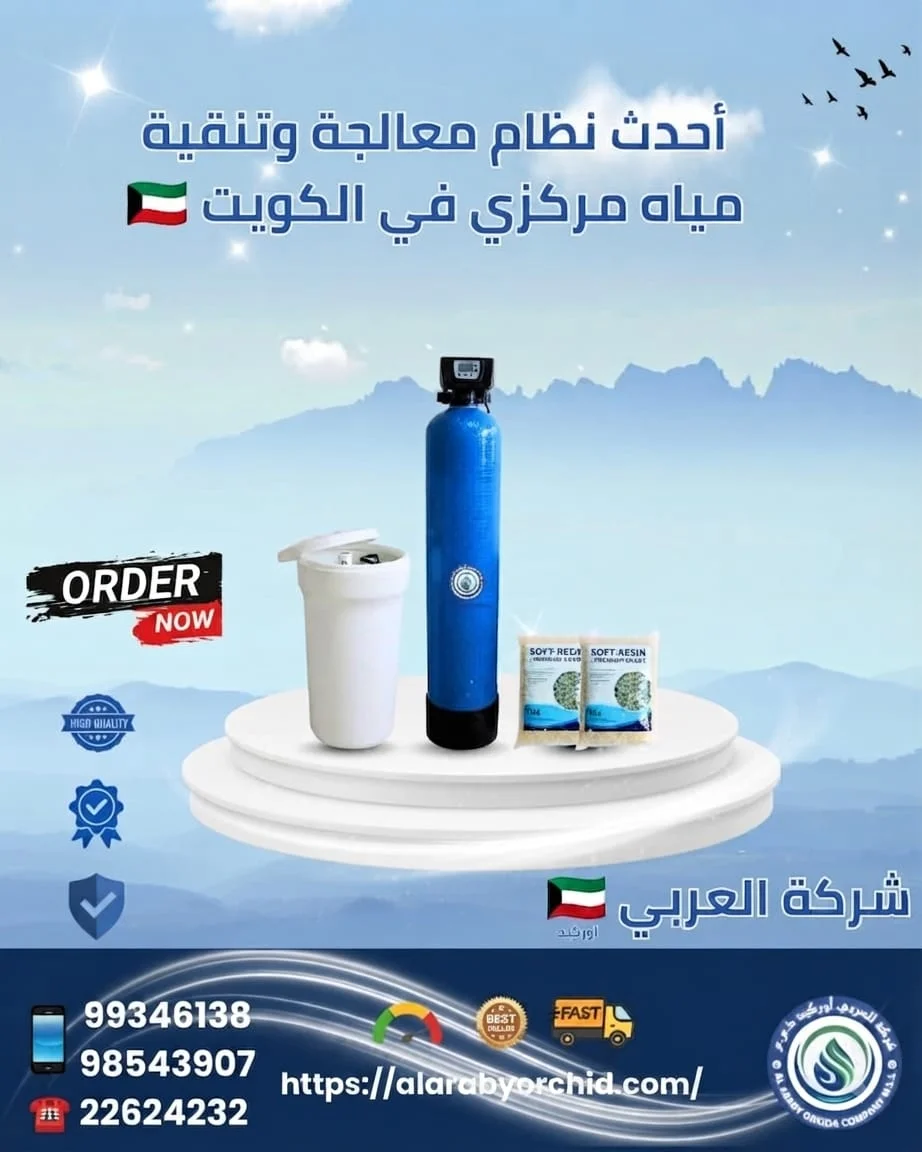
You need a sand filter for your home in Kuwait when the main problem is a noticeable and recurring amount of sand, sediment, and suspended particles entering with the water and reaching the storage tank or household plumbing. A sand filter works as a primary filtration stage capable of handling a heavier sediment load than relying immediately on a fine cartridge, but not every home needs one and it does not solve every water problem. Before installation, you should understand the source of the sediment, household water demand, main pipe size, available pressure, and how the filter will be cleaned. Arabic Orchid helps determine the filtration system according to the actual water condition so you do not pay for a filter larger than necessary or install a system that unnecessarily restricts household flow.
Home Sand Filter

Choosing a home sand filter makes sense when sand and sediment are not a temporary issue that appears once and disappears, but a recurring problem inside the storage tank, pipework, or water outlets. In this situation, the purpose is not to add another piece of equipment simply to make the system look more complete, but to reduce a significant amount of suspended debris before it spreads throughout the household plumbing network.
A sand filter works by allowing water to pass through filtration media that traps a portion of the suspended particles according to the type of media and system design. This is different from a small cartridge filter that relies on a replaceable element which may become heavily loaded very quickly when it receives more sediment than it was designed to handle.
One sign that deserves investigation is repeatedly finding sediment at the bottom of the tank shortly after cleaning. Other warning signs include particles appearing when faucet strainers are removed, sediment cartridges clogging unusually quickly, or debris repeatedly reaching the water heater, mixers, and plumbing fixtures. These signs do not automatically prove that a sand filter is the only correct solution, but they do indicate that the property has a sediment load that should be assessed before choosing the filtration stage.
It is also important to understand what a sand filter cannot do. If the main complaint is salinity, dissolved minerals, or another chemical characteristic of the water, mechanical filtration through sand media is not the treatment required for that type of issue.
A practical example is a home where the water tank is cleaned but a noticeable layer of sand returns soon afterward and the Jumbo sediment cartridges keep clogging rapidly. In this situation, adding a primary filtration stage capable of handling heavier sediment before the finer filter may be more practical than repeatedly replacing fine cartridges.
-
A sand filter can be a suitable option when the sediment load is greater than a small cartridge can comfortably handle on a stable long-term basis
-
Repeated sand deposits at the bottom of the tank are more meaningful than a small amount appearing once because the decision should be based on a persistent condition rather than a temporary incident
-
The filter must be sized according to household flow because good filtration has little value if the system causes weak water pressure when several bathrooms operate together
-
The filtration media and the way the system is cleaned are part of overall performance so the filter should not be judged only by the external tank size
-
A sand filter traps suspended particles but should not be treated as an automatic solution for dissolved salts or every taste and odor complaint
-
Assessing the water condition before installation reduces the risk of buying a system that is larger than necessary or too small for the actual sediment load
Sand Filter Installation in Kuwait
Sand filter installation in Kuwait begins with choosing a location that serves the main water line while still allowing easy access for servicing, cleaning, or backwashing according to the filter design. Installation location is not simply a cosmetic decision because the system needs enough room for valves, connections, and future maintenance without requiring unnecessary dismantling or major changes to the plumbing.
Before installation, the main water-pipe diameter, tank position, pump position, and direction of water flow should be reviewed. Installing the filter in an unsuitable location can add unnecessary resistance or make future maintenance much harder than it needs to be.
The filter size should then be selected according to the household flow rate. A property with limited water demand is different from a villa where several bathrooms and outlets may operate at the same time. Installing an undersized sand filter on a high-flow network can place the system under excessive load and increase pressure loss as sediment accumulates.
A good installation also includes properly positioned isolation valves so the filter can be serviced without unnecessarily dealing with the entire household plumbing system every time maintenance is required. If the filter uses backwashing, the drainage arrangement also needs to accommodate the water discharged during cleaning.
One common mistake is installing a sand filter and then treating it as if it requires no attention for years. Filtration media gradually collects sediment and if the system is not cleaned in the correct way, pressure loss can rise and household flow can decrease.
Arabic Orchid provides water-filter installation services in Kuwait, and the more reliable approach is to determine the type of sediment and property demand before selecting the filter itself.
-
Identifying water-flow direction and the positions of the pump and tank before installation helps prevent layout mistakes that can affect system performance later
-
Connection size should suit the existing plumbing so the filter does not become a restriction at the main household inlet
-
The installation area should allow the technician to reach valves the filter vessel and service points without unnecessarily dismantling pipework
-
Backwash systems require suitable drainage because cleaning the media depends on removing the sediment collected during normal filtration
-
Checking pressure and water flow after installation helps confirm that the filtration system serves the property without creating an unacceptable reduction in performance
-
Installing the filter correctly from the beginning avoids many problems compared with adding a system without evaluating the network simply because sand has appeared in the tank
Sand Filter for the Main Water Inlet
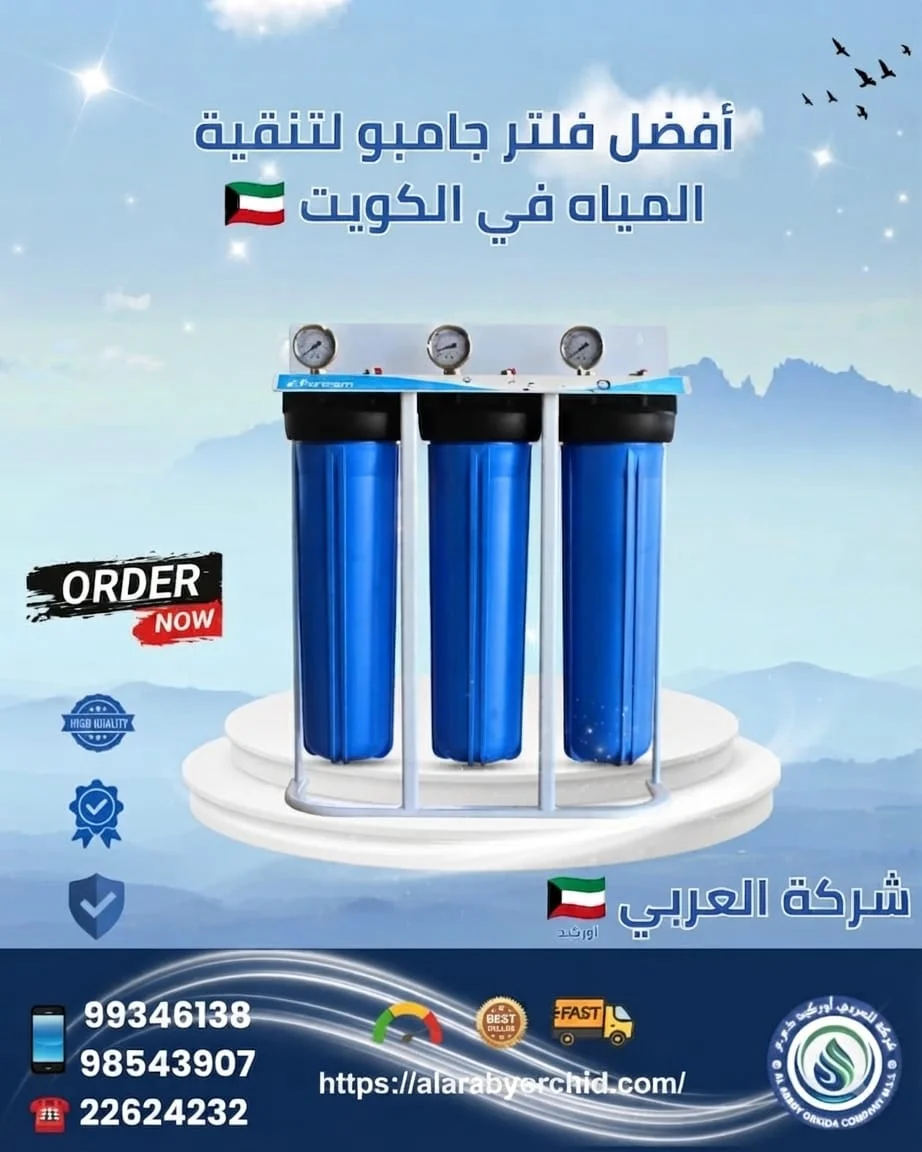
Using a sand filter for the main water inlet is intended to reduce a significant amount of sediment before the plumbing network distributes it to bathrooms, the kitchen, water heater, and other household outlets. This is different from installing a small filter on one faucet because the main inlet handles the entire flow entering the property.
The main inlet is also one of the most sensitive places for incorrect filter sizing. Every liter used inside the house must pass through the filter, which means the system needs to handle peak household demand rather than only average consumption.
If the property has several bathrooms and multiple outlets operate at the same time, the required flow increases considerably. A filter that is too small may create a noticeable pressure drop, particularly after the filtration media has collected sediment over time.
For this reason, selection should not be based only on the number of people living in the property. The expected number of simultaneous water outlets, main-pipe diameter, source pressure, booster-pump performance, and filter capacity all need to be considered.
The filter position in relation to the storage tank is another important factor. If sediment enters the tank with the incoming supply, filtration layout should be determined according to where the sediment originates and how water is distributed through the property. There is no single installation sequence that should be applied to every home without reviewing the plumbing arrangement.
Service pricing also varies according to the size of the filter, filtration media, required fittings, installation location, and whether the property requires pipe modifications or a dedicated backwash-drain arrangement. The cheapest initial option is not necessarily the most economical if the system later needs to be replaced or modified because it was incorrectly sized.
-
A main-inlet filter needs to handle the complete expected household flow because every downstream water outlet depends on its capacity
-
Selecting a filter based only on average water use can create uncomfortable pressure loss during peak periods when several fixtures operate together
-
Pressure difference before and after the filter provides an important indication of media condition and how heavily it has become loaded with sediment
-
Filter position in relation to the storage tank and booster pump should follow the actual plumbing design rather than a fixed rule repeated for every home
-
Installation cost includes more than the filter vessel because fittings valves drainage preparation and system size can all affect the final price
-
The right main-inlet filter is the one that reduces sediment while still maintaining comfortable water flow throughout the property
Sand Filter for the Water Tank
A sand filter for the water tank can be useful when there is a clear recurring problem with sediment entering or collecting with the water and a filtration stage is required before that sediment spreads through the household plumbing. However, it is important to distinguish between filtering water associated with the tank and treating a storage tank that is already dirty internally.
If the tank already contains old sediment at the bottom, installing a new filter will not remove what is already sitting inside it. The source of the sediment should be addressed and the tank should be cleaned if necessary, followed by arranging the filtration system so less debris reaches or leaves the tank depending on the plumbing design.
A layer of sand that repeatedly returns after the tank has been cleaned provides stronger evidence of an ongoing problem than a small amount of dust or debris appearing once. If the tank is cleaned and significant sediment returns again within a relatively short period, the water source and filtration arrangement should be investigated.
A sand filter should also not be presented as a reason to stop maintaining the storage tank completely. The filtration system can reduce a particular sediment load, but the tank still needs appropriate inspection and cleaning based on its actual condition.
Particle size is another important factor. Coarse sand is different from very fine suspended turbidity, which means one filtration arrangement may perform well for one problem and be less effective for another.
-
Installing a sand filter does not replace tank cleaning when old sediment is already present at the bottom
-
Sand that repeatedly returns after tank cleaning is a reason to investigate the sediment source and water-entry path instead of treating only the final symptom
-
Particle type and size help determine whether a sand filter is sufficient on its own or whether another filtration stage may be required
-
Monitoring the tank after installation helps show whether sediment levels have actually decreased or whether the problem is entering the system from another point
-
A filter should not be presented as a solution for every tank problem because leakage contamination or cover-related issues require separate corrective action
-
The real goal is to reduce the sediment load reaching the plumbing network water heater and fixtures rather than simply adding equipment before or after the tank
When Should I Install a Sand Filter?
The question when should I install a sand filter has a direct answer: install one when there is a persistent and noticeable load of sand, sediment, and suspended particles and the household water demand would benefit from a serviceable primary filtration stage instead of forcing fine cartridges to handle the entire sediment load.
The decision should not be based on water color alone. Water can appear visually clear while sediment slowly accumulates at the bottom of a storage tank. The opposite can also happen, where a change in color is caused by a condition that a sand filter does not address.
Signs That May Indicate You Need a Sand Filter
-
Noticeable sand repeatedly collects at the bottom of the water tank shortly after cleaning
-
Sediment cartridges clog significantly faster than expected
-
Small particles repeatedly appear in faucet strainers or showerheads
-
Debris continually reaches valves mixers or other plumbing components
-
The household system needs a primary stage capable of handling a heavy sediment load before finer filtration
Situations Where a Sand Filter Is Not the First Solution
If your main problem is weak water pressure without noticeable sediment, installing a sand filter should not be expected to increase pressure. Any filter creates some resistance and needs to be sized correctly so it does not make the pressure problem worse.
If the main complaint is dissolved salts or salinity, the treatment method should match that specific issue instead of applying a sediment filter to a completely different water-quality problem.
This is why assessment matters. The better approach is not to install the largest number of filters possible but to use each filtration stage for a clearly defined purpose within the water system.
Filter for Sediment Before the Home Plumbing Network
Using a filter for sediment before the home plumbing network is intended to protect the system from a heavy sediment load before particles reach faucets, the water heater, valves, and finer filtration stages. The purpose is mainly preventive rather than treating only one point of use.
If debris continuously enters the plumbing, it may collect in faucet strainers, shorten the service life of finer cartridges, and increase cleaning requirements. A properly selected primary stage can reduce this load and allow the rest of the plumbing components to operate under better conditions.
The word sediment covers several different materials. Sand and larger particles are not the same as fine clay or dissolved substances. For that reason, the nature of what appears in the water should be identified as accurately as possible before choosing the filtration method.
One common mistake is installing an extremely fine filter as the first stage because it seems logical that finer filtration must always be better. When the incoming water carries a large sediment load, a fine stage may clog rapidly and reduce household pressure. A graduated filtration approach can sometimes be more practical, removing the heavier material first and allowing the finer stage to deal with smaller particles.
From an E-E-A-T perspective, it is important not to promise that one filter will solve every water-quality issue. The actual function depends on the filtration media, system design, and the specific problem being treated.
-
A primary filtration stage protects finer cartridges from receiving the entire sand and sediment load at once
-
Identifying the type of debris makes it easier to choose an appropriate filtration level instead of relying on guesswork
-
Moving from coarser to finer filtration can improve service life when the actual water condition justifies a staged system
-
Monitoring pressure before and after the filter can provide early warning when accumulated sediment starts increasing system resistance
-
Protection can extend to the plumbing network water heater and fixtures but the actual benefit depends on the water problem present in the property
-
Every filtration stage should have a clear purpose because adding unnecessary filters means additional resistance and additional maintenance
Filtering Home Water Through Sand

Filtering home water through sand relies on a simple principle, but it needs correct design to deliver practical results. Water passes through filtration media that captures a portion of the suspended material and as the system continues operating, sediment gradually accumulates within the media. For this reason, the filter requires cleaning or backwashing according to its design.
Backwashing is not a cosmetic maintenance step. As the media becomes loaded with debris, resistance to water flow increases and the pressure difference across the filter begins to rise. If maintenance is ignored, household pressure may start to feel weak even though nothing has changed with the booster pump itself.
This also highlights the difference between purchase cost and operating cost. In suitable applications, a sand filter may reduce the need to replace a primary cartridge very frequently, but it also requires backwash water, media maintenance, and periodic inspection of valves and related components.
What Determines Filtration Performance?
Media type, media particle size, filtration-bed depth, water velocity, and vessel design all affect performance. For this reason, the word “sand” alone is not enough to judge the quality or suitability of the filtration system.
If flow is higher than the system is designed to handle or the filter is undersized for the household, performance may decline and the filter may create unnecessary restriction. If the system is much larger than required, the homeowner may pay for capacity that provides little practical benefit.
The better decision balances the amount of sediment, required household flow, available installation space, and future servicing cost.
Sand Filter for a Villa in Kuwait
Choosing a sand filter for a villa in Kuwait requires more careful sizing because villas often have higher water consumption, booster pumps, storage tanks, several bathrooms, and multiple outlets. In this situation, it is not enough to choose a filter that works for a small house and simply increase the pipe diameter while expecting identical performance.
The first criterion is peak flow. The realistic number of bathrooms and outlets that may operate at the same time should be considered so the filter does not become a bottleneck during heavy use.
The second criterion is sediment quantity. A villa with high water demand but relatively clean incoming water does not necessarily need the same filtration system as another villa where large amounts of sand repeatedly enter the tank.
The third criterion is maintenance. The filter should be installed in a location that allows easy backwashing, servicing, and pressure monitoring. Pressure gauges before and after the system can be useful because they provide an objective measurement instead of relying only on the homeowner noticing weak flow.
Why Choose Arabic Orchid?
Arabic Orchid provides water-filter, booster-pump, central-water-heater, and household water-system services in Kuwait, which can be useful when the problem involves more than one component. Sometimes weak flow after filtration is caused by filter sizing, while in other situations a pump or plumbing-network condition needs to be checked before replacing any equipment.
The practical advantage is not installing the largest filter available, but matching filtration to the condition of the tank, pump, household flow, and plumbing system so the components work together properly.
-
A villa requires calculation based on actual peak flow rather than only the number of floors
-
The filtration system should work with the booster pump without creating unnecessary pressure loss
-
Space for servicing and backwashing should be considered when deciding the installation location
-
Monitoring pressure difference makes it easier to identify when servicing is required
-
Filter cost should include maintenance and backwash-water requirements rather than only the original purchase price
-
Arabic Orchid can help determine the actual site requirement before installation instead of selecting a filtration system based only on physical size
Central Sand Water Filter

A central sand water filter places a filtration stage on the main or major part of the household water network instead of treating every faucet individually. This is suitable when the water problem is general and the sediment originates from one common source before the water is distributed throughout the property.
The main advantage of a central system is that it reduces sediment entering the rest of the plumbing from one point. At the same time, any restriction or maintenance issue in that filter affects the whole household network, which is why correct sizing, installation, and servicing matter.
Compared with a single Jumbo filter, a sand filter can be better at handling a heavier sediment load in some situations, while a Jumbo filter can provide greater flexibility when a specific cartridge rating is required. Neither system is automatically better in every application.
Sand Filter Installation Prices
The price is affected by several factors:
-
Filter-vessel size and the required household flow capacity
-
Type and quantity of filtration media
-
Main-pipe diameter and required valves and connections
-
Installation location and how easily the plumbing can be accessed
-
Availability of a suitable drain for backwash water
-
Whether the tank pump or main water line requires modification or rearrangement
Arabic Orchid currently lists sand-filter installation services starting from KWD 165, while the final price depends on the required system and installation conditions at the property.
Before comparing prices, it is better to understand what the filter is expected to do because systems with different sizes, filtration media, and flow capacities should not be treated as if they are identical services.
Using a Sand Filter at Home
Using a sand filter at home works best when the system has a clearly defined purpose and receives regular maintenance. Installing the equipment does not mean that sediment problems disappear permanently because the filtration media itself needs cleaning and its performance changes according to how much debris passes through it.
Monitor household water pressure over time rather than waiting until flow becomes severely restricted. If the pressure difference before and after the filter increases, system resistance has increased and the filter may require inspection or backwashing according to its design.
The condition of the storage tank and any downstream cartridges should also be monitored. If less sand appears after filtration and finer cartridges last longer, that is a useful indication that the filtration stages are distributing the sediment load as intended.
If sediment continues at the same level, the source should be investigated again instead of randomly adding more filtration stages. The debris may be entering the water after the filter or may originate from the tank or internal pipework.
Benefits of Working With Arabic Orchid
-
The service can be based on the actual needs of the household water network rather than selling the same filter type to every customer
-
Filter selection can be considered together with the condition of the booster pump storage tank and household flow
-
Different filtration solutions can be considered instead of assuming that a sand filter is suitable for every water problem
-
Installation cost can be determined according to system size and property requirements before the work is carried out
-
Customers can contact Arabic Orchid through its website or call 99346138
-
Water-filter services are part of Arabic Orchid’s services in Kuwait with system selection based on actual site requirements
The main idea is not to install a sand filter simply because it looks stronger or larger than a Jumbo system. Use it when the sediment load, household flow, and maintenance arrangement show that this filtration stage genuinely suits your plumbing network.
Conclusion
If you are asking when you need a sand filter for your home in Kuwait, the short answer is that it becomes useful when there is a clear and recurring load of sand and sediment and you need a primary filtration stage capable of handling that material without immediately relying on a fine cartridge that would clog rapidly.
A sand filter is not automatically the correct solution for every home. Before installation, the type and source of the sediment, household flow, main-pipe diameter, available pressure, backwash arrangement, and maintenance access should all be considered.
If sand repeatedly returns after the tank has been cleaned, sediment cartridges clog unusually quickly, or debris continues reaching the water heater and plumbing fixtures, contact Arabic Orchid to assess the network and determine an appropriate filter size instead of buying equipment based on guesswork.
Correct selection can reduce repeated modifications and unnecessary maintenance while providing practical sediment filtration without sacrificing comfortable household water pressure.
Frequently Asked Questions
Does every home in Kuwait need a sand filter?
No. A sand filter is more appropriate for homes with a noticeable and persistent load of sand and sediment, while lighter conditions may be better served by a simpler filtration system depending on the water quality and required flow.
Can a sand filter reduce water pressure?
Every filter creates some resistance, but a correctly sized system behaves very differently from an undersized or heavily loaded filter. Increasing pressure difference over time can indicate that the filter requires cleaning or backwashing.
Does a sand filter remove dissolved salts from water?
Do not rely on a sand filter to remove dissolved salts because its primary function is filtering suspended particles and sediment. Dissolved minerals require a different treatment technology.
How much does sand filter installation cost in Kuwait?
Arabic Orchid currently lists sand-filter installation starting from KWD 165. The final price varies according to filter size, filtration media, connections, pipework, and installation requirements at the property.
How do I know whether a sand filter is suitable for my home?
Repeated sand in the storage tank, unusually rapid sediment-cartridge clogging, or debris entering the plumbing network are all signs worth investigating. The final decision should be based on the sediment source, household flow, and plumbing-system size.


