
When tank water becomes so hot during summer that even taking a shower is uncomfortable, the solution is not to buy the first cooling unit you find and simply install it on the roof. A water tank chiller in Kuwait should be part of a properly designed system that begins with the tank size, the actual water temperature, household consumption, and ends with the unit location, water circulation method, and operating controls. Al Arabi Orchid 99346138 provides tank cooling solutions that include compressor-based systems such as Falcon, LG, and Wansa. Falcon systems are available in different cooling capacities with circulation systems and timer control. The objective is not merely to install a machine, but to make the stored water itself reach a comfortable temperature consistently without choosing equipment that is either larger or smaller than the property actually needs.
Water Tank Chiller in Kuwait

Searching for a water tank chiller in Kuwait usually starts after the first period of extreme summer heat, when homeowners notice that stored water becomes especially hot during the afternoon. Before choosing a chiller, however, three different factors should be separated: the amount of water stored in the tank, the amount of heat entering the tank during the day, and the quantity of water the household uses and replaces with fresh incoming water. These three factors together create the real cooling load that the system has to handle.
A medium-sized tank located on an exposed rooftop and receiving direct sunlight for many hours has very different operating conditions from another tank of exactly the same size installed in a shaded area. In the same way, a household of four people using water at different times creates a different cooling load from a villa where several bathrooms are used at the same time in the morning or evening. Tank volume is therefore an important starting point, but it should never be treated as the only factor.
Compressor-based cooling systems work by transferring heat from the tank water into a refrigeration cycle and then releasing that heat outside through the condensing unit. The compressor circulates refrigerant through the system while the condenser rejects the heat that has been removed from the stored water. This explains why the location and ventilation of the outdoor unit are just as important as compressor capacity itself.
Al Arabi Orchid currently provides Falcon water chiller compressor systems in capacities ranging from approximately 1 to 3 tons with circulation and timer control. Certain published applications of the system target water temperatures around 19 to 20°C. However, that temperature should not be understood as a guaranteed result for every installation because final water temperature depends on tank size, cooling load, surrounding heat, household usage, and installation quality.
Anyone looking for a water tank chiller in Kuwait should therefore begin with the desired result rather than only the product name. A homeowner who simply wants to reduce excessively hot water may require a different solution from a villa owner who wants noticeably cooler and more stable water throughout periods of heavy use.
-
Tank capacity is the starting point for sizing but it is not the only factor because direct sunlight and the rate at which water is replaced during the day can significantly change the cooling load
-
The selected unit should be able to lower the temperature of the required water volume within a reasonable operating period instead of running continuously without reaching the desired result
-
Outdoor condenser placement is important because the chiller has to reject the heat removed from the water and restricted airflow can reduce the performance of the complete system
-
Defining the desired comfort temperature before buying helps prevent unnecessary oversizing and ensures that you pay for cooling capacity the property actually needs
-
The best starting point with Al Arabi Orchid 99346138 is to provide the tank volume location and number of users so the correct equipment category can be identified before discussing the exact model
Water Tank Chiller
A water tank chiller is not simply a small air conditioner connected to a tank. A successful system needs a clear path for heat transfer. In some applications, the design includes a compressor, condensing unit, and water circulation system. In others, a different method may be used to transfer cooling into the stored water. The result that matters to the customer is that the entire volume of stored water becomes cooler in a reasonably uniform way instead of only one small area near the heat exchanger becoming cold while the rest of the tank remains warmer.
This is where circulation becomes important. When the cooling system depends on moving water, the circulation pump and the supply and return paths become essential components of performance. If the refrigeration unit is working perfectly but water does not move at the required rate, cooling may be produced inside the unit without being transferred effectively throughout the tank. For this reason, a water tank chiller should not be judged simply by compressor noise or by touching one cold pipe.
The cooling load also changes continuously. The tank may be cool in the morning, but after a period of heavy household use, warmer replacement water enters and raises the stored temperature. The system should therefore be selected according to the real operating pattern of the property and not according to a completely static tank that nobody uses.
Another point homeowners often overlook is what happens after water leaves the tank. The tank itself may be at a comfortable temperature while external pipes running across a hot rooftop raise the temperature of the water sitting inside them. If the first water from the tap is extremely hot but becomes noticeably cooler after a short period, the problem may be partly related to exposed piping rather than weak tank cooling. Installing a larger chiller does not always solve heated distribution pipes.
Al Arabi Orchid provides Falcon, LG, and Wansa solutions within its water tank cooling services in Kuwait, with compressor-based systems available in different capacities. This allows the system to be selected according to actual load rather than using one standard size for every property.
-
Circulation is critical in systems that depend on moving water because the cooling effect has to travel with the water to reach the larger stored volume
-
The unit should not be judged only by the temperature of one refrigeration line because the final measure of success is the actual change in tank water temperature after normal operation
-
Fresh water entering the tank during household use increases the cooling load which means performance during heavy demand can differ from performance when the tank is left untouched
-
Water that is very hot only when the tap first opens and then cools quickly should lead to inspection of exposed piping before assuming the tank chiller itself is undersized
-
Correct system selection combines refrigeration capacity water movement and operating controls rather than focusing on compressor size alone
Buying a Water Tank Chiller
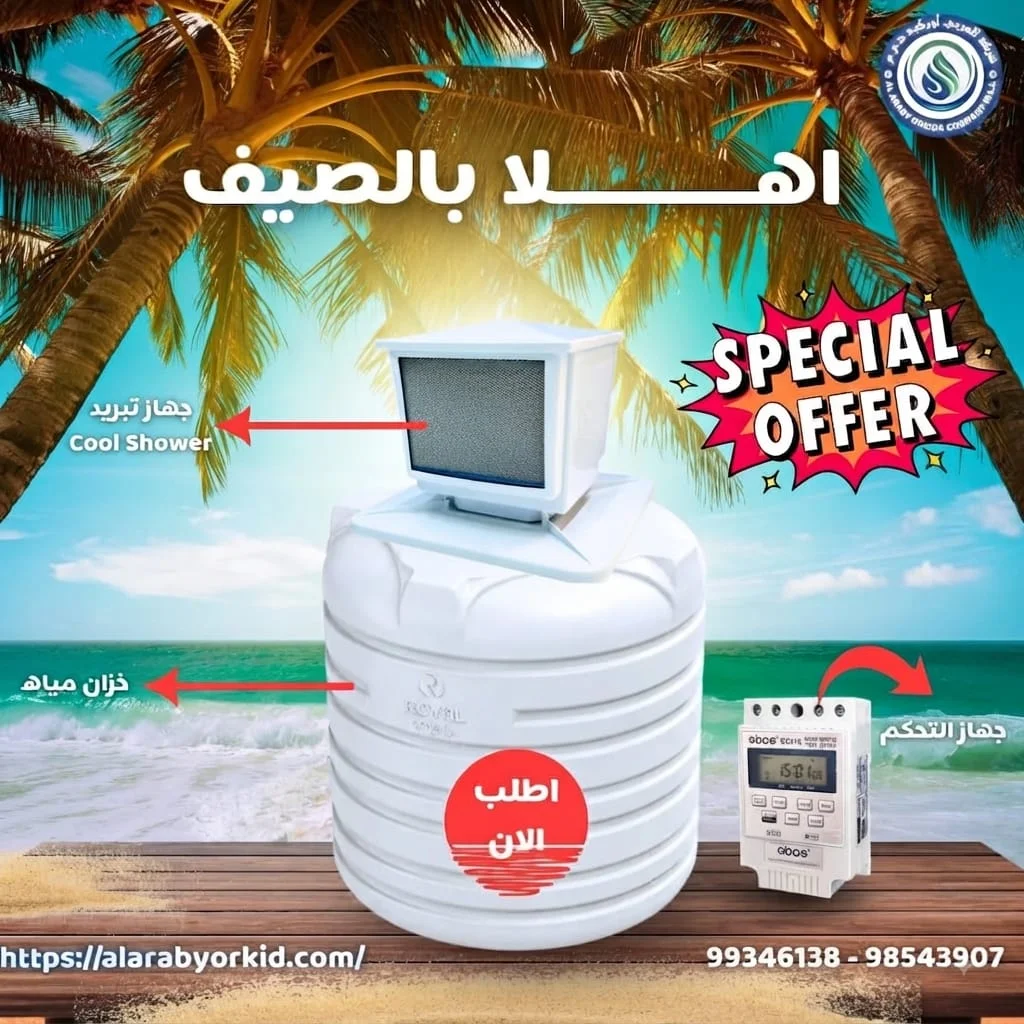
The decision to buy a water tank chiller should begin by gathering information about the property before browsing equipment prices. The first detail is the tank capacity. The second is whether the tank is fully exposed on the roof or protected from direct sunlight. The third is the number of people using water and their typical usage pattern. The fourth is the level of cooling required. The fifth is the available electrical supply and the space where the outdoor unit can be installed. Once these details are clear, buying becomes a technical decision rather than a choice based on product photographs.
After that, compare models intended for similar applications. Do not compare a unit designed for a small cooling load with a much larger system and conclude that the cheaper one is automatically better. At the same time, do not automatically buy the highest capacity available simply because it seems like extra protection for the future. Excess capacity can increase equipment price and installation complexity without delivering a proportional benefit.
Control method is another important point. Some systems include timers while others may use thermostatic control depending on the design. Falcon circulation systems supplied by Al Arabi Orchid include timer control. This provides useful flexibility in organizing operation, but it does not replace correct capacity selection.
Maintenance should also be considered before purchase. Where is the fan located? Can the condenser be cleaned easily? Can a technician reach the compressor and control components without dismantling half the installation? Equipment installed in an inaccessible location can turn routine maintenance into an expensive and frustrating job later.
Finally, do not confuse the equipment price with the complete project cost. Smart purchasing means first determining which unit is suitable and then asking separately and clearly about piping, electrical work, circulation components, and installation.
-
Before buying a water tank chiller write down the tank capacity location and desired cooling level so the comparison remains between equipment that is actually suitable for the application
-
Higher capacity is not automatically better because the unit should match the load and remain balanced with the household’s actual operating and installation requirements
-
Timers and control features add flexibility but they cannot compensate for a unit that is undersized or installed in a poorly ventilated location
-
Easy access for cleaning and service should influence the purchase decision because rooftop tank chillers operate in heat and dust and require future maintenance
-
Ask for equipment price and installation cost separately so you understand exactly what you are paying for and avoid unexpected additional work after purchase
Water Tank Chiller Installation
Water tank chiller installation determines a large part of system performance even when the selected equipment is excellent. The first step is choosing the correct outdoor-unit location. The condenser needs enough airflow around it to reject heat properly. Placing the unit in a tight corner or behind barriers that restrict air movement can cause hot discharge air to return toward the unit and reduce cooling performance.
Restricted airflow, dirty condenser surfaces, failed fans, and high surrounding temperatures can all raise condensing conditions and reduce refrigeration-system performance. This is why outdoor-unit placement should never be treated as an appearance-only decision.
The water circuit is planned next according to the cooling-system design. If the system uses circulation, the water path should allow effective movement throughout the tank. A poorly designed short loop can cause cooled water to return to the same small area without helping mix and cool the full stored volume.
The electrical supply should also match the requirements of the selected model. The unit should not simply be connected to whichever electrical point happens to be closest. Each chiller has its own electrical load and protection requirements depending on capacity and design.
After installation, the real test begins. Water temperature should be recorded before startup and measured again after a suitable operating period. The technician should also confirm that the system starts and stops according to the control settings and that the fan and circulation components operate normally. A running compressor alone does not represent a complete handover.
-
The outdoor unit should be installed where airflow is unrestricted and service panels can be opened easily because ventilation and maintenance access are basic requirements from the first day
-
The circulation route should be designed so cooling reaches as much of the stored water volume as possible rather than returning cold water repeatedly to one limited area
-
Electrical supply should match the actual equipment specifications and breaker or cable sizing should never be guessed based on a different unit
-
Post-installation testing should include the actual tank water temperature so the installer can prove that the system is delivering cooling rather than simply receiving electricity
-
A well-organized installation makes future maintenance faster because technicians can reach the fan condenser controls and connections without unnecessary dismantling
Home Water Tank Chiller

Choosing a home water tank chiller usually requires more balance than maximum cooling power. A medium-sized home may use one tank, have fewer users, and follow a predictable water-use pattern. There is therefore no reason to copy the cooling system of a large villa and install it on a smaller household.
The objective should be to identify the lowest capacity that can comfortably handle the required load while keeping a sensible margin. If most household water use happens after the afternoon, for example, programmed operating times can be useful in preparing the tank before the main demand period. If the tank is shaded and the pipes are protected, the cooling load may also be lower than the load on an identical tank exposed to direct summer heat.
Noise should be considered as well. The outdoor unit contains a compressor and fan, so its position should balance airflow requirements with distance from bedrooms and living spaces. The goal is not to solve hot water and create a new noise problem every time the chiller starts.
In a home installation, the user should also understand basic operation. After installation, the household should know how to use the timer or simple controls, what normal system behavior looks like, and when a technician should be contacted.
-
The best residential unit is the one that covers the tank size and family demand without unnecessary extra capacity that increases cost without improving useful comfort
-
Household usage timing helps determine the most practical control method because a home with one main demand period operates differently from a property using water heavily throughout the entire day
-
Positioning the unit away from sleeping areas while preserving adequate ventilation helps achieve both water comfort and lower noise disturbance
-
Simple controls are important because a residential cooling system should remain understandable and should not require a technician for every minor adjustment
-
Proper tank shading and pipe insulation help the chiller maintain comfortable water temperature for longer instead of allowing the stored water to regain heat quickly
Villa Water Tank Chiller
A villa water tank chiller usually handles a larger cooling load, but that does not automatically mean the correct solution is the biggest unit in the market. A villa may have several bathrooms but spread water use throughout the day, while a smaller property may have an exposed rooftop tank and very heavy simultaneous usage. For this reason, sizing should be based on the water system rather than building floor area.
If the property has several tanks, the way they are connected needs to be understood. A ground tank feeding an upper tank is different from two separate rooftop tanks serving different sections of the property. Cooling-system design changes according to this arrangement.
Peak demand should also be calculated. If several people shower within a short period, a significant amount of fresh replacement water enters the tank and increases the cooling load. The system therefore needs to recover after heavy use, not merely cool a tank that remains untouched.
Tank and pipe locations are also important. Larger villas often have long distribution runs, so insulating external water lines can help preserve the cooled temperature after water leaves the tank.
-
Villa chiller selection begins with tank capacity and water-use patterns rather than the number of building floors because the water load determines much of the required cooling capacity
-
Multiple tanks require inspection of the water-supply arrangement before deciding how many cooling units are necessary so equipment is not duplicated without a technical reason
-
Simultaneous bathroom use increases the rate at which fresh water enters the tank and the system should be able to recover after peak-demand periods
-
Insulating long distribution lines helps preserve more of the cooling benefit as water travels toward bathrooms located farther from the tank
-
A villa system should provide a sensible performance margin during extreme heat without unnecessary oversizing simply because the property itself is large
Water Tank Cooling Machine

The phrase water tank cooling machine usually refers to the main rooftop refrigeration unit, but technically that machine is only one part of a complete cooling system. Inside the refrigeration cycle there is a compressor that moves and compresses refrigerant, a condenser that rejects heat, a fan, control components, and additional parts depending on the design.
This explains why compressor power alone is not enough. If the condenser is dirty, the fan is weak, or the outdoor unit is surrounded by trapped hot air, the cooling machine cannot deliver its full capacity.
In systems that use circulation, the water side also becomes part of the functional cooling machine. If the circulation pump does not move water at the required rate, the refrigeration unit may create cooling successfully while failing to transfer that cooling effectively into the tank.
-
The cooling machine is the heart of the system but it depends on the condenser airflow and controls to convert its rated capacity into real water cooling
-
Compressor noise alone is not enough to prove successful operation because the complete heat-transfer process depends on several other components functioning correctly
-
Outdoor-unit cleanliness and fan performance are important because rejecting heat is an essential part of the refrigeration cycle
-
In circulation systems the water pump becomes functionally part of the cooling machine because it transfers the cooling result into the tank
-
Cooling-unit selection should be based on actual load rather than simply choosing the highest tonnage listed in the available equipment range
Al Arabi Orchid Water Tank Chiller
The Al Arabi Orchid water tank chiller offering is not limited to one model according to the company’s current service range. Al Arabi Orchid provides Falcon water chiller compressor systems as well as LG and Wansa solutions for water tank cooling in Kuwait. Falcon systems are available in capacities ranging from approximately 1 to 3 tons with a circulation system and timer control, with certain published applications targeting water temperatures around 19 to 20°C.
Having more than one equipment category allows the selection process to begin with the property requirements instead of forcing every customer into one standard unit. A smaller tank does not need the same solution as a much larger cooling load, and the opposite is equally true.
Al Arabi Orchid 99346138 also provides installation and maintenance services as part of its water tank cooling offering. This matters because cooling performance does not end at the point of sale. Installation quality and future maintenance access remain important after one or two summer seasons.
-
Offering several cooling-system categories makes it possible to compare solutions according to the tank instead of using one product regardless of site size
-
The Falcon system combines compressor cooling circulation and timer control which supports the idea of tank cooling as a complete system rather than an isolated machine
-
Published performance figures should always be understood within the conditions of the specific application because final water temperature is affected by load tank location and usage
-
Having installation and maintenance available with the equipment reduces the problem of buying a unit and later searching for a technician unfamiliar with the system design
-
Contacting 99346138 allows the customer to explain tank capacity and site conditions before selecting the equipment category instead of relying only on a product name
Water Tank Cooling Device

A water tank cooling device should be evaluated in three stages: before operation, during operation, and after the water reaches the target temperature. Before operation, confirm that the capacity is suitable and that the electrical supply and installation location are ready. During operation, observe the fan, compressor, circulation, and controls. After sufficient operating time, measure water temperature and determine whether the result remains stable.
Do not assume the system is performing well simply because one pipe feels cold. Heat exchange may be occurring while water circulation is too weak. The opposite can also happen where the circulation pump is working properly but refrigeration performance is poor.
Serviceability is also important. A cooling unit that allows good access to the condenser, fan, compressor, and controls makes future maintenance more practical. Good installation design should always leave enough space for cleaning and inspection.
-
Device evaluation begins by confirming that it is appropriate for the tank before judging the brand because even an excellent product in the wrong capacity category will not provide the best result
-
During operation both cooling production and water movement should be monitored so the technician can confirm that cooling is created and actually transferred into the tank
-
Measuring tank water temperature after a known operating period provides a numerical evaluation instead of vague descriptions such as slightly cooler or still warm
-
The unit location should leave enough service clearance because future maintenance quality begins with good installation design
-
Proper operating controls help run the chiller according to actual demand instead of depending on random manual starting and stopping every day
Water Tank Chiller Installation Company
Choosing a water tank chiller installation company matters because you are not purchasing a completely standalone appliance that only needs to be plugged in. The project combines water, electricity, refrigeration, ventilation, and controls, and all of them need to work together correctly.
A professional company should ask about the tank capacity, installation location, and ideally request site photos before making a final recommendation. It should also explain clearly what is included in the quotation, including the equipment, circulation components, electrical work, and installation.
During installation, the outdoor unit should be positioned with suitable airflow and maintenance access. The water circuit and electrical supply should then be prepared correctly. After that comes commissioning, which should include actual water-temperature measurement rather than handing the system over as soon as the compressor can be heard running.
Al Arabi Orchid provides installation and maintenance services for Falcon, LG, and Wansa water tank cooling systems in Kuwait. This gives the customer one point of responsibility for system selection, installation, and future service instead of dividing the project between an equipment seller and unrelated technicians.
-
A specialized company begins with a needs assessment because it understands that equipment capacity must match the tank and cooling load rather than simply the customer’s maximum budget
-
The quotation should be clear about whether installation circulation components and electrical work are included or whether some items are priced separately
-
The outdoor-unit location should be selected technically according to airflow and service access rather than simply choosing the nearest empty corner on the rooftop
-
Professional handover includes checking water temperature controls and circulation because compressor operation alone does not prove that the project has achieved its goal
-
Al Arabi Orchid 99346138 currently combines supply installation and maintenance for water tank cooling solutions which makes follow-up easier after the system has been installed
Conclusion
Choosing a water tank chiller in Kuwait does not mean buying the biggest machine or the cheapest unit. It means selecting a cooling system that matches the tank itself. The process begins with tank capacity, location, water temperature, and number of users. Then the required cooling level is defined before selecting equipment capacity, circulation method, outdoor-unit location, and appropriate electrical supply.
For a home, the priorities are usually simplicity, low disturbance, and easy controls. For a villa, more attention is given to peak demand, multiple tanks, and long water-distribution lines. In both situations, installation remains part of chiller performance because an excellent unit with restricted ventilation or poor circulation will never deliver its full benefit.
Al Arabi Orchid currently provides Falcon, LG, and Wansa solutions for water tank cooling with installation and maintenance services in Kuwait. You can contact 99346138 and provide the tank size, location, and usage pattern so the correct equipment category can be selected instead of buying by guesswork.
Frequently Asked Questions
What is a water tank chiller?
It is a system used to reduce the temperature of water stored inside a tank. Depending on the design, it may use a compressor and refrigeration circuit together with water circulation.
Is a tank chiller suitable for Kuwait summer?
Yes, provided the selected system is suitable for the cooling load and the outdoor unit is installed in a properly ventilated location because high ambient temperature and condenser conditions directly affect refrigeration performance.
Do I need to know my tank size before buying a chiller?
Yes. Tank capacity is one of the most important pieces of information used to determine the required cooling category and the unit should not be selected before the stored water volume is known.
Do all water tank chillers require circulation?
No, not every design is the same. However, systems that depend on circulation require proper water movement so the cooling can be transferred through the stored tank volume. Falcon systems supplied by Al Arabi Orchid use a circulation system with timer control.
Is a home tank chiller different from a villa chiller?
The difference is not simply the name. Villas often have larger tanks, heavier water consumption, or several tanks, but capacity should always be selected according to actual site conditions.
Can I install a chiller that is larger than I need?
It may be technically possible in some cases, but larger does not automatically mean better. Excess cooling capacity can increase purchase and installation costs without producing benefits that match the additional expense.
Where should the water tank chiller be installed?
The outdoor unit should be installed where it receives good airflow, hot discharge air can escape freely, maintenance access is available, and the connection route to the tank is practical.
How do I know whether the tank chiller is performing well?
Compare the tank water temperature before operation and after a suitable running period under similar usage conditions instead of judging performance only by equipment sound or the temperature of refrigeration pipes.
Which tank chiller brands does Al Arabi Orchid provide?
According to the current service range, Al Arabi Orchid provides water tank cooling solutions including Falcon, LG, and Wansa, with Falcon systems available in different capacities with circulation and timer control.
Who installs water tank chillers in Kuwait?
Al Arabi Orchid provides installation and maintenance services for water tank cooling systems in Kuwait. You can contact 99346138 to provide the tank capacity, location, and site requirements so the appropriate cooling system can be selected before installation.

