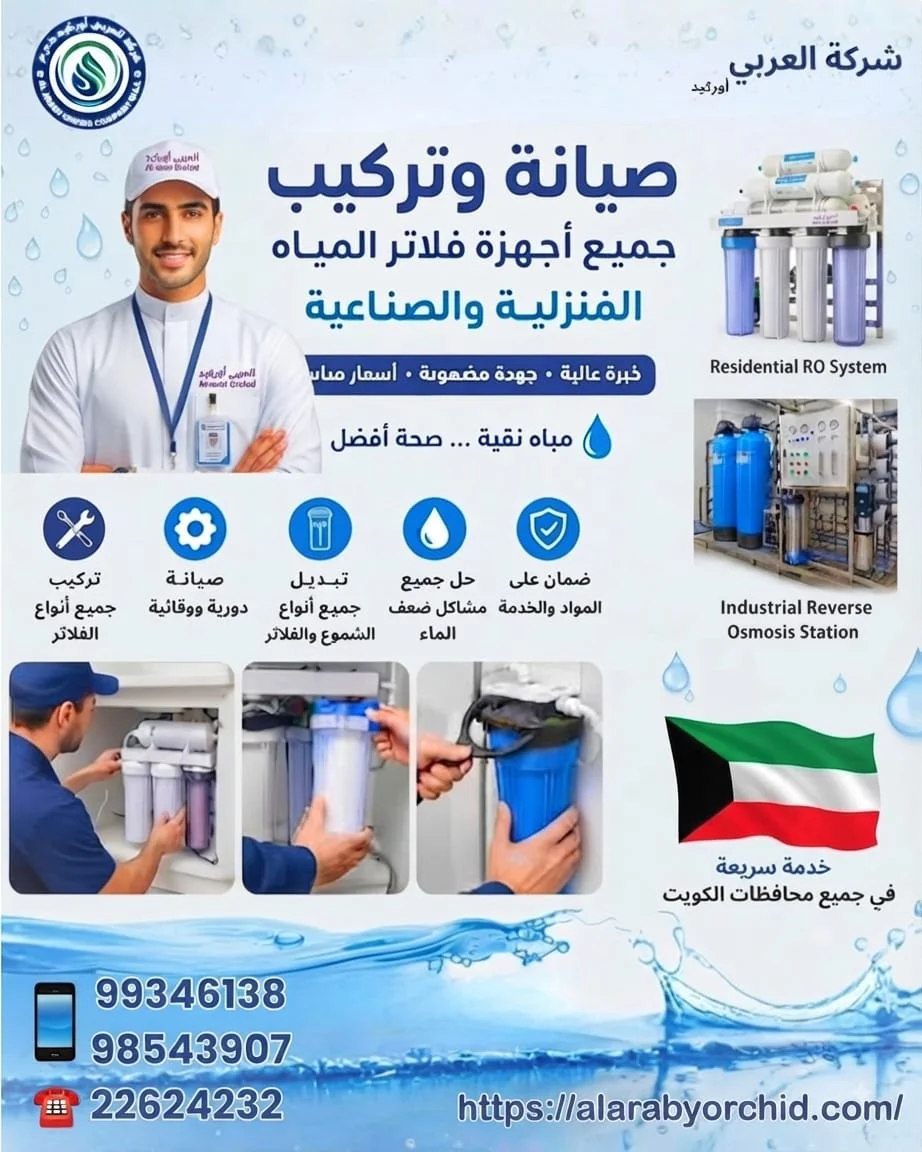
Installing a new water filter should not begin with the question, “Should I buy a three-stage or seven-stage system?” and it should not begin by choosing the most expensive unit in the store. The correct starting point is understanding what you actually want to treat in the water, how much water the household uses, what pressure is available in the network, where the filter will be installed, and whether the location allows easy cartridge replacement and maintenance. An excellent filter selected incorrectly can reduce water flow, make you pay for cartridges you do not need, or become difficult to maintain later. That is why inspecting the installation conditions before purchase can save you from replacing the system later and ensures that every treatment stage has a clear purpose rather than simply increasing the number printed on the box.
Installing a new water filter in Kuwait

Installing a new water filter in Kuwait should begin by defining the filter’s purpose before selecting a specific model because a kitchen drinking-water filter is fundamentally different from a whole-house inlet filter intended to reduce sediment and help protect plumbing, water heaters, and pumps. Customers often say, “I want a filter for the house,” but that phrase can describe several completely different systems, each with its own installation location, flow requirement, and treatment stages.
The first step is to ask what the customer has actually noticed in the water. Is there visible sediment? Is there an unpleasant taste or odor? Is the filtered water required only for drinking? Is the objective to help protect plumbing fixtures from suspended particles? These answers guide the selection instead of adding many stages without a clear reason.
The installation location should then be inspected. If the filter is installed beneath the kitchen sink, the available space, existing connections, faucet location, and clearance required to remove the housing during cartridge replacement all need to be considered. If it is a main inlet filter, there needs to be convenient access, suitable isolation valves, and enough flow capacity for the entire household.
Household water use should also be understood. A drinking-water filter used by two people is different from a system serving a large family that relies on filtered water every day for both cooking and drinking. Higher consumption affects flow demand and can also increase the rate at which some cartridges are used.
Water pressure should be considered from the beginning as well. Every housing, cartridge, fitting, and complete filtration system has operating limits and a designed flow range. Installing an undersized filter on a high-flow main line may cause the homeowner to notice a pressure drop immediately after installation.
Cartridge type and local availability should also be checked before the system is purchased. It makes little sense to install an excellent filter and then discover during the first service that its replacement cartridge is difficult to obtain or costs far more than the household maintenance budget allows.
Finally, the filter should be tested after installation by checking for leaks, verifying the correct direction of water flow, and confirming that the system has not created an abnormal reduction in pressure.
-
Filter installation begins by deciding whether the system is for drinking water or whole-house inlet filtration because each application requires a different design
-
Identifying the actual water problem prevents the installation of treatment stages that do not serve a relevant purpose
-
Service clearance around the filter is just as important as the physical size of the unit because the housing needs room to be removed during cartridge replacement
-
Household consumption affects required flow and maintenance intervals so the system should not be selected according to stage count alone
-
Testing pressure and flow after installation confirms that the filter performs its intended function without creating a new weakness in the water network
Inspecting water before installing the filter
Inspecting water before installing the filter is the step that prevents you from buying a treatment solution before you understand the problem. It is not sensible to choose the same filter stages for every household because water conditions, visible issues, and intended use can differ significantly.
Inspection starts with the water source. Does the property receive water directly from the network before it enters a storage tank? Is the tank old? Do sediment problems become more noticeable after the water has passed through the tank? Understanding the water path can help determine whether the issue comes from the incoming supply, storage, or internal plumbing.
Visual inspection is useful, but it is not a complete water analysis. Cloudiness, sand, or rust-colored particles can indicate suspended material and suggest the need for appropriate sediment filtration. Taste and odor complaints may point toward a different type of treatment and can involve carbon-based stages depending on the situation.
If the customer is concerned about a specific substance or a health-related water-quality issue, water color and taste alone should not be used as evidence. In that situation, appropriate testing from a qualified source is more useful because some substances cannot be seen, smelled, or tasted. A filter selected to reduce a particular contaminant should have documented performance that matches that specific purpose.
If the property previously had a filtration system, the condition of the old cartridges can also provide useful clues. A sediment cartridge that becomes heavily loaded in a very short period may indicate a higher level of suspended material, which can influence the size of the first filtration stage and the expected maintenance interval.
One common mistake is choosing an overly complicated system simply because the customer believes that more stages automatically mean better water. If the main problem is sediment, for example, a properly sized and well-selected first-stage filter may be more important than adding several unrelated treatment stages.
The opposite mistake is also possible. If the system is intended for drinking water and the objective includes improving taste or odor, installing only a basic sediment cartridge does not suddenly turn the system into a complete drinking-water treatment solution.
Water inspection therefore converts the selection process from guesswork into a plan. First, determine what is present in the water or what the customer specifically wants to reduce, and then select the appropriate technology.
-
Water color and visible sediment provide useful initial information but they do not reveal every substance that may be present
-
Identifying whether the problem originates from the supply tank or internal plumbing helps place the filter where it can address the issue more effectively
-
Concern about a specific contaminant should be supported by appropriate data or testing rather than relying only on taste and odor
-
The condition of previous cartridges can provide practical information about sediment load and how quickly the first filtration stage becomes loaded
-
Fewer stages that directly match the actual problem can be more useful than a large number of stages with no clear treatment purpose
Choosing the filter type before installation

Choosing the filter type before installation should happen only after the purpose of the system is understood. A media filter serves a different purpose from a jumbo cartridge filter, a multi-stage kitchen filter, or a system that relies on a fine membrane. Each system treats different aspects of water quality and has different flow, maintenance, and cost requirements.
If the objective is to filter sediment from the main household water supply and help protect the plumbing network, the system usually needs to handle the full household flow without excessively restricting water. In this case, filter size, cartridge capacity, and flow capability can be much more important than having many small treatment stages.
If the objective is drinking water at the kitchen sink, attention shifts toward the required treatment technology, cartridge quality, available installation space, maintenance convenience, and household consumption. A multi-stage filter may be appropriate, but the role of each stage should be understood.
Some customers see a seven-stage filter and automatically assume that it must be better than a three-stage system. That is not a reliable rule. Three stages may be completely appropriate for one water condition, while a seven-stage system may include additional stages that the household does not need. In another situation, a more advanced system may genuinely be the correct choice because the treatment objective is different.
Cartridge type also matters. A sediment cartridge is designed to capture suspended particles within its intended range and does not perform the same function as carbon. Carbon stages can be used for different purposes such as improving certain aspects of taste and odor according to their design. Fine membranes and reverse-osmosis systems serve another purpose entirely.
Maintenance requirements should be part of filter selection as well. If the household wants a straightforward system with easily available cartridges, a standard design may be more practical than a filter that depends on specialized proprietary components.
Flow rate is another important consideration. A compact filter that works very well for drinking water at one faucet should not automatically be installed on the main household inlet because the volume of water required is completely different.
Professional selection therefore does not ask, “Which filter is the strongest?” It asks, “Which filter best fits this water quality, this usage pattern, and this installation location?”
-
Filter type should be selected according to the purpose of the system because a whole-house inlet filter and a drinking-water filter are not simply different sizes of the same product
-
Stage count should never be used as the only quality criterion because the function of each stage matters more than the number printed on the unit
-
Required flow determines filter size especially when the system is expected to serve the entire property
-
Maintenance convenience and cartridge availability should be considered before purchase rather than after the first service appointment
-
The best system is the one that addresses the identified problem without unnecessary complexity or missing an essential treatment stage
Water filter installation location
Water filter installation location affects everyday use and future maintenance more than many people expect. Not every location with a water pipe is automatically suitable. The system needs an area where inlet and outlet piping can be arranged properly, maintenance access is available, and the equipment is protected from conditions that may damage its components.
For an under-sink filter, the height, width, and depth should all be measured rather than simply checking whether the unit physically fits inside the cabinet. Filter housings need clearance below them so they can be unscrewed, and cartridges need enough space for removal and installation. A system installed directly against the bottom of the cabinet may require complete dismantling during the first service visit.
For a main inlet filtration system, the filter should be accessible rather than hidden behind a tank or other equipment. Isolation valves before and after the filter can make servicing easier by allowing the filtration system to be isolated without unnecessarily shutting down larger sections of the plumbing.
The installation location should also suit the product’s environmental requirements. Some components are not intended for continuous exposure to strong sunlight or excessive heat. Outdoor installations should therefore provide appropriate protection while keeping the filter accessible for inspection and maintenance.
Potential leakage should also be considered. Any water system may eventually need maintenance, so placing the filter directly above a highly sensitive area without a practical way to detect or manage leakage is not ideal. A well-planned installation makes even a small leak visible quickly.
For a drinking-water filter with a dedicated faucet, the tubing route and faucet location should be decided before fixing the filter in place. Drilling or modification should be planned instead of installing the equipment first and then discovering that the chosen position is impractical.
If the system includes a storage tank, the tank also needs to be included in the space calculation. Not every under-sink filtration system consists only of a few small filter housings.
A good installation location does more than make the system look organized. It reduces service time, prevents unnecessary stress on tubing and connections, and keeps important components easy to reach.
-
Installation space should include maintenance clearance rather than only the dimensions of the filter while it is fully assembled
-
Isolation valves around appropriate filtration systems can make maintenance easier and reduce unnecessary disruption during cartridge replacement
-
Protection from sunlight and heat should match the product requirements rather than leaving the system exposed to conditions it was not designed to tolerate
-
Tubing and fittings should be arranged without excessive tension or sharp bending to reduce leakage risk and simplify troubleshooting
-
A good filter location allows cartridges and housings to be serviced without removing cabinets tanks or unrelated equipment
Measuring water pressure before the filter
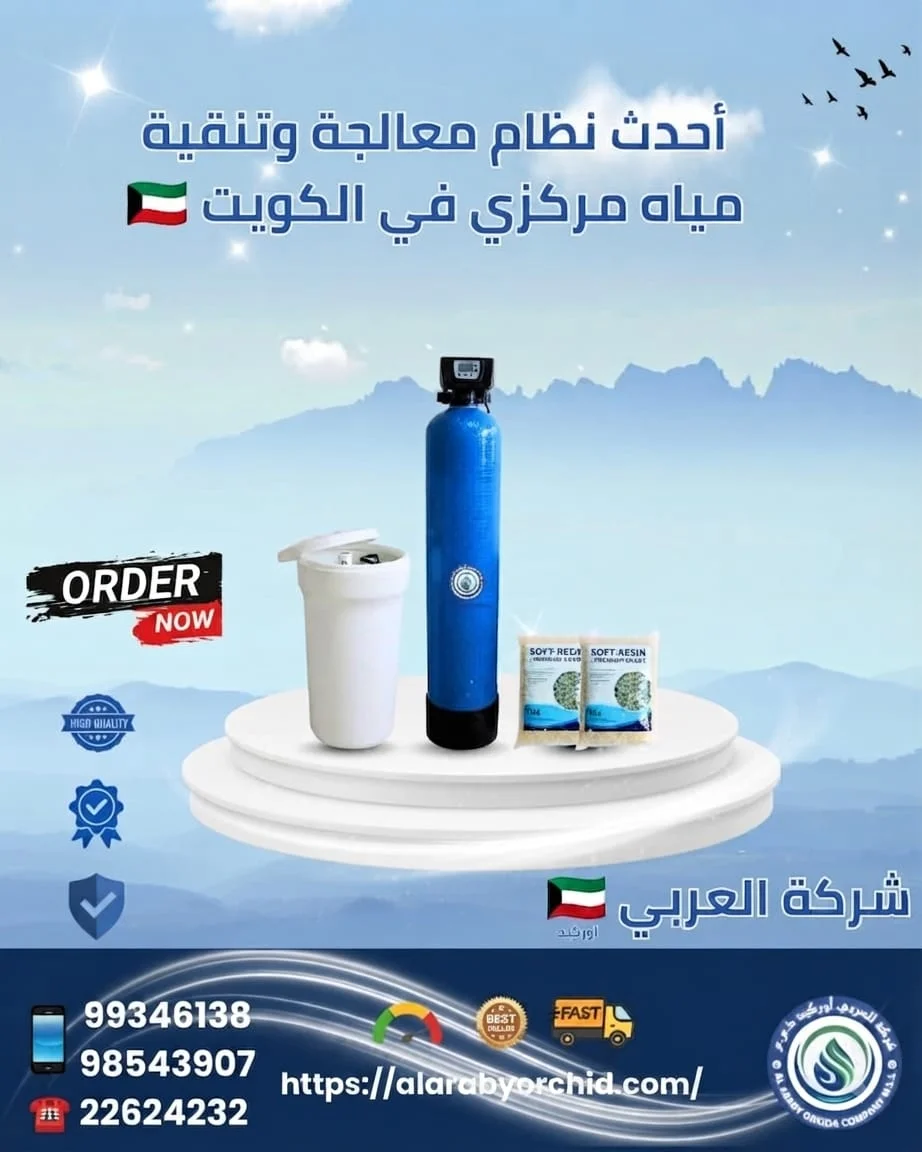
Measuring water pressure before the filter is important because the filtration system becomes part of a pressurized plumbing network and every housing, cartridge, and fitting has operating limits. The filter itself also adds resistance to water flow, so it is useful to understand the incoming conditions and what should reasonably be expected after installation.
If water pressure is higher than the limits of the filtration components, the correct response is not to install the system and simply “see what happens.” Suitable components should be selected or the network conditions should be addressed according to the overall plumbing design. Filter housings and fittings need to operate within the manufacturer’s specified limits.
If pressure is already low, adding an undersized filter or a high-resistance cartridge may make the user notice even weaker water at the faucet. In that situation, the filtration system should be selected to suit the available pressure and flow rather than allowing the customer to discover the problem only after installation.
Pressure and flow are not the same thing. A system can have acceptable static pressure while performance drops considerably when several outlets are opened because the available flow is limited. Useful inspection therefore does not rely only on one pressure reading while the water is not moving. It also considers network performance during use where appropriate.
As sediment accumulates on a filter cartridge, resistance usually increases and flow can decline. Knowing how the system performs when the cartridge is new provides a useful reference for future maintenance.
With whole-house filters in particular, the system needs enough capacity to avoid excessive pressure loss during periods of peak household consumption. A family using several bathrooms and the kitchen at the same time requires a different flow capability from a small apartment.
Certain filtration systems use pressure gauges before and after a stage to monitor pressure difference according to their design. This can help indicate when the filtration stage is becoming loaded, although not every residential filter requires the same arrangement.
Most importantly, household water pressure should never be adjusted randomly or safety measures bypassed simply to force more water through the filter. The filtration system should be integrated safely into the plumbing network.
-
Incoming pressure should be compared with the operating limits of the housing fittings and complete system before the model is approved
-
Good static pressure alone does not prove that flow will remain satisfactory when several outlets are used simultaneously
-
Small or sediment-loaded cartridges can increase pressure loss so cartridge size and maintenance frequency directly affect user comfort
-
A whole-house filter needs enough flow capacity to handle realistic peak demand without becoming a major restriction in the network
-
Recording performance before and after installation provides a useful reference for confirming that the system has been selected and installed correctly
Determining the suitable filter stages
Determining the suitable filter stages does not mean collecting the largest possible number of cartridges. Every stage should have a specific function related either to the water condition or to protecting the next treatment stage. If you cannot explain what a stage is doing, there is little technical reason to include it simply so the system can be advertised as having seven stages.
Many systems begin with a sediment stage because it captures suspended material and helps protect certain later components from becoming blocked too quickly. Carbon stages may then be used depending on the treatment objective for aspects such as taste and odor and the particular substances the carbon media is designed to address.
Some systems include a reverse-osmosis membrane when deeper treatment is appropriate for the application. Adding a reverse-osmosis membrane changes the design of the system in terms of production rate, reject water, maintenance requirements, and supporting components, so it should not be treated as simply “one more stage.”
Post-treatment stages also vary between systems. Some are intended to improve taste after storage, while others may be promoted for additional functions that should be evaluated according to whether they provide real value for the user.
If the incoming water contains a heavy sediment load, better prefiltration may be required instead of relying on a small kitchen cartridge that becomes blocked very quickly. Protecting a more advanced system from excessive sediment can extend service intervals and help performance remain more stable.
Every additional stage also adds cost, maintenance, and some resistance to flow. If three unnecessary stages are added, the customer does not pay for them only on the first day; their cartridges will also need future replacement.
Treatment stages should therefore be designed as a chain where earlier stages support the stages that follow. That is the real purpose of a multi-stage system rather than simply increasing the stage count.
When comparing two filters, ask what each cartridge does instead of asking only which system has more stages.
-
The first stage is often designed to manage sediment and protect the rest of the system according to the product design rather than simply increase the number of stages
-
Carbon stages serve a different purpose from sediment filtration so the cartridges should not be treated as interchangeable
-
Reverse osmosis changes system design operation and maintenance and should therefore be selected when there is a clear reason for using it
-
Every unnecessary stage increases purchase cost maintenance cost and potentially flow resistance without necessarily providing useful treatment
-
A proper comparison focuses on the function and documented performance of each stage instead of the total stage count used in advertising
Choosing a filter according to water quality
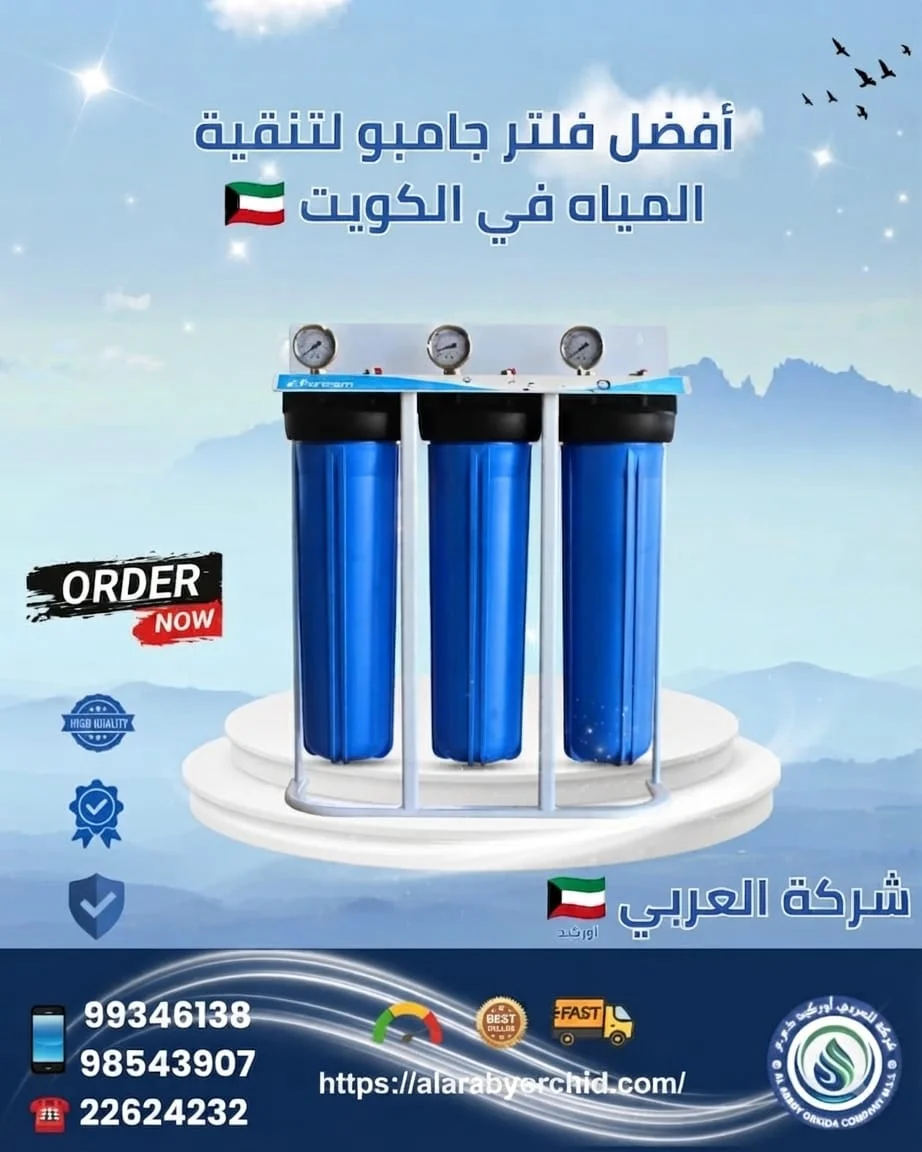
Choosing a filter according to water quality means allowing the actual water condition to guide the purchase rather than trying to fit every household into the same filtration system. Water with visible sediment requires a different approach from water that appears clear but has an unwanted taste or odor or requires treatment for a specific purpose.
If sediment is the main issue, its amount, appearance, and likely source should be considered. In some properties, the better solution may be at the main water inlet because sediment affects the entire plumbing system. In other situations, the only requirement may be improving drinking water at one specific point of use.
If taste or odor is the concern, a treatment stage designed for that purpose should be selected. Not every carbon cartridge has the same construction, capacity, or expected service life, so product data still matters.
If laboratory or other suitable testing identifies a particular substance that the customer wants to reduce, the selected filter should have documented performance for that claim. Certification or testing should be interpreted correctly because a filter being certified does not automatically mean that it reduces every possible contaminant.
Water quality also affects actual cartridge lifespan. A home with a high sediment load may need the first-stage cartridge replaced more frequently than another home using exactly the same filter model.
The water storage tank should also be considered. If the problem becomes more noticeable after storage, the tank condition and cleaning schedule should be inspected rather than expecting the filter alone to compensate for neglected tank maintenance.
Another mistake is using a small point-of-use drinking-water filter as the solution to a water-quality issue affecting the entire property. The drinking faucet may improve while water heaters, valves, and the rest of the plumbing continue receiving the same sediment.
Selecting filtration according to actual water quality saves money because treatment technology is placed exactly where it is needed.
-
Sediment affecting the complete household may require treatment at the point of entry rather than relying only on a kitchen filter
-
Taste and odor concerns should be handled with stages designed for that purpose rather than expecting every cartridge to change every characteristic of the water
-
A specific substance identified through suitable testing requires a filter with documented performance for reducing that substance rather than a unit simply advertised as advanced purification
-
Water quality directly changes cartridge loading and maintenance intervals so one fixed replacement schedule does not suit every household
-
Water-tank maintenance and correction of the sediment source remain important because a filter should not become a substitute for maintaining the complete water system
Preparing home filter connections
Preparing home filter connections determines how easy the system will be to maintain and how stable it will remain after installation. A filter is not simply a component placed between two pipes. The direction of flow, isolation valves, connections, and mechanical support should all be arranged according to the system design.
The first step is to identify the existing pipe size and the inlet and outlet dimensions of the filter. Creating a major restriction at the filter connections can reduce flow, especially on whole-house systems. Connections should therefore match the intended system flow.
Isolation valves should then be planned. Being able to shut off water to the filter in a controlled way makes cartridge replacement and housing maintenance easier without turning every small service task into a major plumbing interruption.
If the system genuinely requires a non-return valve, pressure regulator, or another supporting component, it should be installed according to the system design rather than assuming every filter requires the same accessories.
Pipes and tubing should not pull heavily on the filter housing or head. Heavy piping or continuous side load can place unnecessary mechanical stress on fittings and filter components. Proper support allows the pipework to carry its own weight.
For kitchen drinking-water filters, the clean-water tubing, drainage route where required, and storage-tank location should all be arranged carefully. Tubes should not be trapped behind drawers or bent sharply enough to restrict service access or flow.
Before startup, cartridges should be confirmed as correctly seated and the housings closed according to the design. Water should then be restored gradually while every connection is inspected.
If the manufacturer requires specific startup procedures for new cartridges or treatment stages, those instructions should be followed rather than opening the faucet immediately and assuming every filtration system starts in the same way.
Good plumbing connections make the installation look organized, but more importantly they allow the filter to be maintained in the future without cutting and rebuilding the plumbing every time.
-
Inlet and outlet sizes should support the required flow instead of creating an unnecessary restriction at the filter from the first day
-
Properly arranged isolation valves reduce maintenance time and allow housings to be serviced in a more controlled way
-
Plumbing should have independent support so the filter head is not forced to carry the weight of the water network
-
Drinking-water system tubing should be routed without sharp bends or compression behind cabinets because poor routing can affect both service access and flow
-
Initial startup should follow the product instructions while all fittings are inspected rather than treating completion of installation as the end of the testing process
Installing a filter suitable for family consumption
Installing a filter suitable for family consumption requires looking at how much water the household uses during busy periods, the number of people, and the actual usage pattern rather than simply counting residents on paper. A family of five that relies on filtered water all day for cooking and drinking has different requirements from two people who use the filter for only a limited number of glasses.
For a drinking-water system, production rate is important. If the system produces less water than the household regularly needs, it may appear satisfactory during most of the day but struggle during gatherings or periods of frequent use.
If the system includes a storage tank, its useful capacity and refill behavior should also be considered. A larger tank is not automatically better when cabinet space is limited and consumption is low, but for a larger family it can improve convenience.
For a whole-house inlet filter, consumption is evaluated differently. Several bathrooms, a kitchen, and a washing machine may all draw water at the same time, so the housing and cartridge need enough flow capacity to avoid restricting the network.
Family consumption also affects cartridge replacement frequency. Manufacturer guidance may be based on time, total water volume, or whichever limit is reached first depending on the product. A household that passes more water through the system can reach the usage limit sooner.
Frequent guests, a diwaniya, or a kitchen with higher-than-normal water use should also be mentioned during the initial assessment because they can change peak demand.
The annual maintenance budget is connected to consumption as well. An excellent filtration system whose cartridges become very expensive under heavy family usage may be less practical than another system that delivers the required result with more reasonable operating cost.
The solution should not be oversized randomly just “to be safe.” The objective is to select capacity with a sensible margin without turning a normal household into a commercial filtration project.
-
Household size provides a starting point but actual water-use behavior is more important when selecting the required system capacity
-
Drinking-water filters need production or storage that can handle high-use periods without leaving the family waiting for water
-
Whole-house filters need enough flow capacity to support simultaneous household use without creating an uncomfortable pressure drop
-
Higher-consumption families may need certain cartridges replaced sooner even when they use exactly the same filter model as a smaller household
-
Annual maintenance cost should be calculated together with expected consumption so the system remains affordable after purchase rather than only on installation day
Inspecting the water filter installation space
Inspecting the water filter installation space appears last in the keyword list, but in practice it is one of the first things that should be checked at the property because many installation problems begin when the customer buys a system first and then tries to force it into a location that does not suit it. The available space needs to support the equipment during both normal operation and maintenance.
For an under-sink filter, the distance from the cabinet floor to the highest available point should be measured while also considering existing pipes, the sink trap, drawers, waste bins, and other equipment. It is not enough for the filter to fit today if there is no space to lower and remove the housing six months later.
Width should also be checked because multi-stage housings need enough room for a wrench and access to each individual stage. A system squeezed between the wall and drain trap can make even a basic cartridge change unnecessarily difficult.
If the filtration system includes a storage tank, its dimensions and position when full should be included. The tank should not crush tubing or block access to isolation valves and service points.
For outdoor installations and utility rooms, both vertical and horizontal service clearance should be considered. Large inlet filters and jumbo housings in particular need sufficient space for cartridge removal.
The wall or mounting surface must also be capable of carrying the actual system weight. A housing becomes much heavier when filled with water, so a large filtration system should not be attached to a weak mounting point based only on how light it felt inside the packaging.
The installation should also allow any future leakage to be noticed. Hiding the filter inside a sealed cavity can allow a small leak to continue for a long time before anyone sees it.
If the location is genuinely unsuitable for the model originally selected, a poor installation should not be forced simply to preserve the first choice. It is better to rearrange the components or select another system that fits the location while providing the same required treatment.
A filter that is difficult to service is more likely to have its maintenance delayed. That is why service access is part of system quality rather than simply a convenience for the technician.
-
Space measurement should include the clearance required to remove housings and cartridges rather than only the dimensions of the assembled system
-
Storage tanks tubing and isolation valves are part of the required installation space in systems that use them and should not be ignored when measuring
-
The mounting point should support the weight of the complete system when full of water rather than only the dry weight of the equipment
-
Easy visibility of leakage and access to fittings help identify problems early before they damage the surrounding area
-
When the available location does not suit the selected equipment changing the system choice is better than installing a filter that is difficult to open and maintain from the first day
Conclusion
Installing a new water filter begins with inspection, not with purchasing the equipment. Before selecting the system, you need to understand the intended use, water quality, network pressure, required flow, family consumption, installation space, cartridge availability, and future maintenance. Once these factors are clear, selecting the filter type and number of stages becomes a logical decision rather than guesswork.
If sediment affects the entire property, you may need a very different solution from an under-sink drinking-water filter. If the property already has low pressure, the selected filter should not introduce excessive resistance. If the available space is limited, the maintenance clearance needs to be considered rather than only checking whether the closed unit can physically fit.
Do not be misled by the idea that “the more stages, the better.” A filter is not a cake where adding more layers automatically makes it more impressive. Every stage has a function, a cost, and a maintenance requirement. The better system is the one where every component has a clear reason for being there and directly serves the water conditions and household usage.
Frequently Asked Questions
What should I check first before installing a new water filter?
Start by defining the purpose of the filter, the water source, and the problem you want to address, then inspect pressure, flow, and available installation space before selecting the model and number of stages.
Do I need a water test before buying a filter?
If you are concerned about a specific substance or contaminant, appropriate water testing can help you select a treatment that actually matches the issue instead of relying only on color or taste.
Is a seven-stage filter better than a three-stage filter?
Not automatically. The better system depends on what each stage does and whether the water actually requires that treatment rather than simply having a larger number of stages.
Does water pressure affect filter selection?
Yes. The filter operates within defined pressure limits and also adds some resistance to water flow, so both low and high pressure should be considered before installation.
Where is the best place to install a water filter?
The best location provides suitable access to the water line, appropriate environmental protection according to the product requirements, and enough space to replace cartridges and inspect connections.
Should I choose the filter according to the number of family members?
Household size is important, but actual water-use patterns and peak demand should also be considered, especially for drinking-water and whole-house filtration systems.
What is the difference between a whole-house filter and a drinking-water filter?
A whole-house filter normally serves the entire property flow for main filtration purposes, while a drinking-water filter serves a specific point of use and has different treatment and flow requirements.
Can I install any cartridge if it has the same size?
Not necessarily. Matching physical dimensions do not prove that the cartridge has the same filtration function, performance, or compatibility, so replacements should follow the system specifications.
How do I know if the space under the sink is large enough?
Measure the filter body, storage tank if present, and tubing route while leaving enough clearance below and around the housings for future cartridge replacement.
Is the most expensive filter always the best for the home?
Not necessarily. Value depends on whether the treatment technology suits the water, the required flow, component quality, cartridge availability, and maintenance practicality rather than purchase price alone.