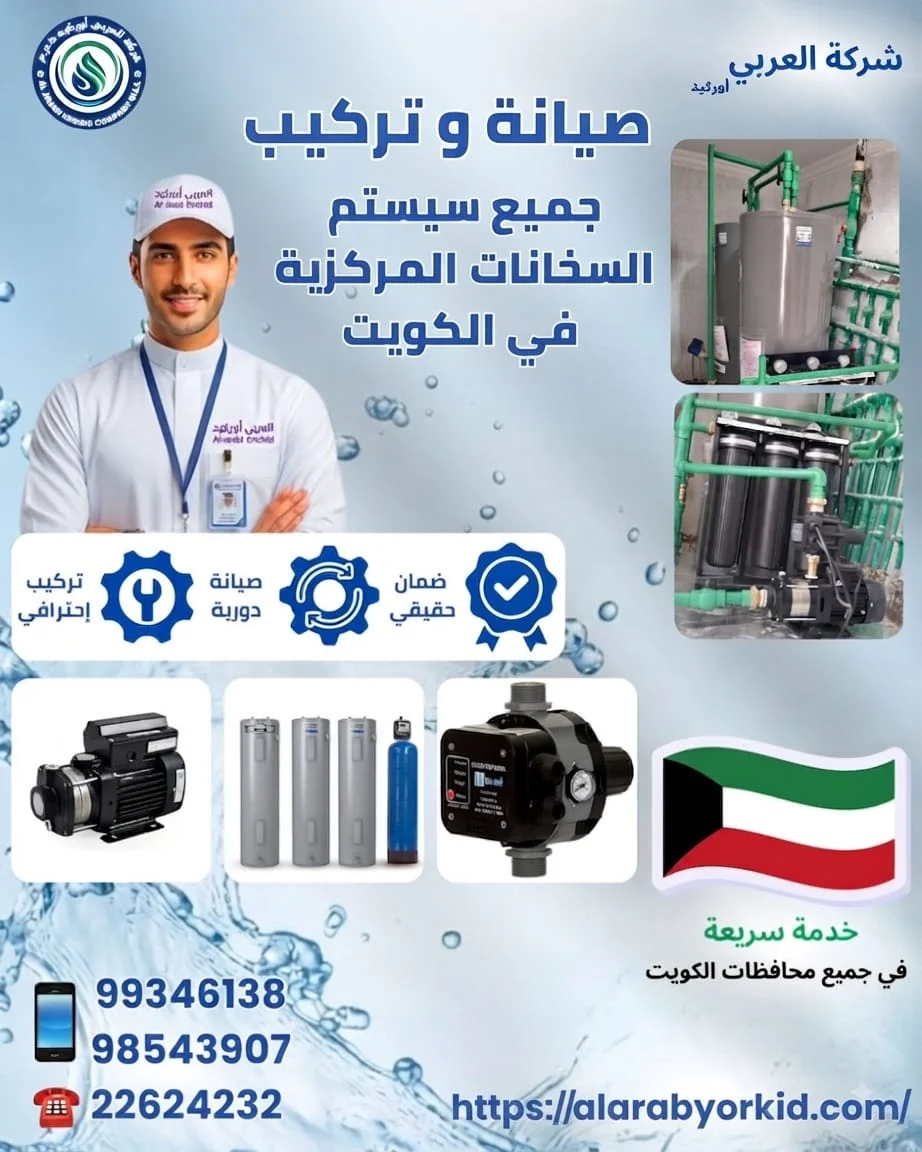
The service of central water heater maintenance and repair from Al Arabi Orchid on 99346138 should not begin by replacing the first component the technician suspects. It should start with an organized inspection that determines whether the problem comes from the heating element, thermostat, safety valve, sediment buildup, plumbing connections, system pressure, or the storage tank itself. Preventive maintenance is also different from repairing an existing fault. Preventive service is intended to identify developing problems before the heater stops working, while repair focuses on a problem that has already appeared. Al Arabi Orchid currently provides maintenance for American water heaters, replacement parts, scale cleaning, and service for brands including Ruud, Bradford White, A. O. Smith, Americana, Rheem, and Richmond throughout all six governorates of Kuwait.
Central Water Heater Maintenance and Repair in Kuwait

Central water heater maintenance and repair in Kuwait becomes much more effective when the condition of the heater is separated into three categories from the beginning: a heater that is still working but needs preventive maintenance, a heater whose performance has changed and needs diagnosis, and a heater that has stopped working or developed a clear fault and requires repair. Mixing these three situations together can lead customers to pay for components they do not need or wait until a minor issue develops into a more serious problem.
Preventive maintenance is intended to inspect the heater while it is still operating and identify signs that may cause future problems. Depending on the exact heater type and model, important areas can include leakage around fittings, heating elements, or the drain valve, the condition of the temperature-and-pressure relief valve, sediment buildup inside the tank, anode condition when the heater uses a sacrificial anode, and whether heating performance remains stable. Major manufacturers explain that the T&P valve is an essential safety component and that the anode protects the tank from corrosion. The anode does not have one fixed lifespan because its condition depends on water chemistry, household usage, and the operating environment. This is why inspection is more reliable than assuming one replacement interval for every heater.
When performance changes, such as the heater taking longer to recover or hot water running out sooner than before, the process should not immediately become “replace the heating element.” A dual-element heater may have one failed element, but thermostat performance, electrical supply, or increased household demand can produce similar symptoms. The value of diagnosis is in measuring and confirming the cause before purchasing a part.
The third situation is a clear fault such as a continuous leak, repeated discharge from the safety valve, breaker tripping, or complete loss of heating. These cases require targeted repair. For example, a dripping T&P valve does not always mean that the valve itself is defective. The problem may involve high water pressure or thermal expansion in a closed plumbing system, so the cause should be identified before replacing the valve when the valve itself is still serviceable.
Al Arabi Orchid currently advertises scale cleaning, maintenance, and spare parts for American heaters, together with replacement heating elements, thermostats, and safety valves. The practical advantage is that several parts of the system can be inspected instead of treating the water heater as one isolated component.
Consider a practical example. A customer says the water has gradually become less hot over the last month. If the thermostat is replaced without testing, the problem may remain. Proper diagnosis starts with the electrical supply, then temperature settings, heating-element performance according to the heater design, and finally actual hot-water demand. If the problem developed gradually and is accompanied by popping noises or visible sediment, tank flushing may become part of the diagnostic process.
-
Preventive maintenance is different from fault repair because the first searches for developing problems while the second corrects a confirmed failure
-
Reduced heater performance does not automatically mean the heating element has failed because thermostat operation power supply demand and sediment can all affect performance
-
A dripping safety valve requires investigation of system pressure before random valve replacement because thermal expansion may be the real cause
-
Sediment removal anode inspection and T&P valve checks can be part of maintenance depending on the heater model and manufacturer instructions
-
When requesting service on 99346138 prepare the brand capacity and description of the performance change so diagnosis begins with the actual issue rather than random component checks
Central Water Heater Maintenance and Repair Technician
The role of a central water heater maintenance and repair technician is not simply knowing the price of replacement parts. A skilled technician needs to distinguish between the primary fault and the symptom caused by that fault. This distinction is what reduces the chance that the same problem returns after a few days or several weeks.
A proper inspection usually begins with the heater’s service history. When was the heater installed? When was it last serviced? Was an element recently replaced? Does the breaker trip? Does the problem affect every hot-water outlet? Was the pump or system pressure changed recently? These details can eliminate many possibilities before the technician opens the heater.
The next stage is a visual inspection without unnecessarily opening electrical sections. The technician should inspect the hot- and cold-water connections, T&P valve, drain valve, heating-element areas, and the bottom of the tank. Water-heater leak diagnosis shows that possible leak points include the hot and cold connections, relief valve, drain valve, heating-element gaskets, and the tank itself. Water on the floor is therefore not enough evidence to say the storage tank has failed.
The next stage is electrical diagnosis when the symptom involves heating. This should be performed by someone properly qualified. Electrical wiring, thermostats, heating elements, and control devices should not be repaired casually without the correct training. Replacement parts should also be matched using the heater’s model number, serial number, voltage, and wattage from the rating plate. The correct component is not simply “an American heater element.” It needs to match the specifications of the actual unit.
The technician should also examine the hydraulic side of the system. Water pressure, the safety valve, and thermal expansion can create symptoms that homeowners may mistakenly assume are internal heater failures. If the T&P valve opens repeatedly after heating, for example, the technician should ask whether the plumbing system has effectively become closed because of a check valve or pressure-reducing valve and whether appropriate thermal-expansion control is required.
During preventive maintenance, sediment condition should also be reviewed. Professional tank flushing commonly involves safely disconnecting power, draining and flushing the tank, checking the T&P valve and drain valve, examining the anode where applicable, checking pressure and leaks, then returning the heater to service and confirming its performance.
That is the maintenance sequence that matters: Inspect → Measure → Diagnose → Repair → Test.
-
A good technician gathers the fault history before opening the unit because the timing of the problem may connect it to earlier maintenance or system changes
-
Leakage should be traced back to its true source rather than judged only by where water collects on the floor
-
Electrical components should be matched using model voltage and wattage rather than appearance alone
-
Water pressure measurements are important when the complaint involves safety-valve discharge or repeated leakage after heating
-
The repair should end with a real operating test rather than only replacing a component and closing the service panel
Central Water Heater Fault Service
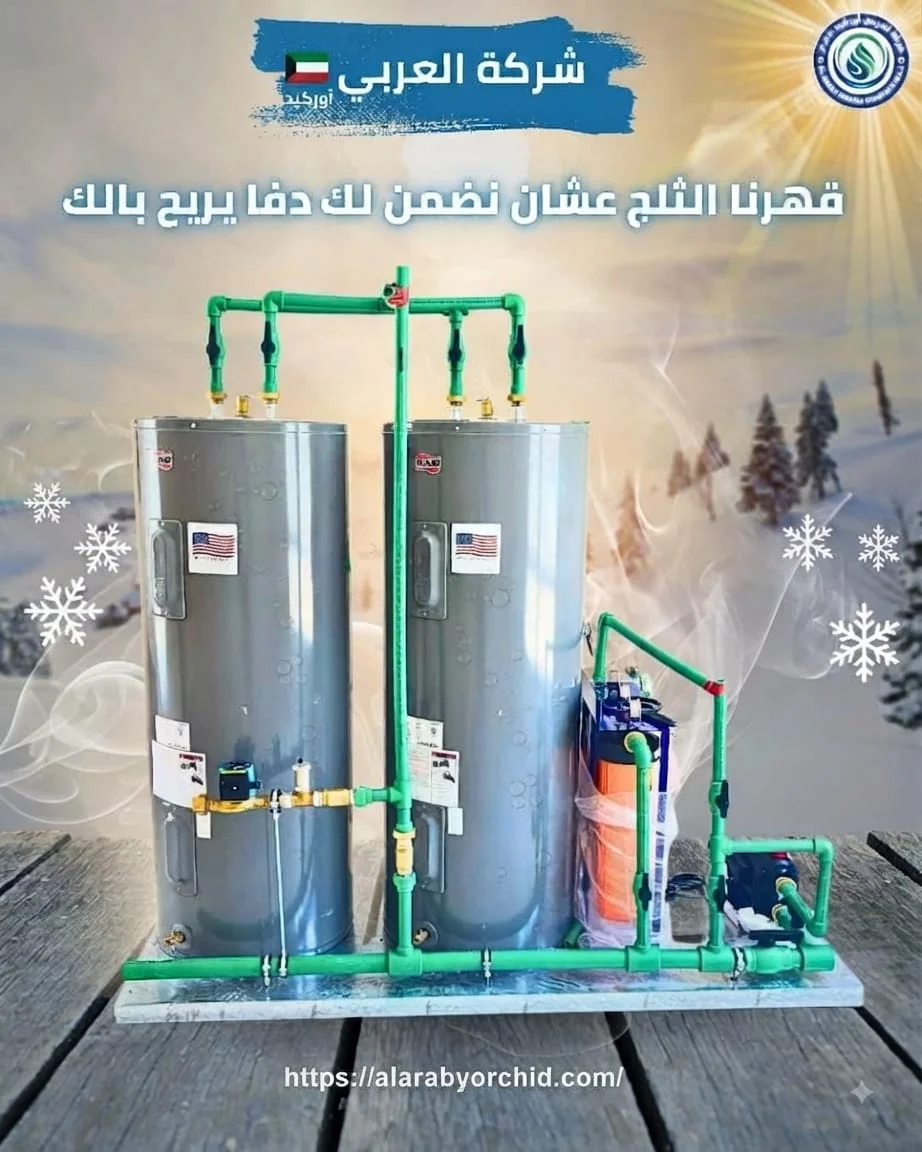
A central water heater fault service becomes effective when problems are classified by the symptom rather than by the name of a suspected component. The homeowner sees the result of the fault, not what is happening inside the heater.
Fault one: No hot water at all.
The inspection should begin with the electrical supply, followed by controls, heating elements, and safety devices according to the heater model. It would be wrong to assume immediately that the heating element has failed because the problem may begin at the breaker or power supply.
Fault two: Water is warm but not hot enough.
This creates several possibilities, including one failed element in a dual-element heater, thermostat problems, incorrect temperature settings, or hot-water demand that has increased beyond the heater’s capacity.
Fault three: The water starts hot but runs out quickly.
The first question is whether this has always happened or is a new problem. If it has been present since installation, the heater may be undersized for peak demand. If it appeared recently, a heating component, control issue, or dip-tube problem depending on heater design may need investigation.
Fault four: The heater makes popping or rumbling noises.
Mineral deposits and sediment inside the tank can be associated with certain noises. Sediment buildup can also reduce performance and may justify flushing according to water conditions and heater instructions.
Fault five: The safety valve drips.
The valve should not be blocked. The technician should inspect system pressure, thermal expansion, and the valve itself. The relief valve is designed to relieve excessive pressure, and dripping can be associated with high pressure or the lack of proper expansion control in a closed system.
Fault six: Leakage around the heating element.
A failed gasket may be the cause rather than a damaged storage tank.
Fault seven: Water underneath the tank.
Again, hot and cold fittings, the T&P valve, drain valve, element gasket, or tank body are separate possibilities that need to be checked individually.
Fault eight: The breaker repeatedly trips.
The breaker should not simply be reset over and over as a test. A qualified electrical inspection is required because the fault may involve the heating element, wiring, or control system.
The goal of a proper fault service is to turn a vague complaint such as “the heater is not working properly” into a specific diagnostic path that reduces unnecessary parts and repeat visits.
-
Complete loss of hot water follows a different diagnostic path from having only a limited amount of hot water
-
A new sound can provide useful information about sediment or heater condition but should not be used alone to identify a failed component
-
Never block the safety valve to stop dripping because that removes an essential protective function
-
Repeated breaker tripping requires qualified electrical inspection rather than repeated resets and attempts to force the heater to operate
-
Record when the symptom started and whether it appeared after maintenance or a pressure change because timing is part of the diagnosis
Villa Water Heater Repair and Maintenance
Villa water heater repair and maintenance requires a wider view than servicing a heater that supplies only one bathroom because a villa often has a long hot-water network, booster pump, multiple bathrooms, and possibly a hot-water recirculation loop. For that reason, not every complaint actually comes from the heater itself.
Consider a situation where the ground floor has strong hot water but the upper floor has weak flow. If the water temperature is correct but the flow is weak, the problem may involve pressure or distribution rather than a heating element.
Another situation is when every bathroom has good pressure, but the farthest bathroom takes a long time to receive hot water. This is more likely to involve hot-water distribution or recirculation than storage capacity.
A third example is when hot water reaches the bathrooms quickly and with good pressure, but the water becomes cold after several bathrooms are used at the same time. In that case, the diagnosis returns to actual heater capacity, peak demand, and the condition of the heating elements.
In villas, system pressure should also be checked. Excessive pressure places additional stress on valves, fittings, and the heater and may appear as discharge from the T&P valve or leakage at connections. Relief-valve leakage can sometimes be connected to high supply pressure or thermal expansion.
Preventive villa maintenance may include recording pressure, checking for leakage, inspecting the safety valve, addressing sediment according to heater condition, and inspecting the anode depending on the model. Good maintenance programs for storage heaters also include checking around tank fittings, reviewing the T&P valve, checking anode condition, and flushing the tank according to water and operating conditions.
Because villas often involve more than one water-system component, it can be useful that Al Arabi Orchid currently advertises water-heater service together with Grundfos pumps, water filters, and hot-water return systems. When the homeowner is not sure whether the complaint comes from the heater or the network, a wider system inspection can prevent unnecessary heater replacement.
The maintenance visit should ideally answer three questions:
Is the heater producing enough heat?
Is the network delivering the water at the required pressure?
Does hot water reach every fixture as expected?
-
Villa heater maintenance should separate temperature problems from pressure problems and hot-water delivery delays
-
Weak performance at only one distant outlet does not automatically prove a heater fault when the rest of the property works normally
-
System pressure affects valves and connections and should be considered when leaks repeatedly appear
-
A recirculation system improves hot-water distribution but cannot compensate for a failed heating element
-
A complete inspection reduces the risk of replacing a healthy heater when the real fault is in the pump or distribution network
Central Water Heater Maintenance With Spare Parts
A central water heater maintenance service with spare parts should distinguish between a part that is properly matched to the model and a part that merely looks similar to the old one. This is especially important with heating elements and thermostats because external appearance is not the only specification that matters.
Replacement components should be matched to the model number, serial number, voltage, and wattage shown on the heater rating plate. The same manufacturer may use different electrical configurations across its product range. Installing an element with incorrect electrical specifications is not a professional repair even if it physically fits the opening.
Al Arabi Orchid currently advertises an American water-heater element at KWD 13 including installation, an American heater thermostat at KWD 13 including installation, and a safety valve at KWD 12 including installation. These are published prices for specific services and should not be interpreted as the total maintenance price for every fault or every model without diagnosis.
Before replacing a heating element, the technician should confirm that it is actually faulty. After replacement, the gasket should be checked, the heater examined for leaks, and the storage tank completely filled before electricity is restored. Energizing an electric element before it is fully covered by water can damage it quickly, which means the installation procedure is just as important as the part itself.
The thermostat also needs to be installed correctly and positioned against the tank surface according to the design. Proper thermostat replacement involves matching the replacement to the original component and correctly securing it against the tank before wiring and operation are restored.
A safety valve should not be replaced simply because it drips. If the system pressure is too high or a closed plumbing system is experiencing thermal expansion, a new valve may begin dripping again when the real underlying condition is not corrected.
Some maintenance cases may require an anode rod rather than a thermostat or heating element. The anode is a sacrificial component that corrodes instead of allowing corrosion to attack the tank. Its lifespan depends on water chemistry and usage rather than one fixed period that suits every property.
-
Ask the technician to match the heating element using the model voltage and wattage instead of relying on the phrase “suitable for American heaters”
-
The published KWD 13 element and thermostat prices and KWD 12 safety-valve price are for specific services and are not a universal maintenance invoice
-
Thermostat replacement requires correct positioning and contact with the tank rather than simply reconnecting the electrical wires
-
Replacing a safety valve without checking system pressure may allow the same dripping to return even when the new valve is working correctly
-
Keep the part number or details of the installed replacement because a clear service record is extremely useful for future maintenance
Central Water Heating System Repair
Central water heating system repair is broader than repairing the storage tank because the word system includes heat production, hot-water distribution, water pressure, safety devices, and potentially booster and recirculation pumps.
The first area is heat generation. Are the heating elements, thermostats, and electrical supply producing the required temperature?
The second area is storage. Is the tank structurally sound, free from active leakage, and not suffering from sediment buildup that is significantly affecting performance?
The third area is delivery. Is hot water leaving the tank correctly but failing to reach distant outlets in a reasonable way?
The fourth area is pressure control. Are the booster pump, pressure-reducing valve, or check valve influencing system operation?
The fifth area is safety. Does the T&P valve operate correctly? Is its discharge line suitable? Is thermal expansion being controlled where necessary?
If the inspection focuses only on the tank, the real problem can easily be missed. A homeowner may say, “the heater does not provide enough hot water,” while the outlet temperature at the heater is actually normal and a mixing valve or distribution issue is reducing the temperature at fixtures. In another home, hot-water pressure may be much lower than cold-water pressure because of a restriction in the hot-water network rather than a failed heating element.
Professional tank maintenance involves more than flushing. It can include inspection of the T&P valve, drain valve, anode, system pressure, leaks, and final operating performance after the heater is returned to service. This is exactly the logic behind examining the complete system instead of only one part.
When a recirculation pump is installed, the technician should check whether it is operating correctly and whether its return path and check valves are functioning as intended. The recirculation pump does not increase heater temperature or tank capacity. It changes how quickly hot water circulates through the distribution network.
The same principle applies to the booster pump. Its role is pressure and flow, not heat generation. If a customer confuses the two systems, money can be spent on replacing a heater when the real problem requires pump diagnosis.
Al Arabi Orchid currently provides heater, pump, filter, and spare-part services, so when the symptoms are complex, it makes more sense to request a central-system inspection rather than treating the heater as an isolated appliance.
-
A central hot-water system includes heat generation storage distribution pressure and safety and each area requires a different inspection method
-
Correct temperature at the heater outlet with a problem at a distant fixture points more toward the network than the heating elements
-
A booster pump cannot repair a heating fault and a recirculation pump cannot increase tank capacity so the role of each component should remain clear
-
Complete maintenance reviews pressure leakage and safety together with temperature instead of focusing on only one component
-
Call 99346138 and request a system-wide inspection when the problem appears mainly during simultaneous bathroom use or after the booster pump operates
Central Water Heater Inspection and Repair
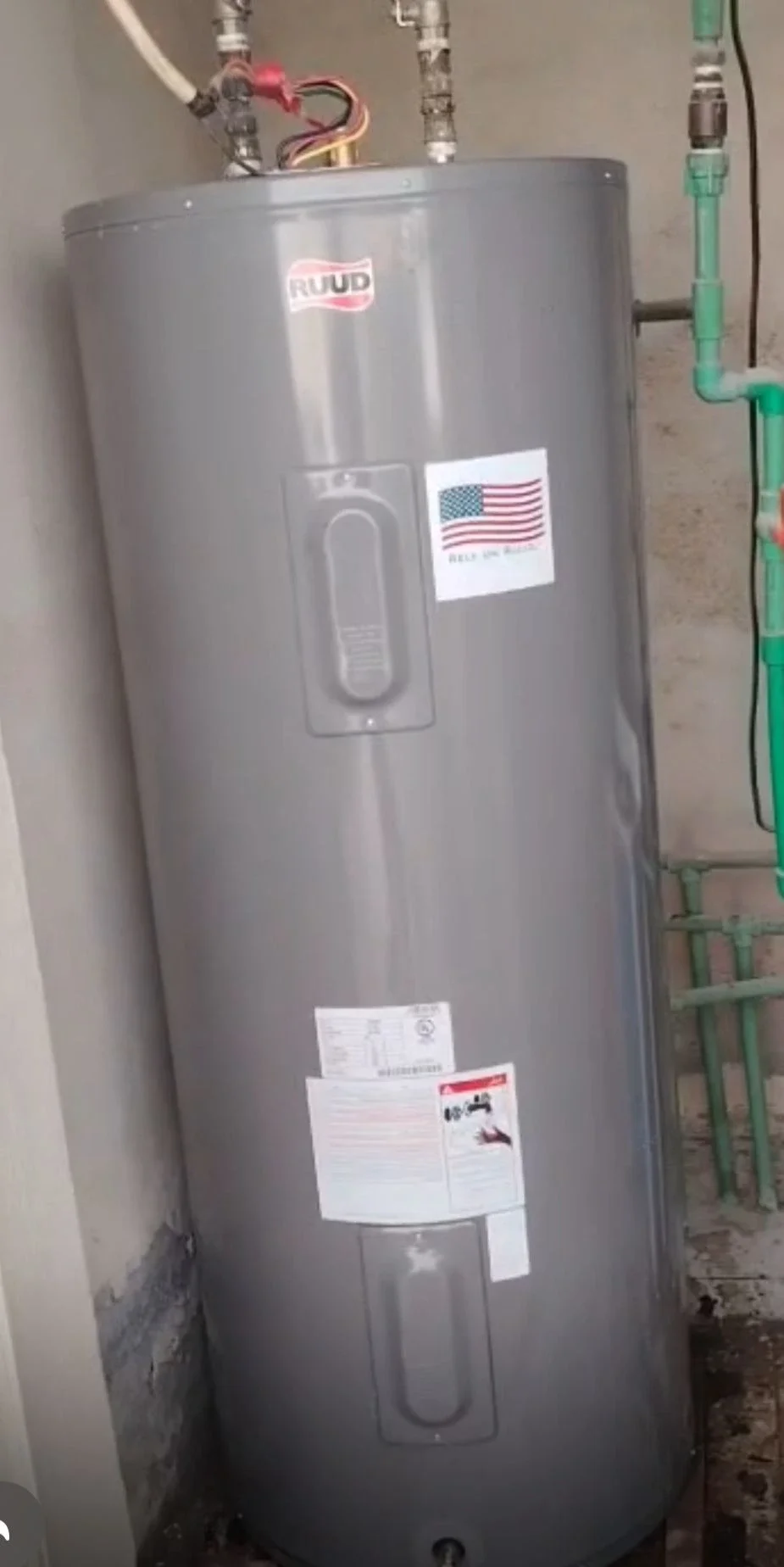
A central water heater inspection and repair service works best when it follows consistent stages rather than relying on instinct.
Step one: Confirm the complaint.
The technician should reproduce or observe the symptom that the customer reported. If the complaint is that the water cools too quickly, the heater should be observed under conditions reasonably close to actual use rather than declaring it repaired because the first minute of water is hot.
Step two: Visual inspection.
Hot and cold connections
T&P valve
Drain valve
Heating-element areas
Bottom of the tank
Any signs of rust or moisture
Step three: Electrical testing by a qualified person.
Power supply
Breaker
Heating elements
Thermostats
Control condition according to the model
Step four: Pressure review.
This is particularly important when there is dripping or discharge from the safety valve.
Step five: Review sediment condition and service history.
A heater that has operated for years without flushing is different from a recently installed unit.
Step six: Decide on the component or maintenance action.
This should happen after the measurements rather than before.
Step seven: Restart and test.
Professional tank-flushing service typically involves safely shutting off power, draining and flushing the heater, checking the T&P and drain valves, inspecting the anode, reviewing water pressure and leakage, and then returning the heater to service and confirming performance. This provides a useful model for an organized maintenance process even when the exact procedure differs by heater.
After a repair, the test should not stop when the water begins warming. The technician should confirm that the breaker remains stable, no new leak appears around a serviced element, thermostat control behaves normally, and the T&P valve does not show abnormal discharge.
If a crack or confirmed leak is found in the tank body, the maintenance decision changes. Elements, thermostats, and valves are serviceable components, but a tank that has lost structural integrity should not be treated with improvised patching or unreliable welding.
-
Inspection should begin by confirming the original complaint so the technician knows the same problem has actually been resolved
-
Measurements should come before component replacement because guesswork increases the chance of changing a part that was still working
-
After removing a heating element the gasket and surrounding area should be checked for leakage before service is completed
-
Final testing should include temperature electrical behavior and water leakage rather than only hearing the heater operate
-
Leakage from the tank body itself changes the repair decision completely compared with a serviceable valve or gasket leak
American Water Heater Maintenance Service
An American water heater maintenance service requires understanding that the word “American” covers several manufacturers and many different designs. Al Arabi Orchid currently works with Ruud, Bradford White, A. O. Smith, Americana, Rheem, and Richmond.
These brands do not all use one identical maintenance schedule for every model. Heating-element input, control design, anode location, number of elements, and drain-valve configuration can vary. The first step in any service should therefore be reading the heater rating plate instead of applying one memorized procedure to every unit.
General storage-water-heater maintenance normally focuses on several common areas:
Connection safety
Heating performance
T&P valve
Sediment
Anode condition when applicable
Leakage
Water pressure
Major manufacturers recommend monitoring the T&P valve because it protects against excessive pressure, and they also emphasize the role of the anode as a sacrificial component that protects the tank from corrosion.
Tank flushing is also a common maintenance task intended to reduce sediment buildup, while the T&P valve, leaks, and anode condition may be reviewed at the same time. Professional service becomes particularly useful when the heater has not been maintained regularly or has accumulated significant sediment.
Even a common recommendation such as “flush once a year” should not be converted into a rigid rule for every heater and every water condition without checking the exact model. Some homes experience heavier sediment loading, and some heaters or operating conditions differ. The manufacturer documentation for the specific model remains the best reference.
Warranty documentation is also important. Al Arabi Orchid currently advertises written coverage that includes 6 years on the American heater tank and 2 years on heating elements in its current service information. Customers should keep the warranty card for their actual heater and replacement parts because coverage conditions depend on the specific product and invoice.
-
Brand name does not replace the need to read the rating plate because maintenance details and spare parts can differ between models
-
A common maintenance program focuses on safety leakage sediment anode condition and heating performance but should be adjusted according to the heater manual
-
Do not automatically use a Rheem replacement schedule for an A. O. Smith heater simply because both are American brands
-
Keep the model serial number and warranty information because they help identify the correct part and support future warranty claims
-
Professional maintenance respects the specifications of each heater instead of treating every American water heater as the same appliance
Treating Central Water Heater Problems

Treating central water heater problems is different from hiding the symptom temporarily. If the safety valve drips and someone tightens or replaces it without identifying the cause, only the visible result may have been addressed. If the breaker trips and someone keeps resetting it without testing the heater, the real electrical fault is simply being delayed.
Proper treatment begins with the question: why did this fault happen?
If a heating element failed, was it normal component wear or were sediment and operating conditions contributing?
If the thermostat failed, was the thermostat itself the only problem or is there another electrical or temperature issue?
If the T&P valve is dripping, is water pressure too high or is thermal expansion occurring?
If water leaks around an element, is the gasket the actual cause?
If hot-water output is weak, is one heating element faulty or is the heater simply undersized for the household’s peak demand?
If the heater is noisy, is sediment buildup contributing?
A dripping T&P valve may be associated with high water pressure or inadequate thermal-expansion control in a closed system. Pressure control and expansion management should therefore be checked before assuming that every new relief valve is defective.
Sediment can reduce performance, increase energy consumption, create noise, and affect service life. Flushing is therefore a treatment for a confirmed or likely sediment-related condition rather than a cosmetic service.
Leak diagnosis should also trace the water back to the actual source because several serviceable components can allow water to collect underneath the tank. This prevents replacement of a structurally sound heater because of a simple fitting or gasket.
After repair, there should be root-cause verification. If a safety valve is replaced, the heater should be observed through a full heating cycle to see whether the discharge returns. If the tank is flushed, noise and performance should be reassessed. If a heating element is changed, the technician should confirm that heating returns to normal.
-
Correct treatment addresses the cause of the fault rather than only the symptom visible to the homeowner
-
Repeated safety-valve discharge requires system-pressure and thermal-expansion review before deciding that every new valve is defective
-
Sediment should be treated when it is supported by the heater condition rather than recommended automatically during every visit
-
Tracing a leak back to its source prevents unnecessary replacement of a good tank because of a simple fitting or gasket
-
After repair the heater should operate long enough under realistic conditions to confirm that the original symptom has not returned
Al Arabi Orchid Water Heater Maintenance
Al Arabi Orchid water heater maintenance currently includes, according to the company’s service information, maintenance, spare parts, scale cleaning, heating-element replacement, thermostat replacement, and safety-valve service for several American brands including Ruud, Bradford White, A. O. Smith, Americana, Rheem, and Richmond. The published contact number is 99346138, with advertised coverage across all six Kuwait governorates and 24/7 service availability.
The company currently publishes several specific service prices:
American heater element KWD 13 including installation
American heater thermostat KWD 13 including installation
Safety valve KWD 12 including installation
These prices do not mean that “water-heater maintenance costs KWD 13.” The final service cost depends on the actual cause of the fault. If the heater needs only one element and that service matches the currently published offer, the element price may apply. If the heater has leakage, excessive pressure, sediment buildup, or a damaged tank, the service is completely different.
When requesting maintenance, it is better to provide:
Heater brand
Capacity
Approximate age
How its performance has changed
Whether there is leakage
Whether the breaker trips
Whether the tank has been flushed before
Which component was most recently replaced
Then request inspection and diagnosis before any part is installed.
For preventive maintenance, ask for a basic service record. It can include:
Service date
Replacement part
T&P valve condition
Whether sediment flushing was performed
Anode condition if inspected
Any important pressure reading
This record becomes valuable after one or two years. If the same problem returns, the technician can see whether a component failed unusually quickly or whether there is a repeating underlying cause.
This approach converts maintenance from “a technician starts from zero every visit” into a useful maintenance history for the heater. That is especially valuable in villas where the household depends completely on one central hot-water system.
-
Al Arabi Orchid currently advertises American heater maintenance scale cleaning and replacement parts through 99346138
-
Published element thermostat and safety-valve prices apply to specific services and should not be treated as one universal repair price
-
Record every service date and replacement part so future maintenance is based on facts rather than approximate memory
-
If the same fault keeps returning request root-cause diagnosis instead of repeatedly replacing the same component
-
The best maintenance value combines diagnosis the correct spare part final testing and a follow-up plan that reduces the chance of recurrence
Conclusion
The service of central water heater maintenance and repair from Al Arabi Orchid on 99346138 should be understood as a diagnostic and preventive maintenance process rather than simply replacing a heating element or thermostat whenever a problem appears.
A central water heater contains several components that can create similar symptoms. Weak hot-water performance may be related to a heating element, thermostat, demand exceeding the heater capacity, or electrical supply. Leakage can come from a fitting, T&P valve, drain valve, heating-element gasket, or the tank itself. A dripping safety valve may result from high system pressure or thermal expansion rather than a faulty valve alone.
This is why the strongest maintenance process follows a clear sequence:
Understand the complaint
Perform a visual inspection
Measure and diagnose
Identify the cause
Select the correct model-specific part
Carry out the repair
Then operate and test the heater
Preventive maintenance has a different role. Major manufacturers emphasize the importance of checking the T&P valve, monitoring anode condition, looking for leaks, and addressing sediment according to the heater design and water conditions. Professional flushing service can also include pressure inspection, leak inspection, safety-component checks, and performance verification after the heater is restarted.
Al Arabi Orchid currently works with Ruud, Bradford White, A. O. Smith, Americana, Rheem, and Richmond and provides scale cleaning, maintenance, and spare parts. It also currently publishes service prices such as an American heater element at KWD 13 including installation, thermostat at KWD 13 including installation, and safety valve at KWD 12 including installation.
For service, call 99346138 and provide the heater brand, capacity, symptom, when it started, and whether previous maintenance has been performed. If the problem keeps returning, do not immediately request the same replacement part again. Ask why the part is failing or why the symptom keeps coming back.
That is the difference between a temporary repair and proper maintenance. A temporary repair simply gets the heater operating again, while correct maintenance aims to return the system to normal and safe operation while reducing the likelihood of the same problem returning.
Frequently Asked Questions
What does central water heater maintenance include?
It depends on the condition and model, but professional maintenance may include checking for leakage, heating performance, heating elements, thermostats, the T&P valve, system pressure, sediment buildup, and the anode according to manufacturer instructions.
Does the water heater have to be flushed every year?
There is no single schedule that fits every heater and every property. Annual flushing is commonly recommended for some storage heaters, while homes with hard water or heavy sediment may need more frequent service. The best reference remains the exact heater manual, water condition, and actual sediment buildup.
If the heater does not heat should I replace the heating element immediately?
No. A lack of heating can result from electrical supply, the heating element, thermostat, or control system depending on the heater. The cause should be tested before any part is purchased.
How much is an American water heater element from Al Arabi Orchid?
Al Arabi Orchid currently advertises an American water-heater element for KWD 13 including installation as one of its published services. That price applies to the specific service and does not mean every heater repair costs the same amount.
How much is a water heater thermostat?
Al Arabi Orchid currently advertises an American water-heater thermostat for KWD 13 including installation. The replacement should still match the heater model and electrical specifications.
How much is a water heater safety valve?
The company currently advertises a safety valve for KWD 12 including installation. However, if the valve repeatedly drips, system pressure and thermal expansion should also be checked because replacing the valve alone may not solve the underlying problem.
Does a dripping safety valve always mean the valve is defective?
No. A T&P valve can discharge because of high water pressure or thermal expansion in a closed plumbing system. The cause should be identified before the valve is replaced.
Does water underneath the heater mean the tank must be replaced?
No. Leakage can originate from the hot- or cold-water connections, T&P valve, drain valve, heating-element gasket, or the tank itself. Identifying the source first prevents unnecessary replacement of a sound tank.
Which water heater brands does Al Arabi Orchid maintain?
Al Arabi Orchid currently states that it works with Ruud, Bradford White, A. O. Smith, Americana, Rheem, and Richmond, together with maintenance and spare parts for American water heaters.
How do I request central water heater maintenance from Al Arabi Orchid?
Call 99346138 and provide the heater brand, capacity, model if known, description of the fault, when it started, and whether there is leakage or breaker tripping. Ask for diagnosis before any component is replaced, and make sure the heater is tested after repair and the replacement part is recorded for future service.