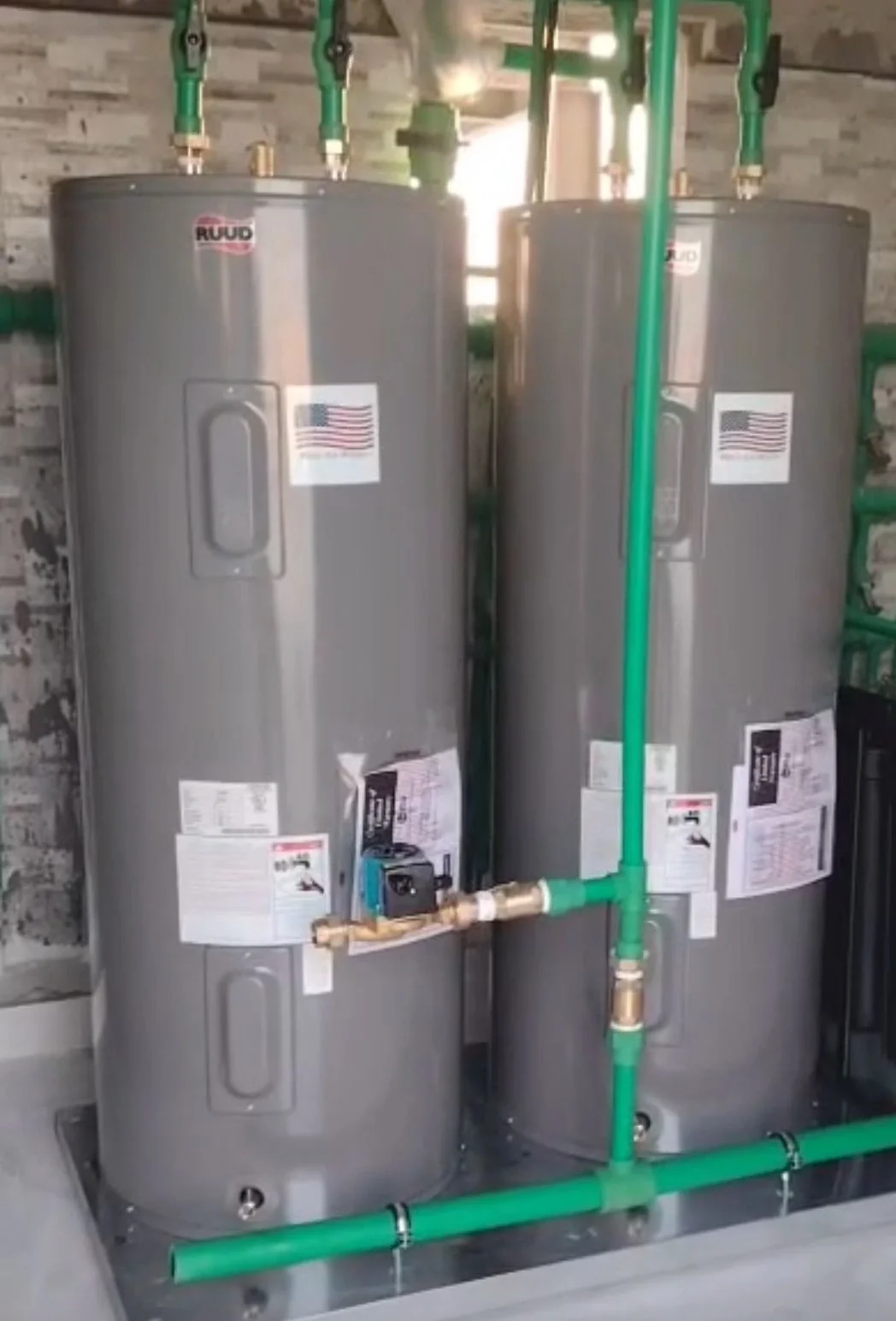
The question repair or replace the central water heater cannot be answered with a fixed rule such as “replace it because it is old” or “repair it as long as it still works.” The correct decision depends on the type of fault, the condition of the tank, the age of the heater, its repair history, the cost of the damaged component, and whether the existing unit still matches the household’s hot water demand. An older heater may only need a simple thermostat replacement and continue working reliably, while another unit may keep costing money because the tank itself has entered an advanced stage of deterioration. Al Arabi Orchid 99346138 approaches the decision as both a technical and financial calculation because the goal is neither to repair at any cost nor to replace every heater simply because it has been in service for several years.
Repair or Replace the Central Water Heater

When deciding between repair or replace the central water heater, do not begin with age alone or with the price of one replacement part. The decision should start with four basic questions: where exactly is the fault, what is the condition of the tank, how many repairs has the heater needed recently, and does the current heater still suit the household’s hot water demand? If the fault is limited to a thermostat, heating element, or external fitting, the tank itself is sound, and the heater does not have a troublesome repair history, repairing it may still be a very sensible decision even if the unit is no longer new.
The situation changes when the problem reaches the tank body itself or when there is confirmed internal leakage, visible corrosion, or several faults occurring within a relatively short period. At that point, the current repair cost should not be considered in isolation. You also need to ask how likely it is that another component will fail a few months later. Some homeowners see a relatively small repair bill and keep choosing repair every time, only to discover after a year that the combined cost is close to the price of a new heater while they have also spent that year worrying about the next breakdown.
The heater’s performance before the fault should also be included in the decision. If the system was already too small for the household, took an excessively long time to recover, or no longer provided enough hot water for the current number of users, repairing it simply restores a heater that still does not meet the household’s needs. In that situation, replacement is not only a response to a fault but also an opportunity to correct an outdated sizing decision.
Al Arabi Orchid 99346138 places repair or replace the central water heater on a clear scale: today’s repair cost versus the reliability and usefulness you can reasonably expect over the coming months and years.
-
Repair is usually reasonable when the fault is limited to a replaceable component the tank itself remains sound and the heater has not required several recent service visits
-
Replacement becomes a stronger option when the problem involves the tank body internal corrosion or confirmed tank leakage because the fault is no longer limited to a normal service component
-
The heater’s performance before the breakdown should be included in the decision because repairing a unit that no longer meets household demand can restore operation without restoring comfort
-
The better decision compares the current repair cost with the likelihood of additional near-term expenses instead of looking only at the price of the part that failed today
Should I Repair the Heater or Replace It?
If you are asking should I repair the heater or replace it, a useful rule is this: if the repair is likely to return the heater to a stable and predictable condition for a reasonable period, repair deserves serious consideration. If the repair simply postpones a larger problem or the heater has started asking for a different component every few months, replacement begins to make more sense financially and practically.
Consider a simple example. A heater of moderate age has a sound tank but one heating element has failed. If the remaining components are stable, there is no leakage, and the heater has not developed a history of repeated problems, replacing the heating element may be an excellent decision. Now consider the same heater after a year in which the thermostat was replaced, then a heating element, then a valve, and now water has started appearing around the base. That is no longer a series of completely unrelated minor faults. It may be a pattern showing overall deterioration.
The effect of another breakdown on the property should also be considered. In a home with an alternative hot water source, you may have more flexibility to attempt another repair. In a villa where one central heater supplies several bathrooms and there is no backup, reliability carries greater value. Sometimes a relatively small financial difference between repairing an exhausted heater and replacing it is not worth the risk of another sudden interruption.
Al Arabi Orchid 99346138 answers should I repair the heater or replace it by determining whether the repair solves a clearly defined problem or simply buys a short period of time before the next service call.
-
Repair when the fault is clearly identified limited in scope reasonably priced and the tank remains in good condition without wider signs of deterioration
-
Replace when each service visit seems to uncover a new issue because repeated faults can turn the heater from a useful household asset into a recurring expense
-
Consider how important the heater is to daily household operation because failure of one central unit serving several bathrooms has a greater impact than failure of a heater with a reliable backup
-
Do not treat a successful repair as proof that repair was the best long-term decision if the overall heater has become unreliable and needs constant attention
Repairing an Old Heater or Buying a New One

The decision between repairing an old heater or buying a new one should include the value of time, reliability, and household comfort rather than equipment cost alone. Repairing an older heater may be cheaper today when the fault is minor, but purchasing a new unit can provide a longer period of stability and reduce the likelihood of unexpected breakdowns if the existing heater has genuinely entered an advanced stage of deterioration.
On the other hand, not every old heater should be thrown away. If the unit has been in service for many years but has no tank leak, the tank remains structurally sound, the maintenance history is good, and the current problem is minor, buying a completely new heater simply because the existing one “has been around for a while” may be unnecessary spending. Age matters, but technical condition often matters more.
The decision also depends on specifications. If the old heater has a 50 or 80 gallon tank but the household has changed and now needs substantially more hot water, replacement creates an opportunity to recalculate the required capacity. If you simply buy the same old size without reviewing demand, you may spend a significant amount and still return to the same shortage problem.
A newer heater may also offer improved insulation, better controls, or higher energy efficiency compared with a very old model, and those differences can become part of the long-term calculation. However, it would be inaccurate to claim that every new heater is automatically cheaper to operate because heater type, size, installation, and household behavior all affect the result.
-
Repairing an old heater is worthwhile when the overall condition remains good the current fault is isolated and there is no technical reason to expect a wider chain of failures
-
Buying a new heater becomes a stronger option when the old unit no longer matches required capacity has repeated faults or the tank itself is showing deterioration
-
Do not replace a stable heater simply because of its age if inspection shows that the tank is sound and the current repair is straightforward
-
If you decide to buy new use the opportunity to review storage capacity electrical requirements and installation conditions instead of automatically copying the specifications of the old heater
Repair Cost Versus Replacement Cost
Repair cost versus replacement cost should not be calculated by comparing only two numbers. You need to include the service visit, replacement part, any electrical or plumbing work, likely future repairs, heater age, and overall equipment condition. Sometimes a relatively inexpensive repair is clearly the smartest decision. In other cases, that repair is simply the first bill in another series of expenses.
Consider a heater that needs only a thermostat while the tank is sound and the unit has no other problems. The price difference between that repair and a complete new installation may be large enough to make repair obviously reasonable. Now consider an older heater that has already received several replacement parts during the past year and now needs another repair. In that case, the correct calculation should include what has already been spent and what you are realistically likely to spend next, not only the current invoice.
The full cost of replacement should also be calculated correctly. A new heater is not only the price of the tank. The project may include removing the old unit, transportation, installation, new connections, and possible electrical modifications depending on the replacement model. It is therefore inaccurate to compare one small repair part with the retail price of a new heater and conclude immediately that replacement is too expensive.
At the same time, installation cost should not be used as an excuse to keep an unsafe or leaking tank in service. Some situations change the question from “what costs less today?” to “which decision stops the continuing cycle of expense and risk?”
-
Compare the current repair cost with likely near-term expenses and not only the price of the one component that needs attention today
-
Replacement cost should include supply removal installation and any necessary electrical or plumbing modifications so the comparison reflects the complete project
-
A low-cost repair may be an excellent decision when the fault is isolated while several individually small repairs can become expensive when added together on a deteriorating unit
-
If the tank itself is no longer sound the difference in upfront price should not become the main reason to avoid replacement because the comparison now includes an ongoing structural problem
Replacing an Old Central Water Heater

The decision to proceed with replacing an old central water heater becomes more reasonable when the existing unit no longer provides enough value to justify keeping it in service. That value includes safety, reliability, available hot water, and maintenance cost. If one or more of these areas have declined significantly, replacement should be reviewed even if the heater can still technically operate.
Some of the strongest reasons for replacement include confirmed leakage from the tank body, visible deterioration, frequent faults, continuing weak performance despite maintenance, or spare parts that have become difficult or expensive to obtain. When every maintenance visit becomes harder to justify, the practical value of keeping the old heater decreases.
Replacement should still be planned carefully. Removing an 80-gallon heater does not automatically mean installing a 120-gallon model because “larger is better.” Likewise, a heater with higher electrical output should not be installed without checking whether the site is prepared for it. The replacement process is an opportunity to reassess household demand, peak-hour usage, electrical capacity, and installation space.
Al Arabi Orchid 99346138 approaches replacing an old central water heater as a planning decision rather than simply removing one unit and installing another in the same position without reconsidering whether the old specifications are still appropriate.
-
Heater replacement becomes reasonable when the old unit has lost reliability and maintenance costs are recurring or its general condition no longer inspires confidence
-
A tank-body leak is fundamentally different from failure of an external component because replacement is usually more appropriate when the main storage vessel is compromised
-
Replacement creates an opportunity to correct heater capacity or equipment type if household demand has changed rather than installing a new version of an outdated sizing decision
-
Electrical requirements dimensions and the access route should be checked before the replacement is purchased so the project does not create unexpected modifications at the installation stage
Is an Old Water Heater Worth Repairing?
The question is an old water heater worth repairing depends on what value the heater can still provide after the repair. If the unit is relatively old but the tank remains sound and the current problem is its first meaningful fault after many years of reliable operation, repair may still be very worthwhile. Age alone does not cancel the value of maintenance.
The situation is different when the heater already has a long history of faults. Every new component can make one part of the unit almost new while the remaining components continue aging. Eventually, you may discover that the heater has been renewed piece by piece while there is still no guarantee that the tank itself will remain reliable.
Spare-parts availability also matters. Some older models use familiar parts that remain readily available and technicians know the design well. In those cases, repair may remain straightforward. Other older or uncommon models may require long waits for parts, expensive components, or less desirable alternatives, which reduces the practical value of repair.
The decision should not be emotional. A heater should not be kept forever simply because “it served us for 15 years,” and it should not automatically be discarded because it is old. Al Arabi Orchid 99346138 evaluates is an old water heater worth repairing according to inspection results and service history rather than attachment to the equipment or assumptions based on age.
-
An older heater is worth repairing when the tank is sound the present fault is limited and the unit does not have a pattern of repeated problems reducing confidence in future reliability
-
Several recently replaced components mean the heater should be evaluated as a complete aging system rather than treating each new fault as completely unrelated to the previous ones
-
Spare-parts availability and ease of service influence repair value because a rare heater can become expensive to maintain even when the actual fault is technically simple
-
Do not use age alone as the final judgment because an older stable heater may be more suitable for repair than a newer unit that has entered a rapid pattern of deterioration
Signs the Heater Needs Replacement
The signs the heater needs replacement become much more meaningful when several of them appear together rather than when one minor symptom appears by itself. Leakage from the tank body is one of the strongest warning signs. Visible corrosion, repeated breakdowns, poor hot water performance despite repairs, and difficulty sourcing reliable replacement parts can also make replacement more reasonable.
Another important sign is when every service visit solves one problem only for another component to fail soon afterward. The heater does not need to stop completely before continued repair becomes financially unattractive. Loss of reliability itself can be an important enough problem.
Another replacement sign has nothing to do with failure at all: the heater may no longer match household demand. If the family has grown or more bathrooms are being used and the tank runs out of hot water too quickly, repairing the heater will not solve the capacity problem. In that situation, replacement gives you an opportunity to install a system that fits current usage rather than maintaining a technically healthy but undersized unit.
-
Leakage from the tank body is one of the strongest replacement indicators because the problem affects the integrity of the main storage vessel rather than a normal replaceable component
-
Closely spaced faults increase the value of replacement even when each individual problem could technically be repaired because their combined cost changes the economics of ownership
-
Difficulty finding dependable spare parts or steadily increasing maintenance costs makes an older heater less practical compared with a supported replacement model
-
Insufficient storage capacity is a different type of replacement sign because the heater may be operating correctly while no longer meeting the household’s actual hot water needs
Deciding to Replace a Central Water Heater
The decision to replace a central water heater should ideally come from a list of clear criteria rather than frustration during a breakdown. Write down the age of the heater, tank condition, number of repairs during the past year or two, current repair cost, whether the heater still provides enough hot water, and whether replacement parts remain readily available. Once these factors are visible together, the decision usually becomes easier.
For example, you may discover that a heater is 12 years old but has only one minor fault, the tank is sound, and parts remain easy to obtain. Repair can still be perfectly reasonable. Another heater may only be eight years old but have a leaking tank and three repairs within one year. The younger age does not automatically make that heater a better candidate for continued repair.
Time also has value. If repair requires waiting two weeks for a difficult-to-find part and the property depends entirely on one central heater, replacement may be faster and more practical if a suitable new unit is readily available. The decision is therefore not only technical and financial but also operational.
Al Arabi Orchid 99346138 helps with the decision to replace a central water heater by using clear information so the customer understands why replacement is recommended or why repair is still the more sensible option.
-
Make a simple list of heater age tank condition repair history current performance and present repair cost so the decision is not based only on the feeling that the heater has become old
-
A younger heater may need replacement before an older one when its actual condition is worse because calendar age alone does not determine safety or economic value
-
Spare-parts availability and the amount of time the household may remain without hot water should be included in the decision especially when one central heater serves the entire property
-
The best decision is one you can explain with technical and financial reasons rather than repeating general rules such as new is always better or old can always be repaired
Maintenance or Buying a New Water Heater
The choice between maintenance or buying a new water heater is different from simply asking whether a fault can technically be repaired. Many heater problems can be repaired, but that does not mean every repair is the best financial decision. What matters is what the homeowner receives in return for the amount being spent.
If maintenance restores a heater that is likely to remain stable and dependable for a reasonable period, repair offers excellent value. If maintenance gets the heater working today but the unit still has significant tank corrosion, a weak tank, or a history of closely spaced breakdowns, the value of a new heater starts to become much stronger.
Buying new should not become a goal by itself either. The replacement needs to match household demand, available installation space, and the property’s electrical system. A new heater with the wrong capacity or power requirement can be a worse decision than properly repairing the old one.
Your expected period of use also influences the calculation. A property you plan to rely on for many years may justify a different long-term decision from a temporary or short-term situation. Al Arabi Orchid 99346138 compares maintenance or buying a new water heater according to the customer’s actual needs rather than automatically favoring the more expensive option.
-
Maintenance is the better choice when it returns the heater to genuinely stable operation rather than simply extending the life of a recurring problem until the next service visit
-
Buying new requires correct capacity electrical compatibility and local service support because the word new alone does not guarantee that the unit will be right for the property
-
If the old heater has one limited problem and a well-understood service history maintenance may provide better value than an unnecessary complete replacement
-
When confidence in the heater becomes very low and another technician is needed every few months the practical and psychological value of replacement becomes part of the decision
When Is Replacing the Heater Better?
When is replacing the heater better? Usually when repair can restore operation but cannot realistically restore confidence in the unit. This often happens with a leaking tank, advanced corrosion, several closely spaced faults, a heater that no longer matches current household demand, or a model whose spare parts have become difficult to obtain.
Replacement can also become the better decision when current repair cost is high compared with the remaining practical value of the heater and there is a clear chance of additional expenses soon. You do not always need to wait for complete failure before making the decision. Planning replacement before the final breakdown gives you time to compare suitable models instead of buying under emergency pressure.
Replacement can also make more sense when an old heater requires repeated maintenance and adjustments to deliver performance that remains lower than what an appropriately selected new system could provide. However, this should never be used as a general excuse to replace every older heater. There should be genuine technical and financial reasons supporting the investment.
Al Arabi Orchid 99346138 determines when replacing the heater is better when two or more strong factors appear together such as poor tank condition, repeated faults, high repair cost, insufficient capacity, or difficult maintenance.
-
Replacement is better when the tank itself has lost structural integrity because repairs to surrounding components cannot restore the main storage vessel to its original condition
-
Replacement is better when repeated faults consume more time and money than the practical value the heater still provides to the household
-
Replacement is better when the existing heater no longer matches current household demand because successful repair will still leave the same hot water shortage afterward
-
Planning replacement before complete failure gives you time to compare models prices and installation requirements instead of accepting the first available option during an emergency
Conclusion
The decision between repair or replace the central water heater should not be based only on age, the price of one part, or the idea that “if it still works, keep it.” Repair is an excellent choice when the fault is limited, the tank remains sound, the heater has not developed repeated problems, and the unit still suits household demand. Replacement becomes a stronger option when the tank body starts deteriorating, faults become frequent, maintenance costs rise, or the heater is no longer suitable for the household’s current hot water needs.
The goal is to avoid paying twice: once for repairing a heater that has already lost its practical value and again soon afterward for a new heater. At the same time, there is no reason to replace a sound unit because of a simple fault that can be repaired properly.
You can contact Al Arabi Orchid on 99346138 to inspect the heater and determine whether repair or replacement is the better decision according to the type of fault, tank condition, repair history, and the real cost of each option. The correct decision is not automatically the most expensive or the cheapest one. It is the decision that gives you reliable hot water for longer with fewer unpleasant surprises.
Frequently Asked Questions
Should I repair my old water heater or replace it?
If the tank is sound, the fault is limited, the repair cost is reasonable, and the heater does not have a history of repeated breakdowns, repair is usually worth considering. If the tank is leaking or faults keep returning, replacement becomes more reasonable.
Is heater age alone enough to decide on replacement?
No. Age matters, but it should be considered together with tank condition, leakage, maintenance history, performance, and spare-parts availability.
When is repair cheaper than replacement?
Repair is usually more economical when the fault affects a replaceable component such as a thermostat, heating element, or fitting and the tank remains in good condition.
When does buying a new heater become more economical?
Buying new becomes more reasonable when repairs are frequent, the tank is corroded, replacement parts are expensive or difficult to find, or the heater no longer matches the household’s current hot water demand.
Does a leaking tank mean the heater should be replaced?
If the leak is confirmed to come from the tank body itself after external fittings and valves have been ruled out, replacement becomes much more likely because the problem affects the main storage vessel.
Should I replace a heater just because it is 10 years old?
Not necessarily. If the heater remains in good condition, has no tank leak, and does not require repeated repairs, it may continue operating. Age supports the decision but should not be treated as a mandatory expiration date.
Is replacing the thermostat worthwhile on an old heater?
It can be very worthwhile if the tank is sound, the rest of the heater remains stable, and testing confirms that the thermostat is the actual fault without other signs of wider deterioration.
How do I compare the cost of repairing the heater with buying new?
Add the current repair cost to recent repair expenses and consider likely near-term faults. Then compare that amount with the full cost of a new heater including installation and the additional reliability the replacement is expected to provide.
Do I have to buy the same heater capacity as the old one?
No. If household demand has changed, the required capacity should be recalculated instead of automatically repeating the old sizing decision.
Who can decide whether my central heater needs repair or replacement?
You can contact Al Arabi Orchid on 99346138 and provide the approximate heater age, type of fault, whether there is any leakage, and details of recent repairs so the unit can be inspected and a decision made on whether maintenance still makes sense or replacement has become the better option.