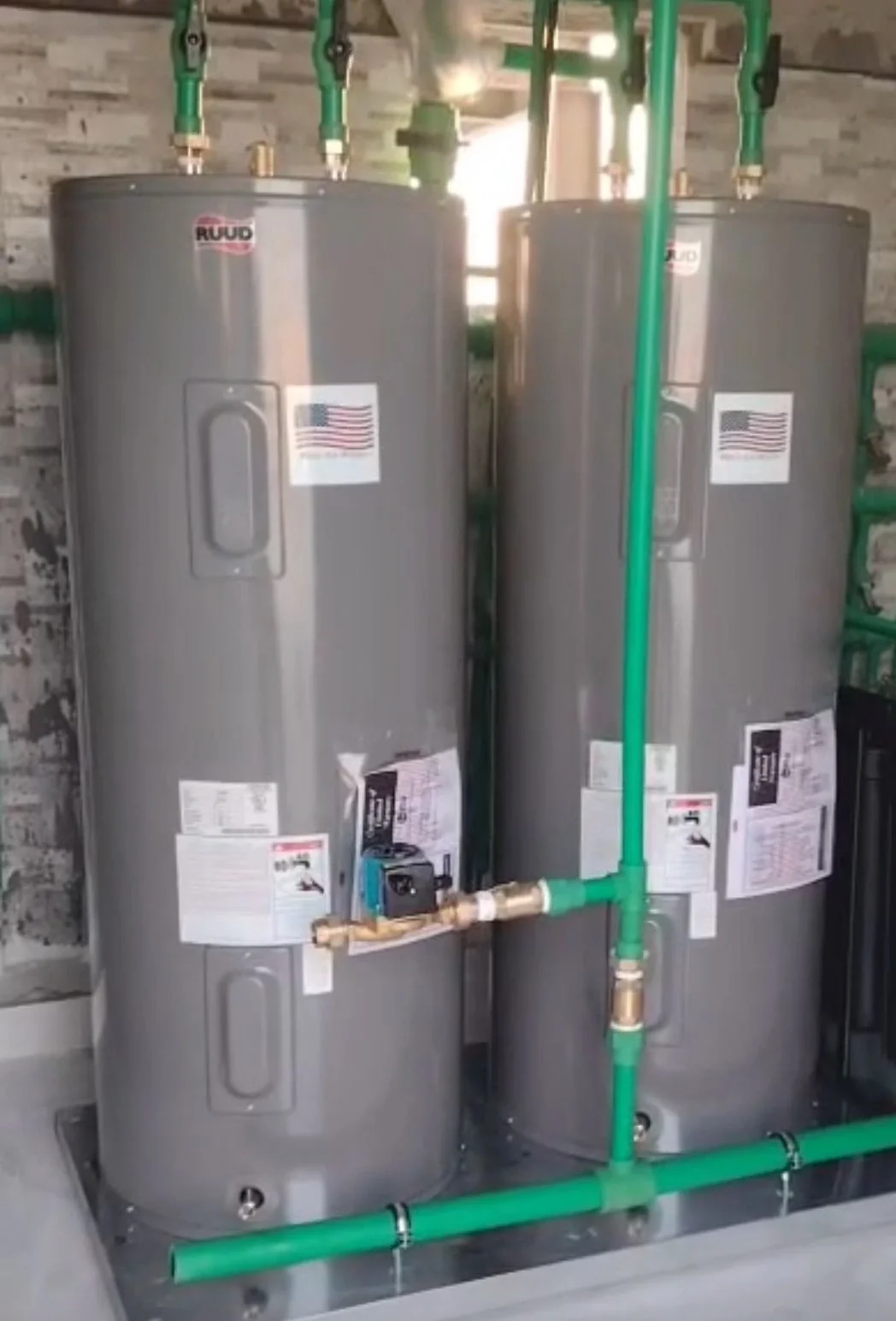
A central water heater can operate for years without you seeing what is happening inside the tank, which is why scale and sediment often build up quietly before becoming an obvious problem. One day you may notice that the water takes longer to heat, another day you may hear a new sound during heating, or you may feel that the amount of usable hot water has decreased even though household demand has not changed. However, these signs do not automatically mean the heater needs cleaning because a weak heating element or faulty thermostat can create similar symptoms. Proper diagnosis looks at the heater’s service history, how performance changed over time, the condition of the heating elements, and the amount of sediment before deciding whether cleaning is really needed.
Scale in the central water heater
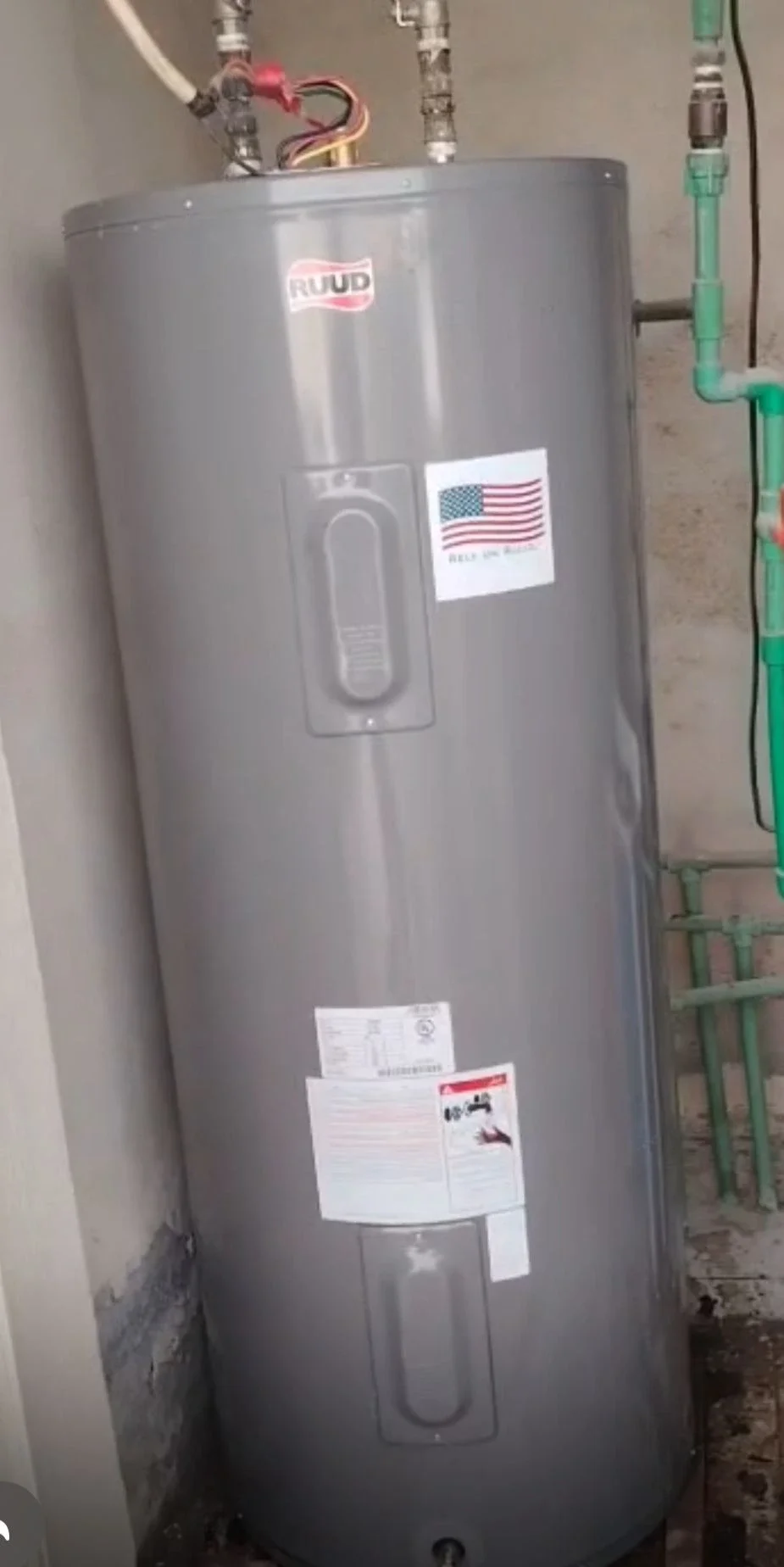
Scale in the central water heater is not simply dirt sitting inside the tank as some people imagine. A water heater can develop two different types of buildup that should be distinguished because their effects and the way they are handled are not exactly the same. Loose sediment and small particles may settle at the bottom of the tank over time, while mineral scale can form more firmly on hot surfaces, especially electric heating elements. When both problems are treated as the same thing, diagnosis becomes less accurate and a customer may assume that draining the tank alone will remove every type of buildup.
Scale covering a heating element is particularly important because the element is designed to transfer heat directly into the water. If it becomes surrounded by a thick mineral layer, heat transfer becomes more difficult and the heater may need longer to reach the required temperature. As buildup increases, the element may also operate under greater thermal stress and its performance can eventually be affected.
Sediment sitting at the bottom of the tank behaves differently. It can accumulate gradually and may appear as small particles or deposited material when the heater is serviced. The amount and speed of this buildup are not the same in every property because they depend on water characteristics, the volume of hot water used, operating temperature, and the length of time between maintenance visits.
This is why it is inaccurate to say that a heater that is three or five years old must contain a specific amount of scale. An older unit may have less buildup than a newer heater simply because the water and operating conditions are different.
A practical example helps explain the difference. If the heater has gradually become slower over several months and has also developed an unusual sound during heating, scale becomes a reasonable possibility. If the heater suddenly loses a large part of its heating ability overnight, checking the heating elements and controls becomes more important because mineral scale normally develops gradually rather than appearing all at once.
Scale also does not automatically mean the entire heater must be replaced. If the tank body is sound, there is no structural leak, and the main problem is serviceable buildup or affected heating components, cleaning and component inspection may be the appropriate route. If the tank itself is leaking, however, removing sediment will not repair damaged metal.
-
Scale attached to heating elements is different from loose sediment collected at the bottom of the tank so identifying where the buildup is located matters before choosing the maintenance method
-
Gradual loss of heating performance can be associated with scale but it does not eliminate the possibility that a heating element or thermostat also needs inspection
-
The age of the heater alone does not determine how much scale is present because water characteristics operating temperature and hot-water usage all affect the speed of buildup
-
Sediment inside the tank does not automatically mean the heater must be replaced because the condition of the tank body and heating components determines whether maintenance is still practical
-
Several signs appearing together such as slower heating new operating noises and reduced usable hot water provide a stronger reason for inspection than relying on one symptom alone
Cleaning sediment from the water heater
Cleaning sediment from the water heater should be based on the actual condition of the unit rather than the assumption that every older heater needs the same procedure. The first question before cleaning should be: what problem are we trying to solve? Is there loose sediment at the bottom of the tank? Is there mineral scale attached to the heating elements? Has the amount of usable hot water dropped? Or does the heater have an electrical fault that will remain even after the tank is thoroughly flushed?
If performance has declined gradually over a long period, sediment buildup is a reasonable cause to investigate. If the heater was working normally yesterday and suddenly heats only a small amount of water today, it would be a mistake to blame sediment immediately. The upper or lower heating element depending on the design, the thermostat, the electrical connections, and the safety controls may all need to be checked by a qualified technician.
Another important distinction is that draining the tank does not always remove all scale. Loose sediment may move out with the water during flushing, while hard scale attached to a heating element can remain in place and require direct inspection of the element. When buildup is severe, replacing a damaged element may be more practical than trying to return it to service regardless of its condition.
Safety is essential. An electric central heater combines hot water, electrical power, and a pressurized tank. Homeowners should not remove electrical covers, disconnect wiring, or pull out heating elements themselves. Even draining the tank involves correct isolation, allowing the water to cool where necessary, and making sure the tank is completely refilled before electrical power is restored.
After professional cleaning, success should not be judged only by how clear the draining water looks. A large amount of sediment may come out while a damaged heating element remains in place. The real test comes after the heater is returned to operation and its heating cycle is monitored to see whether recovery time improves, usable hot water increases, and no leaks appear after refilling.
Another common mistake is using strong cleaning chemicals at random. Any chemical descaling method must be compatible with the heater, the water system, and the manufacturer’s service requirements. Strong acids should not be poured into the system simply because they dissolve mineral scale quickly.
-
Tank cleaning is not a complete solution when the original problem is a failed heating element because sediment and an electrical fault can exist at the same time
-
Loose sediment at the bottom of the tank requires a different approach from hard mineral scale attached to a heating element so the type of buildup should be identified first
-
Opening electrical covers or removing heating elements is not a simple household task because the heater combines electricity hot water and pressure and requires correct isolation and restart procedures
-
The success of cleaning should be confirmed through actual heater performance after restart rather than only by the amount of sediment that came out during draining
-
If a heating element is heavily coated or damaged the decision to clean or replace it should depend on its condition and the heater specifications instead of trying to preserve it at any cost
-
Any product used for descaling must be suitable for the tank components and water system and random acidic cleaners should not be used simply because they remove mineral deposits quickly
Signs of scale buildup in the water heater

Signs of scale buildup in the water heater should not be interpreted one at a time because most symptoms can have more than one explanation. Diagnosis becomes stronger when you look at how the heater’s performance has changed and compare current behavior with how the unit used to operate. If the household, number of users, and shower habits have not changed but the heater has gradually become slower, mineral buildup becomes one of the possibilities worth investigating.
The first important sign is longer recovery time. After a significant amount of hot water has been used, a storage heater normally needs time to heat the replacement water. If this recovery period becomes noticeably longer over time, scale covering the heating elements may be reducing effective heat transfer. Before reaching that conclusion, however, it is important to confirm that all heating elements that should be operating are actually working.
The second sign is that the amount of usable hot water seems lower than before. A customer may describe it as if “the heater has become smaller.” Heavy sediment or mineral buildup can contribute to poor performance, but a failed heating element can create almost the same experience. The difference cannot be confirmed by symptoms alone.
The third sign is the appearance of new sounds during heating. Popping, clicking, rumbling, or another noise that was not present before can sometimes be associated with deposits and heat movement inside the tank. However, sound alone should not be treated as proof of scale. Its location, timing, and whether it appears together with reduced performance all matter.
The fourth sign is visible sediment or particles during tank service. This is direct evidence that deposited material exists inside the heater, but it does not by itself reveal the condition of the heating elements. The bottom of the tank may contain sediment while the elements are in a different condition, or the opposite can be true.
The fifth sign is a noticeable increase in how long the heater runs to achieve the same result when household usage has not changed. In this situation, scale becomes a reasonable possibility because it can reduce the effectiveness of heat transfer.
Water discoloration or unusual odor should not automatically be grouped under scale. These symptoms can relate to corrosion, the anode, plumbing conditions, or other causes and require their own diagnosis.
A combination such as an older heater that has not been inspected for a long time together with slower heating, new noises, and reduced hot-water quantity deserves prompt inspection rather than waiting until a heating element stops completely.
-
A gradual increase in hot-water recovery time is a reason to inspect for scale especially when household demand and required capacity have remained the same
-
Reduced usable hot water does not prove sediment by itself because a failed heating element or thermostat problem can create a very similar result
-
New noises during the heating cycle become more meaningful when they appear together with declining performance rather than treating every sound as definite evidence of scale
-
Visible particles during service confirm that sediment exists inside the tank but they do not show by themselves whether a heating element needs cleaning or replacement
-
A slow decline over several months fits the normal pattern of mineral accumulation more closely than some electrical faults that can appear suddenly
-
Water discoloration requires separate evaluation because sediment corrosion and other system conditions can produce overlapping symptoms
The water heater heats slowly because of scale
When you suspect that the water heater heats slowly because of scale, it is important not to treat mineral buildup as the confirmed cause from the first observation because slow heating has several possible explanations. The real distinction appears when current heating speed is compared with previous performance and you identify whether the change happened gradually or suddenly.
Scale on a heating element can behave like an insulating layer between the element and the water. The element continues producing heat, but transferring that heat into the water becomes less efficient. As the mineral layer becomes thicker, the heater can take longer to reach the required temperature. The change may happen so gradually that the household becomes used to slower performance until the difference becomes obvious.
If the heater was performing normally and then suddenly requires much longer to heat, other possibilities deserve attention. One of the heating elements may have stopped working, the thermostat may no longer be controlling the cycle correctly, or there may be an electrical issue that requires diagnosis.
Consider a practical example. A household has the same number of residents, the same shower schedule, and the same heater capacity for several years. Over a number of months, they begin noticing that the first person gets normal hot water while the heater then needs much longer to recover before the next heavy use. In this situation, checking for scale is reasonable because the decline developed gradually. If the same problem appeared overnight, an electrical fault would become a stronger possibility.
Slow heating should also be separated from insufficient heater capacity. Sometimes the household grows or two bathrooms begin operating at the same time and the family feels that the heater has “become slower,” while the real issue is that demand has increased beyond the original design capacity.
Temperature settings can also affect how performance feels. A change in thermostat setting or a control fault may create the impression that heating has slowed even when scale is not the main problem.
Good diagnosis therefore asks several questions: Is the slowness new? Did it develop gradually? Has the amount of usable hot water also fallen? Has a new sound appeared? Are all heating elements working correctly? Once these pieces are combined, the decision to clean becomes evidence-based rather than a guess.
-
Heating slowdown caused by scale usually develops gradually because mineral layers build over time instead of creating a complete failure instantly
-
If the heater suddenly loses a large amount of heating performance the heating elements and thermostats should be checked before blaming sediment alone
-
More household users or simultaneous bathroom use can feel like slower heating even when the heater itself has not changed
-
Slow recovery together with new operating noises and a long period without maintenance increases the likelihood that scale deserves inspection
-
Comparing current performance with earlier operation under the same usage conditions helps distinguish gradual buildup from a new operating fault
-
Cleaning makes sense when sediment is shown to affect performance rather than being performed automatically just because the heater is old
Cleaning the central water heater tank

Cleaning the central water heater tank is not simply a matter of opening the drain valve and watching water and a few particles come out. Proper service begins with evaluating the condition of the heater and then dealing with sediment in a way that fits the age, design, and physical condition of the unit.
The heater first needs to be safely isolated and prepared for draining according to its type and appropriate service instructions. With electric heaters in particular, power must not be restored before the tank is completely full because energizing heating elements while they are not fully submerged can damage them very quickly.
The sediment at the bottom of the tank can then be addressed. Sometimes the particles are relatively loose and flush out easily. In other heaters that have gone a long time without service, several flushing cycles may be required before the amount of sediment coming out is reduced.
It is important to remain realistic: cleaning the bottom of the tank does not guarantee that mineral scale on the heating elements has disappeared. If the main problem is on the element itself, the technician may need to inspect its condition separately.
The drain valve also deserves attention. In heaters that have not been serviced for a long time, sediment can collect around the drain opening and restrict flow. Random tools or excessive force should not be used in a way that could damage the valve or tank simply to make the water drain faster.
After cleaning, the tank must be refilled correctly, trapped air should be removed through the appropriate procedure, and the service points should be checked for leakage before electrical power is restored.
The next stage is testing. Does the heater return to normal heating performance? Has recovery time improved? Have the operating noises changed? Did any leak appear after service? These questions matter more than the appearance of the sediment that came out.
With very old heaters, the value of cleaning should also be considered before starting. If the tank body already shows serious corrosion or structural leakage, flushing sediment cannot restore damaged metal to its original condition.
Proper tank cleaning is therefore not just draining. It is a complete maintenance process that begins with diagnosis and ends with performance testing.
-
Tank cleaning begins with safe isolation and restart procedures because restoring electricity before the tank is fully filled can damage heating elements
-
Sediment collected at the bottom is different from scale attached to heating elements so removing one does not automatically mean the other has disappeared
-
Restricted flow from the drain valve can be caused by sediment near the opening and should be handled carefully rather than using tools that may damage the valve
-
Correct refilling air removal and leak inspection are essential before the heater is returned to service
-
Cleaning success should be measured by improved performance and stable operation rather than only by how much sediment was removed
-
A tank with significant corrosion or structural leakage needs a different decision because sediment removal cannot repair weakened metal
Sediment inside an American water heater
The presence of sediment inside an American water heater is not a problem connected to one particular brand because Ruud, Rheem, Bradford White, and other storage heaters all hold and heat water and can therefore develop deposits depending on operating and water conditions. The real differences lie in each model’s tank design, protection methods, element positions, and maintenance requirements.
Some homeowners believe an American heater does not require sediment-related maintenance because it is built to a high standard or because the tank includes a protective lining. That assumption is not accurate. Protective technologies help the tank, but they do not prevent every mineral deposit from forming in heated water over time.
Sediment can settle at the bottom or form more firmly on heated components. Over time, its effects may appear as slower heating, less usable hot water, or changes in operating noise.
However, the existence of deposits does not mean every American heater should receive the same service procedure. A Ruud model can differ from a Rheem or Bradford White model in element locations, drain-valve configuration, and access to internal components.
For that reason, the technician should identify the exact model before beginning work. Treating every American heater as if it were built the same way increases the chance of removing a component incorrectly or installing a part that does not match the unit.
The condition of the sacrificial anode should also be considered where the heater design uses one. The anode serves a different function related to corrosion protection and may gradually be consumed over time. Its inspection should follow the requirements of the model and should not be confused with descaling as though they were the same procedure.
Sediment can also affect how a homeowner interprets performance. Sometimes the unit continues working but takes longer to heat. Sometimes the sound changes. In other cases, significant buildup may be present without dramatic symptoms. A lack of obvious symptoms therefore does not guarantee that the inside of the tank is completely clean.
If an American heater has been operating for years without inspection, it is reasonable for sediment evaluation to become part of its maintenance rather than waiting until heating performance deteriorates severely or an element fails.
-
An American water heater can develop sediment like any storage heater because water conditions temperature and usage matter more than the brand name alone
-
Tank linings and protective technologies help reduce some long-term effects but do not prevent every mineral deposit from forming inside the heater
-
Differences between Ruud Rheem and Bradford White models mean access to heating elements and service components should not be treated as identical on every American heater
-
Identifying the exact model before maintenance helps select the correct procedure and parts instead of treating the heater according to external appearance alone
-
The anode performs a corrosion-protection function that is separate from mineral scale so its inspection should not be confused with sediment removal
-
Sediment can exist without dramatic symptoms which is why maintenance history and heater condition remain important even before obvious heating weakness appears
When should the water heater be cleaned of scale?

The question when should the water heater be cleaned of scale does not have one fixed answer for every property because the rate of buildup differs from one home and heater to another. A household that uses a large amount of hot water every day may develop deposits faster than a property with lighter demand. Water characteristics, thermostat setting, heater age, and maintenance history can all change the appropriate timing.
The strongest indicator is not simply the number of years the heater has been installed but whether its performance has changed. If the unit takes noticeably longer to recover, the quantity of usable hot water gradually falls, or new heating noises begin, inspecting for sediment becomes more reasonable than waiting for complete failure.
Maintenance history is also important. If the tank has not been drained or inspected for a long time and there is no record of its internal condition, preventive evaluation may be better than assuming everything is fine simply because hot water is still available.
At the same time, aggressive cleaning should not be performed unnecessarily at very short intervals. Frequent dismantling without a reason is not automatically good maintenance. Proper service should follow the condition of the heater, the instructions for the model, and what was found during previous maintenance.
If the previous cleaning produced a large amount of sediment, that becomes useful information and may justify closer monitoring than a heater where very little buildup was found. Previous maintenance therefore provides practical evidence about the rate of accumulation in that particular property.
Some symptoms also justify inspection earlier than the normal maintenance schedule. A strong new noise, obvious heating weakness, or repeated shortage of hot water should not simply be postponed because the planned cleaning date is still months away. Diagnosis should take priority over the calendar.
If the heater is operating normally with no noticeable performance change, that does not mean maintenance should be forgotten indefinitely. The goal is reasonable periodic evaluation based on actual condition rather than a rigid schedule that treats a clean heater and a heavily sedimented heater exactly the same.
-
Cleaning frequency cannot be determined from heater age alone because water characteristics usage and operating temperature all affect the rate of mineral buildup
-
Gradual performance decline can be a stronger reason for inspection than simply reaching a particular date on the calendar
-
Findings from the previous service help estimate how quickly sediment develops in that specific property more accurately than using a general rule
-
A new operating noise or clear heating weakness may justify inspection before the next planned maintenance visit
-
Cleaning too frequently without a clear reason is not an objective by itself because good maintenance follows the actual condition and service requirements
-
Regular monitoring is better than waiting for total failure because mineral buildup normally develops gradually before it causes an obvious problem
Weak heating caused by sediment
Weak heating caused by sediment can occur when mineral scale or deposits begin to interfere with effective heat transfer or the operating conditions around the heating elements. The challenge is that the same symptom can be produced by other faults, which is why the cause should be separated before cleaning is treated as the only solution.
If a heating element is surrounded by a thick mineral layer, it may need to operate under more difficult conditions to transfer the same amount of heat into the water. The result can be longer operating time and slower recovery after hot water is used.
If one heating element fails completely, however, the homeowner may experience almost the same thing: the water still becomes hot, but it heats more slowly or the hot supply runs out sooner than before. Cleaning alone cannot restore a failed element.
The thermostat can also contribute to poor heating. If it does not activate the element at the correct time or does not control the cycle properly, heater performance can change even when the tank does not contain a large amount of scale.
Changes in household demand must also be considered. A larger family or more simultaneous shower use can create the impression that the heater has become weak even though the appliance is still operating within its original design capacity.
For example, if a heater served the same household reliably for years and then over several months began taking longer to recover while also developing a noticeable heating noise, sediment becomes a stronger possibility. If the problem started immediately after an electrical issue or another sudden event, checking the electrical side becomes a higher priority.
Another useful sign is a heater that runs significantly longer to achieve the same temperature it used to reach more quickly. Even this should be interpreted together with the rest of the symptoms.
Good diagnosis does not ask only, “Is there scale?” It asks, “Is scale actually the main reason for the weak heating, or is it simply present alongside another fault?”
-
Heating weakness related to sediment usually develops gradually because the effect of mineral scale increases as buildup becomes heavier
-
Failure of one heating element can create symptoms very similar to scale so the elements should be checked before cleaning is treated as the complete answer
-
Thermostat faults can alter the heating cycle even when the tank itself is not heavily contaminated with sediment
-
Household usage changes must be considered because increased demand can look like heater weakness even when the unit is working normally
-
Slower heating combined with new operating noise and a long period without maintenance increases the likelihood that sediment is affecting performance
-
The purpose of diagnosis is not merely to prove that scale exists but to determine whether it is the main cause or only a secondary condition
Removing particles from the water heater
Removing particles from the water heater is different from removing hard mineral scale attached to a heating element because the particles are often loose or partially settled deposits at the bottom of the tank. During draining, they can appear as small grains, fragments, or accumulated material leaving with the water.
The presence of these particles confirms that buildup exists inside the tank, but it does not by itself tell you the condition of the other components. A tank can contain a large amount of loose sediment while the heating element remains in acceptable condition, or the opposite may be true.
During tank cleaning, the deposits should be handled gradually and in a way that does not damage the drain valve. A common mistake is inserting metal tools or attempting to break hardened deposits aggressively through a small drain opening. This can damage the valve or other components and create a larger problem than the original sediment.
Sometimes particles partially block the drain opening itself. In this situation, the technician should manage the restricted flow carefully rather than forcing the system or using unsuitable objects.
After sediment removal, the tank needs to be refilled and tested because some problems only become apparent once the heater is operating again. A leak may appear around a valve that was disturbed during service, or the technician may discover that heating performance has not improved because the real issue is a damaged heating element.
It is also not useful to focus too heavily on the exact color or shape of particles and treat each appearance as a fixed diagnosis. Deposits can be influenced by water conditions and materials inside the heater, so color alone is not a reliable way to identify the cause.
If very large amounts of sediment repeatedly appear every time the heater is drained, that becomes valuable information indicating that the tank may require closer monitoring and a broader maintenance evaluation.
The objective is therefore not simply to remove visible particles. The real goal is to reduce the effect of buildup on the heater and confirm that the rest of the system remains in healthy operating condition.
-
Loose particles at the bottom of the tank are different from scale attached to heating elements so removing one type of buildup does not mean every deposit has been eliminated
-
A drain valve restricted by sediment should be handled carefully rather than using tools that could damage the valve or tank
-
The color and appearance of sediment alone are not enough to identify the cause because water and tank conditions can influence what is seen during draining
-
The heater should be tested after particle removal because the original problem may still exist in the heating elements or control system
-
Repeatedly finding a large quantity of sediment during service indicates a higher accumulation rate and justifies closer monitoring
-
The success of the service should be judged by stable heater performance after cleaning rather than only by the amount of sediment that was removed
Water heater maintenance for scale buildup
Water heater maintenance for scale buildup does not mean a technician simply arrives, drains the tank, and leaves. Proper maintenance begins with evaluating the whole heater because sediment can be part of the problem or may exist together with another fault. The first step is therefore to review performance: how long the heater takes to recover, whether the amount of usable hot water has changed, whether new noises have appeared, and whether the heater cycles normally.
The next step is identifying whether the buildup is mainly at the bottom of the tank, attached to the heating elements, or present in both places. This distinction matters because loose sediment can move during flushing while hard scale on an element requires direct assessment of the element and how severely it has been affected.
The drain valve should also be inspected to make sure it can function without severe restriction from sediment. If flow is difficult, the problem should not be attacked with force because the objective is to protect the valve and tank rather than remove deposits at any cost.
Heating elements and thermostats should be checked when symptoms suggest weak performance. The presence of scale does not eliminate the possibility of an electrical problem. A heating element can already be weak or completely failed, and cleaning alone will not restore performance if the true cause lies elsewhere.
With older heaters, the tank body itself deserves broader evaluation. If there is leakage directly from the tank shell or significant corrosion, descaling cannot turn structurally damaged metal back into a sound tank.
When maintenance is complete, the heater should be refilled correctly and the tank confirmed full before power is restored. The system should then be tested for heating performance and leakage through a complete operating cycle.
It is also useful to maintain a simple service record. Knowing when the last inspection was performed, how much sediment was found, and what condition the heating elements were in provides valuable information during the next service visit and prevents starting the diagnosis from zero each time.
-
Scale maintenance begins with performance diagnosis because sediment can exist together with another fault that requires separate attention
-
Identifying whether buildup is at the bottom of the tank or attached to the heating elements determines the appropriate maintenance approach
-
The drain valve is part of the inspection because sediment can restrict it and make the cleaning process itself more difficult
-
Heating elements and thermostats should be tested when symptoms indicate weakness so an electrical fault is not incorrectly blamed on scale
-
The tank body must also be assessed because cleaning cannot repair structural corrosion or leakage
-
Keeping a record of the last cleaning sediment quantity and heating-element condition makes future maintenance decisions more accurate and evidence-based
Conclusion
If your central water heater has become slower to heat, produces less usable hot water, or has started making new sounds during operation, do not immediately assume the cause is definitely scale. Sediment is an important possibility, but correct diagnosis distinguishes between mineral buildup on heating elements, loose sediment at the bottom of the tank, a failed heating element, thermostat trouble, and changes in household demand.
Scale normally accumulates gradually, so a slow decline in performance is more consistent with buildup than a fault that appears suddenly. Visible particles during service confirm that sediment exists, but they do not by themselves prove that every heater problem is caused by those deposits.
There is no single cleaning interval that is correct for every household. The proper timing depends on water conditions, usage patterns, maintenance history, and what was found during previous service. If the heater is very old or the tank body is already leaking, cleaning may no longer be the main solution.
Most importantly, maintenance should not become a cosmetic procedure. The real objective is to restore normal heating performance, keep the system operating safely, and understand the internal condition of the heater rather than simply draining it without confirming whether the actual problem has been solved.
Frequently Asked Questions
How can I tell if my water heater has scale?
The strongest indication is when several symptoms appear together such as slower heating, reduced usable hot water, new operating noises, and a long period without cleaning. Confirmation still requires inspection because other faults can create similar symptoms.
Does slow heating mean the heater definitely needs cleaning?
Not always. A weak heating element or faulty thermostat can create the same problem, which is why diagnosis should come before deciding to clean the heater.
Is sediment at the bottom of the tank different from scale on the elements?
Yes. Loose sediment can collect at the bottom of the tank while hard scale can attach directly to heating elements and hot surfaces. Each type of buildup can affect the heater differently.
When should I clean scale from the water heater?
There is no fixed interval for every home. The decision should consider performance changes, maintenance history, water characteristics, and how much sediment was found during previous service.
Will cleaning the tank restore normal heating?
It can improve performance when sediment is the main cause, but if a heating element is damaged or the thermostat has failed, cleaning alone will not solve the problem.
Are noises inside the heater a sign of scale?
They can be associated with sediment or mineral buildup, but noise is not conclusive evidence because several other conditions can also create unusual sounds.
Is it normal to see particles when the tank is drained?
Some sediment can develop over time, but a large amount of particles or heavy recurring buildup is a reason to evaluate the heater more closely.
Does an American water heater need sediment cleaning?
It may, depending on water conditions, usage, and the specific model. The brand name alone does not prevent mineral deposits from developing inside the tank.
Can I clean the water heater myself?
A central electric heater combines electricity, hot water, and pressure. Removing heating elements, opening electrical sections, or working on internal connections should be handled by a technician familiar with correct isolation, draining, refilling, and restart procedures.
Does scale mean the heater must be replaced?
No. Scale by itself does not mean the heater has reached the end of its life. Replacement depends on the condition of the tank body, heating elements, corrosion, leakage, and whether maintenance remains practical.