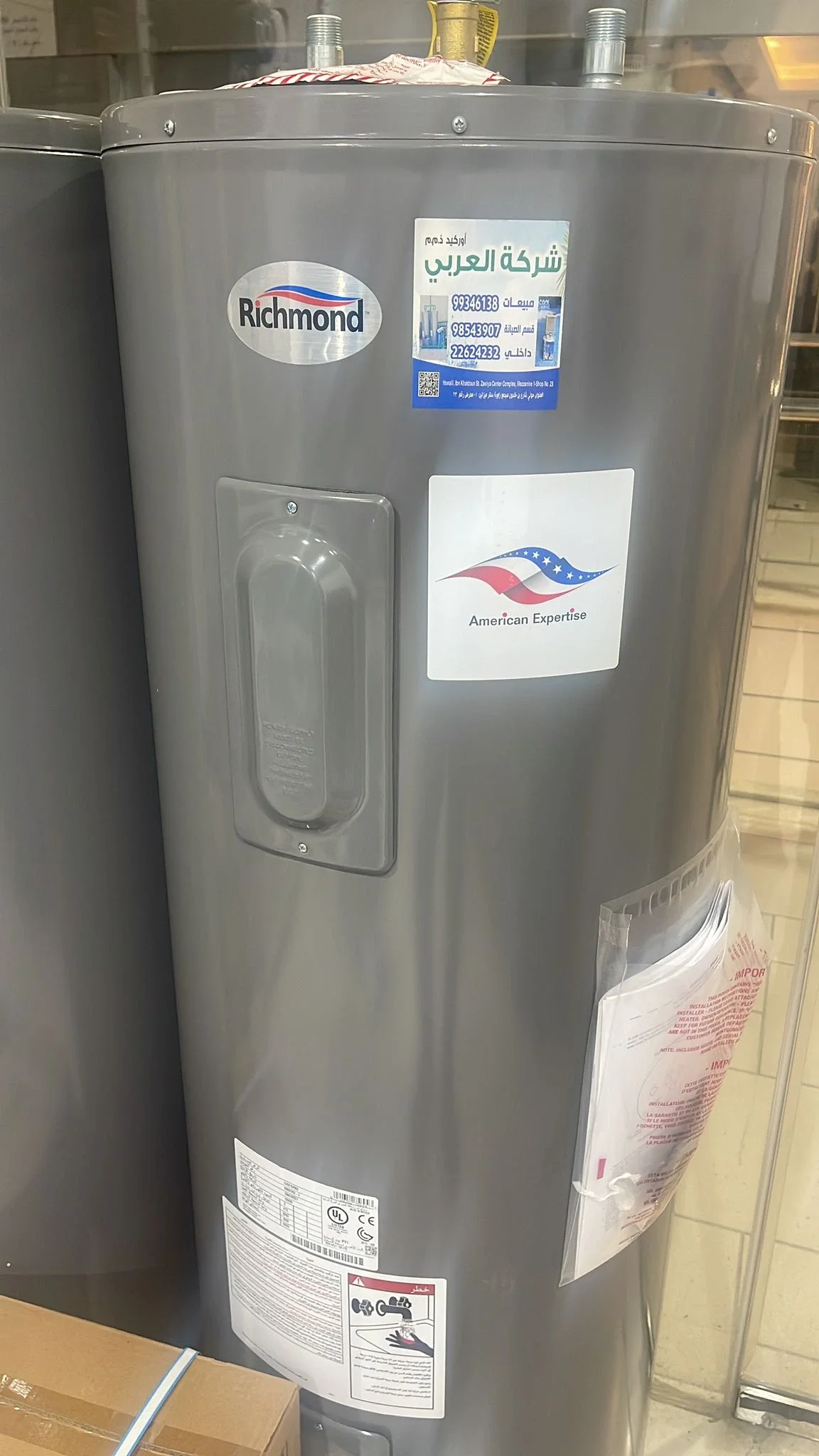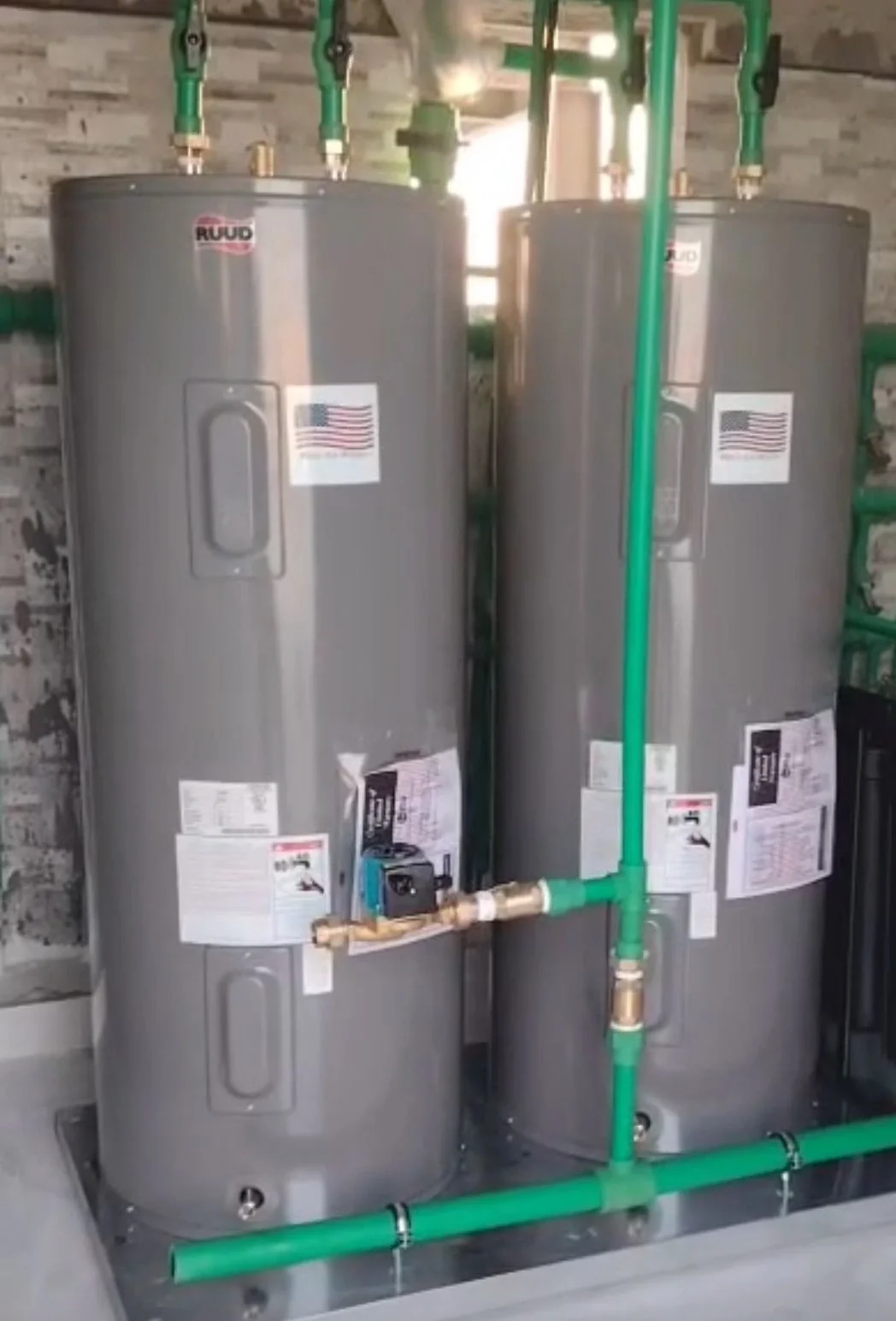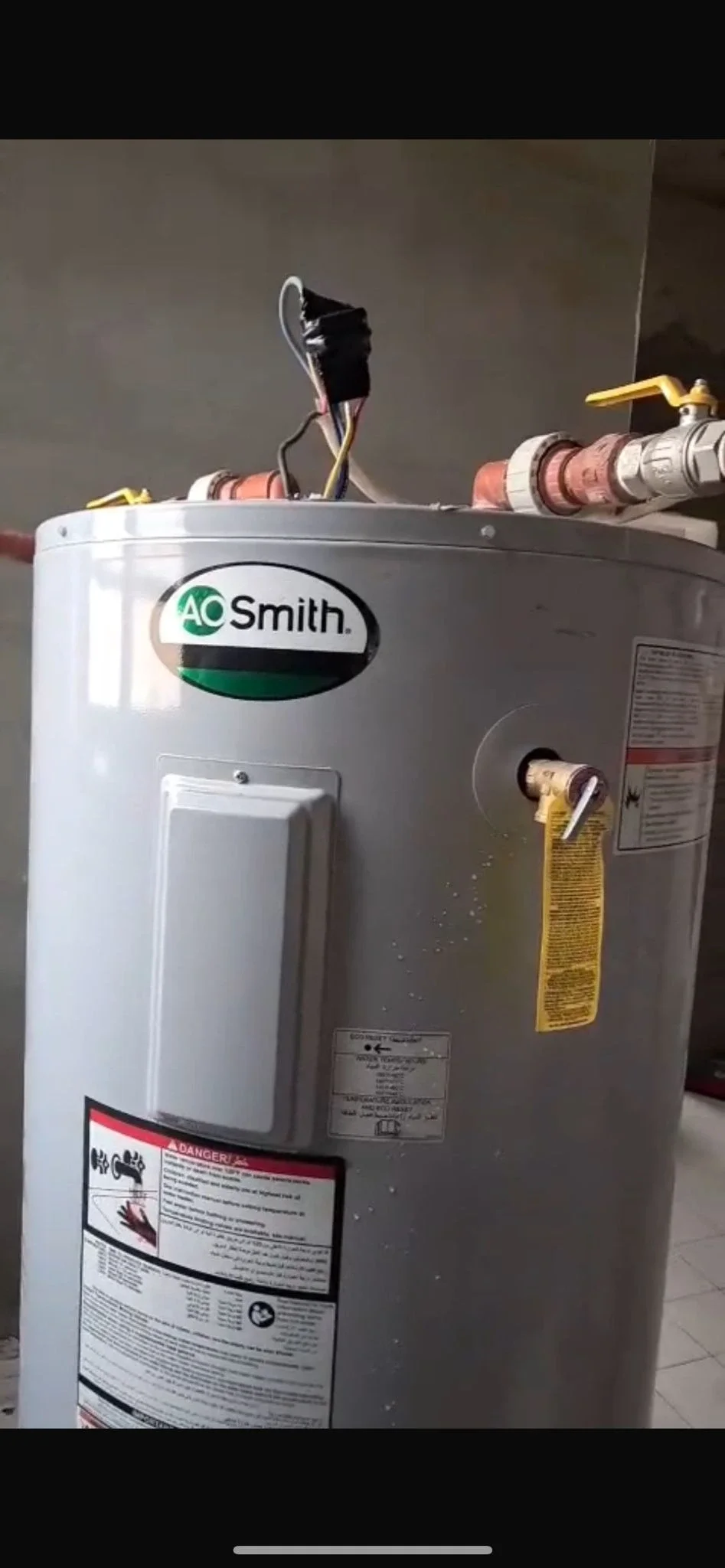
A central water heater that repeatedly turns on and off within short periods is one of the most common operating issues homeowners notice. Many people assume this behavior is completely normal because the heater is controlled by a thermostat that regulates water temperature. However, extensive practical experience servicing American central water heaters throughout Kuwait has consistently demonstrated that there is a significant difference between a normal heating cycle and repeated, abnormal cycling. Frequent switching between operation and shutdown may indicate problems involving the thermostat, heating elements, electrical controls, water pressure, or the thermal insulation of the storage tank. Professional technicians therefore analyze the complete operating cycle before replacing any component because identifying the actual engineering cause saves unnecessary expenses, restores stable operation, improves heating efficiency, and extends the service life of the entire water heating system.
Why Does the Central Water Heater Keep Turning On and Off Even When No Obvious Fault Is Visible?
When homeowners notice that the central water heater keeps turning on and off repeatedly, many immediately believe the electrical supply is unstable or that the heater has reached the end of its useful life. Extensive practical experience servicing American central water heaters throughout Kuwait has consistently demonstrated that this operating behavior may result from several completely different engineering conditions depending on the specific heater and its operating environment. In some situations, repeated cycling occurs because the storage tank loses heat too quickly due to deteriorated insulation, forcing the heating system to restart more frequently than normal. In other cases, inaccurate thermostat readings cause the control system to switch the heater off before the water actually reaches the intended temperature. Reduced heating element efficiency, heavy mineral deposits that interfere with heat transfer, or unstable electrical voltage may also force the heater to complete multiple heating cycles before achieving the desired water temperature. Professional technicians therefore monitor the complete operating cycle while measuring heating time, shutdown intervals, actual water temperature, heating element performance, thermostat accuracy, and electrical power consumption. Water pressure, electrical connections, and operating efficiency are also evaluated to confirm that every component functions within manufacturer specifications. After every engineering measurement has been analyzed, technicians identify the true cause of repeated operating cycles before implementing the appropriate repair strategy. Extensive practical experience throughout Kuwait consistently demonstrates that accurate engineering diagnosis restores stable heater operation, lowers electricity consumption, reduces unnecessary mechanical wear, and significantly extends the lifespan of internal components.
Why Does the Water Heater Restart Repeatedly and How Does This Affect Overall Performance?
If the water heater keeps restarting repeatedly within very short intervals and cannot maintain hot water temperature for a reasonable period, this usually indicates an imbalance somewhere within the heating system rather than normal thermostat operation. Extensive practical experience diagnosing American central water heaters throughout Kuwait has consistently demonstrated that repeated restarting may result from deteriorated thermal insulation, inaccurate temperature sensors, mineral accumulation restricting heat transfer, hidden hot water leaks within the plumbing system, or an undersized heater attempting to satisfy unusually high household demand. Each of these engineering conditions forces the heater to activate far more frequently than originally designed. Professional technicians therefore monitor heater performance over an extended period while measuring water temperature inside the storage tank, evaluating thermostat response, inspecting insulation quality, calculating household hot water consumption, and checking the plumbing system for concealed heat loss or water leakage. Heating efficiency, operating pressure, and electrical performance are analyzed together before determining the actual engineering reason responsible for repeated restart cycles. Once the true cause has been identified, technicians implement corrective repairs directed specifically at the underlying problem instead of merely adjusting thermostat settings or replacing components unnecessarily. Extensive practical experience throughout Kuwait consistently demonstrates that resolving the true cause of repeated restarting significantly improves heater efficiency, reduces operating cycles, lowers electricity consumption, and restores dependable long-term performance.
What Causes a Central Water Heater to Shut Off Repeatedly and How Do Technicians Identify the Exact Problem?
The cause of repeated central water heater shutdown varies considerably from one situation to another, making professional engineering diagnosis essential before replacing any mechanical or electrical component. Extensive practical experience servicing American central water heaters throughout Kuwait has consistently demonstrated that shutdown cycles may occur because the thermostat is correctly protecting the heater from overheating, because the heating element reaches excessive operating temperatures, because electrical control circuits become unstable, because supply voltage fluctuates, or because heavy mineral deposits reduce heat transfer inside the storage tank. Professional technicians therefore begin by measuring electrical voltage during operation before testing thermostat calibration, evaluating heating element performance, comparing actual water temperature with thermostat readings, inspecting all electrical connections, and verifying the operation of every thermal protection device. The complete operating cycle is carefully monitored to determine whether shutdown always occurs at a specific water temperature or after a predictable operating period because these patterns provide valuable engineering information about the underlying mechanical condition. After completing every technical measurement, technicians identify the exact component responsible for repeated shutdown before performing targeted repairs without replacing perfectly functional parts. Extensive practical experience throughout Kuwait consistently demonstrates that this engineering-based diagnostic process restores stable operation, eliminates unnecessary maintenance costs, and prevents the same problem from returning after repairs have been completed.
Why Doesn't the Water Heater Maintain Stable Operation Even Though the Heating Element Is Working Properly?
Homeowners sometimes discover that the water heater does not maintain stable operation even after confirming that the heating element is functioning correctly and that the electrical supply remains stable. This often leads people to believe that simply restarting the heater will solve the problem. However, extensive practical experience servicing American central water heaters throughout Kuwait has consistently demonstrated that unstable operating cycles usually result from the interaction of several control components rather than a failure of a single part. In many situations, the thermostat may interrupt the heating cycle before the water reaches its intended temperature because its calibration gradually becomes inaccurate over time. In other cases, deteriorated thermal insulation allows stored hot water to lose heat rapidly, forcing the heater to restart much sooner than normal. Heavy mineral deposits surrounding the heating element may also reduce heat transfer efficiency, causing the control system to respond incorrectly because the heating element becomes much hotter than the surrounding water. Professional technicians therefore measure water temperature at multiple locations inside the storage tank before comparing those readings with thermostat measurements. Heat loss is monitored after shutdown, insulation performance is evaluated, and electrical consumption is analyzed throughout consecutive operating cycles. Every engineering measurement is carefully compared before determining the true cause of unstable operation. Once the underlying problem has been identified, technicians perform targeted repairs that restore balanced operating cycles, reduce unnecessary restarts, improve heating efficiency, and significantly decrease long-term electrical consumption. Extensive practical experience throughout Kuwait consistently demonstrates that correcting the engineering cause rather than replacing random components provides the most reliable long-term operating performance.
How Are Water Heater Operating Problems Professionally Diagnosed?
Professional diagnosis of water heater operating problems requires evaluating the complete operating cycle instead of focusing only on the moments when the heater switches on or off. Extensive practical experience diagnosing American central water heaters throughout Kuwait has consistently demonstrated that many different mechanical and electrical faults produce nearly identical symptoms, making systematic engineering analysis essential before repairs begin. Professional technicians therefore record complete operating cycles, including total heating time, shutdown duration, restart frequency, electrical voltage, current consumption, heating element efficiency, thermostat performance, and actual water temperature throughout operation. Internal electrical connections, thermal protection systems, storage tank insulation, and household hot water consumption are also evaluated because unusually high demand may create the false impression of a mechanical fault even when the heater is functioning normally. Water pressure, valve performance, and plumbing conditions are examined whenever they may influence heating stability. After gathering every engineering measurement, technicians prepare a complete technical assessment explaining whether the problem originates from electrical components, mechanical equipment, plumbing conditions, operating controls, or actual household usage patterns. Extensive practical experience throughout Kuwait consistently demonstrates that this engineering-based diagnostic process prevents unnecessary replacement of perfectly functional components while permanently resolving the actual operating problem instead of temporarily masking its symptoms.
Why Does the Water Heater Thermostat Keep Switching Off and Should It Always Be Replaced?
When homeowners discover that the water heater thermostat keeps switching off repeatedly, many immediately assume that the thermostat itself has failed and must be replaced. However, extensive practical experience servicing American central water heaters throughout Kuwait has consistently demonstrated that this conclusion is frequently incorrect. In many situations, the thermostat functions exactly as designed but responds to abnormal heating conditions created by excessive mineral deposits, inefficient heat transfer, unstable electrical supply, or inaccurate temperature distribution inside the storage tank. Heavy scale accumulation may cause the heating element to reach unusually high temperatures even though the surrounding water remains relatively cool, forcing the thermostat to interrupt operation in order to protect the system. Electrical irregularities or deteriorating heating elements may also create misleading temperature conditions that trigger repeated thermostat shutdown without any actual thermostat failure. Professional technicians therefore never replace the thermostat before performing complete engineering testing. Actual water temperature is compared with thermostat readings, sensor response is evaluated, heating element performance is measured, thermal insulation is inspected, and operating conditions throughout the entire heating cycle are carefully analyzed. Only when engineering measurements confirm that the thermostat itself has lost calibration or no longer responds accurately is replacement recommended. Otherwise, repairs focus directly on the true mechanical or electrical cause responsible for repeated shutdown. Extensive practical experience throughout Kuwait consistently demonstrates that thorough engineering diagnosis before replacing the thermostat saves considerable maintenance costs while restoring stable operating cycles and preventing recurring problems.
How Is a Water Heater Operating Cycle Professionally Restored Without Replacing Unnecessary Components?
Professional repair of a water heater operating cycle begins with identifying the actual engineering condition responsible for repeated shutdown and restart rather than replacing the thermostat or heating element simply because abnormal cycling has been observed. Extensive practical experience servicing American central water heaters throughout Kuwait has consistently demonstrated that many heaters experiencing unstable operating cycles require system optimization rather than major component replacement. Professional technicians first remove mineral deposits whenever scale buildup interferes with heat transfer, then evaluate heating element efficiency, recalibrate the thermostat whenever engineering measurements reveal inaccurate temperature control, inspect every electrical connection, verify stable voltage supply, test the pressure relief valve, and evaluate the thermal insulation surrounding the storage tank. Once maintenance has been completed, the heater is operated through several complete heating cycles while technicians record operating time, shutdown intervals, electrical consumption, water temperature stability, and thermostat response to verify that normal operating conditions have been fully restored. These engineering measurements are then compared with the data collected before repairs began in order to confirm measurable improvements rather than temporary changes. Extensive practical experience throughout Kuwait consistently demonstrates that correcting the complete operating cycle using engineering analysis significantly improves heater efficiency, reduces unnecessary operating cycles, minimizes electrical consumption, and protects internal components from excessive wear caused by repeated restarting.
How Can Repeated Water Heater Shutdown Be Permanently Solved Instead of Temporarily Corrected?
A permanent solution for repeated water heater shutdown cannot be achieved simply by restarting the heater or replacing random components because repeated cycling usually indicates an underlying engineering problem affecting the entire operating system. Extensive practical experience servicing American central water heaters throughout Kuwait has consistently demonstrated that long-term solutions begin with evaluating every factor influencing heater performance, including heating element efficiency, thermostat accuracy, electrical connections, operating voltage, water pressure, storage tank insulation, internal mineral deposits, and overall thermal performance. After the actual engineering cause has been identified, technicians implement a comprehensive repair plan focused exclusively on the defective condition, whether that requires removing mineral deposits, recalibrating the thermostat, repairing electrical wiring, replacing a deteriorated component, or restoring proper heat transfer inside the storage tank. The heater is then tested under multiple operating conditions to verify stable performance without unnecessary shutdown or repeated restarting. Homeowners also receive preventive maintenance recommendations covering operating temperature settings, routine servicing schedules, periodic cleaning, and proper system monitoring to help preserve stable performance over many years. Extensive practical experience throughout Kuwait consistently demonstrates that addressing the root engineering cause eliminates recurring shutdown problems, reduces electricity consumption, improves heating efficiency, and extends the overall lifespan of the water heating system.
Why Is Routine Maintenance of the Water Heater Operating System Essential for Long-Term Performance?
Regular maintenance of the water heater operating system is often overlooked by homeowners as long as hot water remains available. However, extensive practical experience servicing American central water heaters throughout Kuwait has consistently demonstrated that most major operating failures begin with minor changes in heating cycles that can easily be detected during preventive maintenance long before serious mechanical damage develops. Professional maintenance includes inspecting thermostat calibration, testing heating elements, evaluating electrical wiring, measuring operating voltage, monitoring water pressure, removing mineral deposits, inspecting thermal insulation, verifying heating cycle duration, and confirming that every protective safety device functions according to manufacturer specifications. Pressure relief valves, thermal protection systems, electrical controls, and all operating components are examined to ensure they continue functioning together without excessive cycling or unnecessary mechanical stress. This preventive engineering approach allows technicians to identify gradual performance deterioration before it develops into complete equipment failure or significantly increased electricity consumption. Extensive practical experience throughout Kuwait consistently demonstrates that scheduled preventive maintenance substantially lowers long-term repair costs, extends equipment lifespan, preserves stable operating cycles, maintains heating efficiency, and ensures reliable hot water production even under heavy daily household usage.
When Should You Call a Central Water Heater Operating Specialist Instead of Trying Home Repairs?
Hiring a central water heater operating specialist becomes the most practical solution whenever the heater continues switching on and off repeatedly despite adjusting temperature settings, checking the electrical supply, or performing basic household troubleshooting. Extensive practical experience servicing American central water heaters throughout Kuwait has consistently demonstrated that repeated operating cycles usually indicate engineering conditions that cannot be accurately identified without specialized diagnostic equipment. Many homeowners spend considerable amounts of money replacing thermostats, heating elements, or even the entire water heater before discovering that the actual problem was caused by mineral deposits, unstable electrical connections, deteriorated insulation, incorrect thermostat calibration, or another relatively minor condition within the operating system. Professional technicians therefore use precision instruments to measure electrical voltage, current consumption, thermostat accuracy, heating element efficiency, operating temperature, and complete heating cycle performance while carefully monitoring restart frequency and shutdown intervals under actual operating conditions. Every electrical and mechanical component is evaluated together before any recommendation is made regarding repair or replacement. Once the engineering diagnosis has been completed, technicians explain the exact cause of the operating problem, identify the corrective repair required, estimate the expected service life after maintenance, and provide practical recommendations for preserving stable operating performance in the future. Extensive practical experience throughout Kuwait consistently demonstrates that involving an experienced specialist at the earliest stage saves significant repair costs, prevents unnecessary component replacement, restores dependable operating cycles, and greatly extends the overall service life of the complete water heating system.
Conclusion
If your central water heater keeps turning on and off repeatedly, you should never assume that this behavior is simply part of its normal operating cycle without first understanding how the heating system is actually performing. Extensive practical experience servicing American central water heaters throughout Kuwait has consistently demonstrated that repeated cycling often serves as an early engineering warning sign indicating problems involving the thermostat, heating elements, electrical controls, thermal insulation, or the complete operating system. The earlier these engineering conditions are accurately diagnosed, the easier and less expensive they become to correct while preventing unnecessary wear on internal components caused by excessive operating cycles.
Throughout this comprehensive guide, we examined every important engineering aspect related to situations where the central water heater keeps turning on and off repeatedly, explained why the water heater keeps restarting repeatedly, analyzed the most common causes of repeated central water heater shutdown, discussed why the water heater does not maintain stable operation, explained the professional process used for diagnosing water heater operating problems, examined the engineering reasons why the water heater thermostat keeps switching off repeatedly, described the correct methods for repairing a water heater operating cycle, presented the most reliable engineering approach for solving repeated water heater shutdown, explained the importance of routine maintenance of the water heater operating system, and finally demonstrated when homeowners should contact a central water heater operating specialist to achieve a permanent solution.
Ultimately, maintaining a stable operating cycle is one of the strongest indicators of a healthy and efficient water heating system. Routine preventive maintenance, scheduled removal of mineral deposits, periodic thermostat calibration, inspection of electrical connections, verification of heating element performance, and complete engineering system evaluations all work together to reduce electricity consumption, extend equipment lifespan, improve heating efficiency, and ensure dependable hot water production for many years of reliable service.
Frequently Asked Questions
Why does my central water heater keep turning on and off repeatedly?
Repeated operating cycles may result from thermostat calibration problems, mineral buildup, deteriorated insulation, reduced heating element efficiency, unstable electrical controls, or other engineering conditions affecting the operating system.
Is it normal for a water heater to restart frequently?
A normal water heater cycles according to water temperature and household demand. However, unusually frequent restarting often indicates an underlying mechanical or electrical condition that should be professionally diagnosed.
Why doesn't my water heater maintain stable operation?
Rapid heat loss, deteriorated insulation, thermostat calibration problems, inefficient heating elements, or heavy mineral deposits may all prevent the heater from maintaining stable operating cycles.
How are water heater operating problems professionally diagnosed?
Technicians evaluate complete heating cycles, electrical voltage, current consumption, thermostat performance, heating element efficiency, water temperature, operating pressure, insulation quality, and overall system behavior before identifying the true engineering cause.
Does a thermostat that repeatedly switches off always need replacement?
No. A properly functioning thermostat may respond to overheating caused by mineral deposits, poor heat transfer, electrical irregularities, or other operating conditions rather than an actual thermostat failure.
How is an unstable operating cycle professionally repaired?
Professional repairs focus on correcting the underlying engineering cause by cleaning mineral deposits, recalibrating the thermostat, repairing electrical connections, restoring efficient heat transfer, or replacing only components confirmed to be defective through testing.
Can mineral deposits cause repeated operating cycles?
Yes. Mineral buildup reduces heat transfer efficiency, forcing the heater to operate longer and restart more frequently while increasing electricity consumption.
Does preventive maintenance reduce repeated shutdown problems?
Yes. Routine maintenance allows technicians to identify developing engineering problems early, clean the storage tank, inspect operating controls, and restore proper system performance before repeated cycling becomes a serious issue.
When should I contact a professional technician?
Professional assistance is recommended whenever repeated shutdown and restart cycles continue after basic adjustments, when electricity consumption increases unexpectedly, when heating performance becomes inconsistent, or whenever the operating cycle changes noticeably from normal behavior.
How can I maintain stable water heater operation in the future?
Regular tank cleaning, thermostat inspection, heating element evaluation, electrical connection testing, scheduled preventive maintenance, and professional engineering inspections all help preserve stable operating cycles, maximize heating efficiency, reduce energy consumption, and significantly extend the service life of the complete water heating system