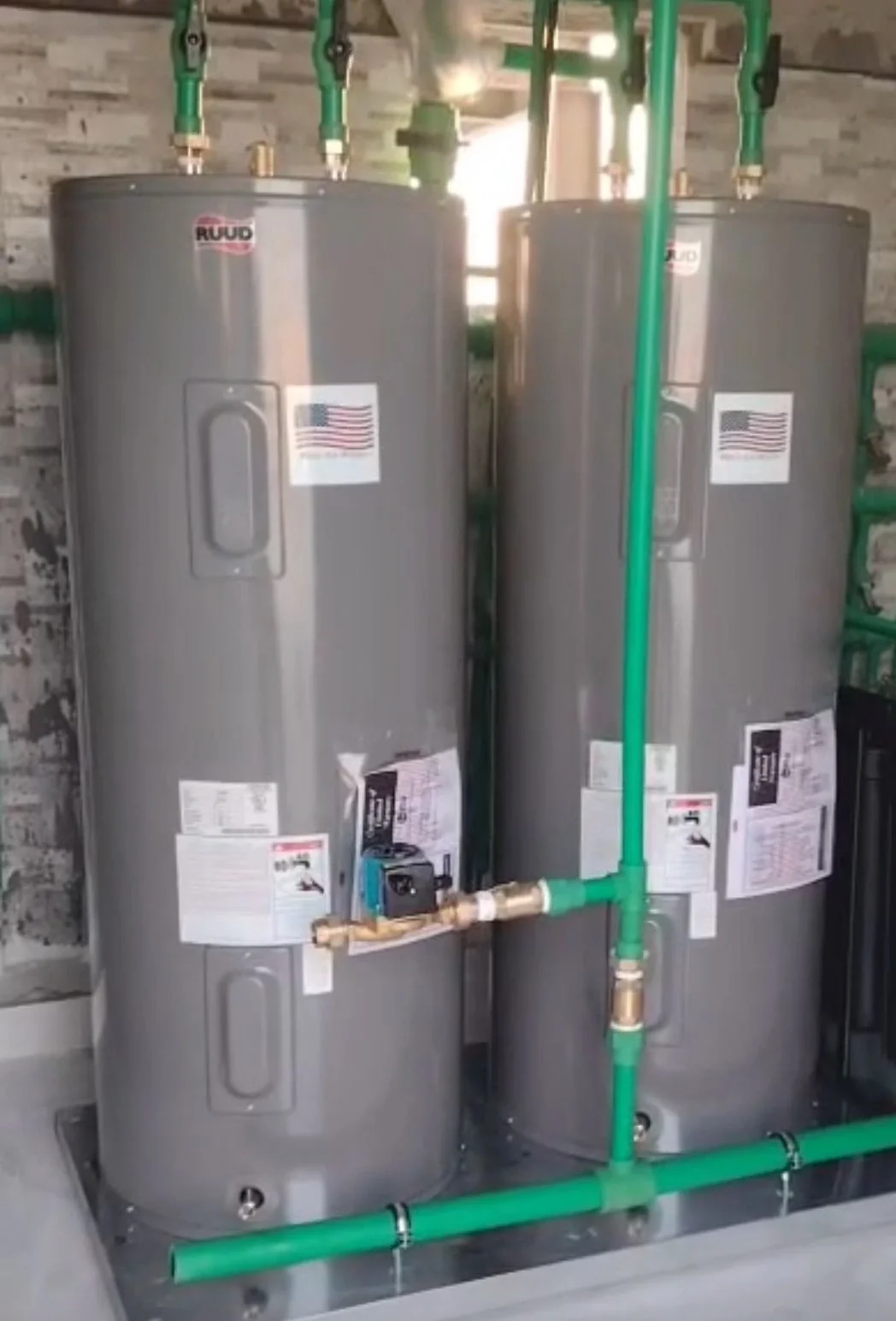
When a central water heater is not heating water, many homeowners immediately assume that the heating element has failed and needs to be replaced. In reality, the problem is often far more complex than replacing a single component. Extensive practical experience diagnosing and repairing American central water heaters throughout Kuwait has consistently shown that several different faults can produce exactly the same symptom, making accurate diagnosis the most important step before any repair begins. Replacing parts without proper testing frequently increases repair costs while leaving the original problem unresolved. This guide explains the professional diagnostic process used to identify the actual cause of heating failure, helping homeowners understand why technical inspection should always come before replacing any components.
Why Doesn't a Central Water Heater That Is Not Heating Water Automatically Mean the Heating Element Has Failed?
When homeowners discover that the central water heater is not heating water, the first assumption is usually that the heating element has burned out and requires immediate replacement. However, extensive practical experience servicing central water heaters throughout Kuwait has consistently demonstrated that numerous different faults can produce the same symptom even when the heating element remains completely functional. Reduced heating performance may result from a faulty thermostat that fails to send the proper control signal, unstable electrical voltage, heavy mineral deposits covering the heating element and reducing heat transfer efficiency, pressure relief valve problems, or even plumbing system issues affecting water circulation. Professional technicians therefore begin every diagnosis by measuring incoming electrical voltage, testing heating element resistance, evaluating thermostat operation, monitoring electrical current consumption during active heating cycles, and confirming that water enters the storage tank correctly while maintaining normal operating pressure throughout the plumbing system. The internal condition of the storage tank is also examined for mineral deposits or early corrosion that may interfere with heat transfer, while all plumbing connections are inspected for hidden leaks or pressure loss. Once all engineering measurements have been completed, technicians compare the collected data with the manufacturer's original operating specifications before deciding whether any component actually requires replacement. Extensive practical experience throughout Kuwait consistently demonstrates that many heaters initially believed to require new heating elements actually needed only professional cleaning or thermostat recalibration, saving homeowners considerable repair expenses while fully restoring normal heating performance.
What Causes a Central Water Heater to Stop Heating Even Though Everything Appears to Be Operating Normally?
A homeowner may encounter a situation where the central water heater is not heating properly even though every visible indicator appears completely normal. The power supply remains active, no warning lights are displayed, and the heater seems to be operating correctly from the outside, yet the water never reaches the required temperature. Extensive practical experience diagnosing American central water heaters throughout Kuwait has consistently demonstrated that many internal failures produce no obvious external warning signs while still preventing efficient water heating. Professional technicians therefore begin by thoroughly inspecting every electrical circuit using precision diagnostic instruments to verify stable electrical supply before evaluating thermostat accuracy, measuring heating element surface temperature during operation, and inspecting the storage tank for mineral deposits that commonly act as an insulating barrier preventing efficient heat transfer into the water. The plumbing system itself is also examined to determine whether hot and cold water are mixing because of faulty valves or plumbing fixtures, since this situation frequently creates the false impression that the water heater itself has stopped functioning correctly. After every engineering measurement has been completed, technicians identify the precise cause of the heating failure before developing the most appropriate repair strategy without replacing any fully functional components unnecessarily. Extensive practical experience throughout Kuwait consistently demonstrates that this systematic diagnostic approach consistently produces more accurate repairs while preventing repeated failures after maintenance has been completed.
Why Does Cold Water Continue Coming from the Heater Even Though It Remains Switched On?
Many homeowners report that cold water comes out of the water heater even though the power indicator remains illuminated and the unit appears to operate continuously for long periods. This situation requires detailed engineering analysis because multiple unrelated faults can produce exactly the same symptom. Extensive practical experience repairing central water heaters throughout Kuwait has consistently demonstrated that reduced heating element efficiency caused by mineral deposits, thermostat malfunction, mixing between hot and cold water lines inside the plumbing network, or internal leakage through valves can all result in lukewarm or completely cold water despite continuous heater operation. Professional technicians therefore begin by measuring the water temperature inside the storage tank before comparing it with the temperature measured at individual hot water outlets to identify precisely where heat loss occurs. Every shutoff valve, mixing valve, and plumbing connection is carefully inspected to confirm that cold water is not entering the hot water distribution system unexpectedly. Heating time, electrical consumption, and complete system performance are then monitored under actual operating conditions until the true engineering cause of the problem has been identified. Once repairs have been been completed, the heater undergoes comprehensive operational testing to confirm stable hot water delivery and verify that the original fault has been permanently eliminated. Extensive practical experience throughout Kuwait consistently demonstrates that systematic diagnosis provides faster, more economical, and far more reliable solutions than replacing components based on assumptions alone.
Why Does the Water Heater Operate but Still Fail to Heat the Water?
One of the most confusing situations homeowners experience is when the water heater is running but not heating, because the indicator lights remain on, electrical power appears normal, and no visible warning signs are present, yet the water temperature never reaches the desired level. Extensive practical experience servicing American central water heaters throughout Kuwait has consistently demonstrated that this condition is often caused by hidden faults that cannot be identified through visual inspection alone. In many cases, the heating element has gradually lost efficiency after years of operation, the thermostat no longer measures temperature accurately, or excessive electrical resistance has developed within internal wiring connections, reducing the amount of electrical energy reaching the heating element even though the heater appears to function normally. Professional technicians therefore begin by measuring supply voltage while the heater is operating under full electrical load because certain faults become visible only during active heating cycles. Electrical current is carefully monitored and compared with the manufacturer's original specifications, thermostat response is evaluated at different temperature settings, and the rate at which water temperature increases inside the storage tank is continuously measured. The thermal insulation surrounding the storage tank is also inspected to verify that stored heat is not being lost before the hot water reaches household fixtures. Once every engineering measurement has been completed, the collected operating data is compared with the original design specifications for that specific heater model to identify the exact source of the problem. Extensive practical experience throughout Kuwait consistently demonstrates that many apparently mysterious heating failures can be completely resolved without replacing the entire heater when professional engineering diagnosis is performed before any repair decisions are made.
How Is a Central Water Heater Fault Professionally Diagnosed Without Replacing Good Components?
Professional diagnosis of a central water heater fault follows a carefully structured engineering process that begins with collecting detailed information about the problem before any internal component is touched because understanding how and when the fault developed significantly reduces diagnostic time while improving repair accuracy. Extensive practical experience diagnosing central water heaters throughout Kuwait has consistently demonstrated that technicians first ask homeowners whether the water became cold suddenly or gradually, whether the problem affects every hot water outlet or only specific fixtures, and whether any unusual noises, electrical interruptions, or changes in performance were observed before the failure occurred. Once this information has been collected, technicians begin the technical inspection by verifying electrical power supply, measuring heating element resistance, testing thermostat calibration, evaluating pressure relief valve performance, monitoring water pressure, and inspecting the internal condition of the storage tank using professional electronic diagnostic equipment capable of detecting faults that cannot be identified through ordinary visual inspection. Mineral accumulation inside the tank is carefully evaluated together with the plumbing network to determine whether hot and cold water are unintentionally mixing outside the heater itself. After every engineering measurement has been completed, technicians prepare a comprehensive diagnostic assessment identifying the exact cause of the malfunction together with the most appropriate repair procedure while avoiding unnecessary replacement of perfectly functional components. Extensive practical experience throughout Kuwait consistently demonstrates that this engineering-based diagnostic approach significantly reduces repair costs, increases first-visit repair success rates, and prevents recurring failures after maintenance has been completed.
When Does Repairing a Water Heater That Is Not Heating Require Complete System Maintenance Instead of a Simple Repair?
Not every situation involving repairing a water heater that is not heating water can be solved by replacing a single defective component because older water heaters frequently develop multiple age-related problems simultaneously, making partial repairs insufficient to restore full operating efficiency. Extensive practical experience maintaining American central water heaters throughout Kuwait has consistently demonstrated that many older units suffer from heavy mineral deposits inside the storage tank, declining heating element performance, worn sacrificial magnesium anode rods, reduced thermostat accuracy, and gradual deterioration of several internal components at the same time. Replacing only one defective part often leaves additional problems unresolved, causing performance to remain below normal despite the completed repair. Professional technicians therefore evaluate the overall engineering condition of the entire heater rather than focusing solely on the immediately visible fault before determining whether localized repairs or comprehensive preventive maintenance will produce the best long-term results. Complete maintenance may include thoroughly cleaning the storage tank, inspecting every heating element, replacing worn protective components, testing all safety devices, recalibrating operating controls, and verifying the performance of every major subsystem before returning the heater to service. Following maintenance, the complete water heating system undergoes extended operational testing to verify stable water temperature, faster heating performance, improved electrical efficiency, and complete elimination of additional developing faults. Extensive practical experience throughout Kuwait consistently demonstrates that performing comprehensive maintenance at the appropriate time restores heater performance to a level very close to its original operating condition while delaying complete replacement and significantly reducing future repair expenses.
How Is the Entire Water Heating System Inspected Before Any Repair Decision Is Made?
A complete water heating system inspection is an essential step before performing any repair because the actual problem may not be located inside the water heater itself. Instead, it could originate from another component connected to the overall plumbing and heating system. Extensive practical experience inspecting residential water heating systems throughout Kuwait has consistently demonstrated that many technicians focus exclusively on the heater while overlooking problems within the plumbing network or electrical supply, leading to inaccurate diagnosis and repeated failures even after replacement parts have been installed. Professional technicians therefore begin by verifying the stability of the electrical supply under operating conditions before measuring incoming cold water pressure, inspecting hot water distribution lines, and confirming that there are no blockages, leaks, or unintended mixing between hot and cold water pipelines. Thermostat operation, pressure relief valve performance, and heating element efficiency are all carefully tested while comparing the temperature of the water inside the storage tank with the temperature measured at household fixtures to determine where heat loss actually occurs. The storage tank insulation is also evaluated together with internal mineral deposits that may reduce heat transfer efficiency, while the complete heating cycle and electrical consumption are monitored throughout normal operation. After gathering every engineering measurement, technicians prepare a comprehensive technical assessment covering the condition of the entire water heating system rather than evaluating only the heater itself. Extensive practical experience throughout Kuwait consistently demonstrates that complete system inspection significantly reduces diagnostic errors, prevents unnecessary repairs, lowers maintenance costs, and ensures that the true source of the problem is corrected during the first service visit.
How Can the Cold Water Problem Be Solved Without Replacing the Entire Water Heater?
Many homeowners believe that solving the cold water problem automatically requires replacing the entire water heater as soon as hot water production declines. However, extensive practical experience repairing central water heaters throughout Kuwait has consistently demonstrated that complete heater replacement is unnecessary in a large percentage of cases. Heating problems frequently result from mineral accumulation, declining heating element efficiency, thermostat malfunction, or plumbing system issues rather than permanent failure of the heater itself. Professional technicians therefore begin by identifying the exact stage where heat is being lost, determining whether the problem occurs inside the storage tank or while hot water travels through the plumbing system. Heating elements, thermostats, mixing valves, plumbing fixtures, and hot water distribution lines are carefully inspected to identify any component allowing cold water to mix with heated water before reaching household outlets. If mineral deposits are restricting heat transfer inside the storage tank, professional cleaning is completed before operating controls are recalibrated according to manufacturer specifications. Following every repair, the complete system undergoes operational testing under realistic household demand to verify that stable hot water is once again available at every fixture. Extensive practical experience throughout Kuwait consistently demonstrates that correcting the true engineering cause of cold water problems produces far more reliable long-term results than replacing the entire heater without accurate diagnosis, while also significantly extending equipment lifespan.
What Are the Real Causes of Weak Hot Water Temperature and How Can They Be Prevented?
There are many causes of weak hot water temperature, and they are not always the result of a sudden mechanical failure. Extensive practical experience maintaining American central water heaters throughout Kuwait has consistently demonstrated that declining hot water temperature often develops gradually as heating system performance changes over time. The most common causes include heavy mineral deposits forming on heating elements, reduced thermostat accuracy, deterioration of the sacrificial magnesium anode rod, declining insulation performance within the storage tank, unintended mixing between hot and cold water lines inside the plumbing system, unstable electrical voltage, or household hot water demand exceeding the actual storage capacity of the heater. For this reason, effective long-term solutions involve much more than repairing the immediately visible fault. Professional preventive maintenance includes regular storage tank cleaning, inspection of heating elements, thermostat testing, water pressure evaluation, inspection of plumbing valves and fixtures, and installation of genuine replacement parts whenever component replacement becomes necessary. Homeowners are also encouraged to schedule routine technical inspections even when no obvious heating problems exist because early identification of small performance changes prevents them from developing into major failures requiring expensive repairs. Extensive practical experience throughout Kuwait consistently demonstrates that combining preventive maintenance with early engineering diagnosis is the most effective method for maintaining stable hot water temperature, reducing electricity consumption, extending heater lifespan, and preventing unexpected interruptions in hot water supply.
Conclusion
When a central water heater is not heating water, the correct first step is never to purchase replacement parts or immediately replace the entire heater. Instead, the priority should always be a complete engineering diagnosis capable of identifying the true cause of the heating failure. Extensive practical experience maintaining central water heaters throughout Kuwait has consistently demonstrated that many apparently serious heating problems are actually caused by relatively simple faults that can be corrected quickly and economically, while repairs based on assumptions frequently result in unnecessary replacement parts and significantly higher maintenance costs without solving the original problem. Professional technicians therefore rely on precise engineering measurements, systematic inspection of every heater component, complete plumbing system evaluation, and comprehensive operational testing before recommending any repair procedure.
Throughout this guide, we examined every major aspect of situations where the central water heater is not heating water, explained why the heating element is not always responsible for the problem, explored the various causes of central water heater heating failure, analyzed situations where cold water comes from the heater despite continuous operation, explained why the heater may run without producing hot water, described the professional engineering process used for diagnosing central water heater faults, identified situations requiring complete maintenance instead of simple repair, demonstrated the importance of inspecting the entire water heating system, explained practical methods for solving cold water problems without replacing the heater, and finally examined the most important causes of weak hot water temperature together with proven methods for preventing those problems in the future.
Ultimately, maintaining reliable hot water performance depends not upon replacing parts quickly but upon performing accurate engineering diagnosis, using professional testing equipment, following structured preventive maintenance procedures, and correcting the true cause of every malfunction. These principles ensure reliable hot water, lower operating costs, fewer recurring repairs, and many additional years of dependable service from the water heating system.
Frequently Asked Questions
Why is my central water heater not heating water even though it is running?
The problem may result from thermostat failure, reduced heating element efficiency, mineral buildup inside the storage tank, unstable electrical voltage, plumbing system issues, or several other engineering causes. Professional diagnosis should always be completed before replacing any components.
Does cold water automatically mean the heating element has failed?
No. Cold water may result from thermostat malfunction, mineral deposits, hot and cold water mixing within the plumbing system, pressure problems, or several other conditions unrelated to heating element failure.
How is a central water heater professionally diagnosed?
Technicians measure electrical voltage, test heating element resistance, inspect thermostat calibration, evaluate water pressure, examine the storage tank for mineral deposits, and monitor complete heater performance during normal operating conditions.
Can the heater be repaired without replacing the heating element?
Yes. Many heating problems can be solved by cleaning mineral deposits, recalibrating the thermostat, repairing electrical connections, or correcting plumbing system faults without replacing the heating element.
Why does hot water temperature gradually decrease over time?
Gradual temperature reduction is commonly caused by mineral buildup inside the storage tank, declining heating element performance, aging internal components, or lack of regular preventive maintenance.
Can plumbing problems affect water heater performance?
Yes. Low water pressure, faulty plumbing fixtures, or mixing between hot and cold water lines may produce symptoms that appear to be heater failures even when the heater itself operates normally.
When is complete maintenance recommended instead of a simple repair?
Comprehensive maintenance is recommended when heating performance continues declining, electricity consumption increases, multiple faults develop simultaneously, or the heater has not received preventive maintenance for an extended period.
How can future heating problems be prevented?
Routine preventive maintenance including storage tank cleaning, heating element inspection, thermostat testing, electrical system evaluation, and periodic engineering inspections significantly reduces future failures.
Can non-genuine replacement parts reduce heating performance?
Yes. Components that do not meet the manufacturer's original engineering specifications may reduce efficiency, increase electricity consumption, and lead to recurring equipment failures.
What is the best way to maintain stable hot water temperature?
The most effective approach combines scheduled preventive maintenance, regular storage tank cleaning, genuine replacement parts, accurate engineering diagnosis, and immediate attention to any change in heater performance before major failures develop