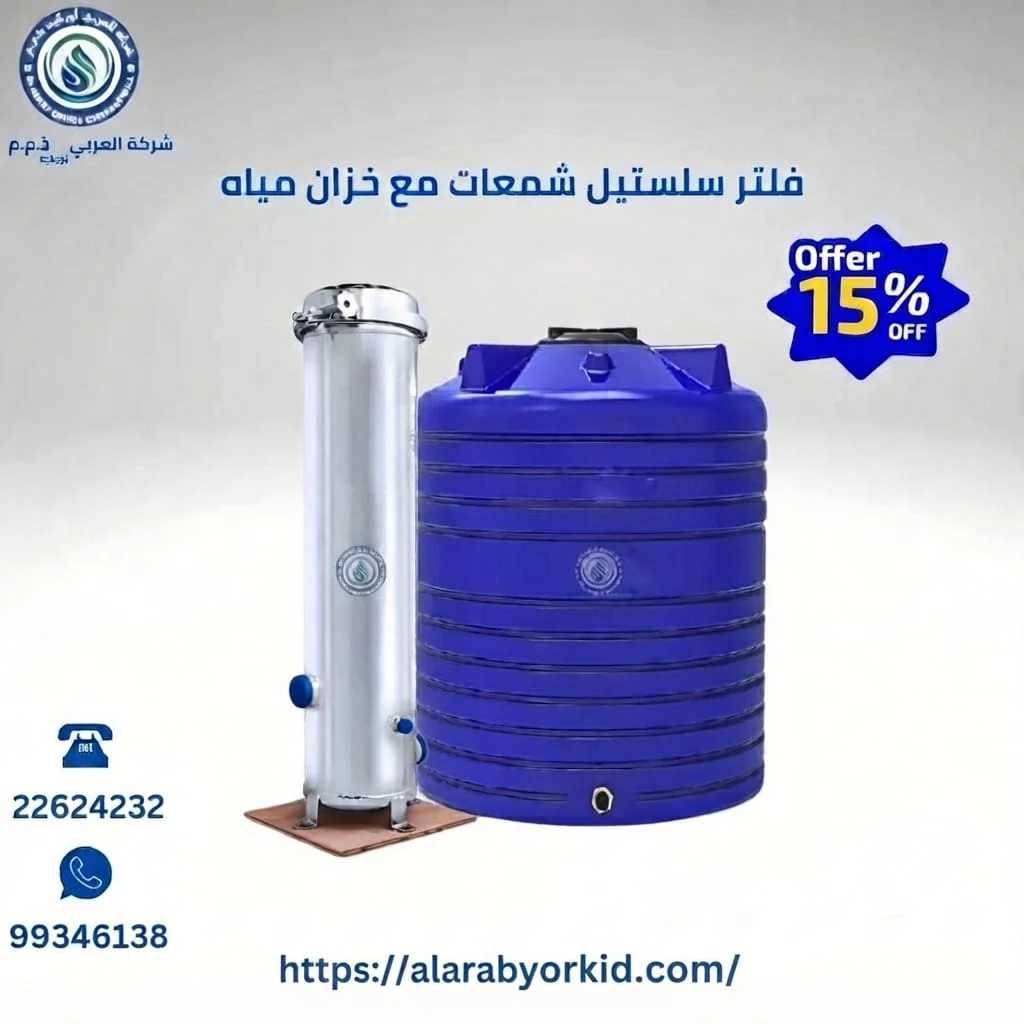
If you already have a stainless filter and notice that water pressure drops quickly after replacing the cartridges or that you need to replace them more frequently than expected, the problem may not necessarily be the cartridge quality itself. Sometimes the number of cartridges is too low for the actual water flow and sediment load of the network. The opposite can also happen because installing 20 cartridges in a home that needs much less capacity does not automatically provide enough benefit to justify the additional cost. Choosing between 8, 10, 15, or 20 cartridges depends on peak water flow, cartridge type, filtration rating, sediment load, pipe diameter, and the effect of the filter on pressure. This guide focuses on how to determine whether your existing size is appropriate or whether the filtration area genuinely needs to be increased.
8-Cartridge Stainless Filter

An 8-cartridge stainless filter should not automatically be considered a small filter, and it cannot be described as suitable for a particular house size without knowing the cartridge specifications and actual network flow. Eight cartridges simply mean that several filtration elements are installed inside one housing, while the real capacity depends on each cartridge’s surface area, length, filtration rating, and the inlet and outlet diameter of the housing.
The more important question is not whether eight cartridges sound like a small number, but whether those eight cartridges can pass the required peak household flow without the pressure differential rising too quickly.
If the filter delivers comfortable flow after new cartridges are installed, the pressure remains stable for a reasonable service period, and cartridge replacement is not required unusually often, that is a good indication that the filter size is reasonably matched to the network.
If pressure is excellent during the first few days and then begins to fall very quickly even though the water source and booster pump have not changed, the sediment load may be too high for the available filtration area.
However, you should not immediately assume that the system must be upgraded to 10 or 15 cartridges. The same symptoms can appear when the installed cartridges are much finer than necessary or when the incoming water contains such a heavy sediment load that a preliminary filtration stage should be installed before the stainless housing.
Signs That the 8-Cartridge Size Should Be Reviewed
-
New cartridges start with good performance but the pressure differential rises rapidly and repeatedly
-
The service period between cartridge replacements becomes inconveniently short even though household water use has not changed
-
Water flow is acceptable when one fixture is operating but drops noticeably when several fixtures are used at the same time
-
The cartridges repeatedly collect very large amounts of sediment every time the housing is opened for maintenance
-
The plumbing network has been expanded since the filter was installed and additional bathrooms or water outlets have been added
-
A new booster pump or another network modification has increased the water demand compared with the original filter-selection conditions
If eight cartridges can deliver the required flow reliably, there is no technical reason to install a larger housing simply because higher cartridge counts are available. The right size is the one that serves the network comfortably rather than the one with the largest number.
10-Cartridge Stainless Filter
Moving to a 10-cartridge stainless filter can make sense when the system needs a moderate increase in filtration area but there is no evidence that the property requires a dramatically larger housing.
When cartridge specifications are identical, adding more elements increases the total available filtration surface. This can distribute both flow and sediment over a larger area, potentially reducing the load on each cartridge and extending the operating period before pressure loss becomes noticeable.
However, the difference between 8 and 10 cartridges should not be treated as a fixed percentage increase in flow. Housing design, cartridge type, inlet and outlet diameter, and internal flow distribution all affect the result.
A 10-cartridge filter can still be installed on undersized pipework and create more resistance than expected, while a lower-cartridge-count housing that is better matched to the network may perform more effectively.
Maintenance cost also matters. Ten cartridges provide more filtration area but every service involves a larger number of consumable elements. The benefit of that additional area should therefore justify the increased replacement cost.
When Does Moving From 8 to 10 Cartridges Make Sense?
The decision becomes more reasonable when testing shows that the problem is not caused by the cartridge specification or an existing restriction in the pipework and the 8-cartridge housing is genuinely operating close to its practical limit because of water flow or sediment load.
If the real issue is an unsuitable cartridge type, installing a larger housing without correcting the cartridge selection can result in higher costs while leaving the original performance problem unresolved.
This is where proper assessment becomes useful because the technician should not compare cartridge counts alone. Pressure before and after the filter and the way that pressure changes when multiple fixtures are operating should also be reviewed.
-
Compare the pressure differential when the filter is clean and again after a period of normal operation
-
Monitor how quickly the cartridges become loaded with sediment
-
Confirm that the pressure loss begins across the filter rather than before it
-
Check whether household flow demand has increased since the filtration system was originally installed
-
Compare the cost of replacing ten cartridges during every service against the expected operating benefit
-
Do not increase the housing size before checking whether the upstream filtration stage is missing or unsuitable
15-Cartridge Stainless Filter
A 15-cartridge stainless filter becomes worth considering when the network clearly requires more filtration area than smaller systems can comfortably provide or when both water flow and sediment loading cause 8 or 10 cartridges to operate under more demanding conditions than desired.
However, fifteen cartridges do not automatically guarantee stronger water pressure. A filter does not create water pressure and it cannot compensate for an undersized booster pump. What a correctly sized larger housing can do is reduce filtration resistance compared with a smaller system if the cartridges and pipe connections are also selected correctly.
If you have a large villa where several bathrooms are often used at the same time or if the plumbing system has been expanded to serve additional units, the existing filtration system may no longer match the new peak-flow requirement.
The number of bathrooms by itself is not enough. A home with six bathrooms that are rarely used simultaneously may require less peak flow than another home with four bathrooms that are heavily used at the same time.
Sediment load also matters. A network carrying more suspended debris can use the available filtration surface more quickly, so increasing the number of cartridges may extend the period before pressure loss rises if the complete filtration system is correctly designed.
When Can 15 Cartridges Be Larger Than You Need?
If the network already has limited flow, cartridges remain relatively clean for long periods, and pressure is stable during normal and simultaneous water use, increasing the filter size may provide little practical benefit.
Oversizing the filtration system can mean:
-
Higher purchase cost
-
More cartridges to replace during every service
-
A larger housing that requires more installation and maintenance space
-
More consumable materials without a proportional improvement in performance
For this reason, a 15-cartridge filter should not automatically be marketed as “better for villas.” The best filter for a villa is the one that matches its actual flow requirement.
20-Cartridge Stainless Filter
A 20-cartridge stainless filter becomes a reasonable option when the site genuinely requires a large filtration area and smaller systems experience rapid loading or excessive pressure differential because of the amount of water passing through them.
This situation is more likely in larger buildings, networks with high simultaneous water use, or central systems where a significant flow passes through one filtration point. Even then, it would still be inaccurate to say that every apartment building requires 20 cartridges.
One common mistake is choosing the largest filter available because it feels like a guaranteed long-term investment. Later, the owner may discover that replacing twenty cartridges during every maintenance cycle costs much more than expected and that much of the installed capacity is rarely used.
The opposite problem also occurs. A smaller housing may reduce the initial purchase price but require more frequent cartridge replacement, develop pressure loss sooner, and cost more to operate over time.
When Is an Upgrade to 20 Cartridges Worth Considering?
-
Measurements show that actual site flow consistently exceeds what a smaller filtration system can comfortably handle
-
The cartridges receive a high sediment load even after a suitable preliminary filtration stage is already in place
-
Pressure differential increases rapidly in the smaller housing despite using suitable cartridges
-
The network serves a larger number of water outlets operating simultaneously
-
Repeated maintenance on the smaller filtration system has become economically inefficient
-
The housing connections and main water line are large enough to benefit from the additional filtration area
The correct decision is not the largest possible filter. It is the smallest system that still provides a comfortable operating margin and reasonable maintenance intervals.
Choosing the Size of a Stainless Filter
Choosing the size of a stainless filter begins with diagnosing the existing system before looking at a cartridge-count chart. If there is no filter installed yet, expected flow should be calculated. If a filter is already operating, its current performance provides valuable information about whether the existing size is suitable.
First, pressure should be checked before and after the filter when the cartridges are clean. If there is already a large pressure difference from the first day, the cartridge type, pipe diameter, and housing connections should be reviewed.
The same comparison should be repeated after a normal operating period. A gradual increase in pressure differential as sediment accumulates is expected to a certain degree. If the increase happens extremely quickly, the filtration area may be too small or the incoming sediment load may be higher than the system can comfortably handle.
The next factor is peak demand. Correct sizing is not based on how much water the property consumes during an entire day but on how much water it may need at the same moment.
A practical example is a villa that normally uses only one bathroom during much of the day but several bathrooms and water outlets operate together in the evening. If the filter is sized only for quiet periods, the problem may appear specifically during peak use.
Practical Steps for Determining the Correct Size
-
Identify the water source and the locations of the storage tank and booster pump
-
Measure or estimate network flow during high-demand periods
-
Review the main pipe diameter
-
Identify the type of sediment the cartridges need to remove
-
Select the appropriate cartridge type and filtration rating before deciding the quantity
-
Determine the acceptable pressure differential across the filtration system
-
Choose a cartridge count that provides sufficient surface area
-
Calculate the cost of replacing the complete cartridge set over time
-
Leave enough space for maintenance and opening the filter housing
-
Confirm that the selected housing works with the existing network rather than becoming its narrowest point
This approach is more accurate than linking a particular cartridge count to a fixed property size or number of floors.
Number of Water Filter Cartridges
The number of water filter cartridges directly affects the available filtration area but remains only one part of a larger sizing equation. If the number of identical cartridges operating in parallel increases, the total available filtration area normally increases as well, which can help distribute water flow and sediment over more surface area.
However, if the pipe before or after the filter is too small, that restriction remains even if the system contains twenty cartridges.
The same applies if the booster pump itself cannot provide the expected flow. A larger filter cannot create additional water or increase the source pressure.
Increasing cartridge count also does not compensate for an unreasonable filtration rating. If the cartridges are much finer than the water condition requires, they may still produce unnecessary resistance and rapid loading even when many elements are installed.
Do Not Choose Cartridge Quantity Using These Rules
Do not assume that:
-
8 cartridges are for a fixed number of residents
-
10 cartridges are automatically required for every villa
-
15 cartridges are required for every two-story home
-
20 cartridges are required for every apartment building
These rules may sound simple for marketing purposes, but they are not technically reliable because water demand, resident behavior, pipe design, and operating conditions vary from one property to another.
A more accurate approach is to determine required peak flow first and then select the number of cartridges that provides enough filtration area for that demand.
Stainless Filter for an Apartment Building
Choosing a stainless filter for an apartment building requires particular attention to major changes in water demand throughout the day. An apartment building can experience periods of low consumption followed by a rapid increase when several apartments use water at the same time.
The filter therefore needs to handle peak demand without becoming a major source of pressure loss.
The locations of the booster pump and storage tank should also be reviewed, along with whether all apartments use the same filtration line or the water network is divided into separate zones.
If one filter serves the entire building, any additional resistance across that filter affects the complete water network.
Signs That the Building Filter May Be Undersized
-
Water pressure becomes weak mainly during periods of high demand
-
Cartridges become loaded much faster than expected despite regular maintenance
-
Pressure differential across the filter rises rapidly
-
Performance returns to excellent immediately after cartridge replacement but drops again after a very short operating period
-
Apartments farther from the booster pump experience a greater effect when several units use water simultaneously
-
New apartments or additional outlets were added to the same network after the filter was originally installed
These signs do not automatically mean that a 20-cartridge filter is required, but they indicate that the existing filtration size and network flow should be reassessed.
If you are searching for the best company to install a stainless filter for an apartment building, do not choose only according to which company offers the largest housing. A better service begins by identifying the network requirement and explaining why a particular cartridge count is appropriate.
Stainless Filter for a Villa
A stainless filter for a villa should be selected according to how the villa actually uses water rather than its architectural size alone. Floor area does not tell you how much water passes through the filter at the same moment.
A large villa may have only a few residents and limited simultaneous use, while a smaller villa may have a larger family and much higher water demand.
The system should also account for additional kitchens, multiple showers, outdoor water use, or any other outlets passing through the same filter.
If a villa originally had an 8-cartridge filter but later expanded its plumbing network, added more bathrooms, or upgraded the booster pump, it may be worth reviewing whether the original filtration area still suits the new operating conditions rather than repeatedly replacing cartridges.
On the other hand, if a 10-cartridge filter performs consistently, there is no technical reason to upgrade to 15 cartridges simply to gain unused reserve capacity.
How Do You Know the Villa Filter Is Properly Sized?
A well-matched system normally shows the following characteristics:
-
Comfortable water pressure during normal and simultaneous use
-
Pressure differential does not rise unusually quickly
-
Cartridge service life is reasonable for the sediment load
-
Maintenance and servicing remain practical
-
No obvious restriction appears downstream from the filter
-
The filtration system is not dramatically larger than the actual household requirement
The objective is not to install an oversized filter but to create a balanced system that works properly with the booster pump, tank, and plumbing network.
Comparing Stainless Filter Sizes
Comparing stainless filter sizes is useful when the information is treated as general guidance rather than a mandatory sizing chart.
|
Size |
When It May Be Worth Considering |
When the Choice Should Be Reviewed |
|
8 cartridges |
When network flow is within the system capacity and sediment loading is manageable |
If cartridges load quickly or pressure drops heavily during peak use |
|
10 cartridges |
When a modest increase in filtration area is needed |
If the increase from 8 cartridges does not address the real cause of the problem |
|
15 cartridges |
When both flow and sediment load are clearly higher |
If actual water demand remains far below the system capacity |
|
20 cartridges |
When a large network genuinely requires a high filtration area |
If it was chosen only because it is larger without considering maintenance cost |
Stainless Filter Prices
There is no single price that applies to 8, 10, 15, or 20-cartridge systems because the final cost depends on several factors including:
-
Housing size
-
Number of cartridges
-
Cartridge length and type
-
Filtration rating
-
Connection diameter
-
Condition of the existing water network
-
Filter installation location
-
Required isolation valves and pressure gauges
-
Pipe modifications if necessary
-
Future operating cost of replacing the complete cartridge set
The mistake is comparing only the original purchase price. A lower-cost filter can become more expensive over a year if its limited filtration area causes the cartridges to require more frequent replacement.
A larger filter can also cost more without providing meaningful benefit when the site uses only a fraction of its available capacity.
Central Multi-Cartridge Filter
A central multi-cartridge filter works properly when it is treated as a complete filtration system rather than simply as a stainless housing filled with cartridge elements.
Water enters the housing, is distributed across the cartridges, and then leaves toward the plumbing network. If the internal distribution or sealing is incorrect, some water may follow an unintended path or the cartridge load may become uneven.
During maintenance, cartridges should be replaced systematically. Seals and gaskets should be inspected, the housing should be cleaned, and the body should be closed correctly before the network is repressurized.
A central filter should never be opened while still under pressure. Any pressurized filtration housing needs to be isolated and depressurized before servicing.
Why Choose Arabic Orchid?
If your objective is to choose the correct filtration size rather than simply buy a larger filter, the practical value comes from reviewing the complete water system: the filter, booster pump, storage tank, pipework, and the actual water demand of the home or apartment building.
Before requesting the service, it is useful to know:
-
The type of property
-
The number of water outlets normally used
-
Whether there is an existing filter and how many cartridges it has
-
How water pressure changes before and after the filter
-
How long cartridges remain effective before flow becomes weak
-
The type of visible sediment or debris
-
The main pipe diameter
-
The condition of the booster pump and water tank
With this information, choosing 8, 10, 15, or 20 cartridges can be based on a genuine network requirement.
Instead of searching only for the phrase best stainless filter company in Kuwait, look for a service that explains why a particular size is suitable and why a larger or smaller system may not be the best decision for your property.
Conclusion
Choosing an 8, 10, 15, or 20-cartridge stainless filter should not be based on a fixed rule saying that one size is for a house, another is for a villa, and another is for an apartment building.
The correct size depends on actual water flow, cartridge type, filtration rating, sediment load, pipe diameter, and the effect of the filter on water pressure.
If your existing filter becomes restrictive quickly, do not automatically increase the cartridge count before checking whether the real issue is the cartridge type, excessive sediment, undersized pipework, or the booster pump.
If the current filtration system operates comfortably and maintains reasonable service intervals, there is no reason to pay more for additional cartridges that the network does not need.
You can contact Arabic Orchid in Kuwait to review the filtration system and select a central multi-cartridge filter suitable for a home, villa, or apartment building with the decision based on flow, maintenance requirements, and long-term operating cost rather than cartridge quantity alone.
Frequently Asked Questions
Does a filter automatically become better when the number of cartridges increases?
No. More cartridges can provide greater filtration area when the rest of the specifications are appropriate, but the best system is the one that matches network flow and sediment load without unnecessary cost.
How can I tell if my existing stainless filter is too small?
Common signs include water pressure dropping rapidly after new cartridges are installed, unusually short cartridge service life, and obvious flow loss when several water outlets operate at the same time.
Should I upgrade from 8 to 10 cartridges if the water pressure is weak?
Not immediately. First check cartridge type and condition, booster-pump performance, pipe diameter, and where the pressure loss actually begins. A larger housing is useful only when the current filtration area has been shown to be insufficient.
Does every apartment building need 20 cartridges?
No. Cartridge quantity depends on peak water flow, the number of units using water simultaneously, plumbing design, and cartridge specifications.
What is the most important thing to compare before buying a larger filter?
Compare required peak flow, pressure differential, cartridge service life, and the cost of replacing the complete cartridge set. These factors are more useful than comparing cartridge count alone.