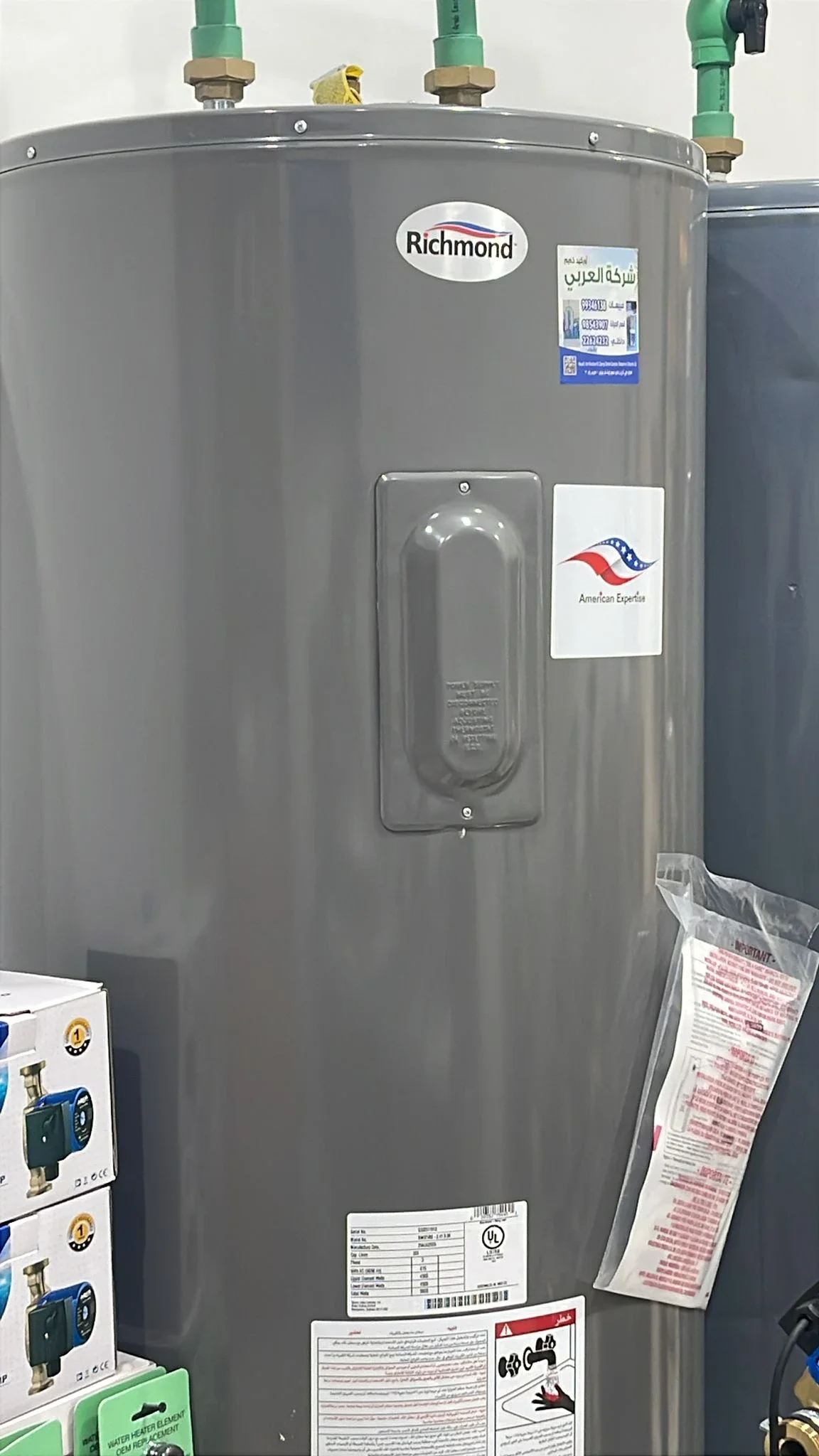
When hot-water performance becomes weaker or a central heater starts taking longer than usual to heat the water, one of the first things you may hear is that the heating element is the problem and needs replacement. However, not every drop in heating performance means that the element itself has reached the end of its life, and not every issue around the element can be solved by cleaning it or adjusting its connections. In some cases, the real fault comes from mineral buildup, an electrical terminal, or the thermostat while the element itself remains healthy. In other cases, testing confirms that the element has an internal break or electrical leakage, and replacement becomes the correct decision. The difference between repair and replacement depends on test results, the condition of the element, and the true cause of the fault rather than guesswork or the age of the heater alone.
When should the central heater element be replaced?

The question when should the central heater element be replaced cannot be answered simply because the water has become less hot. The same symptom can result from several different components inside the heater. The heating element is the part that converts electrical energy into heat inside the tank, so any genuine loss in its performance can affect heating time and final water temperature. However, before deciding on replacement, it is necessary to determine whether the fault is actually inside the element itself or in another component responsible for supplying or controlling it.
If testing confirms that the internal circuit of the element is open and current can no longer pass through it as designed, replacement becomes the logical solution because the fault is inside the heating component itself. The same applies if electrical leakage is detected between the element and the metal body of the heater, or if the element sheath shows visible physical damage or cracking. These are not situations where temporary repair is a sensible choice. A heating element operates while immersed in hot water and under electrical load, so the integrity of its insulation is a fundamental part of whether it is still safe and serviceable.
On the other hand, if the electrical resistance of the element is normal and no electrical leakage is detected but its surface is heavily covered with mineral deposits, the problem may involve reduced heat transfer rather than failure of the element itself. In that situation, a technician can determine whether cleaning the buildup and addressing the reason for its formation can restore performance without replacing a component that is still electrically sound.
A practical example happens frequently when a homeowner asks for a new heating element because heating has become slow, only for inspection to reveal that the correct electrical supply is not reaching the element because of a damaged connection or a thermostat that is not providing the proper switching signal. Replacing the element in that situation would mean paying for a new part while leaving the actual problem untouched, rather like replacing a car tyre because the radio stopped working.
-
The element should be replaced when testing confirms that it has lost electrical continuity or developed an insulation fault that makes continued operation unsafe or unreliable
-
Slow heating alone is not enough to condemn the element because thermostat faults, damaged connections, and mineral deposits can produce very similar symptoms
-
If the element is electrically healthy and the main problem is mineral buildup around it, treating the deposits may be more economical than replacing a serviceable part
Replacing the heater element instead of repairing it
The decision about replacing the heater element instead of repairing it first requires a distinction between repairing a problem around the element and repairing the heating element itself. In everyday service work, many faults described as “repairing the element” are actually jobs such as removing mineral buildup, repairing a damaged connection, correcting a wiring problem, or restoring part of the control circuit while the heating element itself is never opened or internally repaired.
If the internal heating circuit has failed, there is an internal break, or the insulation has deteriorated, the professional approach is usually to replace the element with a compatible new unit rather than attempt to rebuild or patch the heating element itself. The reason is that the element is designed as a sealed component that must withstand continuous contact with water and repeated exposure to high temperatures. An improvised repair to the body of the element can compromise insulation, durability, and long-term reliability and may cause the same fault to return after only a short period.
The financial comparison also matters. Imagine an old heating element with obvious deterioration and test results showing that it is already close to complete failure. Trying to save a small amount by making a temporary repair around its terminals may simply result in another service visit and another period without reliable hot water. On the other hand, if the element itself is healthy and the fault is nothing more than a loose or damaged electrical terminal, replacing the complete element would be unnecessary.
A skilled technician should be able to explain the reason behind the recommendation before replacing anything. For example, they should be able to tell you that element resistance is outside the expected range, that there is leakage to ground, or that the element body itself has deteriorated. At that point, you understand exactly why replacement is required. A statement such as “let us replace the element and see what happens” is not a diagnosis; that is closer to turning heater maintenance into a lottery.
-
If the damage is inside the heating element itself, replacement is generally more reliable than an unsupported attempt to repair the body of the element
-
If the fault is in wiring, controls, or mineral buildup, the underlying problem may be repaired without purchasing a new element provided testing confirms that the existing element is healthy
-
Compare the cost of a temporary repair with the likelihood of the fault returning because the cheapest invoice today can become the more expensive choice if the same service is needed again
Signs the heater element has reached the end of its life
The signs the heater element has reached the end of its life do not all appear in the same way, and some develop so gradually that the homeowner becomes used to weaker performance and starts treating it as normal. One of the more noticeable signs is a steady increase in heating time even though the household’s usage pattern and the thermostat setting have not changed. In this situation, the element may no longer be delivering its intended output, or it may simply be covered by heavy mineral deposits. Proper testing is needed to separate those two possibilities.
Another sign can be partial loss of heating in systems that use more than one heating element. The heater may still produce warm or even hot water, leading the user to assume that the elements are all working, while one element has actually failed and the other is carrying the load alone. The result is much slower heating and a smaller usable supply of hot water during continuous use.
A much stronger indication than poor performance is when electrical testing confirms an open circuit, electrical leakage, or a resistance reading that does not match the expected range for the element specification. At that point, the issue is no longer simply that the water “does not feel as hot as before.” There is measurable evidence that the heating element itself is faulty.
Repeated electrical tripping also deserves attention, but it should not automatically be blamed on the element. The fault could be related to the circuit breaker, wiring, connections, or another electrical component. If testing proves that the heating element is leaking current to the heater body, replacement becomes a safety issue as much as a hot-water performance issue.
Age alone is not enough to decide that an element should be replaced. An older element that still has correct resistance, good insulation, and normal performance should not be discarded simply because it has been in service for several years. Meanwhile, a much newer element that has suffered severe mineral buildup or an electrical defect may need replacement considerably sooner.
-
Longer heating time is a reason to inspect the element but not proof on its own that the element has reached the end of its life because deposits and control problems can produce the same symptom
-
Abnormal electrical readings carry more weight in the replacement decision than the age or outward appearance of the element alone
-
Repeated electrical tripping combined with confirmed current leakage from the element makes heater-element safety a priority and should not be ignored
Burned-out heater element
When the heater element is burned out, the meaning should be that the element has genuinely lost its ability to perform its intended function, not simply that it looks dark or has visible deposits on the surface. Homeowners sometimes hear the word “burned” and assume a technician can identify it by appearance alone, while a more accurate diagnosis normally requires electrical testing together with visual inspection.
An internal break or burnout means that the heating path inside the element can no longer operate as designed. In that situation, removing deposits from the outside will not restore the broken internal section, so replacement becomes the practical solution. If the external metal sheath is damaged and electrical insulation can no longer be trusted, continuing to test the element through repeated operation is also not appropriate.
It is equally important to determine why the element failed. If heavy mineral deposits forced the element to operate under excessive thermal stress for a long time, fitting a new element without cleaning the tank and addressing the buildup can expose the replacement to the same conditions. If a poor electrical connection caused local overheating, then the damaged connection must also be repaired when the element is replaced.
The goal of a service visit should not simply be to leave the home with a new element installed. The goal is to ensure that the replacement operates under correct conditions so the customer does not return shortly afterward asking why a recently installed part has failed again.
-
An element with a confirmed internal break cannot be restored merely by cleaning it because the actual fault exists inside the heating component
-
Identifying the reason the element burned out is just as important as replacing it because mineral buildup or poor electrical connections can damage the new element as well
-
Any damage that affects the electrical insulation of the element requires professional attention rather than continued operation in the hope that the problem will disappear
Checking whether the heater element is still good

Checking whether the heater element is still good is the step that separates a technically justified decision from simply replacing parts by trial and error. Professional inspection is not based on touching the water, waiting an hour, and deciding that the element “seems weak.” The technician first verifies that the correct electrical supply is reaching the system and that the thermostat is operating properly, then tests the heating element according to the heater specifications.
Resistance testing helps determine whether the internal electrical path of the element is still continuous, while insulation testing helps identify unacceptable current leakage toward the heater body. The interpretation of these measurements depends on the power rating of the element and the operating voltage, so there is no single resistance value that applies to every heating element.
The technician should then inspect the wiring connections, terminal condition, and any signs of overheating or burning around the connection points. The element itself may be completely healthy while a damaged electrical terminal prevents it from receiving the correct power. Mineral buildup should also be considered because an electrically healthy element may still heat the water slowly when its surface is heavily insulated by deposits that restrict heat transfer.
A complete inspection can save the cost of purchasing a part that is not actually needed and produces a clear decision about whether the heater requires cleaning, a wiring repair, thermostat work, or replacement of the heating element. Because this inspection involves electricity and hot water in the same appliance, electrical testing should be left to a qualified technician rather than being attempted casually at home.
-
Element condition is determined through a combination of tests involving electrical performance, insulation, and supply conditions rather than one visible symptom
-
The presence of electrical voltage at the heater does not prove that the heating element is healthy because the fault can still exist inside the element or within the control circuit
-
Testing before replacement reduces unnecessary expense by preventing a healthy element from being changed when the actual problem lies elsewhere
Can a heater element be repaired?
The question can a heater element be repaired needs a clear answer so that problems around the element are not confused with failure of the element itself. If the internal heating circuit or the insulation has failed, the element is normally replaced as a complete unit rather than attempting to rebuild the internal structure. However, if the element itself is healthy and the problem involves deposits, wiring, or an external electrical connection, those issues can often be repaired without replacing the element.
For example, if mineral buildup has formed around the element and reduced heat transfer but resistance and insulation tests confirm that the element remains electrically sound, cleaning the system may be part of the solution. If the wire or terminal feeding the element is damaged, repairing the connection correctly can restore normal operation without throwing away a component that is still functional.
This distinction is important when judging the quality and trustworthiness of a service. A technician who treats every hot-water problem as a reason to install a new element may increase the customer’s cost unnecessarily. At the same time, someone who insists that every failed element can be patched may expose the customer to repeated faults. The correct decision lies between those two extremes and depends on the actual condition of the component.
Improvised welding, sealing, or modification of a heating element body that operates in water is generally not a sound approach because reliable insulation and mechanical integrity are more important than saving the cost of the part. Once an element has lost the basic properties required for safe operation, replacement becomes the more stable solution.
-
Removing mineral buildup or repairing electrical connections around the element is not the same as repairing the internal heating element itself
-
An element that has lost the integrity of its insulation or internal circuit is generally better replaced than patched
-
A trustworthy service should explain exactly which component was repaired so the customer understands whether the element was still healthy or actually required replacement
Symptoms of a damaged heater element
The symptoms of a damaged heater element vary depending on the type of failure and whether the heater uses one heating element or several. You may notice longer heating times, a smaller supply of usable hot water, or failure to reach the selected temperature even though the heater is receiving electrical power.
When one element fails in a system that uses several elements, the heater may continue producing hot water but at a much slower rate. In that situation, the homeowner may blame the capacity of the storage tank even though the tank size has not changed at all. Comparing current heater performance with its previous performance is useful because a sudden or obvious drop without any change in household demand provides a good reason to test the elements.
Complete loss of heating does not automatically prove that the element has failed either. The thermostat, breaker, wiring, and electrical connections are part of the same operating chain and can produce a similar result. Each symptom should therefore be treated as a clue that directs testing rather than as a final diagnosis.
Symptoms such as repeated electrical tripping or unusual heat marks around electrical connections deserve greater attention. In these situations, safety should take priority over repeatedly switching the unit back on in an attempt to keep it operating.
-
Slower heating after the heater previously performed much faster is a reason to test the element but does not by itself justify immediate replacement
-
Some heating may remain in systems with multiple elements when one element fails, which can make the problem look like a capacity issue instead of an electrical fault
-
Repeated electrical tripping requires the source to be identified before continuing to restart the heater because the cause may be an element or a connection that needs repair
Replacing a central water heater element
Replacing a central water heater element becomes the correct step after testing confirms that the element itself has failed and other likely causes have been ruled out. Replacement should not be approached as simply finding any element that physically fits the opening. The power rating, physical dimensions, fitting method, and electrical specifications must all be compatible with the heater model.
Installing an unsuitable element can result in slower heating, inappropriate electrical loading, or operation that differs from the original heater design. This is why matching the correct specification matters more than simply finding the cheapest available part.
The cost of replacement can vary depending on the heater type, element specification, accessibility, wiring condition, and whether the tank also requires cleaning or additional treatment during the same service visit. For that reason, the more useful comparison is the overall service cost rather than the price of the element alone.
Replacement should also not be considered complete the moment electrical power is restored. The installation area should be checked for water leakage, the heating cycle should be monitored, and the technician should confirm that the heater has returned to normal operating performance.
-
The replacement element should be selected according to the actual heater specifications rather than physical similarity or connection size alone
-
The final service cost may increase if heavy deposits or damaged wiring also require attention before the heater can be safely returned to operation
-
Testing the heater after element replacement is part of proper workmanship because it confirms that the repair solved the original problem without creating a new leak or fault
Lifespan of a central heater element
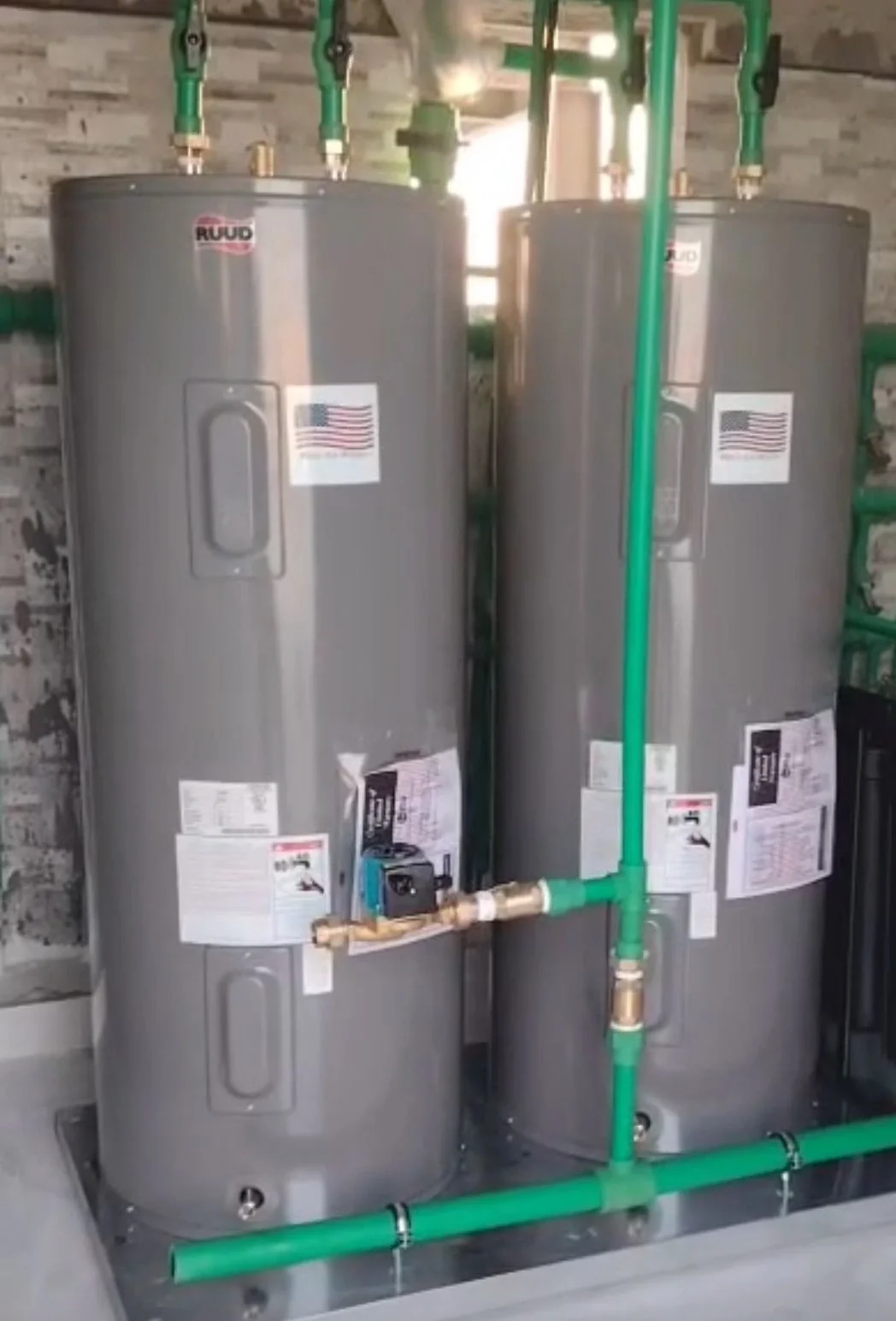
The lifespan of a central heater element cannot be reduced to one fixed number that applies to every home because operating conditions differ significantly. Element quality, the number of heating cycles, water condition, mineral buildup, electrical connection quality, and maintenance practices can all affect actual service life.
An element operating in a tank that is maintained and has limited mineral buildup may continue to perform efficiently much longer than the same type of element installed in a heavily scaled system. A thick layer of mineral deposits forces the element surface to operate under more demanding conditions because the buildup restricts normal transfer of heat into the water.
Years of service are useful as background information but should not be the only reason for replacement. If an older element continues to pass electrical tests and heats at the expected rate, replacing it simply because it has reached a certain age makes little sense unless the manufacturer’s recommendations or the overall condition of the heater indicate otherwise.
On the other hand, a newer element can fail prematurely because of an electrical problem, heavy scaling, or unsuitable operating conditions. Relying only on age can therefore lead to replacing a healthy part or keeping a faulty part in service simply because it is considered “too new to fail.”
-
Element lifespan is influenced by water condition, mineral deposits, operating pattern, and component quality more than by years of service alone
-
An older element that passes testing and performs normally does not need automatic replacement simply because of its age
-
Failure of a relatively new element should trigger investigation of an external cause so the same problem does not damage the replacement
Deciding whether to replace the central heater element
The decision to replace the central heater element becomes stronger when technical evidence and economic sense point in the same direction. If the element has an internal break, insulation failure, or obvious physical damage, replacement is generally the most direct solution. If the element itself is healthy but the problem comes from deposits, a thermostat, or damaged wiring, repairing the actual cause makes more sense.
The overall condition of the heater should also be included in the decision. If the tank is sound and the remaining components are stable, replacing one failed element can restore the heater to efficient service at a cost far below replacing the entire unit. However, if the element is only one part of a long list of faults in a very old heater that also has tank leakage and recurring problems, then the combined cost of repeated repairs should be compared with the cost and value of a more comprehensive replacement.
This is the difference between simply changing a part and making a sensible maintenance decision. One failed element does not automatically mean that the whole water heater should be replaced, and one old heater does not automatically deserve an endless series of new replacement parts.
The best service should provide the test results, explain the condition of the failed component, outline the repair cost, and give the customer a realistic idea of how the heater is likely to perform after the work. That way, the final decision is based on information rather than urgency or guesswork.
-
Replace the element when its internal failure is confirmed and replacement offers a clear and reliable benefit over unstable repair attempts
-
Repair the problem around the element when testing proves that the element itself is healthy because replacing a working component adds no value
-
Compare tank condition and the state of the remaining components with the cost of the element when dealing with a very old heater that already has several recurring faults
Conclusion
Not every hot-water problem means that the central heater element must be replaced, and not every old element can be kept in service simply by cleaning it. The correct decision begins with testing the element itself and checking its resistance, insulation, electrical supply, thermostat operation, wiring condition, and the level of mineral buildup around it.
If the element is healthy and the real fault is somewhere around it, repairing the true cause can save the cost of buying a part that is not needed. If testing confirms an internal break, electrical leakage, or physical deterioration of the element body, replacement becomes safer and more reliable than trying to patch the component.
The simplest rule that can save the most money is this: do not replace the element just because hot-water performance is weak, and do not insist on repairing it simply because replacement costs more. Let the measurements and the overall condition of the heater make the decision. Otherwise, the heating element ends up being blamed for every problem in the system whether it is guilty or not.
Frequently Asked Questions
Can a central heater element be repaired instead of replaced?
If the heating element itself is healthy and the actual problem involves mineral deposits or external electrical connections, the cause may be repaired without replacing the element. However, if the internal circuit or electrical insulation has failed, replacement is usually the more reliable solution.
How do I know if the heater element has really failed?
The most accurate decision comes from testing the element rather than judging it only by water temperature. A technician checks internal electrical continuity, insulation integrity, and power supply before confirming that the element has reached the end of its service life.
Does slow water heating mean the element is burned out?
Not necessarily. Slow heating can also be caused by heavy mineral deposits, thermostat problems, damaged wiring, or the failure of one element in a heater that uses multiple heating elements.
Can cleaning the heater element avoid replacement?
Cleaning can help when mineral buildup is the main problem and the element itself remains electrically healthy. However, an element with an internal break or insulation fault will not become serviceable simply because scale has been removed.
Does the age of the element determine when it should be replaced?
Age is one factor but not a final decision by itself. Water quality, operating hours, maintenance, mineral buildup, and element quality all affect how long the component can remain in reliable service.
Why would a relatively new heater element fail quickly?
Possible causes include severe mineral buildup, poor electrical connections, an unsuitable replacement element, or other operating conditions that place abnormal stress on the component. Repeated early failure should lead to investigation of the cause before another new element is installed.
Should all heating elements be replaced if one fails?
Not necessarily. The decision depends on heater design, the condition of each element, and the individual test results. A healthy element should not automatically be replaced simply because another element in the same heater has failed.
Can a damaged element increase electricity consumption?
Some heating problems can cause the heater to operate for longer periods in an attempt to reach the selected temperature, but higher electricity use has several possible causes. Proper diagnosis is needed rather than assuming that the element is responsible for every increase in consumption.
When is replacing the element more economical than repairing it?
When the fault is inside the element itself and any attempted repair would be unreliable, replacement is generally more economical over the long term, particularly when the rest of the heater is in good condition and can continue operating efficiently after the new element is installed.
Do I need a technician to test the heater element?
Yes. Element testing involves an electrical circuit and a component installed inside a hot-water system, so proper tools and knowledge of the heater specifications are needed to make a safe and accurate decision between repair and replacement.