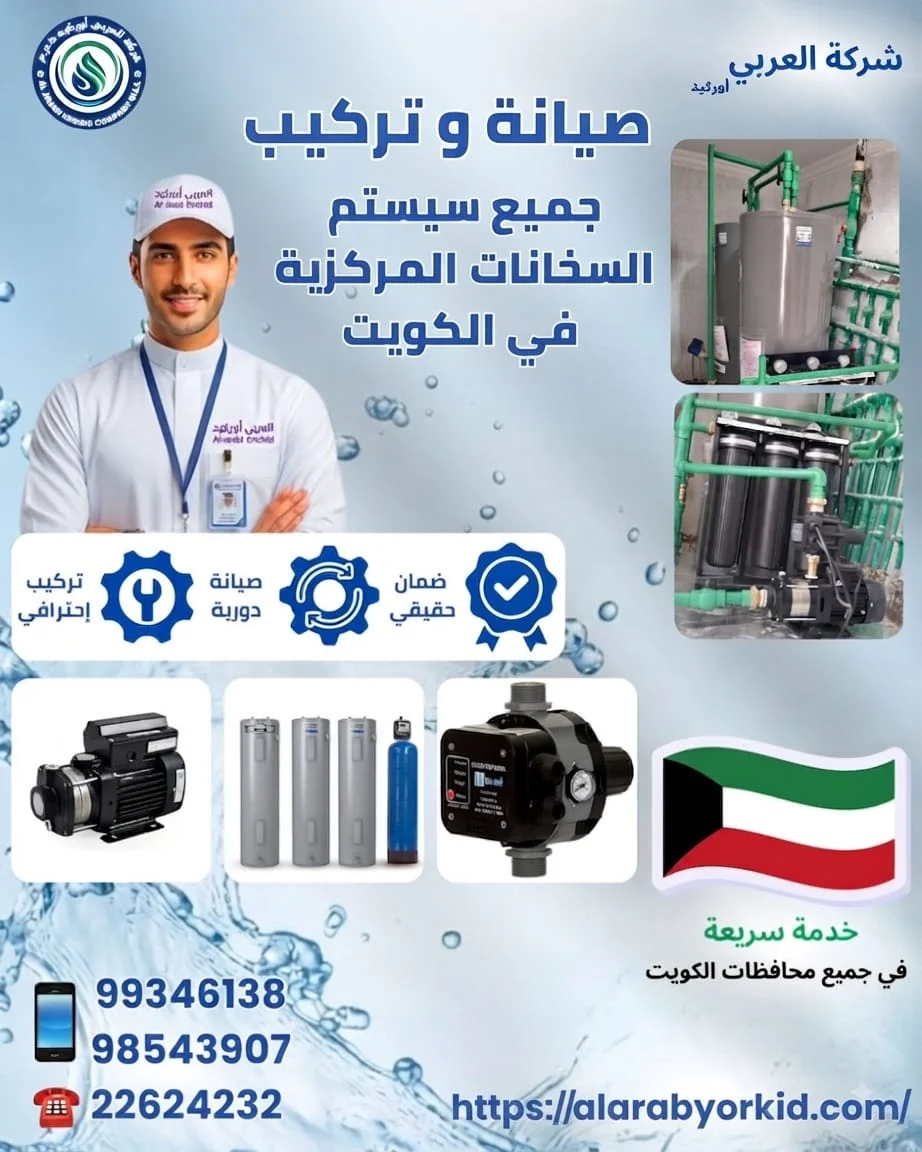
Central water heater maintenance in Kuwait does not mean that a technician simply opens the heater, cleans it, and leaves. Proper maintenance is a structured inspection process that begins with the condition of the tank and its connections, then moves to water pressure, the safety valve, heating elements, thermostats, anode rod, drain system, and finally ends with restarting the heater and comparing its performance after service. The objective is not to replace parts without a reason or flush the tank randomly, but to understand the condition of every component and determine what actually requires attention. Manufacturers such as A. O. Smith and Rheem provide separate maintenance procedures for the anode rod, T&P valve, sediment flushing, and leak inspection, which shows that good maintenance consists of several specific tasks rather than one identical service for every heater. Al Arabi Orchid currently provides periodic maintenance for central water heaters and their connected water systems in Kuwait and can be contacted on 99346138.
Central Water Heater Maintenance in Kuwait

Professional central water heater maintenance in Kuwait should begin by documenting the condition of the heater before anything is removed. The technician should identify the age of the unit when possible, ask about the last maintenance visit, and understand whether the current complaint involves weak heating, unusual noise, unstable hot-water temperature, leakage, or higher electricity consumption. Only after this initial assessment should the external inspection begin, covering the tank body, cold and hot water connections, drain valve, T&P relief valve, and nearby pressure-control components. The purpose is to avoid opening the heater immediately and focusing on the heating elements while ignoring a leak or pressure problem that may actually be responsible for the complaint.
The second stage is to observe the heater while it is operating. The unit should be checked while cold and then again during the heating cycle because some problems only appear when temperature and pressure increase. For example, a connection may look completely dry when the tank is cold but begin to show a small seep once the materials expand under heat. Similarly, a T&P valve may remain quiet at the beginning of operation and start discharging as system pressure rises. In that situation, the technician has to distinguish between a defective relief valve and a thermal-expansion or excessive-pressure condition that requires a completely different solution.
After that comes inspection of internal or serviceable components according to the heater model and condition. A. O. Smith maintenance guidance includes checking the anode rod, draining and flushing the tank, and evaluating sediment accumulation. The anode is a sacrificial component designed to corrode gradually so the steel tank is better protected from corrosion. It should be replaced when it has been substantially consumed rather than automatically during every maintenance visit. Rheem also includes T&P inspection, leakage checks, tank condition, and anode inspection among recommended storage-water-heater maintenance tasks.
The final stage is restarting the system after maintenance. The tank should be completely refilled, air should be purged from the hot-water piping, and only then should the heater be energized. Water temperature, leakage, and pressure behavior should then be checked again. Maintenance that ends immediately after cleaning a component without observing the heater during a real heating cycle does not provide a complete picture of whether the service was successful.
-
Central water heater maintenance should begin with documenting the condition before disassembly so the technician can verify that performance actually improved after the work instead of relying only on impressions
-
Inspecting the tank while cold and again after it enters a heating cycle can reveal leaks and pressure behavior that may not appear during a quick static inspection
-
The anode rod T&P valve and heating elements each perform completely different functions so replacing all of them together without testing is not accurate maintenance
-
Sediment should be evaluated according to tank condition water characteristics and maintenance history because its quantity and effect vary from one property and heater model to another
-
After maintenance the heater should be operated under conditions close to real household use so the technician can confirm that the service corrected the issue without introducing another problem
Central Water Heater Maintenance Technician
A professional central water heater maintenance technician should understand the behavior of the complete system before reaching for tools. When a customer says that the heater “has become weak,” there are several possible causes: a failed heating element, unstable thermostat, sediment interfering with heat transfer, increased household demand that the original capacity can no longer satisfy, cold-water mixing through a faulty mixing valve, or even a distribution problem that has nothing to do with the tank itself. A technician who immediately replaces the heating elements may occasionally solve the problem, but that is not the same as performing a proper diagnosis.
A good technician begins with measurements and observation. The outlet water temperature is checked, electrical supply is confirmed, and the operation of the heating elements is evaluated according to the heater’s control design. Leakage, service connections, and visible component condition are also reviewed. On larger systems, pressure should be observed before and during heating because the way pressure changes can provide important information about a closed plumbing system and thermal expansion.
The anode rod is another area where experience matters. It is not a part that should be replaced at every visit. It is a sacrificial metal component intentionally designed to deteriorate before the tank itself begins to corrode. A. O. Smith explains that anode-consumption rate can vary depending on water quality, temperature, usage, and water-treatment conditions. This means actual inspection is more useful than applying one fixed replacement interval to every heater in Kuwait.
Testing the T&P valve also requires care because the discharged water may be extremely hot. Manufacturer instructions warn that no person should stand in front of the discharge path while the valve is being tested and that the outlet must terminate safely where hot water will not cause injury or property damage.
Once the service is complete, the technician should also be able to explain what was found. Is the anode still in good condition? Was there significant sediment? Did a heating element or thermostat fail? Is system pressure abnormal? Is there a component that should simply be monitored rather than replaced immediately? This explanation is part of professional maintenance because it helps the customer understand the actual condition of the system.
-
A professional technician separates a heater fault from a network problem because weak hot water does not automatically mean that a heating element has failed
-
Measurements before replacing parts reduce unnecessary component changes and help identify the real cause instead of increasing the service bill without clear technical benefit
-
The anode rod should be evaluated according to its actual remaining condition because consumption rate is affected by water chemistry operating temperature and usage rather than heater age alone
-
Testing the safety valve requires knowledge of the correct procedure and safe discharge path because working with hot water under pressure can be hazardous
-
A good technician should leave the customer with a clear explanation of what was inspected what was replaced and what should be monitored instead of giving only a general statement that the heater is now fine
Central Water Heater Maintenance Company
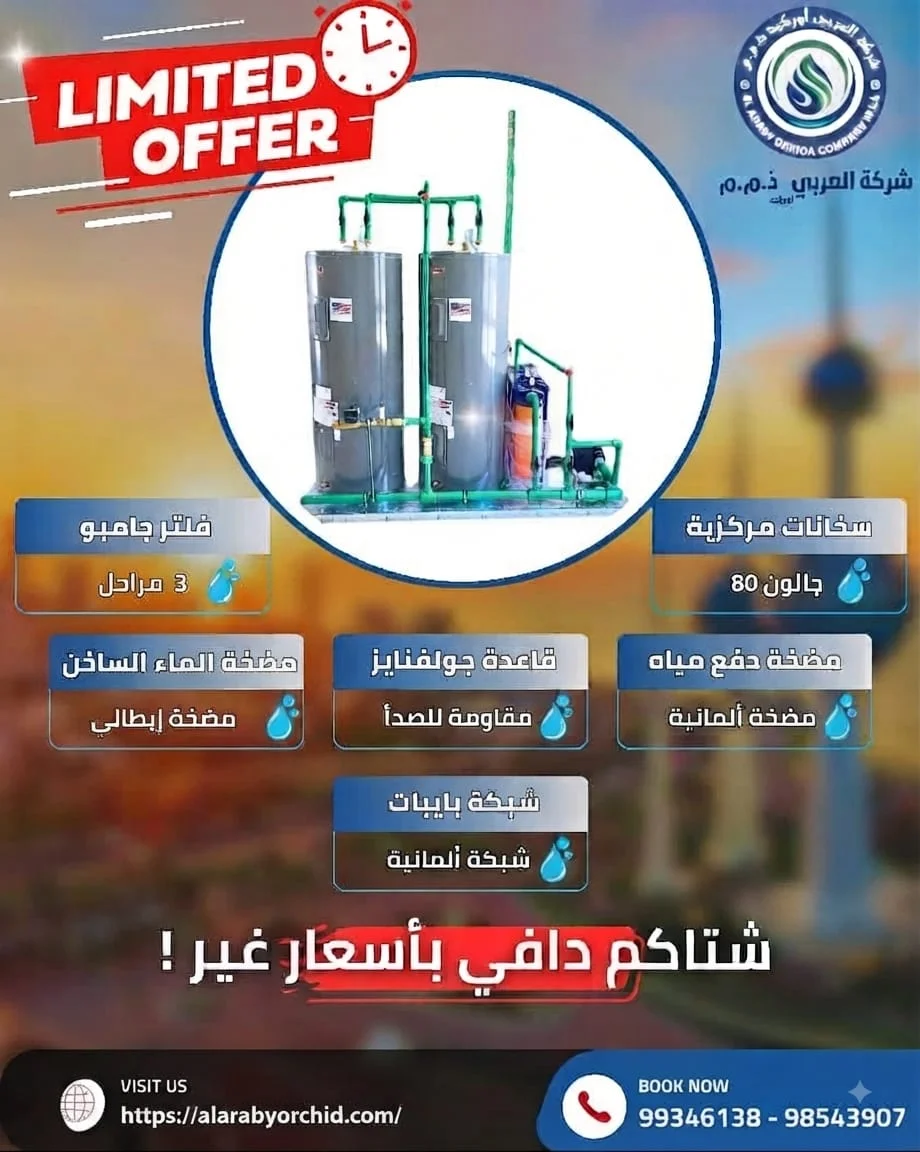
Choosing a central water heater maintenance company becomes especially important when the heater is part of a larger system containing a booster pump, water filter, hot-water recirculation line, and pressure-control components. A company that looks only at the tank may repair one component while leaving the real cause somewhere else in the network. For example, a customer may complain that hot water takes too long to reach the farthest bathroom. The problem may actually involve the recirculation pump, return line, or piping design rather than the heater itself.
An organized maintenance company should follow a clear workflow. It begins by opening a service record for the heater and documenting the brand, model, capacity, and previous service history when available. The technician then inspects the system and records the findings before replacing anything. If a part is needed, that part should be linked to a clear technical reason, such as a heating element that fails electrical testing, an unstable thermostat, a drain valve that no longer seals, or an anode rod that has deteriorated enough to justify replacement.
Al Arabi Orchid currently states that it specializes in the installation and maintenance of water heaters, filters, pumps, cooling systems, and water tanks. Its published services also include periodic maintenance of water-heater, pump, and filtration networks and replacement of spare parts. The company works with several American central-water-heater brands including Ruud, Bradford White, A. O. Smith, American, Rheem, and Richmond.
Another advantage of using an organized company is continuity. If a technician replaces a component today and another symptom appears one week later, a documented service record allows the next technician to continue from the previous diagnosis instead of starting again from zero and repeating the same checks.
The customer should also understand the service scope before work begins. Does the maintenance include draining and flushing? Is anode inspection included or charged separately? Will replacement parts require approval before installation? Is a written or verbal report provided after the work? Clear answers to these questions are more valuable than a vague promise of “complete maintenance.”
-
A strong maintenance company connects heater condition with the pump recirculation line and filtration system when they belong to the same network so symptoms are not treated while the underlying cause remains
-
Maintaining a record of the heater model and previous service reduces repeated diagnostics and helps identify faults that continue returning over time
-
A component should not be replaced only because it is old but because inspection or testing shows that replacement is technically justified
-
Al Arabi Orchid currently provides periodic maintenance for heater pump and filtration networks which is useful for central systems whose components interact with each other
-
Before maintenance begins it is better to agree on the inspection scope materials and potential replacement parts so the service remains transparent and does not turn into unexplained additions during the visit
Central Water Heater Maintenance Service
A proper central water heater maintenance service should have a clear beginning and a clear ending. The beginning is safe isolation of electricity and water according to the maintenance task, while the end is complete refilling, restarting, and testing. The steps in between depend on the actual condition of the heater and should not be treated as a rigid checklist applied blindly to every unit.
If the maintenance includes draining and flushing, the electrical supply should first be isolated according to the manufacturer’s instructions. The technician should also make sure the water is no longer dangerously hot before opening the drain. A. O. Smith service instructions describe procedures that include shutting off power, allowing hot water to cool, and then using the drain valve to empty the tank in a controlled manner before inspection or maintenance work. Some commercial A. O. Smith service schedules also list drain-and-flush work, anode inspection, and T&P testing as separate tasks, which shows that each has a different objective.
If the service is addressing a heating fault, the entire job should not automatically turn into tank cleaning. In that case, priority should be given to the electrical circuit, thermostats, heating elements, and related connections. If the complaint instead involves sediment noise, dirty water, or particles coming from the heater, a different maintenance path is required.
After any service that empties the tank, one of the most important steps is to confirm that it has been completely refilled before electricity is restored. Rheem warns against operating an electric water heater while it is empty or partially filled because the heating elements can be damaged.
A complete maintenance service should also finish with a short handover. The technician should explain what was done, which component was replaced if any, and whether there is anything that should be monitored during the coming weeks or months. This creates a meaningful service history and reduces random future visits.
-
Maintenance should not be identical for every complaint because sediment accumulation requires a completely different process from a failed heating element thermostat or pressure problem
-
Electrical isolation and allowing hot water to cool before draining or disassembly are fundamental safety steps because the tank combines electricity with stored hot water
-
Tank cleaning should be performed when there is a clear reason rather than used as a universal response to every complaint because the true cause may be unrelated to sediment
-
The tank must be completely refilled and air purged before electrical power is restored after maintenance so heating elements are not damaged
-
The service should end with actual operation testing and a clear explanation to the customer rather than leaving the heater disconnected and expecting the homeowner to complete the restart process
Periodic Central Water Heater Maintenance
Periodic central water heater maintenance does not mean replacing the same parts on the same date every year. A better approach is condition-based maintenance that combines manufacturer guidance with water conditions, usage, and the specific history of the heater. Some manuals specify service intervals for particular tasks, but those intervals can vary from one product to another, which is why the exact heater manual should always remain the primary reference.
A. O. Smith, for example, explains in some of its manuals that the anode rod should be inspected periodically because it is a sacrificial component and its consumption rate varies with water conditions. Some models recommend an initial inspection after a certain period and then annual or more frequent inspections when necessary, while other product lines may have different schedules. Rheem also recommends including the anode rod, T&P valve, leakage, and tank condition in regular storage-water-heater maintenance.
The strongest maintenance plan creates a baseline. The technician can record the outlet temperature, anode condition, amount of sediment removed, any seepage around connections, and drain-valve condition. At the next visit, these observations can be compared instead of beginning with no historical reference.
The goal is to identify trends. If the anode is being consumed unusually quickly every time it is checked, that becomes a technical clue worth investigating. If heavy sediment returns very quickly, the source may be the storage tank, internal plumbing, or another upstream condition. If the T&P valve keeps discharging even after replacement, pressure and thermal expansion should be investigated instead of continuing to change the valve repeatedly.
Periodic maintenance therefore works best when it creates useful information over time rather than simply repeating the same physical tasks at every visit.
-
Periodic maintenance should follow the model manual actual water conditions and service history rather than one universal schedule imposed on every central water heater
-
Recording anode condition during each service visit helps establish its real consumption rate instead of replacing it based on guesswork
-
Comparing sediment levels between visits provides information about the tank and plumbing and can reveal whether contamination is repeatedly entering from another source
-
Regular maintenance is not about replacing the largest number of parts but about identifying gradual deterioration before it becomes a costly failure
-
A simple written record showing inspection date parts replaced and technician observations allows future service teams to understand the heater history instead of repeating the same questions every time
Central Water Heater Inspection
Central water heater inspection is the stage that determines whether the unit actually requires maintenance, adjustment, monitoring, or a specific repair. The external inspection begins with the tank body. The technician checks for unusual corrosion, moisture around the base, seepage at connections, the condition of the drain valve, and the routing of the T&P discharge line. The source of every visible water mark should be identified because leakage from a union above the heater is completely different from leakage through the tank body itself.
The next stage is operational inspection. The technician observes how the heater heats, checks outlet temperature, and determines whether the heater cycles normally. In an electric storage heater with multiple elements, a qualified technician can verify whether the elements are energizing in the sequence intended by the control circuit instead of assuming that the presence of some hot water means all heating components are working correctly.
Hydraulic inspection is also important. Persistently high pressure or a major rise in pressure during heating can indicate a thermal-expansion or pressure-regulation problem. If the T&P valve is dripping, the first conclusion should not automatically be “replace the valve.” A. O. Smith explains that when a relief valve continues to drip, system pressure and thermal expansion should be checked and corrected before concluding that the valve itself is defective.
The anode and sediment are inspected when the maintenance history, performance symptoms, or water conditions provide a reason to do so. The inspection should then end with a clear classification: operating normally, requires monitoring, requires maintenance, or requires a defined repair.
That classification is more valuable than simply telling the customer that “the heater was inspected” because it gives the next action a clear priority.
-
Inspection should begin by identifying the exact source of visible moisture because a leaking fitting may be repairable while a tank-body leak can indicate a completely different decision
-
Observing the heater during operation helps determine whether the problem involves the heating cycle or hot-water distribution rather than relying on a single temperature reading
-
System pressure should be interpreted together with T&P behavior because replacing the valve without understanding pressure conditions can cause the same symptom to return
-
Internal inspection should not be performed randomly but when maintenance history performance or water conditions provide a logical reason to examine sediment or the anode
-
A useful inspection report should separate components that are healthy from those that need service and those that only require monitoring instead of presenting the customer with an unprioritized list of possible parts
American Central Water Heater Maintenance
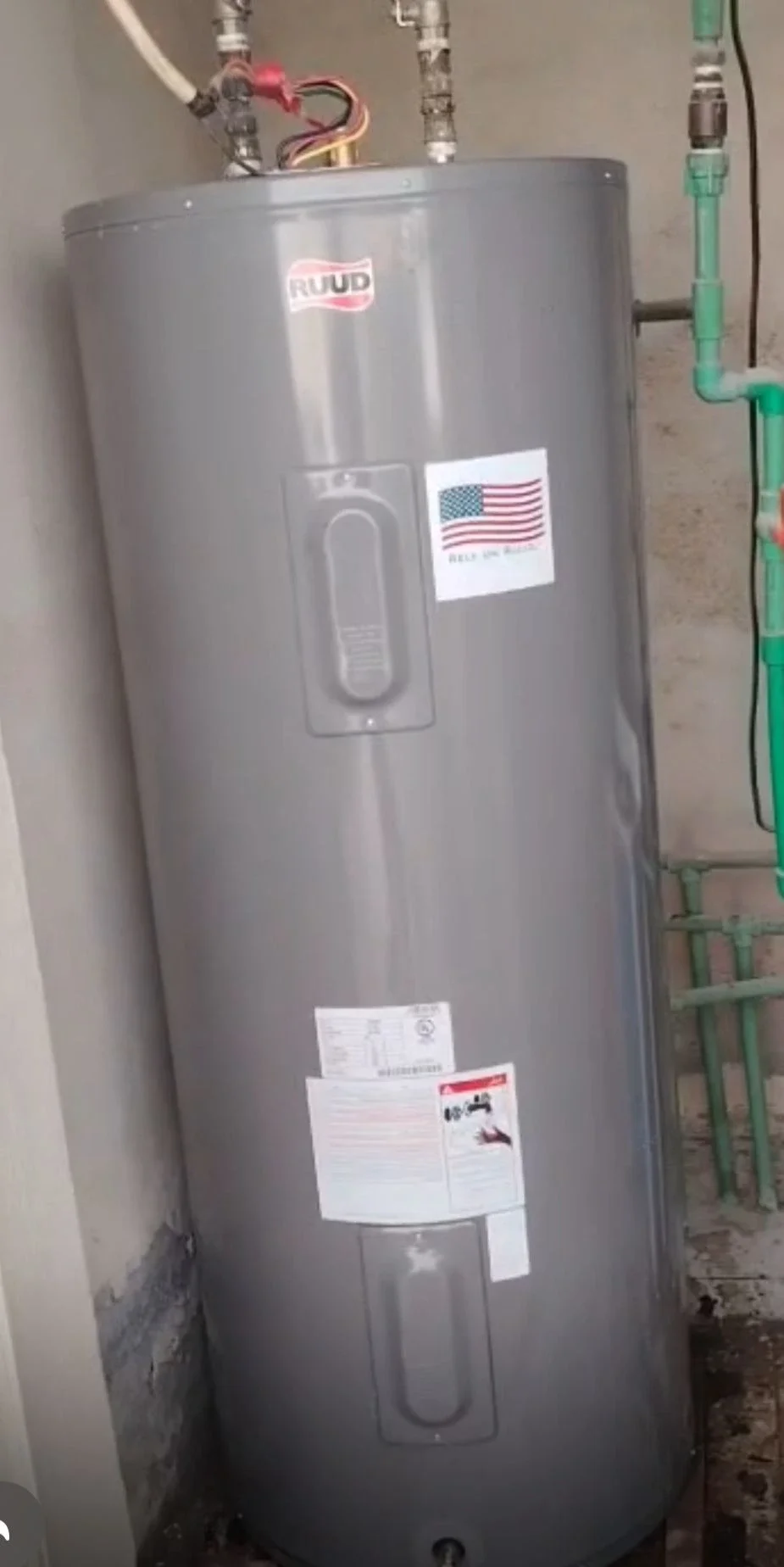
American central water heater maintenance should respect the design of the exact model rather than treating every American heater as if it were the same appliance. Ruud, Rheem, Bradford White, A. O. Smith, American, and other manufacturers can use different arrangements for heating elements, thermostats, anode rods, access panels, controls, and diagnostics. Some modern models also include more electronic functions than older conventional storage heaters.
Al Arabi Orchid currently states that it works with Ruud, Bradford White, A. O. Smith, American, Rheem, and Richmond central water heaters. For proper maintenance, the first step should therefore be identifying the brand and exact model number before ordering any component.
The anode is a good example of why model identification matters. Many conventional A. O. Smith heaters use sacrificial anodes that need physical inspection and gradual replacement as they are consumed. Some newer products, however, may use different monitoring or powered-anode arrangements. A. O. Smith documentation for certain modern models includes diagnostic indications related to anode condition, which means a procedure used for an older heater should not automatically be copied onto every newer unit.
The same principle applies to heating elements. Asking for an “American heater element” is not enough. Wattage, voltage, physical dimensions, flange or thread type, and other specifications must match the exact heater. Al Arabi Orchid currently advertises availability of parts for American central heaters, but the part should still be selected using the unit data rather than visual similarity.
Good American-heater maintenance therefore depends less on the country label and more on using the correct manual, matching the correct components, and testing the heater after service.
-
The first important piece of information in American heater maintenance is the model number because the same brand may use different controls and internal arrangements across multiple product families
-
The anode should not be treated identically in every heater because modern models may use monitoring systems or anode designs different from older conventional units
-
A replacement heating element must match the required electrical and physical specifications rather than being selected only because it looks similar
-
Any diagnostic error code on an electronic model should be interpreted using the manual for that exact series instead of using a generic code list from another brand or heater family
-
Al Arabi Orchid works with several American brands and provides maintenance and replacement parts but accurate service still begins with correctly identifying the specific heater
Central Water Heater Maintenance Contract
A central water heater maintenance contract becomes particularly useful when a property has more than one heater or when uninterrupted hot-water service is important, such as in a large villa, multi-unit residence, or property with several central systems. The value of a maintenance contract is not simply the number of scheduled visits. Its real value is that every heater becomes an asset with a documented service history.
A good contract begins with an equipment inventory. Each heater should be recorded with its brand, model, serial number when available, capacity, heating power, location, and relationship to the surrounding network. A service schedule can then be created according to the actual condition and manufacturer requirements instead of forcing every heater into the same maintenance routine on the same date.
During each visit, work may include visual inspection, leakage checks, T&P valve condition, review of connections, performance observation, and scheduled tasks such as drain-and-flush or anode inspection according to the model and maintenance history. Not every task needs to be performed at every visit. This is what separates a real maintenance program from a routine appointment where the same unnecessary actions are repeated simply because they are on a generic checklist.
A useful contract should also include an escalation process. If the technician finds early corrosion, abnormal anode consumption, or the beginning of a leak, the customer can receive a recommendation before the issue becomes an emergency. If a replacement part is likely to be needed soon, it can be sourced in advance rather than searching for it after the heater has already failed.
Al Arabi Orchid currently advertises periodic maintenance for heater, pump, and filtration networks, which makes this type of service particularly relevant for properties where several connected components need coordinated follow-up.
-
A useful maintenance contract turns every heater into a documented asset with a service history instead of relying on the homeowner’s memory or whichever technician last visited the property
-
The maintenance schedule should vary according to model age and condition instead of performing exactly the same work on every heater simply because they belong to the same contract
-
A report after each visit makes it possible to track small changes such as early leakage or declining performance before they become emergency failures
-
Expected spare parts can be planned in advance under a maintenance contract instead of waiting for a major heater to stop and then searching for parts urgently
-
If the contract includes heaters pumps and filters the condition of each component should still be reported separately so responsibilities and future costs remain clear
Central Water Heater Cleaning and Maintenance
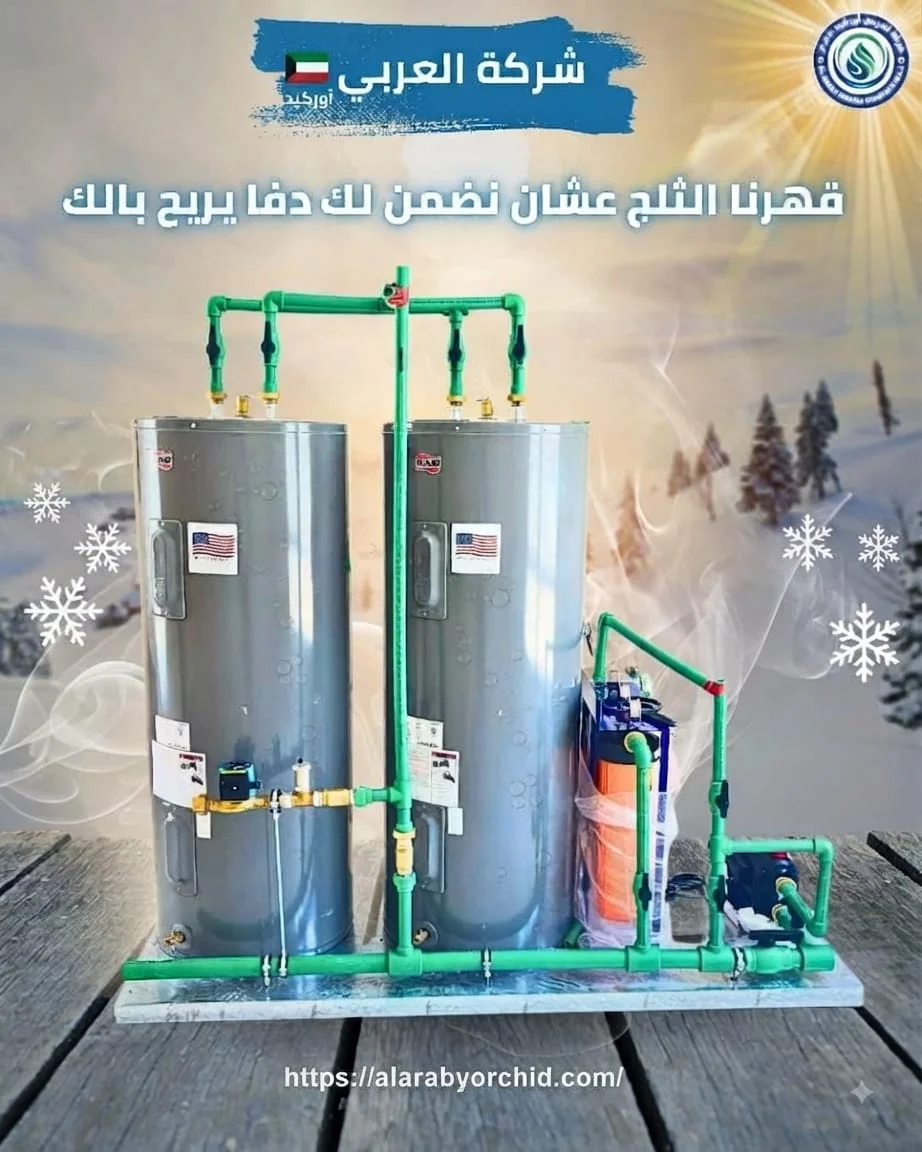
With central water heater cleaning and maintenance, it is important to distinguish between a sediment flush, scale removal, and simple external cleaning because these are three different tasks. Material settling at the bottom of the tank may consist of suspended particles or debris that is different from mineral scale bonded to heating surfaces. The correct procedure depends on the heater design, water conditions, and the type of accumulation present.
A. O. Smith lists separate storage-tank maintenance procedures in some service schedules, including drain-and-flush work and lime-scale removal under specific conditions. This confirms that “cleaning the heater” is not one universal process for every situation. Rheem also explains that during a professional flush, the service technician safely isolates the energy source, drains and flushes the tank, inspects the T&P valve, drain valve, anode rod, system pressure, and leakage, and then restarts the heater and verifies performance.
One mistake that should be avoided is aggressively flushing an old neglected tank without first evaluating its condition. If the heater is already advanced in age, shows signs of corrosion, or has not been serviced for many years, the drain valve and tank condition should be checked before treating flushing as an automatic procedure. Maintenance is not a competition to remove the largest amount of dirt. The objective is to service the system without creating a leak or disturbing a weak component that was already close to failure.
After cleaning, the technician should confirm that the drain valve closes properly and that the tank is completely refilled before restoring electricity. Water clarity and flow should be observed, and the heater should then be restarted and checked for leakage.
Al Arabi Orchid currently advertises cleaning central water heaters from accumulated scale and sediment as part of its published services. In practice, the cleaning should still be linked to an overall assessment of heater condition rather than performed as an isolated procedure without diagnosis.
-
Sediment flushing is different from scale treatment so the type of accumulation should be understood before selecting the maintenance method instead of using one procedure for every heater
-
An older heater with little maintenance history should be evaluated before aggressive draining or flushing because drain-valve and tank condition may require a more cautious approach
-
Professional cleaning does not end when water stops coming from the drain valve but includes confirming closure refilling the tank restarting the heater and checking it after service
-
If heavy sediment returns unusually quickly the source should be investigated in the storage tank or plumbing network instead of repeatedly flushing the heater without addressing the upstream cause
-
Al Arabi Orchid provides heater cleaning for scale and sediment but the strongest approach is to make cleaning part of a complete technical assessment of the unit and its surrounding water system
Central Water Heater Maintenance for Villas
Central water heater maintenance for villas is different because the technician is often dealing with a long plumbing network that includes a large heater, booster pump, hot-water recirculation line, and possibly more than one heater or more than one pressure zone. If maintenance focuses only on the tank, an important part of the system may be left unexamined.
The first area to inspect is the relationship between the heater and water pressure. Is the booster pump maintaining stable pressure? Has a check valve created a closed system? Is an expansion tank present where the design requires one? Is the T&P valve discharging because of thermal expansion? These questions matter because villas often operate with higher and more variable water pressure than a small home.
The second area is the recirculation system. If the customer says, “The water is hot after maintenance but it still takes too long to arrive upstairs,” the heater may be working perfectly while the real issue is the recirculation pump, timer, direction of flow, or check valve in the return line. Al Arabi Orchid currently provides installation and maintenance services for hot-water recirculation pumps in addition to central water-heater maintenance.
The third area is practical testing from multiple outlets. In a villa with several bathrooms, opening the nearest faucet does not provide enough information. The technician should test a remote fixture and observe temperature stability under a realistic level of simultaneous demand to see whether the complete hot-water network is performing properly.
The fourth area is safe service isolation. Villa heaters may be installed on rooftops or in equipment rooms alongside pumps and filtration systems. Maintenance should therefore be organized so electricity and water are isolated for the correct component without unnecessarily disrupting the rest of the property.
At the end of the service, the best villa-maintenance visit should produce a clear report covering heater condition, recirculation performance, booster-pump observations, and any pressure or leakage concerns. The customer should know whether the problem belonged to one component or to the wider system.
-
Villa heater maintenance should include observing system pressure and its behavior during heating because pumps check valves and pressure controls may contribute to the complaint
-
The recirculation line should be tested as part of hot-water comfort because weak circulation can make the homeowner blame the heater even when the tank itself is heating correctly
-
Testing one nearby and one remote outlet after maintenance helps evaluate distribution quality throughout the villa instead of judging the system only from the utility room
-
Properties with more than one heater or pressure zone benefit from clear equipment numbering and maintenance records so findings are assigned to the correct unit
-
Al Arabi Orchid provides heater pump and hot-water recirculation maintenance in Kuwait which allows villa systems to be evaluated as connected networks when necessary
Conclusion
Central water heater maintenance with Al Arabi Orchid should be understood as an organized technical process rather than quick cleaning or replacing parts by guesswork. Maintenance begins with inspecting tank condition, connections, water pressure, and operating performance. Only then should the technician determine whether the unit requires draining and flushing, anode inspection, heating-element testing, T&P evaluation, leak repair, or investigation of a pressure problem. Manufacturers themselves separate these procedures in their service documentation because the anode, relief valve, sediment, heating elements, and leakage all require different diagnostic approaches.
Just as important, maintenance should end with completely refilling the tank, purging air, restarting the heater, and observing its operation. The job is not finished when cleaning or disassembly ends. If the heater is part of a larger villa system containing a pump, filter, and hot-water recirculation line, the relationship between these components should also be evaluated rather than assuming that every hot-water problem begins and ends inside the tank.
Al Arabi Orchid currently provides periodic maintenance for central water heaters, water networks, pumps, and filters and works with several American heater brands. You can contact 99346138 to request inspection or maintenance for a central water heater in Kuwait.
Frequently Asked Questions
What does central water heater maintenance include?
The exact work depends on the condition of the unit, but professional maintenance usually begins with checking the tank body, connections, leakage, operating behavior, water pressure, and T&P relief valve. The technician then decides whether the heater requires anode inspection, heating-element testing, thermostat inspection, or draining and flushing. Not every component should be replaced and not every tank should be cleaned in exactly the same way during every visit.
Does a central water heater need to be cleaned during every maintenance visit?
Not necessarily. Cleaning depends on sediment condition, heater model, service history, and water characteristics. Some manufacturer schedules distinguish between drain-and-flush work and lime-scale removal and assign different conditions or intervals to each. The decision should therefore be based on actual heater condition and the instructions for the specific model.
What is the purpose of the anode rod inside the heater?
The anode is a sacrificial metal rod designed to deteriorate gradually so it helps protect the steel tank from corrosion. It should be inspected and replaced when a substantial portion has been consumed. Its service life varies according to water chemistry, temperature, usage, and other local conditions.
Does the T&P valve need to be replaced during every maintenance visit?
No. It should be inspected and tested safely according to the manufacturer’s instructions. If the valve continues to drip, system pressure and thermal expansion should be investigated before concluding that the valve itself has failed. Only after these possible causes are evaluated should replacement be considered.
Does weak hot water always mean a heating element has failed?
No. Weak heating can result from a failed element, thermostat problem, sediment accumulation, cold-water mixing, increased household demand, or a distribution issue. The system should be measured and diagnosed before replacing an element.
Can the heater be switched on immediately after draining?
No. The tank must be completely refilled and air must be purged from the hot-water lines before electricity is restored. Operating an electric heater while it is empty or partially filled can damage the heating elements.
What is the difference between periodic maintenance and repair?
Periodic maintenance focuses on monitoring heater condition, inspecting serviceable components, cleaning when necessary, and identifying deterioration before it becomes a major failure. Repair addresses a specific existing fault such as a heating element that no longer works, a defective thermostat, or a leak from a serviceable component.
Is a maintenance contract useful for a villa?
It can be especially useful when the property has a large heater, several heaters, or a system containing pumps, recirculation, and filtration. A contract allows the condition of each component to be documented and monitored instead of treating every failure as an isolated emergency visit.
Does villa heater maintenance include the recirculation pump?
If the complaint involves slow delivery of hot water or poor circulation, the recirculation pump and return line should logically be included in the diagnosis. Al Arabi Orchid currently provides installation and maintenance services for hot-water recirculation pumps as well as central water heaters.
How can I request central water heater maintenance from Al Arabi Orchid?
Contact Al Arabi Orchid on 99346138 and provide the heater brand, capacity, current problem, and the approximate date of the last maintenance visit. If possible, send a photo of the data plate and installation area because this information helps the technician prepare the correct tools and diagnose the required service more accurately.