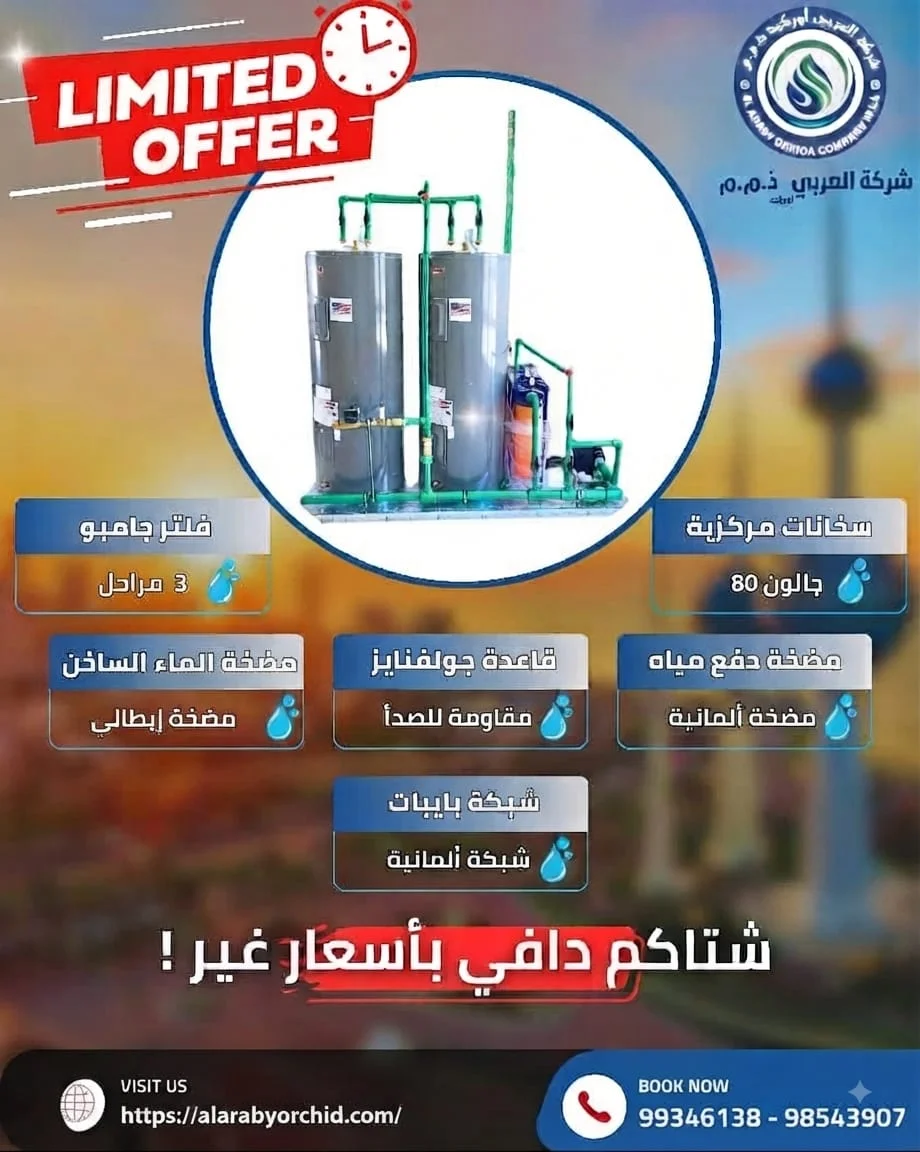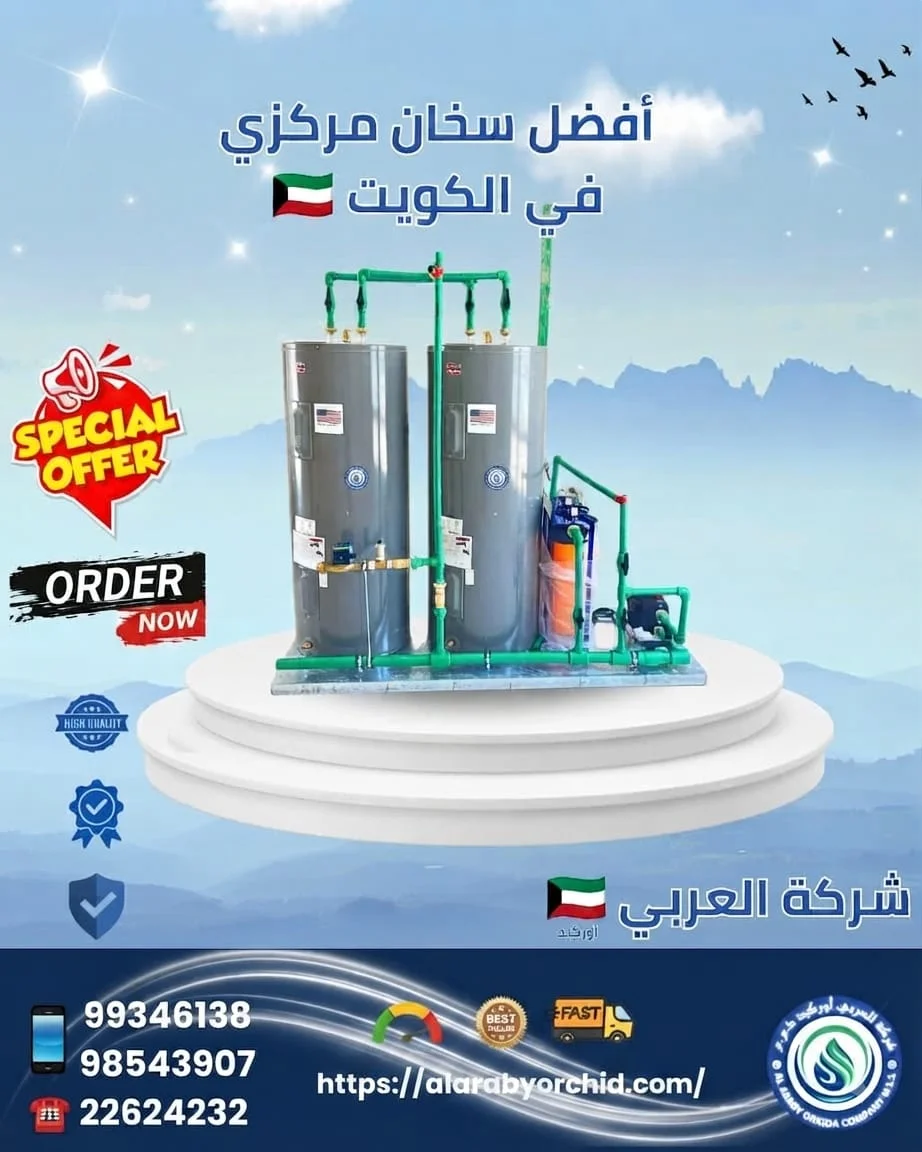
If you are looking for the best central water heater in Kuwait, the right choice is not simply about buying the largest tank or choosing the most expensive model and assuming the job is done. A central water heater is expected to serve your home for years and supply hot water to several bathrooms and kitchen outlets, so the correct choice depends on tank capacity, heating power, electricity consumption, the way hot water is used inside the property, and the number of people relying on the system every day. At Al Arabi Orchid 99346138, we believe the selection process should start with the actual requirements of the property before discussing a specific model or price. A heater that performs perfectly in a small house may be completely unsuitable for a large villa. In this guide, we explain how to compare the available options, understand what you are actually paying for, and choose a system that gives you reliable hot water without wasting money on unnecessary capacity or features.
Best Central Water Heater in Kuwait
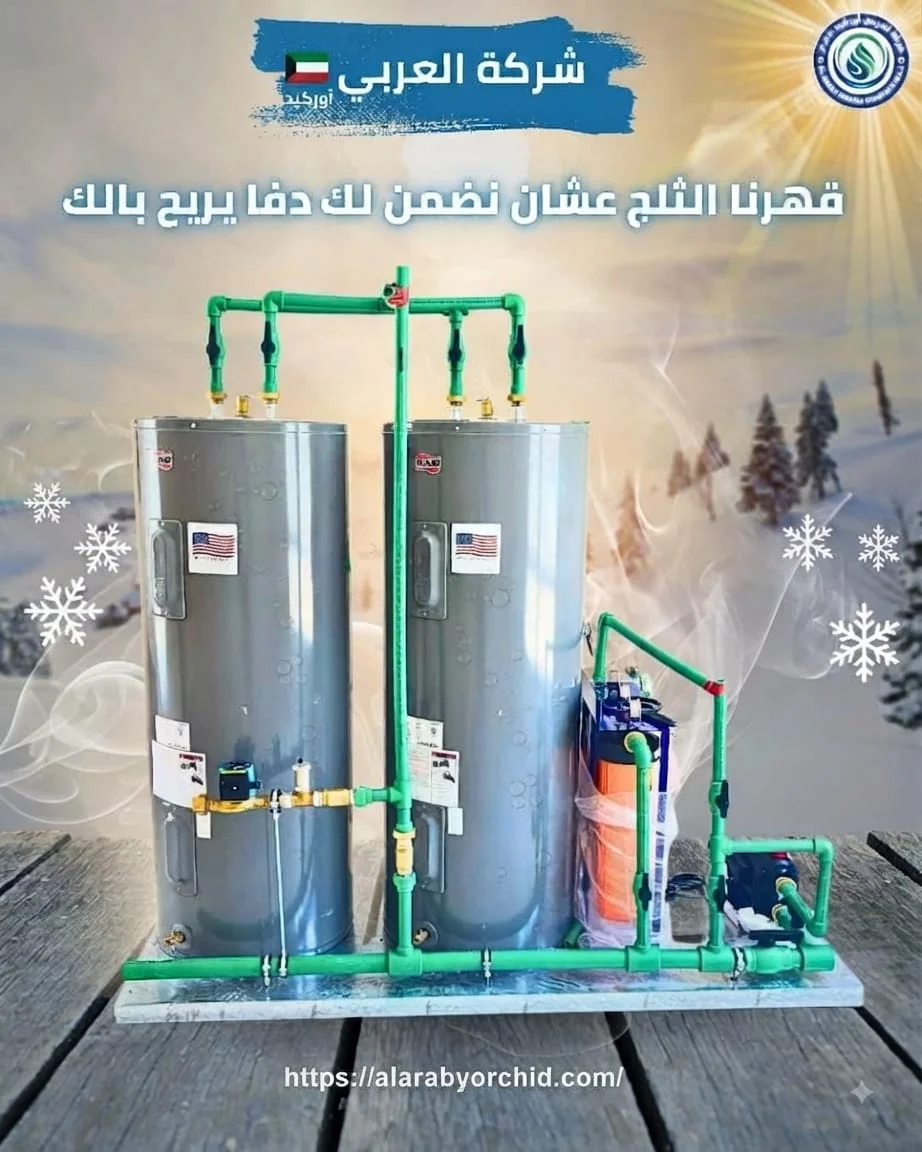
Choosing the best central water heater in Kuwait begins with understanding how hot water is actually consumed inside the property rather than focusing only on the brand name or tank size. A home occupied by two or three people with moderate daily use has completely different requirements from a large villa where several bathrooms may be used at the same time, especially during busy morning or evening hours. From practical situations commonly seen during inspections and replacement work, some homeowners purchase a very large heater because they assume that bigger automatically means better. After installation, they discover that they are heating and maintaining a larger quantity of water than they actually need. Other homeowners choose a smaller capacity simply to reduce the initial purchase price, only to find that the heater keeps reheating frequently and cannot comfortably meet peak demand. The right central heater is therefore not the biggest or smallest unit available. It is the unit that matches the real consumption pattern of the household and can provide hot water comfortably without unnecessary operating cycles.
For Kuwait homes, a good central water heater should provide enough stored hot water for peak use while also having effective thermal insulation that reduces unnecessary heat loss between heating cycles. The heating element must be capable of bringing the required quantity of water to the selected temperature within a reasonable period, while the thermostat should maintain stable temperature control instead of allowing excessive fluctuations. Safety components are equally important. A properly functioning pressure and temperature relief valve should never be considered an optional accessory because a central water heating system operates under both heat and pressure. Electrical connections must also be suitable for the heater's rated power. Installing a powerful heater on an electrical circuit that is not designed for its load can create operating problems that have nothing to do with the quality of the heater itself. This is why selecting a heater requires looking at the complete installation rather than treating the tank as an isolated appliance.
At Al Arabi Orchid 99346138, the selection process also considers the existing system whenever a homeowner is replacing an older central heater. We look at the previous tank capacity, whether it used to provide enough hot water, the reason the owner is considering replacement, the condition of the existing connections, and whether the actual problem may be repairable. Sometimes an older heater simply needs a specific repair and continuing to use it makes financial sense. In other situations, repeated faults, deterioration of the tank, poor efficiency, or an unsuitable capacity make replacement the more practical long-term decision. This type of assessment helps prevent homeowners from replacing a heater unnecessarily or buying another unit that repeats exactly the same capacity problem they had before. The objective is to create a hot water system that suits the property and its users rather than recommending a powerful unit on paper that does not match the real operating conditions.
-
The most suitable heater is one that provides enough hot water during peak household demand without forcing the family to wait repeatedly for the tank to recover its temperature after normal use
-
Good thermal insulation is important because it slows down heat loss from the stored water and reduces how frequently the heating elements need to switch back on during periods when nobody is using hot water
-
Checking the electrical supply and installation location before purchasing a heater is essential because selecting a unit with electrical requirements that exceed the existing system can create operating and safety problems
-
The number of users and simultaneous hot water outlets should be evaluated together because five people using hot water at different times create a completely different demand pattern from five people using several bathrooms at once
Best Types of Central Water Heaters
When discussing the best types of central water heaters, it is important to distinguish between a heater that has impressive specifications and a heater that actually suits your property. Central heaters available in the market differ in tank capacity, tank construction, internal protection, insulation quality, heating element power, temperature controls, safety systems, and maintenance requirements. This is where many buyers make a rushed comparison. They see two heaters and immediately assume the cheaper model offers the best deal or that the more expensive unit must automatically last longer. Neither assumption is reliable on its own. The real comparison should be made between heaters that can meet the same household demand and installation requirements. Only then does comparing construction quality, insulation, maintenance, warranty, and price become meaningful.
A reliable central water heater should combine a durable storage tank with effective insulation, appropriately rated heating elements, accurate thermostat control, and a properly functioning safety system. These components work together and should not be evaluated separately. Strong heating elements are useful only when the tank capacity matches the household's requirements. Excellent insulation is valuable because it helps retain heat, but it cannot compensate for a heater that is undersized for peak consumption. Likewise, a high-quality tank can still give the homeowner a poor experience if the thermostat is faulty or the installation is incorrect. Because central hot water systems operate under temperature and pressure, installation quality is just as important as the heater itself. The pressure relief arrangement, electrical supply, pipe connections, and accessibility for future maintenance should all be considered before the unit is put into regular service.
Practical maintenance history also teaches an important lesson about choosing between different heater types. Many problems found in older central heaters are not caused by complete tank failure. Reduced heating performance can result from worn heating elements, thermostat faults, mineral or sediment buildup, damaged valves, or years of neglected maintenance. This is why choosing the best type of heater also involves asking whether replacement components are available and whether technicians can service the unit properly in the future. A heater that performs well when new but becomes difficult to repair after several years may not be the most practical long-term option. A villa with heavy hot water demand may also need different specifications from a property with moderate consumption. Comparing heaters without considering their intended workload is like comparing two vehicles designed for completely different purposes and wondering why their running costs are not the same.
-
Central water heaters with effective thermal insulation are usually more suitable for long daily operating periods because they retain stored heat longer and reduce unnecessary reheating between periods of use
-
Tank construction and protection against deterioration should be examined carefully because the storage vessel is expected to handle repeated heating cycles and daily service for many years
-
Availability of spare parts and maintenance support matters almost as much as the initial heater quality because thermostats heating elements valves and other serviceable parts may require replacement during the lifetime of the system
-
The best heater should never be selected on purchase price alone because tank capacity insulation component quality maintenance accessibility and long-term operating cost determine the real value of the system
Best Central Water Heater Brand
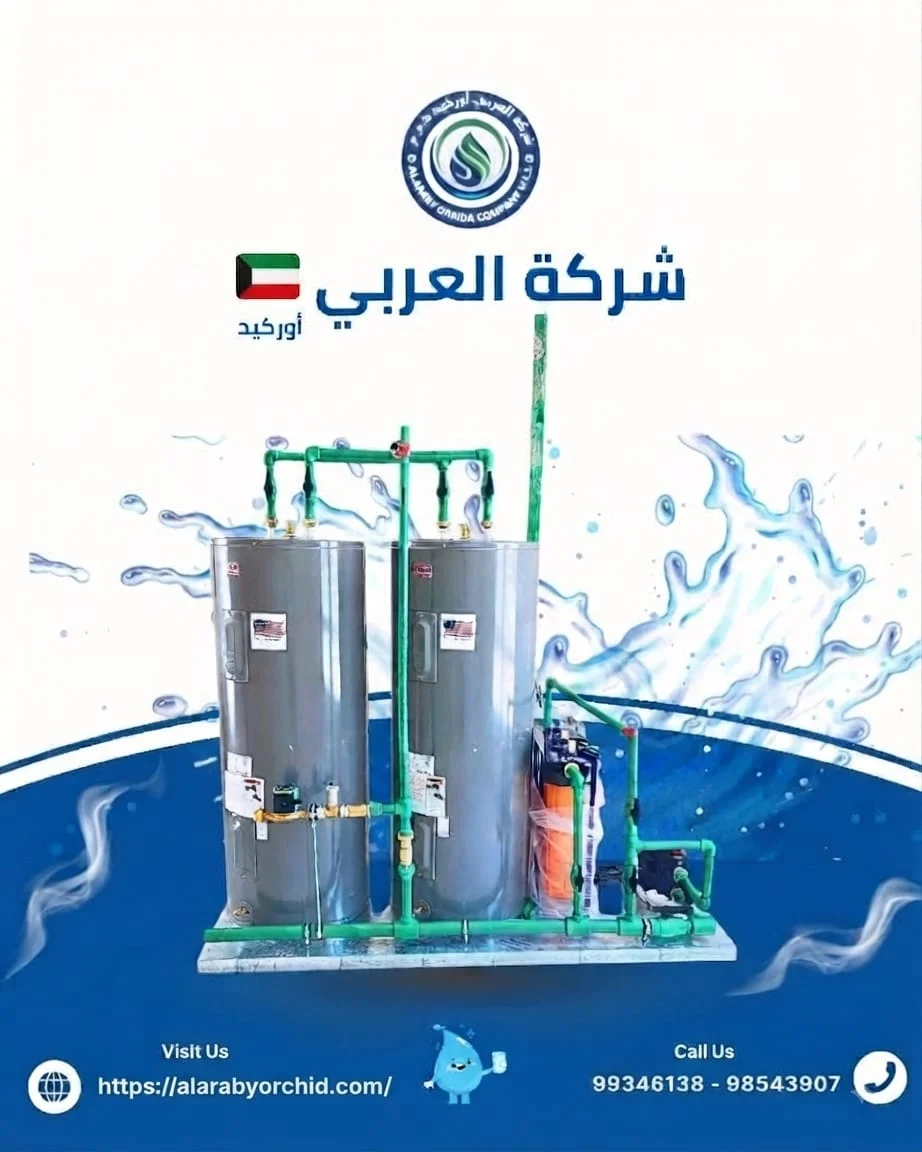
Asking about the best central water heater brand is completely reasonable, but the answer should never be reduced to naming one manufacturer and pretending that every model it produces will suit every property. Brand reputation matters, but even a well-made heater can deliver disappointing results if the wrong capacity is selected, installation conditions are unsuitable, or maintenance is neglected for years. When evaluating a brand, it is better to look at several practical factors together, including tank construction, insulation performance, heating element quality, thermostat accuracy, safety features, availability of spare parts, serviceability, and the level of support available after installation.
A simple example explains why the brand alone cannot determine whether a heater is right for you. A homeowner may purchase a highly regarded model because a friend recommended it. The friend's home may have two bathrooms and moderate hot water demand, while the buyer has a large villa with several bathrooms and much heavier simultaneous use. If both households install the same tank capacity, the experience can be completely different. The villa owner may find that the available hot water is exhausted too quickly and conclude that the brand is poor even though the real problem is undersizing. The opposite also happens when someone buys a significantly oversized heater simply because it belongs to a premium range and then heats more stored water than the family regularly needs.
When choosing the best central water heater, the brand should therefore be considered as one part of a complete evaluation rather than the only deciding factor. A manufacturer with a strong reputation and proven experience in water heating equipment is certainly an advantage, but the specific model must still match the property's consumption requirements and electrical setup. It is also worth considering how easy it will be to find compatible heating elements, thermostats, safety valves, and qualified maintenance support after several years of use. Al Arabi Orchid 99346138 approaches the comparison by looking at what the property needs first instead of automatically recommending one brand to every customer. The goal is not simply to install a famous name on the tank but to select a system that continues to provide reliable service under the household's real operating conditions.
-
The best brand for your property is one that offers a model with the correct capacity and heating performance while also providing serviceable components and spare parts that can reasonably be obtained when maintenance becomes necessary
-
Manufacturer reputation is important but it cannot compensate for choosing the wrong tank size because even a premium heater will struggle if household hot water demand regularly exceeds its usable stored capacity
-
Ask about the heating elements thermostat safety system insulation and service requirements before concentrating only on the brand name because these are the components that directly affect everyday operation and future maintenance
-
The fairest comparison should be made between models with similar capacities and intended applications before evaluating construction quality operating cost maintenance support warranty coverage and overall value
Best Central Water Heater for Home Use
Choosing the best central water heater for home use depends first on how the household actually uses hot water throughout the day because the number of residents alone does not tell the full story. A family of four may use hot water at different times throughout the morning and evening without creating significant peak demand. Another family of four may have everyone showering within the same hour while the kitchen is also using hot water. These two households may require different heater capacities even though the number of people is identical. Before purchasing a new unit, it is therefore better to consider the number of bathrooms used regularly, how often showers are taken, whether multiple bathrooms are commonly used together, and how heavily the kitchen and washbasins rely on hot water.
For a typical home, the objective is to find a sensible balance between stored water volume, reheating performance, electricity consumption, and comfort. A heater that is too small may provide satisfactory performance during quiet periods but run out of usable hot water when several people shower close together. A significantly oversized heater may store and maintain more hot water than the household normally consumes. Neither extreme is ideal. Correct sizing aims to provide enough capacity for normal peak use while avoiding unnecessary excess. The heating performance must also be considered because tank capacity alone does not determine how quickly the heater can recover after a large quantity of hot water has been used.
If the property already has an older central heater, its previous performance can provide useful information when selecting the replacement. If the existing capacity comfortably served the family for years and the heater now needs replacement because of age or deterioration, there may be little reason to dramatically increase the tank size. If the household has always complained that hot water disappears too quickly, however, that is a strong reason to reassess the demand before installing another heater of the same size. At Al Arabi Orchid 99346138, this previous operating experience is treated as useful practical evidence because replacing one heater with another should solve an existing problem rather than simply change the equipment.
-
Home heater capacity should reflect the number of hot water outlets likely to operate during busy periods because simultaneous bathroom use gives a more accurate picture of peak demand than simply counting bedrooms
-
If the previous heater provided enough hot water before it developed a fault its capacity can be a valuable reference point when selecting a replacement instead of beginning with completely arbitrary estimates
-
The installation area should remain reasonably accessible for inspection and maintenance because putting a high-quality heater in a difficult location can make even routine servicing unnecessarily complicated
-
A residential system should balance comfort and operating efficiency so the best heater is not automatically the biggest model but the one capable of meeting peak demand without excessive unused storage capacity
Best Central Water Heater for a Villa
Finding the best central water heater for a villa usually requires more detailed planning than selecting a heater for a small apartment or compact house. Villas commonly have several bathrooms, multiple hot water outlets spread across different floors, a larger number of residents, domestic staff, and occasional guests. This means the heater may be expected to supply several points within a short period instead of serving one shower or tap at a time. Capacity therefore needs to be considered according to probable peak demand rather than the quietest or average usage period during the day.
When assessing a villa, useful questions include how many bathrooms may realistically be used at the same time, whether the property has a bathtub or large-volume fixture, whether the kitchen draws significant quantities of hot water, and how far some outlets are from the central heater. Long hot water lines can affect user comfort because water may cool inside the pipe between uses. Some villas therefore use a hot water circulation system to reduce waiting time at distant outlets. If a circulation pump is present, the heater, pipe insulation, pump operation, and plumbing layout need to work together efficiently because the performance of the heater cannot be evaluated independently from the distribution system serving the property.
Consider two villas that both contain five bathrooms. In the first villa, only two people normally use hot water at the same time. In the second, four bathrooms may be active during the morning rush. The number of bathrooms is identical, but the peak load is completely different. This is why simply counting bathrooms and choosing a tank according to a generic chart can lead to unnecessary oversizing or frustrating undersizing. Recovery performance also becomes important after a large draw because the system should restore stored hot water at a rate suitable for the next expected period of use. At Al Arabi Orchid 99346138, villa sizing is treated according to real consumption rather than assuming every villa automatically requires the largest heater available.
-
Villas with several bathrooms should be assessed according to peak simultaneous demand because the number of hot water points operating during a short period determines the actual load placed on the central heater
-
The length of the hot water distribution network pipe insulation and any circulation system should be considered because significant heat can be lost after the water leaves the heater even when the tank itself performs efficiently
-
Large bathtubs or other high-volume hot water uses should be included in sizing calculations because one such use can remove a substantial portion of the heater's stored hot water within a short time
-
The best heater for a villa is one that handles realistic peak demand and recovers at an appropriate rate without unnecessarily oversizing the tank or increasing electricity consumption beyond what the property requires
Buying the Best Central Water Heater
Before buying the best central water heater, avoid making the decision based only on the question “How much does it cost?” because the purchase price represents only one part of the total cost of ownership. Installation expenses, electricity consumption, maintenance needs, availability and price of replacement parts, and expected service life all influence the real value of the heater. A unit that costs less initially can become a poor investment if it is unsuitable for the property, repeatedly breaks down, or becomes difficult to repair because components are not readily available.
A smarter approach is to establish your requirements before comparing models. Determine the tank capacity you are likely to need, review the available electrical supply, measure the installation area, examine the existing plumbing connections, and identify whether there are any special requirements related to the property's hot water system. Once these basics are clear, you can compare heaters that actually meet the same criteria. This prevents the common situation where homeowners compare several completely different products simply because the prices appear attractive. A genuinely useful comparison looks at similar capacities and applications before evaluating insulation, construction, heating performance, warranty, service support, and price.
Before paying for a heater, ask what the warranty actually covers instead of accepting the general statement that “the unit has a warranty.” Warranty duration, covered components, service conditions, and exclusions can differ considerably. It is also useful to ask about heating elements, thermostats, safety valves, and other serviceable components because these parts may require inspection or replacement during years of regular use. Al Arabi Orchid 99346138 focuses on matching the heater to the property before purchase because the best deal is not necessarily the lowest receipt on the first day. The better investment is a system that suits the installation, provides stable hot water, can be serviced properly, and does not force the homeowner into premature replacement because of an avoidable purchasing mistake.
-
Determine tank capacity electrical requirements and installation conditions before comparing prices so you only compare heaters that can genuinely meet your property's needs instead of being distracted by unrelated models
-
Ask for clear warranty information rather than accepting the word warranty by itself because coverage periods included components exclusions and service conditions may significantly affect the long-term value of the purchase
-
Include maintenance accessibility and spare parts availability in the buying decision because a central heater is a long-term household system and should not become difficult to repair when a normal service component eventually wears out
-
The best price is the one attached to a correctly sized reliable and maintainable heater with reasonable operating costs rather than simply the lowest purchase figure available in the market
Energy-Efficient Central Water Heater
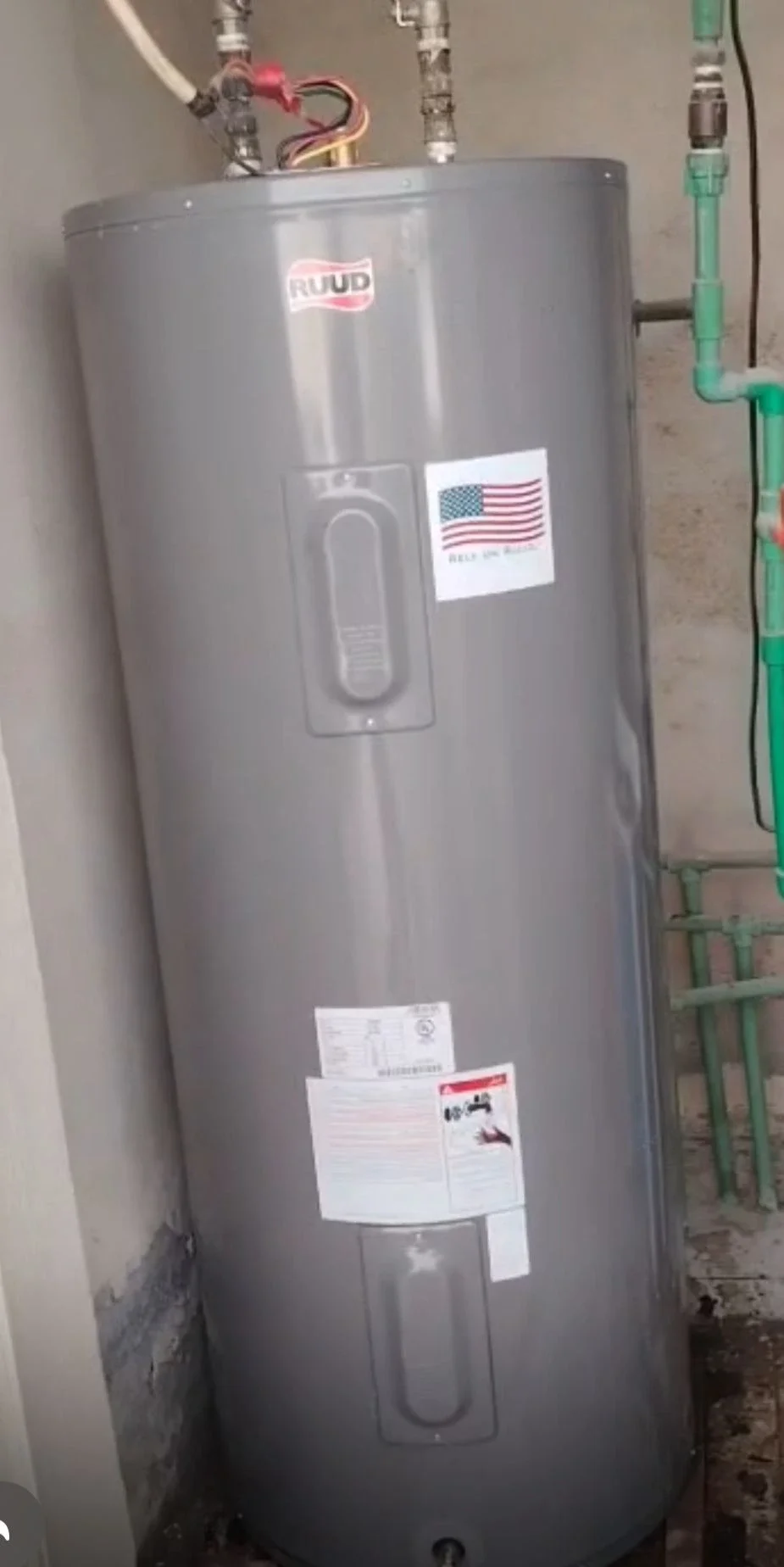
If your priority is an energy-efficient central water heater, do not rely on the word “efficient” printed on a product description without understanding what actually affects electricity consumption. The insulation around the storage tank plays an important role because the longer the stored water retains its temperature, the less frequently the heating elements need to operate simply to replace lost heat. However, even a well-insulated heater may consume more electricity than expected if its capacity is significantly larger than the household needs or if the thermostat is set unnecessarily high.
Maintenance also influences energy performance. Over time, deposits and scale can affect heat transfer around heating components in some systems, meaning the heater may take longer to achieve the required water temperature. A worn or inaccurate thermostat can also create inefficient operating cycles. This is why regular inspection is not only about preventing breakdowns. Checking heating elements, thermostat operation, general tank condition, and other serviceable parts helps the heater continue working close to its intended performance rather than allowing a small issue to gradually increase operating time.
One common mistake is to assume that buying a smaller tank will automatically save electricity. If the unit is undersized for the household, it may repeatedly reheat water during periods of high demand while still failing to provide the comfort residents expect. An oversized tank creates the opposite problem by heating and maintaining more stored water than necessary. The practical solution is to choose a capacity close to the property's real demand, combine it with good insulation, use reasonable temperature settings, and maintain the heater correctly. Al Arabi Orchid 99346138 can help evaluate an existing system or select a more suitable replacement instead of relying on vague efficiency claims that do not explain where the saving actually comes from.
-
Effective tank insulation reduces unnecessary heat loss because the heater does not need to repeatedly replace heat that escapes rapidly during periods when no hot water is being used
-
Selecting a tank capacity that closely matches household demand avoids heating excessive unused water while also preventing an undersized system from constantly trying to recover during normal periods of consumption
-
Setting the thermostat to a suitable operating level matters because maintaining unnecessarily high water temperatures requires additional energy while often providing little practical benefit to everyday users
-
Routine inspection of heating elements thermostat operation and general heater condition helps the system maintain normal performance instead of allowing a minor fault to gradually increase heating time and electricity consumption
High-Efficiency Central Water Heater
The term high-efficiency central water heater should mean more than simply heating water quickly. Real efficiency involves reaching the required temperature, retaining that heat effectively, maintaining stable water temperature, and meeting expected household demand without excessive heat loss or unnecessarily long operating cycles. A heater may have powerful heating elements and still provide mediocre overall efficiency if the tank loses stored heat rapidly between cycles. This is why a single specification should never be used to judge the entire system.
When evaluating performance, look at thermal insulation, tank design, heating element condition, thermostat accuracy, and the quality of the installation. The external plumbing system also matters. Long hot water pipes with poor insulation can lose a noticeable amount of heat before water reaches distant bathrooms or taps. From the homeowner's point of view, efficiency is not simply what happens inside the storage tank. The real objective is to receive hot water at the required outlet at a stable and comfortable temperature without excessive delay or wasted energy along the way.
Efficiency also needs to be considered in relation to the consumption pattern of the property. A home that uses a large quantity of hot water within one short period needs a heater with sufficient stored capacity and suitable recovery performance. A property where hot water use is spread across the day may benefit more from excellent heat retention between uses. This is why the phrase “high efficiency” should not be reduced to one number on a product sheet. At Al Arabi Orchid, the objective is to identify the level and type of performance the property genuinely needs rather than encouraging customers to pay extra for specifications that may offer little practical benefit in their particular installation.
-
Heater efficiency should be judged by its ability to heat the required amount of water retain that heat and deliver reliable performance during actual household use rather than by heating speed considered in isolation
-
Accurate temperature control helps prevent unnecessary fluctuation and allows the heating elements to operate according to real demand instead of cycling irregularly because of a thermostat problem
-
Insulating the tank and the distribution pipes works together because retaining heat inside the heater is only part of the solution if the plumbing system loses a significant amount before the water reaches the outlet
-
A genuinely high-efficiency heater is one that provides the required performance for the property's consumption pattern with minimal unnecessary energy loss rather than simply the model with the longest specification list
Best Water Heaters for Kuwait

Searching for the best water heaters for Kuwait means considering local operating conditions and the fact that many households depend on their water heating system throughout the year. Water conditions, seasonal temperature changes, household consumption, and the design of residential plumbing systems can all influence long-term performance. Many villas and larger homes also rely on central systems serving several outlets, so reliability and maintainability become essential parts of the buying decision rather than minor details to think about later.
Another practical issue in Kuwait is local availability of service and replacement parts. A heater may look excellent on paper, but if a minor component becomes difficult to source several years later, ownership can quickly become inconvenient and expensive. For this reason, local serviceability belongs in the definition of the “best” water heater alongside brand reputation, construction quality, and country of manufacture. A system that can be inspected, repaired, and maintained by technicians familiar with its components can provide a more practical ownership experience than an unusual model with limited support.
Water heater performance should also be monitored over time rather than ignored until the system completely stops working. Changes such as slower heating, inconsistent water temperature, unusual sounds, signs of leakage, or abnormal cycling may indicate a developing problem. Early inspection can sometimes identify a service issue before it becomes a major repair. The best option for Kuwait is therefore a heater that combines reliable daily performance, suitable insulation, serviceable components, correct capacity, and realistic long-term operating costs. Al Arabi Orchid 99346138 connects the heater choice to the conditions of the property itself because the needs of a compact apartment are not identical to those of a large villa with several hot water outlets.
-
Choosing a water heater for Kuwait should include local maintenance support and spare parts availability because long-term serviceability is an important part of reliability rather than something to consider only after a fault occurs
-
Ability to handle regular daily operation matters more than unnecessary secondary features because most households need consistent dependable hot water rather than functions they may rarely use
-
Monitoring heater performance over time helps identify slower heating leakage unusual operation or temperature-control issues before a small developing problem becomes a more expensive failure
-
The best water heaters for Kuwait are those that fit the property's consumption pattern while balancing construction quality efficiency serviceability maintenance requirements and reasonable long-term operating costs
Choosing the Best Central Water Heater
When choosing the best central water heater, bring all the information together and turn it into an organized decision rather than relying on a first impression. Start with the number of people in the household, then look at the number of bathrooms and hot water outlets and determine whether several of them are regularly used at the same time. If an existing heater is already installed, check its capacity and think about whether it previously supplied enough hot water. Then review the available electrical power, the installation space, pipe connections, and any special requirements of the hot water system. Once these points are clear, you have a realistic basis for comparing different options.
After determining the required capacity and installation conditions, compare suitable models according to insulation, component quality, service support, spare parts availability, warranty terms, and price. If two heaters offer similar performance and capacity, do not automatically select one because it is slightly cheaper before considering future maintenance and support. In some situations, the more expensive model may provide better long-term value. In others, paying more adds features or capacity that the property will never use. The objective is to identify value rather than simply choosing the highest or lowest price.
One mistake worth avoiding is buying the heater first and only then asking a technician where it can be installed. The installation area should be assessed before the purchase so dimensions, electrical connections, pipe routes, accessibility, and safety requirements are known in advance. A small amount of planning before paying for the unit can prevent expensive modifications or even the need to exchange the heater later. If you are deciding between different capacities or models, contact Al Arabi Orchid on 99346138 and provide information about the property, number of users, bathrooms, and existing system. This turns the decision from guesswork into a comparison based on genuine requirements.
-
Write down the property's hot water requirements before looking at models because identifying users outlets and peak demand allows unsuitable options to be eliminated before price and brand influence the decision
-
Use the experience of the existing heater whenever possible because a capacity that previously worked well provides useful evidence while a system that regularly ran out of hot water shows that the new selection needs reassessment
-
Inspect the installation area electrical supply and plumbing connections before purchase so you do not discover after delivery that the selected heater requires unplanned modifications or cannot fit the intended location
-
Compare purchase price efficiency maintenance warranty spare parts and long-term support as one complete package because a sensible decision considers total ownership value rather than the initial invoice alone
Conclusion
Finding the best central water heater in Kuwait does not require memorizing dozens of brands or becoming a water-heating engineer overnight. What matters is understanding how your household uses hot water, selecting an appropriate capacity, and comparing tank quality, thermal insulation, heating elements, temperature controls, safety components, warranty coverage, maintenance accessibility, and spare parts availability. Once these factors are clear, the price becomes one part of the decision instead of controlling the entire decision.
Al Arabi Orchid 99346138 can help you with choosing the best central water heater for a home or villa whether you are replacing an older system or preparing a new installation. The objective is to choose equipment that provides reliable and comfortable hot water while remaining suitable for the property's actual demand. Buying an excessively large heater merely “to be safe” can create unnecessary operating costs, while buying an undersized unit simply to reduce the purchase price can leave the household constantly waiting for hot water. A properly selected system gives you the balance between capacity, efficiency, reliability, maintainability, and long-term value that a central water heater should provide.
Frequently Asked Questions
How do I know the right central water heater capacity for my home?
The correct capacity depends on the number of people in the household, the number of hot water outlets, and how those outlets are used, especially how many bathrooms may operate at the same time. It is also useful to review the capacity of the existing heater and whether it previously met the household's needs because that provides practical information instead of relying entirely on general estimates.
Is a larger central water heater always better?
No. A heater that is much larger than the actual requirement stores and maintains more hot water than the household may regularly use, which can increase operating costs without providing a meaningful benefit. The objective is to select a capacity capable of handling peak demand with a sensible margin rather than simply installing the largest tank that will fit in the available space.
What should I check before buying a central water heater?
Focus on the correct tank capacity, insulation quality, tank construction, heating elements, thermostat, safety system, warranty terms, spare parts availability, and maintenance support. The installation area and electrical connections should also be inspected before the purchase because even a high-quality heater needs to be compatible with the property's existing infrastructure.
How can I tell whether a central water heater is energy efficient?
Look at the quality of the tank insulation, how accurately the thermostat controls temperature, and whether the capacity matches the property's real consumption. A correctly sized and well-insulated heater operating at an appropriate temperature is generally more sensible than an oversized unit, an undersized unit that constantly reheats, or a heater suffering from maintenance problems that increase operating time.
Should I repair my old central heater or replace it?
The answer depends on the condition of the storage tank, the age of the unit, the type and frequency of faults, spare parts availability, and the expected repair cost. A defective thermostat or heating element is very different from serious tank deterioration or repeated expensive failures. The system should therefore be properly assessed before deciding that replacement is automatically necessary.
Is the best heater for a villa different from one for an apartment?
Often yes. A villa may have more bathrooms, longer hot water distribution lines, greater simultaneous demand, and potentially a circulation system serving distant outlets. These factors can significantly change the required capacity and recovery performance compared with a small apartment, so the villa should be evaluated according to its actual usage rather than a generic recommendation.
Is the brand more important than the heater capacity?
Both are important, but a premium brand cannot correct an unsuitable capacity. It is better to determine the required capacity and operating specifications first and then select a reputable brand that provides suitable models, service support, spare parts, and dependable maintenance options.
Who can I contact for help choosing a central water heater in Kuwait?
You can contact Al Arabi Orchid on 99346138 and provide details about the number of people in the property, bathrooms, hot water usage, and the existing heater if one is already installed. This information makes it possible to compare appropriate options based on actual requirements rather than relying on guesswork.