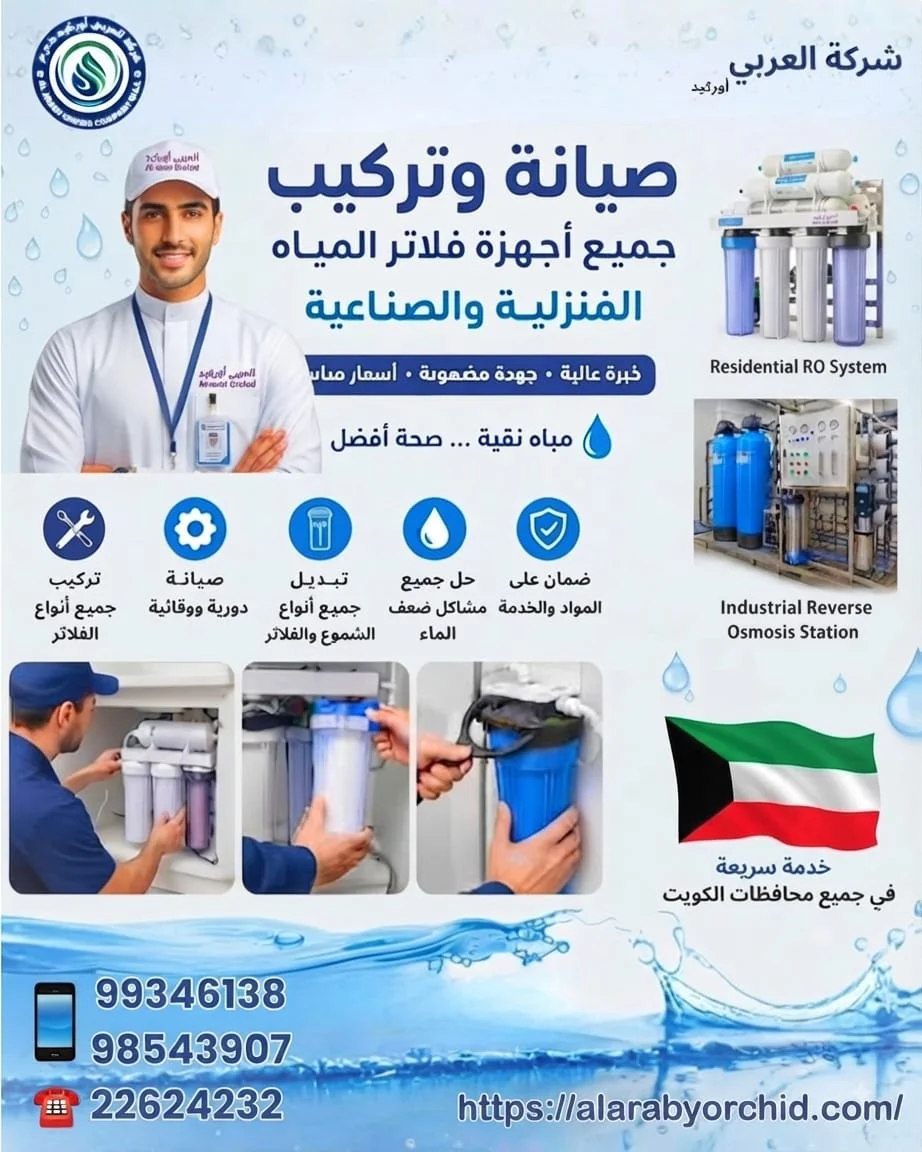
Maintaining a home water filter does not simply mean removing an old cartridge, installing a new one, and considering the job finished. A filtration system contains a complete set of components including the housing, O-ring, fittings, tubing, valves, and in some systems a storage tank and several treatment stages. Any one of these components can affect water flow, treated-water quality, or create leakage if it is ignored. Proper routine inspection checks cartridge condition, pressure, flow, leakage, housing cleanliness, storage-tank performance, and connections before the system is restarted and tested after service. Most importantly, the maintenance schedule should not be identical for every home because filter type, household consumption, water quality, and manufacturer instructions all determine what actually needs replacement and what only needs inspection and cleaning.
Home water filter maintenance in Kuwait

Home water filter maintenance in Kuwait should begin by identifying the type of filtration system before opening any housing. An under-sink drinking-water filter is different from a large point-of-entry filter, and both differ from a multi-stage system that includes a storage tank, membrane, prefilters, and post-treatment stages. For that reason, a good maintenance visit should not begin with one standard bag of replacement cartridges intended for every filter. It should begin by identifying the model, stage arrangement, consumable parts, and the date of the previous service.
The first thing to review is any complaint reported by the user. Has the water flow become slower? Has taste or odor changed? Is there a small water leak around the system? Does the filter make an unusual sound while filling? Does the storage tank provide less water than before? These observations can save a great deal of diagnostic time because they direct attention toward the part whose performance has changed instead of dismantling everything without a reason.
The water supply should then be isolated and pressure released according to the system design before any housing is opened. When a cartridge is replaced, the housing itself, O-ring, and sealing groove should be inspected rather than simply removing the old cartridge and installing the new one quickly. The cartridge may genuinely have reached the end of its service life while the system also has a hardened O-ring or an early leak that would appear only a few days later if it is missed during service.
Maintenance should also compare the condition of each cartridge with how long it has been in service. A cartridge that becomes dark or heavily blocked much faster than expected can reveal a high sediment load or a change in incoming water quality and should not simply be treated as another disposable part that reached its age.
After reassembly, water should be restored gradually while checking for leakage, flow, and normal system filling behavior. If the manufacturer requires a particular stage to be flushed after replacement, the correct flushing procedure should be completed before the water is considered ready for normal use.
Most importantly, not every component needs to be replaced during every visit. Professional maintenance distinguishes between a consumable part that has reached its service interval, a healthy component that only requires inspection, and a part that shows a genuine sign of deterioration.
-
A maintenance visit should begin by identifying the system type and stage arrangement because a drinking-water filter has different service requirements from an inlet filter or multi-stage system
-
Changes in flow taste storage capacity or other operating behavior provide useful diagnostic information that helps focus inspection on the part that has actually changed
-
Opening a filter housing for cartridge replacement provides an opportunity to inspect the O-ring threads and sealing groove instead of waiting for a leak to appear after service
-
The condition of the old cartridge provides information about sediment load and operating conditions and should be observed rather than discarded without inspection
-
Successful maintenance is confirmed only after system pressure is restored leakage and flow are checked and any required manufacturer flushing procedure is completed
Routine water filter inspection
The purpose of routine water filter inspection is to identify changes before they develop into obvious faults. You should not need to wait until the water becomes extremely weak or the filter housing starts leaking before realizing that the system requires attention. Many warning signs develop gradually, such as reduced flow, longer storage-tank filling time, or a first-stage cartridge that needs replacement more frequently than before.
Inspection should begin by checking the maintenance history because cartridge replacement intervals vary by product. Some manufacturers specify service according to time, others use total water volume, and some products use whichever limit is reached first. This is why a general statement such as “replace every cartridge every six months” cannot be applied reliably to every filtration system.
Current water flow should then be evaluated. If it has fallen noticeably, the technician should determine whether the cartridge is loaded with sediment, a valve is not fully open, tubing is kinked, or another stage is creating the restriction. Reduced flow is useful evidence, but by itself it does not identify the exact component.
The filter body and fittings should also be checked for active leakage or signs of previous moisture. Sometimes a leak is small enough to dry before the homeowner notices it, but it can leave staining or moisture marks around a fitting or beneath a housing.
The O-ring should be inspected whenever the housing is opened. If it is cut, flattened, stretched, or has lost flexibility, it should be serviced or replaced as required. If it is still healthy, its seating area should be cleaned and the O-ring should be reinstalled correctly according to the filter design.
In a multi-stage system, it should not be assumed that every stage reaches the end of its service life at the same time. Different cartridges perform different functions and may have different service intervals, which is why maintenance should follow product guidance and actual operating conditions.
Routine inspection should also ask whether the filtration system has been unused for a long period. If the home or filter remained inactive for an extended time, some systems may require cleaning, sanitization, and flushing according to the manufacturer instructions before returning to normal use.
Finally, the parts replaced during each visit should be recorded. Even a simple service record is far more useful than relying on the statement, “I think we changed that cartridge a while ago.”
-
Maintenance schedules should follow product instructions household usage and water conditions rather than forcing every filter into one universal service interval
-
Reduced flow deserves inspection but can result from more than one cartridge or connection so replacement should not be based on guesswork
-
Previous moisture marks around housings and fittings remain important even when no active leak is visible during the service visit
-
Multi-stage systems benefit from a service record showing when each stage was replaced because all cartridges do not necessarily share the same maintenance interval
-
A filtration system left unused for a long period may require assessment before normal use because stagnant water and system conditions can make cleaning or sanitization appropriate
Cleaning the home filtration system
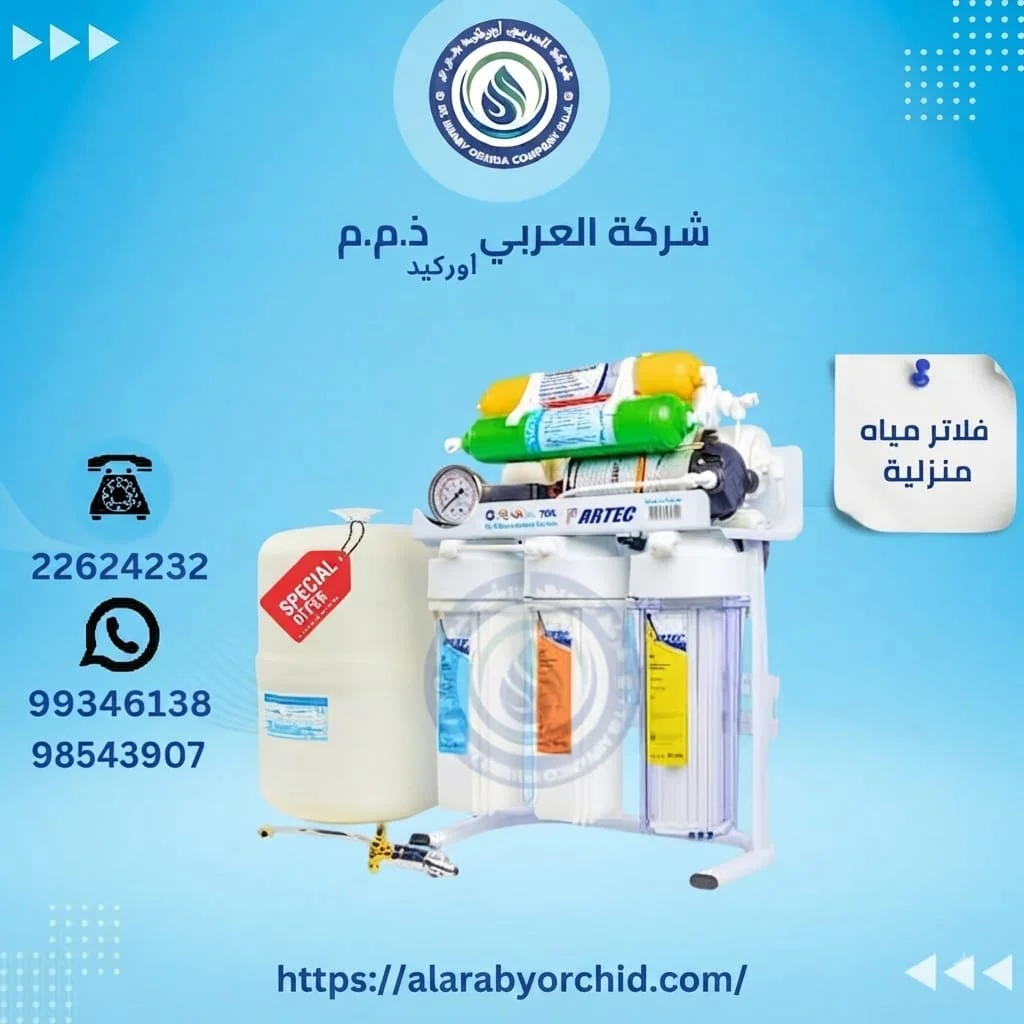
Cleaning the home filtration system is different from simply replacing the cartridge because sediment can accumulate inside the housing, around the O-ring groove, and in other accessible parts of the system even after the used filter element has been removed. Installing a new cartridge inside a dirty housing does not represent complete maintenance.
After the water supply is isolated and system pressure is released, the relevant housing can be opened and cleaned using methods and materials suitable for the filter and for drinking-water applications according to the manufacturer instructions. The purpose is to remove deposits and dirt without scratching the housing or leaving unsuitable cleaning chemicals inside the water path.
The O-ring groove needs special attention because a single grain of sand or a small deposit in the sealing area can create leakage after the system is reassembled. The groove should be cleaned carefully and the O-ring inspected before it is returned to position.
In a multi-stage system, every component should be treated according to its function rather than assuming that every cartridge can be cleaned in the same way. Many filter cartridges are designed to be replaced rather than washed and reused. Cleaning the outside of a disposable cartridge may make it look better without restoring its original filtration capacity.
The sediment found inside the housing should also be observed. If the amount is significantly greater than during previous service visits, this deserves further investigation. The water storage tank, recent plumbing work, or a change in incoming water quality may be contributing to the increase.
Systems that include a storage tank need a service program that considers the tank itself rather than focusing only on the housings. If the system has remained stagnant for an extended period or the manufacturer recommends a specific sanitization procedure, the appropriate method should be followed using materials and steps suitable for the system and drinking water.
After cleaning and reassembly, the filtration system should be flushed according to the manufacturer instructions so that service water, manufacturing residues from a new cartridge, or other material is cleared before normal use.
Proper cleaning is not about making the inside of the filter look shiny. The real objective is to return every accessible surface, O-ring location, and connection to a clean condition that allows the system to operate properly and seal reliably.
-
Replacing a cartridge without cleaning the housing and O-ring groove can leave deposits that contribute to leakage or contamination inside the system
-
Cleaning and sanitizing materials should be selected according to the filter instructions and drinking-water application rather than using whichever household cleaner is available
-
A cartridge designed for replacement does not become a new cartridge simply because its surface has been washed so its intended service cycle should still be followed
-
The amount of sediment inside the housing provides useful information about water conditions and can be compared with previous maintenance visits to identify changes
-
After cleaning and installing new components the filtration system should be flushed for the time and in the manner required by the product before normal water use
Inspecting water filter leakage
Inspecting water filter leakage should not begin by tightening every fitting without knowing where the water is coming from. The correct starting point is identifying the exact leak location because housing leakage has different causes from tubing leaks, inlet-connection leaks, valve leaks, or storage-tank leaks.
If the leak appears between the housing and its cap, inspection should first focus on the O-ring, sealing groove, and the way the housing was installed. The O-ring may have moved out of position, become twisted, or developed a small cut. In other cases, dirt beneath the seal prevents complete closure.
If water is coming from a tubing connection, the fitting itself should be checked along with whether the tube is inserted correctly and whether there is damage or cracking close to the connection. There is no reason to dismantle every housing when the leak source is clearly a fitting.
Leakage through the housing body requires more attention, especially when there is a visible crack line. A cracked pressure-containing component is not a problem that should be treated by tightening the filter harder because the housing itself has lost its structural integrity.
In systems that include a storage tank, its fittings and valve should also be inspected. A small amount of water beneath the tank does not automatically mean that the tank body is damaged because the leak may come from the fitting or valve.
After maintenance, all external surfaces should be dried before water is restored. This makes it much easier to identify a new drop and trace its exact source rather than confusing it with water spilled during servicing.
The water should then be turned back on gradually and the system monitored under operating pressure. A leak that is not visible while the system is empty may appear only after pressure is restored, so final inspection cannot end before the filter is operating normally.
If leakage occurs after every cartridge replacement, the closing procedure, O-ring, threads, and housing should all be reviewed instead of accepting the problem as a normal part of maintenance.
-
Identifying the leak location before dismantling the system prevents unnecessary replacement of healthy components and directs repair toward the actual cause
-
Leakage where the housing meets the cap should lead inspection toward the O-ring and sealing groove before concluding that the complete housing is damaged
-
A genuine crack in a pressure-containing housing should be treated as a structural defect rather than a problem that needs additional tightening
-
Drying the filter before restoring water makes it easier to identify any new leak and trace its source accurately
-
Leak inspection is only complete under operating pressure because some weak points remain invisible while the filtration system is empty
Testing home filter pressure
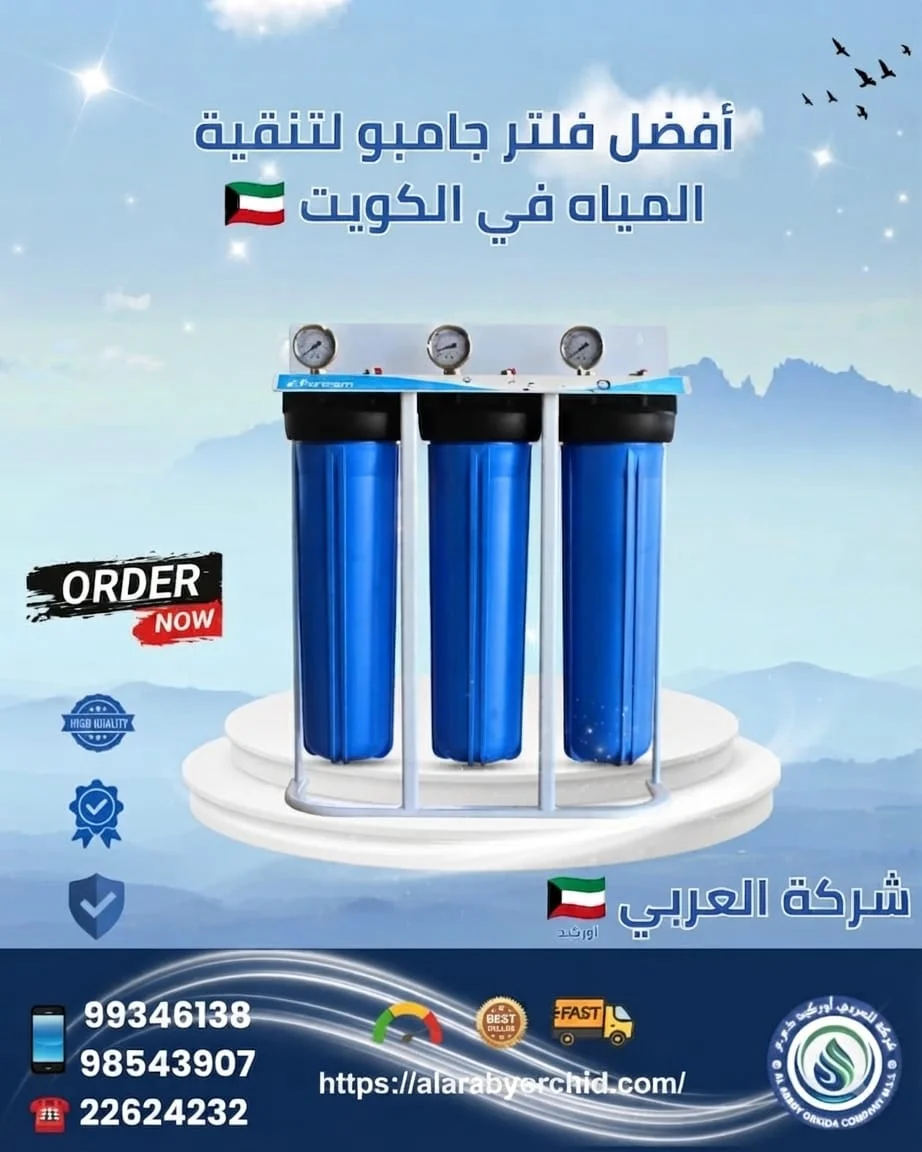
Testing home filter pressure helps determine whether weak water is actually caused by the filtration system or whether the plumbing network already had a problem before the filter. Pressure and flow both affect filtration performance, but they are not the same measurement, so they need to be considered together.
If water flow is excellent immediately after a new cartridge is installed and then gradually declines over time, this can indicate that the cartridge is becoming loaded with sediment depending on the system. However, if water remains weak even after an appropriate new cartridge is installed, another cause should be investigated rather than changing the cartridge again.
In whole-house filtration systems, cartridge size and rated flow are particularly important because the filter may need to supply several faucets, bathrooms, and appliances at the same time. A small stage or a heavily loaded cartridge can create a noticeable pressure drop during peak demand.
Some systems include pressure gauges before and after a filtration stage, allowing the pressure difference across the filter to be monitored. An increasing differential over time can indicate rising resistance inside that stage according to the system design. Not every home filter requires the same instrumentation, so testing should follow the configuration of the actual system.
The incoming pressure should also be checked against the operating limits of the filtration components. If pressure is higher than allowed, the correct response is not to tighten the housing more aggressively. Every component should operate within its stated specifications.
If the property already had weak pressure before the filter was installed, this should be considered because every filtration stage creates some degree of resistance. Maintenance cannot compensate for a filtration system that was poorly selected for the available pressure and flow.
After service, performance should be tested under more than one realistic usage condition instead of opening one faucet briefly. For a whole-house filter, the technician should observe the system under a realistic household load. For a drinking-water system, faucet flow and storage-tank refilling behavior should be checked where applicable.
-
Flow that gradually declines after service may indicate cartridge loading but continued weakness after cartridge replacement requires investigation of another cause
-
Whole-house filters should be tested while more than one outlet is in use because one open faucet does not represent the real household load
-
Pressure difference across a filtration stage can provide useful information in systems designed to measure it but the result should be interpreted according to the system specifications
-
Incoming pressure needs to remain within the limits of the housing and fittings rather than trying to compensate for unsuitable pressure through overtightening or random adjustment
-
Post-maintenance testing should reproduce conditions close to real use so the technician can confirm that normal performance has actually returned
Inspecting the drinking-water filter tank
Inspecting the drinking-water filter tank is important in systems that use a storage tank because the customer may complain that the filter “has become weak” when the actual issue is related to storage or the way the tank fills and empties rather than the cartridges alone.
The first observation is how much usable water the tank provides compared with the past. If the available quantity has dropped noticeably, the complete system should be evaluated because the cause may involve incoming supply, membrane performance, tank pressure, or another component depending on the design.
The tank connections and valve should then be checked for leakage. A small continuous leak can reduce performance and create moisture in the cabinet without immediately becoming obvious.
The tank should also remain stable in an appropriate location with tubing that is not compressed or twisted behind it. Moving the tank during cabinet cleaning or service and then placing it on top of the tubing can reduce flow and create symptoms that appear to be a filtration problem.
In systems that use air pressure inside the tank, that pressure should not be adjusted by guessing or by simply adding air without understanding the system. Measurement and adjustment should follow the equipment specifications because the correct reading depends on defined conditions.
If the system has been unused for a long period, the storage tank should be included in the cleaning and sanitization assessment according to the manufacturer instructions. Water that has remained stagnant for an extended period should not simply be ignored while only the first cartridge is replaced.
An unusual taste or odor after a long period of inactivity may require service of the complete system and appropriate cleaning procedures before normal use resumes.
After maintenance, tank refill time and faucet performance once the tank is full should be observed. If performance does not return close to normal, further diagnosis is needed instead of assuming that cartridge replacement completed the repair.
-
Reduced usable water from the storage tank does not automatically mean that every filter cartridge is exhausted because the cause may be within the storage or production system
-
Tank fittings and valves should be included in leakage inspection just like filter housings and other tubing connections
-
Proper tubing arrangement around the tank prevents kinks or compression that can reduce flow after the system is placed back into the cabinet
-
Drinking-water tank pressure should be adjusted according to the system specifications and condition rather than adding air randomly
-
After long periods of inactivity the storage tank should be included in cleaning and sanitization planning rather than treated as a separate component that never requires attention
Sanitizing the home water filter
Sanitizing the home water filter should not mean using any available chemical at any concentration simply because the goal is to clean the system more thoroughly. Sanitization needs to be appropriate for the product, the system materials, and drinking-water use, particularly when it is required by the manufacturer or after conditions such as long periods of inactivity.
Before sanitization, the system design should be understood because a method suitable for one filter is not automatically suitable for every membrane, storage tank, and cartridge type. Some components may need to be removed during the process, while other systems have a dedicated sanitization cartridge or specific procedure.
One of the most important rules is to use a method and material permitted by the manufacturer instead of randomly mixing household cleaners or chemicals. A higher concentration does not necessarily mean better sanitization and may damage system components or leave undesirable residues in the drinking-water path.
Sanitization should also be distinguished from mechanical cleaning. Removing visible sediment from a housing is one task, while sanitization has a different purpose and follows a defined process. Both may be part of the same service, but they should not be treated as identical procedures.
Systems that have been unused for an extended period deserve particular attention because stagnant conditions may lead the manufacturer to recommend cleaning and sanitization before the unit is returned to regular use. If certain parts are replaced or the system has been opened extensively, additional instructions may also apply.
Flushing comes after sanitization and is not an optional step. The system should be operated according to the manufacturer instructions for the required period before the water is considered suitable for normal use.
If a customer reports an unusual taste or odor, sanitization should not automatically be performed without diagnosis. The cause may be an exhausted cartridge, the storage tank, or the incoming water source. The correct process is to identify the likely cause first and then select the appropriate service.
-
Sanitization should follow system instructions and use materials suitable for drinking-water applications rather than one universal method for every filter
-
Cleaning visible sediment and sanitizing the filtration system are different procedures with different purposes
-
Mixing chemicals or increasing concentration without instructions is not professional practice and may damage system components
-
Extended periods of inactivity are situations where sanitization requirements should be reviewed before returning the filter to daily service
-
Flushing after sanitization is essential and should be completed fully according to product instructions before the water is used
Maintaining filter fittings and tubing
Maintaining filter fittings and tubing is important because many filtration problems do not originate inside the cartridge at all. A kinked tube, a fitting that has started leaking, or tubing compressed behind a drawer can make the customer experience reduced flow or discover water collecting inside the cabinet.
Inspection begins by following the route of every tube. The technician looks for sharp bends, compression from heavy objects, or continuous rubbing against an edge that could damage the tubing over time. Neatly arranged tubing also makes future maintenance easier and allows changes to be noticed more quickly.
Fittings should be inspected for active moisture and for older signs of water leakage. Not every leaking fitting should simply be tightened more. Some connections depend on a specific installation method, and if the tubing is not inserted correctly, additional force does not solve the underlying problem.
If the filter or storage tank is moved during maintenance, the tubing route should be checked again after everything is returned to position. This is a simple issue, but placing the equipment back on top of a tube can immediately reduce flow.
In systems with a drain line, its route should also be checked to make sure there is no obvious problem preventing the system from operating as designed. Any adjustment should follow the product configuration rather than using temporary improvised solutions.
Small valves should also be inspected. If a valve becomes difficult to operate or develops leakage, it should be evaluated before the next service visit when it may be needed to isolate the system.
Mounting points deserve attention as well. If the filter head or complete assembly is installed in a way that allows the weight of tubing or plumbing to pull on it continuously, the fittings are exposed to unnecessary mechanical stress.
After service, connections should be wiped dry and checked again while the filtration system is operating because some small leaks appear only under pressure.
-
A kinked or compressed tube can reduce flow even when the cartridges are new and every internal filtration component is in good condition
-
Old water marks around a fitting deserve attention even when the area is dry during the visit because they can indicate intermittent leakage
-
Additional tightening is not an automatic solution because connection method and component condition matter more than force
-
Any tubing moved during service should be checked again after the storage tank and filter are returned to their normal positions
-
Final inspection of all fittings should be performed after operating pressure is restored to confirm that no new leak appears
Checking water quality after maintenance
Checking water quality after maintenance is the stage that confirms the system has actually returned to its intended function rather than simply looking at newly installed cartridges. Evaluation begins with practical characteristics the user can observe such as water clarity, flow, taste, and odor according to the purpose of the filter.
If a newly installed cartridge requires flushing, the flushing procedure should be completed before the water is evaluated. The first water leaving the filter after replacement is not always representative because certain cartridge types may release harmless fine particles or trapped air initially according to their construction. The manufacturer instructions remain the correct reference.
Flow should be compared with the condition before maintenance. If the system was weak because a cartridge was heavily loaded and flow improves clearly after replacement, that provides practical evidence that the restriction was corrected. If flow remains weak, the rest of the filtration system and plumbing should continue to be investigated.
Taste and odor should be evaluated when the filtration system is specifically designed to affect those characteristics. However, taste alone should never be used to claim that the filter removes a specific contaminant because many substances do not have an obvious taste or smell.
If the purpose of the system is to reduce a particular substance and accurate proof is required, appropriate water testing provides more reliable information than visual appearance or tasting.
The system should also be checked for leakage after it has operated for a period of time, and the storage tank should be observed during filling if one is included. Maintenance quality is not limited to the water leaving the faucet; it includes stable operation of the complete system.
If an unusual color or odor appears after service and does not disappear after the required flushing process, the issue should not automatically be assumed normal. The cause should be investigated.
It is also useful to record the service date and the types of cartridges installed so that any future performance change can be compared with a known maintenance point.
-
Water quality should be evaluated after the required flushing procedure has been completed rather than judging the first water leaving a newly serviced system
-
Improved flow after replacing a heavily loaded stage provides practical evidence that the cause of the restriction was successfully addressed
-
Taste and odor are useful for evaluating functions related to those characteristics but they do not prove removal of every substance that may be present
-
When accurate proof of reduction of a specific contaminant is required appropriate water testing is more reliable than appearance or taste
-
Successful maintenance means suitable water quality together with a stable leak-free system operating at the expected flow and performance
Home water filter maintenance program
A home water filter maintenance program should be a flexible schedule based on manufacturer guidance, water conditions, and household consumption rather than a simple sheet saying that every component should be replaced on the same day. The objective is to service each stage at the appropriate time without replacing components too early and wasting money or waiting too long and allowing performance to decline.
The first part of the program is documenting the filter type, model, and treatment stages. The replacement date of each cartridge should then be recorded separately instead of writing only “filter serviced.” This way, the next maintenance visit can identify which stage has actually reached its service interval and which stages are still relatively new.
The second part is recording performance indicators. If flow becomes slower, the storage tank takes longer to refill, or sediment load appears higher than usual, these observations should be noted. They help adjust future inspection timing according to real operating conditions rather than relying only on the calendar.
The third part is routine inspection of non-consumable components. Housings, O-rings, tubing, fittings, and the storage tank do not have the same replacement schedule as cartridges, but they still need periodic inspection to detect early deterioration.
The fourth part is accounting for unusual events. After a long shutdown, plumbing work, or tank cleaning that introduces a significant amount of sediment into the network, the filtration system may need attention earlier than the normal schedule. A good maintenance program responds to real conditions instead of saying, “Your appointment is still two months away.”
The fifth part is maintenance budgeting. Knowing the routine replacement parts from the beginning allows the homeowner to estimate annual filtration cost instead of facing unexpected expenses at each visit. It also encourages the use of correctly matched replacement components rather than selecting the cheapest part during an emergency.
The sixth part is documentation. Recording the service date, cartridge model, and any observations about pressure, flow, or leakage improves future maintenance quality because the technician begins with actual information rather than starting from zero.
A successful maintenance program is not the one with the greatest number of service visits. It is the one that keeps the filtration system performing consistently and helps prevent faults that could have been identified before they became serious.
-
The replacement date of each stage should be recorded separately because different cartridges do not always share the same service interval
-
Changes in flow or storage-tank refill time should be included in the performance record so they can be compared with system condition during future visits
-
Housings tubing fittings and other non-consumable components should be inspected routinely even when they do not have a fixed replacement date
-
Unusual events such as extended inactivity or a sudden sediment load after plumbing work may justify inspection before the normal schedule
-
A good maintenance program combines manufacturer instructions water conditions and household usage rather than following a rigid date that does not reflect actual operation
Conclusion
Home water filter maintenance does not end with replacing the cartridge. Complete service should inspect the housings, O-rings, fittings, tubing, leakage, pressure, flow, storage tank, system cleanliness, and operating behavior after maintenance. In a multi-stage filter, each stage should be treated according to its specific function and service interval rather than replacing every cartridge automatically.
Sanitization, flushing, and storage-tank servicing also have specific conditions and procedures and should not be carried out with random materials or in exactly the same way for every system. The manufacturer instructions, filtration design, and actual operating condition determine the correct procedure.
The best maintenance program is one that records what was replaced, what was inspected, how the flow performed, and whether any leakage appeared rather than allowing every service visit to begin from zero. Replacing the cartridge quickly while leaving a leaking O-ring or kinked tube is a little like washing the car while leaving a flat tire and then saying the maintenance is complete.
Frequently Asked Questions
Does water filter maintenance only mean replacing the cartridges?
No. Maintenance also includes inspecting the housing, O-ring, fittings, tubing, leakage, flow, storage tank, and other components according to the filtration system design.
How often does a home water filter need maintenance?
There is no single interval for every filter because timing depends on manufacturer recommendations, cartridge type, water consumption, water quality, and changes in system performance.
How do I know when a filter cartridge needs replacement?
The manufacturer’s service interval should be considered together with system performance and operating conditions rather than relying only on a change in cartridge color.
Should the filter housing be cleaned every time the cartridge is replaced?
Opening the housing provides a suitable opportunity to clean it according to the manufacturer instructions, inspect the O-ring groove, and remove sediment before installing the new cartridge.
Does low water pressure mean the filter is blocked?
A sediment-loaded cartridge can reduce flow, but low pressure can have other causes, so the system should be inspected before assuming the cartridge is responsible.
Does the drinking-water filter tank need maintenance?
Yes. If the system uses a storage tank, its connections, performance, available water volume, and filling behavior should be inspected, and any required cleaning or sanitization should follow the system instructions.
When does a water filter need sanitization?
This depends on the filtration system, manufacturer instructions, and operating conditions. Sanitization may be particularly relevant after extended periods of inactivity or when specified as part of the service procedure.
Can I use any product to sanitize the filter?
No. The material and method need to be suitable for drinking-water systems and compatible with the filter components according to the manufacturer instructions.
What should be checked after maintenance is completed?
Check for leakage, water flow, normal system operation, storage-tank filling where applicable, complete any required flushing, and then evaluate the water according to the intended function of the filter.
Is it better to replace every filter stage at the same time?
Not necessarily. Different stages can have different functions and service intervals, so each one should be replaced according to the product instructions and actual condition rather than automatically changing all stages together.