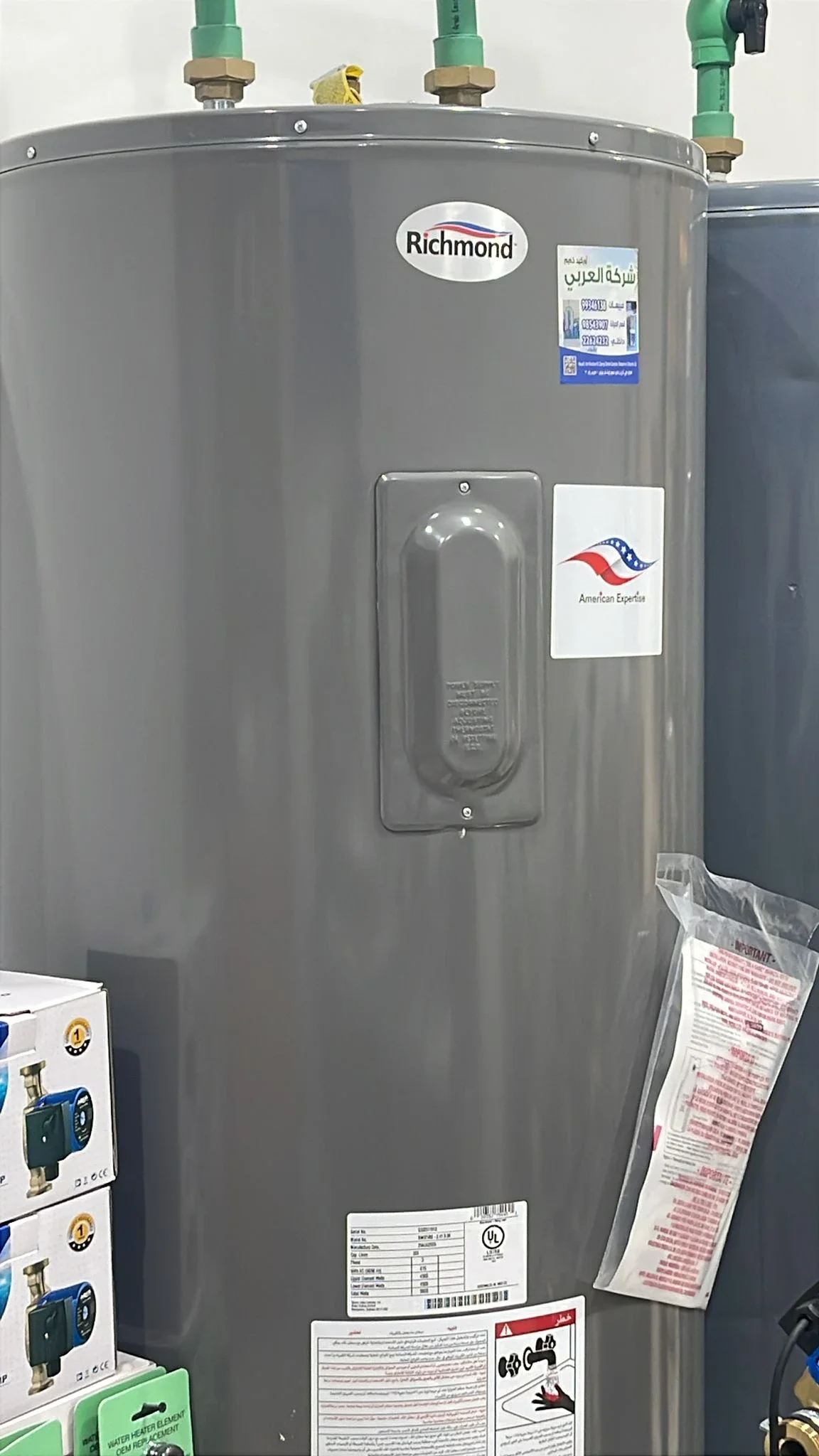
When the central water heater heating element is not working, the heater does not necessarily stop operating completely. In electric water heaters that use more than one heating element, you may still receive a limited amount of hot water while another element has failed. This is why many homeowners confuse a heating-element problem with a thermostat fault or general heater weakness. In Kuwait, the Arabic term commonly used for the heater “candle” usually refers to the electric heating element installed inside the tank. Proper diagnosis should determine whether the element is open and no longer heating, grounded to the tank, heavily covered with scale, or damaged because it was energized before the tank was completely filled with water before any replacement part is purchased.
Central Water Heater Heating Element Is Not Working
When the central water heater heating element is not working, the first thing to understand is that “the heater is operating” does not prove that every heating element inside it is functioning correctly. Many central electric water heaters contain more than one heating element, and each element serves a different part of the heating cycle depending on the heater design. You may therefore see the heater indicator illuminated and know that the unit is receiving power while the amount of available hot water has still become much lower than before.
Water-heater service guidance identifies heating-element failure as one of the common causes of electric water-heater performance problems and recommends checking the elements early when the complaint is “no hot water” or “not enough hot water.” This is important because it prevents an immediate and potentially incorrect jump toward replacing the thermostat or the entire heater.
A heating element can fail in several different ways. The first is an open element, meaning that the internal electrical path inside the element has broken and the component can no longer convert electrical energy into heat. The element may still look completely normal from the outside, with no visible burn marks, but an electrical resistance test shows that the circuit is open.
The second failure mode is a grounded element, meaning part of the heating element has developed an unintended electrical path to its metal body or the tank. This is a completely different type of failure. In some cases it can trip the electrical breaker, while in other situations it can contribute to abnormal continued heating and excessive water temperature until the high-temperature safety limit, or ECO, intervenes.
The third condition is not necessarily complete electrical failure but reduced performance caused by scale and mineral deposits surrounding the element. The element may still heat, but heat transfer into the surrounding water becomes slower. The customer then notices that the heater needs much longer to recover after hot-water use.
The fourth condition is dry firing, which happens when the heating element is energized while it is not properly submerged in water. The element is designed to transfer its heat directly into the water. If it operates while the tank is empty or only partly filled, its surface temperature can rise extremely quickly and the element may fail within a very short time.
-
If the heater still produces some hot water do not assume the heating element is healthy simply because the unit continues operating
-
An open element can look normal externally while failing electrically and requires proper testing to confirm the open circuit
-
A grounded element is different from an open element because it can trip the breaker or create abnormal heating and high-limit operation
-
Scale buildup does not always mean the element has burned out but it can slow recovery and reduce overall performance
-
Energizing the heater before the tank is fully filled with water can cause dry firing and rapidly damage the heating element
Signs of a Damaged Water Heater Element
Signs of a damaged water heater element vary depending on whether the heater uses one element or several and on the exact way the element has failed. One of the clearest symptoms is no hot water despite confirmed electrical supply and a functional control circuit. Even then, the element should not be condemned immediately because a thermostat, high-temperature limit, or wiring problem can produce the same symptom.
The second sign, which is very common in two-element heaters, is that the water begins hot but runs out much sooner than it used to. If the upper element continues working while the lower element has failed, the upper section of the tank can still heat normally. The first shower or first amount of hot water therefore gives the impression that the heater is healthy. Soon afterward, however, the available hot-water volume becomes noticeably smaller and recovery becomes much slower.
The third sign is very slow reheating of the tank. If the heater previously returned to full hot-water availability within a familiar amount of time and now takes much longer under the same usage conditions, a failed element, an element covered with scale, or a poor electrical connection should be considered.
The fourth sign can be hissing, sizzling, or another unusual noise during heating. Not every sound means that the element has failed, but mineral accumulation around the element can create unusual heating noises. The sound should therefore be treated as a reason for inspection rather than automatic proof that the element needs replacement.
The fifth sign is repeated breaker trips or repeated ECO operation, particularly when a heating element has developed a ground fault. Once again, this symptom does not prove by itself that the element is responsible because thermostat and wiring faults can enter the same diagnostic path.
The sixth sign appears during professional testing: the electrical resistance does not correspond with the voltage and wattage printed on the element, or an unintended electrical path is detected between an element terminal and the metal body. At that point, evidence of element failure becomes far stronger than symptoms alone.
-
Hot water that runs out much sooner than the heater’s previous normal performance can indicate the loss of one element in a multi-element system
-
Slow recovery after showering or heavy hot-water use justifies inspection of the element scale buildup and electrical connections
-
Hissing or boiling-like sounds around the element can be associated with mineral buildup but do not by themselves prove that the element is burned out
-
Repeated breaker or ECO trips require testing for a ground fault rather than immediately replacing the thermostat
-
The strongest indication of element failure is an electrical test result that confirms the fault rather than the element’s appearance or water temperature alone
Replacing a Central Water Heater Element
Replacing a central water heater element is appropriate when testing confirms that the element is open, grounded, physically damaged, or no longer capable of delivering its required output. Not every reduction in heating performance requires replacement. If the primary issue is mineral scale, the technician may determine whether cleaning is still practical or whether replacing the element is the better option.
Before replacement, the technician needs to match the voltage, wattage, and installation type. Heating-element specifications are tied directly to electrical voltage and power rating. Expected resistance can also be calculated from voltage and wattage. For example, a 4,500-watt element operating at 240 volts has an expected resistance of approximately 12.8 ohms in that specific example. However, this is not a universal number because a 3,000-, 4,000-, or 5,000-watt element will have a different resistance.
A common mistake is installing a heating element that “fits the same opening” but has a different power rating from the original. The element may physically screw into or mount on the tank but still be electrically unsuitable. A heating element must remain within the heater manufacturer’s intended electrical design and approved conversion specifications.
Replacement should also address the reason the old element failed. If the original element burned out because it was energized while the tank was empty, installing another one and turning on the heater before fully filling and purging air from the tank will simply recreate the same failure. If the previous element was heavily damaged by scale buildup, ignoring the condition of the tank may significantly shorten the life of the replacement.
The gasket or seal is also important. The new element must be installed with a proper watertight seal around the tank opening so leakage does not begin after the tank is refilled. Electrical power should not be restored until the tank has been completely filled with water according to the manufacturer’s procedure.
Al Arabi Orchid currently advertises replacement of American water-heater heating elements using original parts with a two-year warranty and publishes a current price of KWD 13 including installation service for an American water-heater element. This advertised price is useful as a reference, but model compatibility should still be confirmed when booking because selecting the correct element is more important than price alone.
-
Replacement should take place after confirming the element itself is faulty rather than only because hot-water performance has become weaker
-
Voltage wattage and the element installation type must match and physical size alone is not enough
-
Installing a different wattage from the heater specification can change the electrical load and expected heating performance
-
The cause of the original element failure should be corrected so the replacement does not fail for exactly the same reason
-
Al Arabi Orchid currently advertises an American water-heater element for KWD 13 including installation with a two-year element warranty
Testing a Central Water Heater Heating Element
Testing a central water heater heating element is intended to answer two separate questions: is the internal electrical path through the element still intact, and is there any unintended electrical leakage from the element to its metal body or ground?
Professional service procedures measure element resistance after the electrical supply has been isolated correctly. Expected resistance depends on voltage and wattage. For example, a 240-volt, 4,500-watt heating element has an expected resistance of approximately 12.8 ohms in a typical reference calculation. If the measured resistance is significantly different from the value expected for that exact element specification, the element may be defective.
The second test is a ground test. A healthy heating element should not have an unintended electrical path between its powered terminals and the metal flange or body. If testing detects such a path, the element is considered grounded and requires replacement.
Major water-heater manufacturers separate open or grounded heating-element testing from thermostat testing. This distinction is important because the two faults can produce similar customer complaints even though the defective components and repairs are completely different.
However, these tests are not suitable as casual homeowner experiments. Accessing the heating element means working around potentially lethal electrical voltage. Proper isolation, verification, and measurement procedures should be carried out by a qualified technician.
A competent technician does not look only at the ohm reading. The technician also checks the element rating, incoming voltage, wiring condition, thermostat, and high-temperature safety limit because a perfectly healthy element cannot produce heat if the electrical control circuit never supplies it with power.
-
Resistance testing determines whether the heating element’s internal electrical path approximately matches the value expected from its rating
-
A ground-fault test determines whether an unintended electrical path has developed between the element and its metal body
-
The correct resistance value depends on voltage and wattage so there is no single ohm value for every water-heater element
-
Heating-element testing is separate from thermostat testing because both components can produce similar symptoms
-
Direct electrical measurements inside a central water heater should be carried out by a qualified technician because of high-voltage risk
Water Heater Heating Element Failure

Water heater heating element failure can behave very differently depending on the type of damage. An open element normally stops producing heat completely. A grounded element can create a more serious and unpredictable electrical condition. An element covered in scale may continue operating but with slower recovery. An element exposed to dry firing can fail extremely quickly even when it is brand new.
The three important conditions commonly highlighted in service literature are dry firing, grounded-element failure, and sediment or mineral buildup. Dry firing occurs when the element is not sufficiently submerged in water. A grounded element occurs when electrical current finds an unintended path to ground. Sediment and scale slow heat transfer and can eventually create harsh operating conditions around the element.
It is important to distinguish between the cause of failure and the result of failure. If a removed element is found heavily damaged by scale, the solution should not stop at installing another element. The amount of sediment inside the tank and the maintenance strategy should also be reviewed. Otherwise, the new element begins operating under the same conditions that damaged the old one.
If the element failure was associated with a loose electrical terminal, electrical resistance at the poor connection can create heat and damage the terminal or wire. Any blackening, melting, or heat damage around the connector should therefore lead to repair of the electrical connection itself.
The age of the element alone does not prove that it has failed. An older element can still show normal resistance and perform correctly, while a new element can fail during its first operation if it is dry-fired. This is why electrical testing and the physical condition of the element are more useful than simply saying, “It has been installed for many years, so we should replace it.”
-
An open element loses its ability to heat while a grounded element can create abnormal electrical operation and unsafe temperature behavior
-
Dry firing can destroy a new heating element very quickly if the heater is energized before the tank is full
-
Scale reduces heat transfer and can cause slow recovery even before the element fails completely
-
Heat damage at the electrical terminals requires repair of the wire and connection rather than replacement of the element alone
-
Component age is only a secondary clue while electrical test results and actual element condition should determine replacement
Damaged American Water Heater Element
A damaged American water heater element should not be replaced based only on the description “American heater.” Ruud, Rheem, Bradford White, A. O. Smith, Richmond, and other manufacturers use different heater models and electrical ratings. Even within one brand, wattage, voltage, element length, sheath material, and mounting style can vary.
Manufacturers provide separate official procedures for testing and replacing upper heating elements and lower heating elements in many electric water heaters. This shows that identifying the position of the element is part of proper diagnosis.
Technical service information from major manufacturers also includes separate bulletins covering heating-element characteristics, element failure, replacement procedures, voltage, current, and resistance. These references reinforce the fact that the correct element should be selected according to the heater’s model and rating plate rather than buying a generic “American heater element.”
Al Arabi Orchid currently states that it services water heaters from Ruud, Bradford White, A. O. Smith, Americana, Rheem, and Richmond and advertises original replacement elements for American water heaters. Its website currently lists the element at KWD 13 including installation and states a two-year warranty on water-heater elements.
Before ordering the part, it is better to provide a photo of the heater model number and rating plate. The model information is the best way to identify the correct voltage, wattage, and element type.
A properly matched element prevents two important problems: reduced recovery when a lower-wattage element is installed and electrical incompatibility when a component does not match the heater’s intended design.
-
The phrase American water heater does not identify one universal element because every model can have different electrical specifications
-
Identifying whether the failed element is upper or lower matters in two-element water heaters
-
The model number and rating plate are the best references for confirming voltage wattage and element type
-
Al Arabi Orchid currently advertises original heating elements for the American heater brands it services
-
Sending a photo of the heater data before the visit reduces the chance of the technician arriving with an incompatible replacement part
Water Heater Does Not Heat Because of the Element
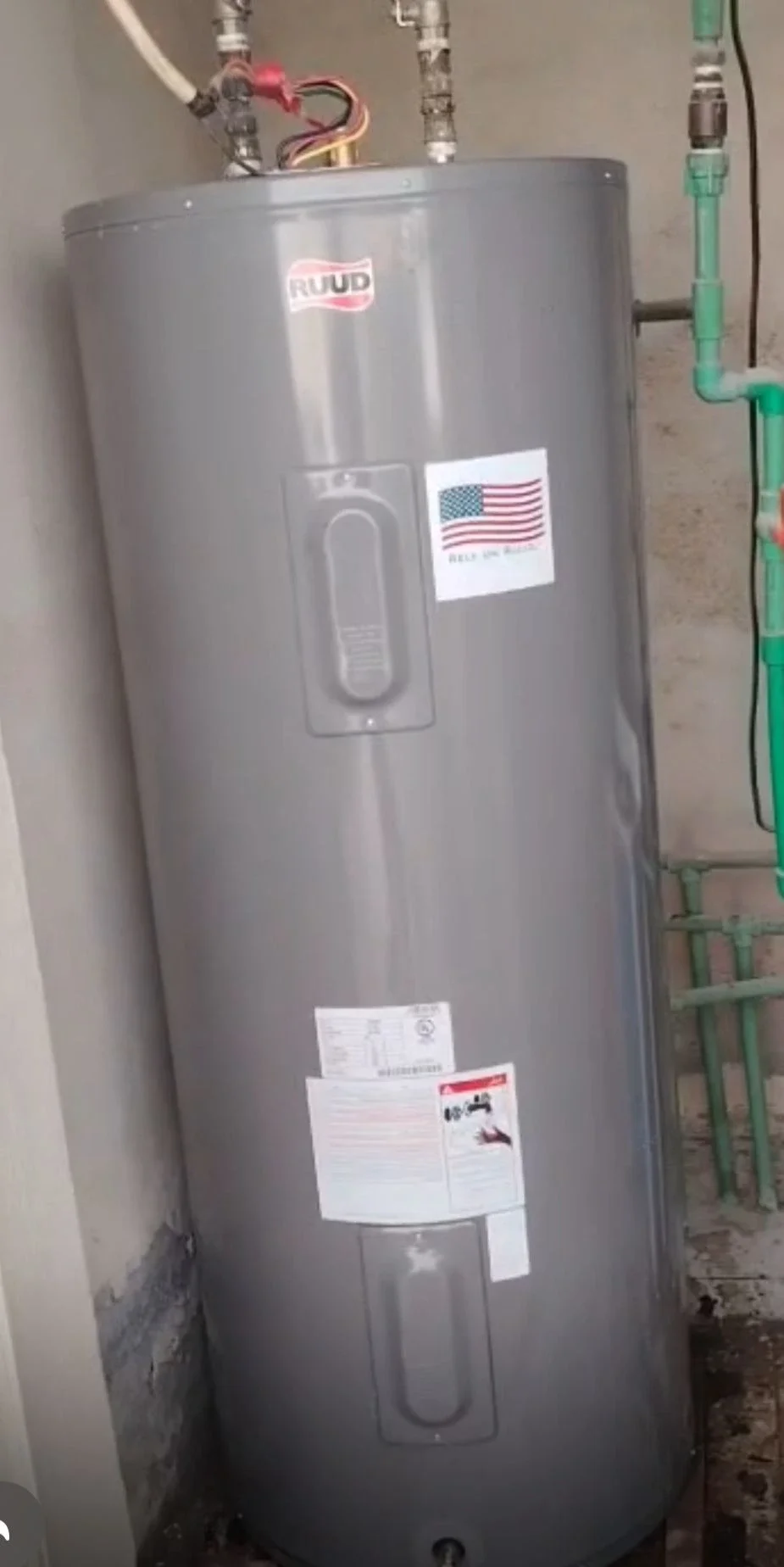
A water heater does not heat because of the element when the control circuit is correctly requesting heat and electrical power is reaching the correct point, but the heating element cannot convert that electricity into heat because of a confirmed internal fault.
An inoperative heating element is one recognized cause of no hot water, but service diagnostic tables also include loss of electrical power, damaged wiring, thermostat problems, safety-limit faults, and contactor or control issues. No heat is therefore a shared symptom and should not automatically be assigned to the element without testing.
In a single-element heater, complete element failure may result in completely cold water. In a two-element heater, the symptom depends on which element has failed and on the control sequence. If only one element stops working, the household may still receive some hot water but in a much smaller quantity or with much slower recovery.
Actual usage patterns can help the technician. If there is absolutely no heat from the beginning, the diagnostic path remains broad and starts with the electrical supply. If the heater provides an initial amount of hot water and then cools quickly, the lower element and recovery performance become more important suspects. If water becomes excessively hot while the ECO trips, a grounded element becomes a stronger possibility.
The customer does not need to perform these tests personally, but understanding the logic helps them know what the technician should prove before saying, “The element has failed.”
-
Complete lack of heat can be caused by the element but can also result from the power supply thermostat or high-temperature limit
-
In a two-element heater failure of only one element can appear as reduced hot-water volume rather than completely cold water
-
Strong initial hot water followed by rapid temperature loss directs attention toward the lower heating element more than a general heater failure
-
Excessively hot water combined with ECO operation raises the possibility of a grounded element rather than assuming every element failure produces cold water
-
The heating-element diagnosis should connect the customer symptom with electrical test results and the control sequence
Testing the Central Water Heater Element
Testing the central water heater element professionally should not involve installing a new part simply to see whether the problem disappears. Two primary measurements provide much stronger evidence: element resistance and insulation from ground.
Expected resistance is calculated from the element’s voltage and wattage rating. A 240-volt, 4,500-watt heating element, for example, produces an expected value of approximately 12.8 ohms, while a 5,000-watt element on the same voltage has a different expected resistance. The technician should therefore read the element rating first and then compare the actual meter reading with the value appropriate for that specification.
If the internal element circuit is open, the meter will not show the resistance that should be present. If an unintended electrical path appears between either terminal and the element body, the condition indicates a grounded element and the part should be replaced.
Element testing must also consider operating conditions. An element can test correctly for resistance yet still fail to heat because it is not receiving power from the thermostat, contactor, or wiring. If incoming voltage is lower than the element was designed for, heating output can also be reduced even though the element itself is electrically intact.
The test is not a recommendation for homeowners to work on high-voltage equipment. Water-heater service literature is written for qualified service providers and contains clear warnings about dangerous electrical voltage.
-
Resistance measurement must be interpreted according to the element voltage and wattage rather than one memorized number
-
Insulation or ground testing confirms whether the element has developed electrical leakage to its metal body
-
Correct element resistance does not prove the entire heater circuit is healthy because the control and power supply must also be checked
-
Voltage below the element rating can reduce heating performance even when the element itself is not defective
-
Test results rather than assumptions based on weak hot water should justify element replacement
Replacing a Central Water Heater Heating Element

A successful central water heater heating element replacement should end with normal heater performance rather than only the fact that the new component has been installed. The first step is choosing an element that matches the exact heater model. The service procedure then requires proper electrical isolation and preparation of the tank according to the manufacturer’s instructions.
One of the most important steps after installation is preventing dry firing. The tank must be completely filled with water before the replacement element is energized. An immersion heating element depends on surrounding water to remove heat from its sheath. If electricity is applied while the element is exposed to air, the surface temperature can rise rapidly and damage the new part.
The technician should then check for leakage around the element opening. Even a small amount of water around the flange or threaded connection should not be ignored because the leak is close to electrical terminals and needs immediate correction.
After that, electrical power can be restored and a full heating cycle monitored. Water temperature should be measured after the cycle is completed, and in two-element heaters the technician should also confirm that the normal operating sequence between the upper and lower elements is functioning correctly.
If the removed element was heavily covered with scale, the technician should evaluate sediment inside the tank rather than simply throwing away the old element and installing another one. Scale around the elements can slow recovery and contribute to repeated heating-element problems over time.
-
The replacement element must match heater voltage wattage and model before installation
-
The tank must be full of water before the new element is energized so the replacement is not damaged by dry firing
-
Checking the gasket flange or threaded connection after refill prevents leaving a water leak beside electrical components
-
Successful replacement should be confirmed through water temperature recovery speed and a full operating cycle rather than only verifying electrical power
-
If the old element is heavily scaled inspect the tank condition so the new element does not begin operating under the same damaging conditions
Central Water Heater Element Price in Kuwait
The central water heater element price in Kuwait varies according to the heater brand, model, voltage, wattage, element design, and whether the quoted amount covers the component only or includes installation. Any fair price comparison should therefore begin by identifying exactly what the quotation includes.
As of September 2026, Al Arabi Orchid currently publishes a price of KWD 13 for an American water-heater element including installation service. The company also states that it uses original elements for American water-heater brands and advertises a two-year warranty on the heating elements.
If the exact heater model requires a different element or unusual electrical specification, the price should still be confirmed before the technician arrives. If there are additional faults such as a damaged thermostat, burned wiring, or severe scale that requires cleaning, these are separate repairs and should not automatically be assumed to be included in the element price.
A cheap replacement part is not a good deal if it does not match the heater. The correct heating element needs to correspond with the heater rating because a lower-power element can slow recovery and an electrically unsuitable component can conflict with the original circuit design.
To contact Al Arabi Orchid, use 99346138 and send a photo of the model number or rating plate if possible. Also explain whether the heater does not heat at all, hot water runs out quickly, or the safety reset keeps tripping. These details help the technician prepare the correct replacement part before arriving.
-
Al Arabi Orchid currently publishes KWD 13 for an American water-heater element including installation
-
The company currently states a two-year warranty on water-heater heating elements
-
Final pricing should still be confirmed for heater models requiring a different element specification
-
Wiring repairs thermostat work or severe descaling are separate repairs when they are also required
-
Sending the heater model before booking makes it easier to compare the price of a compatible element rather than a generic replacement
Conclusion
When the central water heater heating element is not working, the correct decision is not to replace it simply because the water has become cooler. Heating elements can fail in several different ways, and each failure creates a different pattern.
Important heating-element problems include dry firing, grounded-element failure, and sediment or scale buildup. A grounded element may cause breaker operation or in some circumstances abnormal continued heating until the ECO intervenes, while mineral scale more commonly appears as slow hot-water recovery and reduced heat-transfer efficiency.
When there is no hot water, an inoperative element is only one possible cause. Electrical supply failure, wiring problems, thermostat faults, and the high-temperature safety limit can create similar symptoms. Proper element diagnosis therefore uses resistance testing, ground-fault testing, incoming-voltage checks, and confirmation of the control path rather than relying on the symptom alone.
Major heater manufacturers also separate thermostat testing from open or grounded heating-element testing and element replacement procedures. The principle is simple: the heating element should be replaced after the fault has been proven.
Al Arabi Orchid currently advertises original American water-heater elements for KWD 13 including installation, together with a two-year warranty on the elements, and services brands such as Ruud, Bradford White, A. O. Smith, Americana, Rheem, and Richmond.
If you suspect the heating element is faulty, contact 99346138 and request testing that covers element resistance, insulation to ground, incoming voltage, thermostat operation, high-temperature safety limit, scale condition, and electrical connections. This way, the element is replaced only when it is genuinely responsible for the problem, and if the actual fault is elsewhere you do not pay to replace a healthy component.
Frequently Asked Questions
How do I know if the central water heater element has failed?
Possible symptoms include no heating, reduced hot-water volume, or slow recovery, but the strongest confirmation comes from measuring element resistance and checking for a ground fault after the rest of the heater circuit has also been inspected.
Can a failed element still allow the heater to produce hot water at first?
Yes. In a heater with more than one element, one element may continue operating while the other has failed. You can therefore receive an initial amount of hot water and then notice that the temperature falls or the hot-water supply ends much sooner than normal.
Does a grounded heating element only cause cold water?
No. A grounded element can trip the electrical breaker and, in some cases, contribute to abnormal continued heating that results in excessive temperature and operation of the high-temperature safety limit.
Does scale mean the heating element must be replaced?
Not always. Scale can reduce heat-transfer efficiency and slow recovery. The condition of the element and tank determines whether cleaning is reasonable or replacement has become the better option.
What does dry firing mean in a water heater element?
Dry firing means energizing the heating element while it is not properly submerged in water. This can damage the element very quickly, which is why the tank must be completely filled before electricity is restored after replacement.
How does a technician test a water heater element?
The technician compares the measured element resistance with the expected value based on voltage and wattage and checks for any unintended electrical path between the element terminals and the metal body. Incoming voltage and the control circuit are also inspected.
Do all water-heater elements have the same resistance?
No. Resistance varies according to voltage and wattage. For example, a 240-volt, 4,500-watt element is approximately 12.8 ohms in one common reference calculation, while elements with other power ratings have different expected values.
Can I test the water heater element myself?
It is safer not to if the test requires opening the electrical circuit. Central electric water heaters contain dangerous voltage, and manufacturer service procedures are intended for qualified technicians because incorrect testing can cause serious electric shock.
How much does a central water heater element cost from Al Arabi Orchid?
Al Arabi Orchid currently advertises KWD 13 for an American water-heater element including installation and states that the elements carry a two-year warranty. Compatibility and the final price should still be confirmed for the exact heater model when booking.
How do I request central water heater element replacement from Al Arabi Orchid?
Call 99346138 and provide the heater model number or a photo of the rating plate. Explain whether the heater does not heat at all, hot water runs out more quickly, or the safety reset keeps tripping. Request inspection of the heating element, resistance, ground insulation, thermostat, wiring, and scale condition before replacement so the correct element is installed and the real cause of failure is addressed.