Choosing a 5-stage water filter should not begin with the assumption that five stages must be better than three or that seven stages must automatically be stronger. The number alone does not tell you what the filter actually treats because the components can vary significantly from one model to another. The important thing is to identify the problem you want to address: sediment, taste and odor, drinking and cooking water from one faucet, or a completely different treatment requirement. Al Arabi Orchid currently offers 3- and 5-stage kitchen filters in Kuwait, but the correct choice depends on cartridge type, household usage, incoming water pressure, installation location, and the treatment result you actually need. This article explains when a five-stage system is a practical choice and when buying additional stages may add little real value.
5-Stage Water Filter in Kuwait
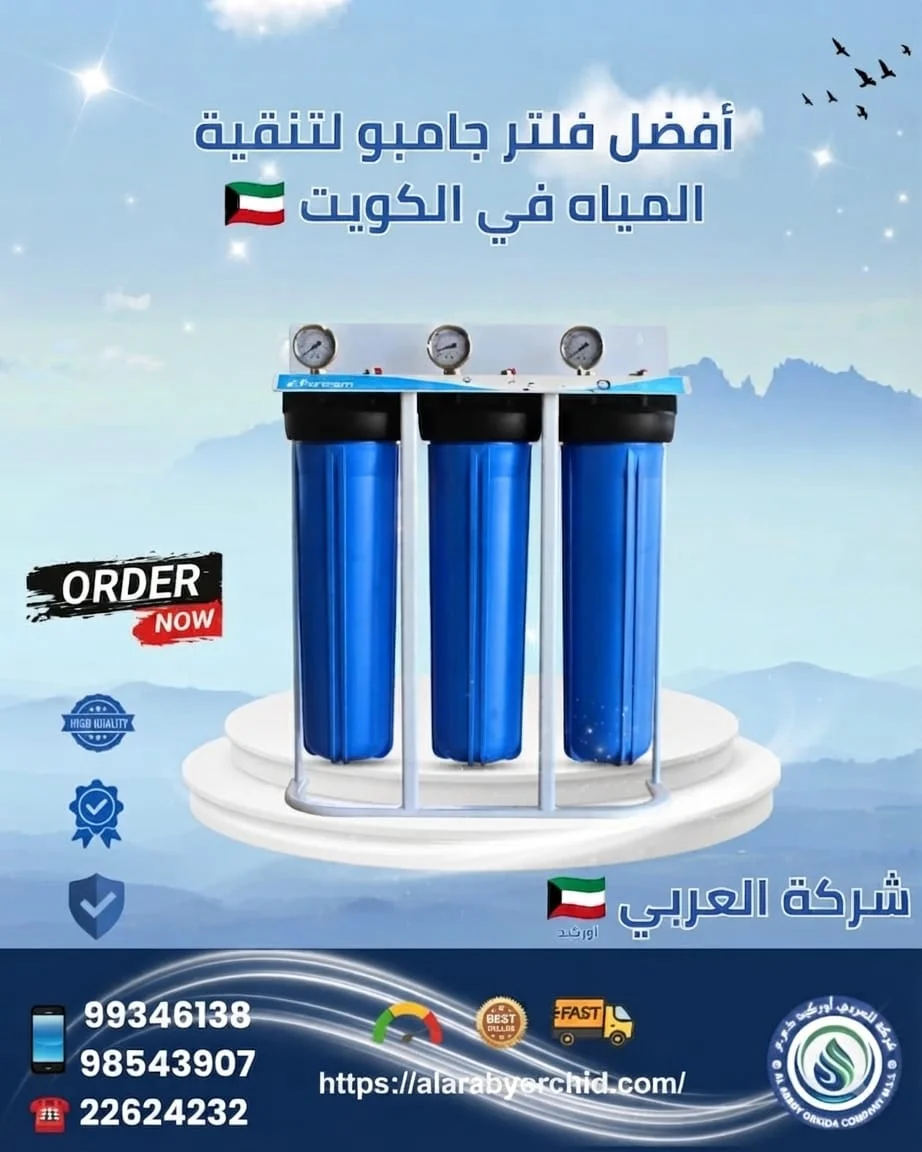
A 5-stage water filter in Kuwait usually belongs to the category of point-of-use drinking-water treatment systems. In other words, it typically treats the water used for drinking and cooking at one specific location such as the kitchen faucet rather than automatically treating all water throughout the home. Under-sink systems are considered point-of-use systems because they treat water where it is actually consumed instead of processing every liter entering the property.
The first thing that needs to be clear is that the phrase five stages is not one universal technical specification. One system may use a sediment stage followed by several carbon stages and a final polishing cartridge, while another product with the same five-stage label may include a reverse osmosis membrane and operate in a completely different way. A customer who says, “I want a five-stage filter,” has therefore not yet defined the technical requirement. They have only chosen a number printed on the product.
Al Arabi Orchid currently offers 3- and 5-stage kitchen filters as well as 6- and 7-stage systems, Jumbo filters, sand filters, and stainless multi-cartridge filtration systems. The fact that these different categories exist is important because a five-stage filter is not automatically a replacement for every other filter type. If the problem involves sediment entering the entire plumbing network, a main-line treatment system may be more appropriate. If the objective is drinking water at the kitchen only, an under-sink system is usually closer to the real requirement.
In Kuwait specifically, storage-tank condition, plumbing condition, and household size can all influence performance. If the incoming water contains a large amount of sediment, the first cartridge may carry a heavier load and require more frequent maintenance. If household water pressure is already low, the expected flow after the filter should be checked before installation so the drinking-water faucet does not become unacceptably slow.
Most importantly, a five-stage system should never be assumed to make every type of water suitable for every possible situation. Different water-treatment technologies have different capabilities, and no single household filtration system automatically addresses every possible contaminant or water-quality problem.
-
A five-stage filter is usually most appropriate for drinking and cooking water at one point of use rather than as an automatic substitute for whole-home filtration
-
The number of stages alone does not tell you what the system can reduce because cartridge arrangement and technology vary between models
-
Sediment in the household storage tank can increase the load on the first stage and shorten the expected maintenance interval
-
Water pressure installation space and household usage should all be considered before purchasing the system
-
Al Arabi Orchid offers several filtration categories so the five-stage option should be selected when its function matches the household need rather than simply because five seems like a balanced number
Advantages of a 5-Stage Water Filter
The advantages of a 5-stage water filter become clear when the five stages are designed to complement each other rather than simply increase the number printed on the product. The real benefit of a multi-stage system is that different filtration media can divide the treatment work instead of forcing one cartridge to handle everything.
In a common design, the first stage may be a sediment cartridge that captures suspended particles before they reach the later stages. Carbon-based stages can then be used for functions such as reducing chlorine taste and odor depending on the cartridge specification. Filtration standards often distinguish between claims related to aesthetic characteristics such as chlorine, taste, odor, and certain particles, but simply having carbon inside the filter does not automatically prove that every possible reduction claim applies. The exact model and its documented performance still matter.
The second advantage is that a point-of-use filter treats only the water you actually need for drinking and cooking. If there is no reason to process shower, washing-machine, and toilet water through the same small drinking-water cartridges, a kitchen system can be simpler and less intrusive than a large central filtration system.
The third advantage is easier separation of maintenance duties between stages. If the first cartridge receives a much heavier sediment load, that does not automatically mean every other filtration medium has reached the end of its service life on the same day. Each cartridge can be maintained according to its function and the manufacturer’s schedule.
The fourth advantage is flexibility. A five-stage system can be a relatively simple non-RO filtration unit, or it can use a completely different treatment technology depending on the design. This allows the system to be selected around water quality and the desired result instead of forcing one technology on every home.
The fifth advantage becomes visible over time rather than on installation day. A good system should have replacement cartridges that are easy to obtain, reasonable maintenance requirements, stable flow, and a design that remains practical after months of use. These factors can be more important than the appearance of the unit when it is first installed.
-
Multiple stages allow filtration tasks to be divided between different media instead of placing the entire load on one cartridge
-
A sediment prefilter can help protect later treatment stages from rapid loading depending on the system design
-
Kitchen filtration treats the water actually used for drinking and cooking rather than processing every household water use through the same technology
-
Different media make a five-stage design flexible but each stage should have a clearly defined purpose
-
The true advantage is not the number five itself but whether the stages match the problem and whether replacement cartridges remain practical to obtain and maintain
When Is a 5-Stage Filter Suitable?

When is a 5-stage filter suitable? It is most suitable when both the problem and the intended treatment result are clearly defined. If you want a dedicated source of drinking and cooking water in the kitchen and need a multi-stage system that deals with sediment and certain taste or odor issues according to the cartridge specifications, a five-stage filter can be a very practical choice.
Before choosing it, however, you need to understand the quality of the water entering the unit. Water-treatment technologies should be selected according to the specific problem or substance you want to reduce because different technologies do not provide identical results. It is also important to understand that filtration standards are not interchangeable. A standard related primarily to aesthetic characteristics such as chlorine, taste, and odor is not the same as a standard related to reduction claims involving contaminants that may affect health. This means that a product labeled “five stages” does not by itself prove any specific health-related reduction performance.
A five-stage system is also suitable when you specifically want an under-sink unit rather than a whole-house treatment system. This can be both practical and economical. There is little reason to pass all shower, laundry, and toilet water through small drinking-water cartridges if your real objective is only the kitchen faucet.
When is it not the obvious choice? If the entire household network suffers from heavy sediment, a point-of-use filter will not protect the rest of the plumbing. If your requirement specifically involves reducing dissolved substances and you need reverse osmosis, you must confirm that the model actually includes RO technology rather than assuming it from the number of stages. If you are concerned about one specific substance such as lead, the correct approach is to choose a product with a documented reduction claim for that substance rather than simply selecting more filtration stages.
A five-stage filter is also more suitable for homeowners who are willing to maintain it properly. Every multi-cartridge system depends on timely cartridge replacement. Without proper maintenance, extra stages simply become additional exhausted filters that no longer perform as intended.
-
It is suitable when the objective is drinking and cooking water at the kitchen rather than treatment of the entire property
-
It is suitable when the purpose of all five cartridges is clear and directly related to the water-quality problem being addressed
-
Stage count alone is not enough when a specific contaminant requires a documented reduction claim
-
It is not a direct substitute for main-line filtration when the problem affects the entire household network
-
Do not choose it if you are unwilling to maintain the cartridges because the value of any multi-stage filter depends heavily on regular service
5-Stage Water Filter for Home
A 5-stage water filter for home becomes a practical choice when household needs are evaluated before the equipment is selected. The first question is not only “How many people live in the house?” but also how much filtered water is used for drinking and cooking every day and whether several people may need it at the same time.
For a small family with moderate usage, an under-sink system with an appropriate flow rate may be more than sufficient. In a larger household where filtered water is used continuously for cooking, filling bottles, and daily drinking, flow rate and cartridge capacity become much more important because a small system can quickly become inconvenient.
The second issue is installation space. Under-sink systems are normally connected to the incoming water line and direct treated water to a dedicated faucet. This means cabinet space matters, especially if the area under the sink is already filled with drawers, containers, plumbing, or another appliance.
The third issue is water pressure. Every filtration stage creates some resistance to flow, and that resistance increases as cartridges become loaded with sediment. A home with already weak incoming pressure should therefore have expected post-filter flow checked before installation rather than discovering afterward that the drinking-water faucet is too slow.
The fourth issue is service access. There is little value in installing a filter in a location so tight that the housings cannot be opened without dismantling half the kitchen cabinet. A practical home filter should be maintainable without major disturbance every time cartridges need replacement.
The fifth issue is the actual purpose of the system. If the home needs filtered drinking water at one faucet, five stages may make sense. If the real goal is to protect the water heater, pump, faucets, and entire plumbing system from incoming sediment, a different type of filtration should be considered.
-
Calculate drinking and cooking water demand rather than total household water consumption when evaluating a kitchen filter
-
Confirm that flow after all five stages will remain suitable for the household especially during periods of higher use
-
Leave enough service space around the unit so filter housings can be opened easily during maintenance
-
Do not use a kitchen filter as the only solution for a sediment problem affecting the entire plumbing network
-
A successful household installation balances treatment performance maintenance convenience water flow and available space
Installing a 5-Stage Water Filter
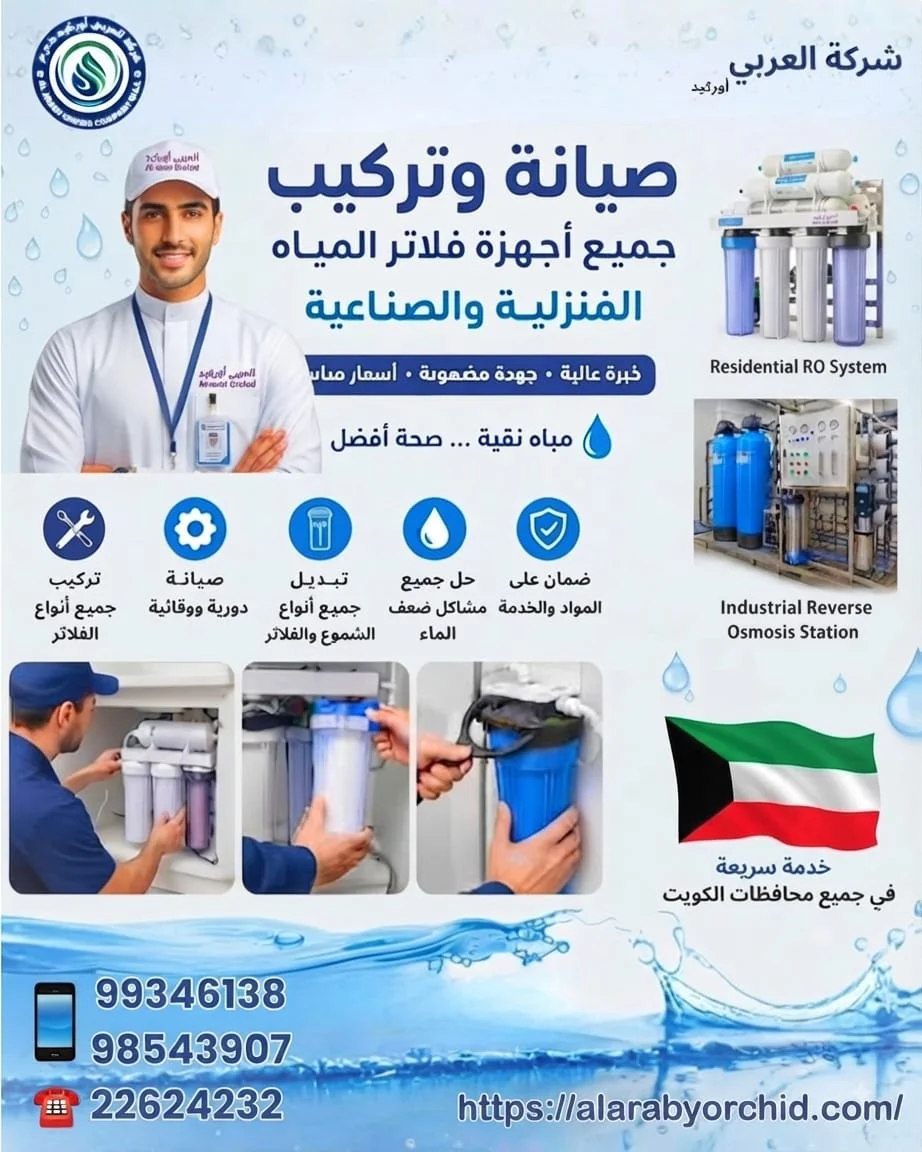
Installing a 5-stage water filter begins by choosing a location that allows proper plumbing and future maintenance rather than simply finding an empty corner under the sink. Many residential systems are installed as point-of-use kitchen filters with a dedicated faucet for treated water.
The technician should first inspect the incoming water line, isolation valve, and available mounting space. The tubing route should then be planned so hoses are not sharply bent, stretched, or trapped by cabinet doors. If the system requires a separate faucet, its location should be selected carefully so the sink or countertop remains practical to use.
Once the housings and cartridges are installed, the technician should verify the direction of water flow and confirm that every cartridge is in the correct position. Stage order is not cosmetic. A cartridge designed to capture sediment at the beginning of the system may be protecting later stages from unnecessary loading.
The next step is leak testing. Water should be restored gradually while every fitting, housing, and seal is checked. The installer should not simply open the main valve fully and leave. Initial flushing should also be performed according to the filter instructions because some cartridges, particularly carbon-based media, may require a certain amount of water to pass through before drinking use.
A professional installation should end with a flow test, not merely confirmation that there is no leak. If flow is weak from the first day, something needs to be reviewed, such as incoming pressure, valve opening, hose routing, cartridge selection, or system configuration.
-
Choose an installation location that leaves enough room to remove the filter housings during future service
-
Confirm correct water-flow direction and stage order according to the system diagram
-
Restore water gradually after installation and inspect every fitting and seal carefully
-
Perform the required initial flushing before using the treated water for drinking
-
Test water flow after installation because leak-free connections alone do not prove that the system is operating correctly
Components of a 5-Stage Filter
Components of a 5-stage filter vary from one system to another, and this is one of the most important points to understand. There is no universal configuration requiring every five-stage filter to contain the same cartridges in the same order.
In traditional filtration designs, the first stage may use a sediment cartridge, followed by different carbon-based media, with a final stage selected according to the objective of the system. Activated carbon is commonly used in drinking-water treatment for adsorption and can be used to reduce characteristics such as chlorine taste and odor when the specific product is designed and tested for those claims.
Other five-stage systems may include reverse osmosis. In that case, the sequence might include sediment filtration, one or more pretreatment stages, an RO membrane, and a final post-treatment stage. However, simply having five stages does not prove that a membrane is present. The actual equipment specification has to be checked.
This distinction matters because maintenance is completely different. A sediment cartridge is not the same as a membrane, and an RO membrane is not the same as a final carbon stage. Replacement intervals, component costs, flow effects, and service procedures can all differ.
Do not accept vague descriptions such as “complete five-stage purification” without a component list. Ask the supplier: What is the first stage? What is the second? Which stages use carbon? Is there an RO membrane? Is there a storage tank? What documented performance claims apply to the model?
-
There is no universal component arrangement for all five-stage filters so the exact model components must be identified
-
Sediment filtration is commonly used early in multi-stage systems to capture particles before they reach later media
-
Carbon stages differ in form capacity and treatment role so the word carbon alone is not enough to evaluate performance
-
Some five-stage systems contain reverse osmosis while others do not use RO at all
-
Request a complete stage list because maintenance results and future operating costs depend on the actual components
5-Stage Water Filter Maintenance
5-stage water filter maintenance does not mean waiting until the water changes color. Maintenance starts with knowing when each cartridge was installed, the service capacity specified by the manufacturer, and whether flow, taste, or odor has changed.
Replacement cartridges should be changed according to manufacturer instructions because every element has a defined service life or treatment capacity. Using an incompatible replacement can also affect water flow through the system and reduce the performance the filter was originally designed to provide.
Routine maintenance should include the housings, seals, and connections as well as the cartridges themselves. If the cartridges are replaced while an old damaged O-ring is ignored, a leak may appear afterward and the homeowner may incorrectly assume that the filter housing has failed.
The reason for unusually rapid cartridge loading should also be investigated. If the first-stage sediment cartridge repeatedly clogs much earlier than expected, do not immediately accept that interval as normal. The storage tank may contain heavy sediment, the incoming water condition may have changed, or the system may require a different type of preliminary protection.
Al Arabi Orchid currently provides replacement of sediment, carbon, and charcoal cartridges as part of its filtration services, in addition to maintaining larger multi-cartridge systems. This service is most useful when the exact cartridge type is identified rather than replacing whatever cartridge set happens to be available.
After maintenance, flow and leakage should be checked and the treated-water characteristics should be evaluated according to the purpose of the filter. A successful service should produce an observable and measurable improvement.
-
Record the installation date of each cartridge rather than relying on memory in a multi-stage system
-
Inspect housings seals and connections during every service because the problem is not always the cartridge itself
-
If the sediment stage repeatedly clogs early investigate the source of the heavy particulate load
-
Do not install an incompatible cartridge simply because it fits physically inside the housing
-
After maintenance verify flow and leakage to make sure the system has returned to stable operation
5-Stage Filter Cartridges
5-stage filter cartridges determine the real character of the system more than the number printed on the front. Each cartridge has a different purpose, treatment capacity, and resistance to flow, so selecting the correct replacement is part of system performance rather than just a routine purchase.
A sediment cartridge, for example, captures particles according to the filtration rating it was designed for. Choosing a much finer rating than necessary without considering flow can cause pressure loss to increase more quickly. Choosing a rating that is too coarse may allow particles to pass into later stages that were intended to be protected.
Carbon cartridges behave differently. They use adsorption media and may be designed to reduce chlorine taste and odor or other characteristics depending on the exact product. Not every carbon cartridge has the same capacity, flow rate, or documented performance claim.
Official product listings from filtration-certification organizations also show that cartridges that look very similar can have very different service capacities, flow rates, and reduction claims. This is why buying “the same size cartridge” is not the best replacement strategy.
In a five-stage system, you also need to know whether one of the stages is specialized, such as an RO membrane or a final polishing cartridge, because its maintenance interval will often differ from the primary cartridges.
-
Know the purpose of each cartridge so replacement is not based only on color or age
-
Filtration rating should match incoming water quality and required flow rather than automatically choosing the smallest micron number
-
Carbon cartridges can differ substantially in capacity and performance even when their physical dimensions are similar
-
Do not assume all five cartridges must be replaced on the same day unless the model instructions specifically require it
-
Keep the model number of each cartridge so the correct replacement can be used during future service
Is a 5-Stage Filter Enough?

Is a 5-stage filter enough? In some homes, yes. In others, no. The answer depends entirely on what you expect the system to do.
If your objective is to treat drinking and cooking water at one point and the exact model is designed for the characteristics you care about, five stages may be more than enough. There is no technical reason to add more stages simply to increase the number.
However, if you are concerned about one specific contaminant, saying “I have five stages” is not enough. You need to look for the specific documented performance claim. Filtration standards distinguish between different types of claims. Some focus on aesthetic characteristics such as taste, odor, and chlorine, while others cover specific contaminant reduction, and reverse osmosis systems belong to another category. These standards are not quality scores; they cover different functions.
For example, if the concern is lead, the correct approach is to select a point-of-use filter that has been independently evaluated for lead reduction. A five-stage label alone does not prove this capability.
If the requirement is specifically to reduce dissolved solids using reverse osmosis, the filter must actually contain RO technology. If the objective is to treat all household water, a kitchen filter does not perform that job regardless of whether it has five or seven stages.
The more useful question is therefore not “Are five stages enough?” but “Do these five stages perform the treatment I actually need?”
-
Five stages can be completely sufficient for a clearly defined household treatment goal without adding unnecessary extra stages
-
Stage count does not prove that the system can reduce a specific health-related contaminant
-
Check the applicable performance standard and claim when you have a specific treatment objective
-
A kitchen filter does not automatically treat the entire household water supply even if it contains five or seven stages
-
If your requirement involves reverse osmosis confirm that the system actually contains RO technology rather than assuming it from the stage count
Choosing a 5-Stage Filter for Your Home
Choosing a 5-stage filter for your home is easiest when you use a short checklist before purchasing. First, determine where the treated water will be used. If the goal is drinking and cooking water at the kitchen, a point-of-use system is logical. If you want to protect the entire plumbing network, look at a different filtration category.
Second, define the problem. Are you dealing with sediment? Taste and odor? A specific contaminant requiring a documented reduction claim? Do not buy the filter first and only later ask what it is designed to do.
Third, ask for a detailed explanation of all five stages. If the supplier cannot explain the purpose of each stage, it becomes difficult to judge the value of the system.
Fourth, ask about water flow and replacement cartridges. A filter may have an attractive purchase price but become inconvenient after the first service if cartridges are difficult to find or unusually expensive.
Fifth, consider ownership cost. Al Arabi Orchid currently advertises its 3- and 5-stage kitchen-filter category starting from KWD 50, but a starting price is not enough for a buying decision. Confirm what the offer includes, which model is supplied, which cartridges are used, and whether installation is included.
Sixth, think about maintenance before purchase. Replacement-filter cost and ongoing care are part of choosing a practical household treatment system, not an issue to discover only after installation.
Al Arabi Orchid currently offers 3- and 5-stage kitchen filters together with other filtration categories, so the best approach is to compare systems against the same household requirement rather than deciding on five stages before the assessment. For service or selection, contact 99346138.
-
Decide whether the filter is intended for drinking water only or for wider household protection before choosing the number of stages
-
Ask for a clear description of every stage rather than buying the system because the number five sounds appropriate
-
Check cartridge availability and replacement cost because ownership continues long after installation day
-
Review flow rate and available under-sink space before confirming the system
-
The currently advertised starting price is KWD 50 for the 3- and 5-stage category but the final choice depends on the exact model and components
-
Contact 99346138 and request a recommendation based on actual household use rather than stage count alone
Conclusion
5-stage water filter: when is it the right choice for a home? It is appropriate when you need a point-of-use system for drinking and cooking water and when the five actual treatment stages clearly match the result you want.
It is not correct to assume that every five-stage filter provides the same performance, and it is also not correct to assume that seven stages are automatically better. Water filtration systems differ by technology and documented reduction claims, and different standards cover different treatment functions. Stage count is not a performance certification.
There is also a clear difference between point-of-use systems, such as under-sink filters designed for drinking and cooking water, and point-of-entry systems that treat a much larger volume of water for the entire property. Understanding that distinction often tells you immediately whether a five-stage kitchen filter is even the correct type of product for the job.
Al Arabi Orchid currently offers 3- and 5-stage kitchen filters as well as 6- and 7-stage systems, Jumbo filters, sand filters, and stainless systems. This gives homeowners the ability to select filtration based on actual need rather than using one filter type for every property.
Before installation, contact 99346138 and explain what you expect the filter to do, whether it is only for drinking and cooking, how many people use the water, whether incoming pressure is weak, and whether noticeable sediment is present. Ask for the exact components of all five stages, expected flow rate, cartridge types, replacement cost, and what installation includes. This way, you will know whether a five-stage filter is genuinely suitable for your home or simply a larger number than you actually need.
Frequently Asked Questions
Is a 5-stage filter suitable for every home?
No. It is most suitable when you need drinking and cooking water treatment at one specific point and the filtration technologies are appropriate for the actual water-quality problem. If the entire household network needs treatment, a different type of system may be more suitable.
Is a 5-stage filter better than a 3-stage filter?
Not necessarily. If the additional stages perform a function the household genuinely needs, they add value. If a properly designed 3-stage system already achieves the required treatment goal, adding more stages does not automatically mean better performance.
Does a 5-stage filter always use reverse osmosis?
No. Some five-stage systems use reverse osmosis, while others rely on sediment, carbon, and other filtration media without an RO membrane. The exact model components must be checked.
Does a 5-stage filter remove every contaminant?
No. A household filter cannot be judged by the number of stages and assumed to remove everything. Different products carry different treatment claims depending on the filtration technology and documented performance.
What is the difference between a 5-stage filter and a whole-house filter?
A five-stage kitchen filter usually treats water at the point of use for drinking and cooking, while a whole-house or point-of-entry system treats water before it is distributed to multiple fixtures and appliances throughout the property.
Does a 5-stage water filter require electricity?
It depends on the design. Some systems operate without electricity, while others may use a pump or another component that requires power. The number of stages alone does not tell you whether electricity is required.
How often should 5-stage filter cartridges be replaced?
There is no single schedule for all five stages. Each cartridge can have a different service life or rated capacity depending on the model, so the manufacturer’s maintenance schedule and actual flow performance should be followed.
Can low water pressure prevent installation of a 5-stage filter?
Not necessarily, but incoming pressure and expected flow should be evaluated. If pressure is already low, passing water through several cartridges can reduce drinking-water flow further depending on the cartridge design and condition.
How much does a 5-stage filter cost from Al Arabi Orchid?
Al Arabi Orchid currently advertises its 3- and 5-stage kitchen-filter category starting from KWD 50. The final price depends on the exact model, components, and whether installation and accessories are included.
How do I choose the right 5-stage filter from Al Arabi Orchid?
Contact 99346138 and provide the number of users, installation location, incoming water pressure, and the specific problem you want to address. Ask for a clear explanation of all five stages, cartridge types, expected flow rate, maintenance schedule, and installed price, then compare the five-stage system with other available options according to the treatment result you actually need rather than choosing by stage count alone.
