When you notice low water flow after a filter, do not immediately assume that the cartridge is the problem, and do not rush straight toward installing a stronger pump. The point where the weakness begins and the timing of when it appeared often provide more useful information than the filter’s appearance itself. If flow has been weak since the first day after installation, the filter size, cartridge rating, valves, or piping connections may be responsible. If the system worked well for several months and then gradually became weaker, clogging or sediment accumulation becomes much more likely. In under-sink RO systems, the storage tank, tank pressure, post-filter, and incoming feed pressure must also be included in
the diagnosis. Proper troubleshooting compares pressure before and after the filter together with actual flow rate instead of replacing parts based on assumptions.
Low Water Flow After the Filter

Low water flow after the filter becomes much easier to diagnose when we first separate two things that homeowners often combine under the word “pressure”: pressure and flow. You can have good static pressure when every tap is closed, but the moment water is opened, flow can drop because the filter, cartridge, or pipe has become a significant restriction. The opposite can also happen: the water source itself may already be weak before it reaches the filter, in which case changing the cartridge will not create flow that never existed upstream.
In a whole-house filter, one of the most useful practical checks is measuring pressure before and after the filter while water is actually flowing. If the difference was small when the cartridge was new and then increases gradually over time, that strongly suggests that resistance inside the filter has increased.
In simple terms:
Pressure drop = inlet pressure − outlet pressure
There is no single acceptable pressure-drop value for every filter because housing size, cartridge type, flow rate, and manufacturer specifications all differ. The important thing is to compare readings under similar operating conditions and monitor how the system has changed from its normal baseline.
If pressure before the filter is already low, there is little reason to blame the cartridge first. The investigation should move toward the tank, pump, supply valves, or upstream pipework. If inlet pressure is normal but pressure after the filter collapses when water is opened, then attention should shift to the filtration system itself.
In a multi-stage filter, it is also important to determine where the loss begins. The first sediment cartridge may be heavily restricted while the carbon stages after it remain completely serviceable. Another possibility is that the housing itself is simply too small for the flow required by a villa, even when the cartridges are brand new.
-
If water is weak both before and after the filter do not blame the filtration unit for a problem that actually originates from the water source pump or upstream supply network
-
If the difference between inlet and outlet pressure becomes larger while the same amount of water is being used this is stronger diagnostic evidence than judging cartridge condition by color alone
-
A filter that is too small for the demand of a villa can create pressure loss even when brand new because its available flow area may simply be insufficient for actual peak demand
-
In multi-stage systems it is better to identify the restrictive stage one by one because replacing every cartridge at once hides which component was actually causing the problem
-
Measuring liters per minute before and after maintenance provides a numerical way to confirm improvement instead of relying only on the impression that the water feels a little stronger
Filter Water Comes Out Slowly
When filter water comes out slowly, the first thing to determine is whether we are dealing with a direct-flow kitchen filter or a Reverse Osmosis system that uses a storage tank. Normal flow from RO is already different from ordinary household tap flow, and membrane production rate is not the same thing as the discharge rate from the storage tank.
In an RO system, the way the flow changes over time gives useful clues. If water initially comes out at a reasonably strong rate and then becomes weaker after several seconds or minutes, the problem may be related more to stored-water volume or storage-tank pressure than to the faucet itself. If flow is weak from the very first second even though the storage tank is full, the post-carbon filter may be restricted, the tank valve may not be fully open, a tube may be kinked, or the drinking-water faucet may have a restriction.
Low flow from an RO faucet can also result from incorrect air pressure in the storage tank, a clogged post-filter, a tank that has already been heavily depleted after high usage, or a system producing water too slowly. Clogged sediment or carbon pre-filters, low feed pressure, and reduced membrane performance can also reduce the amount of water entering the tank in the first place.
Storage-tank pressure should not be adjusted using a random number remembered from the internet because precharge values vary by tank and system design. The correct pressure should be checked according to the specific model instructions, typically under the required tank condition rather than while it is simply full of water.
A newly installed RO system also needs time to fill its storage tank for the first time. Low flow while the tank is still being filled is not the same problem as a system that worked normally for months and then became weak.
-
If water starts relatively strong and then weakens during continued use inspect the amount of stored water and the RO tank precharge before immediately blaming the membrane
-
If flow is weak from the first moment even though the tank is full inspect the post-filter tank valve faucet and tubing before assuming the RO production rate is the main problem
-
An RO system that has had its storage tank completely emptied needs time to produce and store water again so temporarily reduced output after heavy use may be normal
-
Do not adjust storage-tank air pressure using a generic value copied from another system because the required precharge should follow the specifications of the exact tank and filter
-
Slow RO production into the tank and slow discharge from the tank to the faucet are two different problems and each requires a different diagnostic path
Low Water Pressure From the Filter
Low water pressure from the filter becomes more meaningful when we look at exactly when it appears. If the filter performs well with one tap open but pressure falls significantly when two or three fixtures are used at the same time, this usually means that the filter’s resistance becomes more noticeable as demand increases. The higher the required flow, the greater the effect of any restrictive cartridge, undersized housing, partially closed valve, or narrow connection.
A useful test is to measure pressure after the filter with one fixture open and then again with two or more outlets running. At the same time, compare those readings with inlet pressure under the same conditions. If inlet pressure stays relatively stable but outlet pressure collapses as usage increases, that strongly suggests that the restriction is located somewhere between the two measurement points.
If inlet pressure falls by roughly the same amount, however, the problem is not inside the filter alone. The pump may not be providing enough flow, the source may be limited, or a restriction may exist before the filter. This distinction prevents a perfectly good filtration unit from being removed only to discover that shower pressure is still weak afterward.
Cartridge specification must also be included in the diagnosis. A finer micron rating means smaller particles can be captured, but it may also create greater resistance or clog faster if used in the wrong application. Choosing the finest cartridge available does not automatically make it the best choice for a whole-house system.
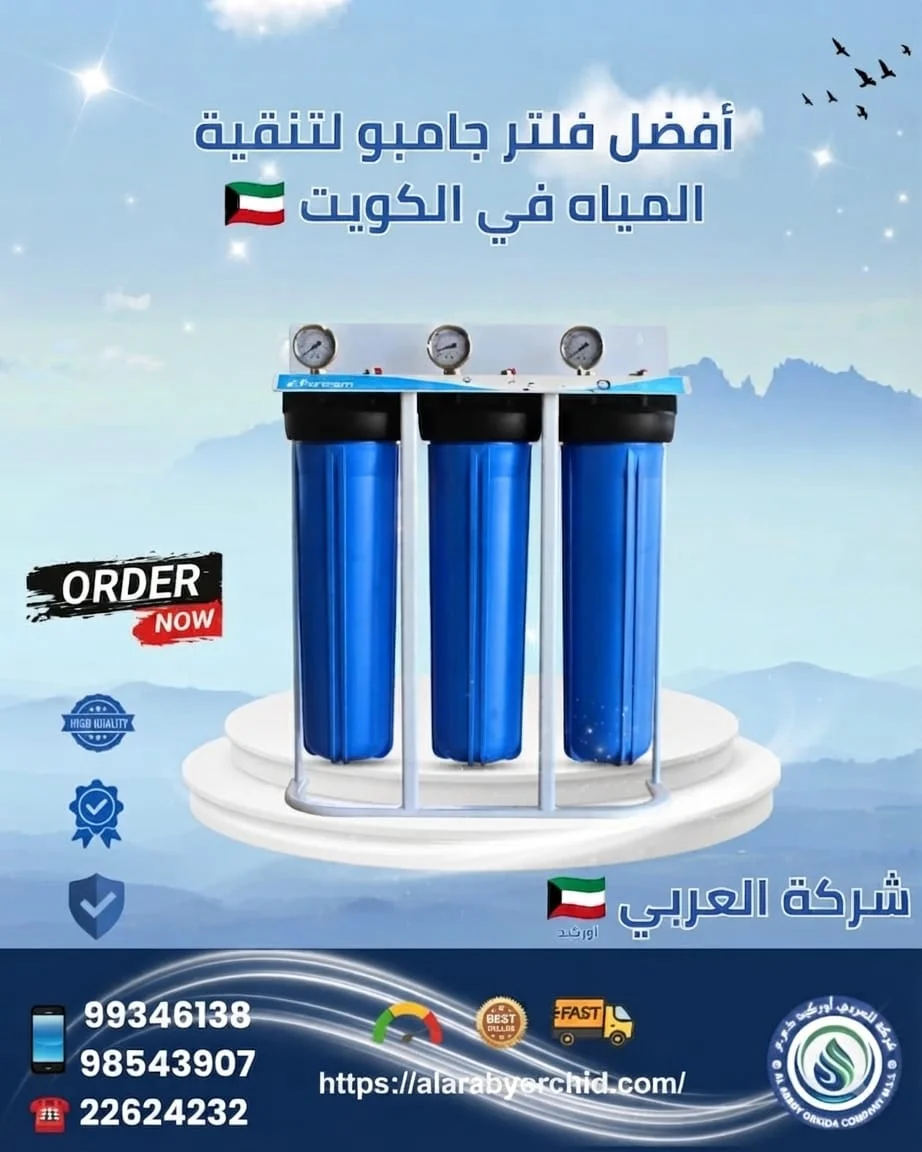
In larger multi-cartridge filters, distributing flow across several cartridges increases filtration area and reduces the load on each individual element. This is one reason larger systems often use multiple cartridges instead of forcing all household demand through one small filter.
-
Low pressure that appears only when several fixtures are opened should be tested under realistic peak-flow conditions rather than with only one tap running
-
Stable inlet pressure combined with a major drop at the outlet directs attention toward cartridges housings and valves inside the filtration path
-
A simultaneous drop in both inlet and outlet pressure means the investigation should move toward the pump water source or upstream piping rather than the filter alone
-
Selecting a finer micron rating than the property actually needs can increase restriction or shorten cartridge life when the system is not sized for that filtration level
-
Increasing total filtration area in higher-demand applications can be more effective than trying to pass the entire property’s water use through one very small cartridge
Causes of Slow Filtered Water
The causes of slow filtered water can be organized according to where the resistance is located instead of treating the problem as a random list of possible faults. The first group is before the filter and includes low feed pressure, a partially closed valve, or an undersized supply line. The second group is inside the filter and includes clogged cartridges, unsuitable cartridge selection, or incorrect installation. The third group is after the filter and includes kinked tubing, restrictive faucets, or outlet valves. RO systems add a fourth category involving production rate and storage-tank performance.
The timing of the problem gives even more information. Slow flow beginning immediately after a new cartridge was installed makes cartridge specification, installation method, and valve position early suspects. Flow that gradually weakens over several months makes sediment accumulation much more likely. A sudden problem appearing immediately after service may point toward an incorrectly reassembled component or a valve that was never fully reopened.
Sometimes the problem is not technically a “fault” at all. It may simply be a mismatch between the filtration system and the way it is being used. A small drinking-water filter designed for one faucet will naturally perform poorly if someone tries to make it serve multiple outlets or a whole property.
-
The timing of the symptom can shorten diagnosis significantly because slow flow from the first day is very different from flow that gradually declines after months of use
-
A partially closed valve can imitate the symptoms of a clogged cartridge so valve positions should always be checked before replacement parts are purchased
-
A kinked tube under the kitchen sink can create a restriction after the filter and lead to unnecessary replacement of cartridges that are still in good condition
-
Using a Point-of-Use filter as though it were a high-flow whole-house system is a design mismatch rather than a maintenance fault
-
Dividing the system into upstream internal and downstream sections makes it easier to locate the real restriction instead of replacing components far away from the actual problem
Clogged Water Filter and Low Flow

The connection between a clogged water filter and low flow is direct in many sediment filtration systems because the particles captured by the cartridge gradually reduce the available path for water to pass through. However, “clogged” does not necessarily mean that water has stopped completely. The problem may begin as a small loss that is only noticeable when several fixtures are opened and then become progressively worse.
Pressure drop is one of the most practical ways to evaluate cartridge restriction. The real concern is not simply whether the cartridge has turned brown or looks dirty. What matters is whether the resistance to water movement has increased under actual flow.
This is why pressure gauges before and after a whole-house filter can be extremely useful in systems where monitoring is worthwhile. An increasing difference between inlet and outlet pressure under similar water use gives a much more objective indication of clogging than appearance alone.
The solution is also not to wash and reuse every cartridge. Some filter elements are designed to be replaced rather than cleaned. Whether a cartridge can be serviced or must be discarded depends on its construction and manufacturer instructions.
If a brand-new cartridge becomes heavily clogged within a very short period, the real problem may be upstream. A storage tank carrying excessive sediment, disturbed debris after plumbing work, or another source of contamination may be overloading the filter.
-
Filter clogging usually begins as increasing hydraulic resistance before it becomes an obvious loss of flow which makes early monitoring valuable
-
Pressure difference provides more objective evidence of restriction than deciding only from the appearance of sediment on the cartridge surface
-
A disposable cartridge should not be turned into a washable cartridge simply because cleaning seems cheaper than replacing it
-
Repeated rapid clogging should lead to investigation of the sediment source because replacing cartridges without addressing the tank or upstream line only repeats the same problem
-
In high-sediment applications using a coarser pre-filter before a finer stage can sometimes distribute the contaminant load more effectively across the system
Low Filter Tank Pressure
The issue of low filter tank pressure mainly applies to RO systems that use a pressurized storage tank. The tank is not simply an empty container. It contains an air chamber or internal bladder that helps push stored water toward the drinking faucet.
If the air precharge is incorrect, the tank may feel heavy and contain water while only a small amount comes out at useful pressure. Incorrect storage-tank pressure is a common reason for poor delivery from an RO faucet.
However, the pressure must be measured correctly. Checking the tank while it is still full and then comparing that reading directly with the required precharge value can be misleading. The tank normally has to be prepared according to the manufacturer’s procedure before precharge is checked.
Adding more air is also not automatically better. Too much precharge can reduce the actual volume of water the tank is able to store. The goal is correct pressure for the system, not the highest pressure possible.
If the tank repeatedly loses pressure after being adjusted, or if water appears at the air valve, the internal bladder may be damaged. In that situation, simply adding air repeatedly is not a permanent solution.
-
An RO tank that contains water but cannot deliver it normally should have its precharge checked before the membrane is blamed for low production
-
Measuring tank pressure under the wrong conditions can produce a reading that is useless for comparison so the manufacturer’s procedure should be followed
-
Adding excessive air does not improve flow because an overcharged tank can actually reduce the amount of water stored inside it
-
Repeated loss of air pressure after adjustment should lead to inspection of the bladder and air valve instead of simply repressurizing the tank every time
-
A correctly adjusted storage tank cannot solve a clogged pre-filter because water storage and water production are separate parts of the RO system
Water Is Weak After Installing the Filter

If water is weak after installing the filter from the very beginning, this is a different situation from a system that worked well for a year and then gradually lost flow. In this case, the possibility that the original design or installation created new resistance becomes much stronger.
The first things to review are the inlet and outlet connection sizes compared with the original pipe diameter. Then inspect the valves, fittings, and flow direction if the filter head or housing has a specified inlet and outlet. Cartridge type should also be checked to confirm that its micron rating and construction are suitable for the required household flow.
If a small main-line filter has been installed on a large villa, every component may technically be “working correctly” while the overall result is still poor because the filter simply does not have enough flow capacity. Replacing the cartridge with another new cartridge of exactly the same type will not solve a sizing problem.
In these situations, the correct solution may involve a larger housing, a jumbo filter, a multi-cartridge system, or another configuration with more filtration surface rather than repeated cartridge replacement.
-
Flow weakness that begins immediately after installation makes sizing connection layout and valve position more important suspects than natural cartridge clogging
-
Reducing the pipe diameter at the filter and then increasing it again afterward can create a hydraulic bottleneck even when the filter housing itself is good quality
-
Valves that were not fully reopened after installation or service are simple faults but can create symptoms very similar to a restricted cartridge
-
A whole-house filter should be selected according to realistic peak flow because good performance with one faucet does not prove it can support the entire property
-
Upgrading housing size or total cartridge area can be the correct solution when the real problem is system capacity rather than a defective filter element
How to Fix Slow Water Flow From a Filter
The solution for slow water flow from a filter cannot be one universal replacement part because different causes require completely different corrections. The correct repair begins by identifying where the flow loss occurs and then addressing that specific point.
If the cartridge is clogged, replace it with the correct specification. If a valve is partially closed, restore the proper position. If an RO tube is kinked or the post-filter is restricted, correct that part of the system. If storage-tank precharge is wrong, adjust it according to the tank instructions. If feed pressure is below the operating requirement of the RO system, the source should be corrected or a booster pump may be considered where appropriate for the design.
The important point is to avoid replacing the RO membrane first simply because it is a major component. Clogged pre-filters, low feed pressure, storage-tank problems, and downstream restrictions can all produce symptoms that look similar to membrane failure.
Flow should also be measured before the repair where possible. Without a baseline, it becomes difficult to prove whether the maintenance produced a real improvement or only a temporary subjective change.
-
Begin the repair by measuring actual flow so the post-repair result can be verified rather than judged only by feel
-
If a cartridge became clogged much earlier than expected the reason for the unusually short service life should be identified so the same problem does not return quickly
-
In an RO system inspect pre-filters feed pressure and storage-tank condition before replacing the membrane because all of them can imitate poor membrane performance
-
If the system is undersized for the property the real repair may be increasing filtration capacity rather than repeatedly replacing cartridges
-
After any correction test the filter under the same usage scenario that originally caused the weak flow so the repair is evaluated fairly
Water Filter Pressure Problem
A water filter pressure problem requires determining whether the pressure drop is normal for the filter design or excessive because something has changed. Every filter creates some resistance to water flow. A correctly designed system keeps that resistance within a range that allows comfortable household use.
The problem begins when resistance becomes higher than expected or when the filter was undersized from the beginning. In that situation, some people try to increase pump pressure to compensate. This should not be the first solution because it may increase stress on the plumbing network without removing the restrictive point.
If a pump is installed before the filter and its setpoint has to be increased every time the cartridge becomes dirty, the system is using pump pressure to hide a maintenance indicator. A better solution is to use a filter with sufficient capacity and maintain it before the pressure drop becomes severe.
Static pressure readings alone can also be misleading. A filter may show a normal pressure reading when no water is being used and then create a major drop only when flow increases. Diagnosis should therefore be carried out while the system is actually operating.
-
Increasing pump pressure is not a permanent substitute for correcting filter restriction because the plumbing receives more stress while the hydraulic bottleneck remains in place
-
Every filter has some normal operating resistance but the key is determining whether the current loss is expected for the design or significantly higher than its previous performance
-
A system that needs repeated pump adjustment whenever the filter approaches service time may require a better maintenance program or more filtration area
-
Stable inlet pressure combined with fluctuating outlet pressure points toward the filter while unstable inlet pressure directs investigation outside the filtration system
-
Pressure diagnosis should be performed during real flow because static readings can hide a restriction that appears only when household demand increases
Checking Water Flow Through the Filter
Checking water flow through the filter is one of the best ways to complete the diagnosis because it turns a vague complaint into measurable information. A simple method is to collect a known quantity of water over a specific time and convert the result into liters per minute. The same test can then be repeated after maintenance.
In a whole-house filter, pressure readings before and after the housing should be taken during the same test. In an RO system, the discharge rate from the faucet should be checked when the tank is full, and the way flow changes during continued use should also be observed. If the concern is production rather than tank discharge, then refill time or membrane output should be evaluated according to the system design.
Testing conditions should remain as similar as possible. Comparing today’s one-faucet test with an older test performed while three fixtures were running will not provide useful information.
The same method is valuable after repair. If the measured flow improves substantially and pressure drop returns closer to its normal baseline, the service has produced an objective result rather than merely a subjective impression.
Al Arabi Orchid provides installation, cartridge replacement, and maintenance for sand filters, jumbo systems, multi-stage filters, stainless-steel filters, and kitchen filtration systems in Kuwait. You can contact 99346138 when the issue requires inspection of the filter as a complete system instead of replacing cartridges based only on assumptions.
-
Measuring liters per minute before and after maintenance provides clear evidence of the amount of improvement and can reveal when the real cause has not been fully corrected
-
Recording inlet and outlet pressure at the same moment helps locate where resistance is occurring instead of relying on how strong the water feels by hand
-
In RO systems the rate at which the tank empties and the rate at which the system produces new water are two different measurements of two different parts of the system
-
Repeated tests should be performed under similar conditions so normal day-to-day changes in water use are not mistaken for filter faults
-
You can contact Al Arabi Orchid on 99346138 when the cartridges storage tank pressure and connections need to be checked together before deciding which components should be replaced
Conclusion
Low water flow after a filter can appear in several different ways, which is why it does not have one universal solution. If the weakness develops gradually after a period of normal operation, cartridge restriction and increasing pressure drop become strong possibilities. If the problem begins immediately after installation, the filter size, cartridge rating, connection diameter, valve position, and installation method should be reviewed. If the system is RO, storage-tank pressure, tank condition, post-filter restriction, feed pressure, and membrane production must also be included in the diagnosis.
The most important step is comparing what happens before the filter with what happens after it. If inlet pressure and flow are not known, it is impossible to say confidently whether the filter caused the weakness or simply received already-poor water conditions from the upstream network.
Al Arabi Orchid provides whole-house and kitchen filtration systems together with filter maintenance and cartridge replacement services in Kuwait. You can contact 99346138 for inspection. The goal is not simply to make the water feel stronger by any available method. The real objective is to identify exactly where the hydraulic resistance exists and restore normal flow without randomly increasing pressure or replacing components that are still functioning correctly.
Frequently Asked Questions
Why did water flow become weak after the filter?
Possible causes include a clogged cartridge, an undersized filtration system, a partially closed valve, restrictive piping, or low feed pressure before the filter. Comparing pressure and flow before and after the filter helps identify the correct direction.
How do I know if the cartridge is causing the problem?
If inlet pressure remains normal but the pressure drop across the filter has increased compared with earlier performance and flow has also decreased, that is a strong indication of restriction inside the cartridge.
Why does my RO filter start with strong flow and then become weak?
The initial flow may come from stored water inside the tank. As that stored volume is used, low tank precharge, limited stored-water capacity, a restricted post-filter, or slow RO production may become more noticeable.
Can low RO tank pressure reduce flow from the faucet?
Yes. Incorrect storage-tank precharge can cause weak delivery, but the correct pressure and measurement procedure should follow the instructions for the exact tank and RO system.
Can a finer micron cartridge reduce water flow?
Yes. A finer cartridge can create more resistance or clog faster depending on its design and the amount of sediment in the water. The finest rating is not automatically the best choice for a high-flow whole-house system.
Should I replace every filter cartridge if water becomes weak?
Not necessarily. The better approach is to identify which stage is causing the restriction because the first pre-filter may be clogged while later stages still have useful service life remaining.
Why did the water become weak immediately after installing a new filter?
Check housing capacity, pipe diameter, flow direction, valve position, and cartridge specification. A problem that appears immediately after installation is more likely to involve sizing or installation than natural sediment loading.
Will installing a stronger pump solve low flow after the filter?
Not necessarily. If the filter itself is restricting flow, increasing pump pressure may only hide the issue temporarily while adding unnecessary stress to the plumbing system.
How can I measure filter flow?
Measure the quantity of water produced over a known period and calculate liters per minute. Repeat the same test under similar conditions before and after maintenance. For whole-house systems, pressure readings before and after the filter should also be compared.
Who checks low water flow from filters in Kuwait?
Al Arabi Orchid provides installation and maintenance for Sand, Jumbo, 3-Stage, Stainless Steel, and kitchen water filters in Kuwait. You can contact 99346138 to inspect flow, pressure, cartridges, storage tanks, and connections and determine whether the problem is caused by restriction, tank pressure, installation, or filter capacity.