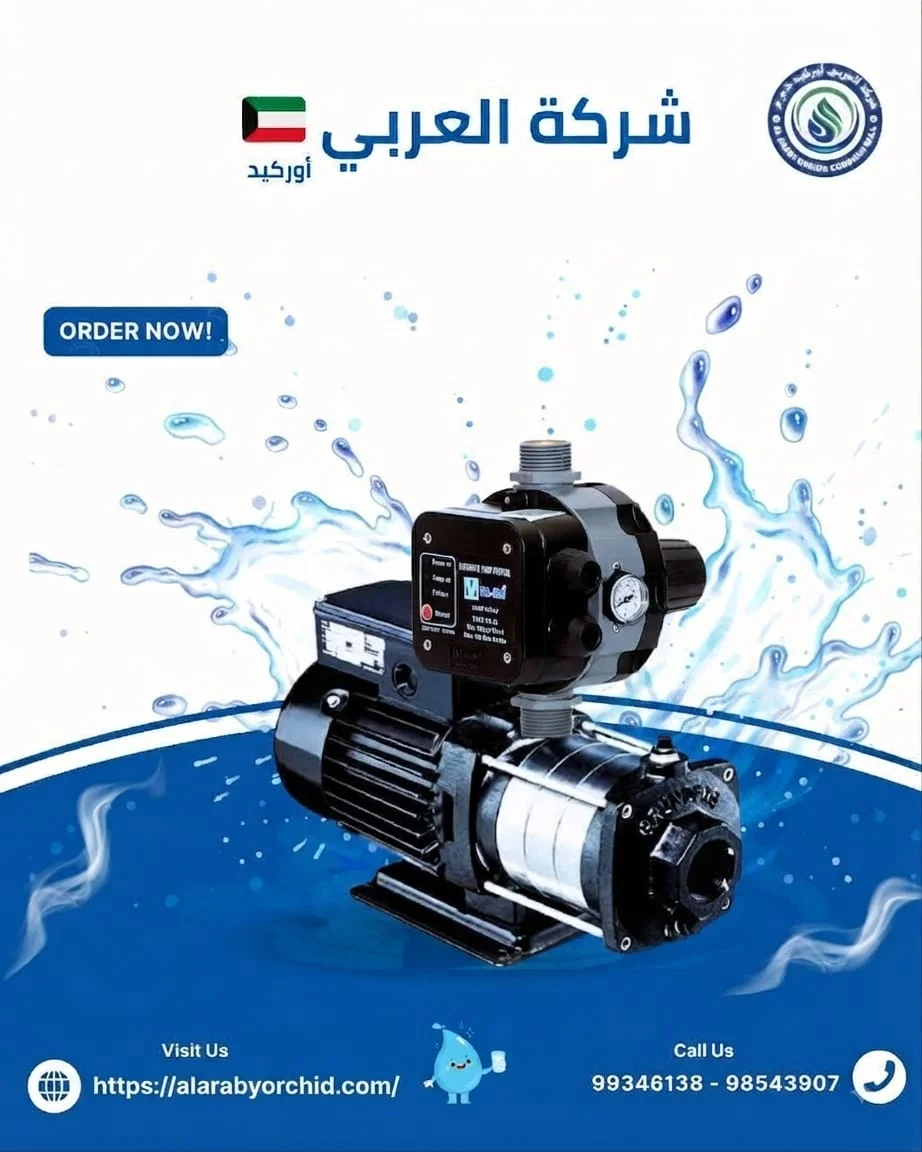
If you are choosing between a standard water pump or a smart water pump, do not assume that the smart option is automatically better simply because it is newer, and do not assume that the traditional pump is always sufficient simply because it costs less. The real difference appears in the way water is used inside the home. A traditional pump works very well when demand is clear and relatively stable and you want a straightforward system using the pump, automatic pressure control, and a pressure tank. A smart variable-speed pump becomes more useful in homes where demand changes frequently and where more stable pressure is important when several fixtures are opened. Al Arabi Orchid currently offers traditional Grundfos pumps from 0.5 HP to 2 HP together with smart pump options. The right decision depends on the number of users, required flow, changes in demand, noise level, and the condition of the plumbing network, not simply on whether the pump is called smart or standard.
Standard Water Pump or Smart Water Pump
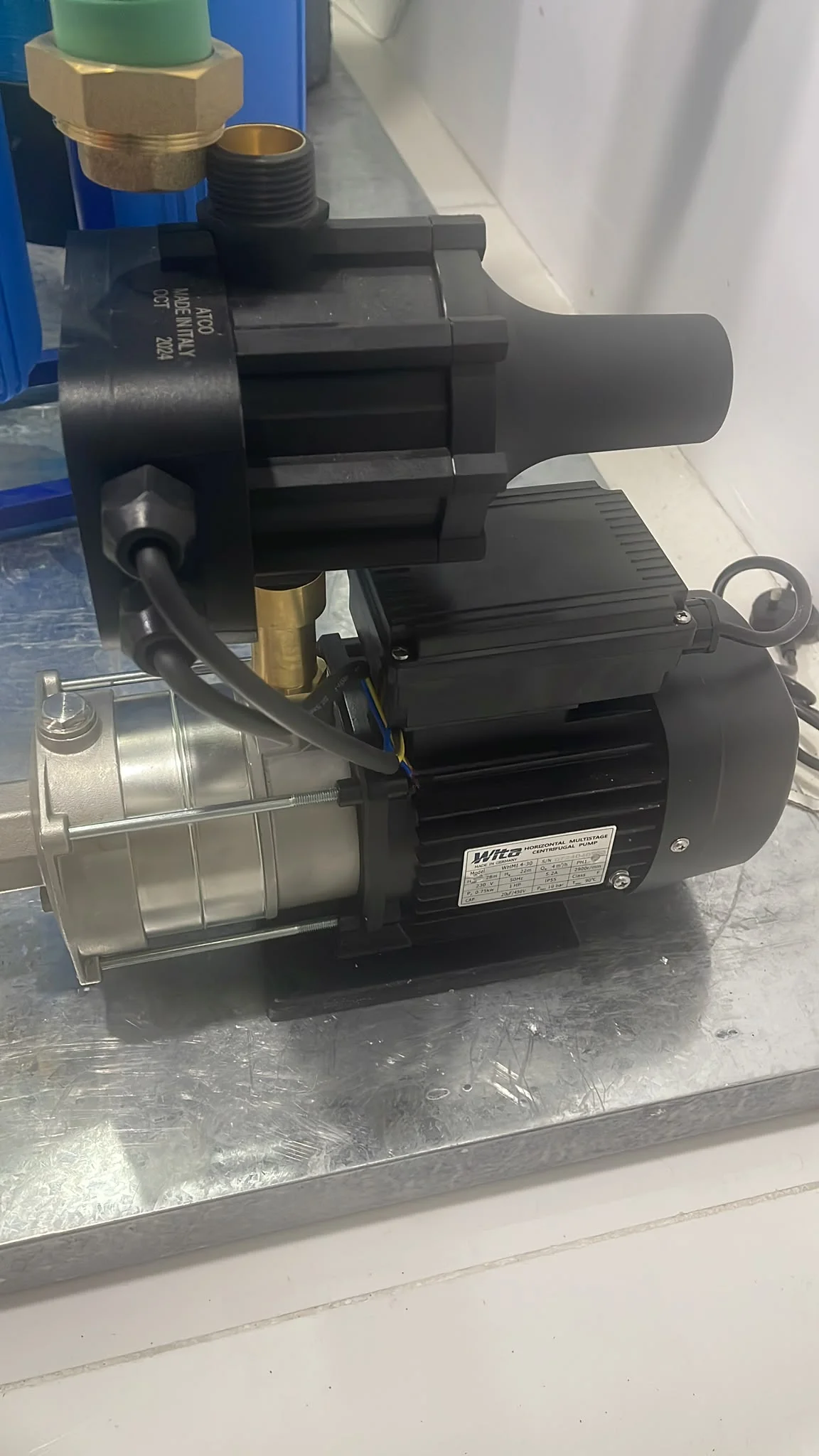
When comparing a standard water pump or a smart water pump, we are not comparing only two motors. We are comparing two different ways of managing household water pressure. The traditional system currently offered by Al Arabi Orchid includes stainless-steel Grundfos pumps from 0.5 HP to 2 HP and can be installed with an automatic pressure controller, a 24-liter pressure tank, a pressure regulator, and check valves. This type of system generally operates by switching the pump on and off within a selected pressure range.
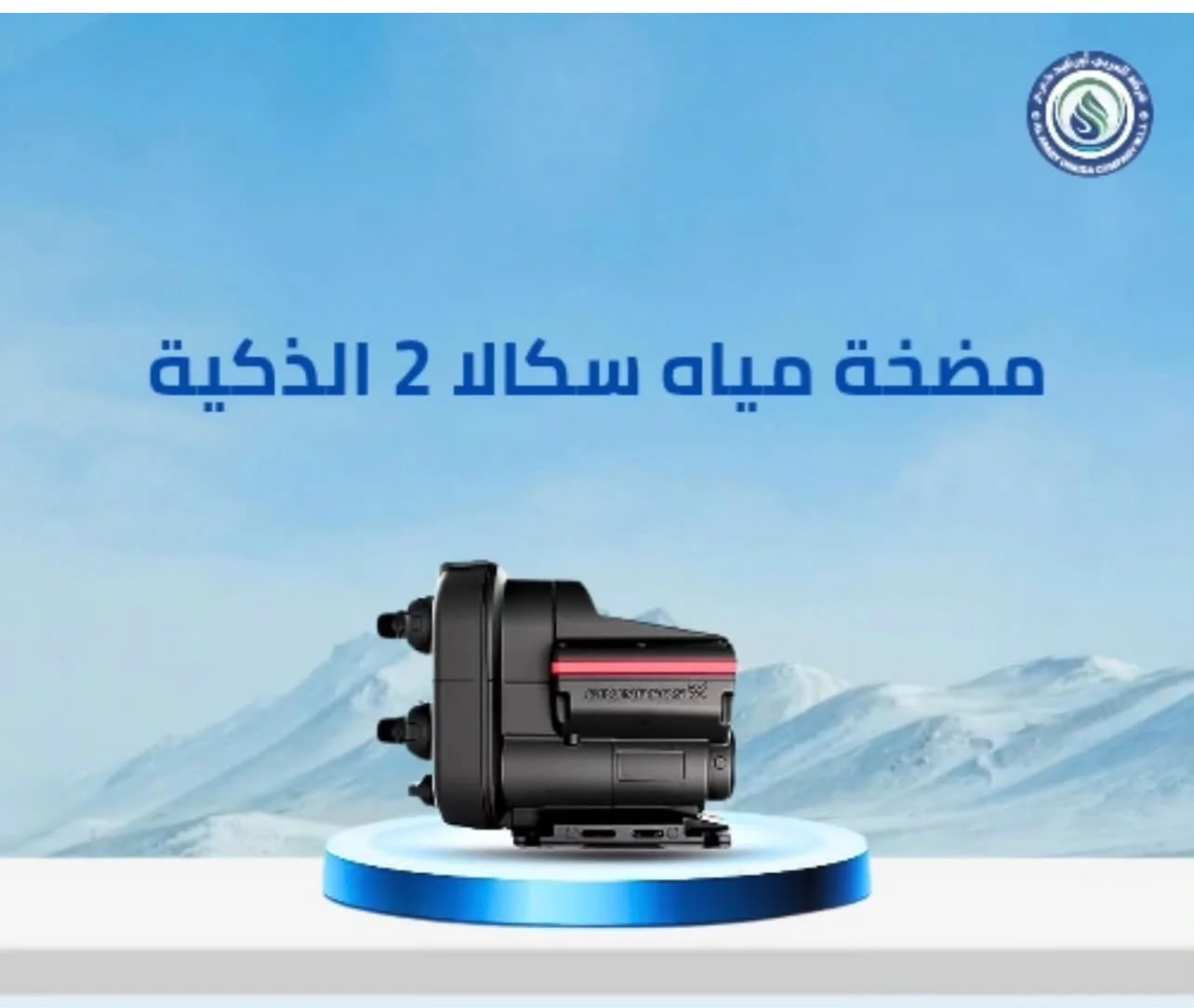
A smart pump such as Grundfos SCALA2 uses variable-speed control. If you open one tap, the pump does not need to provide the same output required when several bathrooms are being used. The control system monitors pressure changes and adjusts pump performance according to demand to keep the pressure more stable. SCALA2 itself integrates the pump, motor, pressure tank, sensor, controller, and check valve into one compact unit.
Consider a simple example. A home with two residents that normally uses only one bathroom at a time and does not suffer from noticeable pressure fluctuation may be served perfectly well by a correctly sized and adjusted traditional system. A larger household where the kitchen tap, shower, and washing machine can operate at the same time may gain much more from variable-speed control because the pump responds continuously as water demand changes.
The meaning of “better” therefore depends on the type of comfort you actually need. A traditional pump is excellent when you want a direct and practical solution for relatively stable demand. A smart pump becomes stronger when pressure stability, quieter operation, and changing household consumption matter more.
-
A standard pump is suitable for relatively stable household demand when the required system pressure is clearly understood
-
A smart pump adjusts its output as water demand changes instead of operating in the same way throughout every period of use
-
A traditional system may use separate components such as a pump pressure switch pressure tank and check valves while a smart system integrates several of these functions
-
Homes where several water fixtures are used simultaneously gain more value from automatic performance adjustment
-
Neither system is automatically best in every property because the right choice depends on how water is actually used in the home
Difference Between a Standard and Smart Pump
The difference between a standard and smart pump begins with the way each one responds to changes in water consumption. A traditional residential pump is usually fixed-speed. It starts when system pressure drops and stops when the selected upper pressure level is reached. The pressure tank helps reduce unnecessary starting and stopping during small water demands and provides some pressure stability between pump cycles.
A smart variable-speed pump works differently. It does not simply wait for one pressure point to start and another to stop. Its controller monitors demand and changes motor speed to keep the pressure closer to the selected target. Grundfos describes SCALA2 as an integrated booster system that intelligently adjusts performance according to household consumption and combines the motor, pressure tank, sensor, controller, and check valve in one unit.
This difference becomes noticeable in daily use. With a traditional pump, you may feel a small change in pressure as the system moves between its start and stop points, depending on the network design and pressure-tank adjustment. With a variable-speed system, the objective is to reduce these fluctuations and maintain more consistent pressure as fixtures open and close.
Installation is also different. Al Arabi Orchid currently describes traditional systems that may include a 24-liter pressure tank, an automatic controller, a pressure regulator, and check valves, while a smart pump such as SCALA2 incorporates a pressure tank, sensor, control system, and check valve internally. This does not eliminate the need for correct plumbing installation, but it can reduce the number of some external components.
The diagnostic process also differs. A traditional system is often checked by inspecting the pump, pressure switch, pressure tank, and valves as separate components. A smart system adds electronic settings, sensors, and warning indications to the troubleshooting process.
-
Standard pumps depend more heavily on start-stop operation within pressure limits while smart pumps adjust motor speed as demand changes
-
A pressure tank is a major part of many traditional systems while some smart pumps integrate the tank inside the unit
-
Smart systems are designed to reduce pressure fluctuation when different household fixtures are opened and closed
-
Traditional systems can be simpler to separate into individual components because the controller pressure tank and valves may all be external
-
A meaningful comparison should include control method and user experience rather than horsepower alone
Best Smart Water Pump for Home
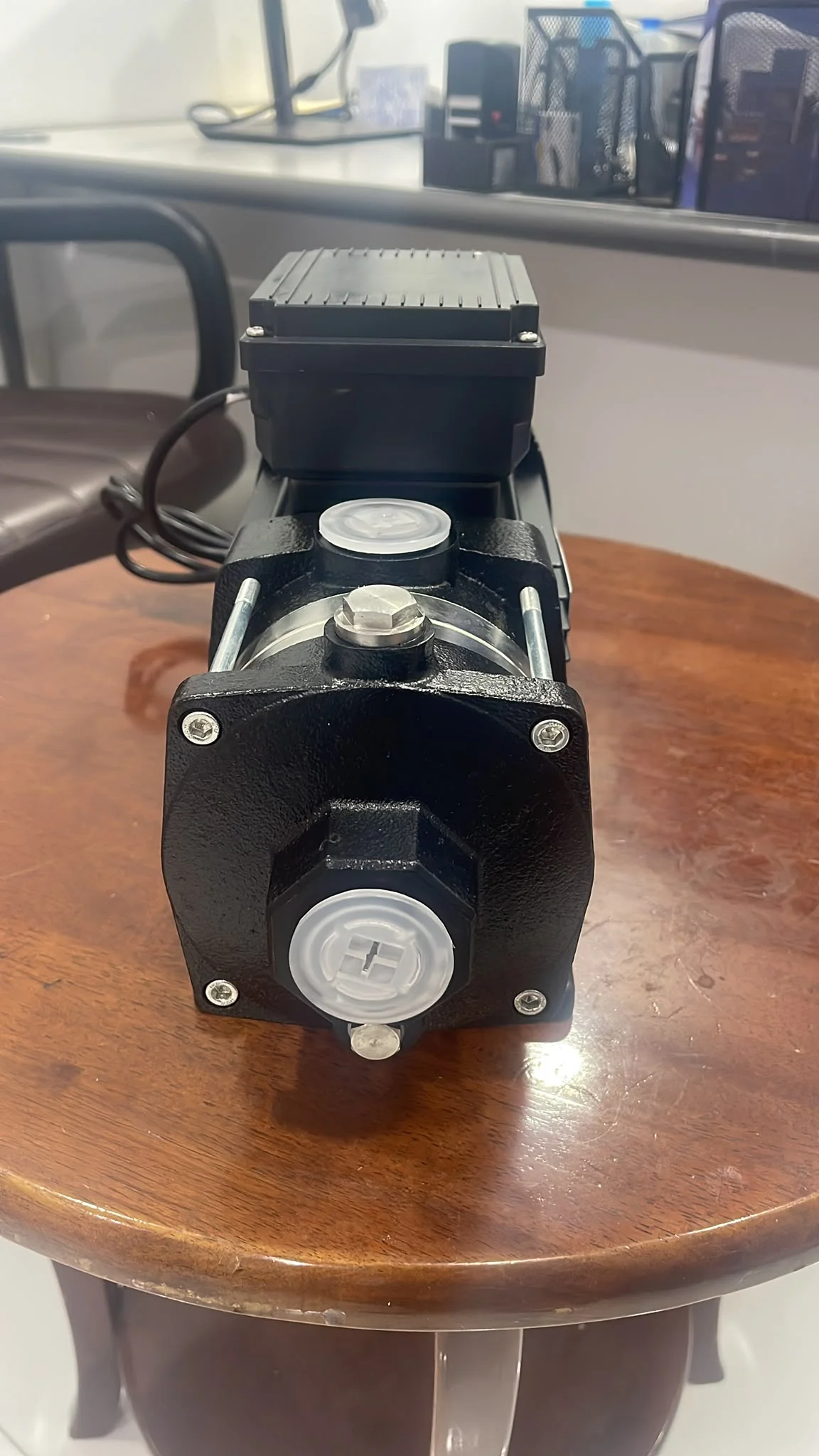
When looking for the best smart water pump for home, do not begin with the brand before confirming whether the pump specifications actually match the property. The best model for a single-level home is not automatically the best choice for a villa with several floors and multiple bathrooms.
Grundfos SCALA2 is a clear example of a residential smart booster. According to Grundfos product information, it is an integrated variable-speed unit designed to maintain constant pressure and includes the pump, motor, pressure tank, sensor, controller, and check valve. Current manufacturer information also presents it for residential applications with multiple floors and several water outlets within the limits of the specific system design.
However, statements such as “supports several outlets” should never be interpreted as meaning that every property with the same number of taps will perform identically. Building height, incoming pressure, required flow, and pipe losses all affect the final result.
Three things make a smart pump suitable for a home. First, it must provide the required flow and pressure. Second, the smart control should genuinely solve a problem created by changing household demand. Third, the property should allow the equipment to be installed and maintained properly.
Al Arabi Orchid currently offers a Grundfos smart pump as a separate option alongside traditional pumps and describes it as operating automatically according to pressure demand. This gives customers a genuine choice rather than applying the same pump type to every home.
If your property is small and water consumption is extremely stable, you may end up paying for smart features you rarely use. If the pressure changes noticeably whenever household demand changes, then the smart pump category deserves serious consideration.
-
The best smart pump is not the most expensive one but the model that supplies the required pressure and flow without being unnecessarily oversized
-
SCALA2 is an example of a variable-speed booster that integrates control sensing pressure storage and a check valve in one unit
-
Fixture count alone is not enough because elevation pipe length and inlet pressure all change the real requirement
-
Homes that experience noticeable pressure changes during simultaneous water use gain more from variable-speed control
-
Before purchasing ask for the pump to be matched to the required operating point instead of relying only on the statement suitable for homes
Advantages of Smart Water Pumps
The advantages of smart water pumps become clearer when you look at daily household use rather than only at the specifications printed on the box. The first major advantage is pressure stability. Grundfos explains that SCALA2 monitors pressure changes and adjusts motor speed according to demand so that household pressure remains more consistent as the number of open fixtures changes.
The second advantage is quieter operation. Grundfos data for SCALA2 describes operating noise around 44 dB under normal use, with part of that performance supported by the compact design and water-cooled motor arrangement. The actual noise experienced inside a property still depends on installation location and pipe support because loose pipework can transmit vibration even when the pump itself is relatively quiet.
The third advantage is protection. SCALA2 includes dry-running protection, which is useful when the water supply is interrupted or the storage tank becomes empty because the pump can stop rather than continue operating without water.
The fourth advantage is integrated design. Instead of having a separate pump, pressure tank, sensor, controller, and check valve installed around the system, many of these functions are built into one unit. This reduces installation clutter and can make the system more compact.
The fifth advantage is operating efficiency under changing demand. A variable-speed motor does not need to run at the same full output for every small water request. When consumption is low, the pump can reduce its performance accordingly.
-
More stable pressure reduces the noticeable change in shower strength when another fixture is opened or closed
-
Quieter operation is especially valuable when the pump is installed close to bedrooms living rooms or other occupied areas
-
Dry-running protection adds useful protection when the water source becomes unavailable
-
Integrated pressure storage sensing control and check-valve functions reduce the number of some external components around the pump
-
Variable speed allows the pump to match output to demand instead of using the same operating level regardless of consumption
Disadvantages of a Smart Pump
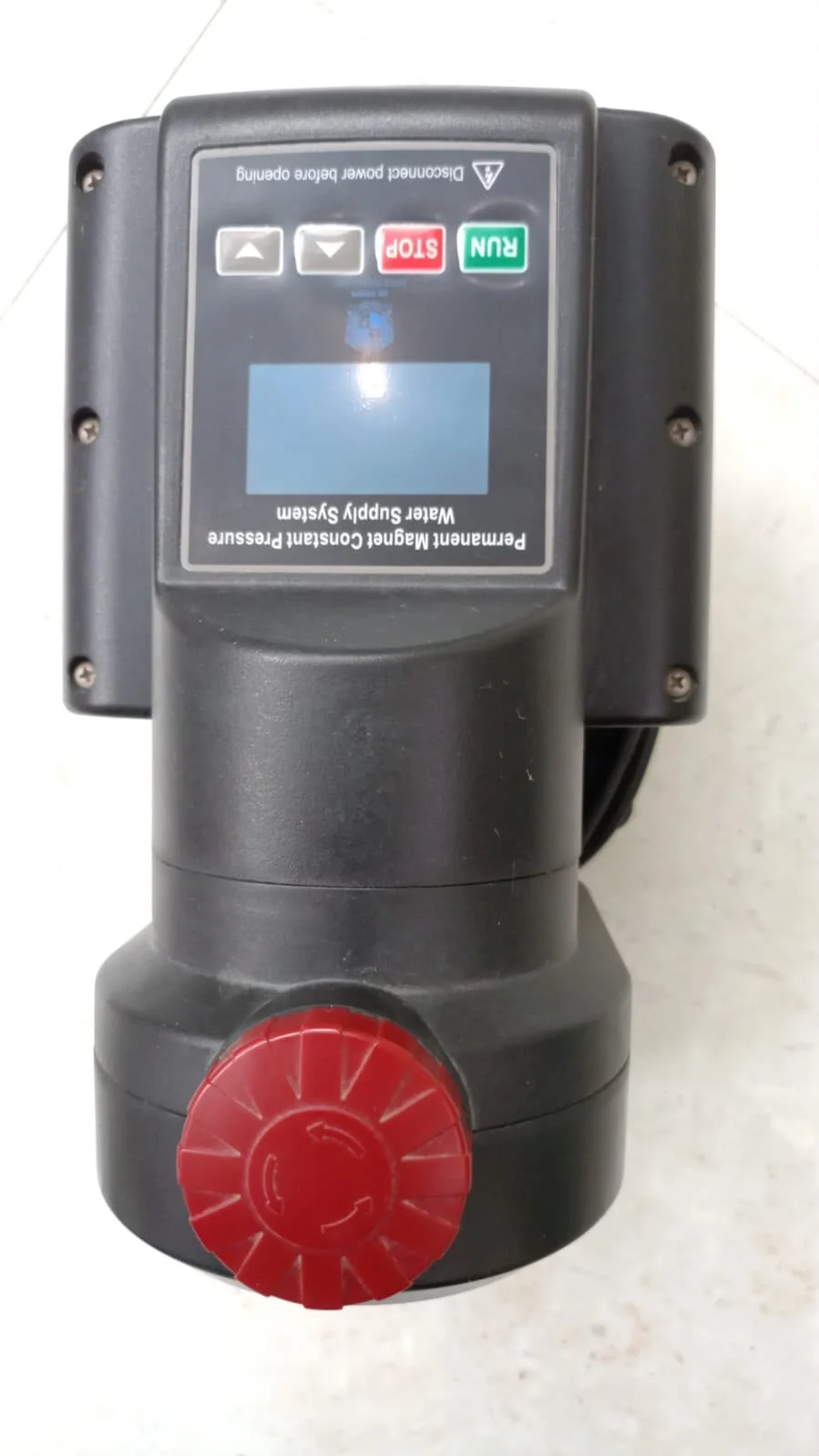
Despite the benefits, it is important to discuss the disadvantages of a smart pump so the comparison remains fair. The first is initial purchase cost. A smart pump contains electronic controls, a variable-speed motor, sensors, and more integrated technology than a simple traditional system, so it is natural for the equipment itself to cost more in many cases.
Al Arabi Orchid currently advertises a Grundfos smart pump at KWD 160, while traditional pumps are offered from 0.5 HP to 2 HP depending on the required capacity and components without one single published price for every category. That price is useful only as an indication that the smart system belongs to a more advanced technology category, not as a replacement for a full price comparison.
The second disadvantage is that a smart pump is not a “fit it and forget it forever” product. Grundfos itself recommends periodically checking the precharge pressure of the integrated SCALA2 pressure tank. If that pressure drops or is set incorrectly, the system can experience pressure fluctuation, additional noise, higher energy use, or unnecessary stress.
The third issue is diagnostics. Because smart pumps contain electronic controls and integrated sensors, troubleshooting requires a technician who understands the warning indications, settings, sensors, hydraulic network, and motor instead of treating every problem as though it were an external pressure-switch fault.
The fourth disadvantage is that customers can pay for features they do not need. Grundfos itself explains in applications involving simple water transfer between tanks that a fixed-speed pump may be entirely appropriate and that paying for variable-speed technology in a straightforward transfer application can be unnecessary.
That is an important rule: smart technology is useful when the application genuinely benefits from it.
-
Smart pumps often have a higher initial price because of electronic controls sensors and variable-speed motor technology
-
The integrated pressure tank still requires periodic attention and the system should not be treated as completely maintenance-free
-
Troubleshooting requires someone who understands the electronic controller warnings and sensors as well as basic pump operation
-
Using a smart pump for a simple fixed water-transfer task can mean paying for technology that adds little practical benefit
-
A smart pump is worth the additional complexity when pressure stability quieter operation variable speed and system protection are genuinely useful to the household
Smart Booster Pump for Home
A smart booster pump for home is particularly suitable when incoming pressure is insufficient or inconsistent and when the number of water outlets being used changes throughout the day. Instead of choosing a pump that simply “makes the water stronger,” you are choosing a system designed to maintain a more consistent pressure experience.
Consider a home with two bathrooms, a kitchen, and a washing machine. Water demand can change within a minute. One tap may be opened first, requiring only modest flow, and then a shower and washing machine may begin operating, increasing demand. A variable-speed pump increases its output when required and reduces it again when consumption drops.
Grundfos SCALA2 is designed specifically for domestic pressure boosting and uses intelligent control to adjust performance according to demand. It combines the main operating components in a compact design and allows the pressure target to be adjusted from the control panel.
However, the success of a smart booster still depends on correct installation. The suction line must be capable of supplying the pump. The household pipework must be suitable for the selected pressure. The network should not contain a clogged filter or major restriction. Smart electronics cannot cancel the physical limits of the plumbing system. If insufficient water reaches the pump, the controller cannot create additional water.
This is where site assessment becomes important. Because Al Arabi Orchid currently offers both traditional and smart pump options, the better approach is to evaluate household demand before selecting a system, particularly in multi-level properties or homes with several bathrooms.
-
A smart booster is particularly useful in homes where the number of active water fixtures changes significantly throughout the day
-
Variable-speed control raises or lowers output according to demand instead of operating at maximum performance all the time
-
Adjustable pressure gives the customer flexibility but the selected setting still needs to match the household plumbing system
-
A blocked network or weak suction condition cannot be solved simply by installing a smart pump so the network should be checked first
-
Booster selection begins with actual pressure and flow requirements rather than a general desire to purchase the newest technology
Smart Pump Electricity Consumption
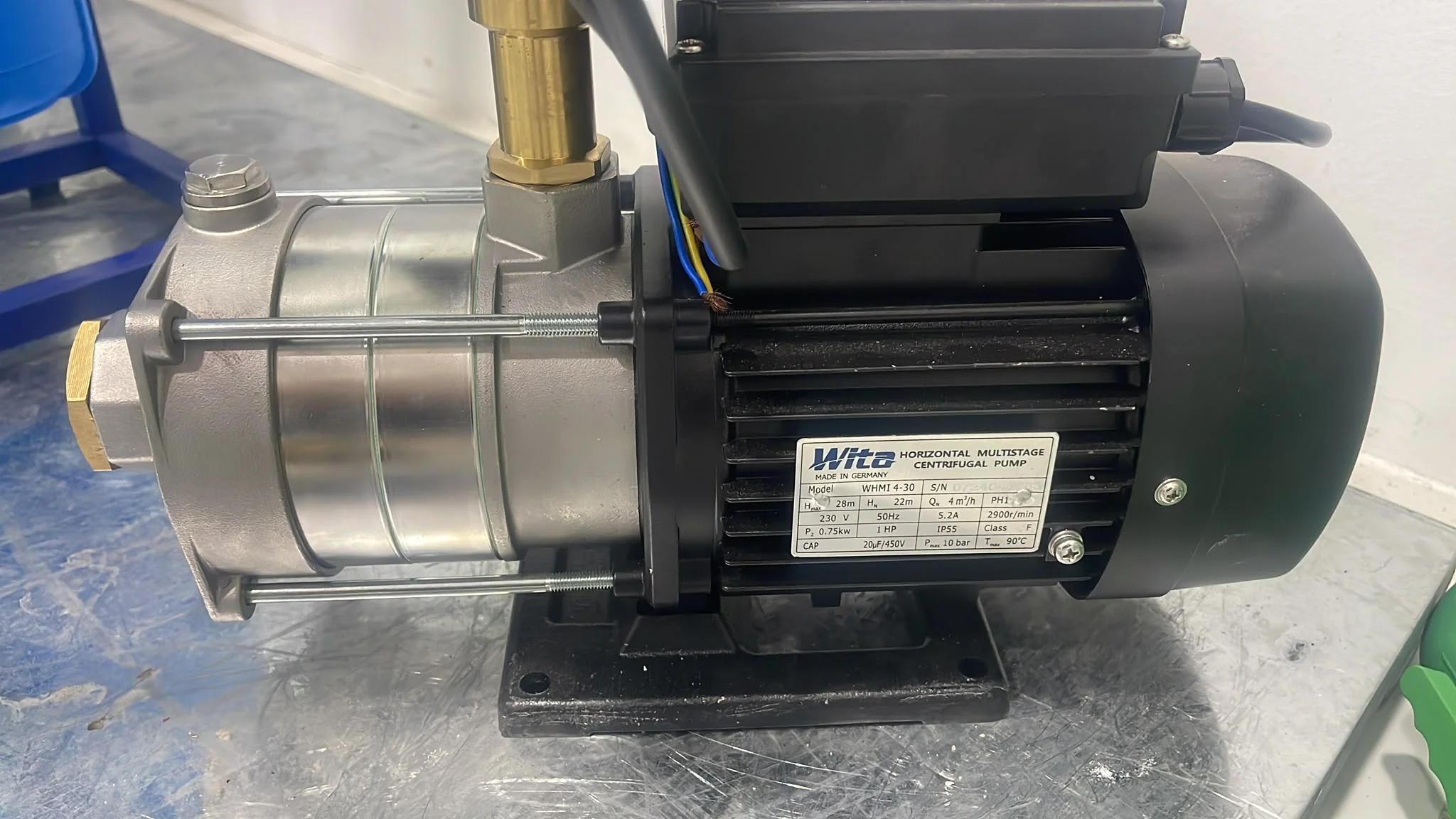
Smart pump electricity consumption is one of the areas where accurate explanation is more important than marketing. The basic idea is that a variable-speed pump can reduce motor output when demand is low instead of operating at its maximum level during every part of the operating cycle. This gives it the potential to use less electricity in homes where water demand changes considerably throughout the day.
Grundfos currently explains that SCALA2 uses a permanent-magnet motor and variable-speed control and states that it may achieve energy savings of up to 40% compared with certain traditional booster pumps. However, this statement needs to be understood correctly. It is not a guaranteed saving for every property. The manufacturer’s comparison is based on specific pump models, operating hours, and assumed daily flow patterns. Real consumption depends on pressure setting, operating hours, required flow, and the hydraulic conditions of the network.
For example, if a home spends part of the day using only one tap and another part using several fixtures, variable speed can save energy because the pump does not need to operate at maximum output during every small demand. If the pump spends most of the day operating close to maximum capacity because demand is continuously high, the energy-saving difference compared with another well-matched system may be smaller.
Incorrect adjustment can also increase energy use. Grundfos notes that improper precharge pressure in the integrated tank can contribute to less efficient operation and higher energy consumption, which means maintenance is directly connected to electricity performance.
-
A smart pump can save energy because motor speed changes with demand instead of remaining at one fixed output
-
The advertised saving of up to 40% comes from a defined manufacturer comparison and should not be treated as a guaranteed result for every property
-
The more household demand changes throughout the day the more opportunity there is to benefit from variable-speed control
-
Setting pressure higher than necessary can increase the work required from the pump without improving household comfort
-
Real electricity consumption depends on the exact pump model operating hours and household demand rather than the word smart alone
Smart Water Pressure Control
Smart water pressure control is the main feature separating a modern variable-speed booster from a pump that depends primarily on traditional start-stop control. The system continuously monitors pressure and responds as taps are opened and closed by increasing or reducing pump speed within the limits of the selected model.
Grundfos explains that SCALA2 detects pressure drops and automatically adjusts operation, while also allowing the user to select the desired pressure level from the control panel. The system responds to changes in inlet conditions and the number of active fixtures and adjusts output accordingly.
This feature addresses a common household situation. One person is taking a shower and another opens the kitchen tap. With a traditional system, pressure may fluctuate or the pump may move into a start-stop cycle depending on its setup. With variable-speed control, the pump attempts to increase output to compensate for the additional demand and keep the pressure closer to the target.
However, the word “smart” does not mean the pump automatically knows the perfect pressure for your plumbing system. The target pressure must still be selected sensibly. Setting it unnecessarily high can make the network operate at more pressure than it needs.
Smart control also does not eliminate the importance of the water source. If the suction line is restricted or the tank is empty, there are physical limits to what the pump can do. Dry-running protection can stop the pump when water is unavailable, but it does not solve the underlying source problem.
-
Smart control monitors pressure changes and adjusts motor speed instead of depending only on fixed start-stop thresholds
-
The user can select a pressure target but that setting should match the plumbing network rather than simply using the highest available value
-
Changes in demand from several fixtures are where variable-speed control becomes especially noticeable
-
Dry-running protection protects the pump when water is unavailable but does not repair a weak water source
-
The best pressure setting should be confirmed by testing the farthest fixture rather than only looking at the pump control panel
Comparing Home Water Pumps
A proper comparison of home water pumps should use several criteria instead of asking only “which one is stronger?” The first criterion is pressure stability. A smart variable-speed pump performs especially well when demand changes, while a traditional pump can perform perfectly well when consumption is stable and the system is properly adjusted.
The second criterion is simplicity. Traditional systems use familiar, separate components such as the pump, pressure controller, pressure tank, and check valves. This can be attractive to homeowners who prefer a direct and straightforward arrangement for a relatively simple water-pressure requirement. Al Arabi Orchid currently offers this category from 0.5 HP to 2 HP with the related system accessories.
The third criterion is noise. Grundfos publishes normal operating noise for SCALA2 at around 44 dB, which can be a meaningful advantage when the pump is installed close to living areas or bedrooms.
The fourth criterion is energy use. Variable-speed systems have more opportunity to reduce electricity consumption when water demand changes frequently, but the amount saved depends on actual operating conditions.
The fifth criterion is maintenance. Traditional systems have external pressure tanks, pressure switches, and other components that require inspection. Smart systems also have integrated pressure storage and electronic controls that need monitoring and correct adjustment. Grundfos recommends periodic checking of the SCALA2 tank precharge, which confirms that no system should be treated as maintenance-free.
The sixth criterion is application. If the task is simply transferring water from one tank to another, a fixed-speed pump may be more economical and appropriate. If the objective is comfortable household pressure under changing demand, the smart system becomes more relevant.
-
Traditional pumps win on simplicity when the requirement is straightforward pressure boosting with stable household use
-
Smart pumps win on pressure stability when the required water flow changes from moment to moment
-
Noise becomes an important comparison factor when the pump is located close to regularly occupied spaces
-
Electricity savings depend on the actual demand profile and should not be treated as guaranteed merely because the pump uses variable speed
-
Both systems require maintenance but the components that need attention differ between them
-
Compare pumps by application pressure flow control noise and service requirements rather than horsepower alone
Choosing a Smart or Standard Pump
Choosing a smart or standard pump becomes much easier when you answer five questions before buying. Is household water use stable or highly variable? Do you notice a clear pressure drop whenever another fixture is opened? Will the pump be located close to occupied rooms where noise matters? Do you prefer a simple system with separate components or a compact integrated unit? And is the additional initial cost of smart control justified by the comfort you expect to gain every day?
If your home is small, has relatively few fixtures, and they are rarely used at the same time, a correctly selected traditional pump can be an excellent and economical choice. There is no reason to pay more simply because newer technology exists.
If you have a larger household, demand changes constantly, and you want pressure to remain more consistent, a smart pump becomes more logical. SCALA2, for example, is designed specifically for this type of residential pressure boosting and varies its speed according to demand.
If the pump is intended only to transfer water between two tanks rather than maintain household fixture pressure, a fixed-speed pump may be entirely sufficient. Grundfos itself explains that variable-speed technology may not be necessary for a simple transfer application. This is an important point because it proves that smart technology is not automatically the best solution for every pump application.
If the goal is domestic boosting under changing demand, however, the smart system becomes much stronger in terms of comfort, control, and quieter operation. The final condition is that the selected model must still match the required flow and elevation.
Al Arabi Orchid currently provides both categories, so the best decision comes from assessing the actual requirement rather than selling one pump type to every customer.
-
Choose a traditional pump when household water use is simple and stable and you want a straightforward practical system
-
Choose a smart pump when demand changes frequently and pressure stability quieter operation and automatic control are major priorities
-
Do not pay for variable-speed technology in a simple water-transfer application if it provides no clear operating benefit
-
Do not choose the traditional option only to save money if pressure fluctuation is the main problem you are trying to solve
-
Before deciding contact Al Arabi Orchid on 99346138 and provide the number of floors bathrooms and simultaneous fixtures so both options can be compared against the same requirement
Conclusion
The answer to standard water pump or smart water pump: which is better for home? is that both can be excellent when each one is used in the right application.
A traditional pump is very suitable for a home with clear and relatively stable demand. It can be built as a Grundfos system using an automatic controller, pressure tank, pressure regulator, and check valves. Al Arabi Orchid currently offers traditional pump options from 0.5 HP to 2 HP for these types of applications.
A smart pump such as SCALA2 has a different personality: variable-speed control, more stable pressure, quieter operation, dry-running protection, and integrated components. Grundfos publishes normal operating noise at around 44 dB and explains that the control system adjusts pump performance according to demand.
From an electricity perspective, Grundfos states that SCALA2 may save up to 40% in a defined comparison with a traditional booster, but that figure is based on specific operating assumptions and should not be presented as a guaranteed saving for every home.
A smart pump also does not mean “no maintenance.” The integrated pressure tank in SCALA2 requires correct precharge, and the manufacturer recommends checking it periodically.
If your household use is simple and stable, the traditional pump can be more economical and perfectly suitable. If several fixtures are used at changing levels throughout the day and you want noticeably more stable pressure, a smart pump can justify the added technology.
To choose with Al Arabi Orchid, contact 99346138 and provide the number of floors, bathrooms, simultaneous water-use points, and pump location. Ask for a comparison between a traditional pump and a smart pump at the same required pressure and flow. This allows you to decide which system is truly better for your home instead of choosing only from the word “smart” or from the horsepower number.
Frequently Asked Questions
What is the main difference between a standard and smart pump?
A standard pump usually operates at fixed speed and starts and stops according to pressure settings and the automatic controller. A smart variable-speed pump adjusts its output according to water demand in order to keep pressure more stable.
Is a smart pump always better than a standard pump?
No. If household demand is simple and stable, a traditional pump may be the better financial choice. If consumption changes frequently and stable pressure is important, a smart pump offers more practical benefit.
Is SCALA2 considered a smart pump?
Yes. Grundfos describes SCALA2 as an integrated variable-speed booster that includes the motor, pressure tank, sensor, controller, and check valve and adjusts performance according to household demand.
Does a smart pump save electricity?
It can use less electricity because the motor speed changes according to demand. Grundfos states that savings of up to 40% are possible in a defined comparison with a traditional booster, but real savings vary from one property to another according to operating hours, pressure settings, and required flow.
Is a smart pump quiet?
SCALA2 specifically is marketed by Grundfos as a relatively quiet booster, with published normal operating noise around 44 dB. Final noise still depends on installation location, pipe support, and how vibration is managed.
Does a smart pump need a separate pressure tank?
Some smart pumps such as SCALA2 include an integrated pressure tank, so they do not require the same external pressure-tank arrangement used in many traditional systems. Installation should still follow the requirements of the exact model.
Does a smart pump require maintenance?
Yes. Grundfos recommends checking the precharge pressure of the integrated SCALA2 tank periodically because incorrect pressure can contribute to pressure fluctuation, additional noise, and lower operating efficiency.
When should I choose a traditional pump for home?
Choose a traditional pump when water demand is limited and relatively stable and you want a straightforward, practical pressure-boosting system, especially when pressure does not fluctuate significantly during simultaneous use.
When is a smart pump worth the additional cost?
A smart pump becomes more worthwhile when the home has several bathrooms or water outlets used at different levels throughout the day and you value more stable pressure, quieter operation, and automatic performance adjustment.
How do I choose between a standard and smart pump with Al Arabi Orchid?
Contact 99346138 and provide the number of floors, bathrooms, household members, simultaneous water-use points, and the location of the tank and pump. Ask for both options to be compared at the same required pressure and flow, including control method, accessories, noise, electricity use, and maintenance requirements. Then choose the system that matches the real way water is used in the home rather than selecting the technology by name alone.