When you open the shower and notice that the water becomes strong for a while, then weakens, and then becomes strong again, that does not automatically mean the pump is faulty. In traditional booster systems, there is a direct relationship between the pump, the pressure switch or automatic control, and the pressure tank or diaphragm tank. A problem in any one of these components can appear to the homeowner as fluctuating water pressure. The pressure tank does not increase pump power. Its job is to store a quantity of water under pressure and reduce the number of times the motor starts. If its air charge is incorrect or the internal diaphragm is damaged, the pump may start and stop too frequently. If the tank is healthy, the cause may instead be the pump, controls, filter, leakage, or inlet pressure. Proper diagnosis therefore depends on observing the pressure gauge, monitoring pump cycles, and checking the pressure tank with no water pressure in the system before replacing anything.
Water Pressure Keeps Changing
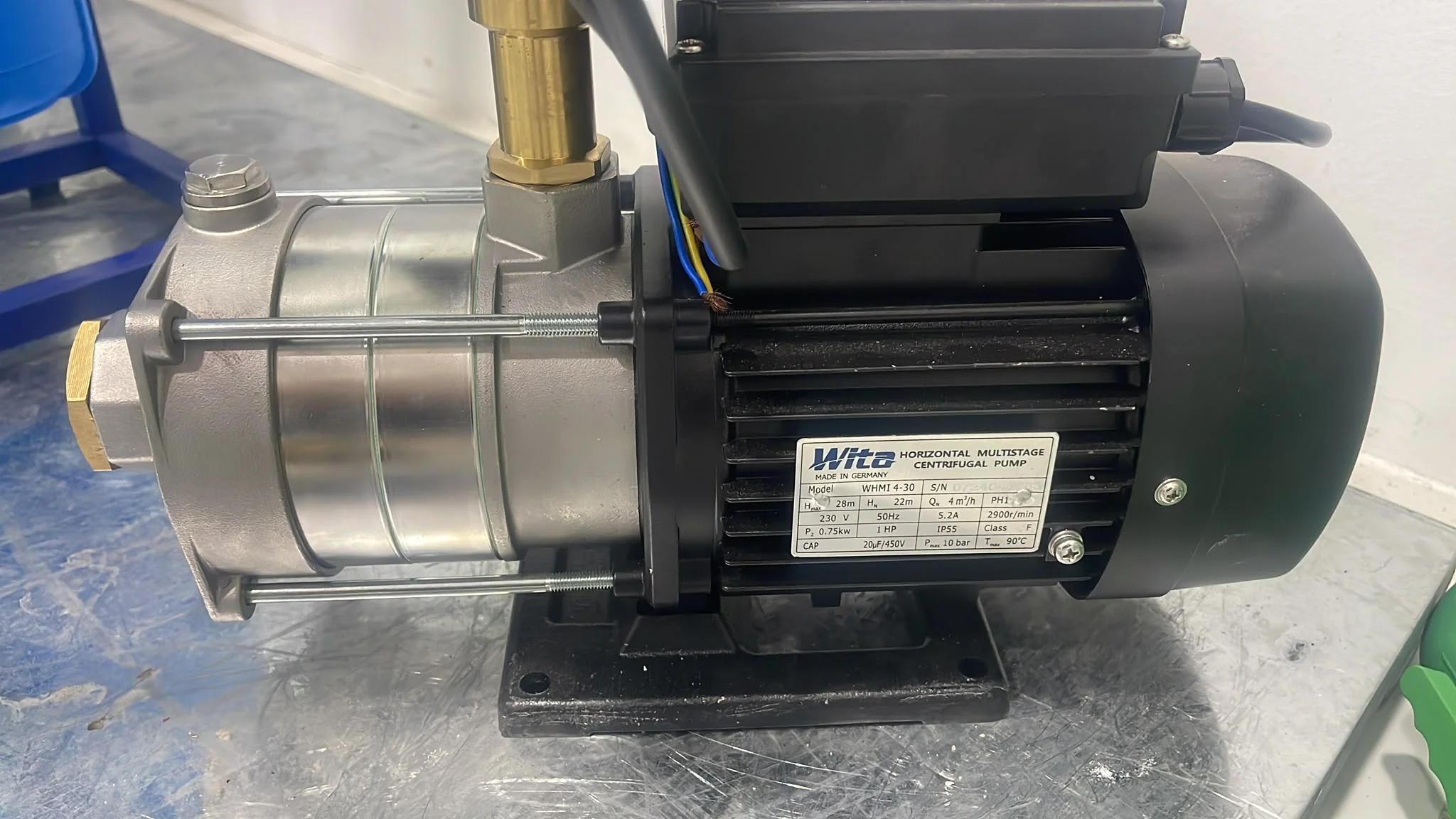
If water pressure keeps changing, the first step before calling it a fault is understanding what type of booster system you have. In traditional pumps controlled by a pressure switch or mechanical automatic control, pressure normally moves between the cut-in pressure and the cut-out pressure. In other words, the pump is not trying to maintain exactly one pressure value all the time. As water is used, system pressure falls until it reaches the cut-in point, the pump starts, and pressure then rises until it reaches the cut-out point and the pump stops. A limited change in pressure can therefore be normal in this type of system.
The problem begins when the difference becomes large, uncomfortable, or extremely rapid. For example, you open only one shower and every few seconds the water becomes strong and then weak again while you can hear the pump starting and stopping continuously. This is known as short cycling, and the pressure tank and pressure-control settings become some of the first things that should be checked.
In traditional booster systems, water is initially supplied from the diaphragm tank before the pump starts, while the cut-in and cut-out settings define the operating pressure range. Reducing the difference between those two pressure values can reduce the amount of pressure variation in some systems, provided that the settings remain within the operating limits of the pump, tank, and plumbing network.
However, if pressure fluctuates while the pump does not start and stop rapidly, the likelihood of a pressure-tank problem becomes lower. The cause may instead be changing inlet pressure, a partially blocked main filter, a valve that is not fully open, or a pump that cannot maintain the required flow when several fixtures are operating.
This is where the pressure gauge becomes more useful than judging the water by hand. The technician opens one outlet and observes:
When pressure begins to fall
At what pressure the pump starts
At what pressure the pump stops
How long each pump cycle lasts
Whether the pressure change occurs at exactly the same time as pump startup and shutdown
If every drop in shower pressure is followed by the pump starting and every strong surge is followed quickly by the pump stopping, that diagnostic path is different from a situation where pressure fluctuates while the motor continues running.
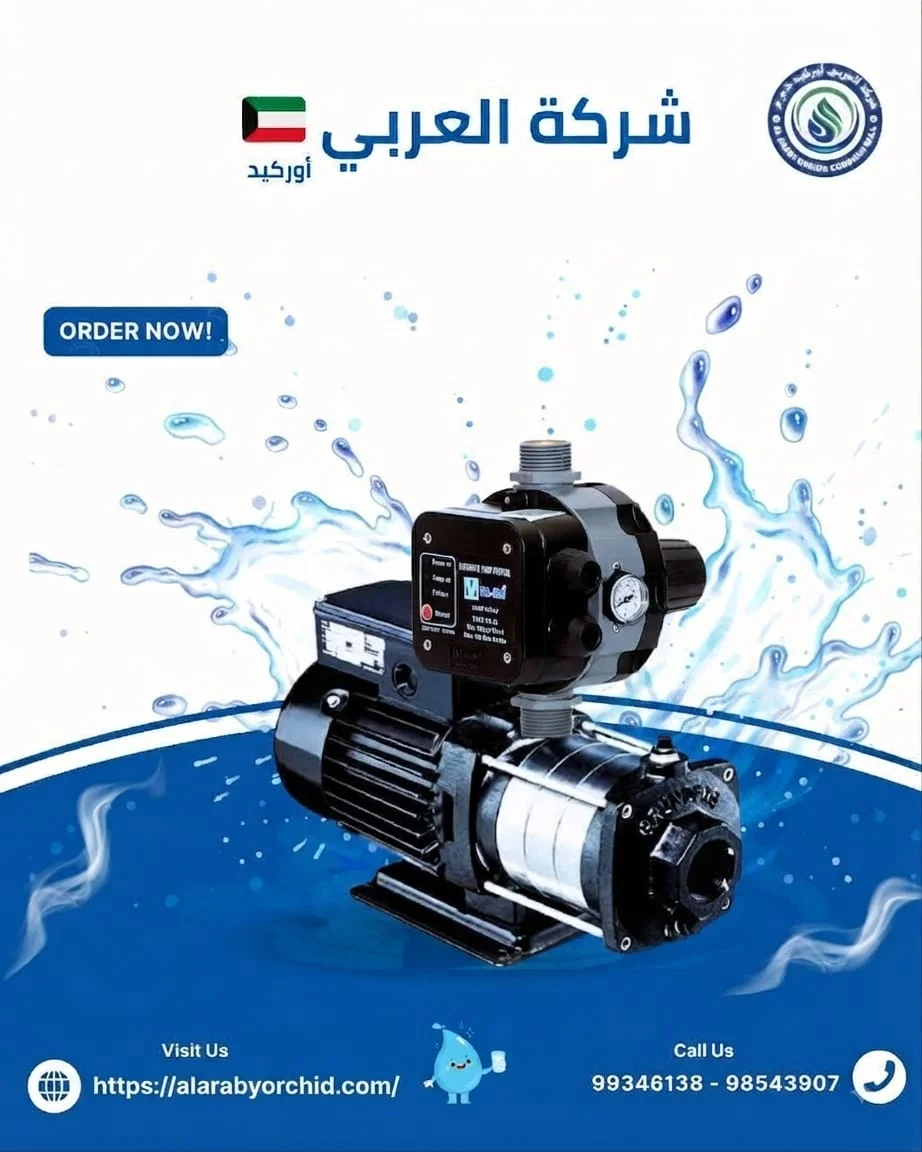
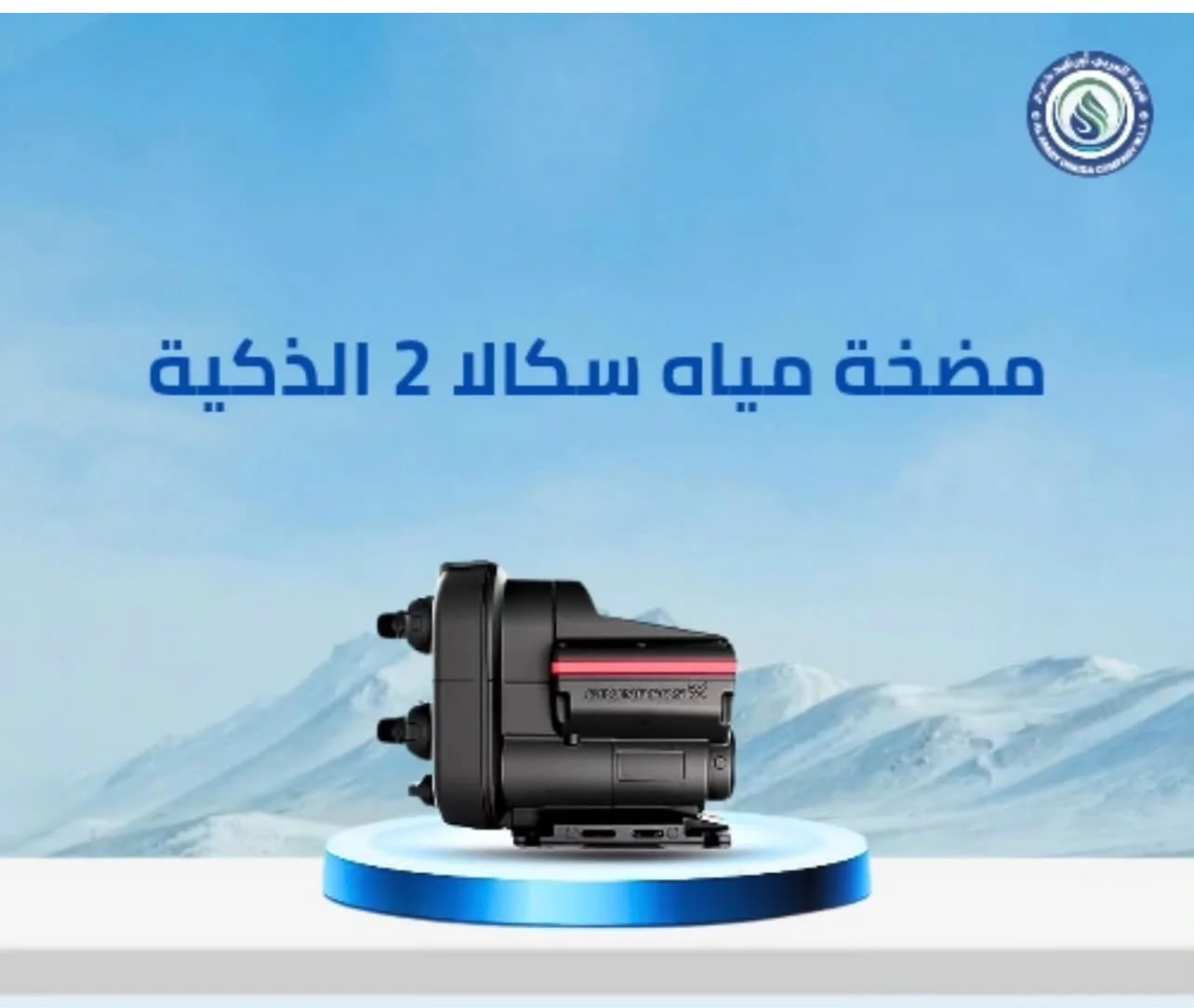
Al Arabi Orchid currently lists traditional Grundfos booster systems from half horsepower up to two horsepower with automatic controls and a 24-liter pressure tank, as well as smart pumps that operate automatically according to pressure demand.
-
Pressure naturally changes between cut-in and cut-out in some traditional systems but it should not become an uncomfortable strong-and-weak cycle every few seconds
-
If pressure fluctuation occurs directly with rapid pump startup and shutdown the pressure tank and control settings should be among the first things inspected
-
If the pump continues running while pressure changes inspect water flow inlet conditions filters and pump capacity before blaming the pressure tank
-
Pressure-gauge readings provide stronger diagnostic evidence than a description such as “the water keeps getting strong and weak”
-
Do not replace the pump or pressure tank before identifying the cut-in cut-out and actual operating behavior under demand
Fluctuating Water Pressure in the House
Fluctuating water pressure in the house can come from more components than just the pump and pressure tank, so proper diagnosis begins by finding out whether the problem affects the entire house or only one faucet or bathroom.
If all bathrooms and the kitchen experience the same pressure change at the same time, the inspection should focus on the main boosting system: the booster pump, pressure tank, automatic control, inlet-water pressure, and main filters. If only one shower is affected while the rest of the property remains stable, the first inspection should usually be the shower mixer, local filter, showerhead, or branch piping rather than the central pump equipment.
The second important point is when the problem occurs. If pressure fluctuates even with only one faucet open, pump cycling and pressure-tank condition deserve attention. If the problem appears only when a second shower starts or garden irrigation is turned on, the available pump capacity or system flow may be lower than peak demand rather than the pressure tank being damaged.
A blocked filter can also be misleading. A clean filter may allow enough flow for normal operation, while accumulated sediment increases pressure loss. With one outlet open, everything may still seem acceptable. Once several outlets operate, the required flow rises and the pressure loss across the filter or piping becomes much more noticeable. The customer experiences “fluctuating pressure,” but the motor itself may be completely healthy.
A check valve is another possible cause. If water flows backward after the pump stops because the check valve is not sealing properly, system pressure can drop even while every faucet is closed, causing the pump to restart by itself. If the pump starts when no water is being used, leakage and the check valve should be inspected before blaming the pressure tank.
In traditional pressure-switch systems, the pressure tank provides a usable drawdown volume between pump cycles and therefore reduces the number of motor starts. Correct precharge pressure should match the pump’s starting-pressure arrangement, and periodic checking helps maintain a reasonable number of start and stop cycles.
With smart variable-speed systems, the situation is different. The controller adjusts pump speed with demand in an attempt to keep pressure closer to a setpoint. Clear pressure fluctuation in a variable-speed system therefore requires a different diagnostic process involving the pressure sensor, settings, inlet pressure, pump capacity, and diaphragm tank if one is included in the system.
-
If fluctuation affects only one fixture do not begin with the booster pump because the fault may be local to that faucet mixer or branch line
-
If the problem appears only when several outlets operate inspect flow capacity pump sizing and network losses
-
If the pump starts by itself while all faucets are closed inspect network leakage and the check valve
-
A clogged filter can allow acceptable pressure at low demand but cause a major pressure drop when flow increases
-
You need to know whether the system is on-off or variable speed because fluctuating pressure has a different meaning in each design
Water Pressure Alternates Between Weak and Strong
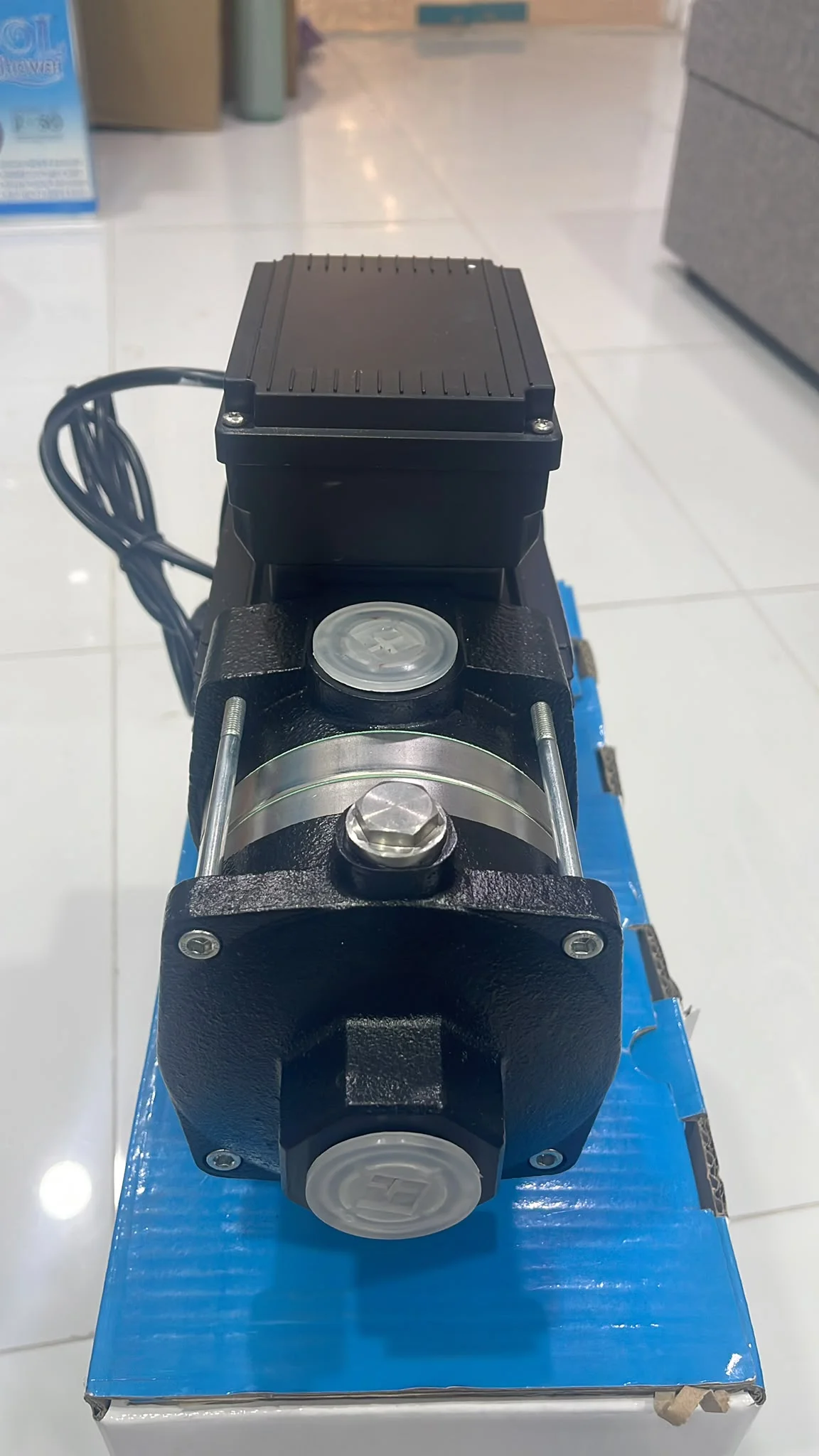
When water pressure alternates between weak and strong every few seconds, the diagnostic pattern is different from a system with consistently low pressure. If water begins strong, gradually weakens until you hear the pump start, becomes strong again, then the pump stops shortly afterward and the cycle repeats, the relationship between pressure-tank drawdown, precharge pressure, and pump cut-in pressure becomes especially important.
A pressure tank contains an air chamber that can be compressed, separated from the water by a diaphragm or bladder depending on tank design. When the pump fills the system, water enters the tank and compresses the air. When a faucet opens, the compressed air pushes some of that stored water back into the network before the pump needs to start. This reduces the number of motor starts.
If the tank can no longer provide adequate drawdown, pressure drops very quickly after a faucet is opened and the pump starts. It may then reach cut-out pressure quickly and stop, after which pressure drops again. To the homeowner, the water feels as though it is “pulsing.”
However, this does not always mean the bladder is torn. An incorrect precharge can produce similar symptoms. If the air pressure is too high in relation to the pump’s cut-in pressure, the user may experience a short pause or noticeable pressure drop before the pump starts. The correct relationship between precharge and system pressure depends on the exact tank and control design. Some traditional Grundfos systems use a precharge close to 90% of cut-in pressure, while variable-speed systems such as CMBE use a different relationship to the pressure setpoint. Therefore, one universal precharge number should never be applied to every pressure tank.
It is also important to distinguish between a normal pressure range and actual pressure pulsing. A traditional system may naturally move gradually between its cut-in and cut-out values. What is not normal is a motor completing dozens of very short cycles during one shower.
Sometimes the pressure tank is healthy but simply too small for the system. A smaller tank generally provides less drawdown, which can create more frequent pump cycles, especially under low but continuous water demand. Tank volume is therefore part of system design rather than just an accessory attached beside the pump.
The pump itself still needs to be considered. If the pump starts but cannot increase pressure quickly enough, the pattern is different. The motor may run for a long time while pressure struggles to reach the cut-out value or may never reach it. That situation directs diagnosis more strongly toward pump capacity, suction conditions, the impeller, or a restriction rather than toward the pressure tank.
-
Rapid cycling from weak to strong and back to weak together with pump starts every few seconds strongly suggests checking pressure-tank drawdown and precharge
-
Loss of air charge is not the same as a ruptured diaphragm so tank condition should be proven before replacement
-
The correct precharge depends on the control system and should come from the pump and tank specifications rather than one memorized value
-
A pump that runs for a long time without reaching cut-out pressure follows a different diagnostic path from short cycling
-
Pressure-tank size affects drawdown and motor cycling so a 24-liter tank is not automatically the correct size for every project
Is the Problem the Pump or the Pressure Tank?
When asking is the problem the pump or the pressure tank, the easiest approach is not guessing but comparing four operating conditions.
Condition 1: The pump starts and stops every few seconds during light water use.
The pressure tank, precharge, and pressure-switch settings should be checked first because the tank is supposed to extend the operating cycle and reduce the number of pump starts.
Condition 2: The pump runs continuously while pressure remains weak.
This is less typical of an isolated pressure-tank fault. Pump capacity, suction conditions, the impeller, filters, leakage, and whether the cut-out setting is higher than the pump can realistically achieve should be inspected.
Condition 3: The pump starts even though no faucet is open.
Look for a hidden leak, a leaking check valve, a faulty flushing valve, float valve, or any other path causing pressure loss. A pressure tank by itself does not consume water, so it should not make pressure keep falling indefinitely when the plumbing network is completely sealed.
Condition 4: The pump does not start even though pressure has fallen.
The diagnostic focus moves toward the electrical supply, pressure switch, controller, or pressure sensor before the pressure tank.
Then observe the pressure gauge. If pressure rises extremely quickly from cut-in to cut-out as soon as the pump starts and then collapses just as quickly when a small amount of water is used, the pressure tank becomes a strong suspect. If pressure rises very slowly while the motor sounds loaded or water flow is poor, the pump or water source deserves more attention.
Smart systems should not be diagnosed in exactly the same way. Variable-speed pumps adjust their speed according to demand in an attempt to maintain a pressure setpoint, so they do not always follow the same cut-in and cut-out pattern as a traditional pressure-switch system. Al Arabi Orchid currently advertises both Grundfos smart pumps and traditional booster systems using a 24-liter pressure tank.
The first diagnostic question should therefore be simple: what type of system do you have? If it is a conventional motor, pressure switch, and pressure tank, observe the cycling pattern. If it is a smart booster, inspect the setpoint, pressure sensor, fault codes, and inlet pressure.
-
Rapid starting and stopping points more strongly toward the pressure tank and control system before motor failure
-
Continuous motor operation with weak pressure directs inspection toward pump performance suction and flow rather than the pressure tank
-
Falling pressure while no water is being used requires inspection for leakage or reverse flow
-
A pump that does not respond at all when pressure drops directs diagnosis toward electrical and control components
-
Identify the system type before troubleshooting because a smart pump does not behave like a traditional pressure-switch booster
Pump Pressure Tank and Pressure Fluctuation
The relationship between the pump pressure tank and pressure fluctuation begins with the air charge inside the tank. Air is compressible, while water is effectively much less compressible in this application. When the pump pushes water into the tank, the air is compressed and stores energy that later helps push water back into the plumbing network after the pump stops.
When precharge is correctly matched to the system, the pressure tank provides useful drawdown and pump cycles become longer and more stable. When the air pressure is incorrect, symptoms can include short cycling, a brief drop in water delivery, or large noticeable pressure changes depending on the exact problem.
However, checking the pressure tank does not mean simply placing a pressure gauge on the air valve while the plumbing system is still pressurized and declaring the reading “fine.” Manufacturers emphasize that water pressure must be removed from the tank before precharge is measured. In variable-speed systems as well as traditional booster arrangements, diaphragm-tank precharge should be checked while the water side is pressureless.
There is also an important safety point. A pressure tank is a pressurized vessel. Homeowners should not randomly increase pressure while the tank is still connected and under operating pressure. Pressure-vessel instructions warn against repressurizing a corroded or structurally damaged tank because the vessel itself must be in safe physical condition before any adjustment is attempted.
It is equally incorrect to say “just add air.” If the internal diaphragm is damaged, adding air may not solve anything. If precharge keeps disappearing quickly after being adjusted correctly, the technician needs to identify why rather than repeatedly reinflating the tank.
Tank size also matters. Al Arabi Orchid currently lists a 24-liter pressure tank with some traditional Grundfos booster arrangements, but that does not mean 24 liters is automatically the best tank size for every villa or every pump cycle. Correct capacity depends on pump size, control method, and required drawdown.
-
Correct precharge is measured only after removing water pressure from the tank according to system instructions
-
Required air pressure differs between fixed-speed and variable-speed systems so one number should never be used for every pressure tank
-
If the tank quickly loses its air charge again after correct adjustment identify the cause rather than repeatedly adding air
-
A corroded or damaged pressure tank should not be randomly repressurized because it is a pressure vessel and requires professional inspection
-
A 24-liter tank is one option currently used by Al Arabi Orchid in some traditional systems but it is not a universal design size for every property
Water Pump With Unstable Pressure
When you have a water pump with unstable pressure, the pump itself should be proven incapable of stable performance before it is replaced.
First, inspect the water source. Even an excellent pump cannot deliver flow that is not available at the inlet. If the tank level is low, the suction line contains air, a valve is partially closed, or the filter before the pump is blocked, discharge pressure can become unstable.
Second, determine whether the pump is properly sized for the actual load. As with villa booster selection, pumps should be chosen according to flow and head. If the pump is too small for simultaneous demand, pressure may remain excellent with one faucet but fall as soon as a second shower starts. The pressure tank cannot compensate for continuous pump undersizing because it stores only a limited quantity of water.
Third, inspect the impeller and hydraulic condition of the pump. Wear or blockage can reduce performance. If the motor is running but the pump no longer achieves the head it previously delivered, the hydraulic components deserve inspection.
Fourth, check the controls. If the pressure-switch settings are unsuitable or its contacts are unstable, the motor may start and stop at incorrect pressure values. In traditional booster systems, cut-in pressure should be selected according to the minimum pressure required at the highest point together with elevation and pipe losses, while cut-out pressure must remain within the capabilities of the pump and tank.
Fifth, inspect any pressure-reducing valve installed after the pump. Al Arabi Orchid lists pressure-reducing components in some Grundfos pump installations. If the valve is sticking or incorrectly adjusted, pressure fluctuations downstream may make the homeowner believe the booster pump is faulty.
Sixth, distinguish traditional pumps from smart pumps. Variable-speed systems are specifically designed to adjust output according to demand, but if demand exceeds their maximum capacity, pressure will still fall no matter how sophisticated the control system is.
-
Before blaming the pump confirm that enough water reaches its inlet and that no filter or suction-line restriction is limiting flow
-
A pressure tank cannot correct pump undersizing because it cannot provide unlimited additional flow during peak demand
-
A cut-in setting above the pump’s realistic performance range can make the motor run for a long time without reaching the target
-
A sticking or incorrectly adjusted pressure-reducing valve can cause fluctuation downstream of an otherwise healthy pump
-
If pressure used to be stable and has recently changed inspect the impeller suction conditions and controls before immediately buying a larger pump
Diagnosing Unstable Water Pressure
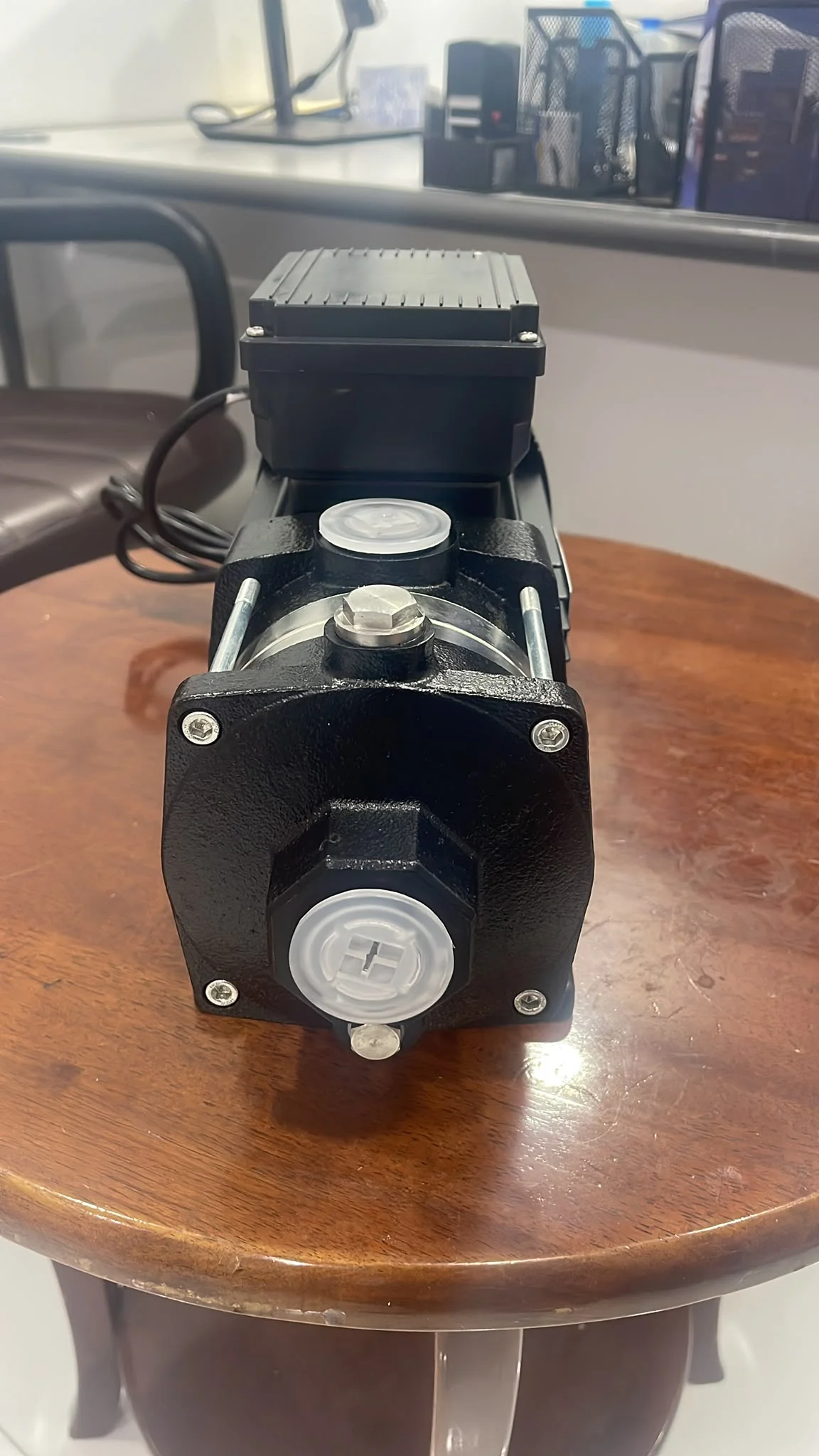
Diagnosing unstable water pressure is best done in an organized order because replacing the pressure tank and later discovering a clogged filter wastes the customer’s money.
Test 1: Open one water outlet and watch the pressure gauge.
Record cut-in pressure, cut-out pressure, and pump running time.
Test 2: Open several outlets.
Does pressure remain within an acceptable range, or does it collapse while the pump runs continuously? If it collapses only at higher demand, inspect pump capacity and available flow.
Test 3: Close every water outlet.
Does pressure remain stable? If it begins falling by itself, look for leakage or reverse flow through a check valve.
Test 4: Count pump starts.
Does the pump start and stop rapidly with only a small amount of water use? This brings pressure-tank condition, precharge, tank size, and pressure-switch settings into the diagnosis.
Test 5: Inspect filters and valves.
Pressure loss across a filter can rise significantly as flow demand increases.
Test 6: Check precharge correctly.
The pump is switched off, water pressure is released from the system, and the pressure tank is then measured according to the instructions for the specific model.
Test 7: Inspect control settings.
If someone previously increased cut-out pressure or changed cut-in pressure without readjusting the pressure tank, the system can become mismatched. Changing pressure-switch settings in systems that use diaphragm tanks may require the precharge to be adjusted accordingly.
This is where the difference between diagnosis and random part replacement becomes clear. A qualified technician may conclude:
The tank is healthy but precharge is incorrect
The pressure tank is not providing normal drawdown
The pump is undersized for demand
The filter is severely restricted
The check valve is allowing reverse flow
The pressure switch needs adjustment or replacement
There should be no need to replace half the system to reach that conclusion.
-
Pressure fluctuation diagnosis should begin with pressure-gauge readings instead of replacing any component
-
Testing one outlet and then several outlets helps separate cycling problems from pump-capacity and flow problems
-
Pressure stability after all water use stops is an important test for leakage and reverse flow
-
Changing pressure-switch settings without reviewing precharge can create a new problem even when the pressure tank itself is healthy
-
The best service result is a proven cause supported by before-and-after readings rather than simply saying “we replaced the tank”
Sudden Rise and Drop in Water Pressure
A sudden rise and drop in water pressure can appear in three different patterns, and each pattern points in a different diagnostic direction.
The first pattern is pressure gradually falling and then jumping upward when the pump starts. In an on-off system, part of this can be a normal operating cycle. However, if the jump is extremely large or repeats every few seconds, the cut-in and cut-out difference together with pressure-tank condition should be inspected.
The second pattern is normal pressure that drops immediately when a second outlet is opened. This is usually more closely related to flow. The pump, water source, piping, or filter may not be able to pass the required volume while maintaining the same pressure.
The third pattern is pressure rising and falling without any change in water demand. Here, unstable controls, a pressure switch, a sensor in a smart system, a valve, or varying inlet pressure become more likely.
Homes using a rooftop tank and booster pump must also consider gravity pressure together with pump pressure. If control is not properly designed, pressure differences between floors can become significant. This is not only a pressure-tank issue; plumbing design and pressure-reducing valves may also be part of the solution.
Air pockets can sometimes contribute to irregular pressure in certain branches, but “there is air” should not be used as a universal answer. The technician should verify whether air is actually coming from outlets and whether the problem began after the plumbing system was drained or serviced.
If the pressure tank is too small or has lost part of its effective drawdown, system pressure will fall more quickly between pump cycles. The basic function of a diaphragm pressure tank in traditional systems is to provide water before the pump starts and help regulate operating cycles.
If fluctuation appears suddenly after years of stable service, do not assume it is “normal system behavior.” A new change deserves inspection, especially when it appears with louder pump noise, more frequent starts and stops, or leakage.
-
A pressure jump that occurs exactly when the pump starts should be evaluated together with cut-in cut-out and pressure-tank condition
-
Pressure dropping only when water use increases points more strongly toward flow pump capacity and network restrictions
-
Pressure changing while demand remains unchanged directs attention toward controls sensors and inlet pressure
-
Pressure differences between villa floors may require network design or a pressure-reducing valve rather than only pressure-tank work
-
Fluctuation that appears after years of stable service is an important diagnostic clue and should not automatically be treated as normal
Checking the Pressure Tank When Pressure Changes
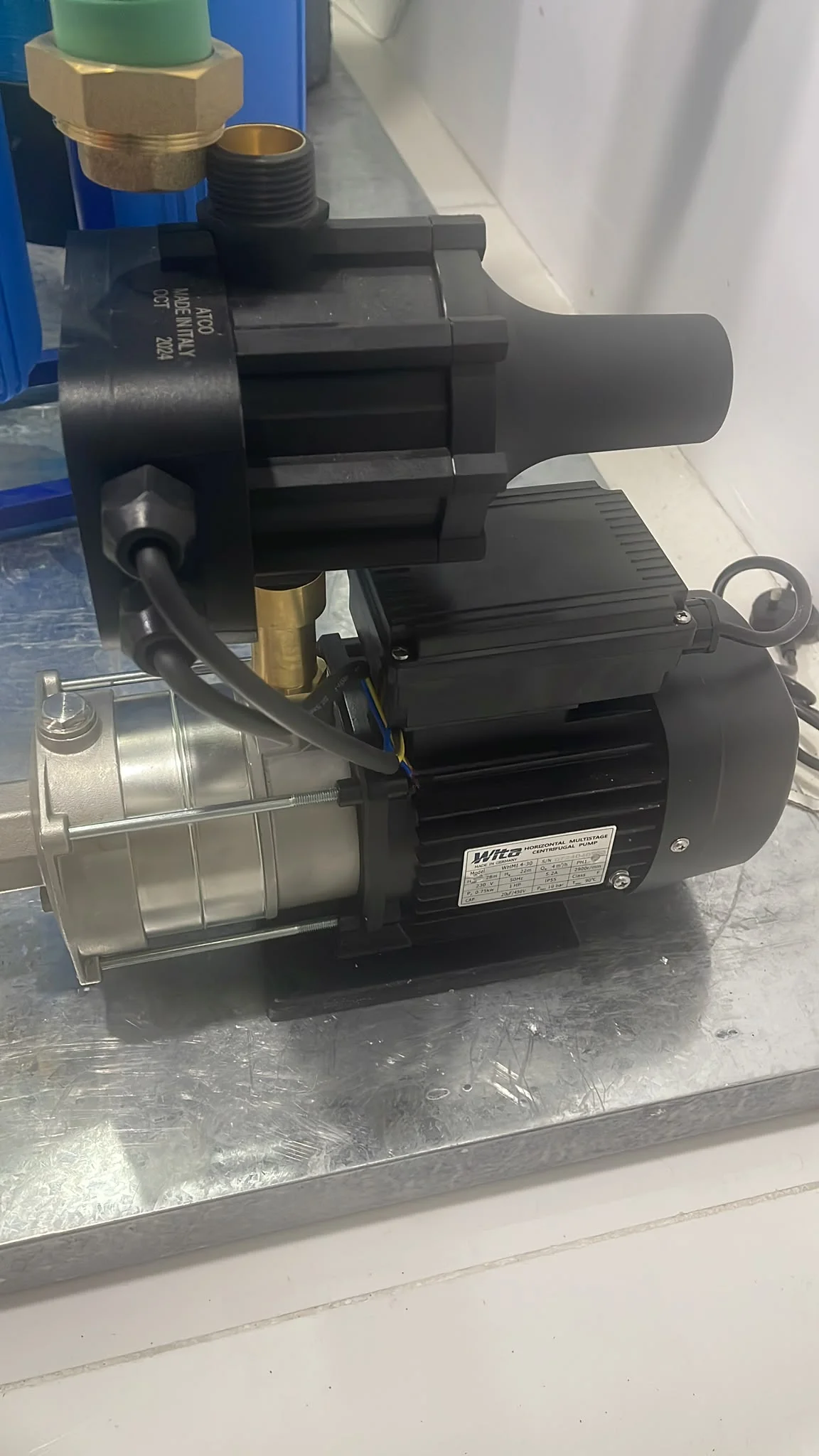
Checking the pressure tank when pressure changes should be done carefully because it is a pressurized vessel, not simply a water container.
The technician first disconnects electrical power to the pump, isolates the system as required, and opens a drain or water outlet until pressure on the water side of the tank reaches zero. Only then should precharge be measured through the air valve. Pressure-tank instructions consistently require checking air charge while the water side is not under pressure.
The reading is then compared with the correct specification for that specific system. A number taken from a video or another house should not be copied automatically. Traditional Grundfos CH/JP systems, for example, may use a precharge close to 90% of cut-in pressure, while a variable-speed CMBE system uses a different relationship to the setpoint. Even within the same manufacturer, different control designs require different pressure settings.
The technician then evaluates whether the tank can retain its air charge and whether it provides normal water drawdown. If precharge is corrected but disappears again quickly, or the tank still fails to provide normal drawdown, the diaphragm and tank condition should be inspected instead of repeatedly adding air.
Safety is essential. Pressure-tank instructions warn against adding or adjusting pressure in a damaged or visibly corroded tank because a compromised pressure vessel can be dangerous. The customer should not simply connect an air compressor and experiment without understanding the condition of the tank and the required pressure setting.
Tank size is also reviewed. If the system uses a 24-liter tank but pump capacity and usage pattern require longer operating cycles, a different system design may be more suitable. Not every pressure-tank problem is solved by adding more air.
Finally, performance should be tested again after service:
How long water is available before the pump starts
How long the motor runs
Whether pressure moves smoothly between operating points
Whether the uncomfortable fluctuation has disappeared
-
Disconnect electrical power and remove water pressure before checking precharge because a reading taken while the plumbing side is pressurized is not the correct precharge value
-
Compare the reading with the instructions for the exact tank and control system because fixed-speed and variable-speed systems use different settings
-
Do not add air to a corroded or damaged pressure tank before it has been evaluated by a qualified technician
-
If the pressure tank quickly loses its air charge again the solution is not reinflating it every week but finding the reason for the loss
-
A successful inspection is confirmed by improved pump cycling and more stable pressure after the system is returned to operation
Solving Fluctuating Water Pressure at Home
Solving fluctuating water pressure at home depends entirely on the cause. There is no single component that can be replaced to solve every case.
If the problem is incorrect precharge and the pressure tank is structurally healthy, the air charge should be adjusted according to the system specification after water pressure has been removed.
If the problem is a damaged diaphragm or pressure tank, the tank should be replaced with the correct size instead of repeatedly adding air without achieving a lasting result.
If the problem is the pressure switch, cut-in and cut-out values should be checked to ensure that they match household requirements and pump capability. After changing those settings, precharge should also be reviewed in systems where the two settings are directly related.
If the problem is an undersized pump, changing the pressure tank will not solve it. Required flow and head should be recalculated and a pump capable of meeting the actual demand should be selected.
If the problem is a blocked filter, the filter element should be cleaned or replaced rather than installing a larger motor to overcome pressure loss created by the blockage.
If the problem is a check valve or leakage, the pressure loss should be corrected so the pump does not start when no water is actually being used.
If the homeowner wants pressure that remains closer to constant instead of moving noticeably between cut-in and cut-out, a suitable variable-speed system may be worth comparing with the existing traditional arrangement. Al Arabi Orchid currently advertises both traditional Grundfos systems using a 24-liter pressure tank and smart Grundfos pumps that automatically adjust according to pressure demand.
However, a smart pump should not be installed simply because a traditional pressure tank needs a minor adjustment. Each solution has its own cost and application, and the decision should depend on household usage, required pressure, and the condition of the existing system.
Al Arabi Orchid’s current website does not publish one fixed separate price for replacing a 24-liter pressure tank or repairing every fluctuating-pressure problem, so it would be incorrect to invent one general price. The cost depends on whether the job requires only adjustment, a pressure switch, a new tank, pump work, or a plumbing-network repair.
-
If the pressure tank is healthy do not replace it simply because pressure fluctuates before checking precharge and control settings
-
If the pump is smaller than required peak flow the solution is proper sizing rather than simply installing a larger pressure tank
-
If pressure falls while every water outlet is closed repair leakage or the check valve before adjusting the pump
-
A variable-speed system is worth comparing when the goal is more stable pressure under changing demand but not every home needs a complete conversion
-
Contact 99346138 and request diagnosis of the pump pressure tank and controls together instead of replacing one component by assumption
Conclusion
When water pressure keeps changing, it is not correct to immediately decide that the pump is faulty or that “the pressure tank has lost its air.” The same symptom can come from several different causes, but the way the fluctuation happens provides important clues.
If the pump starts and stops every few seconds during light water use and pressure becomes strong and weak with every cycle, begin by checking the pressure tank, precharge, and pressure switch. The pressure tank is designed to store a usable volume of pressurized water between pump cycles and reduce the number of motor starts, so correct precharge is important for proper cycling.
If the motor continues running but pressure remains weak or drops when several bathrooms are used, inspect pump capacity, available flow, suction conditions, filters, and the impeller. A pressure tank cannot compensate for a pump that is undersized for the actual load.
If pressure falls even while every faucet is closed, look for a leak or faulty check valve before replacing the pressure tank.
If you have a smart booster or variable-speed pump, diagnosis differs from a traditional system because the pump changes speed around a pressure setpoint rather than relying on the same fixed cut-in and cut-out pattern. Even pressure-tank precharge can differ between fixed-speed and variable-speed systems, which is why the exact manufacturer specification matters.
Most importantly, pressure-tank precharge should be checked only when the tank is free of water-side pressure, and air should not be added randomly to a tank that is damaged or corroded because it is a pressurized vessel that needs to be handled safely.
Al Arabi Orchid currently advertises Grundfos booster pumps from half horsepower up to two horsepower together with automatic controls, a 24-liter pressure tank, pressure-reducing components in some systems, smart pumps, and pump installation and maintenance services throughout Kuwait.
If your water alternates between weak and strong, contact 99346138 and explain:
Whether the problem affects the whole house
Whether the pump starts and stops rapidly
Whether pressure falls while all faucets are closed
Whether fluctuation becomes worse when more than one outlet is opened
Whether the system is traditional or smart
With this information, the technician can begin with the pressure gauge, pressure tank, controls, pump, and plumbing network instead of replacing components without evidence.
Frequently Asked Questions
Does fluctuating water pressure mean the pressure tank is damaged?
Not necessarily. The pressure tank is only one possibility. The cause may also be the pressure-switch setting, pump capacity, a blocked filter, leakage, a faulty check valve, or changing inlet pressure. The pump’s operating pattern helps identify the most likely direction.
How do I know whether the pressure tank is the problem?
If the pump starts and stops very quickly while only a small amount of water is being used and pressure rises and falls with every cycle, precharge, tank size, and pressure-tank condition should be among the first things inspected.
Is it normal for water pressure to become strong and weak with a standard pump?
A limited change between cut-in and cut-out can be normal in traditional on-off booster systems. It becomes a problem when the difference is very noticeable or repeats every few seconds because of short cycling.
How is pressure-tank air pressure checked?
The pump is switched off, water pressure is removed from the tank, and precharge is then measured with a suitable gauge and compared with the system specification. The reading should be taken while there is no water pressure on the tank.
What should the pressure-tank air pressure be?
There is no single correct number for every system. The value depends on pump type, control method, cut-in pressure, or setpoint. Even different Grundfos systems use different relationships, so the exact model specification should be followed.
Is a 24-liter pressure tank suitable for every domestic pump?
No. Al Arabi Orchid currently lists a 24-liter tank with some traditional Grundfos booster systems, but correct tank size depends on pump capacity, control arrangement, cycling requirements, and the application.
Why does the pump keep starting and stopping rapidly?
Possible causes include incorrect pressure-tank precharge, an unsuitable pressure tank, incorrect pressure-switch settings, leakage, or another cycling-related problem. Pressure readings and operating cycles should be checked before deciding on the cause.
Why does pressure fall even when all faucets are closed?
This directs inspection toward leakage in the plumbing network, a check valve allowing water to flow backward, or another point causing pressure loss. In a properly sealed system, pressure should not continue falling without water use.
Does a smart pump prevent fluctuating water pressure?
Variable-speed pumps are designed to adjust performance according to demand and keep pressure closer to the setpoint than many traditional on-off systems, but they cannot overcome insufficient inlet water, demand beyond their maximum capacity, a faulty sensor, or plumbing-network problems.
How do I request a pump and pressure-tank inspection from Al Arabi Orchid?
Contact 99346138 and explain whether pressure fluctuates throughout the house, whether the pump starts and stops rapidly, whether pressure falls while no water is being used, and whether you have a traditional system with a pressure tank or a smart pump. Ask for inspection of cut-in, cut-out, precharge, pressure-tank condition, pump capacity, leakage, check valve, and filters before approving any replacement.