
When you hear the terms “central system” and “smart system,” it may sound as if the second is simply a newer and more expensive version of the first. In reality, the main difference is not appearance or branding. Both systems can include a central water heater, filtration, a pressure pump, and the home’s water network, while the key difference lies in how water pressure is managed. A traditional central system uses a pump and control components selected for the property, while a smart system uses a pump that can automatically adjust its performance as demand changes. That is why the choice should not be based on price alone. The number of floors, bathrooms, active outlets, required pressure, and how much household water demand changes throughout the day all need to be considered.
Central system or smart system

The comparison between a central system or smart system begins with understanding that both are designed to serve the home’s water network as an integrated system, but they manage water pressure differently. A traditional central system may include a central heater, pressure pump, water filter, pipework, and suitable control and protection components. A smart system is based on the same integrated concept but uses a smart pressure pump that can adjust its operation as water demand changes.
In a traditional system, the pump is selected for a certain pressure and flow range and operates through the control equipment designed for the installation. When a faucet opens, demand begins, and when it closes, the pump responds according to the control method being used. A correctly designed traditional system can deliver excellent performance and should not be considered outdated or weak simply because it is not described as smart.
In a smart system, the pump has greater ability to monitor pressure and adjust its performance as the number of open water outlets changes, depending on the specific model. For example, one person taking a shower creates a different demand from two showers and a kitchen faucet operating at the same time. A smart pump designed for this purpose adjusts its output rather than treating both conditions as the same load.
This is where the smart system becomes particularly useful in homes where water demand changes significantly or where several floors and many outlets may be used together. On the other hand, a home with limited and relatively stable consumption may be served extremely well by a properly selected traditional central system without paying more for advanced control features that provide little additional benefit.
It is also important to explain that the word “smart” in this context does not necessarily mean that the pump is connected to a mobile phone or home automation platform. The main meaning is that the pump can adjust its own operating performance according to pressure and water-demand requirements.
-
A traditional central system remains a strong and practical option when pump size pressure and flow are correctly calculated for the property
-
A smart system provides greater value when the number of active water outlets changes frequently and the household benefits from more stable pressure
-
Paying more for smart control makes sense when the pressure-management feature will actually be used rather than simply paying for the word smart
-
A smart pump does not replace the heater or filter but changes the way water pressure is managed within the complete system
-
The correct choice should consider household usage floors bathrooms and water source before comparing system names
Difference between the central and smart system
The difference between the central and smart system is mainly found in how the pressure pump operates and responds to changing water consumption. In a traditional system, the home uses a pressure pump calculated for the required flow and pressure together with the necessary control equipment. In a smart system, the pump can adjust its output more flexibly to maintain the required pressure as consumption changes according to its design.
Imagine that one person opens a small faucet. Five minutes later, another person turns on a shower while a third person uses another water outlet. The load on the network changes significantly within a short period. With a smart pump designed to maintain constant pressure, the controls can raise or reduce pump performance to match the changing demand instead of operating at the same output under every condition.
This difference becomes more noticeable in larger homes. If water demand stays low for much of the day but rises sharply in the morning and evening, a smart system can operate across a wider range of conditions. In a smaller home where one or two outlets are used in a fairly predictable way, the difference may be less significant.
Noise can also be part of the comparison. Some smart domestic pumps are designed for quieter operation and can adjust speed according to demand rather than running at maximum performance every time. However, actual noise still depends on the specific pump model, installation method, base, and pipework, so it would be inaccurate to claim that every smart pump is silent or every traditional system is noisy.
Energy use should also not be judged by the name alone. A pump that can reduce its output when demand is low may consume less electricity than a pump operating at a fixed level, but the real result depends on the model, operating hours, and system settings.
From a maintenance perspective, some traditional installations can be simpler, while smart pumps contain electronic controls and sensors that require appropriate diagnosis when a fault occurs.
-
The main difference is not that one system has a heater and the other does not but in the way the pump manages pressure as household consumption changes
-
Variable control becomes more useful when several outlets are opened and closed at different times and the network load changes frequently
-
Quiet operation depends on pump design and correct installation and should not be attributed to the word smart alone
-
Potential energy savings in a smart system are linked to reducing pump output during lower demand but actual results depend on operating conditions
-
Simplicity can be an advantage of a traditional system in some homes while flexible smart control can be more valuable in others
Central water system for the home

A central water system for the home is not simply a large heater with a pump placed next to it. A successful system connects the water source, filtration, pressure, heating, and distribution in a way that allows each component to operate within its appropriate limits.
In a traditional system, the pressure pump is selected according to required flow, elevation, and pressure losses through the network. The suitable control method is then added, and the design may include a pressure tank, pressure regulator, non-return valves, and isolation valves depending on the property requirements.
The central heater is responsible for heating water, not for creating proper pressure at every bathroom. The filter is responsible for the specific filtration function it was selected for, not for correcting poor pressure. Each component therefore needs to perform its own job instead of trying to solve one component’s problem by increasing the size of another.
For example, if the upper floor has weak pressure, the correct approach is to determine whether the pump is undersized, the pipework is restricted, the filter is heavily loaded, or there is a problem with the water source. Installing a larger heater will not solve that issue.
Likewise, if hot water takes too long to reach the farthest bathroom, this does not automatically indicate weak pressure. The reason may be the length of the hot-water line, and the solution may involve distribution design or a properly designed recirculation system rather than randomly increasing whole-house pressure.
One advantage of a traditional central system is that each component can be selected separately according to the actual requirement. This provides excellent flexibility in homes where demand is well understood and does not change dramatically.
However, success depends strongly on correct sizing from the beginning. An oversized pump can create unsuitable pressure, while an undersized pump can cause noticeable drops when several outlets are used together.
-
A central system combines several functions but each component remains responsible for a specific task such as pressure heating or filtration
-
Pump selection should be based on flow elevation and real pressure loss rather than horsepower alone
-
Weak upper-floor pressure requires diagnosis of the complete network before deciding that a larger pump is necessary
-
Slow hot-water delivery to distant bathrooms is different from weak water pressure and each problem requires its own diagnosis
-
A properly selected traditional system can serve a home extremely well without converting every component into a smart version
Smart water system in Kuwait
A smart water system in Kuwait is particularly suitable for homes where water demand changes constantly and where maintaining more stable pressure during simultaneous use is important. The part that usually gives the system its smart character is the pressure pump and the way it controls its operation.
A smart pump measures or monitors pressure conditions according to its design and adjusts output to reach the required pressure. If demand is low, there is no need for the pump to operate at the same level required when several outlets are open.
This type of control can be especially useful in multi-floor villas because usage may change from one washbasin to two bathrooms and a kitchen within minutes. Instead of the user experiencing a large pressure change every time another person opens a faucet, a correctly designed smart system attempts to maintain the required performance.
However, the word smart does not mean the pump can be installed in any home without proper calculation. The water source, building height, required flow, incoming pressure, and installation location all still need to be understood. Even an advanced smart pump can deliver poor performance if it is used outside its operating range or set to an unsuitable pressure.
Another mistake is increasing the pressure setting beyond what the home actually needs simply because the control panel allows it. The goal is not to reach the highest possible pressure but to provide comfortable performance without placing unnecessary stress on pipework, valves, filters, and the heater.
Maintenance also varies by model. Smart systems contain control electronics and sensors and may include built-in protection depending on the pump type. When a problem appears, the system should be diagnosed according to its actual status rather than having parts replaced at random.
A smart water system is therefore not simply a technology feature. Its value appears when flexible pressure control genuinely improves the way the home operates.
-
A smart system is particularly useful in homes where demand changes between one outlet and several outlets throughout the day
-
Pressure should be set according to actual household requirements rather than selecting the highest value available on the pump
-
Water source building height and required flow remain fundamental even when the pump has smart control
-
Sensors and electronic control do not compensate for incorrect sizing or poor connections so proper assessment remains essential
-
The real value of the smart system is more flexible pressure management rather than adding electronics with no clear practical benefit
Choosing a water system for a villa

Choosing a water system for a villa should begin by building a clear picture of how the property uses water rather than starting with the question: central or smart? First, determine where the water comes from, whether there is a ground or roof tank, how many floors the villa has, and how many bathrooms may be used at the same time.
A three-floor villa with many bathrooms normally has more elevation and pressure loss than a single-floor home, but even here the pump should not be selected according to floor count alone because pipe diameter, pipe length, and required flow also matter.
Next, look at the demand pattern. If the household is large and water use changes significantly as different family members open and close outlets, a smart system may provide greater comfort.
If the villa has fewer residents and water use remains relatively stable, a correctly designed traditional system may deliver excellent pressure at a lower level of complexity and cost.
The central heater should also be evaluated separately. Heater capacity is selected according to hot-water demand, not according to whether the pressure pump is traditional or smart. A smart pump cannot make an undersized heater produce more hot water than its storage and heating capability allow.
The filter also needs to support the required flow. Installing an undersized filter on a large villa line can create pressure loss and lead the homeowner to think the pump is weak when the real problem is a restriction in the network.
A proper assessment therefore treats the water system as one chain rather than purchasing individual components without understanding how they affect each other.
-
Villa system selection begins with the water source floor count and simultaneous demand rather than pump name or purchase price
-
Villas with large changes in consumption benefit more from flexible pressure control when the system has been calculated correctly
-
A villa with relatively stable demand can achieve excellent performance from a traditional system without paying for unnecessary features
-
Heater capacity is based on hot-water demand and does not automatically change because the pressure pump is smart
-
Filter size and pipework must support the required flow so a network restriction is not mistakenly blamed on the pump
Smart pump with a central heater
Installing a smart pump with a central heater requires coordination between the water pressure required by the network and the operating limits of the heater and other components. The idea is not to install a powerful pump before the heater, raise pressure to the highest setting, and assume that performance will automatically improve.
The main function of the smart pump is to increase and manage water pressure according to demand. The heater is responsible for storing and heating water. When both are selected correctly, the household receives comfortable pressure together with a suitable quantity of hot water.
However, a smart pump does not increase the amount of hot water stored in the heater. If the heater is undersized for family consumption, hot water will still run out even when pressure is excellent. In fact, stronger shower flow can sometimes increase the rate at which stored hot water is consumed.
A smart pump also does not automatically solve delayed hot-water delivery to distant outlets. If the reason is a long hot-water pipe where water cools between uses, the distribution network may require a different solution and possibly a properly designed recirculation system.
The balance between cold and hot-water lines matters as well. Increasing pressure in one part of the system without understanding the complete distribution can create uncomfortable changes at mixers and fixtures.
The pressure setting should always remain within the operating limits of the heater, filter, hoses, valves, and other network components. Comfortable performance does not require excessive pressure.
When household demand changes significantly during the day, combining a smart pump with a correctly sized heater can create a very comfortable system because pressure adapts to demand while the heater supplies the required thermal capacity.
-
The smart pump manages water pressure while the central heater manages heating and storage and neither component performs the other’s function
-
Higher shower pressure can increase water consumption so heater capacity still needs to match actual household use
-
Delayed hot-water delivery caused by long pipe runs should be evaluated through the distribution or recirculation system rather than simply increasing pump pressure
-
Pressure settings should remain within the limits of the heater filter fittings and complete plumbing system
-
The best result comes when the pump and heater are designed as parts of one system while each is still selected according to its own function
Components of the central system
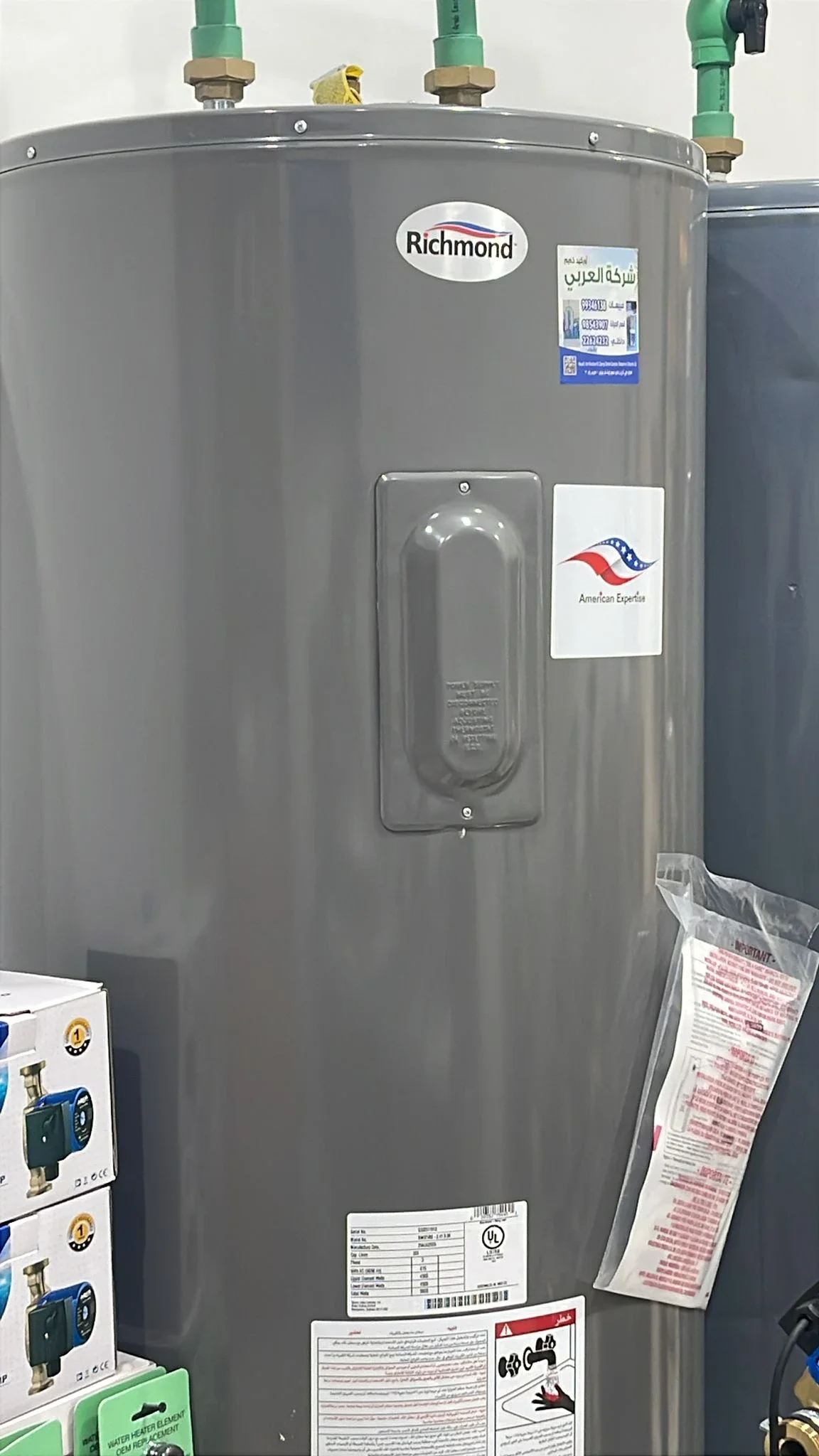
The components of the central system can vary from one property to another, but a complete Al Arabi Orchid configuration is based on a core group that can include a central heater, pressure pump, water filter, suitable pipework, support base, and components that control water direction and help regulate the network.
The heater is selected according to required hot-water quantity. The pump is selected according to pressure, flow, and elevation. The filter type and size are selected according to water quality and required flow.
In a traditional pumping system, additional equipment may include a pressure tank, automatic control device, pressure reducer, and other components depending on pump design and network conditions. These parts are not decorative; each one serves a specific operating function.
A pressure regulator, for example, can be used when the system needs pressure controlled within an appropriate level. Non-return valves prevent water from flowing backward where the system design requires them.
Isolation valves are also important because properly located shutoff points allow the filter, heater, or pump to be serviced without unnecessarily shutting down the entire household network.
The support base and mechanical installation also affect system stability and can reduce unwanted vibration transfer depending on the location.
The pipe network itself is another major component. Installing an excellent pump on pipework with severe restrictions or unsuitable diameters and then judging only the pump would not be fair.
This is why the word system means that the components are selected to work together rather than simply collecting several good products in one location.
-
The heater pump and filter are each selected using different criteria but all need to remain compatible within the same water network
-
A pressure tank control device or pressure regulator is included according to pump type and system design rather than simply to increase the number of components
-
Non-return valves and isolation valves help control water direction and allow system components to be isolated during maintenance when needed
-
The support base and installation method affect equipment stability and future service access
-
Pipe dimensions and network layout are fundamental to system performance because even high-quality equipment cannot ignore a major restriction in the plumbing
Advantages of a smart system for the home
The advantages of a smart system for the home first appear in the comfort created by the pump responding to changing demand. When one person opens a faucet and another turns on a shower, the system load changes, and a smart pump designed to maintain pressure adjusts its performance accordingly.
The second advantage is that operation can follow actual demand instead of relying constantly on one level of output. This can benefit energy use in pumps with variable control because lower demand does not require the same operating level as peak periods.
The third advantage can be quieter operation in some smart residential pumps because their design and ability to vary speed are suited to home environments. However, poor installation can still transfer vibration and noise even when the pump itself is excellent.
The fourth advantage is that some models include built-in protection or monitoring functions for conditions such as insufficient water supply or abnormal operation. These features vary from model to model and should not be assumed for every pump described as smart.
The fifth advantage is easier pressure adjustment within the operating range of the system instead of relying only on mechanical changes when household demand changes.
These advantages do come with trade-offs. Purchase cost is usually higher than a basic traditional solution, and electronic controls may require a technician who understands the system if a fault appears.
If the property is small and consumption is very stable, the household may not benefit enough from all these features to justify the additional cost.
A smart system is therefore successful when its features solve real household requirements rather than when it is purchased simply because it is the newest option.
-
More stable pressure as the number of active outlets changes is one of the main advantages of smart pump control in homes with varied water use
-
Adjusting performance according to demand can reduce unnecessary operation in some pumps compared with running at one fixed output
-
Quiet operation depends on both pump design and correct installation so professional mounting remains part of the benefit
-
Protection features differ by model and should be confirmed from the pump specifications rather than assumed for every smart system
-
The real value of the system appears when the home genuinely needs flexible pressure control enough to justify the additional technology and cost
Integrated water pressure and heating system
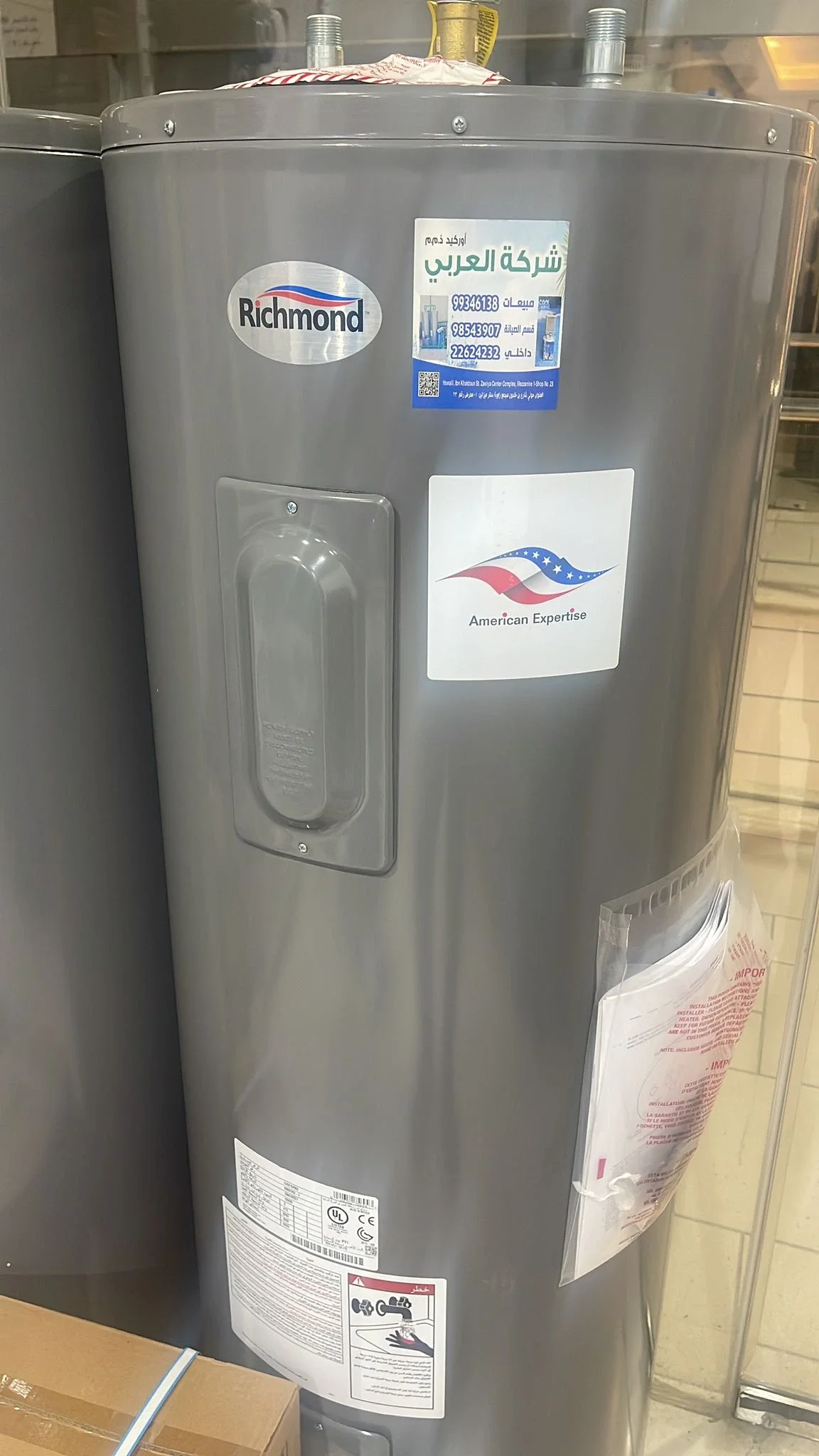
An integrated water pressure and heating system works best when it is designed from the water source all the way to the final faucet rather than purchasing a pump, heater, and filter independently. The system should account for how much water enters, how much flow is required, how much heating is needed, and how pressure is distributed.
The process starts with the water source and storage tank if present. The filtration requirement and filter location are then determined according to filter type and flow limitations, followed by pressure-pump sizing based on the network.
Heater capacity is then calculated according to hot-water demand rather than pump size. If a villa has four bathrooms and two are commonly used together, heater capacity should reflect the actual thermal demand.
The selected pressure should remain suitable for all other components. Raising it higher than necessary does not create better quality but may increase stress on fittings, valves, and the heater.
Distribution is also important. If hot and cold lines are poorly balanced, mixer performance can change when additional outlets are opened even if the pump itself is working perfectly.
In larger homes, the need for a hot-water return loop should be assessed separately. The main pressure pump handles distribution pressure, while a recirculation pump serves a different purpose by moving hot water through a dedicated loop.
During installation, isolation valves and service points should be provided so individual components can be serviced without unnecessarily shutting down the entire system whenever possible.
That is where the meaning of integrated becomes important: not the biggest equipment but compatible equipment where each part performs the function it was designed for.
-
System design begins at the water source and continues through every outlet so equipment is not selected from separate pieces of information
-
The filter needs enough flow capacity because an undersized filter can create pressure loss even inside a powerful system
-
The heater is sized for hot-water demand while the pump is sized for pressure and flow and these calculations are related but not identical
-
A recirculation network performs a different function from the pressure pump so slow hot-water arrival should not be treated by randomly increasing house pressure
-
An integrated system includes practical isolation and service points so one small maintenance job does not necessarily shut down the entire home
Which water system is better for the home?
The question which water system is better for the home does not have one universal answer because the best choice depends on property layout, usage pattern, budget, and the level of comfort required. If demand is relatively stable and a traditional system can provide the required pressure and heating without difficulty, a conventional central system may offer the best value.
If the home is large, demand changes constantly, several bathrooms or outlets are used together, and pressure changes are noticeable, then a smart system deserves stronger consideration.
If your priority is simpler components, easier maintenance, and lower initial cost, the decision may favor a traditional system depending on the design and pump selected.
If your priority is more stable pressure during changing consumption, quieter operation, and more flexible control, a smart pump may provide enough benefit to justify the additional cost.
However, a smart system should not be chosen to solve a problem unrelated to the pump. If the heater is too small, smart pressure control will not increase hot-water storage. If the filter is blocked, installing a stronger pump does not solve the filtration restriction. If hot water takes too long to arrive because of long pipe runs, the distribution or recirculation system needs separate evaluation.
Cost should also be assessed beyond the first installation invoice. Purchase price, maintenance, operating comfort, expected energy use, and future availability of service and spare parts should all be compared.
Before choosing, the current pressure, number of outlets, water source, and household usage pattern should be inspected. The comparison then changes from “which system is newer?” to “which system solves my actual need with the least unnecessary complexity?”
That is the standard that keeps the decision sensible years after installation rather than only on the day the equipment is installed.
-
A home with limited and stable water demand may receive the best value from a correctly calculated traditional central system
-
Multi-floor homes with highly variable water use may benefit more from a smart pump that adjusts pressure as demand changes
-
A smart system does not automatically solve insufficient heater capacity a blocked filter or delayed hot water caused by long pipework
-
Cost should be evaluated through purchase operation maintenance and expected comfort rather than comparing the installation invoice alone
-
The best system is the least complicated option capable of delivering the required pressure heating and filtration reliably for that specific home
Conclusion
The difference between a central system and a smart system in Kuwait is not that one is ordinary and the other is extraordinary. Both can provide an excellent household water system when selected according to the actual needs of the property. The main difference is how water pressure is managed. A traditional system relies on a correctly selected pump and control components, while a smart system uses a pump capable of adjusting performance as water demand changes.
If your household has limited and relatively stable water use, a traditional central system may provide the best value without unnecessary complexity. If you have a multi-floor villa with several bathrooms and major changes in water demand throughout the day, you may benefit more from smart pressure control and more consistent performance.
And remember that even the smartest pump cannot correct an undersized heater, a restricted filter, or badly designed pipework. The word “system” means all components need to work together. If every part is operating independently with no coordination, you do not really have a smart system or a central system; you simply have a meeting of equipment where every component speaks a different language.
Frequently Asked Questions
What is the main difference between a central system and a smart system?
The main difference is how the pressure pump is controlled. A smart system uses a pump that adjusts its performance according to demand, while a traditional system uses a pressure and control arrangement designed in a simpler way.
Does a smart system include a heater and filter?
In Al Arabi Orchid’s integrated concept, the smart system is built on the same overall central-water-system idea while using a smart pump to manage pressure according to demand.
Does a smart system provide more hot water?
Not automatically. Hot-water quantity depends on heater capacity and heating performance, while the smart pump mainly manages water pressure.
Which system is better for a multi-floor villa?
It depends on required flow, elevation, and how many outlets operate together, but villas with highly variable demand may benefit more from a properly selected smart pump.
Does a traditional central system provide weak pressure?
No. When the pump and network are calculated and installed correctly, a traditional system can provide strong and stable pressure for normal household use.
Can a smart system save electricity?
Some variable-control smart pumps can reduce output during lower demand and may use less energy than a fixed-output arrangement, but the actual result depends on the pump model and operating pattern.
Does a smart pump make hot water arrive faster?
Not necessarily. Delayed hot-water arrival caused by long pipe runs or the absence of a recirculation loop requires a different solution from increasing water pressure.
Does a smart system require more maintenance?
It depends on the pump model because electronic controls and sensors add technical components while some traditional systems can be mechanically simpler.
What should I inspect before choosing a system?
Check the water source, current pressure, number of floors, simultaneous-use outlets, heater capacity, filter size, pipework, and available equipment space.
Which system provides the best value for money?
The system that solves the household’s real requirements without unnecessary components or unused capability provides the best value whether it is a traditional central system or one using a smart pump.