When choosing a central water heater for a villa and comparing 50, 65, 80, and 120-gallon options, do not treat those numbers like rankings where the larger number is automatically the better choice. The right capacity depends on the number of residents, how many bathrooms are actually used, how many may operate at the same time, the household’s hot-water habits, and how quickly the heater can recover after water is drawn. A large villa may work comfortably with a medium-sized heater when demand is spread throughout the day, while a smaller home may need more capacity because most hot-water use happens during one busy morning period. The better comparison starts with peak-hour demand and then identifies which capacity provides enough comfort without unnecessarily increasing storage, equipment size, and cost.
Central heater for villas in Kuwait
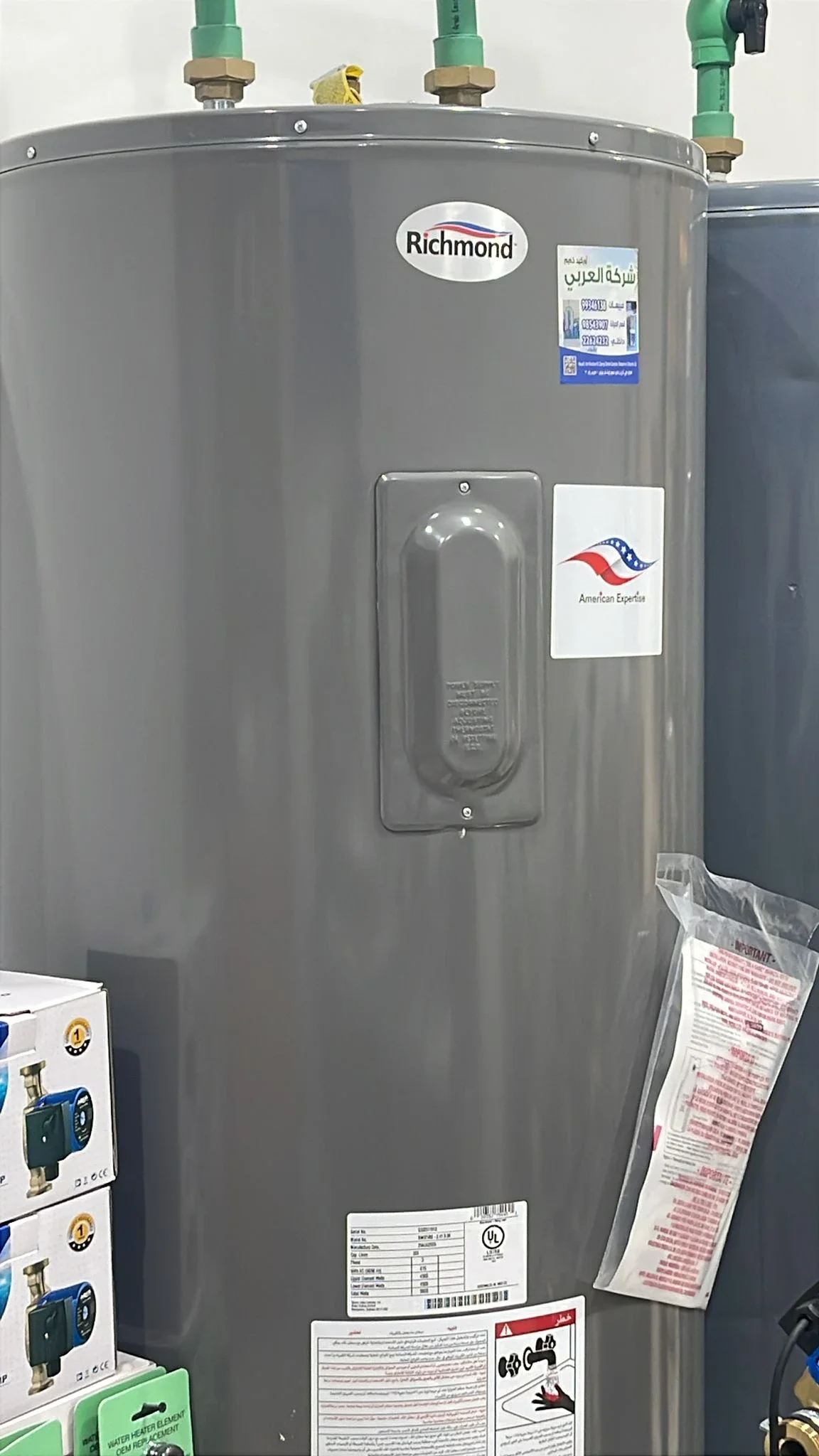
Choosing a central heater for villas in Kuwait is different from selecting a water heater for an apartment because villas usually have more bathrooms, more hot-water outlets, longer distances between the heater and the farthest fixture, and sometimes several floors. However, that does not mean every villa should automatically receive the largest available heater.
The first thing to determine is the actual number of residents, not the number of bedrooms. A six-bedroom villa occupied by three people has completely different hot-water demand from a four-bedroom villa occupied by a large family where several people use bathrooms during the same morning period.
Next, calculate how many showers may realistically operate at the same time. Having five bathrooms on the property plan does not mean all five are used simultaneously. If only two showers normally operate together, the real peak demand can be much lower than the total bathroom count suggests.
Kitchen hot-water use should also be included when it overlaps with the busiest shower period. Any other regular hot-water use during the same hour should be included instead of calculating shower demand alone.
The heater’s recovery ability then becomes important. An 80-gallon tank does not necessarily provide the same practical experience as every other 80-gallon heater if heating power and first-hour performance are different. Storage volume matters, but it represents only one part of the complete system.
Installation location also matters in villas. A 120-gallon heater, for example, requires more space, greater structural consideration, and a different handling plan from a smaller unit, so the decision cannot be based on water volume alone.
If the villa has a hot-water recirculation loop, that also needs to be considered because heat loss and recirculation operation affect the complete system.
-
Villa heater selection should begin with the actual number of users and their usage pattern rather than bedroom count or building size alone
-
The number of bathrooms installed is less important than the number likely to use hot water at the same time during peak periods
-
Heater performance during continuous use matters alongside tank capacity because stored gallons alone do not explain the complete hot-water supply
-
Long distribution lines or a recirculation system should be evaluated because heat loss is not automatically solved by selecting a larger tank
-
Larger-capacity heaters require suitable installation space and support so the location should be checked before the equipment is purchased
50 or 65 gallons for the heater
The choice between 50 or 65 gallons for the heater cannot be reduced to a simple rule saying the smaller size is for a small family and the larger one is for a bigger family. The real difference appears when household demand is close to the practical limit of the 50-gallon option and you need to decide whether the additional storage margin of 65 gallons is genuinely useful.
A 50-gallon heater may be worth considering for a home or part of a villa where simultaneous hot-water use is limited and the number of residents and shower habits match the actual performance of the heater. However, it would be misleading to assign it to one fixed number of people because usage habits vary greatly.
Consider a practical example. A household with several residents who leave home at different times and rarely use two bathrooms together may create less peak demand than a smaller household where everyone showers within the same half hour.
A 65-gallon heater provides additional stored hot water compared with a 50-gallon tank, but it is not automatically the correct choice simply because it is larger. If the real problem with the previous heater was slow recovery after heavy use, heating performance should also be compared rather than looking only at tank volume.
Physical dimensions and installation space should also be reviewed because moving to a larger capacity may change the height or diameter depending on the model. If the utility area is limited, measurements should be checked before purchase.
It is also important to understand why the household is considering moving from 50 to 65 gallons. Does the 50-gallon heater actually fail to meet demand? Does hot water regularly run out? Or is the real issue a weak heating element, sediment, or a recirculation problem? Capacity should not be increased until the shortage is confirmed.
If current demand is very close to the practical capability of the 50-gallon system and the household is expected to grow, a larger margin may be sensible. If the existing capacity already provides more hot water than the household normally uses, there may be little practical benefit in increasing it.
-
The difference between 50 and 65 gallons should be judged according to the actual hot-water shortage during peak periods rather than assuming that larger automatically means more comfortable
-
If the current heater does not keep up it is important to confirm whether the problem is truly storage capacity rather than a heating or operating fault before moving to a larger tank
-
More gallons provide a larger storage margin but do not eliminate the importance of heater recovery after hot water is used
-
Physical dimensions vary between models so the larger capacity still needs to fit the available installation space and future service requirements
-
A household operating near the limit of the smaller heater requires more careful calculation than one where the available capacity is clearly above or below actual demand
80 or 120 gallons for the villa

The comparison between 80 or 120 gallons for the villa should be based on real usage because the difference between these two capacities is significant. Choosing 120 gallons simply because the property is called a villa can result in unnecessary oversizing.
An 80-gallon heater can be a strong option where hot-water demand is relatively high but still controlled in terms of simultaneous use, household size, and heater performance. A 120-gallon heater becomes more relevant when demand is larger and sustained or when several hot-water outlets are used together regularly, provided that the system and property genuinely justify the larger capacity.
Consider a villa with four bathrooms where the family normally uses no more than two at the same time. That situation is completely different from another home with the same number of bathrooms but a larger family, frequent guests, and several hot-water uses happening during the same hour.
Moving to 120 gallons changes more than water storage. The heater is larger and requires a suitable location, appropriate support, and proper consideration of the filled weight.
Heating capability must also be reviewed. A larger tank needs enough heating power to recover in a way that suits the household pattern. Otherwise, the home may enjoy a large initial supply but experience a long wait after heavy use.
If the system has continuous hot-water recirculation operating inefficiently, additional heat loss may occur. The correct response is not necessarily to jump from 80 to 120 gallons because the underlying issue may be the way the distribution system is operating.
A 120-gallon heater makes sense when peak demand justifies it, not simply because the customer wants to choose the largest option and stop thinking about capacity.
-
Moving from 80 to 120 gallons is a major increase and should be justified by consistently high hot-water demand rather than villa size or bedroom count
-
Simultaneous bathroom use frequent guests and large-household routines provide a more accurate picture than the total number of bathrooms installed
-
The larger tank requires sufficient installation space and suitable support for the filled operating weight
-
Recovery capability becomes particularly important with larger capacities so the household does not rely only on a large initial supply followed by long waiting periods
-
Heat loss or poorly controlled recirculation should be corrected at the source rather than automatically compensated for with a larger tank
Best heater size for a villa
The best heater size for a villa is not one fixed number that can be applied to every property. The best size is the one that covers the highest realistic hot-water demand with an appropriate margin while remaining reasonable in terms of installation space, operation, and cost.
Start by identifying the peak hour. It may be from six to seven in the morning when everyone is getting ready or in the evening when family members return home. Record what happens during that period: one shower, two showers, three showers, and whether the kitchen is also using hot water.
Then review the previous heater if there was one. If a 65-gallon heater served the property comfortably for years and the latest problem was simply a mechanical fault, there is no obvious reason to jump to 120 gallons. If hot water ran out every day even while the old heater was operating correctly, that information is extremely useful.
Expected household growth should also be considered if it is close and predictable, but capacity should not be dramatically increased because of a remote possibility.
Comfort expectations differ between families. Some households are happy to use bathrooms one after another, while others genuinely need several showers to operate simultaneously. That difference should be reflected in the selection.
Available capacities should then be compared using the specifications of each model, not tank size alone. Heating power, first-hour performance, and insulation all help create a more complete picture.
Installation space also creates a practical limit. If the largest heater blocks access for maintenance or requires major site modification, it is worth asking whether that extra capacity is truly necessary.
The best choice is therefore not a heater so large that hot water could never run out under any imaginary scenario. It is the heater that handles normal use and realistic peak demand comfortably.
-
The best capacity is one that handles the household’s normal peak period with a sensible margin rather than being sized for an extremely rare event
-
Performance of the previous heater provides real-world information showing whether the household needs a small increase or a major jump in capacity
-
The acceptable level of simultaneous bathroom use changes the decision because some families use bathrooms sequentially while others need several showers operating together
-
Heating performance insulation and first-hour output complete the picture provided by storage capacity and should be compared when selecting a model
-
Installation space and future service access are part of what makes a heater the best choice because a technically suitable unit that cannot be serviced easily is not a successful installation
Choosing central heater capacity

Choosing central heater capacity works best when three factors are separated clearly: stored hot-water volume, heating capability, and peak-hour demand. Focusing on only one of these can produce a system that looks suitable on paper but performs poorly during normal family use.
The tank provides an initial volume of hot water. As that water is drawn, colder water enters and the heater begins recovering the temperature. Real-world performance therefore depends on storage and heating together.
For this reason, comparing 50, 65, 80, and 120 gallons should not be treated as comparing four containers only. The specifications and heating capability of each heater should also be reviewed.
Begin by listing the hot-water outlets, then identify which ones operate together. A guest bathroom used once a week should not have the same weight in the peak-hour calculation as a children’s bathroom used every morning.
Next, determine how the previous heater performed. If hot water only became insufficient during unusual situations, a large capacity increase may not be necessary. If shortages happen daily, storage or heating performance clearly needs to be adjusted.
Water pressure and flow rate should also be considered because a high-flow shower can consume stored hot water more quickly during the same amount of time. Changing bathroom fixtures can alter demand even when the number of residents remains unchanged.
Capacity selection should also account for near-term household changes, available space, and the electrical or energy requirements of the selected heater.
The objective is to choose a size that covers realistic demand with the least unnecessary oversizing.
-
Capacity selection combines storage volume with heating capability because both determine how much useful hot water the system can provide during actual use
-
Frequently used outlets should have more influence on the calculation than bathrooms or sinks that are rarely used
-
Shower flow rate affects how quickly stored hot water is consumed even when household size remains unchanged
-
Experience with the previous heater helps determine how much additional capacity is actually needed instead of moving randomly to the largest model
-
Heater dimensions and site capability are part of capacity selection rather than separate issues considered only after the equipment has been purchased
50-gallon heater for the house
A 50-gallon heater for the house can be a sensible choice in certain situations, but it should not be assigned to one fixed number of residents as though that were a universal rule. Heater design, heating capability, and household usage determine whether this capacity is comfortable or insufficient.
If the home normally uses one or two hot-water outlets without heavy simultaneous demand, 50 gallons may be among the capacities worth evaluating. However, if several family members take showers one after another in a short period, first-hour performance becomes particularly important.
The reason for replacing or reconsidering the previous heater should also be reviewed. If a 50-gallon unit was installed and hot water repeatedly ran out despite the heater operating correctly, that suggests household demand may exceed its capability or that the specific model’s performance does not match the load.
On the other hand, if the previous heater had the same capacity and served the family very well before it failed, there is no automatic technical reason to increase the tank size during replacement.
A smaller capacity may also have practical advantages in a limited utility area because it generally occupies less space than significantly larger options, depending on the model.
However, saving installation space or initial purchase cost is not useful if household members regularly have to wait for hot water. Comfort has value as well.
The practical question for a 50-gallon heater is simple: can it handle the home’s normal peak demand without creating an annoying shortage? If the answer is yes, the capacity can be suitable even if another household nearby uses 120 gallons.
-
A 50-gallon heater should be evaluated according to actual use and model performance rather than being assigned to one fixed household size
-
Previous successful use of the same capacity provides strong practical evidence when the household’s usage pattern has not changed
-
Repeated hot-water shortages from a correctly operating heater indicate that demand should be recalculated rather than automatically repeating the same selection
-
Smaller physical size can be useful in limited service areas but should not come at the expense of everyday household comfort
-
The correct comparison is between heater capability and the home’s peak demand rather than comparing your tank size with the heater installed in another property
65-gallon heater for a family
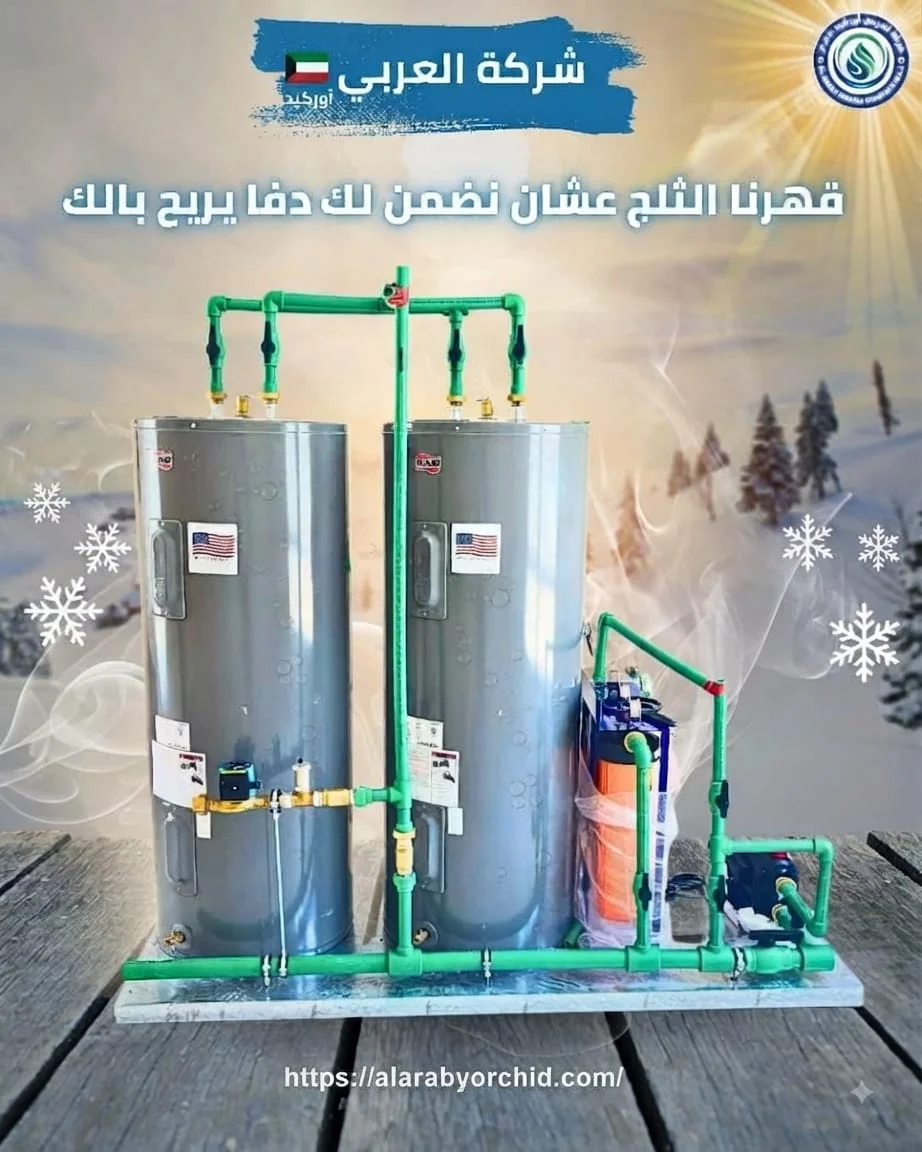
A 65-gallon heater for a family can serve as a middle option between smaller and larger capacities, but it should not be treated as the standard “family size” for every home. Its value appears when household demand is greater than what a smaller system comfortably handles but does not justify moving into much larger capacities.
If the family uses two bathrooms within a relatively short period but not necessarily at the same moment every day, 65 gallons may be worth considering depending on the performance of the actual heater model. If three or four hot-water uses regularly start together, the calculation needs to go beyond the tank number.
The important question is whether the increase above 50 gallons solves a real problem. If the previous heater only fell slightly short at the end of the busiest period, a moderate increase may be reasonable. If hot water disappears after the first two uses, a small capacity increase alone may not be enough.
Heating specifications should also be compared because a 65-gallon heater with strong recovery can provide a different user experience from another model of the same capacity with lower heating capability.
Installation space should be measured as well. Homeowners sometimes assume the physical difference will be small, but dimensions vary by brand and model, not simply by gallon rating.
Maintenance and spare-part availability also matter. Correct capacity alone does not make a heater a good long-term choice if the unit is difficult to service.
A reasonable margin for household growth can be included when demand is already close to the system’s capability, but the margin should not become an unjustified doubling of capacity.
-
A 65-gallon heater is worth considering when demand is clearly above smaller capacities but actual usage should still justify the increase
-
If the previous shortage was only slight near the end of the peak period a moderate step upward may make more sense than moving immediately to a very large tank
-
Heating capability can make two 65-gallon models perform differently so tank size alone is not enough to judge real performance
-
Actual dimensions should be checked from the selected model because heaters with similar capacities do not necessarily have the same external shape or size
-
A suitable family heater should also have practical maintenance requirements and accessible spare parts rather than being judged only by storage capacity
80-gallon heater for a villa
An 80-gallon heater for a villa becomes a strong option when household demand is higher and hot-water uses frequently occur close together, but before selecting it, the household should confirm that the increase above 65 gallons will actually be used.
In a villa with a medium to large family and several bathrooms, this capacity may be appropriate depending on real usage, but the number of residents alone does not settle the decision.
If two showers often operate together and a third use begins immediately afterward, the load is very different from a villa with the same number of residents where everyone uses the bathroom at separate times.
First-hour performance becomes especially important at this level because the family usually does not care only about the label saying “80 gallons.” What they really care about is whether hot water remains available throughout the busiest part of the day.
The villa’s longer plumbing network should also be evaluated. If significant heat is being lost through distribution lines or an uncontrolled recirculation system, the household may feel that capacity is insufficient when the real problem is distribution efficiency.
Installation location and filled operating weight should also be considered when installing an 80-gallon tank.
If the move from 65 to 80 gallons responds to a clear daily shortage, the increase can make practical sense. If 65 gallons already covers the household comfortably, choosing the larger tank only “for extra safety” requires a stronger reason.
Near-term household growth can also be considered when resident numbers are expected to increase permanently.
-
An 80-gallon heater deserves consideration when simultaneous and consecutive hot-water demand is regularly high rather than merely because the villa contains several unused bathrooms
-
Peak-period performance matters more than storage volume alone because families experience comfort through continuous hot-water availability rather than the number written on the heater
-
Heat loss through long distribution lines or recirculation problems can resemble insufficient capacity and should be separated from sizing before purchasing a larger tank
-
Moving from 65 to 80 gallons is more convincing when actual experience with the previous system shows a repeated shortage
-
Heater size and operating weight need to be considered during installation just as carefully as the amount of water the unit stores
120-gallon heater for large homes

A 120-gallon heater for large homes is logically suited to situations where hot-water demand is genuinely high, but the phrase “large home” alone is not enough. A very large property occupied by two people may use less hot water than a smaller house containing a large family.
A 120-gallon capacity becomes more justifiable when several hot-water outlets are used simultaneously and this pattern happens regularly during peak periods.
Frequent guests or a hospitality area can also be included in the calculation when that usage is part of the home’s normal routine rather than an occasional seasonal event.
The larger tank provides more stored water, but it also needs enough heating capability to recover appropriately. If recovery is too slow compared with demand, the household may enjoy a large initial supply but still face a long wait after heavy use.
Installation location becomes especially important with this capacity. Heater dimensions, filled weight, access route for installation and future removal, and maintenance clearance all need to be reviewed.
A 120-gallon heater should not be selected simply to fix a distribution problem. If hot water takes too long to reach a distant wing because of long piping, a larger tank will not make the water travel through the pipes faster.
Not every large villa therefore needs this capacity. If usage is naturally spread throughout the day, a smaller heater with suitable performance may work extremely well.
The decision to install 120 gallons should be supported by actual household demand rather than the idea that the biggest heater must be the strongest choice.
-
A 120-gallon capacity is justified more by high repeated peak demand than by property size or bedroom count
-
Hospitality areas should be included when they are used regularly but should not cause major oversizing because of rare events
-
A large tank still requires suitable recovery performance to maintain comfort after much of the stored hot water has been used
-
Site requirements filled weight transport access and future maintenance become increasingly important as heater size increases
-
Increasing storage capacity does not correct long distribution delays or excessive heat loss when the real problem is in the hot-water network
Comparing central heater capacities
Comparing central heater capacities of 50, 65, 80, and 120 gallons becomes useful when each capacity is placed inside a real usage scenario rather than simply being ranked from smallest to best. Every size has a suitable application, and every one of them can also be a poor choice when household demand is different.
A 50-gallon heater may fit situations where demand is lower or simultaneous hot-water use is limited, depending on the performance of the specific heater.
A 65-gallon option provides an additional storage step and may suit homes needing more margin than the smaller heater without moving into very large capacities.
An 80-gallon heater supports higher demand more comfortably and requires careful consideration of simultaneous use and heating capability.
A 120-gallon heater is better suited to genuinely high loads and homes where regular usage justifies the capacity, installation space, and equipment requirements.
The comparison does not stop there. Two heaters with the same gallon rating can have different heating performance, first-hour output, insulation quality, and other specifications.
Physical dimensions, electrical requirements, service needs, spare-part availability, and the specific warranty attached to the model should also be compared.
If the previous heater capacity is known and the household has several years of experience with it, that information is extremely valuable. If the old capacity always worked comfortably, sizing does not need to begin from guesswork. If it regularly fell short, the degree of shortage can help determine the required increase.
The final goal is usually to choose the smallest capacity that comfortably meets realistic demand with a sensible margin rather than simply installing the largest tank that fits in the utility room.
-
50 65 80 and 120 gallons are not quality levels but different storage capacities that should be matched to actual household hot-water demand
-
Every increase in capacity should be supported by peak demand or realistic future growth rather than being chosen only as a precaution
-
Heaters with the same gallon capacity can perform differently so heating specifications should be compared together with tank volume
-
Experience with the previous heater can simplify sizing considerably because it reveals whether the old capacity was sufficient or inadequate
-
The final choice should balance comfort installation space performance and cost instead of relying only on the gallon rating
Conclusion
Choosing between 50, 65, 80, and 120 gallons for a villa does not have one answer that works for every home. The correct decision combines the number of residents, number of bathrooms used simultaneously, peak-hour demand, heater recovery capability, previous heater performance, installation space, and the hot-water distribution network.
If a 50-gallon heater handles the household comfortably, there is no reason to increase capacity simply because larger options exist. If the family repeatedly runs out of hot water with a correctly operating heater, then moving to a larger capacity deserves proper calculation. A 120-gallon system can be an excellent choice when real demand justifies it rather than merely because the property is large.
Think of gallons like shoe size: bigger is not more impressive when it does not fit. The goal is a heater that handles real peak demand without making you pay for tank capacity, installation space, and performance you rarely use.
Frequently Asked Questions
What is the best central heater capacity for a villa?
There is no single capacity for every villa because the right choice depends on the number of residents, simultaneous use, peak-hour demand, and heater performance.
Is 50 gallons enough for a villa?
It can be suitable for some homes when simultaneous demand is limited and the heater’s performance matches the household requirement, but the word villa alone does not determine capacity.
When should I choose 65 gallons instead of 50?
Choose the larger capacity when real usage or previous heater performance shows that the household needs additional storage margin above the smaller option.
Is an 80-gallon heater suitable for large families?
It can be, depending on the number of users, simultaneous bathroom use, and heater recovery capability, but family size alone does not determine the answer.
When does a home need a 120-gallon heater?
A 120-gallon heater becomes more appropriate when the property has high repeated peak demand, significant simultaneous hot-water use, and a suitable installation location.
Is 120 gallons better than 80 gallons?
Not automatically. A 120-gallon heater provides greater storage, but it is not better when the household does not need that capacity or the installation location is unsuitable.
Is tank size more important than heating capability?
Both matter because storage capacity provides the initial hot-water reserve while heating capability affects how quickly hot water is restored after use.
Does the number of bathrooms determine the required gallons?
It helps estimate demand, but the more important factor is how many bathrooms use hot water at the same time and how the household actually uses them.
Should I choose the same capacity as the old heater when replacing it?
If the old capacity served the home comfortably and usage has not changed, it may still be appropriate. If shortages were frequent, capacity should be recalculated.
What information should I prepare before selecting heater capacity?
Prepare the number of residents, number of bathrooms used simultaneously, busiest hot-water period, previous heater performance, available installation space, and whether the property uses hot-water recirculation.