
Choosing a central water heater for an apartment does not mean looking at two bathrooms and immediately selecting one fixed tank size. The number of bathrooms gives you a starting point, but the right decision also depends on how many people live in the apartment, how many bathrooms may be used at the same time, how long showers usually last, whether the kitchen uses hot water during the same period, and how quickly the heater can recover after hot water is drawn. Two apartments with exactly the same number of bathrooms can require very different heater capacities because their usage patterns are different. That is why the better approach is to estimate peak-hour hot-water demand, review the installation space and connections, and compare the heater’s actual performance before simply buying the largest tank available.
Central water heater for apartments in Kuwait

Choosing a central water heater for apartments in Kuwait requires a different approach from selecting a heater for a large villa because apartments usually have more limited installation space, a known number of hot-water outlets, and a daily usage pattern that is easier to estimate. Problems start when the heater is selected according to the apartment’s floor area or number of bedrooms while the more important factor is how hot water is actually used.
Start with the number of bathrooms that are genuinely used for showers rather than simply counting every room containing a sink. Then ask whether two people may shower at the same time. An apartment with two bathrooms where family members use them one after another creates a different demand from another apartment with the same two bathrooms where both showers are regularly used together every morning.
The kitchen should be included as well. If dishwashing or other hot-water use happens during the same period as showers, it becomes part of the total demand placed on the heater. The same applies to any other outlet connected to the hot-water system.
The heater’s recovery capability also matters. A storage heater does not simply provide the water already stored inside and then stop. As hot water is drawn, colder water enters the tank and the heater continues working to restore the temperature. The speed at which it can recover is therefore part of real performance.
Installation space inside the apartment or service area must also be considered. A larger heater usually means a larger physical body and greater weight once filled with water, so it makes little sense to buy the unit first and then start searching for somewhere to install it.
Another common mistake is replacing an older heater with exactly the same capacity without asking whether the previous size was actually appropriate. The old heater may have worked perfectly for years, or it may have been the reason hot water always ran out too quickly.
The right apartment heater selection begins with describing a normal busy day at home: how many people use the bathrooms during peak time, how many outlets may operate together, and what complaints existed with the previous heater. These details can be more useful than the number of bedrooms in the apartment.
-
The number of bathrooms provides an initial indication but does not determine capacity by itself because simultaneous use can dramatically change the amount of hot water required
-
An apartment where two bathrooms are used one after another places a different demand on the heater than an apartment where both showers operate at the same time even when the floor plans are identical
-
Heater recovery capability should be considered together with tank size because stored volume alone does not explain performance during peak-hour demand
-
Installation space support and future service access should be checked before choosing the heater so the capacity does not look correct on paper while the unit is impractical to install
-
Experience with the previous heater is extremely useful because hot water running out quickly or large amounts remaining unused can indicate that the previous capacity was too small or unnecessarily large
Central water heater capacity for an apartment
Central water heater capacity for an apartment should not be determined by asking only one question such as “How many people live here?” because three people can sometimes use more hot water during one peak period than five people whose usage is spread throughout the day. It is better to separate storage capacity from the amount of hot water the household needs during its busiest hour.
The peak hour is usually in the morning before work and school or in the evening when everyone returns home and several hot-water activities happen close together. If that hour includes more than one shower together with kitchen use, the demand becomes much higher than in a household using the same total quantity of hot water gradually throughout the day.
Shower duration also matters. Having two bathrooms does not tell us whether each shower lasts five minutes or much longer. The type of showerhead and its flow rate also affect how much water is drawn from the tank.
This is where recovery capability becomes important. The heater does not only provide the hot water stored inside it. As water is used, colder water enters the tank and heating continues, so the rate at which the heater can restore hot-water availability is a major part of performance.
For that reason, two heaters with the same tank volume may provide different practical results if their heating capacities and recovery rates differ. You cannot assume that every heater with the same number of liters will serve the same number of people equally well.
Oversizing is not always an advantage either. A heater much larger than necessary may cost more to purchase, require more installation space, and keep a larger quantity of hot water available even when the household rarely uses it.
On the other hand, an undersized heater can leave family members waiting between showers and may struggle more during peak periods.
The goal is therefore not to choose the biggest number possible but to select a capacity that provides a reasonable margin above normal demand without unnecessary excess.
-
Storage capacity is only one part of the decision while peak-hour demand shows whether the heater can match the household’s real usage pattern
-
Shower duration and showerhead flow can change hot-water demand even between two families with the same number of residents and bathrooms
-
Two heaters with the same tank volume do not necessarily provide the same performance because recovery capability can differ significantly
-
A heater that is too small usually reveals the problem when several hot-water uses happen close together and temperature falls before household demand is finished
-
Excessive capacity can increase equipment size and purchase cost without providing meaningful benefit when normal daily usage remains far below the heater’s capability
Water heater size by number of bathrooms
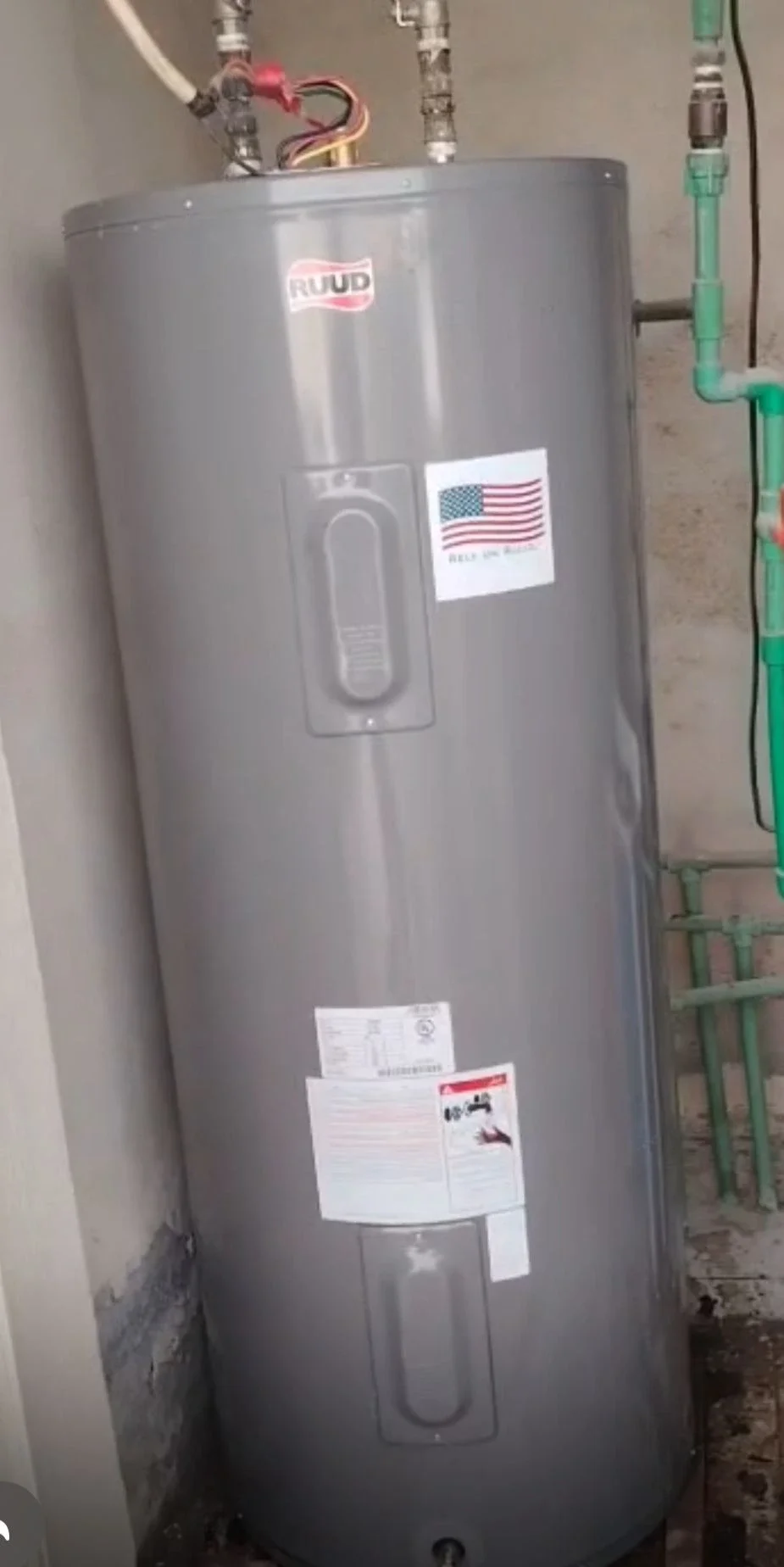
Choosing a water heater size by number of bathrooms is useful as a starting point, but it becomes misleading if it is turned into a rigid rule saying one bathroom requires one fixed capacity and two bathrooms require twice as much. A bathroom is not a fixed unit of hot-water consumption because the real issue is how and when it is used.
Consider two apartments that each have two bathrooms. In the first, a couple lives there and uses the bathrooms at different times. In the second, a family lives there and everyone gets ready during the same morning period, so both showers may operate together. The number of bathrooms is identical, but peak-hour demand is completely different.
Having a bathtub can also change the calculation compared with a quick shower because the usage pattern and water volume may be greater. A high-flow showerhead can also draw considerably more water than a lower-flow fixture.
It is also important to remember that hot water leaving the heater is usually mixed with cold water at the faucet or shower to reach a comfortable temperature. The useful amount of mixed water available therefore depends on storage temperature, incoming water temperature, and how the system is adjusted. This is another reason not to rely on a simple bathroom-count formula.
If an apartment has three bathrooms but rarely uses more than one at a time, it may not need the capacity someone imagines when hearing “three bathrooms.” On the other hand, an apartment with only two bathrooms can create a larger peak load if both are used together with the kitchen.
It should also be confirmed that every bathroom is actually connected to the same central heater. Some apartments have previous modifications or separate heaters serving certain areas, so the real plumbing arrangement matters more than the number of bathroom doors shown on the property plan.
The number of bathrooms therefore helps us ask the right questions, but it is not the final answer.
-
Two bathrooms used at different times do not place the same demand on a heater as two bathrooms operating simultaneously
-
The type and duration of bathroom use from quick showers to longer use can affect demand more than the bathroom count itself
-
The number of hot-water outlets actually connected to the central heater should be confirmed before sizing because some apartments contain more than one hot-water system
-
Kitchen use during peak shower periods should be included in the calculation even when the main sizing discussion begins with bathroom count
-
The more accurate method is to estimate expected simultaneous usage and then choose a heater capable of supporting that load instead of assigning one fixed capacity to each bathroom
Right heater size for a family
The right heater size for a family depends more on household habits than on the number of family members alone. A family of four that showers at different times can create a lower peak demand than three people who use showers and the kitchen within the same half-hour period.
Start with a simple question: when does the household use the greatest amount of hot water? Then list what happens during that time. How many showers operate, how many people need hot water, and whether the kitchen or another use overlaps with the same period.
Children can also create a different usage pattern from adults. A household with older family members or other regular reasons for higher hot-water use may need a larger comfort margin even when the number of residents is not particularly high.
Frequent guests should be considered when they are part of the household’s normal routine. However, the heater should not be dramatically oversized because of an event that happens only once or twice a year, otherwise the family will pay for capacity it rarely uses.
If the family is expected to grow soon or the number of regular residents is likely to increase, adding a reasonable margin can make sense rather than buying a heater that only just satisfies today’s demand.
The suitable heater should also recover in a practical amount of time after the first heavy use. This becomes especially important for families that use bathrooms consecutively.
In practical sizing, it is better to leave a comfortable margin rather than calculating capacity down to the last drop. However, a reasonable margin does not mean automatically choosing the largest heater available.
When the budget is limited, it is often better to spend it on a properly sized heater with suitable heating performance and professional installation rather than on an oversized tank simply because a larger number feels safer.
-
Family size provides a starting point but the way household members distribute hot-water use throughout the day determines the real load
-
Frequent guests or several people needing hot water during the same period can justify an additional capacity margin when that pattern is normal
-
Expected family growth can be included in sizing when the change is realistic and relatively near rather than buying excessive unused capacity
-
Recovery performance is particularly important for families using bathrooms one after another because it affects how quickly useful hot water becomes available again
-
The right capacity provides comfort during peak periods without turning the apartment into storage space for hot water the household rarely needs
Central heater for a three-bedroom apartment
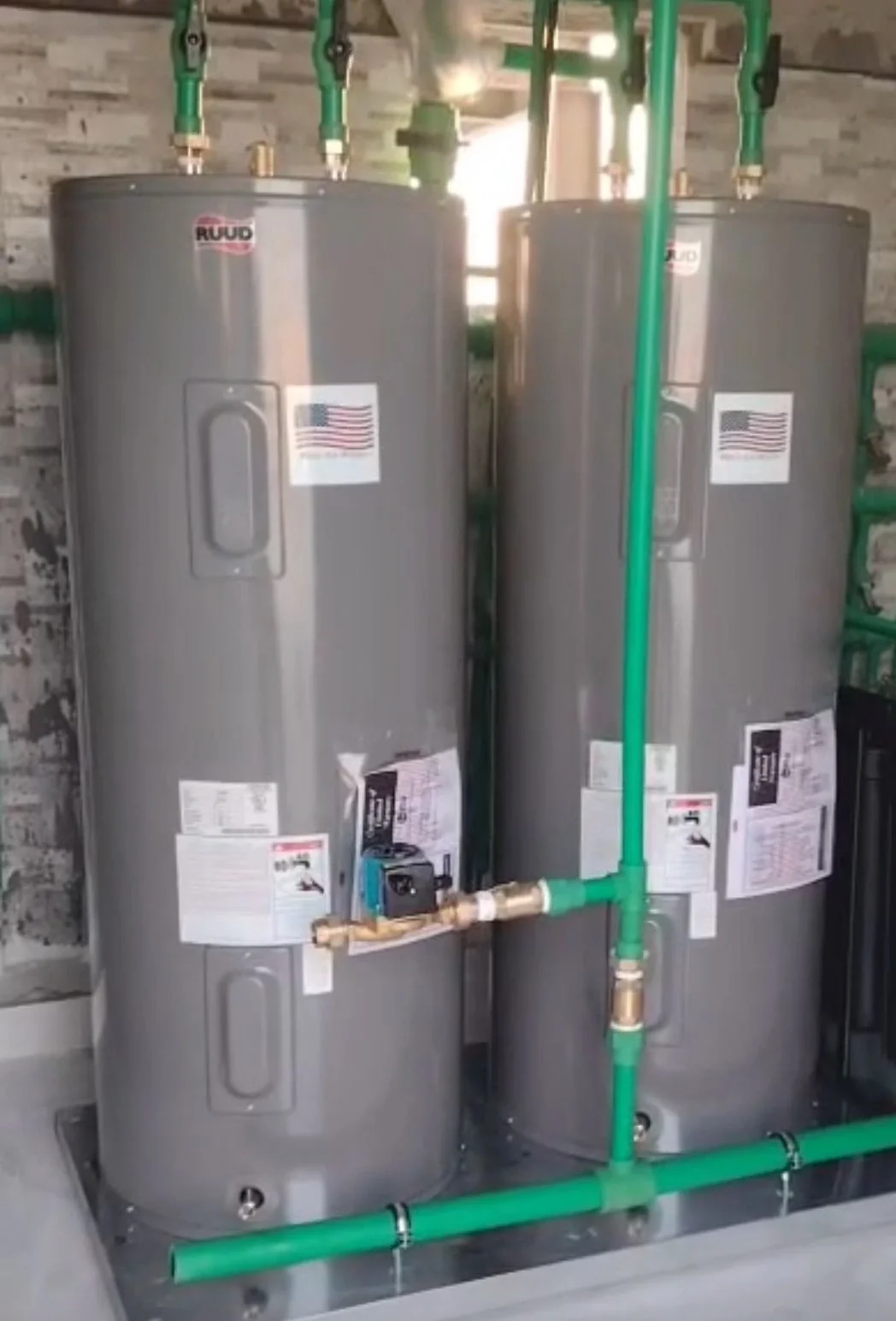
Choosing a central heater for a three-bedroom apartment should not depend on the three bedrooms themselves because bedrooms do not consume hot water. What the description “three bedrooms” provides is only an initial idea about the possible household size, and the decision quickly moves toward the number of bathrooms and residents.
A three-bedroom apartment may be occupied by two people or by a family of five or more. Selecting the same heater for both homes simply because the bedroom count matches would not be accurate.
If the apartment has two bathrooms and the family normally uses only one at a time, demand is different from the same floor plan where both bathrooms are used heavily throughout the day.
The distance between the heater and hot-water outlets should also be considered. Long pipe runs or an inefficient distribution layout can make the customer wait for hot water even when the heater itself is performing correctly. Increasing tank capacity does not automatically solve this kind of problem.
If a hot-water recirculation system or another specialized plumbing arrangement is present, it should also be included in the evaluation because operation differs from a simple apartment with short distribution lines.
Installation space in a three-bedroom apartment is often limited to a utility area, kitchen service space, or another designated location. The physical dimensions therefore need to be checked before purchase. A heater that looks correct according to capacity calculations may not fit through the access route or leave adequate space for maintenance.
The electrical requirements should also be compared with the existing supply according to the heater specifications because the new unit needs to match the electrical installation as well as the plumbing.
Selecting a heater for a three-bedroom apartment is therefore not a ready-made package. The apartment description helps build the initial picture, but actual usage determines the final choice.
-
Bedroom count does not directly determine heater capacity but it can provide an initial clue about likely household size before usage details are considered
-
Two three-bedroom apartments can require very different heater capacities when resident numbers or simultaneous bathroom use are different
-
Long hot-water pipe runs and delayed delivery are distribution issues that are not automatically solved by increasing tank volume
-
Utility-space dimensions and access routes should be checked before purchase because a correctly sized heater must also be practical to install and service
-
Electrical load and existing connections should be compatible with the selected heater rather than being discovered as a problem on installation day
Central heater for a large family
Choosing a central heater for a large family requires particular attention to peak-hour demand because the challenge is not simply how much hot water the family uses during the entire day. A household may consume a large daily volume but spread that use from morning until night, while another family may use most of its hot water within one hour.
The first thing to determine is how many people prepare at the same time. If six people use the bathrooms one after another before work or school, the heater needs storage and recovery performance that can support that sequence.
Next, consider how many bathrooms may operate simultaneously. Having three bathrooms does not mean all three will always be used at once, but if simultaneous use genuinely happens, it becomes a major sizing factor.
A larger family should also consider how quickly the heater recovers after a heavy draw. If the first group uses a large amount and the rest of the family has to wait, recovery rate becomes an everyday comfort issue.
Improving the timing of usage can sometimes be part of the solution when apartment space or electrical supply does not allow a much larger heater. Not every hot-water problem has to be solved by buying the largest possible tank.
Operating cost also belongs in the comparison because a large heater operates every day. The goal should be to meet real peak demand rather than oversizing the unit simply out of fear that hot water may run out.
If the family has different patterns on working days and weekends, focus on a realistically busy day rather than an extremely rare event.
It is also useful to ask how the existing heater performs. Does hot water disappear only when the final person showers? Does it become insufficient after the second shower? Does the heater recover quickly? These answers help quantify the shortage instead of guessing.
-
Large families need the sequence of hot-water use evaluated because six people spread throughout the day create a different load from six closely spaced showers
-
The number of bathrooms used simultaneously matters more than the total number of bathrooms when estimating peak demand
-
Recovery speed after a heavy draw directly affects waiting time between family members
-
Excessively increasing tank size is not always the only solution because better usage distribution and suitable heating performance may provide a more balanced result
-
Performance of the existing heater shows when the shortage actually begins and helps choose the replacement based on a specific problem rather than simply assuming the old heater was too small
Choosing a heater for an apartment in Kuwait
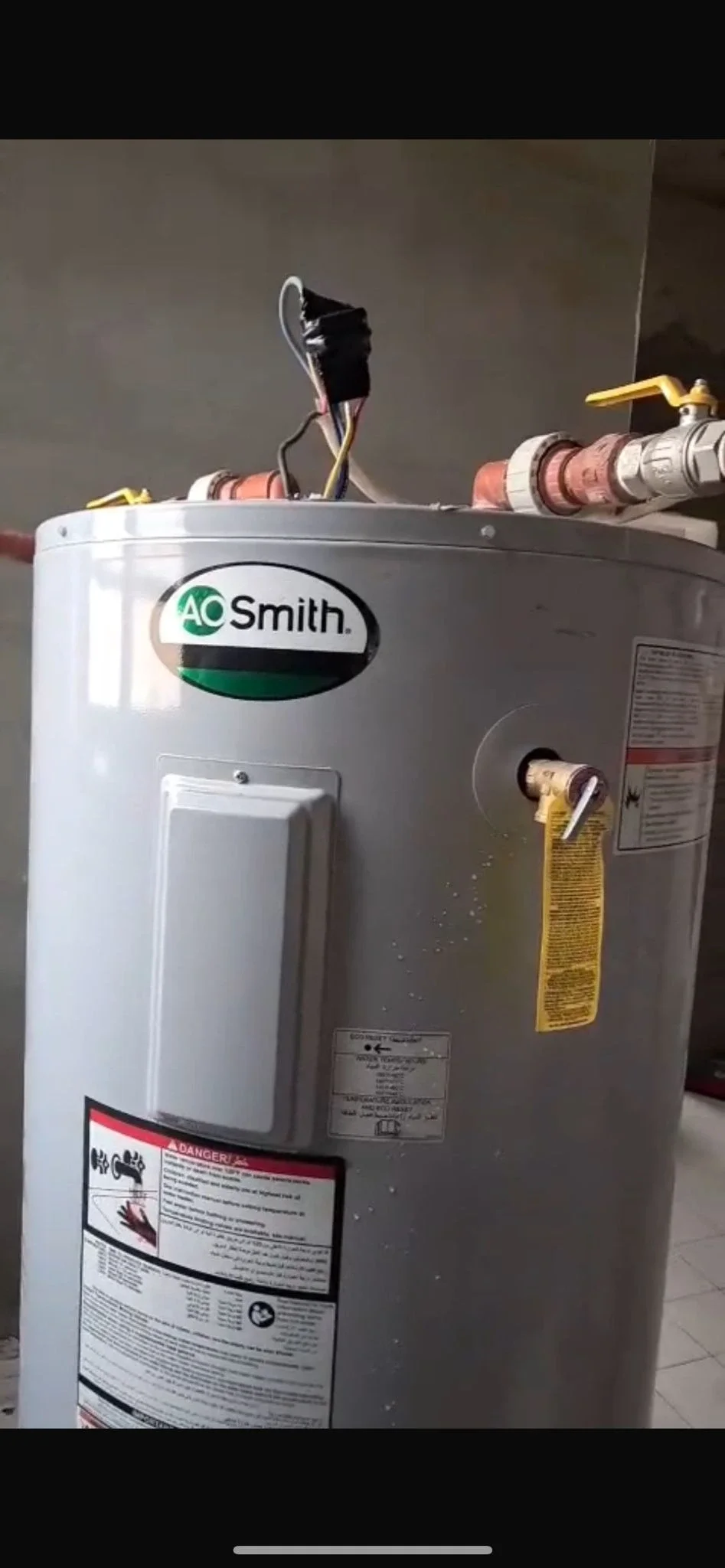
Choosing a heater for an apartment in Kuwait should begin after collecting five clear pieces of information: the number of residents, number of bathrooms regularly used, likelihood of simultaneous use, peak-hour demand, and available installation space. Only then should specific products be compared instead of beginning with brand or price.
The first mistake is buying a heater because it is on sale. The price may be attractive while the capacity or heating performance is completely unsuitable for the apartment.
The second mistake is choosing the largest heater available “to be safe.” A larger unit requires more space, usually costs more to purchase, and may store far more hot water than the family normally needs.
The third mistake is looking only at tank volume. It is better to compare performance information showing how the heater can supply hot water during intensive use because storage volume alone does not tell the whole story.
The fourth mistake is ignoring installation space. Heater width, height, connection locations, and clearance required to open service covers all need to be known.
The fifth mistake is ignoring the electrical system. Any electric water heater needs to be installed according to the unit’s electrical requirements with appropriate protection and qualified electrical work.
Price still matters, but it should be compared between heaters that perform a similar job. A cheaper unit is not a bargain if the family waits for hot water every morning, and a more expensive one is not automatically better if half of its capacity is never used.
Once the suitable performance range is identified, brand, spare-part availability, service support, and the actual warranty provided with the product can be considered.
The idea is to choose an apartment heater as part of a complete system rather than selecting a tank as an isolated product.
-
Start with actual usage data before brand selection because even an excellent heater can be a poor choice if its capacity does not suit the apartment
-
A discounted price does not compensate for insufficient capacity or for a heater that is much larger than the real requirement
-
Performance during periods of high demand is more informative than tank volume alone when comparing two models
-
Maintenance clearance should be considered alongside physical dimensions because technicians need access to components after installation
-
Financial comparisons are most useful when made between heaters with similar capabilities that suit the same usage pattern
Heater capacity by number of people
Determining heater capacity by number of people is useful when it is treated as a starting point rather than a rigid table. Two people do not always use exactly half the hot water of a family of four because personal habits can vary considerably.
One person may take a long shower every morning while four people use efficient showers quickly. The number of residents without context can therefore be misleading.
It is better to understand when each person generally uses hot water. If everyone uses the bathrooms within one hour, peak demand becomes much higher than when the same number of people spreads usage over three hours.
The number of people also does not tell us how many bathrooms operate at the same time. A family of five with one bathroom creates a very different pattern from five people using three bathrooms.
Young children may change the usage pattern, and a person working from home may spread water use away from the main morning peak.
Resident count should therefore be used to estimate demand and then adjusted according to real behavior. If the family has experience with an existing heater, that information can be more useful than any generic sizing chart. For example, a previous heater that served everyone except the final person indicates a very different shortage from one that runs out after only two showers.
Incoming water temperature and other operating conditions also affect heater performance, so the same heater does not necessarily feel identical under every condition.
Ultimately, the number of people makes the estimate easier, but it does not replace an assessment of actual usage.
-
Resident count begins the sizing process but needs adjustment for shower duration timing and how many outlets operate simultaneously
-
Five people sharing one bathroom do not create the same peak draw as five people using several bathrooms at the same time
-
Work and school schedules affect demand because a family leaving home together creates a larger short-term peak
-
Experience with the previous heater helps determine the real capacity shortage rather than automatically jumping to a much larger tank
-
Using only the number of residents without considering recovery performance can result in a heater whose storage volume looks suitable while actual performance cannot keep up
Central water heater for apartments
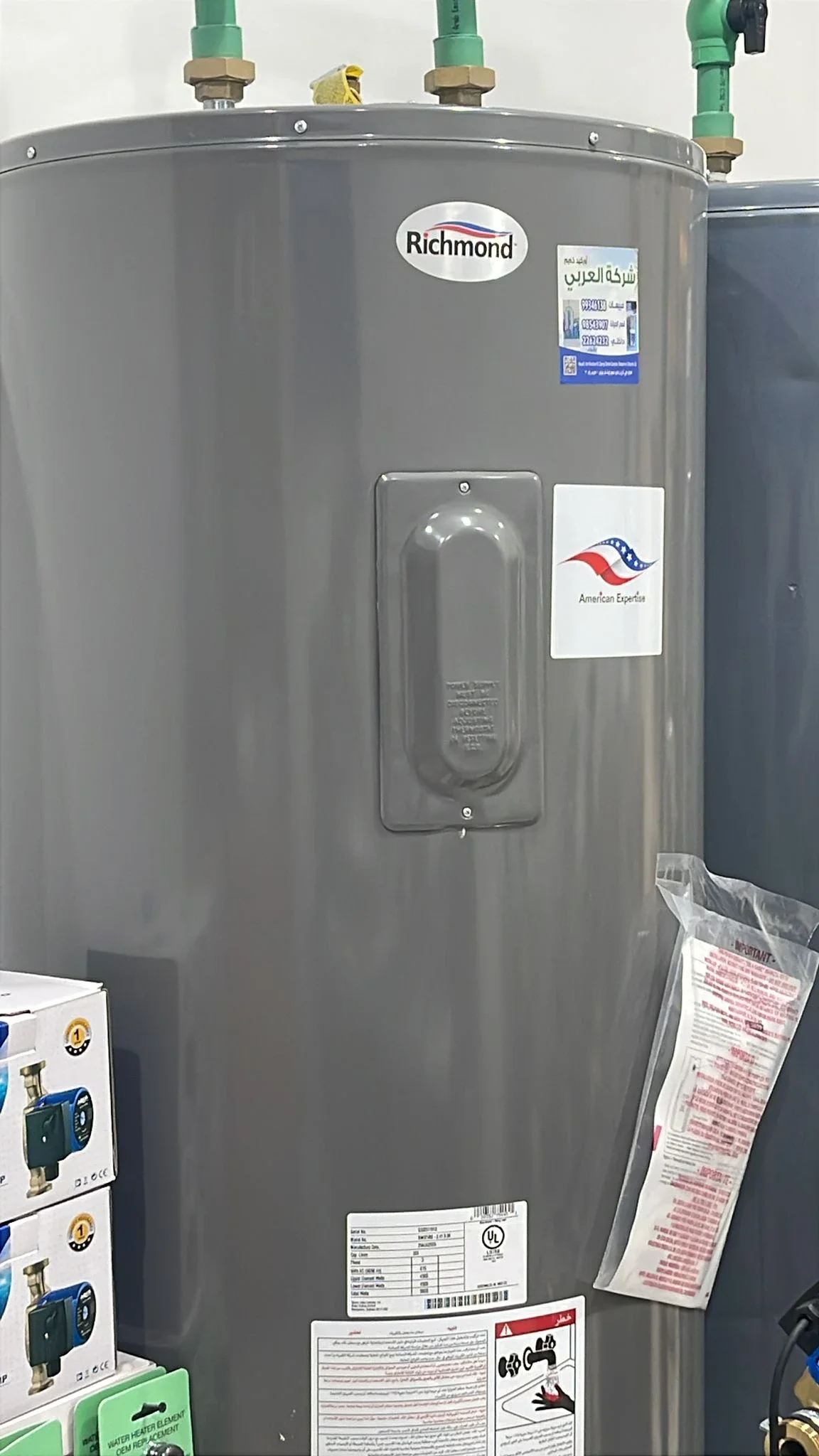
A central water heater for apartments provides one heating source for several hot-water uses, but its success depends on how well it matches the apartment’s plumbing system. The heater does not operate independently from pipework, pressure, line length, and installation location.
One advantage of a central system is that the household manages one heater instead of several separate units, but that also means an incorrect capacity choice can affect every bathroom at once.
For that reason, it should be confirmed which outlets are actually connected to the central system. Some apartments may have a service bathroom or kitchen supplied differently, while others have every hot-water outlet connected to the same tank.
Water pressure matters because higher flow can draw stored hot water more quickly, while low pressure may have other causes that cannot be solved by purchasing a larger heater.
Good insulation on hot-water lines can also reduce heat loss, especially when the distance between the heater and the farthest bathroom is long. If the problem is slow arrival of hot water or noticeable cooling along the line, the plumbing distribution should be reviewed rather than increasing heater capacity automatically.
If a recirculation pump is part of the system, its design and operating method should also be considered because continuous recirculation without appropriate control can increase heat loss and energy use.
Maintenance is easier when the installation location provides clear access to valves, connections, heating elements, and the tank.
A successful central water heater for an apartment is therefore one selected as part of the complete system rather than as an isolated tank chosen only according to liters.
-
Every hot-water outlet connected to the heater should be identified before sizing because the heater must support their combined use during peak periods
-
Slow hot-water delivery to the farthest outlet may be caused by pipe length or heat loss rather than insufficient tank capacity
-
Water pressure and flow affect the user experience so choosing a larger storage tank alone does not solve every apartment plumbing problem
-
A recirculation system adds another factor to heater sizing and operation and should be controlled appropriately rather than operated without considering heat loss
-
The heater location should provide access to valves heating elements and service points because one central unit supplies the entire apartment and any shutdown affects everyone
Installing a central water heater in an apartment
Installing a central water heater in an apartment begins before the equipment arrives at the property. The first step is reviewing the available space, support base, access route, existing connections, and electrical supply requirements for the selected heater.
Weight matters because the tank becomes much heavier when filled with water than when it is empty. The installation location and support therefore need to be suitable for the completed system according to the heater design and site requirements.
Cold- and hot-water lines, isolation valves, safety components, and installation requirements should then be checked. An existing layout should not automatically be copied when the previous installation contains poor or unsuitable arrangements.
For an electric heater, the electrical supply and protective devices should match the requirements of the selected unit and should be installed or verified by a qualified technician. An older electrical connection should not automatically be assumed suitable simply because it powered another heater, as the new unit may have different requirements.
Before the heating system is energized, the tank should be fully filled with water and trapped air should be released according to the appropriate procedure. Operating heating elements in an empty or partially filled tank can damage them.
Once heating begins, all fittings should be inspected for leakage while the control system and heating operation are monitored. Hot-water delivery should also be checked at different outlets.
This stage can reveal plumbing problems unrelated to the heater itself. The heater may operate perfectly while the farthest bathroom experiences a delay because of a long pipe run or an inefficient distribution layout.
Future maintenance is part of installation quality as well. The heater should remain accessible enough for technicians to service heating elements, valves, and connections without removing furniture or breaking surrounding finishes.
Professional installation cannot correct an incorrectly selected capacity. That is why the process begins with sizing and ends with testing, not the other way around.
-
The support base and installation space should be evaluated for the heater’s filled operating weight and maintenance access rather than only the dimensions shown on the packaging
-
Existing plumbing and electrical connections should be evaluated against the requirements of the new heater instead of assuming they suit every model or capacity
-
Filling the tank completely before energizing the heater protects the heating elements from operating without sufficient water
-
Startup testing should include more than one hot-water outlet to confirm that both the heater and distribution system provide the expected result
-
Leaving proper service clearance from the first day makes future repair easier and prevents an installation that looks neat but becomes difficult to maintain
Conclusion
Choosing a central water heater for an apartment in Kuwait should not be decided by the number of bathrooms alone or the number of residents alone. A more accurate calculation combines how many bathrooms may be used together, the number of residents, peak-hour consumption, duration of use, heater recovery capability, installation space, and the apartment’s hot-water distribution system.
An apartment with two bathrooms can require more capacity than one with three bathrooms if the first uses both simultaneously while the second spreads usage throughout the day. A large family can also operate comfortably with a properly selected heater instead of automatically installing the largest capacity available.
Most importantly, do not buy the tank first and start calculating afterward. Ask first: when does hot water run out? Who uses it at the same time? How did the previous heater perform? Once those questions are answered, capacity becomes the result of the calculation rather than a number you are trying to justify after purchase.
The right heater is not the biggest one on the market or the cheapest one on the invoice. It is the one that prevents the last person entering the shower from blaming the first person for using all the hot water.
Frequently Asked Questions
Is the number of bathrooms alone enough to choose central heater capacity?
No. Simultaneous use, number of residents, shower duration, and heater recovery capability all affect the required capacity.
Does a two-bathroom apartment need a larger heater than a one-bathroom apartment?
The potential demand is usually higher, but capacity cannot be determined automatically because it depends on whether both bathrooms are used together and how much hot water the household consumes.
What is more important than the heater tank size?
The heater’s ability to supply hot water during peak demand and recover after water is drawn is extremely important together with storage capacity.
Does the number of residents determine heater capacity?
It helps estimate demand but is not enough by itself because four people using hot water at different times may require less peak capacity than three people using several outlets simultaneously.
Is a larger heater always better for an apartment?
No. Excessive capacity can increase purchase cost and installation-space requirements without providing practical value when household demand is much lower.
How do I know if my current heater is too small for the family?
One sign is hot water repeatedly running out during normal household use even though the heater is operating correctly and has been given enough time to heat.
Does the number of bedrooms determine heater size?
Not directly because bedrooms do not consume hot water. Bedroom count only gives a rough idea of potential household size.
Should I choose the same capacity as the old heater when replacing it?
Not always. First evaluate whether the previous capacity was actually sufficient and whether the number of residents bathrooms or usage pattern has changed.
Does the installation location affect heater selection?
Yes. Heater dimensions filled weight maintenance clearance plumbing connections and electrical requirements all need to suit the available location.
What information should I prepare before choosing a central heater for an apartment?
Identify the number of residents, number of bathrooms, outlets likely to operate at the same time, peak-use period, performance of the previous heater, and the available installation space.