Installing a central water heater does not end with fixing the tank in place and connecting water and electricity. Proper central water heater installation in Kuwait starts with inspecting the site before work begins, checking the heater’s full operating weight after filling, confirming the electrical supply, reviewing the cold and hot water lines, determining how the safety-valve discharge will be handled, and identifying whether the plumbing system is closed and therefore requires thermal-expansion control. After installation comes an equally important stage: filling the tank, removing trapped air, checking for leaks, starting the heater, and testing it under conditions close to real household use. Manufacturers such as Rheem and A. O. Smith emphasize that an electric water heater must never be energized before the tank is completely full of water and that the T&P relief valve and its discharge line must remain correctly installed without blockage or restriction. Al Arabi Orchid provides installation and maintenance services for American central water heaters in Kuwait and can be contacted on 99346138.
Central Water Heater Installation in Kuwait

Successful central water heater installation in Kuwait begins with a technical inspection rather than with the day the heater arrives. The first thing to evaluate is the installation area itself. Will the new tank fit through the access route and into its final position? Can it also be removed again in the future when replacement becomes necessary? Is the floor or support base strong enough for the full weight after the tank is filled? Water alone adds roughly one kilogram for every liter, which means a large central heater becomes a very heavy piece of equipment once it is in service. Manufacturers such as A. O. Smith recommend that the installation area be level, structurally capable of supporting the fully filled heater, and arranged so that future service access remains available.
The water network comes next. The technician should identify the cold-water inlet, hot-water outlet, and any recirculation return line. The system should also be checked for check valves, pressure-reducing valves, booster pumps, or other components that may prevent water from expanding backward through the supply line. If the plumbing becomes a closed system, thermal expansion has to be handled correctly because water increases in volume as it heats. In those situations, a properly sized and adjusted expansion tank may be required. A. O. Smith explains that thermal expansion should be controlled by the system design and that the T&P relief valve should not be used as a routine expansion-control device.
The electrical side is then checked according to the actual model data plate. It is not enough to say that the old heater and the new heater are both 80 gallons and therefore must use the same electrical circuit. Two heaters with the same nominal capacity can have different power ratings, voltage requirements, and phase configurations. The final step is commissioning: fill the tank completely, open hot-water outlets to purge air, inspect every connection for leakage, and only then energize the unit and monitor the first heating cycle.
-
The pre-installation inspection prevents situations where the heater arrives and only then it becomes clear that the dimensions electrical requirements base or maintenance clearances are unsuitable
-
The support base must be evaluated according to the heater’s full operating weight because the loaded tank is dramatically heavier than the empty unit delivered to the property
-
The cold hot and recirculation lines should be assessed as one water system because pumps check valves and operating pressure all affect how the heater behaves after installation
-
If the plumbing network is closed thermal expansion should be evaluated as part of the design instead of waiting for the relief valve to start dripping and replacing it without addressing the real cause
-
Electrical power should only be connected after the tank is completely full trapped air has been purged and stable water flow has been confirmed because dry heating elements can be damaged quickly
Central Water Heater Installation Technician
A professional central water heater installation technician does much more than secure the appliance and connect two pipes. The work starts by reading the new heater’s data plate to identify rated voltage, heating power, electrical configuration, and any specific installation requirements. Those details are then compared with the existing site. This step matters because two heaters with the same gallon capacity can still require very different electrical circuits and protection.
During replacement work, the technician should also inspect the condition of existing isolation valves, check valves, fittings, and flexible or rigid connections before deciding whether they can be reused. Not every old part automatically has to be replaced, but it also makes little sense to install a new central heater while keeping a leaking valve or a questionable check valve merely to save a small amount of money. The quality of the final installation is influenced by every component around the new tank.
Safety is another major part of the technician’s responsibility. The Temperature and Pressure Relief Valve is not an ordinary drain fitting. Rheem instructions specify that its discharge pipe should not be smaller than the valve outlet and should not contain a shutoff valve, reducer, or other restriction. It should discharge to a suitable location where hot water can escape safely. A. O. Smith also identifies the T&P valve as a fundamental protective device for excessive temperature or pressure conditions.
A competent technician also understands that energizing the heater is not the first test. The first test is hydraulic. The tank is filled, trapped air is removed through hot-water outlets, flow is stabilized, and all connections are checked. Only then should the electrical supply be turned on. After the first heating cycle, the system should be inspected again because some leaks or pressure-related behavior may only appear once the water is hot.
-
A professional technician reads the new heater specifications before removing the old unit so the site electrical supply and plumbing can be checked against the replacement model in advance
-
Existing valves and check valves should only be reused after inspection because one weak component can compromise the quality of an otherwise new installation
-
The T&P relief valve and discharge line should be treated as a dedicated safety system rather than as an ordinary drain pipe that can be closed or restricted
-
A skilled technician separates a heater-selection problem from an installation problem because a poorly chosen model does not become suitable simply because the installation work looks neat
-
The first complete heating cycle is part of the installation process because observing the system under actual temperature and pressure can reveal issues that remain invisible while everything is still cold
Central Water Heater Installation Company
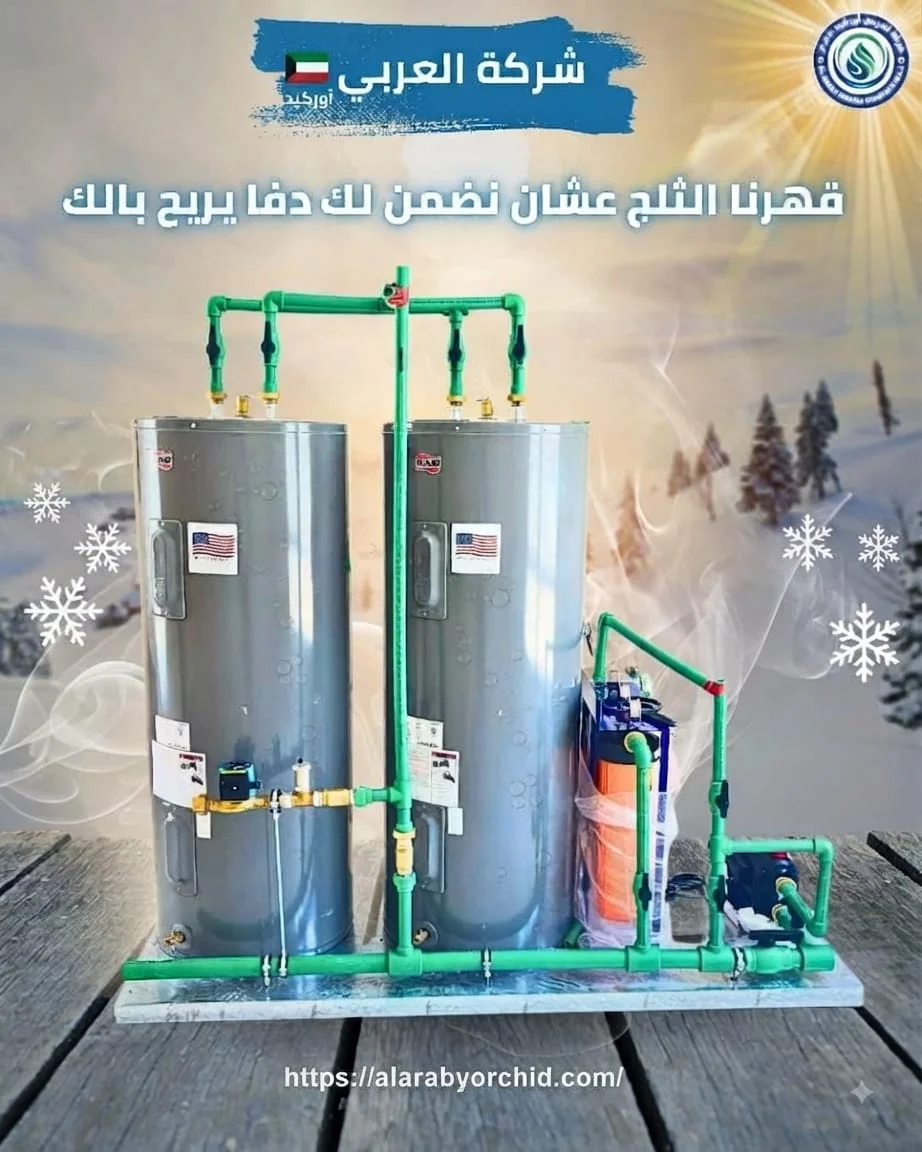
Choosing a central water heater installation company becomes more important when the project involves several systems at the same time, such as the heater, booster pump, water filter, hot-water recirculation line, check valves, pressure controls, electrical supply, and drainage. In that situation, the value of the company is not simply that it can send a technician. The real value is that the complete system can be coordinated so that every component operates correctly with the others.
A structured installation should follow a clear sequence. First, the property requirements and suitable heater model are identified. Then the installation area is inspected. After that, the base, valves, piping, drainage, and any other required components are prepared. The tank is then installed and connected to the plumbing system. Electrical work is completed according to the specific model requirements, and finally the heater is filled, commissioned, and tested. This sequence reduces improvisation and prevents the common problem of delivering equipment before anyone has confirmed whether the site is actually ready for it.
Clear responsibility is also important. The customer should know what the quotation includes before the work begins. Does it include removal of the old heater? Which valves and fittings will be replaced? Is the base being reused or renewed? Will the T&P discharge arrangement be inspected? Is electrical work included or handled separately? Is commissioning part of the installation? The clearer the scope, the lower the risk of unexpected charges or disputes later.
Al Arabi Orchid currently states that it specializes in the installation and maintenance of water heaters, filters, pumps, and tanks and works with several American heater brands including Ruud, Bradford White, A. O. Smith, American, Rheem, and Richmond. The company also provides service across Kuwait’s six governorates. This broader service scope can be useful when the heater is part of a larger water-pressure or filtration system rather than a completely independent appliance.
-
The stronger installation company defines the project scope before execution and clearly explains which existing components will remain in service and which should be replaced
-
Having heater pump filter and recirculation services within one technical scope is particularly useful when hot-water performance depends on several interconnected components
-
A site inspection before equipment delivery reduces the risk of purchasing a heater that does not fit the service room or requires electrical infrastructure that the property does not have
-
Final functional testing should be part of the documented installation process because handing over a mounted heater without testing real hot-water operation is not a complete technical handover
-
Al Arabi Orchid can be contacted on 99346138 for American central water heater installation in Kuwait together with inspection of the related water-system components
Central Water Heater Installation for the Home
Central water heater installation for the home requires balancing daily convenience with future serviceability. Many homeowners focus mainly on hiding the tank in a compact space, but a location that is too tight can create serious problems when the heating elements, thermostat, anode rod, drain valve, or even the complete heater needs service later. A. O. Smith installation guidance emphasizes maintaining sufficient clearances for replaceable components and future maintenance before the unit is permanently positioned.
If an existing central heater is being replaced, the first comparison should be the actual physical dimensions, not only the nominal capacity. Two 50-gallon or 80-gallon heaters from different series can have different diameters, heights, access-panel positions, and water-connection locations. When the service space is tight, even a relatively small dimensional difference can require changes to the cold and hot water pipe arrangement or the support base.
Protection of the surrounding area is another important consideration. If the heater is installed above a living space or in a location where a future leak could damage flooring, ceilings, or stored items, a drain pan and suitable drainage route may need to be considered according to the exact model and site conditions. A. O. Smith recommends locating a water heater where leakage will not cause damage and, where that is not possible, using an appropriate containment and drainage arrangement.
After installation, the heater should be tested through actual use rather than simply by opening the nearest faucet. The technician should confirm that hot water reaches the intended fixtures properly, that no leakage appears after heating, and that the system pressure behaves normally during operation.
-
Hiding the heater should never come at the expense of future service access because saving a small amount of space today can create much higher maintenance costs later
-
Replacing a heater with another unit of the same nominal capacity does not guarantee matching dimensions connection locations or service clearances so the exact replacement model should be measured before the old unit is removed
-
If the heater location is vulnerable to water damage an appropriate drain pan and drainage arrangement should be considered rather than assuming a new tank can never leak in the future
-
Operating temperature should be adjusted according to household needs and manufacturer guidance rather than being raised excessively to compensate for incorrect capacity selection
-
Final home commissioning should include testing actual hot-water outlets and observing the first heating cycle rather than treating an illuminated power indicator as proof that the installation is complete
Central Water Heater Installation for a Villa

Central water heater installation for a villa requires broader planning because the tank often serves longer piping runs and a larger number of outlets. In this type of property, hot-water distribution becomes part of installation quality. A perfectly functioning heater positioned at one extreme end of the villa may still leave residents waiting a long time for hot water at distant bathrooms even if the tank has more than enough capacity.
Where a Hot Water Recirculation system is installed, the return line must be understood as part of the complete network. Its route, pump direction, check valves, and control method all matter. The purpose of recirculation is to reduce the waiting time for hot water at remote fixtures, but poorly controlled continuous circulation can increase heat loss through the piping. Al Arabi Orchid currently includes hot-water recirculation pumps among its water-system services, which is especially useful when the comfort problem comes from distribution rather than storage capacity.
Operating pressure is another major consideration. Many villas use booster or smart pressure pumps, so the water heater may operate under different hydraulic conditions from a smaller home. The presence of a booster pump, pressure-reducing valve, or check valve can also change how thermal expansion behaves. A. O. Smith explains that closed systems require a dedicated method of managing thermal expansion instead of depending on the T&P valve for routine pressure relief.
Large capacities also bring structural considerations. An 80-US-gallon heater holds approximately 303 liters of water, while 120 gallons is approximately 454 liters. Water alone therefore contributes hundreds of kilograms once the tank is full, before the weight of the heater itself is added.
-
The location of the heater inside a villa should be considered together with the hot-water distribution network because delivery time at remote fixtures depends on pipe length as well as heater performance
-
A recirculation line should be tested to confirm that water actually returns through the intended path instead of short-circuiting through an incorrectly arranged connection
-
A powerful booster pump does not remove the need to review system pressure because check valves thermal expansion and heater safety components all interact hydraulically
-
Large-capacity heaters require a support base and access path that can accommodate the full operating weight and also allow eventual future replacement
-
Villa commissioning should include testing hot water at several bathrooms and on different floors so the system is proven under realistic conditions rather than only at the closest faucet
Central Water Heater Installation Cost
The central water heater installation cost cannot be determined from capacity alone because the same heater can be a simple replacement in one property and part of a much larger modification project in another. The first factor is the condition of the existing installation. If the replacement heater has similar dimensions and specifications to the old unit and the base, valves, piping, and electrical circuit are all in good condition, the installation scope may be relatively limited. If the capacity, power rating, or location changes significantly, the project can become much more involved.
Access is the second factor. Removing a large tank from an open utility room is very different from handling one on a roof, through a narrow service corridor, or behind other equipment. As heater capacity increases, weight and physical size can add significantly to the labor and handling requirements.
Materials are the third factor. Some installations only require limited fittings, while others may need new isolation valves, check valves, a support base, drain pan, T&P discharge line, or modifications to PPR pipework. If the plumbing is a closed system and the design requires an expansion tank, that becomes an additional project component rather than a simple heater connection.
Electrical requirements are another major cost variable. If the new heater has a different power rating, voltage, or phase configuration from the old unit, the electrical supply should be evaluated before the final project cost is confirmed. It is much better to identify this requirement before the heater arrives than to discover it after installation has already started.
The strongest quotation therefore separates the key elements as clearly as possible: equipment, removal of the old heater, installation labor, plumbing materials, special preparation, electrical modifications if required, and final commissioning.
-
A straightforward replacement on a sound existing installation has a different cost structure from a project requiring changes to piping base drainage and electrical supply even when the same heater model is used
-
Difficult access increases installation cost because moving a large central tank safely can require more labor and equipment than carrying a small appliance through an open service area
-
Material costs should be clear in the quotation so valves check valves drainage and fittings do not suddenly appear as unexpected additions after the work has started
-
Electrical inspection before confirming the final price prevents a low-cost heater purchase from turning into an expensive electrical-upgrade project later
-
For a more realistic estimate from Al Arabi Orchid you can send a photo of the installation area and the existing heater data plate and contact 99346138
Central Water Heater System Setup
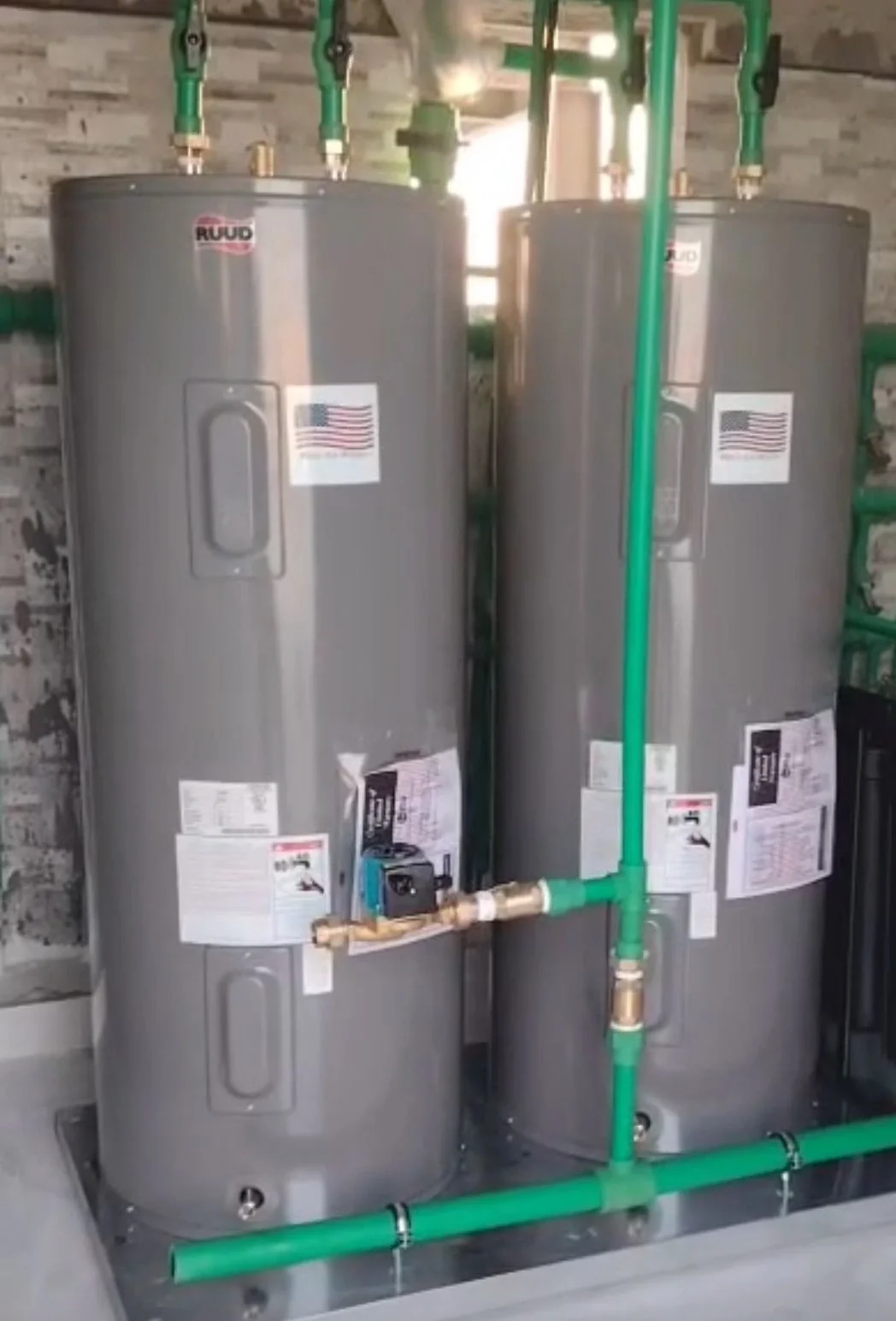
Central water heater system setup from the beginning provides much more flexibility than replacing a heater inside an already established network. In a new build or major renovation, the location of the tank can be selected before walls and finishes are completed, and the cold, hot, recirculation, drainage, and electrical routes can all be planned around both performance and future maintenance.
The first design decision is heater location. Ideally, it should be reasonably close to the center of hot-water demand while still leaving adequate space for service and future removal. It makes little sense to create an attractive utility room with a doorway narrower than the heater itself because eventual replacement would then require unnecessary dismantling or structural work.
The second decision is piping. Hot-water lines should use materials suitable for operating temperature and pressure and should be insulated where appropriate to reduce heat loss. If the villa is expected to use recirculation, the return line should be designed from the beginning instead of being added after occupancy through long and complicated routes.
The third decision is electrical preparation. The heater circuit should be designed around the planned equipment rather than installing a random cable and breaker and later trying to find a heater that happens to match them. Future capacity changes should also be considered carefully because a larger tank does not necessarily mean identical electrical requirements.
The fourth decision is drainage. The drain valve, T&P relief discharge, and any drain pan need a clear destination. Rheem states that the T&P discharge line should remain unrestricted and should terminate at an appropriate drainage point.
-
Planning the heater location before final finishes allows shorter more organized hot-water routes and reduces improvised solutions after construction is complete
-
The utility-room doorway and future removal path should be considered from the beginning because every water heater will eventually require replacement
-
If a recirculation line is required it is far more efficient to install it with the original hot-water network than to add it later through completed walls and ceilings
-
The drainage destination for the heater and T&P valve should be planned from the start so safety discharge does not end in an unsuitable location
-
Electrical infrastructure should be designed according to the planned heater and system requirements instead of installing arbitrary protection and later restricting equipment choice to whatever matches it
Central Water Heater Connections
Central water heater connections should be understood according to their functions rather than treated as a group of ordinary pipes and fittings. The Cold Water Inlet supplies replacement water to the tank, the Hot Water Outlet feeds the distribution network, and the cold line normally includes an isolation valve so the heater can be serviced. The system also includes the T&P Relief Valve for protection against excessive pressure or temperature, and depending on the design there may also be a check valve, expansion tank, and recirculation return line.
The location and sequence of these components matters. If a check valve is added and the plumbing becomes hydraulically closed, expanding water cannot move backward easily when it heats. The system then needs a dedicated method for handling thermal expansion. A. O. Smith explains that an expansion tank should be sized and adjusted appropriately in a closed system and that the T&P valve should not be used as the normal daily expansion-control device.
The T&P discharge line also has important requirements. Rheem specifies that it should not include a shutoff valve, reducer, or restriction and should discharge hot water safely to an appropriate location. These details should never be simplified merely to make the pipework look neater.
Electrical connections must follow the exact heater data plate and manufacturer instructions. A. O. Smith installation guidance emphasizes isolating the electrical supply during work, wiring according to the unit instructions, providing proper grounding, and fully filling the tank before power is restored.
-
The cold-water isolation valve allows the heater to be serviced without necessarily shutting down the entire household water supply when the plumbing design permits
-
A check valve should only be installed for a defined hydraulic reason because it can convert the system into a closed network that then requires thermal-expansion management
-
The T&P discharge line must remain unrestricted because any valve or reduction can compromise a critical safety function
-
Electrical wiring should be selected according to the actual rated voltage power and phase of the heater rather than according to gallon capacity or the appearance of the old unit
-
If a recirculation line is present the valves and pump direction should be arranged so circulation is understandable serviceable and hydraulically correct
Central Water Heater Tank Installation

Central water heater tank installation starts with the surface that will support the tank throughout its service life. The base or floor should be stable, level, and capable of carrying the heater after it is completely filled. A. O. Smith recommends confirming that the installation floor is level and strong enough for the full operating weight while also providing adequate service clearances.
The weight issue deserves special attention. An 80-US-gallon tank holds approximately 303 liters of water, so the water alone adds roughly 303 kilograms. A 120-gallon tank holds approximately 454 liters, meaning the water alone adds around 454 kilograms before the weight of the tank, insulation, controls, and fittings is included. A weak support base or unsuitable floor therefore becomes a structural issue rather than simply a cosmetic concern.
Service clearance is equally important. If heating elements or thermostats are located on one side, the technician needs room to reach them. If the anode rod requires vertical removal from the top, the installation area must provide the necessary clearance. A. O. Smith specifically advises leaving sufficient access for replaceable parts and anode service before the unit is permanently placed.
Where a future leak could cause major damage, a suitable drain pan and drainage arrangement should also be considered according to the product and site requirements. This is not based on an expectation that the heater will leak immediately but on designing for the complete service life of a large water-storage appliance.
Once the tank is positioned, the connected pipework should be supported independently. The heater’s inlet and outlet fittings should not be used as structural supports for the weight or tension of the plumbing network.
-
The heater base should be selected according to the full operating weight because large storage tanks add hundreds of kilograms after they are filled with water
-
A level installation helps keep the tank stable reduces unnecessary mechanical stress on connections and simplifies future draining and service
-
Space around the heater is not wasted room but necessary service clearance for elements thermostats anode access and drain components according to the model
-
Cold and hot water pipework should be independently supported so the heater connections are not forced to carry the weight or mechanical tension of the plumbing
-
If the tank is installed above a sensitive area or in a location where future leakage could cause significant damage suitable containment and drainage should be evaluated from the first day
Central Water Heater Installation and Commissioning
Central water heater installation and commissioning is the final stage that proves whether everything before it was completed correctly. After the tank has been secured and connected to the water system, the drain valve is closed and the cold-water supply is opened gradually. One or more hot-water faucets should then be opened so trapped air can leave the tank and distribution lines. A. O. Smith recommends continuing until water flows steadily from the hot outlets without air before electrical power is restored.
Rheem is equally clear about this point: an electric water heater should not be energized unless the tank is completely full of water. Dry or partially dry operation can damage heating elements. There should be no practice of turning the power on “for a few seconds just to test it” while the tank is empty.
Once the heater is full, all connections are inspected under normal cold-water pressure. Only then should the electrical supply be turned on and the first heating cycle monitored. Several things should be checked at this stage: does the heater start normally, does any leakage appear as the system warms, is the T&P valve behaving normally, is the outlet temperature appropriate, and does hot water reach distant fixtures properly?
If the system includes a recirculation pump, it should be tested as part of commissioning rather than separately. The technician should observe how quickly hot water reaches remote outlets, confirm correct circulation direction, and listen for any unusual operating noise.
The final step is customer handover. The technician should identify the electrical isolator or breaker, cold-water shutoff valve, drain valve, and T&P relief valve and explain that the T&P safety device should never be closed or tampered with if it begins to discharge.
-
Filling the tank and purging air must always come before electrical power because an uncovered heating element can fail rapidly instead of proving that the heater works
-
Leak inspection should be repeated after heating because operating temperature and pressure can reveal issues that were not visible while the system was still cold
-
Commissioning should include both the nearest and farthest hot-water outlets so the full distribution system is tested rather than only the tank itself
-
If a recirculation pump is installed its direction and effect on hot-water delivery time should be tested because it is part of user comfort and overall system performance
-
A complete handover should explain the isolation valves electrical protection T&P valve and warranty information so the homeowner knows how to respond safely if the system ever needs to be shut down or serviced
Conclusion
Central water heater installation with Al Arabi Orchid 99346138 should be treated as a complete process that begins with inspection and ends with commissioning rather than as a simple tank replacement. A successful project depends on selecting a location that supports the fully loaded tank and allows future service, installing the water connections correctly, providing a safe T&P discharge path, addressing thermal expansion where the plumbing is closed, matching the electrical supply to the exact heater specifications, and then filling, purging, leak-testing, heating, and checking the complete distribution network.
One of the most important operating rules emphasized by manufacturers is never energizing an electric water heater before it is completely filled with water. One of the most important safety rules is keeping the T&P Relief Valve and its discharge line free from shutoff valves and restrictions. Where a closed system exists, thermal expansion should be managed through proper system design rather than using the safety valve as a routine pressure-control device.
Al Arabi Orchid currently provides installation and maintenance services for American water heaters, pumps, filters, and tanks and serves Kuwait’s six governorates. For central water heater installation or replacement, contact 99346138. It is useful to prepare a photo of the current heater, its data plate, and the installation area so the decision begins with the actual site conditions rather than assumptions.
Frequently Asked Questions
What should be checked first before installing a central water heater?
The first step is to inspect the installation site as a complete system. This includes the available dimensions, access route for bringing the heater in and removing it later, the ability of the floor or support base to carry the full filled weight, the cold and hot water lines, the presence of check valves or pressure-reducing valves, T&P drainage, and the available electrical supply. Buying the heater before this inspection can lead to unnecessary modification work later.
Can I switch on an electric water heater while it is empty just to test it?
No. Manufacturers warn against energizing an electric water heater before the tank is completely full. The cold-water supply should be opened and air should be purged through hot-water outlets until a steady flow is established. Only after confirming that the tank is full and leak-free should the electrical supply be turned on. Dry operation can damage heating elements.
Is the T&P relief valve necessary on a central water heater?
Yes. The T&P Relief Valve is a fundamental safety component protecting the heater against excessive pressure or temperature. Its discharge line should not contain a shutoff valve, reducer, or restriction. If the valve begins to discharge repeatedly, the cause should be diagnosed, such as excessive system pressure or thermal expansion, rather than disabling the safety device.
When does a central water heater need an expansion tank?
An expansion tank should be evaluated especially when the plumbing is a closed system because a check valve or another component prevents expanded water from moving backward. As water heats, its volume increases, and without room to expand, system pressure can rise. A properly selected expansion-control method should be used instead of relying on the T&P valve for routine relief.
Can I install an 80-gallon heater directly in place of a 50-gallon heater?
Not automatically. Increasing capacity can change the dimensions, operating weight, heating power, electrical requirements, and service clearances. The base, room access, pipe arrangement, and electrical supply should all be checked before approving the larger heater even when the house already has a central hot-water system.
Does every villa need a hot-water recirculation line?
No. Not every villa requires recirculation. However, if the distance between the heater and remote fixtures is long and occupants regularly wait for hot water to arrive, a recirculation line and pump may be worth evaluating. The decision depends on the plumbing layout rather than simply the number of floors. Al Arabi Orchid also provides hot-water recirculation pump services.
What is the difference between installing and setting up a central water heater system?
Installation may simply mean replacing an existing tank within an established network. System setup begins earlier and includes planning the heater location, cold and hot water lines, recirculation, electrical supply, drainage, support base, and future service access. A new setup gives more freedom to optimize pipe lengths and utility-room design before finishes are completed.
Is central water heater installation cost fixed?
No. It changes according to heater size, installation location, access difficulty, condition of the base, pipework, valves, electrical supply, and whether the old unit must be removed or part of the network needs to be rebuilt. The best quotation clearly defines the scope and materials instead of giving a generic installation number.
How do I know the heater was installed correctly after commissioning?
Confirm that the tank was completely filled and air was removed before power was connected, that no leakage appears at the fittings, that the first heating cycle operates normally, that hot water reaches the intended outlets, that the T&P valve and discharge line are correctly arranged, and that any recirculation or pressure system operates as designed. Proper installation is proven under real operating conditions rather than by appearance alone.
Who installs central water heaters in Kuwait?
Al Arabi Orchid provides installation and maintenance services for American central water heaters together with pumps, filters, and tank systems. The company serves Al Asimah, Hawalli, Farwaniya, Jahra, Ahmadi, and Mubarak Al-Kabeer. You can contact 99346138 to request central water heater installation or replacement and to inspect the related plumbing components.