When you are choosing between Ruud, Rheem, and Bradford White, do not start with the brand name and assume one is automatically the best. A central water heater should not be judged by the logo alone. The right choice begins with the actual needs of your home: how much capacity you require, how your family uses hot water, what heating performance is needed, whether the model matches the electrical supply and installation space, and whether suitable replacement parts are available in Kuwait. A brand can have an excellent international reputation while the specific model available to you may not suit your property. Another model from a different brand may be a better choice because it provides the right capacity, specifications, serviceability, and local support.
Ruud or Rheem water heater
Comparing a Ruud or Rheem water heater should begin with an important point: Ruud and Rheem are closely connected from a manufacturing-family perspective because Ruud has been part of the Rheem family for many years. However, that does not mean every Ruud water heater is an exact copy of every Rheem model. Each brand has different series, capacities, specifications, and product configurations, so judging the name alone can easily lead to the wrong conclusion.
For example, if you are comparing an 80-gallon Ruud model with an 80-gallon Rheem model, you should not automatically assume they are identical simply because the storage capacity matches. You still need to compare the heating-element capacity, control system, tank design, insulation, physical dimensions, connection locations, and the warranty terms that apply to the model actually sold in Kuwait.
Maintenance is another important part of the comparison. Before choosing, ask whether service parts for the specific model are readily available locally. Heating elements, thermostats, fittings, and other service components may become important several years after installation. A heater is a long-term household appliance, not something you buy once and never need to maintain.
You should also separate one person’s experience with a particular model from the reputation of the entire brand. Someone may tell you that Rheem is excellent because one specific heater served them reliably for ten years, while the model you are considering may have a different capacity, configuration, and installation environment. The same applies to Ruud.
If the two models are very close in specifications, the practical decision becomes simpler. Which one is currently available? Which has clearer local warranty terms? Which is easier to install at your site? Which has better access to spare parts? And is any price difference actually justified?
The goal is not to declare that Ruud is always better than Rheem or the opposite. The useful comparison moves from the brand level down to the exact model that will be installed in your home.
-
Ruud and Rheem belong to the same broader manufacturing family but that does not make every model from the two brands identical in specifications or construction
-
A fair comparison should begin with similar capacities and the same intended use so you are not comparing a basic model with a higher-specification model and drawing a misleading conclusion
-
Heating performance control design insulation and tank dimensions matter more than relying only on the brand logo printed on the heater
-
Availability of service parts and technicians familiar with the specific model in Kuwait should be considered from the beginning because future maintenance is part of ownership
-
If both heaters are very close in specifications then local warranty installation requirements spare-part availability and price become stronger deciding factors than the Ruud or Rheem name alone
Ruud or Bradford White
The comparison between Ruud or Bradford White is slightly different from Ruud versus Rheem because here you are comparing brands from different manufacturing companies, each with its own product lines, engineering approaches, and model designs. Even so, it would still be inaccurate to say Bradford White is always better or Ruud is always better without identifying the exact models.
The first point is capacity. If the villa requires an 80-gallon heater, the useful comparison is between an 80-gallon Ruud model and a Bradford White model in a similar capacity and application range. Choosing a brand simply because of its reputation does not help if the available heater is too small or otherwise unsuitable for the home’s actual hot-water demand.
The second point is tank protection. Manufacturers use different internal protection methods and design approaches to reduce the effects of water conditions, deposits, and corrosion over time. The important thing is not memorizing the marketing name of a technology but understanding what is actually included in the model you are considering and whether its operating requirements suit your water system.
The third point is heating performance. Two heaters with similar tank volume can provide a different practical experience if their heating elements or recovery performance differ. This becomes especially important in villas or larger households where several showers may be used one after another during the morning or evening.
The fourth point is physical dimensions. Two 80-gallon units may not have the same height, diameter, or connection layout. One can fit a utility area much better than the other even when both offer similar storage capacity.
The fifth point is local service. Do not ask only whether “Bradford White parts” or “Ruud parts” are available in general. Ask about the parts used by the exact model in front of you. The same brand may use different components across different product series.
The brand reputation of Bradford White in water heating is strong, and Ruud also has a long-established presence in American water-heating products, but reputation alone does not make the decision. The model that genuinely suits your home should win the comparison.
-
Ruud and Bradford White should be evaluated through specific models rather than broad company reputations because each brand offers more than one product line and specification level
-
Internal tank protection is important but the exact technology needs to be confirmed on the model being purchased rather than assumed from the brand name
-
Two heaters with the same gallon capacity can differ in heating performance so storage volume alone is not enough to judge everyday comfort
-
Physical dimensions and connection locations can make one model more suitable for a specific installation space even when nominal capacity is the same
-
Local availability of the exact model’s service parts and technical support is more useful than relying on reviews of completely different models sold in another market
Comparing American water heaters in Kuwait

Any useful comparison of American water heaters in Kuwait should be based on consistent criteria rather than simply asking which brand is more famous. Ruud, Rheem, and Bradford White all offer multiple models, so the real comparison begins after the household requirement has been established and comparable heaters are placed side by side.
The first criterion is capacity. If the house genuinely needs 65 gallons, do not allow an attractive discount to push you toward a 50-gallon heater when the previous system already struggled to provide enough hot water. The opposite is also true. There is no reason to move to 120 gallons when the household does not have the demand to justify it.
The second criterion is heating performance. Tank size tells you how much hot water can be stored, but it does not fully explain how the heater performs during repeated use. Heating-element specifications and the heater’s ability to recover temperature after water is drawn should also be reviewed.
The third criterion is tank design and insulation. Effective insulation helps reduce heat loss while tank design and internal protection contribute to long-term reliability.
The fourth criterion is the electrical supply available at the installation site. Do not select a heater and only discover on installation day that its electrical requirements differ from the existing setup. Heating-element requirements and suitable electrical protection should be checked before purchase.
The fifth criterion is installation space. Measure the available height and diameter, examine connection locations, and make sure enough space remains for future maintenance. It is not enough for the heater to simply fit through the door.
The sixth criterion is the local warranty. Do not rely on information from an American product page and assume exactly the same terms apply in Kuwait. Review the written warranty for the specific model you are actually receiving and understand what it covers and who is responsible for supporting it.
The seventh criterion is spare parts. Ask specifically about heating elements, thermostats, safety components, and other parts associated with the model.
Only after these points have been made comparable does price become a useful criterion. Otherwise, the cheaper heater may simply belong to a different performance class.
-
Start the comparison with the correct required capacity because a difference in storage volume can explain major differences in price and performance
-
Heating-element capability matters together with tank size because it affects how quickly hot water can be restored after part of the stored supply is used
-
Tank design insulation and internal protection should be compared at the model level rather than assuming every product from one brand is constructed the same way
-
Electrical compatibility and installation-space requirements should be confirmed before purchase so an attractive deal does not create unexpected modifications later
-
The local warranty and availability of service parts for the specific model determine a large part of the heater’s long-term value
-
Price should be considered after capacity specifications service and installation requirements have been made comparable so the comparison is genuinely fair
Best central water heater brand
The phrase best central water heater brand is understandable because customers want to make one purchase and depend on the heater for years. The problem is that the word “best” is incomplete unless the property and specific model are defined. The best brand for a smaller home is not necessarily the best choice for a large villa, and the model that works perfectly in a new installation may not be the most practical replacement in an existing location with fixed connections.
Begin with the capacity the property actually needs. If the household calculation points toward an 80-gallon heater, for example, then the correct comparison is between Ruud, Rheem, and Bradford White models that genuinely provide that capacity or another appropriate size. Do not choose a brand first and then force the household requirement into whatever capacity happens to be available.
After capacity, look at heating capability. Customers often focus on the gallon rating while overlooking the fact that two heaters with the same storage volume can recover hot water differently. In a family that uses several bathrooms one after another, this difference can be noticeable every day.
Tank condition and design also matter. Internal protection technologies and proper insulation are important, but they do not make a tank indestructible. Water conditions, system pressure, installation quality, and maintenance still influence the real service life of the heater.
The best brand for your property should also offer a model that can realistically be serviced in Kuwait. If the heating element, thermostat, or another common service component is difficult to obtain, that reduces practical convenience regardless of how strong the brand reputation may be.
Installation location can also decide the comparison. Some heaters are wider, some taller, and service access can differ. A technically excellent heater that leaves no practical room for future element or thermostat service becomes a less suitable choice.
Warranty is another major factor. It is not enough to hear that the heater has a “long warranty.” You need to know what the warranty covers for the exact model, which party supports it locally, and whether tank coverage and component coverage follow the same conditions.
In the end, the best brand is not one universal winner. It is the model that matches the property’s consumption, installation conditions, maintenance needs, and budget most effectively.
-
The best brand for a customer is the one offering a model that correctly matches capacity usage and installation conditions rather than simply the most famous name
-
Heating recovery should be compared with storage capacity because repeated hot-water use depends on both factors
-
Tank protection matters but works within a complete system that includes water conditions pressure installation and maintenance
-
Availability of matching heating elements thermostats and service components increases the practical value of the model after purchase
-
Maintenance access and physical compatibility with the installation location are part of determining what is best rather than secondary details
-
The most useful warranty is the written warranty for the exact heater being purchased with clear conditions and a known party responsible for providing support
Ruud vs Rheem Kuwait
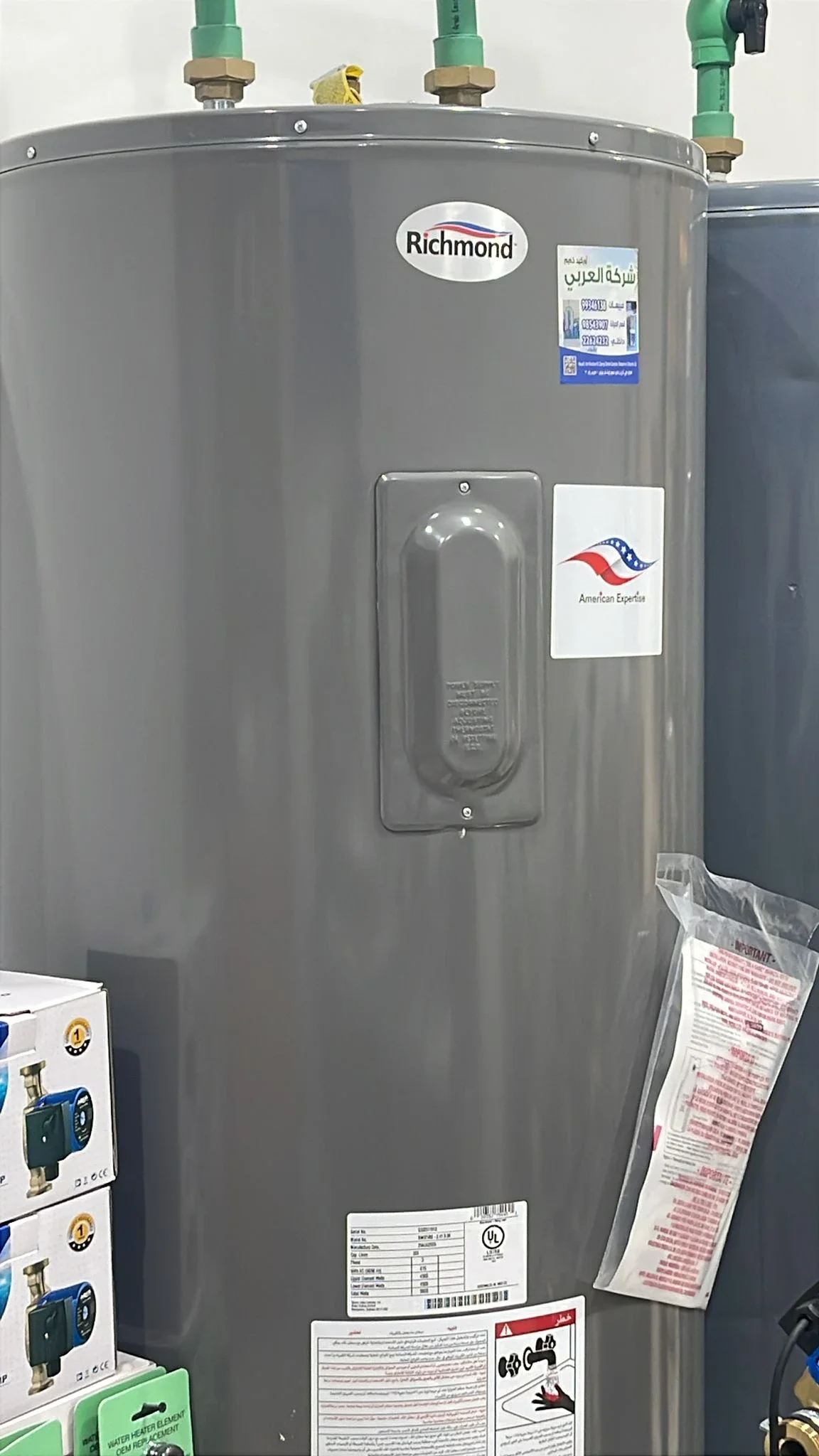
A search for Ruud vs Rheem Kuwait often comes from someone who has seen both heaters at different suppliers and wants to know whether the difference is significant or mainly a brand-name difference. An important fact is that Ruud is part of the broader Rheem family, but this relationship does not make every Ruud model identical to the corresponding Rheem unit.
The first thing to compare is the model number. This is not a minor detail because it identifies the actual series, capacity, and configuration. A customer may see two heaters both labeled 80 gallons and assume the comparison is finished, while the heating elements, controls, and protection features can still differ.
Usage should then be considered. If the villa has high and repeated hot-water demand, the relevant question is how the specific model behaves during that busy period. In a home with lighter demand, certain higher-level specifications may make less noticeable difference in everyday use.
Local availability also matters greatly. A Rheem model may have excellent specifications but limited availability at a particular time while the comparable Ruud model is readily available with local parts, or the opposite may be true. Waiting time and part availability are practical ownership considerations.
Price should only be compared after confirming that the two heaters belong to a similar specification level. If one model includes additional features, a higher price may have a clear reason. If the specifications are nearly identical, the key question becomes whether the extra cost creates any useful benefit in your property.
One mistake is assuming Rheem must always be superior because it is the parent brand, or that Ruud must automatically be lower because it belongs to the broader group. That is not a useful way to compare actual products.
You should also avoid relying on product photographs from overseas and assuming the exact same configuration is the model available in Kuwait. Always compare the actual specifications of the heater offered locally.
For maintenance, accessibility to thermostats and heating elements together with the availability of compatible replacement parts can matter more than broad statements about the brand.
If the Ruud and Rheem models you are comparing are effectively equal in capacity, specifications, warranty, and local service, choosing the more affordable or readily available option can be perfectly reasonable.
-
Ruud’s relationship with Rheem does not remove the need to compare model numbers because the two brands can still offer different series and configurations
-
Equal gallon capacity does not guarantee identical performance so heating capability controls and other specifications should still be reviewed
-
Local availability of the heater and its service parts matters because excellent specifications provide limited value when basic replacement components are difficult to obtain
-
A higher price is justified only when it provides a meaningful difference in specifications service or warranty that the household will actually use
-
Ruud and Rheem should not be ranked purely according to the parent-brand relationship because the individual product is what matters
-
When both models are extremely close local warranty parts availability serviceability and price become the strongest deciding factors
Bradford White or Ruud
The comparison between Bradford White or Ruud is broader than Ruud versus Rheem because these are brands from different companies with their own product philosophies and product lines. Even here, however, the same rule applies: judge the model that will be installed in the house rather than the company name by itself.
The first point is capacity. If household demand has been calculated at 65, 80, or 120 gallons, look at what is actually available from each brand in that range. A brand can be excellent, but if the supplier does not have the capacity your home needs, you should not change the household calculation simply to stay with that name.
The second point is tank-protection design and the way the heater deals with deposits and internal water exposure. Manufacturers use different internal linings and protection approaches, but these should be evaluated according to the specific model rather than turned into a marketing statement claiming the tank can never deteriorate.
The third point is heating-element performance. Element capacity and arrangement affect everyday operation, especially when a villa has several consecutive hot-water uses during a busy morning.
The fourth point is maintenance access. Bradford White and Ruud models can differ in physical design and component access, so the installation location matters. A heater that is squeezed between a wall and other equipment may become unnecessarily difficult to service later.
The fifth point is spare parts. Do not ask only whether Bradford White or Ruud parts are generally available. Ask about the model you are buying because different product lines can use different components.
The sixth point is the local warranty. Product information shown for the American market may not automatically represent the warranty offered with a heater sold in Kuwait. The relevant reference is the written local warranty provided with your unit.
The seventh point is installation cost. Two heaters may have similar purchase prices, but one can require greater modification to connections, base, or installation layout, increasing the total cost.
If both models provide nearly the same capacity, performance, serviceability, and support, price and availability can decide the purchase. If one clearly provides a feature your household genuinely needs, then a price difference may be justified.
-
Bradford White and Ruud should be compared as specific models rather than as entire companies because each brand has several product series and specification levels
-
The household’s required capacity remains the first filter and should not be changed simply because one brand is more readily available
-
Tank-protection technologies should be evaluated together with water conditions pressure and installation quality rather than treated as a guarantee of unlimited tank life
-
Heating-element capacity and recovery performance become particularly important in villas with several consecutive hot-water uses
-
Local availability of parts for the exact model and technician familiarity are more useful than a general statement that the brand has spare parts
-
Modifications to connections base and installation layout should be added to the equipment price when comparing the true cost of Ruud and Bradford White
Choosing an American water heater for a villa

Choosing an American water heater for a villa should not begin with Ruud, Rheem, or Bradford White. It should begin with a simpler and more important question: what does the villa actually need from the water heater? A property can be physically large but have only a few residents, while a smaller villa can have a large family using several bathrooms at the same time. Building size alone is therefore not enough to identify the right heater.
The first step is to estimate hot-water consumption during peak periods. How many people use the bathrooms during the same period? Can two or three showers operate together? Does the kitchen use hot water at the same time? And did the previous heater provide enough water or become cold before the peak period was finished? These details provide a real basis for capacity selection.
Heating performance comes next, not just gallon capacity. A large tank with recovery performance that does not match household usage may provide an excellent initial supply followed by an inconvenient waiting period. Storage and heating capability therefore need to be evaluated together.
The electrical supply is another important part of the calculation. Do not purchase a higher-powered heater and only later discover that the installation site requires changes to electrical connections or protection. The heater specifications should be compared with the property’s electrical setup before purchase.
Installation space becomes especially important with larger capacities. Measure the height and diameter, check the route through which the heater will be moved into place, evaluate the utility-room space, and leave enough room for future maintenance. Some customers only check whether the tank physically fits and forget that a technician may later need access to thermostats, elements, and connections.
If the villa has a hot-water recirculation system, this should be treated as a separate part of the network. Slow hot-water arrival at a distant bathroom does not automatically justify increasing heater capacity if the actual issue is the pipe length or recirculation design.
Only after capacity, installation location, and electrical requirements are established does it make sense to compare the available Ruud, Rheem, and Bradford White models. At that stage, the brand becomes a useful decision factor rather than an arbitrary starting point.
-
Choosing an American heater for a villa begins with real peak demand because the size of the building alone does not reveal how much hot water the household requires
-
Storage capacity and recovery performance should be evaluated together because a large tank with insufficient recovery can still create waiting after intensive use
-
Electrical supply and protection requirements should be checked before purchase so a good heater choice does not create unexpected installation modifications
-
Installation space access route and future service clearance are essential considerations particularly with larger-capacity heaters
-
Hot-water recirculation and delayed delivery should be evaluated separately from tank size so a distribution problem is not treated by purchasing unnecessary capacity
-
Once the technical requirement is established comparing available Ruud Rheem and Bradford White models becomes genuinely useful
Comparing central water heater brands
Comparing central water heater brands becomes much more useful when the decision is changed from opinion to a clear specification table. Instead of saying “someone recommended Ruud” or “someone had a good experience with Bradford White,” place the exact models side by side and compare the same categories in the same order.
Start with capacity and heating performance. Then record the heater dimensions, connection positions, tank-protection design, and insulation specifications. After that, compare the local warranty, spare-part availability, and maintenance access.
This method matters because one brand can have a model that fits one installation perfectly and another model that does not. A Rheem heater may work particularly well in one utility area because of its dimensions, while a comparable Ruud unit may require base modification. In another property, the situation can be completely reversed.
You should also compare total ownership cost rather than the initial purchase price alone. A cheaper heater that requires larger installation modifications or has more expensive or difficult-to-obtain service parts may lose its initial price advantage over time.
Warranty should be evaluated carefully. The useful question is not simply “this one has five years and that one has ten.” What exactly does each warranty cover? Is the tank covered under the same terms as the components? Who provides the service? Are there specific installation or registration conditions? These details are more meaningful than the headline number.
Maintenance should also be included. Some heaters can be easier to service in a specific installation location, while others require more clearance around the tank. In a tight utility room, this can become a major practical difference.
It is also important to separate brand quality from installation quality. An excellent heater installed under unsuitable pressure or with poor plumbing connections can provide a poor experience, but that does not automatically mean the manufacturer is weak.
A fair comparison therefore separates the quality of the heater, the quality of installation, and the availability of ongoing service. All three affect the customer’s experience.
-
A structured comparison using the same criteria for every model prevents brand fame or one person’s experience from controlling the decision
-
Capacity heating performance dimensions tank protection and insulation are technical factors that should be reviewed before price
-
Total ownership cost includes installation modifications maintenance and spare parts rather than only the initial heater price
-
Warranty value depends on coverage conditions and the responsible service provider rather than the number of years printed in advertising
-
Maintenance access can make one model more practical than another when the installation area is narrow or future service requires direct component access
-
Installation quality should be separated from brand evaluation because pressure or plumbing mistakes can make an excellent heater perform poorly
Suitable American water heater for the home
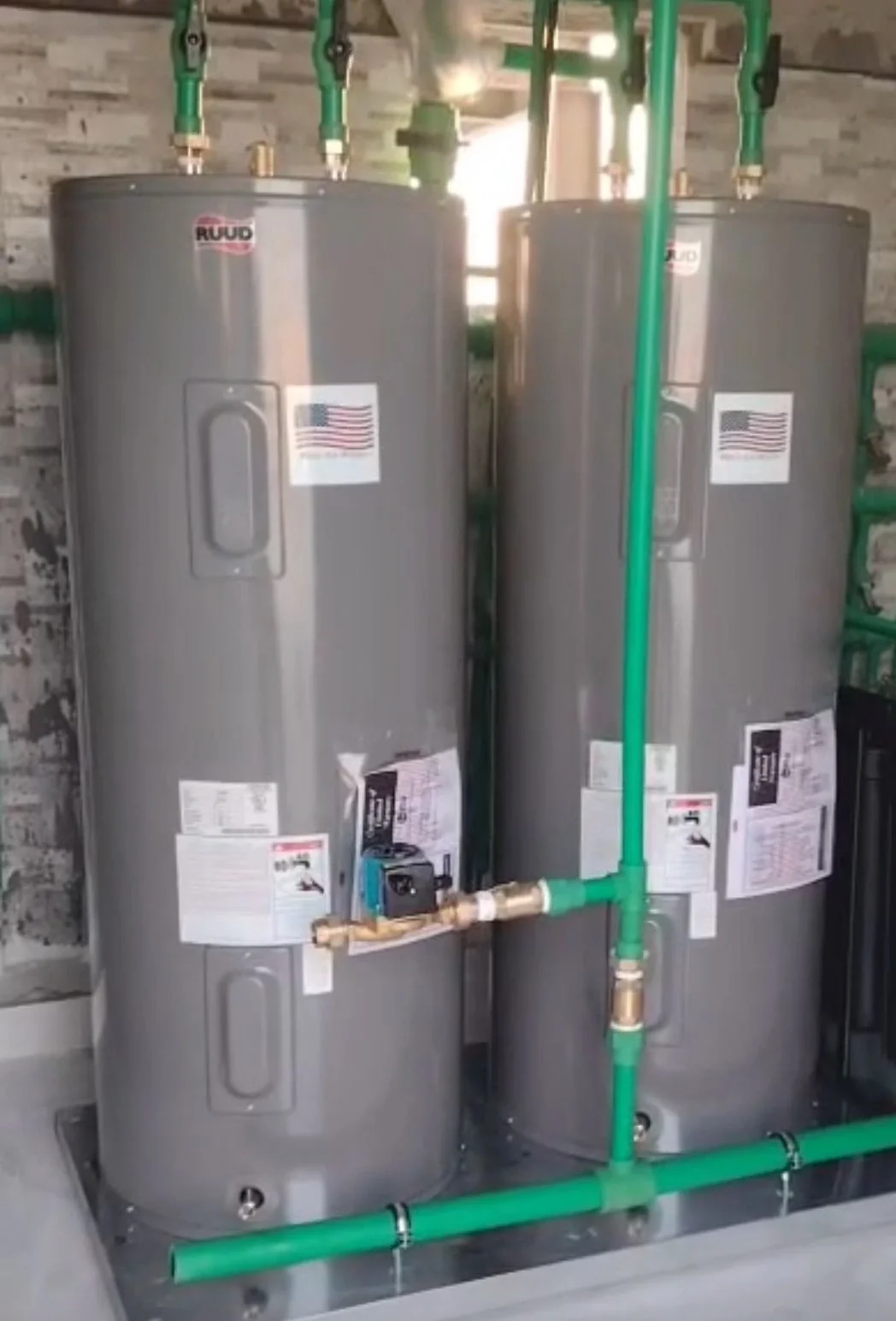
Choosing a suitable American water heater for the home is easier than trying to identify the “best American heater on the market” because the word suitable gives you a clear standard. The correct heater is the one that covers the property’s hot-water requirement, works properly with the existing network, and remains practical to maintain in the future.
A medium-sized home may need moderate capacity with usage spread throughout the day. A large villa may require greater capacity and more simultaneous use. An apartment may have more restrictions related to installation space. The meaning of suitable therefore changes with the property.
If you already have an older heater, do not ignore the information it provides. Ask yourself whether it was large enough, whether hot water regularly ran out, or whether the only problem was that the tank eventually began leaking after years of otherwise satisfactory service. If the old heater performed very well before the fault, that is strong evidence that a similar capacity may remain suitable. If it was always insufficient, replacement is an opportunity to recalculate rather than repeat the same size.
The available brands can then be compared within the same category. If you have three models from Ruud, Rheem, and Bradford White that all satisfy the basic requirement, the meaningful differences begin to appear in local warranty, spare parts, dimensions, maintenance access, and price.
The heater should also match the existing electrical installation. There is little benefit in selecting a model requiring major modifications when another model offers the required performance with better compatibility.
The same principle applies to plumbing connections. If a model integrates more easily with the existing system without sacrificing specifications, it can reduce unnecessary installation changes.
For long-term maintenance, access to suitable heating elements, thermostats, and service parts can make a major difference several years later. The purchase does not end on installation day.
The budget should also include the complete job: heater price, installation, required modifications, and any additional parts. The cheapest tank on the shelf is not always the cheapest complete solution.
-
A suitable heater is defined by household demand and property conditions rather than by a general ranking of brands
-
Performance of the previous heater provides real information about whether the existing capacity was appropriate or needs adjustment
-
Once capacity and required heating performance are established Ruud Rheem and Bradford White can be compared fairly within the same category
-
Electrical and plumbing compatibility can reduce unnecessary modifications and improve the logic of the purchase
-
Availability of service parts for the exact model increases long-term value because reliable ownership includes what happens several years after installation
-
A realistic budget includes equipment installation and required modifications rather than judging only the displayed heater price
Difference between American water heaters
The difference between American water heaters is not limited to the brand. Within the same company, the difference between two product lines can sometimes be greater than the difference between comparable models from two separate manufacturers.
The first difference is tank design and internal protection. Manufacturers use different linings and protection methods intended to reduce the effects of water exposure, deposits, and corrosion according to the product design.
The second difference is heating elements and control. Some models use more traditional configurations while others may include additional monitoring, leak-detection, or more advanced control features depending on the series.
The third difference is insulation and efficiency. The way the heater limits stored-heat loss affects operation, but comparisons should be made between models in similar capacity and product categories.
The fourth difference is maintenance access. Heating-element positions, access-panel design, and spare-part availability all matter to both the technician and the homeowner.
The fifth difference is capacities and physical dimensions. Not every manufacturer offers exactly the same size range in every market, and heaters with the same nominal gallon rating can still have different external measurements.
The sixth difference is warranty. Manufacturer warranty conditions vary by model and market. For a customer in Kuwait, the practical reference should be the written warranty supplied with the heater being purchased and the local conditions attached to it.
The seventh difference is local service availability. A brand can have an excellent international reputation but become less practical in a particular market if technical support or matching parts are difficult to obtain.
This explains why it is inaccurate to claim that all American heaters are effectively the same or that one brand is automatically better under every condition. The real differences become clear only at the model level.
-
Differences within one brand can be significant because product lines and technologies vary so the company name never tells the complete product story
-
Tank-protection approaches vary between manufacturers and should be evaluated according to the exact model and its expected operating conditions
-
Smart features monitoring and leak detection belong to specific models and should not be treated as standard features of every American water heater
-
Local warranty parts availability and service support determine a major part of the product’s value after the purchase stage
-
Physical dimensions and maintenance access can matter just as much as capacity when the heater needs to fit an existing utility space
-
The most accurate comparison is always model against model in a similar capacity and intended application rather than logo against logo
Conclusion
If you are deciding between Ruud, Rheem, and Bradford White in Kuwait, there is no need to search for one brand that can be declared the winner in every situation. Ruud and Rheem are closely related within the same broader manufacturing family, but their individual models are not all identical, while Bradford White has its own product lines and design approaches.
The correct choice begins with the capacity your home requires, heating performance, tank specifications, physical dimensions, local warranty, spare-part availability, maintenance access, and total installation cost. Only after these points have been compared does the brand name become a useful final deciding factor.
If a Ruud model gives your property the required capacity, suitable warranty, accessible service parts, and better overall value, it may be the best choice for you. If a Rheem or Bradford White model offers a feature your home genuinely needs, then the decision can reasonably move in that direction.
The important thing is not to start with the logo and then try to justify the purchase afterward. Start with household demand, installation conditions, electrical compatibility, and future maintenance, then use the brand as the final filter.
Put simply, the best heater is not necessarily the one with the most famous name in the showroom. It is the one that still suits your home five years later, can be serviced properly, and does not turn every replacement part into a new search project.
Frequently Asked Questions
Which is better, a Ruud or Rheem water heater?
There is no absolute winner. Ruud and Rheem belong to the same broader manufacturing family, but their individual series and models can differ in specifications, capacity, and features, so the best choice depends on the exact heater and the needs of the property.
Are Ruud and Rheem the same company?
Ruud has been part of the Rheem family for many years, but each brand continues to offer its own product lines, so every Ruud model should not be treated as identical to every Rheem model.
Is Bradford White better than Ruud?
Not in every situation. The answer depends on capacity, heating performance, tank design, local warranty, spare-part availability, installation conditions, and the exact models available in Kuwait.
What is the most important thing to compare between Ruud, Rheem, and Bradford White?
Begin with capacity and heating performance, then compare tank design, insulation, physical dimensions, electrical compatibility, local warranty, spare parts, and ease of maintenance.
Does the same gallon capacity mean the same performance?
No. Two heaters with the same storage capacity can differ in heating-element capability, insulation, control design, and recovery performance after hot water is used.
Is the most expensive brand always the best?
No. A higher price may reflect additional features or a higher product series, but if your property does not need those features, a less expensive model can offer better value.
How do I know whether a heater is suitable for a villa?
It should cover realistic peak-hour demand, provide enough storage and heating recovery for the number of users and simultaneous bathrooms, and match the electrical supply and available installation space.
Is spare-part availability important when buying the heater?
Yes. A central water heater is expected to operate for years, so suitable heating elements, thermostats, and other service parts need to remain practical to obtain for the exact model.
Should I choose the brand with the longest warranty?
Not based on duration alone. Check what the warranty actually covers, who provides the service, the conditions attached to it, and whether the locally sold model receives the same coverage.
What should I choose if all three models are very similar?
If capacity and specifications are genuinely close, local warranty, spare-part availability, ease of installation, maintenance access, and total price become the strongest deciding factors.