If your central water heater is not heating water, or the water has become lukewarm after previously reaching the correct temperature, do not immediately assume that the tank has reached the end of its life. The problem may begin with the electrical supply, thermostat, or heating element, but it can also be related to sediment inside the tank or the way hot water is distributed throughout the property. The important point is that the same symptom can have several different causes, so replacing parts by guesswork is not a reliable solution. Al Arabi Orchid 99346138 approaches weak heating by diagnosing the source before carrying out repairs. In this guide, we separate the most common situations and explain the difference between a heater that does not heat at all, one that heats poorly, and a problem that actually comes from the hot water network rather than the heater itself.
Central Water Heater Does Not Heat Water

When the problem is that the central water heater does not heat water at all, the first step is to distinguish between a heater that has lost electrical power completely and a unit that is receiving electricity but whose heating circuit is not doing its job. Electric central water heaters rely on heating elements controlled by thermostats together with electrical and thermal protection devices. Complete loss of heat can therefore result from a power supply interruption, a protective device that has tripped, a faulty thermostat, a failed heating element, or an internal wiring problem. The presence of an indicator light or another visible sign of power does not automatically prove that every part of the heating circuit is functioning correctly.
A central water heater combines electricity and water, so internal inspection is not a suitable area for home experimentation. The user can observe symptoms and check obvious external conditions without opening electrical covers or touching internal wiring, but testing heating elements, thermostats, and electrical connections requires a qualified technician and appropriate measuring equipment. If the breaker repeatedly trips, it is particularly important not to keep resetting it over and over in the hope that it will eventually stay on. Repeated tripping can indicate an electrical fault or a damaged component that needs proper diagnosis.
It is also useful to ask when the problem appeared. A heater that suddenly stops producing hot water after operating normally for years should be investigated differently from a unit whose heating performance has slowly declined over several months. Al Arabi Orchid 99346138 focuses on establishing whether the fault involves complete electrical loss, the temperature-control system, or the heating circuit itself before deciding that any component needs replacement.
-
If hot water disappears completely and suddenly the first priority is to confirm whether the heater is receiving the correct electrical supply before assuming the storage tank itself has failed
-
Repeated breaker tripping needs proper diagnosis because continually resetting the breaker can ignore an electrical or component fault that may continue to return
-
Thermostats and heating elements should be tested with appropriate measurements rather than judged only by appearance because a component can look normal while failing internally
-
Avoid opening electrical covers or touching heater terminals without proper qualifications because a central water heater combines electricity and water and careless testing can make the situation more dangerous
Central Water Heater Does Not Heat Properly
If the central water heater does not heat properly but still produces some warm water, this is different from a complete loss of heating. Reduced temperature usually means the system is still operating to some extent but can no longer reach or maintain the same temperature as before. One possible reason is a weak or failed heating element in systems that use more than one element. The heater may continue operating but take much longer to recover or provide less heating power. A thermostat problem or an incorrect setting can also cause the water to stop heating at a lower temperature than expected.
In other cases, the problem is not entirely electrical. Sediment inside a storage tank can affect heat transfer over time and may change how efficiently the heater operates, particularly if the unit has gone for a long period without inspection. Increased household demand can also create the impression that the heater has become weaker. If more people now live in the home or several bathrooms are being used within the same period, a system that once felt adequate may simply be reaching its designed limit more quickly. This is why it is important to distinguish between an actual equipment fault and a storage capacity that no longer matches current demand.
The pattern of the problem provides useful clues. If the first person receives properly heated water but the temperature drops quickly for the next users, the issue may be related to stored capacity, recovery performance, or unusually heavy consumption. If the water is already lukewarm from the beginning even after the heater has had enough time to recover, the diagnosis moves more strongly toward the heating elements or temperature controls.
-
Water that begins hot and then becomes cold quickly provides a different diagnostic clue from water that remains lukewarm from the first moment of use
-
Failure of part of the heating system can allow the heater to continue operating while taking significantly longer to heat the tank or producing less total heating performance
-
Increased household size or more simultaneous bathroom use can make a previously adequate heater appear weak even when there is no major mechanical fault
-
Sediment heating elements and thermostat performance should be reviewed when heating quality declines gradually because a slowly developing issue differs from a sudden total failure
Central Water Heater Water Is Cold

When central water heater water is cold even though the heater appears to be operating, the important question is where the cold water problem actually begins. Is every hot-water outlet in the property cold? Is only one bathroom affected? Does the water remain cold from the first moment, or does it arrive hot near the heater but become cooler at distant outlets? These questions matter because the fault does not necessarily have to be inside the storage tank. If most outlets receive properly heated water but one bathroom does not, the likely cause may be a mixer valve, local plumbing, or a distribution problem rather than complete heater failure.
If every hot-water outlet in the property becomes cold at the same time, this is a stronger indication that the problem may be close to the source of heat, such as the electrical supply, heating elements, or controls. If the property uses a hot water circulation system, a circulation pump problem or poor water movement may also affect temperature at distant points. Abnormal mixing between cold and hot water lines somewhere in the network can also lower the temperature reaching the user even when the tank itself is heating correctly.
A useful diagnostic approach is to compare the temperature at the closest hot-water outlet to the heater with the temperature at the most distant outlet. If the nearby outlet is properly hot but the distant one is cold or only warm, attention should shift toward distribution, circulation, and heat loss rather than immediately replacing a heating element. Al Arabi Orchid 99346138 separates heat-production problems from heat-delivery problems because replacing a perfectly good element will not repair a faulty pipe, mixer, or circulation issue.
-
If water is cold at every hot-water point in the property the diagnosis should focus more strongly on the heating source electrical supply and control components
-
If only one bathroom has cold water while the rest of the property receives normal hot water the local mixer or plumbing should be checked before blaming the central heater
-
Comparing the temperature at the closest and most distant outlets can help identify distribution heat-loss or circulation problems in larger hot water networks
-
A circulation system adds another component to the diagnosis because poor hot-water delivery to distant areas does not automatically mean that the storage tank has stopped heating
Causes of a Central Water Heater Not Heating
Understanding the causes of a central water heater not heating requires distinguishing between the immediate fault and the condition that caused it. A heating element may have failed, but the more useful question is whether it simply reached the end of its service life or whether electrical problems, operating conditions, or heavy deposits contributed to that failure. The thermostat may also be preventing normal heating or switching the heater off before the correct temperature is reached. Electrical connections, protective devices, and circuit components should also be considered when heating disappears suddenly.
Some failures appear immediately after previous maintenance or replacement work. If the problem begins directly after a new component was installed or the heater was disconnected and restarted, the recent work should be reviewed before the unit is treated as though a completely unrelated fault has appeared. By contrast, if performance has gradually declined over several months, the diagnostic process should consider aging components, accumulation, and progressive loss of heating efficiency.
In central systems serving several bathrooms, demand itself must also be considered. A homeowner may say that the heater does not heat like it used to, only for the inspection to reveal that the number of residents has increased or several bathrooms are now being used at the same time. The heater may still be functioning normally while the household demand has changed. This matters because the solution is not replacing a component but reassessing storage capacity or usage conditions.
Al Arabi Orchid 99346138 approaches the causes of a central water heater not heating in a logical order, beginning with electrical supply and operation, then moving to thermostats and heating elements, and finally reviewing tank condition and household demand.
-
A sudden loss of heating after years of normal operation suggests a different diagnostic path from a gradual decline that develops over a long period
-
If the problem appears immediately after previous maintenance or component replacement the recent work should be reviewed before assuming a completely new fault has developed
-
Increased household size or more simultaneous bathroom use can make a normally operating heater feel insufficient even when the thermostat and heating elements are functioning correctly
-
The most effective diagnosis works through the electrical supply control system heating elements tank condition and consumption pattern instead of beginning by replacing the most expensive or most commonly blamed component
Weak Central Water Heater Temperature

Weak central water heater temperature is different from complete loss of heat because the unit is usually still producing some temperature but either takes longer than before or stops at a lower level. This may be caused by a heating element that is weak or partially failed, a thermostat that is no longer controlling temperature accurately, or internal deposits that reduce heat-transfer performance. High water consumption over a short period can also cause cold incoming water to reduce tank temperature faster than the heater can recover.
One of the best ways to understand the problem is to compare current performance with previous normal behavior. If the heater used to reach the required temperature within a certain period and now takes almost twice as long, that change is important. If heating time remains similar but the temperature drops quickly whenever several bathrooms are used together, the issue may be closer to storage capacity, recovery rate, or increased consumption rather than failure of the heating element itself.
Thermostat settings and operation should also be checked. After previous maintenance or adjustment, the thermostat may have been set lower than before or may have developed a control problem that stops the heater at a reduced temperature. Diagnosis should therefore include actual temperature measurement and observation of the heating cycle rather than relying only on how warm the water feels to the user.
Al Arabi Orchid 99346138 focuses on whether weak central water heater temperature comes from poor heat production, poor heat retention, or hot water being consumed too quickly. Each one requires a different solution, and there is no reason to perform major heater work when the real issue may be a simple control adjustment.
-
A noticeable increase in heating time is an important symptom because it shows that performance has changed even when the heater eventually reaches an acceptable temperature
-
Temperature dropping mainly when several outlets operate together may indicate consumption above the heater's effective capacity rather than an obvious internal heating fault
-
Thermostat settings and control operation should be checked because a heater that stops at a lower temperature can appear weak even when the heating element itself still operates
-
Distinguishing between weak heat production and rapid heat loss is essential because one points toward heater components while the other may involve insulation distribution or consumption patterns
Central Water Heater Heating Element Failure
A central water heater heating element failure is one of the common causes of weak or completely lost heating because the element converts electrical energy into heat inside the stored water. If the element fails completely, the heater may lose most or all of its heating capacity depending on the design and number of elements. Some heaters use more than one element, so failure of a single element may cause slower recovery or reduced performance instead of total shutdown.
The important point is that a heating element cannot always be judged from the outside. It may look perfectly normal and show no visible damage while having an internal electrical fault. Correct diagnosis therefore requires suitable electrical testing by a qualified technician after the power has been safely isolated. Attempting to experiment with heater wiring or remove an element without the right training is not a sensible approach because the work involves electrical components directly connected to a water-filled tank.
In some cases, replacing the heating element is genuinely the correct repair, but the technician should still determine whether anything contributed to the failure. If there is heavy buildup, an electrical problem, or unsuitable operating conditions, installing a new element without addressing the surrounding cause may result in the same problem returning. Proper repair should not only replace the failed part when there is an identifiable reason for why it failed.
Al Arabi Orchid 99346138 treats central water heater heating element failure as part of a complete diagnostic process that also includes the thermostat, wiring, and normal operating conditions before confirming that the element is the main cause.
-
Failure of one element in a multi-element heater may cause significantly slower heating rather than a complete loss of hot water so symptoms depend on the design of the unit
-
The heating element requires proper electrical testing because an internal failure may not leave any visible sign on the outside of the component
-
Replacing an element without investigating why it failed can lead to only temporary repair if the real cause is related to electrical conditions or other operating problems
-
Confirming thermostat and wiring condition before installing a new element reduces the chance of replacing a part that was not actually responsible for the fault
Water Heater Runs Without Heating
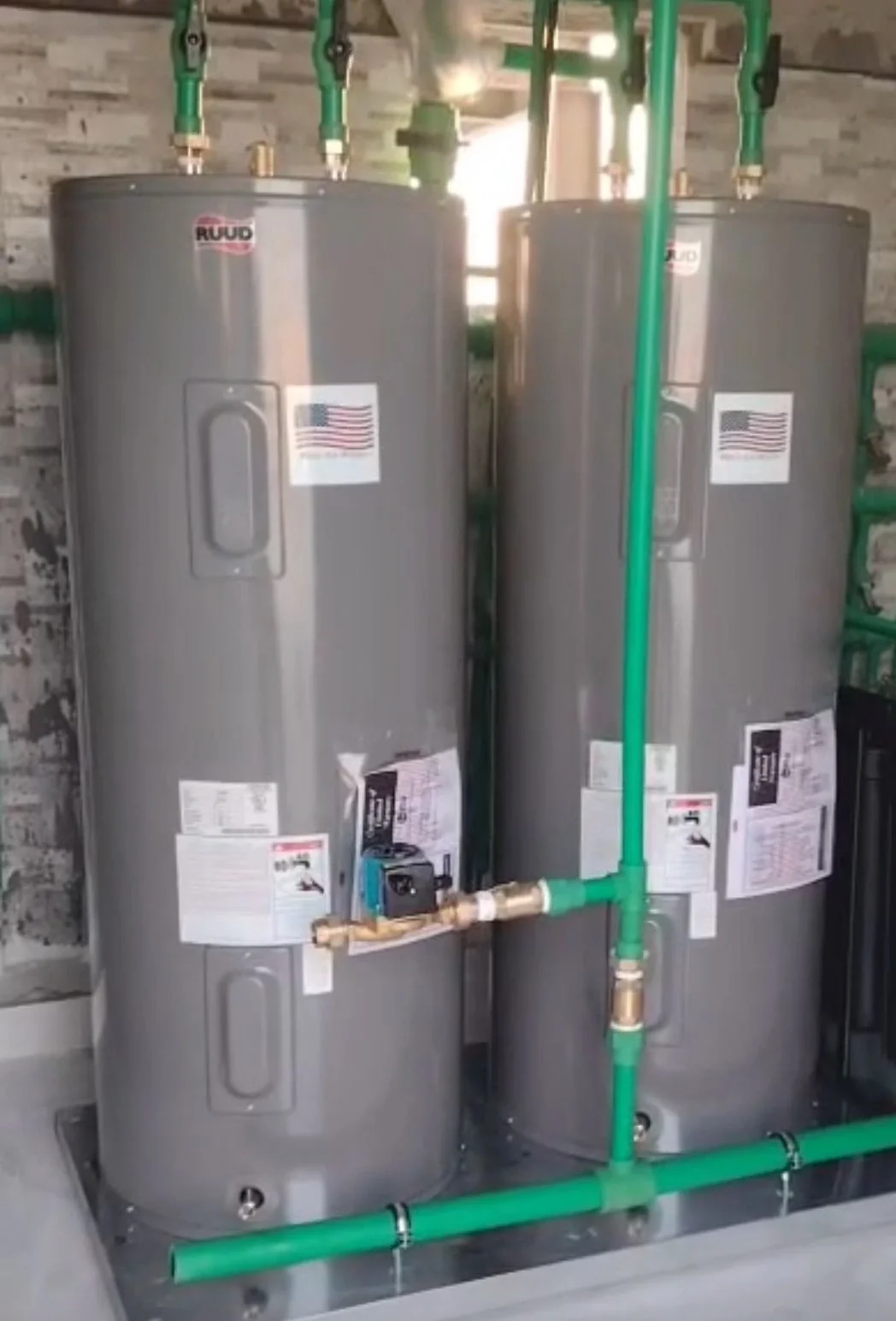
The situation where the water heater runs without heating causes confusion because the customer may see an indicator light, hear normal operating sounds, or know that electricity is reaching the unit and wonder how it can appear to be working without producing hot water. The explanation is that electrical power reaching one part of the heater does not prove that the entire heating circuit is operating. An indicator may still receive power while the heating element remains inactive, the thermostat does not call for heat, or another internal fault prevents the element from producing temperature.
The diagnostic process must therefore distinguish between electrical power being present and actual heat being generated. A technician checks whether the thermostat is requesting heat, whether the heating elements are receiving the required supply when they should be operating, and whether thermal protection devices remain in their normal operating condition. These checks cannot be confirmed by simply looking at the heater and require organized electrical measurements.
There are also cases where the heater is actually producing hot water inside the tank, but rapid cold-water entry or abnormal mixing within the plumbing system causes the user to receive cold or lukewarm water at the tap. This means that even the statement “the heater is working but not heating” should be separated into two questions: is the tank itself cold, or is only the delivered water cold?
Al Arabi Orchid 99346138 evaluates tank temperature, heating-circuit behavior, and hot water delivery instead of treating an illuminated operating indicator as proof that the entire heater is functioning correctly.
-
An illuminated operating indicator does not prove that the heating element is working because part of the heater can receive electricity while the heating circuit itself remains faulty
-
Checking the thermostat demand and electrical supply to the heating elements helps separate a control problem from an element failure instead of relying on guesswork
-
It is important to establish whether the storage tank itself is cold or whether the water becomes cold only after entering the plumbing network because the two cases require completely different diagnosis
-
Repeatedly switching the heater on and off does not repair an internal fault and may only temporarily hide a problem without restoring stable operation
Central Hot Water Heating Problem
A central hot water heating problem may involve more than the heater itself because a complete central system includes the storage tank, valves, pipes, hot water outlets, and sometimes a circulation pump and mixing devices. Concentrating only on the tank can cause the real problem elsewhere in the system to be missed, especially in villas or larger homes where there are long distances between the heater and the bathrooms.
For example, if hot water is excellent near the heater but weak at the far end of the property, distribution should be investigated first. If every outlet produces similarly weak temperature, the issue is more likely to be near the heating source. If some bathrooms are normal while others are not, local mixers and branch piping should be reviewed. This type of comparison divides the system into logical sections instead of immediately opening the heater as though every hot water problem must originate inside the tank.
The timing of the problem also matters. If performance is excellent at quiet times but becomes poor when several bathrooms are used, storage capacity and recovery rate become part of the diagnosis. If the water remains weak throughout the entire day even after many hours without use, an equipment fault or continuous heat loss becomes more likely.
Al Arabi Orchid 99346138 treats a central hot water heating problem as a system-level issue and uses both the location and timing of temperature loss to reach the most likely cause rather than replacing components randomly.
-
Comparing nearby and distant hot water outlets helps determine whether the fault is at the heating source or somewhere in the distribution network after the water leaves the tank
-
Different temperatures between bathrooms often point toward local mixers or branch plumbing before major repair work is carried out on the central heater
-
Weak temperature only during peak demand is different from weak temperature all day because the first may be related to load while the second is more likely to involve a fault or continuous heat loss
-
Evaluating the entire system reduces diagnostic mistakes especially in villas that use long pipe runs or a hot water circulation pump
Hot Water Does Not Reach From the Heater
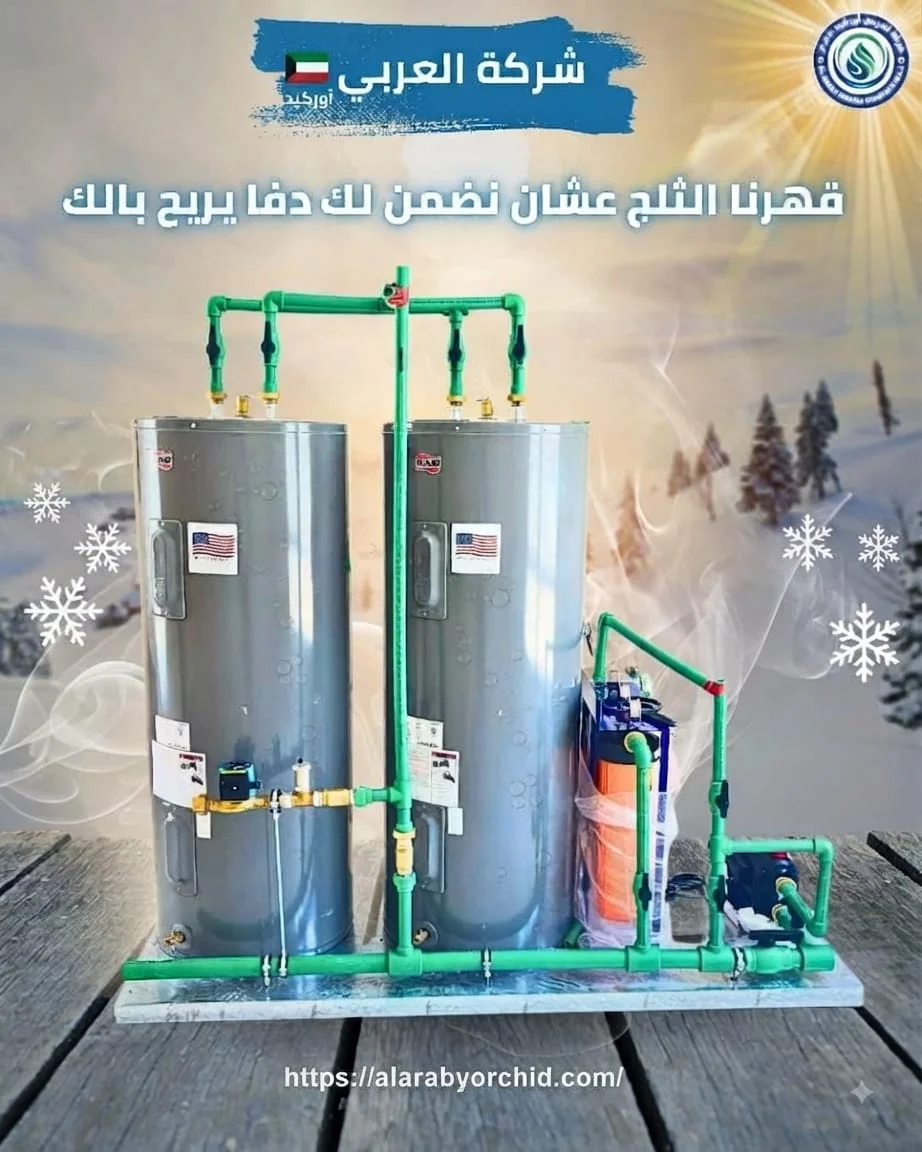
If hot water does not reach from the heater even though the tank itself is heating normally, the problem has shifted from producing heat to delivering it. The first step is to confirm whether hot water actually leaves the heater, then whether it reaches the nearest outlet, and finally whether it reaches more distant points. If the tank is hot but the nearest outlet remains cold, a valve, blockage, or abnormal mixing problem may be involved. If nearby outlets are hot but distant ones are not, the distribution network or circulation system becomes more likely.
Some systems use a mixing valve to control the temperature leaving the heater and reduce the risk of excessively hot water reaching users. If this valve develops a problem, the delivered temperature may be lower than expected even while the tank remains fully heated. Some bathroom mixer valves can also allow cold water to cross into the hot line under certain conditions, affecting more than one outlet depending on the plumbing design.
Homes with a hot water circulation pump require the pump and circulation path to be reviewed if hot water begins taking much longer to reach distant areas or no longer arrives as it did before. This does not mean every delay is caused by the pump, but its presence adds another component that needs to be considered.
Al Arabi Orchid 99346138 separates heaters that fail to create heat from systems that create heat but fail to deliver it because the second situation begins with the distribution network rather than replacement of the heating element.
-
If the storage tank is hot but the nearest outlet remains cold the diagnosis should move toward valves piping and mixing conditions before returning to the heating element
-
Hot water reaching nearby outlets but not distant ones strongly suggests reviewing circulation heat loss or the distribution path
-
A mixing valve should be included in the inspection when present because it can reduce delivered temperature even when the heater itself is operating normally
-
Faulty bathroom mixers can create cross-flow between cold and hot water which makes distribution-system testing important when the problem differs from one outlet to another
How to Fix Weak Central Water Heater Heating
The correct solution for weak central water heater heating starts by identifying exactly what type of weakness is occurring before carrying out any repair. If the water is completely cold, the electrical supply and heating circuit need attention. If it is lukewarm from the beginning, the thermostat, heating elements, and internal condition should be examined. If the water begins hot and then cools rapidly, storage capacity, recovery performance, and household demand need to be evaluated. If the water is hot near the heater but weak at distant bathrooms, attention should move to distribution and circulation. This simple separation prevents several very different problems from being treated as though they were the same fault.
Once the cause has been confirmed, the repair should match it. A failed heating element requires a compatible replacement. A faulty thermostat may need repair or replacement depending on its condition. Deposits affecting performance should be handled according to the heater design and manufacturer maintenance requirements. A capacity problem will not be solved by installing a new heating element if the tank is simply too small for current demand. A distribution problem will not be fixed by increasing the thermostat setting because heat lost in the network will continue to be lost while electricity consumption increases.
Testing after the repair is just as important as the repair itself. The technician should confirm that the heater reaches the required temperature, cycles normally, and delivers hot water to the relevant outlets without abnormal behavior. Repair that ends immediately after a new component is installed remains incomplete if the overall system has not been checked.
Al Arabi Orchid 99346138 focuses on making the solution for weak central water heater heating directly connected to a confirmed cause instead of turning the heater into a trial-and-error parts replacement exercise.
-
The repair process begins by identifying the pattern of temperature loss because completely cold water has different likely causes from water that starts hot and quickly becomes cool
-
Component replacement should take place only after the part has been confirmed as the cause because changing a heating element or thermostat without testing may add cost without solving the problem
-
Capacity and distribution problems require different solutions from electrical faults so increasing temperature or replacing a heating element is not a universal answer to every hot water complaint
-
Post-repair testing is necessary to confirm that the heater reaches the correct temperature cycles normally and delivers hot water consistently throughout the system
Conclusion
If your central water heater is not heating water, there is no single cause that can be assumed every time. The problem may come from the electrical supply, thermostat, heating element, internal buildup, inadequate capacity, or the way hot water is distributed through the property. The smartest first step is to describe the symptom accurately. Is the water completely cold? Is it lukewarm? Does it start hot and then cool quickly? Is the problem present in every bathroom or only at one outlet? Each answer narrows down the likely cause.
Al Arabi Orchid 99346138 provides inspection, maintenance, and central water heater repair services in Kuwait with a focus on identifying the cause of poor heating before replacing parts. The objective is to repair the source of the problem rather than only the visible symptom. A water heater cannot be persuaded to “just heat better” through enthusiasm alone; the fault has to be found and treated correctly so stable hot water returns.
Frequently Asked Questions
Why does my central water heater not heat water at all?
Possible causes include loss of electrical supply, a thermostat fault, a failed heating element, a protective device that has tripped, or an internal wiring problem. If the breaker keeps tripping, it should not be repeatedly reset before the cause has been inspected by a qualified technician.
Why does the heater run but the water stays lukewarm?
A heating element may not be operating correctly, the thermostat may be set or failing at a lower temperature, or deposits may be affecting heat transfer. Increased household demand can also create the same symptom if the heater is now being pushed beyond its normal capacity.
How do I know if the heating element is faulty?
Symptoms such as no heating or unusually slow heating can point toward a failed element, but confirmation requires suitable electrical testing. The external appearance of the element is not enough to determine whether it has failed internally.
Why is the water hot at first and then becomes cold quickly?
This can be caused by rapid use of the stored hot water, weak recovery performance, or partial failure in the heating system. The heater capacity and the way hot water is being used should be reviewed together with the condition of the heating components.
If only one bathroom has cold water is the heater faulty?
Not necessarily. If the rest of the property receives normal hot water, the problem is more likely to involve the bathroom mixer, local branch piping, or another distribution issue rather than complete failure of the central heater.
Can sediment cause weak heating?
Yes. Deposits inside some storage heaters can reduce heat-transfer performance and affect the heating elements over time. The correct maintenance method depends on the heater design and its actual condition.
Can more people in the house cause weaker hot water?
Yes. If household demand increases or several bathrooms begin operating at the same time, a capacity that was previously adequate can become insufficient even though the heater has no major technical fault.
Should I increase the thermostat setting if the water is not hot enough?
Not before the cause is understood. If the problem is related to a heating element, capacity, circulation, or distribution, increasing the thermostat may not solve it and can increase energy use or produce excessively hot stored water.
Why does hot water not reach distant bathrooms?
Possible causes include long pipe runs, heat loss, a circulation pump problem, a valve fault, or another distribution issue. If water is hot near the heater but cool at distant outlets, the network should be inspected before blaming the tank.
When should I call a central water heater technician?
If heating disappears completely, remains consistently weak, the breaker repeatedly trips, leakage appears, or heater performance changes noticeably, professional inspection is recommended. You can contact Al Arabi Orchid on 99346138 to diagnose the source and determine the appropriate repair.