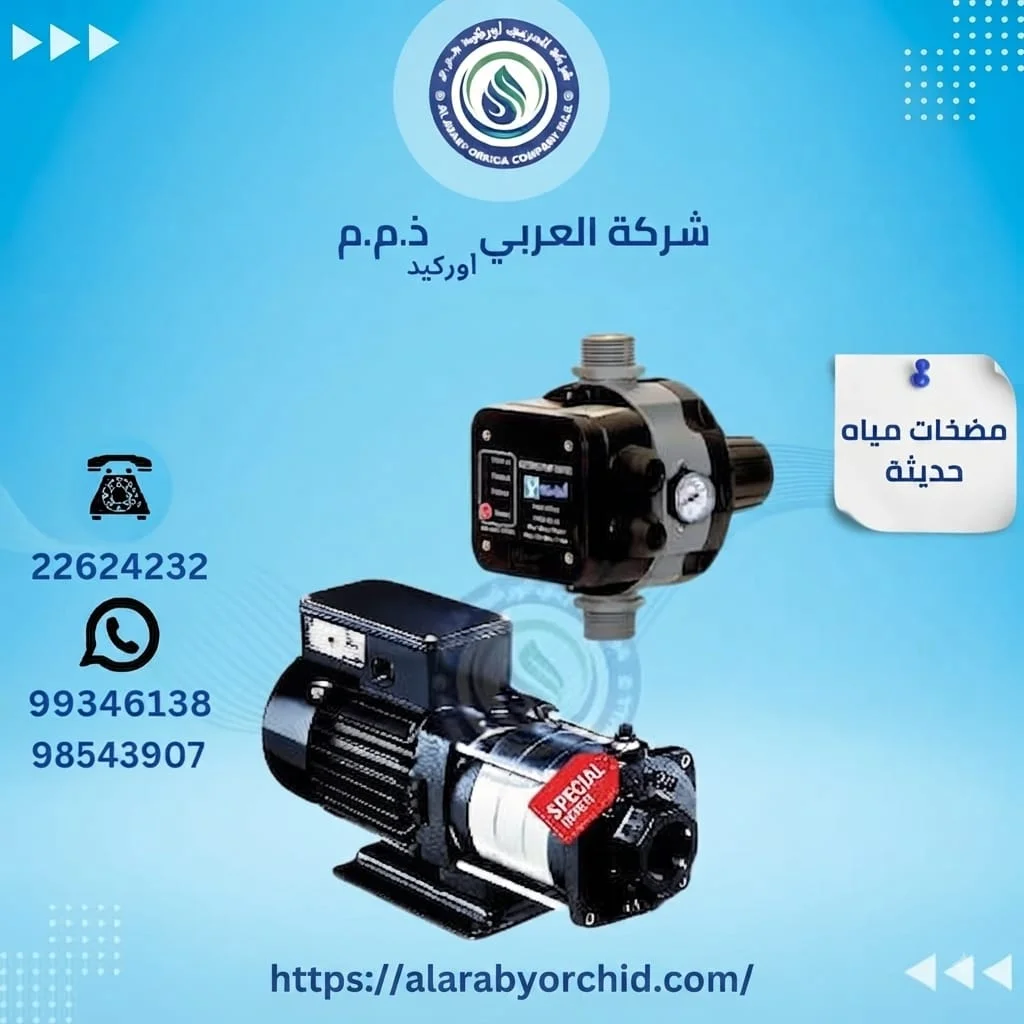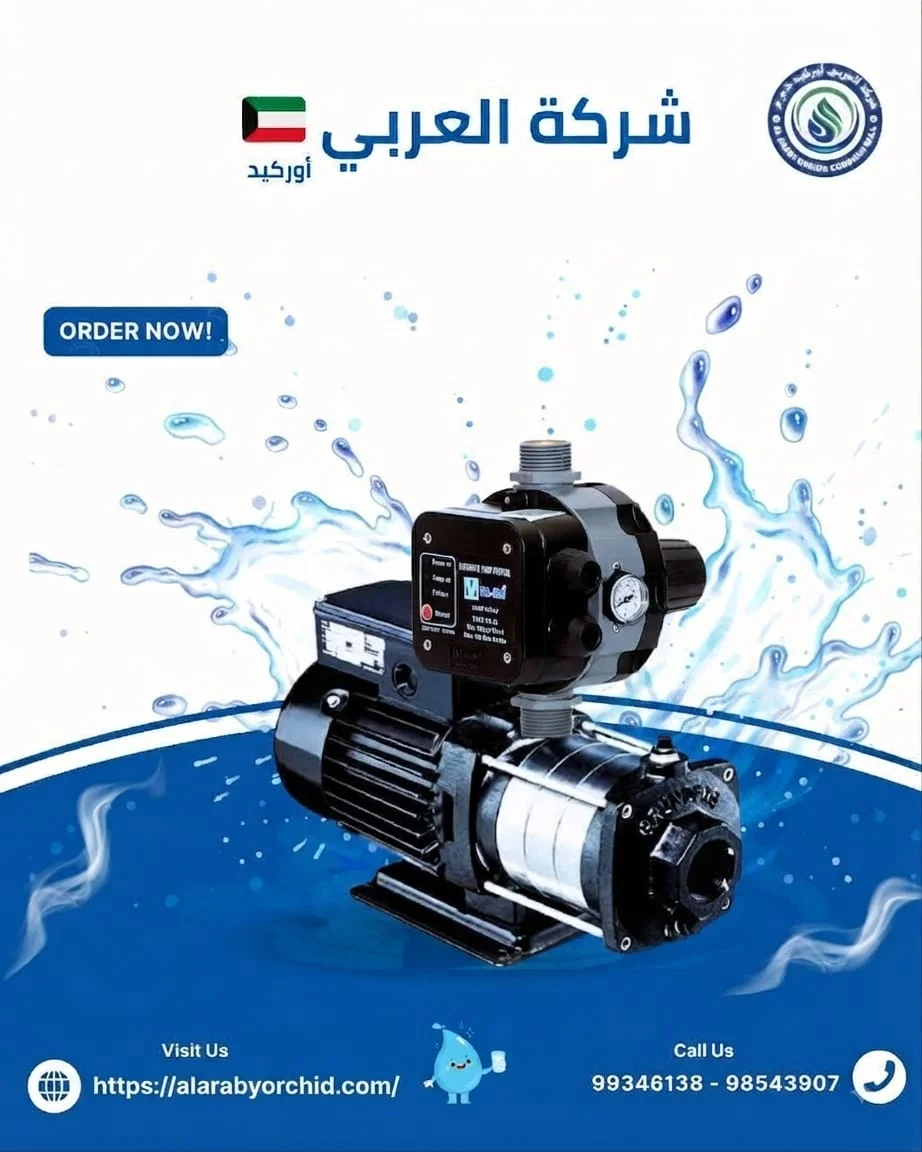
When water pressure is weak in a large villa or a multi-story building, the question often comes up quickly: is a 1 HP Grundfos pump enough, or should you install a 2 HP pump and avoid the risk of weak pressure? The problem is that choosing this way can leave you with a pump that is either larger or smaller than the property really needs. Motor horsepower by itself does not tell you how much water will reach the highest floor during actual peak use. The right decision depends on building height, the number of outlets that may operate at the same time, pipe length, filters, incoming pressure, and the pressure required at the farthest bathroom. Sometimes 1 HP is completely sufficient, and sometimes 2 HP has a clear technical justification. The important point is matching pump performance to the plumbing system rather than simply choosing the larger motor as a precaution.
Grundfos 1 HP pump
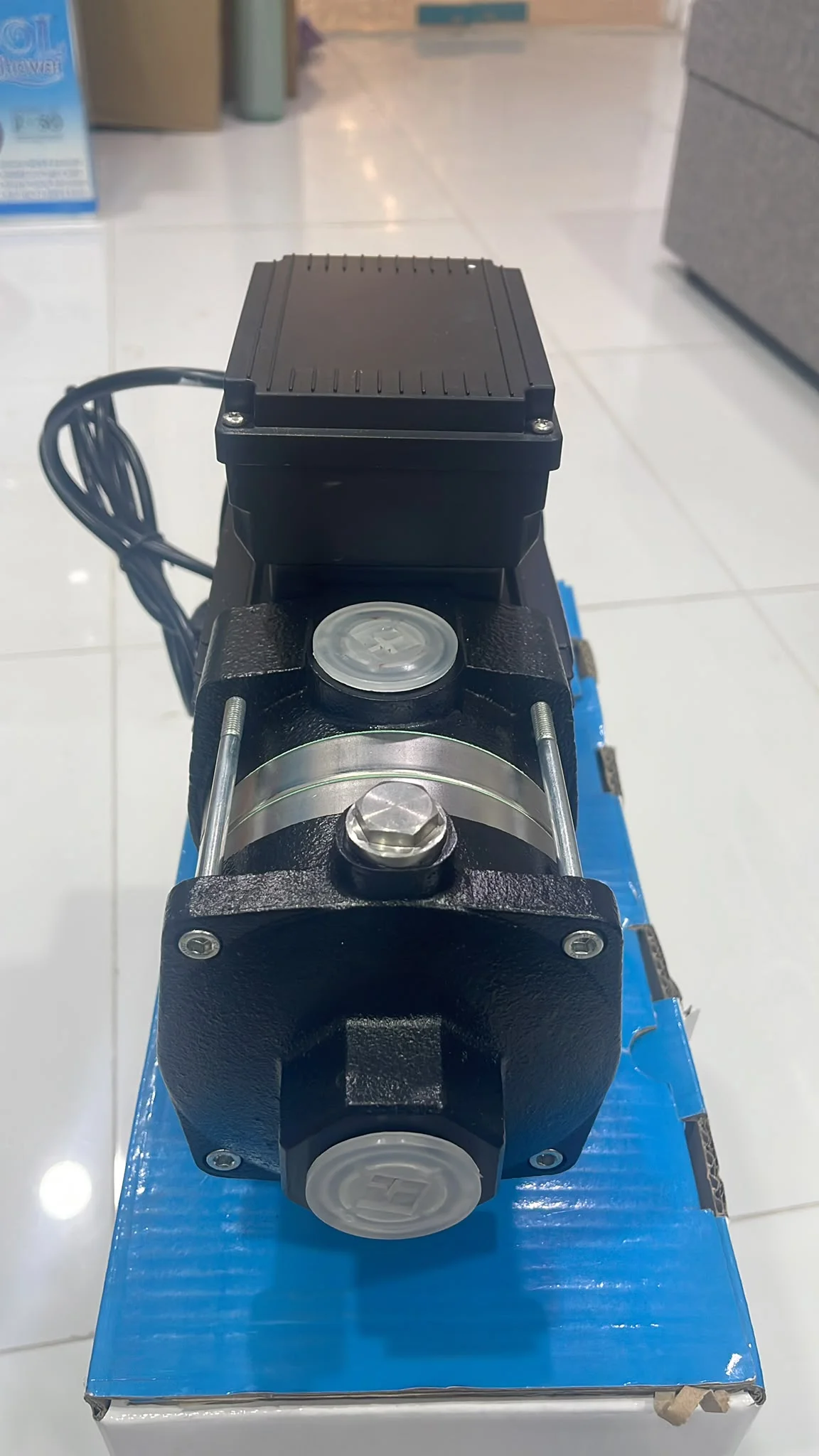
Choosing a Grundfos 1 HP pump makes sense when the building’s actual operating requirements fall comfortably within the performance range of the selected model and the property does not require more flow or head than the pump can provide reliably. The phrase “1 horsepower” gives an indication of motor power, but it is not enough to say that the pump is automatically suitable for a two-story or three-story villa because every property has a different plumbing system.
The first thing to identify is the elevation between the pump and the farthest outlet. If the pump is located close to the tank level and the highest bathroom is not significantly above it, the vertical head requirement is lower than in a much taller building. Even then, the calculation is not complete because pressure is also lost through pipes, elbows, filters, and valves.
The second factor is flow demand. A 1 HP pump can perform very well in a villa with several bathrooms if the number used at the same time is limited. A property may have six bathrooms, but if only two are normally used simultaneously, the required peak flow is completely different from another villa where four showers, the kitchen, and additional services may all operate at once.
The third factor is inlet pressure. If some useful pressure already exists before the pump, the final result is different from a system drawing from a tank under lower inlet-pressure conditions. The calculation should determine how much additional pressure the pump actually needs to provide rather than assuming every property starts from zero.
The plumbing network itself must also be checked. A small or dirty central filter, restrictive piping, or a partially open valve can consume a significant amount of pressure. If these issues are ignored, the homeowner may wrongly conclude that the 1 HP pump is too small when the real problem is downstream of the pump.
For example, a moderately sized villa with reasonable simultaneous demand, correctly sized pipes, and a stable water source may be served extremely well by a 1 HP pump if the model’s performance curve covers the required flow and head. Installing 2 HP in the same situation does not automatically improve comfort and may simply exceed what the system needs.
-
A 1 HP pump is a strong choice when the required operating point lies comfortably within the selected model’s performance curve without forcing the pump to run near its maximum limit most of the time
-
The number of floors provides only part of the picture because simultaneous flow demand and pressure loss through the plumbing network determine whether 1 HP can maintain performance during peak use
-
A villa with several bathrooms does not automatically require 2 HP when only a limited number of outlets are normally used together and the source and pipework are suitable
-
Existing water pressure before the pump must be included because the pump is not always responsible for creating the entire final pressure from zero
-
Restrictive filters valves and piping can make a 1 HP pump appear undersized even when correcting the plumbing restriction may be the more appropriate solution
-
Choosing 1 HP instead of 2 HP is technically correct when it provides the required pressure and flow with a reasonable margin without adding cost and pressure that the building does not need
Grundfos 2 HP pump
Choosing a Grundfos 2 HP pump becomes reasonable when the building has a genuine requirement that exceeds the comfortable performance range of the 1 HP models being considered. This higher requirement may come from greater elevation, higher simultaneous flow, significant pressure losses, or several of these factors occurring together.
In a multi-story building, part of the pump’s available head is used simply to overcome the vertical distance between the pump and the highest outlet. After overcoming that elevation, enough pressure still needs to remain at the fixture itself. Water merely reaching the top floor is not the final objective because the user needs a comfortable shower rather than water that only trickles from the outlet.
Higher simultaneous demand can also justify moving toward 2 HP. A building containing several apartments or a very large villa with many fixtures operating at the same time requires more flow than a normal single-family home. As flow increases, friction losses in the plumbing usually rise as well, so higher demand affects the system in more than one way.
However, a large building does not automatically mean that 2 HP should be installed. If the main pipes are old or undersized, a stronger pump may raise pressure before the restriction while leaving the same underlying problem after it. That is why the plumbing network should be evaluated before simply increasing motor power.
The pressure limits of the system components must also be considered. Water heaters, filters, hoses, valves, and mixers all operate within specific ranges, so increasing pressure simply because a more powerful pump is available is not good design. In some cases, the building may need pressure regulation, zoning, or a different control strategy rather than a direct increase in motor size.
In larger buildings, the real question may not even be “1 HP or 2 HP.” Some applications are better served by multiple booster pumps or pressure zones rather than a single 2 HP pump. The building design itself therefore matters as much as horsepower.
For example, a taller property containing several apartments or a very large villa with high simultaneous demand may reasonably consider a 2 HP model when the required operating point, including elevation and losses, falls beyond what the 1 HP option can provide comfortably.
-
A 2 HP pump has a clear technical justification when greater elevation and higher flow combine and calculations show that the 1 HP pump cannot maintain the required pressure under actual load
-
Large buildings need enough pressure remaining after elevation is overcome because water simply reaching the highest floor does not mean the service is comfortable
-
More simultaneous outlets increase required flow and also increase friction losses so a busy building behaves very differently from a villa of the same height
-
A 2 HP pump does not correct restrictive piping or an unsuitable filter and the plumbing network should be checked before assuming more motor power is the answer
-
Final pump pressure must remain compatible with heaters filters hoses valves and other components so higher power does not become unnecessary stress on the system
-
Some larger properties are better served by multi-pump booster systems or pressure zoning rather than relying on a single 2 HP pump
1 HP or 2 HP for the pump?
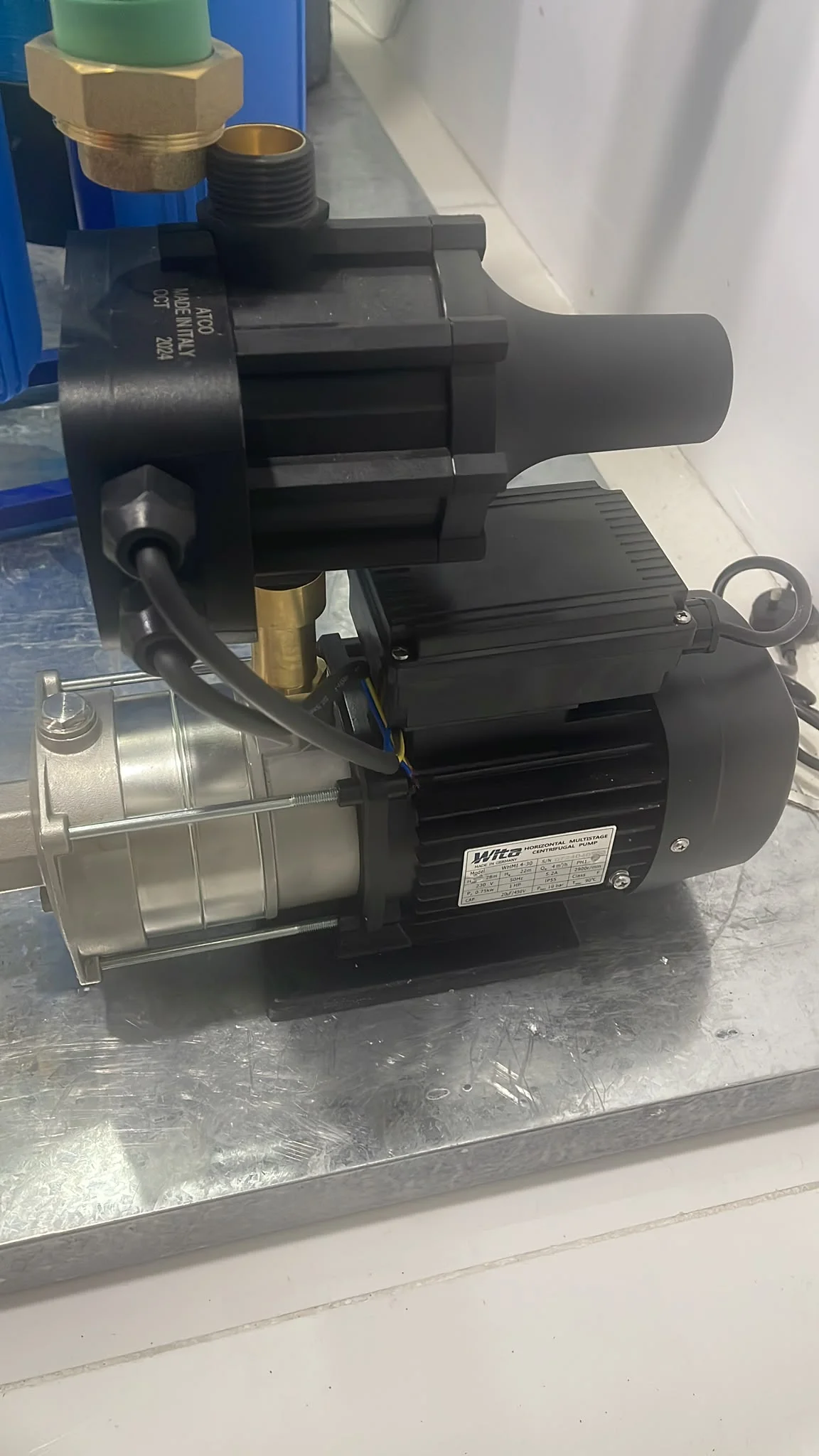
When deciding 1 HP or 2 HP for the pump, do not begin with price and do not assume the larger motor is automatically the safer option. The correct starting point is the required operating point: how much flow the building needs during peak use and how much total head the pump must overcome while still leaving comfortable pressure at the farthest outlet.
First, calculate the elevation difference between the pump and the highest faucet or shower. Then add pressure losses through piping, elbows, filters, and valves. After that, include the pressure required at the actual point of use. If useful pressure already exists at the pump inlet, it should be included rather than ignored.
Once these requirements are established, the performance curves of the Grundfos models can be compared. If a 1 HP pump can provide the required flow and head within a comfortable operating range, there is no technical reason to move automatically to 2 HP simply as a precaution.
If the required operating point falls outside the capability of the 1 HP model or forces it to run very close to its limit during peak periods, then a 2 HP model or a different system design becomes more reasonable.
There is also a difference between a building with relatively stable demand and one where usage changes dramatically throughout the day. A residential property may experience strong morning and evening peaks with much lower demand at other times. In this case, the control strategy can be just as important as the motor rating.
A common mistake is measuring pressure during a quiet period with one faucet open and deciding that 1 HP is enough. The test that matters is peak use because that is when you see whether the pump can maintain pressure as flow demand increases.
The opposite mistake is also common. Choosing 2 HP based on an unrealistic worst-case scenario that rarely or never occurs can result in an oversized system. Professional sizing should neither exaggerate peak demand nor underestimate it.
A large villa occupied by one family with distributed water use may be served perfectly by a correctly selected 1 HP pump, while a smaller building with several independent units using water simultaneously may require more flow. Floor area alone therefore does not determine horsepower.
-
Choosing between 1 HP and 2 HP starts with required flow and total head during peak use rather than property size or floor count alone
-
If the 1 HP pump comfortably provides the required operating point there is no technical benefit in increasing motor size simply for extra precaution
-
If a 1 HP model would operate near the end of its performance curve during most peak periods then the selection should be reviewed rather than accepting unstable pressure
-
Measuring pressure during light use can be misleading because pump limitations often become visible only when several outlets are operating
-
Selecting 2 HP for an exaggerated scenario raises cost and may create more pressure than necessary while realistic calculations prevent unnecessary oversizing
-
Villa or building size alone does not determine pump power because a smaller property with several units using water simultaneously may require more flow than a larger villa with fewer users
Water pump for a large building
Selecting a water pump for a large building cannot be based on floor count alone because a large property usually combines several factors at the same time: greater height, more water outlets, longer pipe runs, more filters and valves, and sometimes multiple tanks or pressure zones within the same building. All of these factors affect the required flow and head.
The first step is to determine actual peak demand. A building with several apartments does not mean every faucet will operate at exactly the same moment, but simultaneous demand is clearly higher than in a normal single-family home. The expected number of active outlets during the busiest periods, such as mornings and evenings, needs to be estimated realistically.
The vertical distance from the pump to the highest point of use is then calculated. This is still not the complete head requirement because long piping, elbows, valves, and filters create additional pressure losses that become more significant as flow increases.
If the building is large but the main distribution pipes are undersized, installing a stronger pump may not produce the expected improvement because the network itself becomes the restriction. Main pipe diameter therefore matters just as much as motor power.
The system should also be evaluated to determine whether one pump is appropriate or whether multiple pumps would be better. Some buildings experience major changes in demand throughout the day. A multi-pump booster system can sometimes operate more efficiently by bringing additional pumps online only when the load increases instead of relying on one oversized pump continuously.
Pressure on the lower floors is another important consideration. A pump selected to provide strong pressure on the highest floor may create excessive pressure on the ground or first floor. Pressure zoning or regulators may therefore be needed instead of simply increasing pressure throughout the entire building.
One of the biggest mistakes is looking at a large building and deciding that 2 HP must be correct. That may be true in one case and completely wrong in another. The answer comes from the required operating point and system design rather than the size of the building’s exterior or the number of apartment doors.
-
A large building needs peak-flow and total-head calculations because floor count alone does not reveal how much water is required during real use
-
Main pipe diameters are extremely important because restrictive pipework can limit flow even after a larger pump is installed
-
Filters valves and elbows add pressure losses that become more significant as flow increases and therefore need to be included from the beginning
-
Lower-floor pressure should be checked so the problem on the upper floor is not solved by creating excessive pressure below
-
Some buildings benefit more from a multi-pump system than from one large pump especially where demand changes significantly during the day
-
Building size does not directly determine horsepower because final selection must match the required operating point to the actual pump curve
Grundfos for apartment buildings in Kuwait
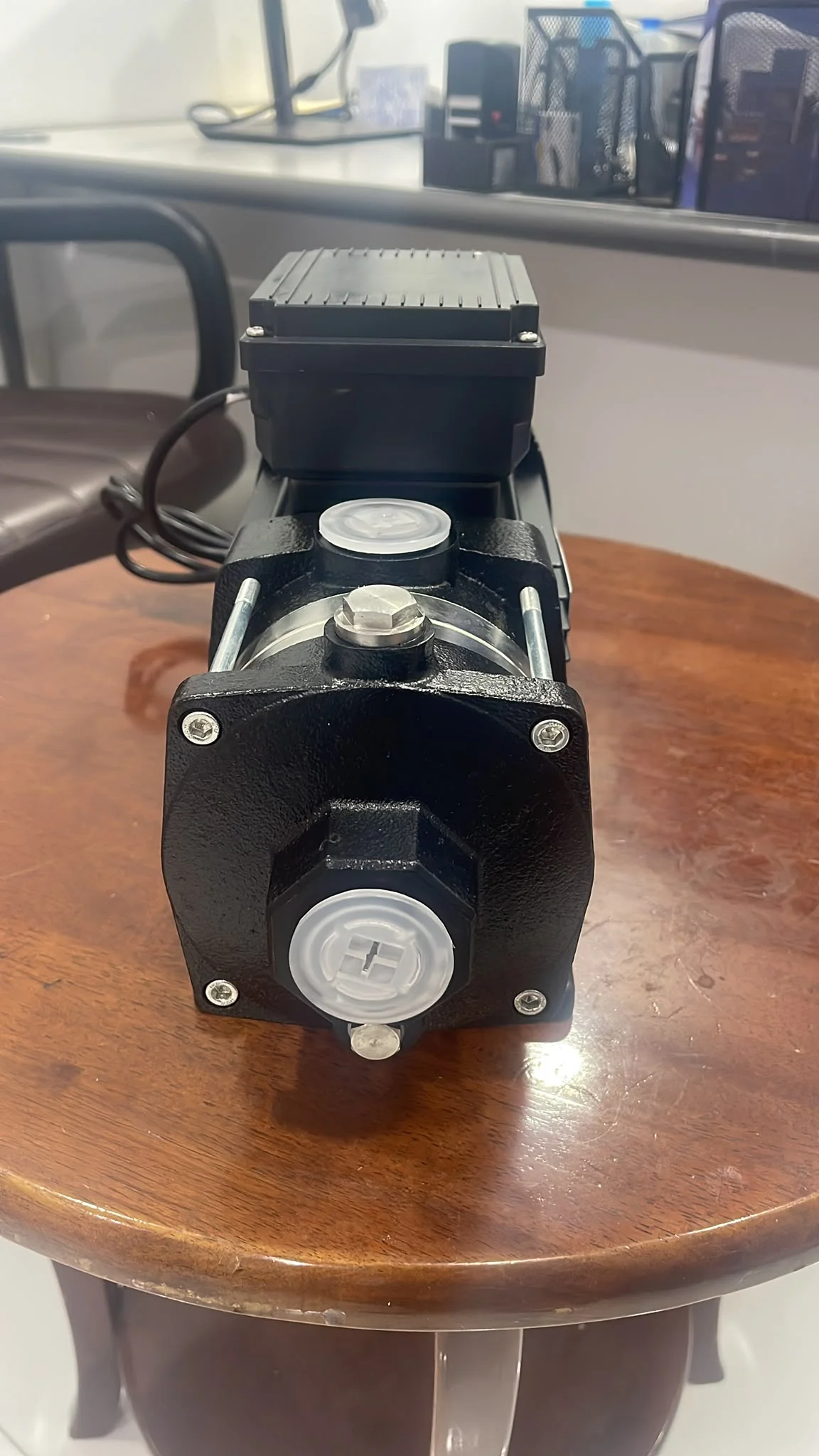
Choosing Grundfos for apartment buildings in Kuwait requires greater attention to pressure stability because an apartment building is different from a single home. Several apartments operate independently, and each has a different water-use pattern, causing demand to change quickly throughout the day.
In the morning, several apartments may use showers and kitchens at the same time, while demand may fall substantially around midday. If the system is designed only for maximum peak demand using a large pump that always operates at the same output, the result may be less efficient than a system that adjusts to actual demand.
This is where certain Grundfos variable-speed solutions or multi-pump booster systems can be useful because they can adapt system output as water consumption changes within the limits of the design. Even smart or variable-speed systems still require proper calculation because the maximum required flow and pressure must be established first.
The water source is important as well. If the building depends on a ground-level tank, the suction piping must be able to supply the required flow without restriction or air entry. If more than one pump is used, the manifold and suction arrangement should distribute flow correctly.
Building height must then be considered. A multi-story apartment building may need higher pressure than a villa, but if the full pump pressure reaches the lower floors, it may be higher than necessary. Dividing the building into pressure zones can therefore be a sensible design approach in some cases.
Maintenance is especially important in apartment buildings because one pump failure can affect several households. Good accessibility, isolation valves, and a layout that allows maintenance without unnecessarily shutting down water to the whole building add real practical value.
The selection should therefore not stop at saying “a 2 HP Grundfos pump for the building.” One property may genuinely need one 2 HP pump while another may be better served by several smaller pumps arranged more intelligently.
-
Apartment buildings need a pressure system that can respond to changes in water demand across several units throughout the day
-
Variable-speed systems or multi-pump boosters can be more appropriate where demand ranges from light use to a high residential peak
-
Ground-tank suction piping must be capable of supplying the required flow because restrictions before the pump reduce the performance of the entire system
-
Pressure zoning can become important in taller buildings so lower floors are not exposed to unnecessarily high pressure
-
Service access and isolation are important because any interruption in the booster system can affect multiple apartments at the same time
-
Choosing Grundfos for an apartment building should be based on the complete booster-system design rather than motor horsepower alone
Booster pump for a large villa
Selecting a booster pump for a large villa requires understanding how the villa actually uses water rather than focusing only on its floor area. A very large villa may have relatively few occupants with water use spread throughout the day, while a smaller villa occupied by a larger family may have several bathrooms operating at the same time. Property size alone therefore cannot determine whether 1 HP or 2 HP is needed.
The first step is to identify realistic simultaneous use. How many showers may operate together? Is the kitchen drawing water at the same time? Is a washing machine, garden irrigation line, or outdoor service connected to the same plumbing network? All of these uses contribute to required flow.
The elevation should then be calculated. If the villa has three floors and the pump is installed near a ground tank, the highest bathroom requires the pump to overcome a meaningful elevation before any comfortable pressure remains at the shower.
Central filters are also important in large villas. Every filter creates pressure loss, and that loss generally becomes more significant as flow rises. A filter sized for a small home can become a major restriction in a large villa even if the pump itself is powerful.
Pipe length and diameter should also be reviewed because large villas often have long horizontal pipe runs in addition to vertical elevation. Friction loss can therefore be significant even when the building height is not extreme.
Where demand changes substantially throughout the day, a variable-speed pump may be useful because it can provide pressure that remains more consistent between one-faucet use and periods when several outlets are operating.
However, if calculations show that a 1 HP pump comfortably provides the required flow and head, there is no reason to install 2 HP simply because the villa is large. Conversely, if the 1 HP unit would operate near the edge of its performance curve during peak demand, then a 2 HP model or a larger booster arrangement becomes reasonable.
-
Villa size alone is not enough because occupant count and water-use patterns matter more than total floor area
-
Simultaneous use of showers kitchen fixtures and outdoor services provides a more accurate indication of required flow
-
Central filters should be sized for villa flow so they do not become a major source of pressure loss even when a strong pump is installed
-
Long pipe runs in large villas create friction losses that should be included alongside vertical elevation
-
A variable-speed pump can be useful when household demand changes significantly and more consistent pressure is desired
-
A 2 HP pump is not automatically better unless calculations show that the 1 HP option cannot meet the required operating point with an appropriate margin
Pump power for multi-story buildings
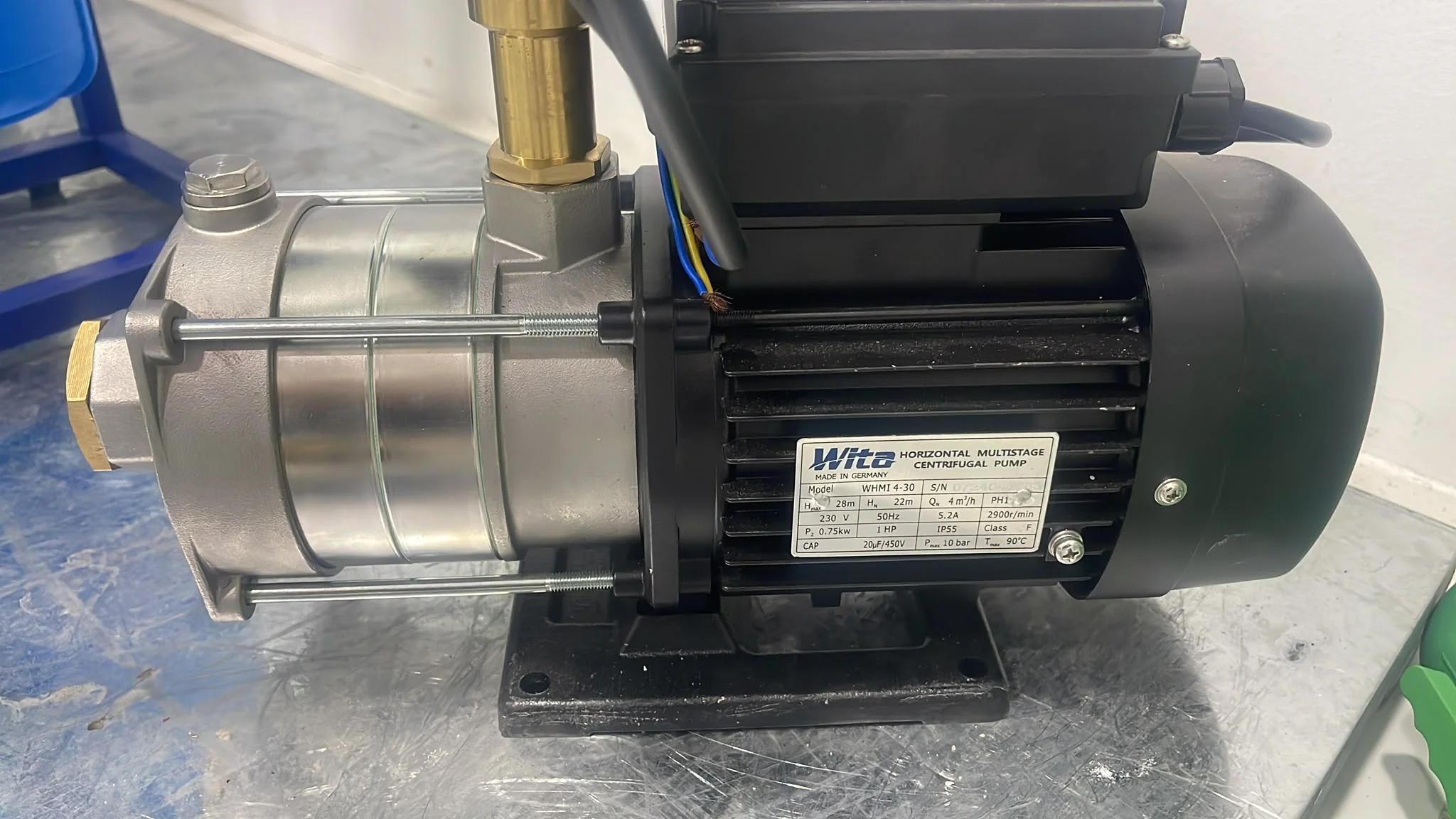
Determining pump power for multi-story buildings requires separating three different requirements clearly: how much water the building needs during peak use, how much vertical elevation exists between the pump and the highest outlet, and how much usable pressure should remain at the point of use. If the entire decision is reduced to floor count, the selected pump is likely to be inaccurate.
Every additional floor increases the elevation the pump has to overcome, but elevation is not the only factor. A six-story building with properly sized main pipes and distributed demand can be hydraulically easier to serve than a shorter building with restrictive pipes, several filters, and high simultaneous use.
It is also important to distinguish between water reaching the top floor and water reaching it at usable pressure. A pump may be able to send water to the highest floor while the shower still feels weak because most of the available head has already been consumed by elevation and pressure losses.
For that reason, the required residual pressure at the highest point should be included as part of total head rather than treated as something to consider only after selecting the pump.
Pressure on the lower floors is another major issue. If pump power is increased only to serve the highest floor, lower floors can end up with pressure higher than necessary. Taller buildings may therefore need pressure zoning or regulation rather than simply a larger motor serving the entire network.
Peak flow also affects selection. A building with ten apartments but relatively distributed use differs from another building of the same height where many units draw water simultaneously. Realistic peak demand matters more than the simple number of apartments.
Finally, the required operating point is matched to the pump performance curve. If it falls comfortably within the capability of a 1 HP model, that may be the correct choice. If significantly higher flow and head are required under peak conditions, 2 HP or a different booster-system design becomes more appropriate.
-
Pump power for multi-story buildings depends on elevation flow and required pressure at the highest outlet rather than floor count alone
-
Getting water to the top floor is not enough because comfortable pressure must remain after part of the pump head is consumed by elevation and system losses
-
Taller buildings may require pressure zoning so correcting weak upper-floor pressure does not create excessive pressure on lower floors
-
Apartment count provides an initial estimate but simultaneous peak use has a stronger influence on required flow
-
Pipe diameters filters and valves affect required pump power because pressure losses increase as flow rises
-
Comparing 1 HP and 2 HP should happen after defining the operating point and reviewing each model’s performance curve rather than before the calculation
1 HP pump for the home
Choosing a 1 HP pump for the home makes sense when the property needs more support than a smaller pump can comfortably provide but does not have requirements that justify moving to 2 HP. This middle range includes many medium and large homes and villas as long as the elevation, usage pattern, and plumbing network match the performance of the selected model.
The first step is understanding why half horsepower is not enough. If the home has several floors, more than one bathroom operating together, or long pipe runs, a 1 HP pump may provide a better margin and maintain pressure more effectively as flow increases.
However, 1 HP should not be selected automatically just because a smaller pump felt weak. The actual cause may be a clogged filter, poor suction conditions, or a partially open valve. If the problem comes from the network, some of the weakness will remain even after installing a larger pump.
A 1 HP pump becomes more reasonable when testing shows that the system needs greater flow at the same elevation. For example, if pressure is excellent with one outlet open but drops noticeably when a second or third bathroom starts operating, additional pump capacity may be justified once the plumbing itself has been confirmed to be healthy.
Final pressure should also be reviewed. The goal is not to make the water excessively forceful but to keep showers, the kitchen, and other fixtures stable during normal use.
In some homes, 1 HP is more suitable than 2 HP because it provides the required performance with enough margin without creating unnecessarily high pressure or additional cost. This can be particularly important in older plumbing networks where components may not be suitable for higher pressure.
If household demand changes substantially throughout the day, a correctly sized variable-speed system may also be considered because speed control can reduce the difference between single-outlet use and several outlets operating simultaneously.
-
A 1 HP pump is suitable when half horsepower cannot comfortably cover required flow but 2 HP would be larger than the plumbing system needs
-
Weak performance from a smaller pump does not automatically mean a larger motor is required because filters suction lines and valves should be checked first
-
A noticeable pressure drop as additional outlets open can indicate that 1 HP is closer to the real requirement when the plumbing network itself is healthy
-
The objective of 1 HP is stable pressure during normal use rather than achieving the highest possible pressure
-
Homes with older plumbing benefit from calculated pump sizing instead of unnecessarily increasing pressure and placing more stress on hoses and mixers
-
A correctly sized variable-speed system may be useful where demand changes significantly throughout the day
2 HP pump for an apartment building
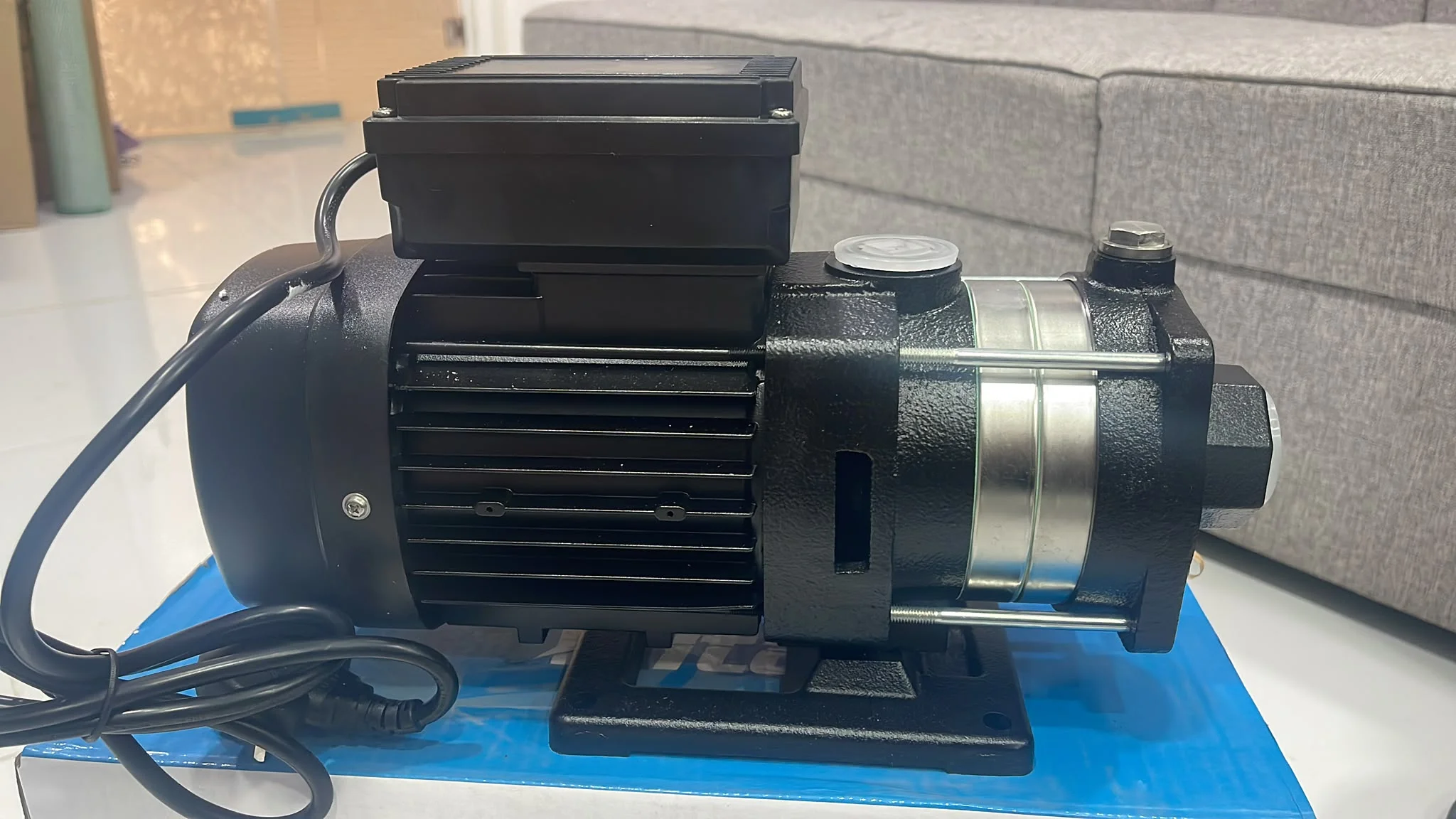
Choosing a 2 HP pump for an apartment building is justified when the building genuinely requires higher flow and head and a smaller pump cannot provide both with a comfortable operating margin. Having several floors or several apartments, however, is not enough by itself to prove that 2 HP is necessary.
The first step is to identify the number of occupied units and how water is actually used. A building with more residents and strong morning and evening peaks needs greater flow than another building of the same height with fewer occupants.
The elevation from the pump to the highest outlet is then calculated, after which network losses and the required pressure at the highest apartment are added. If the resulting operating point exceeds what a 1 HP model can provide at the required flow, then 2 HP becomes a technically reasonable option to compare.
Even then, one 2 HP pump is not always the best design. Some apartment buildings work better with two smaller pumps that operate alternately or together as demand changes. This approach can improve maintenance flexibility and reduce unnecessary operation during periods of light water use.
Lower-floor pressure also needs to be considered because a pump powerful enough to serve the top floor can create uncomfortable pressure below if regulation is not provided. Pressure regulators or zoned systems may be needed depending on the building design.
The water tank and main supply line before the pump must also be able to deliver sufficient flow. A 2 HP pump cannot produce its expected performance if the water source itself cannot supply enough water.
Maintenance planning is especially important in apartment buildings. If one pump is the only source of pressure and it stops, all residents may be affected. Some designs therefore benefit from standby capacity or multiple pumps rather than relying entirely on one large unit.
-
A 2 HP pump becomes reasonable when calculations confirm that a 1 HP pump cannot provide the flow and head required by the apartment building
-
Apartment count resident numbers and simultaneous-use patterns matter more than floor count alone when estimating required water flow
-
Some apartment buildings benefit more from two smaller pumps than from one 2 HP unit because operation can adapt to demand and maintenance becomes more flexible
-
Lower-floor pressure should be evaluated together with top-floor requirements so the building does not develop uncomfortable pressure differences
-
The tank and inlet piping must be capable of supplying the necessary flow because motor power cannot compensate for an inadequate water source
-
Relying on one large pump also requires maintenance planning because its failure can affect the entire building
Choosing a powerful water pump
Choosing a powerful water pump does not mean immediately buying the highest horsepower available and assuming it is the safest option. The correct amount of power is the one that provides the required flow and pressure during peak use without pushing pressure beyond what the network needs and without forcing a smaller pump to operate at the edge of its capability all day.
The process begins with real building use. Determine how many outlets may operate simultaneously, identify the highest floor and farthest bathroom, and then review filters, pipe lengths, pipe diameters, valves, and the water source because all of these factors change the result.
If the decision is between a 1 HP and 2 HP pump, the comparison should be made between actual models and their actual performance curves rather than simply comparing two motor ratings. A particular 1 HP model may comfortably meet the required operating point while the larger pump provides no meaningful benefit. The opposite may also be true when required flow and head are genuinely higher.
Demand variation throughout the day should also be considered. A large villa may operate under light demand most of the time with only short periods of higher use, while an apartment building may experience clear peaks when several apartments use water together. Where demand changes significantly, the type of control becomes part of pump selection rather than horsepower being the only consideration.
The pump also needs to match the rest of the plumbing network. If the components cannot safely handle the resulting pressure or if there is a major difference in pressure between floors, simply installing a stronger pump and leaving everything else unchanged is not a complete solution. Pressure regulation, zoning, or changes to certain sections of the network may be needed.
The water source must not be forgotten either. A powerful pump cannot create water from nothing. If the tank or suction line cannot supply the required flow, the problem will remain no matter how large the motor is.
The best choice is therefore the pump that provides comfortable pressure at the highest outlet, remains stable during peak demand, and does not overload the rest of the plumbing system. If 1 HP achieves that, then 1 HP is the right choice. If calculations show that 2 HP is genuinely necessary, the larger pump becomes a technically justified decision rather than simply a preference for more power.
-
A powerful pump should be selected according to the actual operating point rather than assuming that the highest horsepower is always the safest choice
-
Comparing 1 HP and 2 HP requires performance curves because the motor rating alone does not determine how much pressure and flow will reach the building
-
Changes in demand throughout the day matter because a building that moves between light use and heavy peak demand behaves differently from a system with nearly constant load
-
Plumbing components need to tolerate final system pressure because increasing pump power without reviewing heaters filters hoses and valves can create a new problem
-
The water source and suction line must be capable of supplying the required flow because a larger pump cannot compensate for insufficient water before the pump
-
The best pump is neither automatically the largest nor the cheapest but the one that provides the required flow and pressure with a suitable margin while operating comfortably within the building system
Conclusion
The comparison between a 1 HP Grundfos pump and a 2 HP Grundfos pump cannot be decided by floor count or by the size of the villa or apartment building alone. What actually determines the correct choice is the required peak flow total head pressure losses inside the plumbing network and the pressure needed at the highest and farthest point of use.
A 1 HP pump can be more than enough for a large villa when simultaneous demand is reasonable, the plumbing is in good condition, and the required operating point falls comfortably within the pump’s performance range. On the other hand, a taller or busier building may genuinely need 2 HP or even a system design that goes beyond a single pump.
The important point is not to choose 2 HP simply as a precaution and not to insist on 1 HP when it is clear that the pump would operate near its limit most of the time.
Filters, valves, pipe diameters, suction conditions, and the water source should also be checked before deciding that a stronger pump is necessary because any restriction in the system can lead to unnecessary oversizing.
When the calculation is done correctly, the choice becomes much clearer: select a pump that provides the required pressure at the highest outlet, remains comfortable for the lower floors, and handles peak demand without unnecessary excess. That is the difference between a selection based on actual system requirements and one based only on the words “1 HP” or “2 HP.”
Frequently Asked Questions
Can a 1 HP Grundfos pump serve a large villa?
Yes, it can if peak flow, elevation, and network losses all fall within the selected model’s performance range and the pump does not need to operate near its maximum capability continuously.
When do I need a 2 HP Grundfos pump?
You may need 2 HP when calculations show that the required flow and head exceed what a 1 HP model can provide, especially in taller buildings, properties with greater simultaneous demand, or systems with significant pressure losses.
Is 2 HP always better than 1 HP?
No. If a 1 HP pump comfortably provides the required performance, 2 HP may simply be oversized and may increase pressure and cost without delivering a meaningful benefit.
Does the number of floors determine whether I need 1 HP or 2 HP?
Floor count is part of the calculation, but it is not the only factor. Simultaneous outlets, pipe length, filters, and inlet pressure also affect the final selection.
Is a 1 HP pump suitable for a three-story home?
It can be suitable in some homes and unsuitable in others with the same number of floors. The actual elevation, required flow, pressure losses, and pump performance curve all need to be considered.
Can a 2 HP pump serve an entire apartment building?
It depends on apartment count, building height, simultaneous demand, and plumbing design. Some buildings are better served by multi-pump booster systems or pressure zoning instead of one pump.
Why is pressure strong on lower floors but weak on upper floors?
Because elevation consumes part of the available pump head and additional pressure is lost through pipes and filters. If the system is not designed correctly, the difference between floors becomes more noticeable.
Can a central filter make me think I need a stronger pump?
Yes. A dirty or undersized filter can create major pressure loss, but the solution is not always a larger pump. The filter should be inspected first because removing the restriction may restore pressure without increasing pump power.
Is a two-pump system better than one 2 HP pump?
Some buildings benefit more from two pumps, especially when demand changes significantly or maintenance flexibility is important. The correct choice depends on building design and the required operating point.
What is the most important thing to know before buying a powerful building pump?
You need to determine peak flow, total head, required outlet pressure, and the condition of the water source, pipes, and filters before selecting the model that can provide the required operating point comfortably.