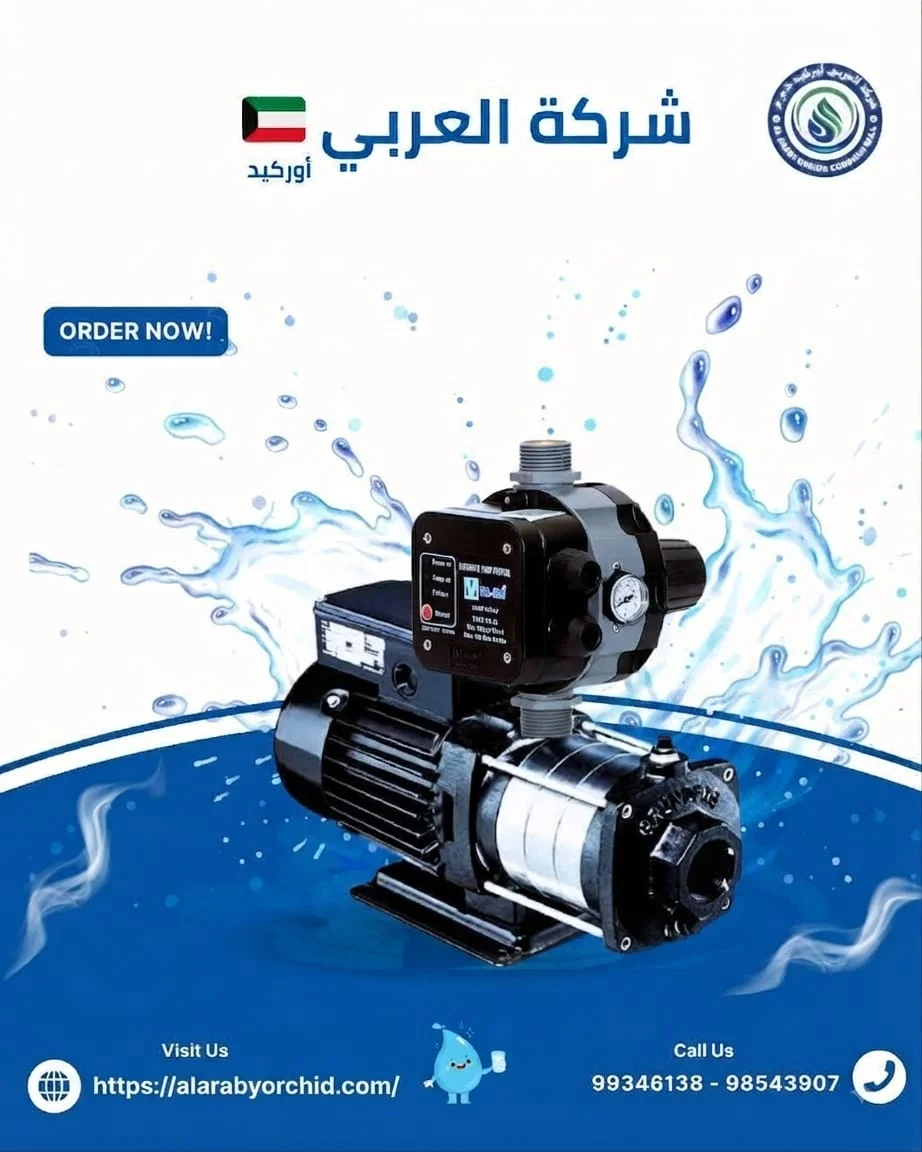
Installing a new water pump is not simply about buying a motor with more horsepower, connecting it to the water network, and expecting excellent pressure everywhere in the property. The final result depends on choosing the correct capacity, selecting the right location, understanding the suction-line length, building height, peak household water demand, control method, and even the base on which the pump is mounted. A pump that is too small can leave you with weak pressure, while a pump that is significantly oversized can increase electricity use, raise pressure unnecessarily, and make operation less stable. That is why proper planning begins before purchase by understanding the property’s water network, then selecting a pump and installation location that support reliable performance, easy maintenance, and comfortable pressure without unnecessary oversizing.
Installing a new water pump in Kuwait

Installing a new water pump in Kuwait starts by identifying the problem the pump is supposed to solve because not every home needs the same pump type or the same capacity. In one property, water pressure may be weak only on the upper floor. In a villa, demand may be high because several bathrooms operate at the same time. At another property, the real problem may not be pump capacity at all but a restricted suction line, blocked filter, or a tank that is not supplying enough water to the pump. If the real condition is not understood from the beginning, a brand-new pump can be installed without solving the original problem.
Before selecting the equipment, the number of floors, water outlets, bathrooms, kitchens, garden-irrigation points, external annexes, and any other water-consuming services should be considered. Attention then moves to the highest point where suitable pressure is required. The greater the vertical height, the more pressure the pump must provide in addition to the pressure that still needs to remain available at the tap or shower itself.
However, building height is not the only factor. The amount of water required at the same time is equally important. A home with two bathrooms that are rarely used together is very different from a villa where three or four bathrooms, a kitchen, and a washing machine may all operate during the same period. The pump should provide both the required flow and pressure at a suitable operating point rather than delivering one while sacrificing the other.
The existing water network then needs to be reviewed. Long piping runs, small pipe diameters, and large numbers of elbows and valves create resistance and pressure loss. This means two houses with the same number of floors may still require different pump selections if one has a longer or more restrictive piping system.
Al Arabi Orchid currently provides Grundfos booster pumps in capacities starting from approximately half a horsepower and extending to larger options for homes and buildings, but this range should not be treated as a simple rule where every small house receives half a horsepower and every villa receives two horsepower. Final selection should follow the actual system load.
At the end of installation, simply hearing the pump run is not enough. Several water outlets should be tested while checking whether pressure remains stable, whether the pump starts and stops normally, and whether there is leakage, vibration, or excessive cycling.
-
Pump installation should begin with identifying the property’s actual flow and pressure requirements instead of selecting the equipment according to building size alone
-
The number of floors matters but does not determine pump capacity by itself because the number of outlets used simultaneously can change the load significantly
-
Checking the tank suction line and filter before installation prevents a new pump from being connected to a network problem that limits its performance from the first day
-
Pipe length diameter elbows and valves all contribute to pressure loss so two homes with the same height can still require different pump configurations
-
Successful installation is proven by stable pressure and operation under realistic use rather than simply confirming that the motor starts after connection
Water pump installation location
Water pump installation location affects performance, service life, noise, and future maintenance, which is why the location should not be treated as a cosmetic decision left until the technician arrives. The pump needs a position that supports reliable water supply, suitable ventilation, sufficient working space, and protection from conditions that can damage the motor or electrical components.
With household booster pumps, keeping the suction route as practical and reliable as possible is important because the pump depends on receiving a stable supply of water. If the route is unnecessarily complicated, contains restrictions, or allows air to enter, performance can suffer. This is why the technician should review the water-tank location and suction route before selecting the exact pump position instead of simply choosing the nearest empty corner.
The location should also allow easy access. A pump squeezed behind a tank or installed in a very narrow service area may operate normally today but make the first maintenance visit unnecessarily difficult. Enough space should be available to inspect the motor, pressure tank, controls, valves, and connections without dismantling half of the surrounding installation.
Ventilation is especially important for the motor because heat produced during operation needs to dissipate. Placing the pump inside a completely enclosed box just to hide the sound can create a greater overheating problem than the original noise issue. When noise control is needed, vibration, mounting, equipment selection, and location should be addressed properly instead of blocking airflow.
The installation area should also prevent water from collecting around electrical equipment. Proper drainage and organized piping help ensure that a small leak does not turn into standing water around the motor and electrical connections. Electrical work itself should be carried out by a qualified technician using appropriate protection for the equipment and location.
From a noise perspective, the pump should not be installed randomly against a bedroom wall when a more suitable location is available because operating noise and vibration can travel through the structure. At the same time, moving the pump excessively far away simply to reduce sound can increase piping length and negatively affect the system.
For outdoor installations, suitable protection from sunlight, dust, and environmental exposure should be provided according to the pump requirements without preventing ventilation. The objective is to protect the equipment, not wrap it in a way that traps heat.
-
Pump location should be determined according to its relationship with the water tank and suction line rather than simply placing it near the closest electrical point
-
A good location provides enough space for future maintenance so every service visit does not require removing tanks or piping just to reach the motor
-
Ventilation around the pump is part of installation quality because hiding the unit inside an enclosed space can increase motor temperature
-
Noise should be controlled through a stable base proper mounting and a sensible location instead of sacrificing pump performance or ventilation
-
Protecting the installation from standing water and outdoor conditions is important but any enclosure or cover should preserve ventilation and service access
Choosing the capacity of a new water pump
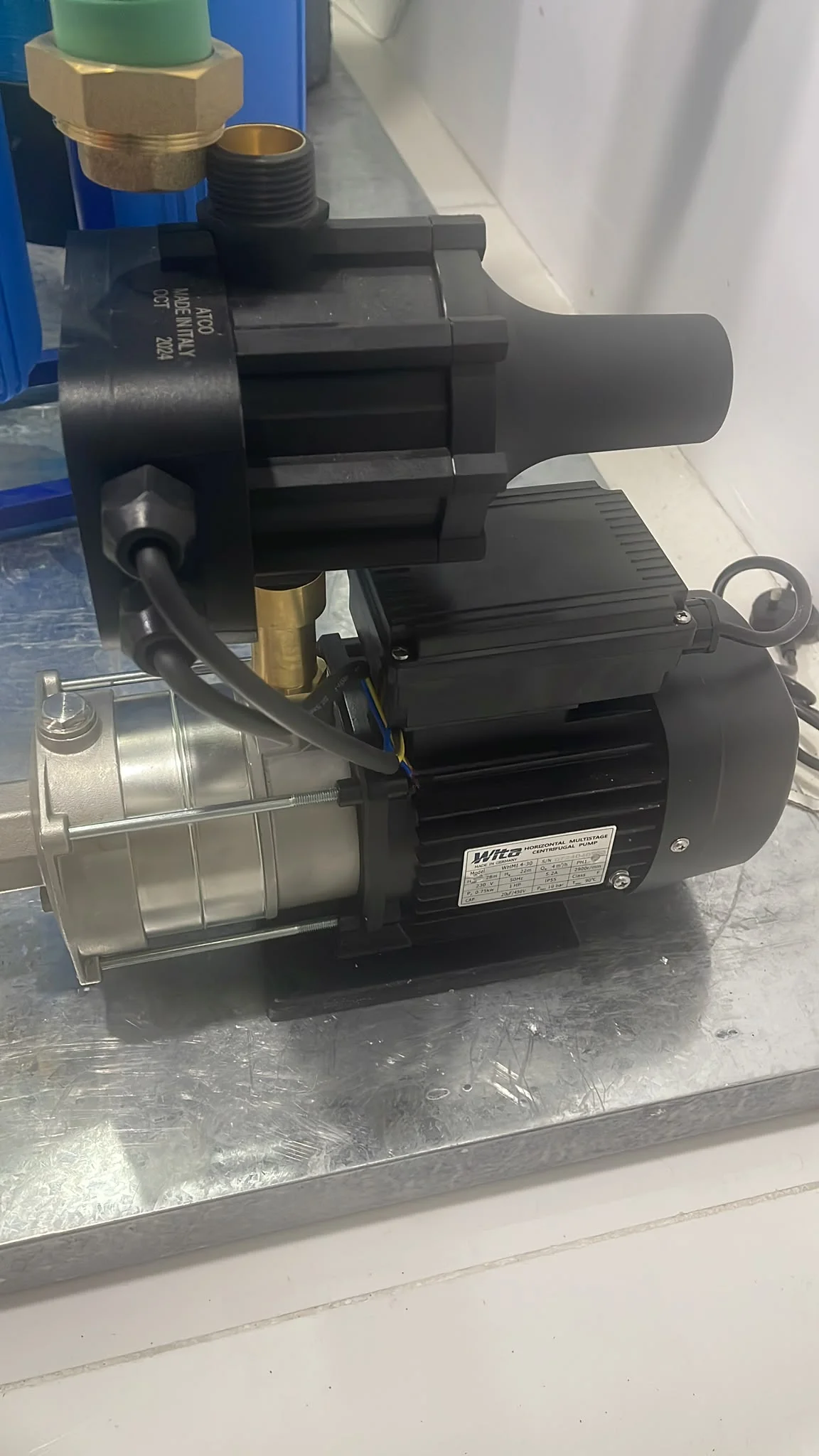
Choosing the capacity of a new water pump should not be based on horsepower alone because horsepower indicates motor power but does not tell you by itself how much water the pump can deliver or what pressure it can maintain under the actual conditions of your property. Proper selection depends on an operating point that combines required water flow with the pressure or head the pump must overcome.
The first part is flow. We need to estimate how many water outlets may realistically operate at the same time. It does not make sense to calculate every tap in the house as though they will all open at the same second if that never happens in real life, but it is equally unrealistic to size a pump for only one tap in a large villa occupied by a family. The correct approach is to estimate realistic peak demand.
The second part is height. Water must travel from the pump level to the highest point of use and still have enough pressure there for comfortable operation. The vertical elevation consumes part of the available pressure before the water even reaches the final outlet.
Friction loss inside the piping, fittings, elbows, and valves must then be added. The longer the piping and the smaller the diameter relative to the required flow, the greater the pressure loss. This is why correct pump selection depends on the network as a whole rather than the pump as an isolated device.
Each pump has a performance curve showing the relationship between flow and pressure. As flow increases, the amount of pressure the pump can provide typically changes. A specialist selects a model capable of meeting the required operating point within a suitable range instead of simply choosing the unit with the highest number printed in the catalog.
Oversizing is not automatically an advantage. A pump significantly larger than necessary can create pressure that is higher than required, increase purchase and running costs, and require more sophisticated control without providing a meaningful benefit. An undersized pump, on the other hand, can operate under constant strain and still fail to keep up with peak demand.
In some homes, a smart or variable-speed pump may be appropriate because it can adjust operation according to water demand and maintain more stable pressure. However, this does not mean that it is the only correct option for every property. The decision depends on the network, budget, and usage pattern.
-
Pump capacity selection should begin with required flow and pressure together because horsepower alone does not describe how the pump will perform inside the water network
-
The highest point of use consumes part of the available pressure so vertical elevation should be calculated before selecting a model
-
Pressure loss through piping elbows and valves becomes particularly important with long routes or high water demand
-
A larger pump is not always better because excessive capacity can increase cost and pressure without providing enough practical benefit to justify the difference
-
The pump performance curve is more useful than comparing horsepower alone because it shows what the unit can deliver at the required operating point
Choosing the location of the water pump motor
Choosing the location of the water pump motor should balance performance, safety, and future service access rather than simply hiding the equipment from view. The first question is where the pump will receive water from and where it needs to send it because its position relative to the water tank and the network affects piping layout and operating conditions.
If the suction line is long and complicated, there is a greater chance of pressure loss or unstable water supply. For that reason, the system should be planned to keep the suction route practical within the site conditions. Moving the motor far away just to hide it can create longer piping, greater resistance, and more difficult maintenance.
The pump also needs a floor or base that supports stable mounting. Installing the motor on an uneven surface or temporary support that moves during operation can create vibration that transfers into the piping and building structure. Over time, continued vibration becomes more than a noise issue and can place additional stress on joints and mechanical components.
Access to valves, controls, and the pressure tank should also be considered if these are part of the system. Installing the pressure tank behind the motor in a position that can only be reached after removing pipes makes future inspection much harder than necessary.
For outdoor motor locations, appropriate protection from sunlight and surrounding environmental conditions should be provided according to the equipment requirements. If the location is extremely hot or poorly ventilated, that problem should be corrected before the motor is expected to operate for long periods because excessive heat reduces component life.
Electrical routing also influences the installation, but the nearest power point should not determine the entire system layout. Suitable electrical supply should be brought safely to the correct pump location by a qualified professional rather than placing the pump in a poor hydraulic location simply because electricity is already available there.
In larger villas, a dedicated service room can provide a useful location for the pump, pressure tank, filters, and valves. Even then, sensible clearances should be left so any component can be removed later without dismantling the entire group of equipment.
-
The motor location should be chosen according to the water path first and supporting services should then be arranged around it instead of accepting a poor location just because power is already available there
-
Reducing unnecessary complexity in the suction line helps water reach the pump more reliably and lowers the risk of operating problems
-
Space around the equipment should allow essential components to be removed and serviced without having to dismantle other equipment every time
-
Outdoor protection should shield the pump from sunlight and environmental exposure without blocking the ventilation required by the motor
-
Planning the location correctly from the beginning makes the pump pressure tank filters and valves easier to inspect and maintain in the future
Installing a pump according to building height
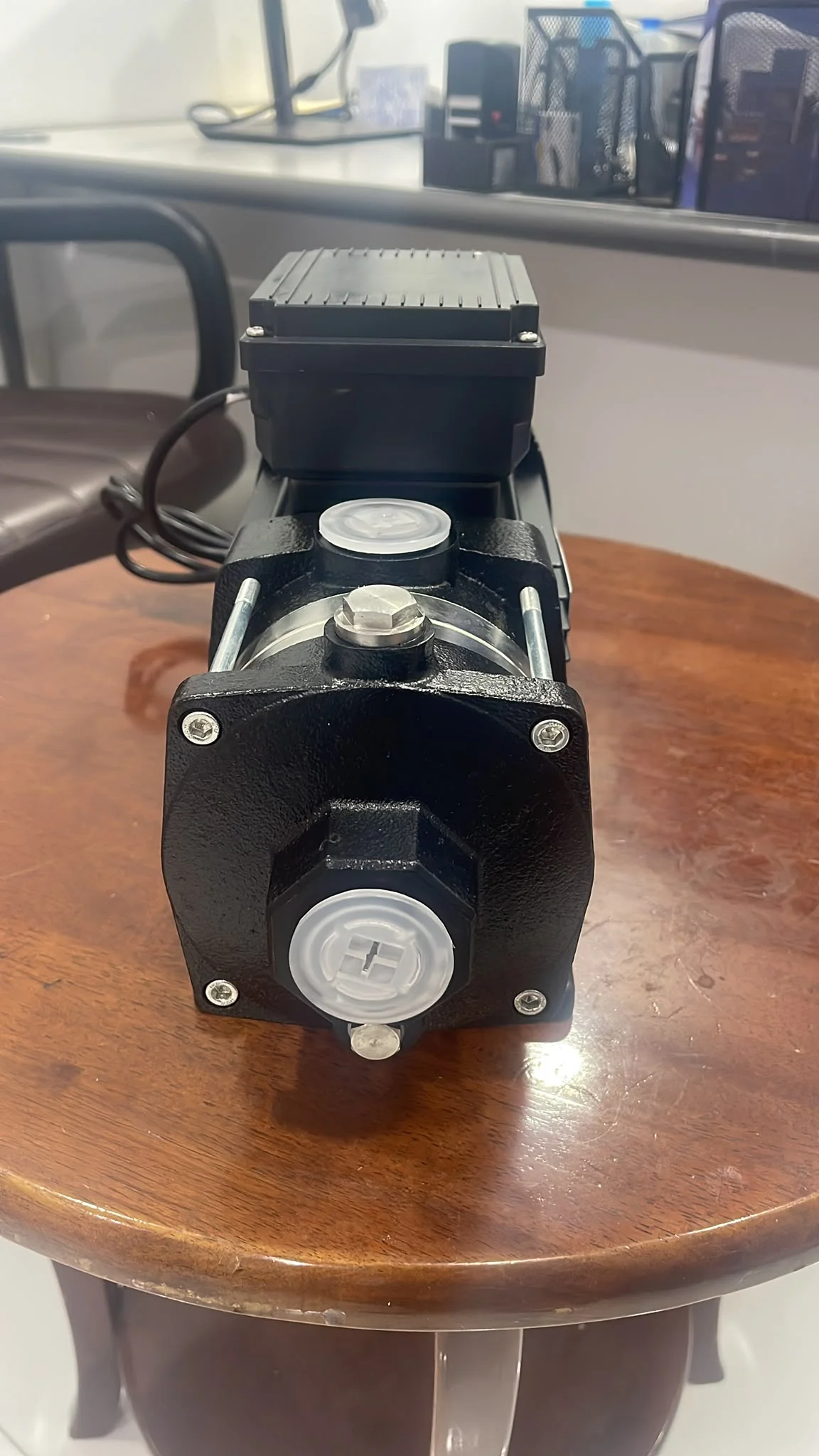
Installing a pump according to building height requires understanding what height actually means instead of following a fixed rule that assigns a certain horsepower to every floor. What really matters is the vertical difference between the pump and the highest point where suitable pressure is required, plus the pressure needed at that point and the friction loss through the piping.
If the pump is installed at ground level and the highest shower is several floors above, part of the pump’s pressure is used simply to overcome the elevation difference. After the water reaches the top floor, enough pressure still needs to remain for the shower and taps to operate comfortably. On top of that, some pressure is lost while the water travels through pipes, fittings, and elbows.
For this reason, pump selection should not be based on the number of floors alone. Two three-story buildings may need different solutions if one has greater floor-to-floor height, longer piping, or more water outlets.
The number of users also changes the decision. One top-floor shower requires a very different amount of flow from a building where several apartments use water at the same time. Height determines part of the required pressure, while water demand determines the required flow.
For significantly taller buildings or more complex networks, a different pressure-boosting design may be needed rather than relying on one simple domestic pump. In some projects, pressure zones or another suitable booster arrangement may make more sense than continuing to increase motor horsepower because the network itself has operating limits.
After installation, performance should be checked at the highest outlet while a realistic number of fixtures are being used. Testing only one tap beside the pump does not tell you what happens on the top floor during peak demand.
Pressure at lower floors should also be considered. Selecting very high pressure solely to satisfy the highest outlet without proper system design can expose lower points to more pressure than necessary. The network should therefore be designed as one complete system rather than around a single pressure figure.
-
Building height is one part of the required pressure but flow demand and network losses still need to be included
-
Floor count alone is not enough because floor height pipe length and network layout vary from one property to another
-
Testing the highest point after installation gives a more realistic picture than checking pressure only beside the pump
-
Increasing pressure to reach upper floors should also consider what that pressure will do to outlets closer to the pump
-
Larger buildings may require a more appropriate pressure-boosting design rather than simply increasing the size of one household motor
Pump capacity according to household water consumption
Pump capacity according to household water consumption should be based on reasonable peak demand rather than total daily water use. One home may consume a large amount of water over twenty-four hours but spread that usage evenly throughout the day. Another home may use less water overall but place much greater demand on the network during one morning hour when several bathrooms and the kitchen are operating at the same time.
For that reason, the number of residents, bathrooms, kitchens, water-using appliances, garden irrigation, and external annexes should all be considered. These details help estimate how much water the property may require at the same moment.
The number of bathrooms alone is still not enough. A home with five bathrooms but only three residents can have lower actual peak demand than a home with three bathrooms and a large family using them heavily. Usage behavior is what turns the number of outlets into real water flow.
It is also important to understand whether the pump serves only the cold-water network or forms part of a larger system with different responsibilities. The more services the pump has to support, the more important it becomes to size it according to the actual operating scenario.
An undersized pump may provide perfectly acceptable pressure when one tap is open and then experience a major drop as a second and third outlet are used. The customer may say that the pump is weak even though it is mechanically healthy but simply selected for a lower flow requirement.
On the other hand, an excessively large pump for a property with limited demand does not automatically improve comfort. It may require better control, cost more to purchase, and create unnecessary pressure. The objective is not to install the most powerful unit available but to provide stable performance during real household demand.
Smart or variable-speed systems can suit some homes because they adapt to changes in demand, but their value should still be evaluated according to the property’s usage pattern and budget. Not every home needs exactly the same technology.
-
Total daily consumption does not determine pump capacity by itself because simultaneous peak use reveals the highest flow requirement
-
The number of residents and how bathrooms are actually used provide a more accurate picture than bathroom count alone
-
A pressure drop when several outlets are opened may indicate that the pump was selected for lower flow even if it performs perfectly with one tap
-
Excessive pump capacity does not guarantee better comfort because the pump controls and water network all need to work together
-
Proper sizing provides stable pressure when the household actually needs it without paying for a larger pump and higher operating cost than necessary
Preparing the water pump base
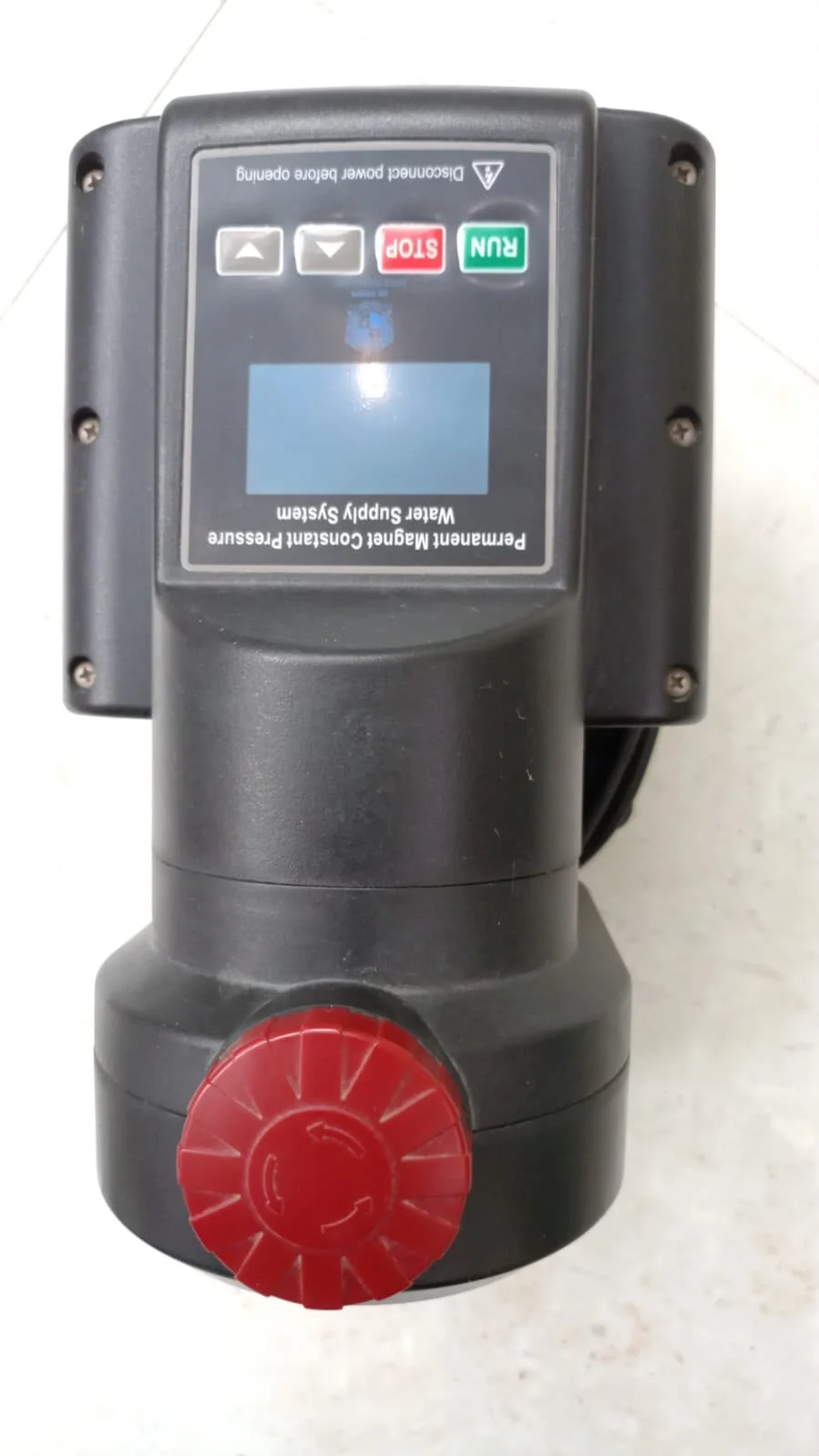
Preparing the water pump base may look like a small part of the project, but it can make a significant difference in noise, vibration, piping stability, and the service life of several components. A pump contains a motor and rotating parts operating at speed, and if the base is weak or uneven, normal mechanical movement can turn into vibration transmitted through the pump body, pipes, and walls.
The base should be stable, level, and suitable for the weight and mounting requirements of the equipment. A pump should not be placed on a loose block or a piece of wood exposed to water with the expectation that it will operate quietly for years. The mounting method should follow the pump type, manufacturer guidance, and actual site conditions.
In some installations, vibration-reducing elements can be used where appropriate, but they need to be installed correctly. Vibration isolation does not mean allowing the pump to move freely. The objective is to secure the equipment while reducing unnecessary transfer of vibration into the structure.
The piping should not carry the weight of the pump or pull it sideways. If the connections are under abnormal tension, additional stress can be transferred to the casing and fittings. Correct installation allows each part to perform its own function without using the piping as a support for the motor.
Water accumulation should also be considered. The base and surrounding area should be arranged so a small leak is visible rather than leaving the motor standing in water. Suitable drainage where required helps reveal and manage problems early.
Sound becomes a useful test after startup. If a brand-new pump produces excessive vibration from the first day, it should not automatically be dismissed as normal because it is new. The level of the base, mounting bolts, piping supports, and other possible sources of resonance should be checked.
Future removal should also be considered. If the pump is fixed in a way that makes bolts or fittings inaccessible after surrounding equipment is installed, every future maintenance visit becomes more expensive and time-consuming.
-
A stable level base reduces vibration transmission and keeps the pump and connected piping steady during operation
-
Proper mounting prevents unwanted movement while still allowing appropriate vibration-control measures where the location requires them
-
The piping should not be used to support the pump because abnormal loads on fittings can create problems over time
-
Arranging the area so small leaks become visible is better than installing the pump in a location where standing water remains hidden
-
Considering future maintenance while preparing the base saves significant work later because the technician can remove and reinstall the pump without damaging the surrounding setup
Choosing pump horsepower before installation
Choosing pump horsepower before installation is one of the areas where oversimplification happens most often because many people ask whether they need half a horsepower, one horsepower, or one and a half horsepower as though the number alone determines suitability. In reality, two pumps with the same horsepower can have different performance curves and therefore provide different flow and pressure under the same conditions.
Al Arabi Orchid currently provides Grundfos booster pumps from approximately half a horsepower up to two horsepower among its available solutions, but selecting between them still requires understanding the actual operating point. A half-horsepower pump may be excellent for one property and insufficient for another, not because one home is automatically “better” but because the water networks have different requirements.
The first step is determining the required pressure and adding the elevation difference and network losses. The required peak flow is then estimated. Once both figures are known, a pump that can meet them within a suitable operating range can be selected.
If the decision is based only on horsepower, a larger motor may be selected even though the pump curve does not match the required operating point. This is why flow and head specifications are more important than the simple horsepower number that customers commonly use when discussing pumps.
Operating efficiency should also be considered. Equipment working reasonably close to its intended operating range is usually a better choice than a heavily oversized pump that spends its life operating far away from the conditions it was designed for.
Control type also matters. A traditional pump with a pressure tank and control system behaves differently from a smart variable-speed pump that adjusts to demand. Both may be capable of serving the same property, but the user experience, electricity consumption, sound, and operating pattern can differ.
That is why if someone asks, “My house has two floors, how much horsepower do I need?” and receives an answer without any other questions, that answer is likely to be only an estimate. The number of floors is just one piece of the complete selection process.
-
Horsepower describes motor power but does not replace flow and head data that show how the pump will actually perform at the property
-
Two pumps with the same horsepower can provide different performance so the comparison should use the operating curve and technical specifications
-
Defining required pressure and flow before purchase prevents selection of a pump that sounds powerful but is unsuitable for the actual operating point
-
Smart and traditional pumps can behave differently even when both are capable of serving the same property
-
The question of how much horsepower a house needs cannot be answered accurately from floor count alone without knowing demand network conditions and elevation
Connecting a new household water pump
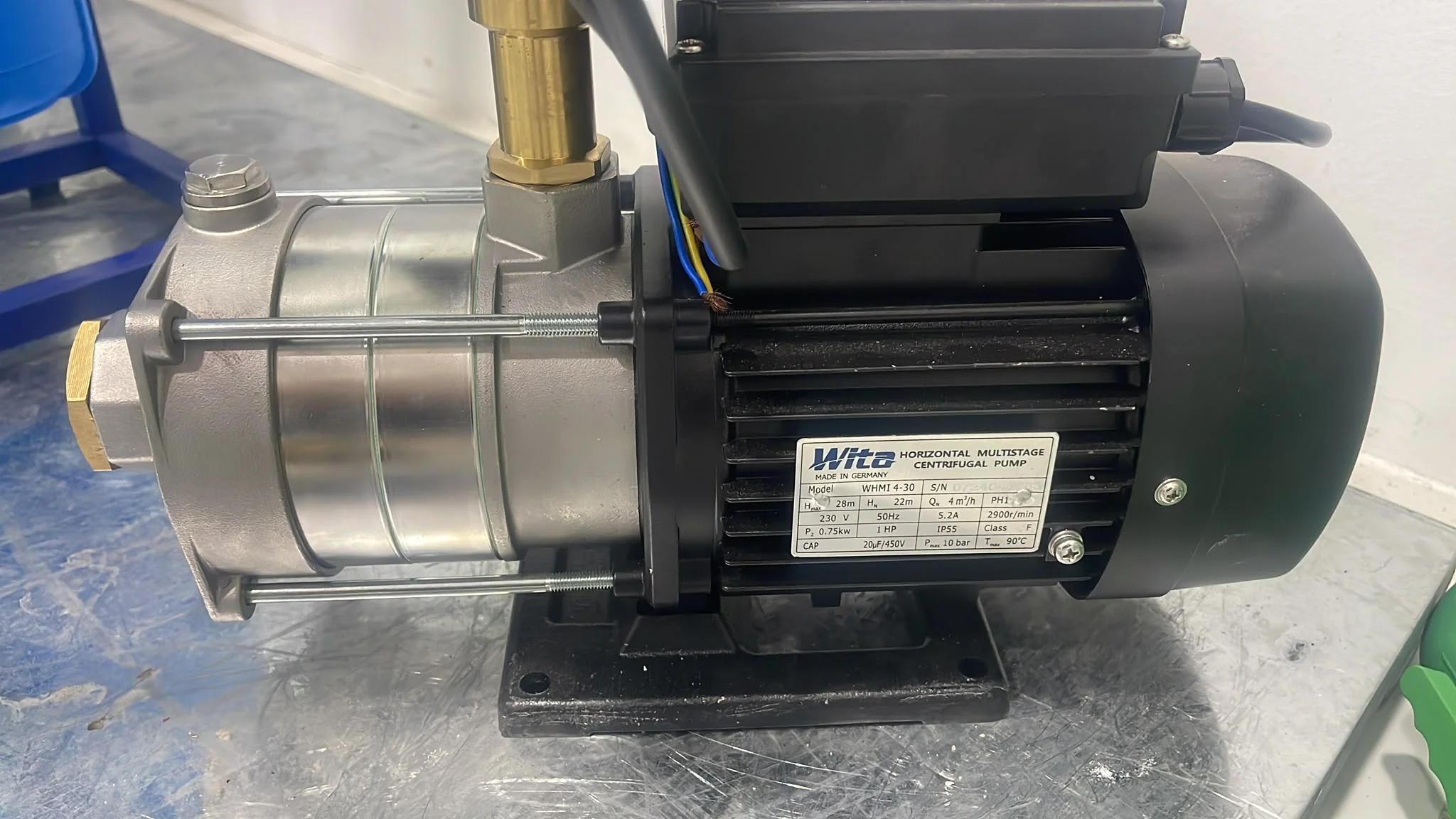
Connecting a new household water pump comes after the location and capacity have already been selected because even perfect piping cannot compensate for a pump that was incorrectly chosen. At this stage, the inlet and outlet lines, isolation valves, and supporting components are arranged according to the system design so operation and future maintenance remain clear.
Before startup, the water source should be confirmed and the pump should be prepared according to its type. Some pumps can be damaged quickly if operated without water, so dry running should never be used simply as a test to see whether the motor works.
Isolation valves should be arranged so the pump can be serviced later without draining or shutting down more of the network than necessary. If the system requires a non-return valve, pressure tank, or control unit, those components should be selected according to the design rather than adding every accessory available in the market on the assumption that more components automatically improve performance.
On the electrical side, the power supply and protection should be installed by a qualified technician according to the pump specifications. Detailed do-it-yourself wiring instructions or protection bypasses should not be used because electricity next to a water system requires safe professional work.
After startup, the connections should be checked for leakage while motor sound and vibration are monitored. Pressure should then be tested at more than one point, including a situation that represents realistic use, such as opening several outlets according to the household demand.
If the system uses pressure-based controls, several start-and-stop cycles should be observed. The objective is to confirm that the pump does not start every few seconds and does not continue operating after the taps have been closed without a reason.
The user should also receive a simple explanation of normal operation. They should know what pump sounds are normal and which signs deserve a service call, such as continuous running, leakage, or a sudden change in pressure.
-
Pump connection should take place only after the correct capacity and location are selected because excellent piping cannot correct an incorrectly sized pump
-
Properly arranged isolation valves make future maintenance easier and prevent every small repair from becoming a complete system shutdown and drain-down
-
Dry operation should be avoided according to the pump requirements because some internal components can be damaged quickly without water
-
Electrical work should be completed by a qualified professional with appropriate protection rather than reducing cost through temporary or unsafe connections
-
Final testing should include leakage sound pressure and several start-stop cycles under more than one usage condition to confirm stable operation
Planning a water pump installation for a villa
Planning a water pump installation for a villa requires a complete picture of the property before selecting the equipment because a villa may include several tanks, multiple floors, many bathrooms, a main kitchen, a secondary kitchen, an external annex, garden irrigation, and additional services. All of these loads change the required flow and the way pressure should be distributed.
The first step is identifying the water source and tank arrangement. Does the pump draw from a ground tank and supply the entire villa? Are rooftop tanks also used? Is there already more than one pump in the system? Understanding the existing water path prevents installation of a new unit that conflicts with the current arrangement.
Usage should then be divided into realistic peak-demand scenarios. We need to understand which water outlets are most likely to operate together during the morning or evening. The objective is not to assume an impossible worst-case scenario but to select a realistic condition that keeps water pressure comfortable during actual peak use.
The elevation to the highest floor needs to be included together with the desired pressure at that point and friction loss through the network. In a large villa, horizontal piping distance can matter just as much as vertical height. A bathroom tens of meters away from the pump room creates friction loss that should be considered in the same way as elevation.
Pump location should be chosen so it remains practical in relation to the tank while providing ventilation, service access, and reasonable noise control. If the villa has a dedicated service room, that can be a good opportunity to organize the pump, pressure tank, filters, and valves in a way that supports future maintenance.
The control method is then selected. Some villas can operate perfectly with a correctly designed traditional booster arrangement, while others may benefit from a smart pump because water demand changes significantly between one open tap and several bathrooms operating at once. The decision should be technical and economic rather than simply choosing the more expensive option.
If an extension, new annex, or additional bathroom is planned in the near future, that should be mentioned from the beginning. The system being designed today may be able to account for the expected additional load rather than forcing the owner to replace the pump again shortly afterward.
At the end of the project, testing should take place at the farthest and highest outlets rather than only beside the pump room. Several fixtures should be operated in a way that represents realistic demand to verify whether pressure remains comfortable and how the pump responds as usage changes.
-
Villa planning starts with understanding the water path tanks and existing pumps before adding another unit to the system
-
Required flow is based on realistic peak use of bathrooms kitchens and other services rather than villa floor area alone
-
Horizontal piping distance and vertical building height both contribute to pressure loss particularly in larger villas
-
Control type should be chosen according to demand variation and household needs rather than assuming the most expensive system is automatically the best
-
Final testing should be carried out at the farthest and highest points while several outlets operate together so the design is proven outside the pump room
Conclusion
Installing a new water pump starts before the pump itself is purchased. You need to know how much water the property requires during peak demand, how much vertical height the pump must overcome, what pressure should remain at the highest outlet, and how much pressure is lost through the pipes and fittings. Only after these factors are understood does horsepower become a meaningful part of pump selection.
Installation location is also not a minor detail. The pump needs a position that supports reliable suction, provides ventilation, uses a stable base, allows maintenance access, and protects the equipment from harmful conditions without enclosing it in a way that traps heat. In villas, the complete water network should be reviewed because the number of tanks, floors, and outlets can change the design.
Al Arabi Orchid provides Grundfos booster pumps in several capacities from around half a horsepower to larger options for homes and buildings, but the best pump is not simply the largest unit available. The right pump is the one that operates at the actual requirements of your property and provides stable pressure without unnecessary oversizing. Buying extra horsepower “just to be safe” is a little like buying an entire bus to drive two people to work every morning. It will certainly move them, but that does not automatically make it the smartest choice.
Frequently Asked Questions
Should I choose pump capacity according to the number of floors?
The number of floors is an important factor but is not enough by itself. Selection should also consider actual elevation difference, required flow, desired pressure, and pressure losses through the piping network.
Is a half-horsepower pump enough for a home?
It may be suitable for some small or medium-sized homes depending on the water network and demand, but there is no universal rule that half a horsepower fits every property of a certain size without checking flow and pressure requirements.
Is a two-horsepower pump better than a one-horsepower pump?
Not necessarily. If the larger pump is significantly above the needs of the network, it can increase purchase cost and pressure without providing a practical benefit that justifies the difference.
Where is the best place to install a water pump?
The location should be selected according to the water source and network layout while providing suitable ventilation, a stable base, appropriate protection, and easy maintenance access rather than simply choosing the nearest electrical point.
Does pipe length affect pump selection?
Yes. Pipe length, elbows, valves, and pipe diameter all create pressure loss that should be included when selecting the pump.
What is the difference between choosing by horsepower and by flow and head?
Horsepower gives a general indication of motor power, while flow and head show how much water the pump can move and under what pressure or height, which are much more closely connected to the actual needs of the water network.
Is the pump base really important?
Yes. A level and stable base reduces vibration and noise, keeps the equipment and piping stable, and makes future maintenance easier when it is planned correctly.
Does every villa need a smart pump?
No. A smart pump can be useful where water demand changes significantly during the day and more stable pressure or flexible operation is desired, but the correct choice depends on the property and the system.
Can I use the same pump after adding another floor?
Possibly, but the existing pump needs to be reassessed according to the additional elevation and water demand. The old pump should not automatically be assumed capable of serving the new load.
What is the most important thing to test after installing a new pump?
Test water pressure at the farthest and highest outlets while a realistic number of taps are running, and make sure operation remains stable without leakage, abnormal vibration, or excessive starting and stopping.


