
If you are deciding between an 80 vs 120 gallon central water heater, do not choose 120 gallons simply because it is larger, and do not choose 80 gallons only because it costs less. The nominal difference is 40 gallons, which equals roughly 151 liters of additional storage, meaning a 120-gallon tank provides around 50% more nominal capacity than an 80-gallon tank. However, that difference alone does not tell you which option is right for your property. The real decision depends on peak-hour hot water demand, how many bathrooms operate simultaneously, the heater’s recovery performance, the available electrical supply, and the installation space. Proper sizing should consider First Hour Rating and peak demand rather than tank capacity alone. Al Arabi Orchid 99346138 compares both options according to actual household use so you do not pay for 120 gallons when 80 is enough, or install 80 gallons only to make the last person taking a shower the daily victim of cold water.
80 vs 120 Gallon Central Water Heater
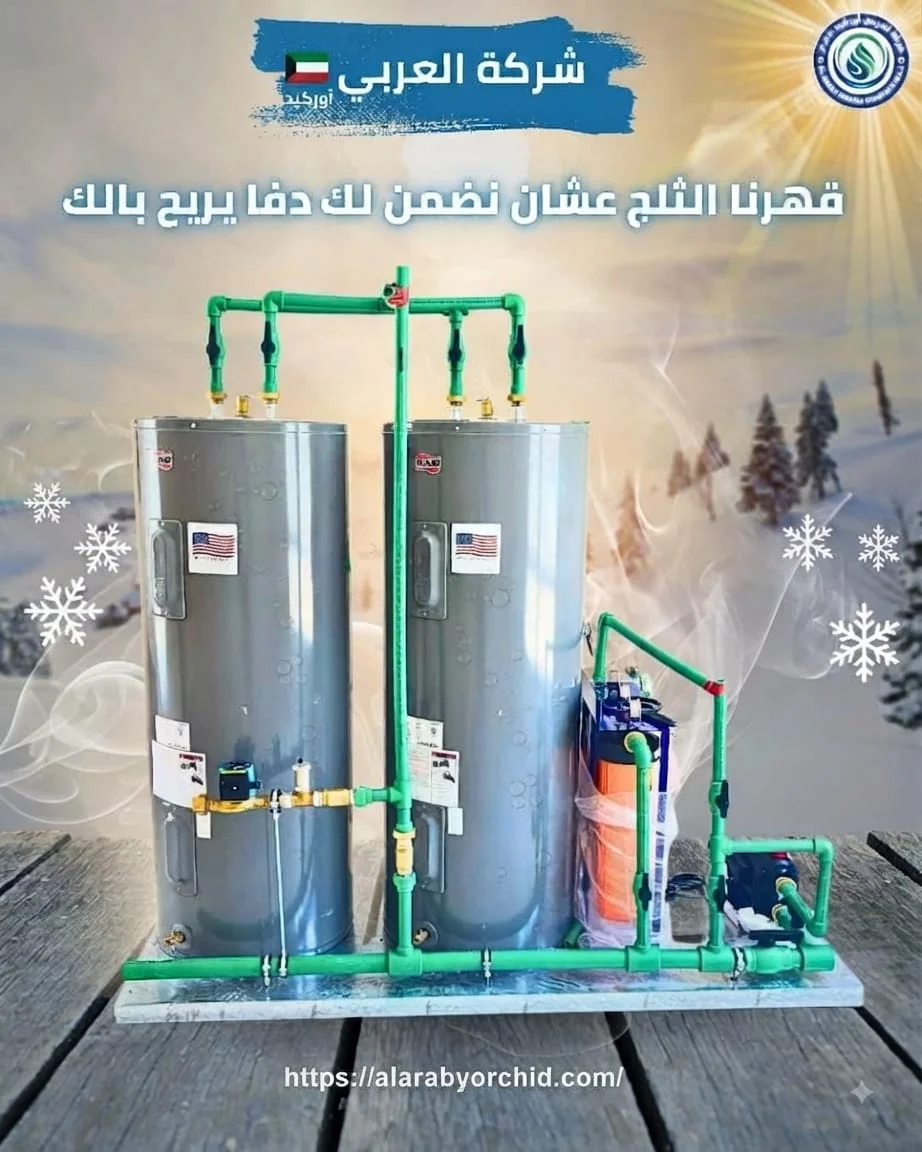
The comparison between an 80 vs 120 gallon central water heater begins with the obvious difference in stored volume. Eighty US gallons equal approximately 303 liters, while 120 gallons equal around 454 liters. This means the larger option provides roughly 151 additional liters of nominal storage, which can be a significant advantage when a property has heavy and concentrated hot water demand. However, having more stored water does not automatically make 120 gallons the better decision because the heater is not simply a storage container. As hot water is used, colder water enters the tank and the unit begins reheating it, so recovery rate and heating-element output also affect real-world performance.
From a technical perspective, it is more useful to review the First Hour Rating of the actual model. This figure indicates how much hot water the heater can approximately provide during the first hour of heavy use when it begins with a fully heated tank. Manufacturers commonly recommend comparing this rating with household demand during the busiest hour rather than selecting a heater based only on nominal tank size. This means an 80-gallon model with suitable recovery performance may comfortably handle your household, while a larger model may not provide the advantage you expect if its specifications are significantly different.
You should also read the actual specification sheet instead of relying only on the commercial model name. Some heater families described as 80 or 120 gallons may have actual rated capacities that are slightly different from the marketing category. For example, certain large storage models may be listed at approximately 78 and 119 US gallons. This shows why the product class does not always represent the exact amount of water held inside every model.
Al Arabi Orchid 99346138 begins with demand rather than tank size. If an 80-gallon heater can cover peak-hour use with a comfortable margin, there is no reason to increase capacity simply for reassurance. If calculations show that 80 gallons would regularly operate close to its limit, then 120 gallons becomes a much more reasonable option to consider.
-
Choosing 120 instead of 80 gallons makes sense when the additional stored water serves genuine peak-period demand rather than simply creating psychological reassurance because the number is larger
-
Reviewing the First Hour Rating is more useful than looking at tank capacity alone because the heater continues reheating incoming water while hot water is being consumed
-
Actual nominal capacity should be confirmed from the specification sheet because commercial 80 and 120 gallon categories do not always mean the tank contains exactly those numbers
-
If an 80-gallon system comfortably handles the household’s highest normal demand then moving to 120 gallons should have a clear reason such as household growth heavier simultaneous bathroom use or high-demand fixtures
Difference Between an 80 and 120 Gallon Water Heater
The difference between an 80 and 120 gallon water heater is not simply that one tank is physically larger and holds more water. Four factors should be considered together: storage volume, recovery performance, electrical requirements, and installation space. From a storage perspective, 120 gallons provides 50% more nominal capacity than 80 gallons. That additional reserve can be valuable if several people use hot water within a short period. If household consumption is spread throughout the day, however, much of that additional storage may rarely be used.
The second factor is heating power. Large storage heaters can be available with different element outputs, voltages, and electrical phase configurations. This means the statement “a 120-gallon heater heats faster” is not automatically true. If two models have different heating outputs, recovery performance will differ accordingly. If their heating power is similar, the larger volume of water naturally creates a different recovery requirement.
The third difference is installation space. A larger tank generally needs more physical room and becomes substantially heavier once filled. The access route must also be considered. It is not enough for the final heater room to be spacious. The tank has to pass through doors, corridors, stairways, or service openings and still leave enough clearance for future maintenance.
The fourth factor is the intended application. An 80-gallon central heater is already a substantial storage option that can serve larger households or relatively heavy residential demand when correctly selected. A 120-gallon tank moves further toward very high demand and should therefore have a clear usage reason behind it rather than being chosen automatically because it is the larger option.
-
The additional forty gallons represent a significant increase in storage but that extra capacity creates real value only when the household actually uses it during busy periods
-
Heating output voltage and electrical configuration vary between models so it is incorrect to assume that every 120-gallon heater is more powerful or recovers faster than every 80-gallon heater
-
Tank dimensions and filled weight should be included in installation planning because access problems can make an excellent heater unsuitable for the actual property
-
The most useful comparison starts with the same household demand scenario and then identifies which heater meets it with the least unnecessary oversizing instead of assuming 80 is always economical and 120 is always better
Comparing 80 and 120 Gallon Water Heaters

When comparing 80 and 120 gallon water heaters professionally, do not create two columns labeled 80 and 120 and stop at tank capacity. The comparison should focus on actual performance. The first category is peak-hour demand. Estimate what happens during the busiest 60 minutes in the property. Are two showers running simultaneously? Do three people shower consecutively? Is there a large bathtub? Is the kitchen using hot water at the same time? Once that peak demand is understood, compare it with the First Hour Rating of the actual heater models and choose a system capable of covering the demand with a reasonable margin.
The second category is recovery. If you use a large portion of the 80-gallon supply quickly, how efficiently can that model restore usable hot water? Ask the same question about the 120-gallon option. A larger tank gives you more stored water before depletion, but it does not automatically mean faster recovery. Heating output must therefore be part of the comparison.
The third category is electrical and installation requirements. If the 120-gallon model requires major electrical modifications or considerably more installation space, those factors create real additional project cost. In some properties, a well-specified 80-gallon unit may therefore be the cleaner and simpler solution. In another property with suitable electrical infrastructure and genuinely high demand, the 120-gallon tank may provide noticeably greater comfort.
The fourth category is the near future. If the household is already close to the practical limit of an 80-gallon system and the number of permanent residents is definitely expected to increase, choosing 120 gallons may prevent another replacement later. However, occasional guests once or twice a year are not a strong reason to maintain 40 extra gallons of storage every day.
-
A professional comparison begins with peak-hour demand followed by First Hour Rating recovery performance installation space electrical requirements and then total cost instead of reversing those priorities
-
A 120-gallon tank provides greater storage reserve but does not guarantee faster reheating so actual heating output must be compared between the two models
-
Future demand should be based on realistic changes such as a confirmed increase in permanent residents or regular use of additional bathrooms rather than rare scenarios that unnecessarily enlarge the system
-
The final decision should balance comfort during peak use with installation and operating considerations because the best heater is not the largest but the one that handles demand without shortage or unnecessary excess
Should I Choose 80 or 120 Gallons?
If you are asking should I choose 80 or 120 gallons, allow the decision to pass three practical tests. First, can the 80-gallon model cover the busiest hour of household demand? If the answer is yes and it still has a reasonable operating margin, there may be no strong reason to move to 120 gallons. Second, has the property experienced repeated hot water shortages even when the previous heater was functioning correctly? If yes, the old heater’s capacity and recovery performance should be reviewed before choosing a replacement. Third, can the property physically and electrically support the 120-gallon option without unreasonable modifications?
Consider a realistic example. One villa has six residents, but showering is spread between morning and evening and no more than two showers are normally used at the same time. An 80-gallon heater with a suitable First Hour Rating may serve the property very comfortably. Another villa also has six residents, but five of them use bathrooms during the same hour before work and school, with a large bathtub or high-flow shower adding additional demand. The household size is identical, yet the hot water requirement is completely different and 120 gallons may become the more comfortable option.
This leads to the most important point: the number of residents does not choose the heater by itself. Shower duration, simultaneous use, bathroom fixtures, and household routine may matter more than the difference of one or two people.
-
Choose 80 gallons when its actual performance comfortably handles peak-hour demand because increasing capacity to 120 gallons without a real need does not necessarily provide proportional practical value
-
Choose 120 gallons when simultaneous demand is consistently high and calculations show that an 80-gallon heater would regularly operate close to its effective limit during normal use
-
Previous heater performance provides valuable evidence because an 80-gallon tank that served the same household comfortably tells a very different story from one that ran out of hot water every morning
-
Do not rely on household size alone because shower duration flow rates and simultaneous bathroom use can influence sizing more than one or two additional residents
How Many People Can an 80 Gallon Heater Serve?
The question how many people can an 80 gallon heater serve has an approximate answer but never one guaranteed number for every property. In some residential electric water heater guidance, 80 gallons can be considered a starting category for households of around five people or more. However, the final decision still depends on actual usage patterns, shower duration, simultaneous consumption, and the First Hour Rating of the exact model.
A household of five where everyone showers at different times and hot water demand is spread across the day may be very comfortable with 80 gallons when the heater has suitable recovery performance. Another household with only four people may put greater pressure on the same capacity if two high-flow showers and a large bathtub are used within a short period. Fewer people therefore do not automatically mean lower peak demand.
It is also important to distinguish between an 80-gallon storage tank and how much hot water the heater can actually supply during a demanding hour. A specific 80-gallon model may have a First Hour Rating only slightly above its nominal storage capacity, while another heater using a different technology or heating output may have a different rating. This is why an 80-gallon label should not be converted directly into a fixed number of showers or residents without reviewing the model.
-
Eighty gallons is a strong residential capacity for many larger households but it should not be converted into one fixed number of people that applies to every home
-
Five people with distributed hot water use may create less peak pressure than four people using several high-flow fixtures during the same hour
-
Large bathtubs and long showers should be included in the calculation because heavy short-term demand determines whether stored capacity remains comfortable
-
The model’s First Hour Rating provides a better picture than nominal tank capacity alone when estimating whether the heater can support the household during its busiest period
How Many People Can a 120 Gallon Heater Serve?
The question how many people can a 120 gallon heater serve becomes even more misleading if we try to answer it with one fixed number. A 120-gallon tank belongs to a very large storage category compared with common residential heater sizes, and many manufacturers offer units around 119 or 120 gallons in product families designed for higher demand, medium-duty, heavy-duty, or commercial-style applications. This does not mean a 120-gallon heater cannot be installed in a villa. It means there should be a clear demand reason for choosing it.
Instead of asking whether 120 gallons serves seven, eight, or ten people, ask how many gallons of hot water the property requires during the busiest hour. If the household is very large, several bathrooms operate simultaneously, showers are closely spaced, or large bathtubs are regularly used, 120 gallons may be entirely justified. If the property is large in floor area but occupied by only a few people, building size alone does not create the need for such a large tank.
Electrical requirements also become particularly important in this category. If the 120-gallon model uses high-output heating elements, its electrical requirements may differ considerably from those of a simpler residential 80-gallon model. The decision therefore involves the complete system and not just a larger tank.
-
A 120-gallon heater is better associated with high simultaneous demand than with one fixed number of residents because usage behavior matters more than population alone
-
Some heaters in this capacity category are offered with higher electrical outputs so voltage kilowatts and phase requirements must be reviewed before treating 120 gallons as a direct replacement for any 80-gallon unit
-
A large villa does not automatically justify 120 gallons when occupancy is low and hot water demand is distributed because the heater responds to consumption rather than building area
-
The better decision proves the need for additional storage through actual demand calculations or previous usage history instead of buying 120 gallons simply on the principle of having as much reserve as possible
120 Gallon Water Heater for a Large Family
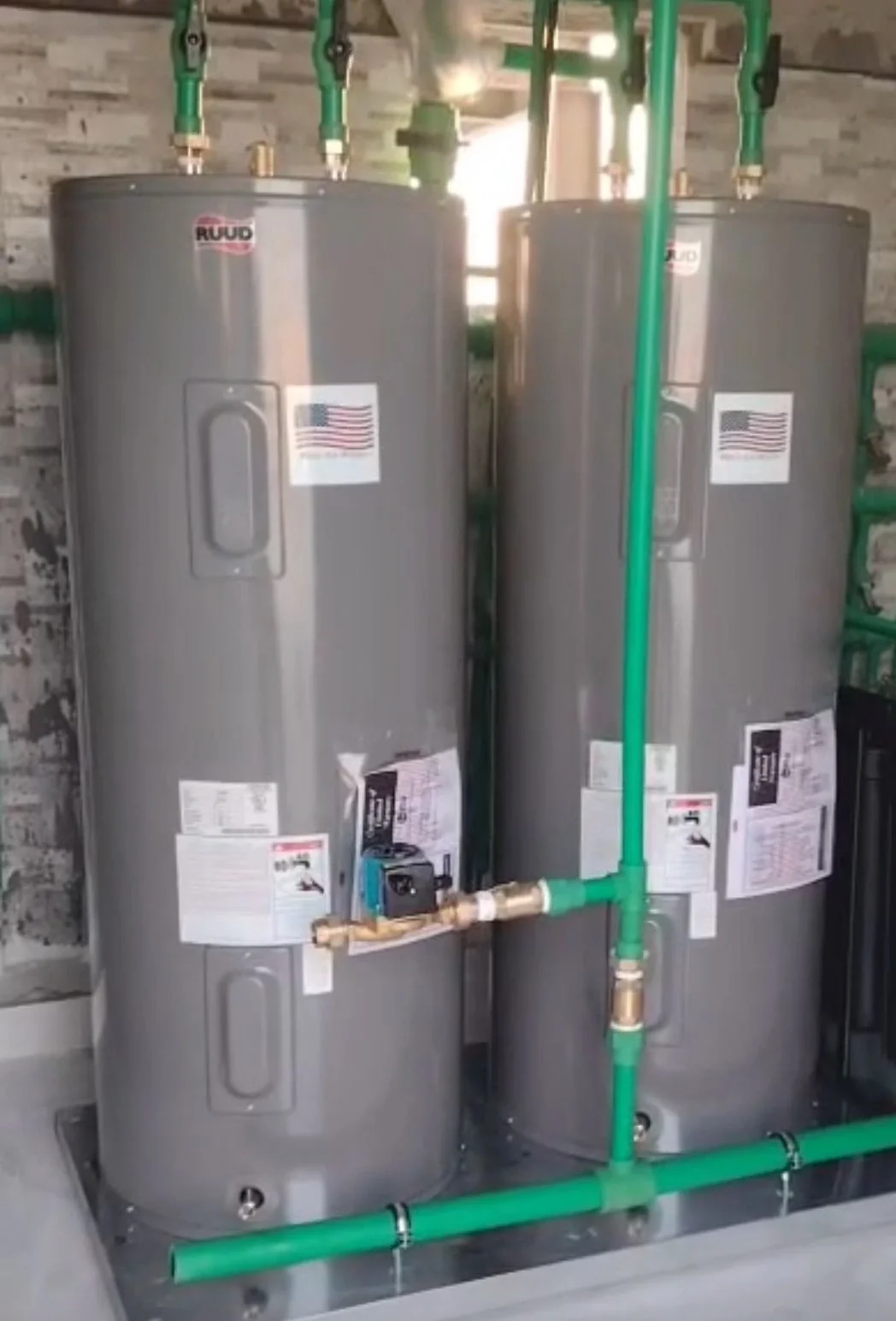
A 120 gallon water heater for a large family can make excellent sense in certain situations, but even the phrase “large family” needs definition. A family of seven that uses hot water gradually throughout the day may not require the same system as a family of six where nearly everyone leaves home at the same time and three bathrooms operate simultaneously. Concurrent demand is what reveals whether large storage capacity will provide a meaningful advantage.
The main advantage of 120 gallons is the additional 40 gallons of nominal storage compared with an 80-gallon tank. This creates a larger reserve before stored hot water is significantly depleted. If the family regularly uses several showers in succession, operates a bathtub, or has heavy kitchen demand during the same period, that additional reserve can translate directly into greater comfort.
A large family should also consider what happens after the first peak period. If the morning demand is heavy and another major round of hot water use follows only a couple of hours later, recovery performance becomes extremely important. A huge tank can perform brilliantly during the first round but still be inconvenient if it cannot recover at a rate that matches the household routine.
The 120-gallon option therefore works best when both the storage volume and heating output support the family’s pattern rather than when capacity is selected in isolation.
-
Large families benefit most from 120 gallons when household demand is concentrated into predictable periods rather than simply because there are many residents on paper
-
The additional forty gallons provide a meaningful reserve but their value depends on simultaneous showers usage duration and the presence of high-volume fixtures
-
Recovery performance is particularly important for families with more than one heavy-demand period each day because large storage alone does not guarantee quick readiness for the next round
-
If an 80-gallon model already covers household demand comfortably with suitable first-hour performance then the move to 120 gallons should demonstrate a real additional benefit before the extra capacity and installation requirements are accepted
80 or 120 Gallons for a Villa?
The question 80 or 120 gallons for a villa cannot be answered from villa size or number of floors. An 800-square-meter villa occupied by two people may have much lower hot water demand than a smaller property occupied by a large family. Villa sizing should begin with the number of bathrooms operating at the same time, the number of residents, the morning and evening routines, and then the hot water distribution system.
Villas also introduce another factor: longer piping distances. The location of the heater, length of hot water lines, pipe insulation, and circulation system can affect how quickly hot water reaches distant bathrooms. If the circulation system is poorly designed or there is significant distribution heat loss, installing a 120-gallon tank instead of an 80-gallon model will not automatically solve the problem. You may simply end up with a larger tank while the hot water is still taking a scenic tour through the villa before reaching the bathroom.
If the villa has three or four bathrooms but only two are normally used during peak periods, an 80-gallon heater may be completely suitable depending on its First Hour Rating. If several high-demand outlets operate together and previous smaller capacities repeatedly ran short despite the heater being technically healthy, 120 gallons becomes a stronger candidate.
-
Villa floor area and number of levels do not directly determine storage capacity because simultaneous hot water use is what actually creates pressure on the tank
-
Delayed hot water in distant bathrooms requires evaluation of the distribution network and circulation system because increasing tank size does not correct pipe heat loss or slow delivery
-
Previous heater performance in the same villa is strong evidence because it shows whether the old capacity handled peak demand or regularly became insufficient
-
A 120-gallon heater becomes more logical when several high-demand outlets operate together as part of normal household routine while 80 gallons remains a strong option when actual demand is lower despite the size of the property
Energy Use Difference Between 80 and 120 Gallons

The energy use difference between 80 and 120 gallons needs careful explanation because it is incorrect to say that a 120-gallon heater automatically uses 50% more electricity simply because it stores 50% more water. Actual energy consumption depends on how much hot water the household uses, incoming water temperature, thermostat setting, insulation quality, heater efficiency, heating-element output, and standby heat loss.
If two heaters use very similar technology, insulation, and operating temperatures, the larger tank contains more water and therefore more total water mass must be heated when the entire tank is brought up to temperature. A larger tank may also experience different standby losses because of its greater size. However, if the household does not consume the entire stored volume every day, the difference in the electricity bill cannot be calculated simply by looking at the gallon difference.
The opposite issue is also important. If you install an 80-gallon heater that is too small for the property and it repeatedly undergoes heavy recovery cycles because of high demand, it is not automatically the economical choice you expected. Proper sizing should come first, followed by comparison of the efficiency of the actual models.
Energy efficiency and demand performance are also different concepts. A model may be highly efficient but still be too small for the household, while a large heater may comfortably cover demand but be unnecessarily oversized. The goal is to balance both.
-
Increasing storage from 80 to 120 gallons means greater nominal capacity but it does not automatically translate into a 50% increase in electricity bills because actual energy use depends on several operating factors
-
A tank significantly larger than household demand may create unnecessary standby losses while an undersized tank may spend more time undergoing heavy recovery after repeated draws
-
Compare the efficiency of the actual heater model instead of judging electricity use by size alone because insulation and heating technologies can differ substantially
-
The best energy outcome does not always come from the smallest tank but from a heater whose capacity and recovery performance are properly balanced with real household demand
Choosing Between 80 and 120 Gallons
Before choosing between 80 and 120 gallons, write down six answers. How many people live in the property? How many showers operate simultaneously? Is there a large bathtub? What happens during the busiest hot water hour? What was the capacity of the previous heater and did it provide enough hot water? What electrical supply and installation space are available? Once these questions are answered, the decision becomes far more meaningful than simply asking a salesperson which tank is better.
Then compare two actual models rather than two theoretical numbers. Review First Hour Rating, heating output, voltage, electrical phase, dimensions, warranty, and maintenance requirements. You may discover that a particular 80-gallon model suits the property extremely well while the 120-gallon option you were considering requires major electrical changes. In another property, the comparison may show that the household demand places an 80-gallon heater too close to its limit and the additional reserve of 120 gallons is justified.
The guiding principle is simple: First Hour Rating should meet or exceed peak-hour household demand with a suitable margin. The heater should therefore be selected around the household rather than forcing household behavior to fit whichever tank was purchased.
Al Arabi Orchid 99346138 helps compare the two capacities according to real household use and site requirements so the recommendation has a clear reason behind it instead of simply saying “120 is bigger so it must be better.”
-
Begin with peak-hour demand because it is the quickest way to determine whether an 80-gallon heater has sufficient reserve or whether the household genuinely needs the larger 120-gallon category
-
Compare actual heater models according to First Hour Rating heating output electrical requirements and dimensions because technical differences can completely change the result
-
Include the performance of the previous heater in the decision because success or failure of an existing capacity in the same property provides real-world evidence that no generic chart can fully replace
-
The best choice is the smallest capacity that provides reliable hot water with a sensible margin while remaining compatible with the site and electrical system instead of buying a large tank simply to eliminate uncertainty
Conclusion
Choosing between an 80 vs 120 gallon central water heater cannot be settled by a rule saying 80 gallons is for houses and 120 gallons is for villas. Eighty gallons represents approximately 303 liters of nominal capacity while 120 gallons represents around 454 liters, so the difference is substantial. What determines whether you actually need that additional storage is peak-hour demand, simultaneous hot water use, First Hour Rating, recovery performance, electrical capacity, and installation conditions.
For many large families, an 80-gallon heater can already be a strong option, particularly when use is reasonably distributed and the selected model has suitable recovery performance. A 120-gallon heater becomes more compelling when demand is consistently high and simultaneous, or when the property’s actual history shows that a smaller capacity regularly runs short even though the heater itself is operating properly.
You can contact Al Arabi Orchid on 99346138 and provide the number of residents, bathrooms used at the same time, current heater capacity, and information about any large bathtub or high-demand fixtures. The two capacities can then be compared according to the actual property. The numerical difference may only be 40 gallons, but the correct decision takes a little more thought than subtraction.
Frequently Asked Questions
Which is better, an 80 or 120 gallon water heater?
Neither one is better in every situation. An 80-gallon heater is better when it comfortably covers peak demand, while 120 gallons becomes the stronger option when the property has consistently high simultaneous demand that genuinely requires the additional storage.
What is the difference between 80 and 120 gallons?
The nominal difference is 40 US gallons, which equals approximately 151 liters. A 120-gallon tank therefore provides roughly 50% more nominal storage capacity than an 80-gallon tank.
Is an 80-gallon heater enough for five people?
It can be. Eighty gallons is a strong starting capacity for many larger households, but shower duration, simultaneous use, high-flow fixtures, and the First Hour Rating of the actual heater remain important.
Is an 80-gallon heater enough for six people?
Possibly, especially when hot water use is spread throughout the day and the model has suitable recovery performance. Six people using two showers at different times create a very different load from six people using several bathrooms within one hour.
How many people can a 120-gallon heater serve?
There is no fixed number. This capacity is more suitable for very large households or properties with heavy simultaneous demand, but the final decision should be based on peak-hour demand and the performance of the specific heater.
Is a 120-gallon heater better for a villa?
Not simply because the property is a villa. It becomes better when the number of residents and simultaneous bathroom use justify the additional capacity. A large villa occupied by only a few people may not benefit from 120 gallons.
Does a 120-gallon heater use twice as much electricity as an 80-gallon heater?
No. A 120-gallon heater stores 50% more nominal water than an 80-gallon tank, but that does not mean electricity use automatically increases by 50% or doubles. Consumption depends on household use, insulation, temperature settings, efficiency, and heating output.
Does a 120-gallon heater take longer to heat than an 80-gallon heater?
Not necessarily. Recovery time depends on heating power, incoming water temperature, thermostat settings, and the exact heater model. The specifications of both units must be compared instead of looking at tank capacity alone.
Do I need electrical modifications when changing from 80 to 120 gallons?
Possibly, depending on the exact model. Larger heaters may be available with different heating outputs, voltages, and phase requirements, so the new unit must be checked against the existing electrical system before purchase.
How do I choose between 80 and 120 gallons in Kuwait?
You can contact Al Arabi Orchid on 99346138 and provide the number of residents, bathrooms used simultaneously, current heater capacity, household hot water routine, and installation location so the demand can be evaluated and the two capacities compared practically rather than by guesswork.

