Choosing a water pump technician is not simply about finding the nearest phone number, making a call, and waiting for someone to replace the pump. The real difference between a specialist technician and an ordinary repair person appears before the repair even begins, through the way the technician asks questions, inspects the system, and diagnoses the problem. If water pressure is weak, the cause may be the pump, pressure tank, automatic control, suction line, a blocked filter, or even the way the water network is distributed. A technician who starts replacing parts before taking measurements may cost you more than the original fault. That is why choosing the right technician depends on their ability to identify the real cause, prove it, explain the available repair options and costs, and then test the system after the work instead of relying on guesswork.
Water pump technician in Kuwait
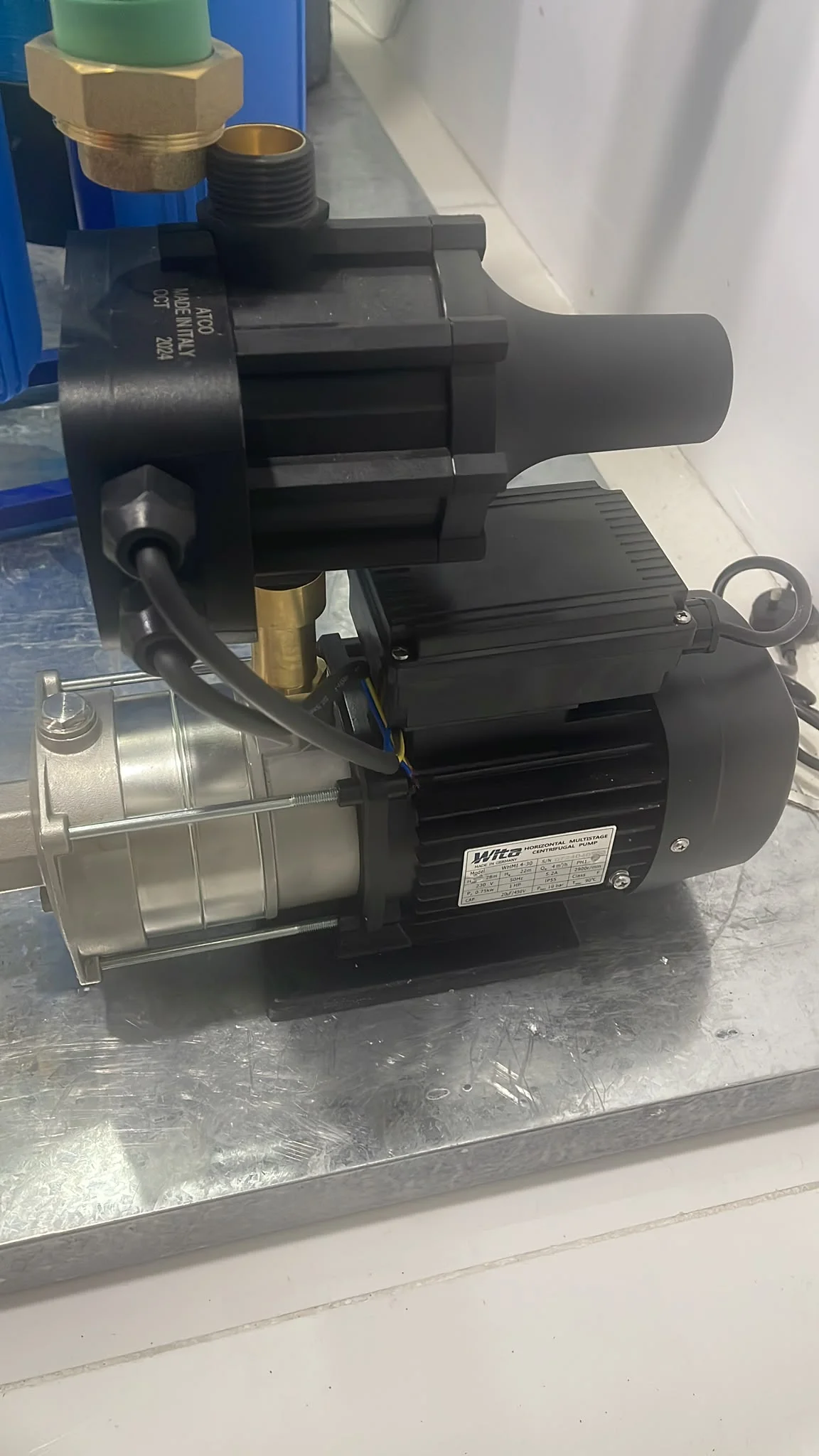
Searching for a water pump technician in Kuwait should begin with understanding the type of problem you have because the word pump can refer to very different systems. One home may have a booster pump whose main purpose is increasing water pressure. A villa may have several pumps serving different floors or water systems. Another property may use a hot-water return pump to reduce the waiting time before hot water reaches the taps. A technician who understands the type of system from the beginning is in a much better position to diagnose it than someone who treats every pump in exactly the same way.
One of the first signs that the technician understands the job is that they ask about the symptoms before arriving instead of giving an instant diagnosis. Is the pressure weak throughout the house or only on one floor? Does the pump run continuously or fail to start? Has its sound changed? Did the problem appear suddenly or become worse gradually? Was the water tank cleaned, a filter replaced, or any piping work carried out before the problem appeared? These questions are not unnecessary conversation. They help narrow down the inspection path before the technician even reaches the property.
When the technician arrives, they should start with the system rather than dismantling the pump immediately. If the complaint is weak pressure, they should inspect the water source, compare pressure before and after the pump, and check the suction line, valves, filter, pressure tank, and automatic control depending on the system design. Sometimes the pump itself is perfectly healthy, but a restriction before the pump prevents enough water from reaching it. Replacing the pump in that situation does not solve anything.
Consider a practical example. If the ground floor has normal pressure but the upper floor has weak pressure, the diagnostic path is different from a situation where the entire house suddenly loses pressure at the same time. If the pump starts and stops every few seconds, the pressure tank or control system may be more relevant than the motor itself.
A good technician should also avoid vague statements such as “the pump is tired.” They should be able to explain what was tested, what the result showed, and why a particular component needs repair or replacement. The more specific the diagnosis is, the clearer your decision becomes.
-
A specialist technician starts with the symptoms and the water-network design before dismantling the pump because weak pressure alone does not prove that the motor has failed
-
Checking the water source suction line filter and valves can prevent replacement of a healthy pump when the actual problem is located before the pump
-
A fault affecting only one floor provides different diagnostic information from a fault affecting the entire house at the same time
-
A technician who explains the inspection result and the reason behind the recommendation allows the customer to compare repair with replacement instead of accepting a vague statement
-
Choosing someone who understands pumps controls pressure tanks and the water network reduces the problem of moving between several technicians who each blame another part of the system
Choosing a professional water pump technician
Choosing a professional water pump technician should not depend on whether the person carries a large toolbox or simply says they have years of experience. Professionalism appears in the order of the diagnostic process and in the technician’s refusal to replace a component before there is a clear reason. A professional understands that pump symptoms can overlap and that one sound or one pressure problem may have several possible causes.
The first standard is the ability to distinguish between an electrical fault, a mechanical fault, and a water-network problem. A pump that does not start may have a power-supply issue, a control fault, a failed starting component, or a mechanically jammed part. A pump that runs but produces weak pressure may have an impeller problem, suction restriction, air entering the system, a pressure-tank problem, or incorrect control settings. Professional diagnosis narrows these possibilities through testing instead of jumping to the first idea.
The second standard is knowing when not to open the pump. An inexperienced technician may start dismantling the unit in the first few minutes, and after that the customer can feel committed to continuing the repair simply because the pump is already open. A better technician checks external and simpler causes first and only dismantles the pump when there is a clear reason.
The third standard is how the technician presents the available options. If a simple component such as a seal or bearing is responsible and the rest of the pump is healthy, the technician should explain why repair is economical. If the motor, shaft, and pump body are all badly worn and the pump is old, the technician should also be honest when continued repair is not the best financial decision.
The fourth standard is safety. A professional technician does not ask the customer to perform electrical testing over the phone. The customer can safely observe whether the pump makes noise, whether there is visible leakage, or whether the breaker has tripped, but voltage measurement, electrical connections, and internal electrical components should be handled by a qualified person.
The fifth standard is post-repair testing. A professional does not consider the job complete just because the pump starts turning again. Pressure, flow, start-and-stop behavior, and leakage should be checked to make sure the original complaint has actually been resolved.
-
Professionalism appears in the order of inspection rather than in how quickly the technician announces that the pump needs replacement
-
A good technician rules out water-network and control problems before opening the pump when the symptoms allow that approach
-
Presenting more than one option when repair is possible gives the customer an economic choice instead of forcing unnecessary replacement
-
A professional technician does not ask the customer to perform unsafe electrical tests in order to avoid a service visit
-
Testing after repair is a fundamental part of the service because pump rotation alone does not prove that pressure and system performance have returned to normal
Pump fault diagnosis technician
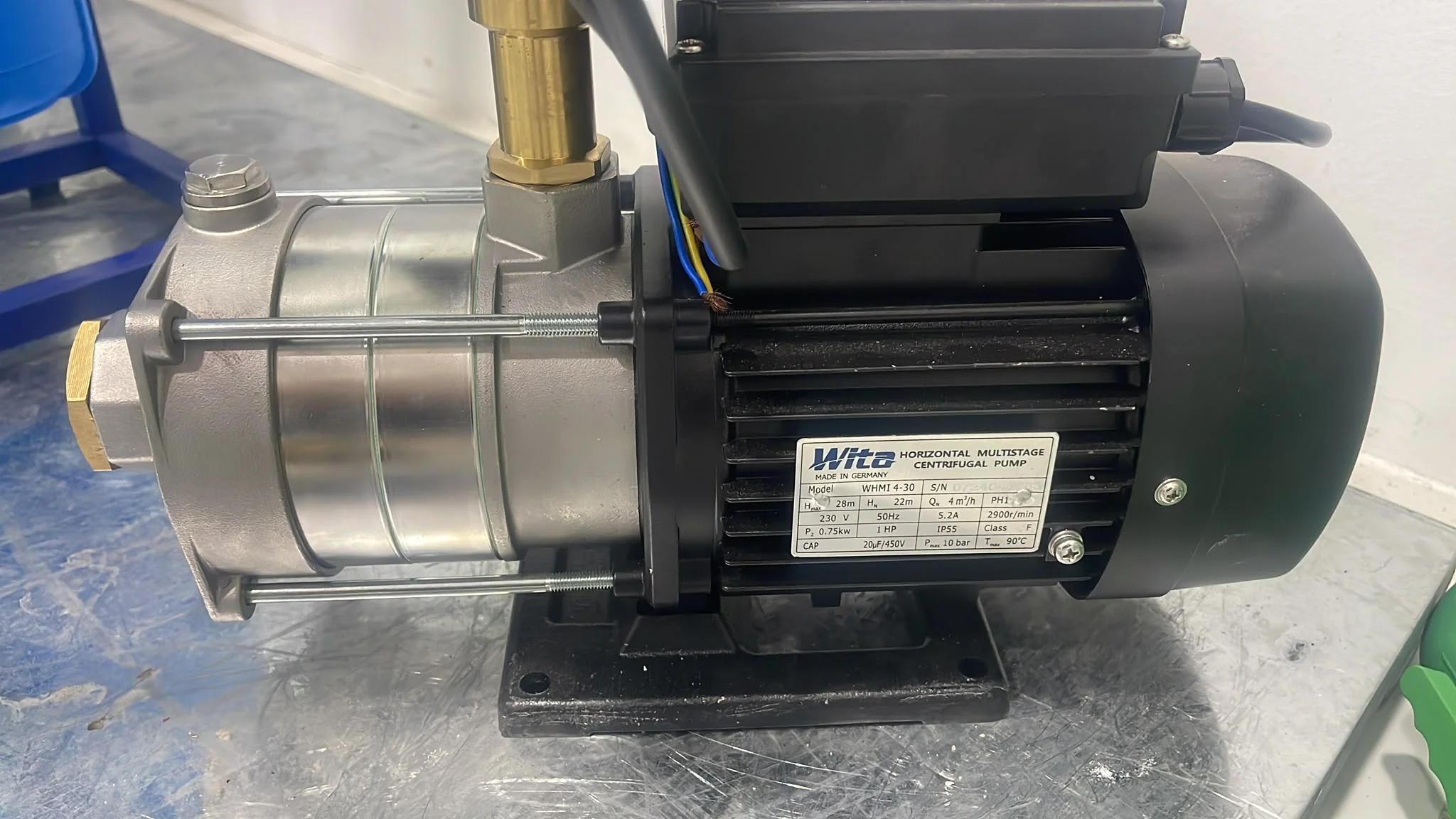
A pump fault diagnosis technician should work with the mindset of finding the cause rather than finding a component to replace. Diagnosis begins by turning the customer’s complaint into symptoms that can be tested. Saying “the pump is broken” does not provide much information, while saying “the pump starts every ten seconds,” “the pressure is strong for the first minute and then drops,” or “there is a rough mechanical noise during operation” provides useful diagnostic information.
If the problem is frequent starting and stopping, the pressure control, pressure tank, and possible leakage in the network should be checked before replacing the motor. If the problem is low pressure, the water level, suction line, filter, and valves should be checked before inspecting the impeller. If the problem is leakage, the exact location of the water should be identified because leakage from an external connection is completely different from leakage through the mechanical seal around the shaft.
Diagnosis also depends on the history of the problem. A pump that operated normally for five years and then developed a new sound is different from a newly installed pump that never produced the required pressure from the first week. The first case may involve component wear, while the second may involve incorrect pump sizing, installation, or system adjustment from the beginning.
The technician should also compare the symptoms with the condition of the rest of the system. If the pump trips its protection every time it starts, the technician should not repeatedly restart it just to “see what happens.” Protection devices trip for a reason and the cause needs appropriate electrical and mechanical inspection. If the motor body is excessively hot, questions need to be asked about operating load, bearing condition, ventilation, and electrical supply.
The important point is that diagnosis should lead to a clear decision. The fault may be outside the pump, limited to one replaceable component, serious enough to require a major repair, or no longer economical to repair. “We will try and see” can be part of a controlled diagnostic test, but it should never become the complete repair strategy at the customer’s expense.
-
Describing the symptoms accurately shortens diagnosis more effectively than trying to name the failed component yourself
-
Repeated protective tripping needs a clear cause and should never be treated as something that should simply be bypassed
-
The performance history of the pump helps distinguish a new fault from a sizing or installation problem that existed from the beginning
-
Identifying the location of a leak or the exact time pressure becomes weak helps the technician move toward the right cause and reduces unnecessary dismantling
-
Good diagnosis ends with a recommendation that can be explained rather than a chain of experiments where every experiment involves another replacement part
Water pump motor maintenance technician
A water pump motor maintenance technician needs to distinguish between a problem inside the motor and a load problem coming from the pump itself because the two are closely connected. The motor may overheat because of an electrical fault, but it can also overheat because a bearing is becoming stiff, the impeller is rubbing, or the pump is operating outside its intended conditions. Repairing one side while leaving the actual cause on the other side allows the same problem to return.
If the motor does not start, electrical inspection should be carried out by a qualified person. The customer should not open electrical connections, bypass protection devices, or touch internal components based on phone instructions. The technician checks the power supply, starting components, and protective devices according to the design of the motor and then determines whether the problem is external or internal.
If the motor runs but becomes hotter than normal, operating duration, load, ventilation, and mechanical resistance all need to be considered. A pump that runs continuously because of leakage in the water network or an incorrect pressure setting can cause the motor to overheat even when the motor itself is electrically healthy. Repairing the motor alone will not solve that condition.
Sound also provides clues. Bearing noise differs from electrical noise or a cooling fan rubbing against its cover, but confirmation still requires inspection. If a damaged bearing is confirmed, it should be replaced before continued vibration affects other components.
If the motor windings are severely damaged, the technician needs to compare the value of rewinding with replacement of the motor or complete pump. The decision depends on the motor capacity, age, condition of the pump body, and spare-part availability. Rewinding can make sense in some cases, while in others the repair cost is too high compared with installing a better replacement.
A specialist technician also corrects the reason that placed excessive stress on the motor. If a failed pressure tank makes the pump start every few seconds or a pressure-control problem prevents the pump from stopping, those issues need repair together with the motor.
-
Motor maintenance starts by identifying whether normal pump load caused the problem or whether the fault is electrical inside the motor itself
-
Electrical testing should be performed by a qualified technician because pump systems combine electricity and water and should not be treated as safe areas for experimentation
-
High motor temperature does not automatically mean the motor is burned because long operating hours friction and poor ventilation are also possible causes
-
Repairing the motor without correcting excessive operating time or high mechanical load can cause the same failure to return
-
Comparing motor-repair cost with the overall condition of the pump prevents spending heavily on a unit whose other components are already near the end of their life
Home pump inspection expert
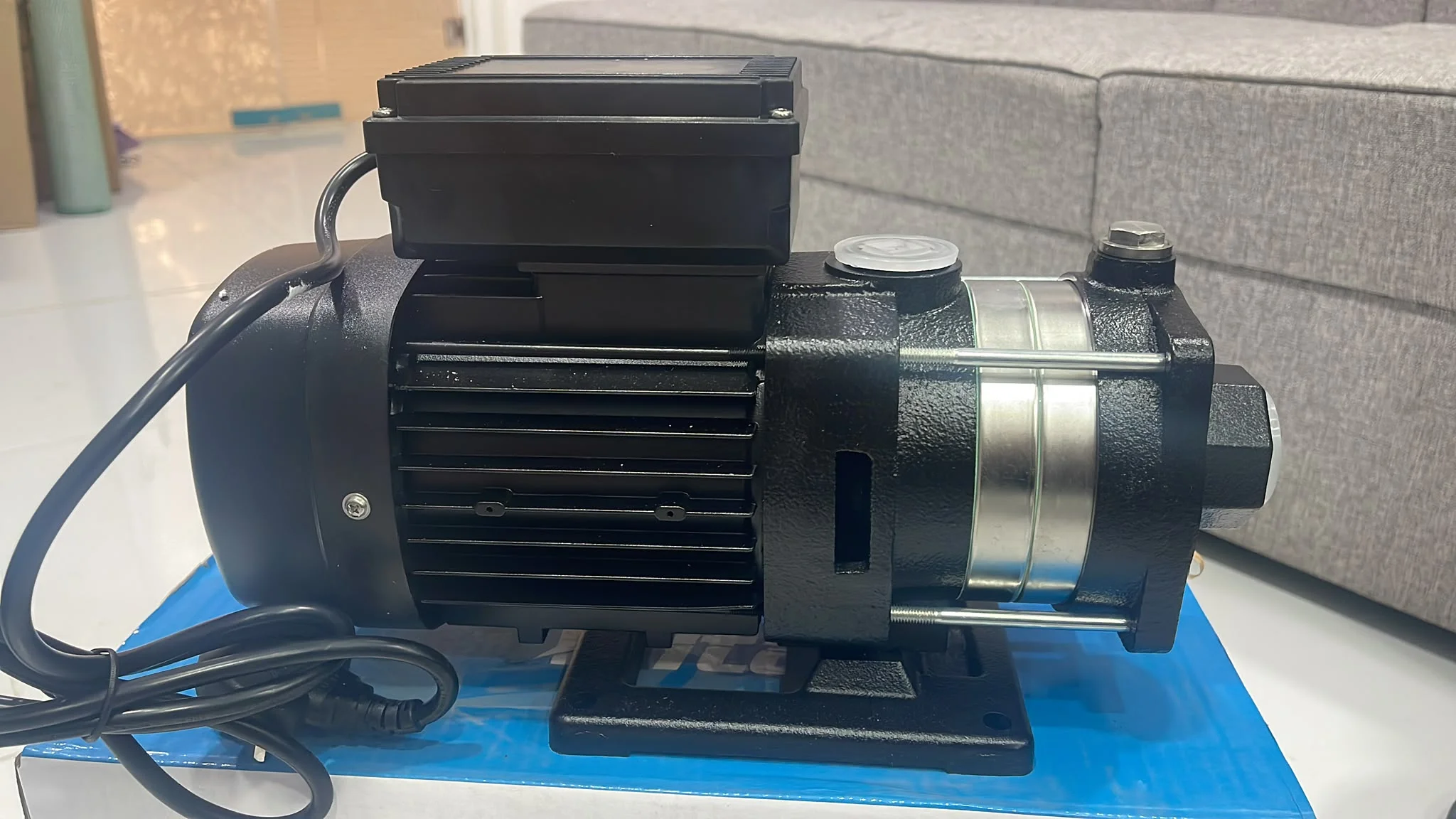
A home pump inspection expert does not look at the pump as a device completely separate from the property because the pressure you feel at the tap is the result of a chain that begins with the water source and tank, passes through piping, valves, filters, the pump, pressure tank, and control system, and ends at the point of use. Any component in that chain can change the final pressure.
If the homeowner says that pressure is weak at every tap, the inspection is different from a complaint about one weak shower only. In the second situation, the problem may be local to the mixer, shower head, or branch pipe and may not require touching the pump at all. This is where the value of a technician who understands the complete water system becomes obvious.
The timing of the problem also matters. If pressure drops only when several people use water at the same time, system capacity, pipe size, or pressure settings may be involved. If pressure suddenly becomes weak even when only one tap is open, then a new fault or restriction becomes more likely.
The technician should also ask about the water tank. Is the water level normal? Is the float valve allowing enough water into the tank? Does the pump sometimes draw from a source that can run low? A pump cannot produce stable pressure if the water supply feeding it is unstable.
Filters also need to be considered. A blocked filter installed before or after the pump can create a noticeable pressure drop and convince the customer that a larger pump is required when the real problem is simply restriction. A partially closed valve can create the same type of symptom.
A complete inspection does not make the visit unnecessarily complicated. In fact, it saves time because the technician starts with the simplest causes that can explain the symptom and only moves toward internal pump work when there is a real reason.
-
Weak pressure at only one point in the house usually deserves local inspection before blaming a pump that is serving the rest of the network normally
-
The timing of pressure loss and the number of taps open at the same time help distinguish a fault from a system that simply has lower capacity than the current demand
-
Water-tank level and refill performance are fundamental parts of pump diagnosis because an unstable water source creates unstable pump performance
-
A blocked filter or partially closed valve can mislead the customer into thinking the pump has become weak
-
A specialist inspects the complete system from the source to the final point of use instead of limiting diagnosis to the pump itself
Villa water pump technician
Choosing a villa water pump technician requires greater attention because villas often contain several bathrooms, multiple floors, several water tanks, a main booster pump, a hot-water return pump, and additional control components. What appears to the resident as one simple pressure problem may actually come from peak demand, system distribution, or a mismatch between the current water load and the original pump design.
The technician should begin by identifying the number of floors, tanks, points of use, and the way the pump is connected. If the ground floor has excellent pressure while the highest floor remains weak, the technician needs to look at available pressure, elevation, and network losses. If all floors suddenly become weak at the same time, a shared cause such as the pump, suction line, or filter becomes more likely.
Peak demand should then be examined. In some villas, pressure is excellent when only one person is using water but collapses when several bathrooms are used at the same time. In that situation, the question is not only whether the pump is healthy but whether its capacity is suitable for the required flow. Replacing a part inside the pump will not solve a system that was designed below the current demand of the property.
A villa may also use a pressure tank and automatic control system. If pressure rises and falls in an uncomfortable way, the technician should inspect the operating logic instead of randomly increasing the pressure setting. Raising pressure without understanding the limits of the water network can place unnecessary stress on fittings and plumbing fixtures.
If the villa has been expanded or additional bathrooms or annexes were added after the original pump system was installed, the technician needs to know that. A pump that was suitable several years ago may still be mechanically healthy while current demand has become greater than its original design capacity.
In larger villas, future maintenance access also matters. A good technician repairs the existing problem but can also point out genuinely useful improvements if valves are poorly arranged or the pump is installed in a location that makes future service unnecessarily difficult.
-
Villa pump diagnosis starts with the number of floors tanks and actual demand pattern rather than motor power alone
-
Pressure differences between floors provide information about elevation and distribution rather than automatically proving that the pump is weak
-
Pressure collapse when several outlets are used can indicate a capacity or flow problem rather than a failed internal component
-
Adding bathrooms or expanding the property changes system demand even when the pump itself has not changed since installation
-
The right villa technician understands the complete water system because several pumps and tanks may be working together within one network
Criteria for choosing a pump technician

Criteria for choosing a pump technician should be clear before you hand over the equipment and agree to replacement of any component. The first standard is diagnosis before a final repair price. A technician may provide an inspection charge or a general range, but someone who decides over a thirty-second phone call that you need a new motor without even seeing the pump is guessing more than diagnosing.
The second standard is transparency. The technician should tell you what was found, what needs replacement, and whether any older components are still functioning correctly. A healthy component should not be added to the replacement list just because the pump has already been dismantled.
The third standard is knowledge of the specific pump type. A booster pump is different from a return pump or submersible pump, and each system has different operating characteristics and common faults. A technician familiar with the actual pump type is better than someone who applies the same repair to every system.
The fourth standard is using appropriate measuring tools instead of depending entirely on sight and sound. Some problems become much clearer through pressure, flow, or appropriate electrical measurements carried out by a qualified technician. Tools do not replace experience, but experience without measurements can sometimes remain only a possibility.
The fifth standard is the ability to explain the recommendation. If the technician says the pressure tank needs replacement, ask what proved that it failed. If they recommend replacing the complete pump, ask why repair is not economical. A technician confident in the diagnosis should be able to explain the reason briefly without turning the visit into an engineering lecture.
The sixth standard is respect for safety. A good technician does not bypass protection devices, use a dangerous temporary electrical connection as a permanent repair, or ask the customer to open live pump wiring just to avoid a service visit.
The seventh standard is testing the result. After the repair, pressure should be stable, the pump should start and stop normally, and any original leakage or abnormal behavior should be gone.
-
The better technician diagnoses before recommending the most expensive component because price is meaningless when the actual cause has not been identified
-
Transparency appears when the technician distinguishes between failed parts and older parts that are still performing correctly
-
Specialization in the actual pump type helps the technician understand its common faults and controls instead of applying one solution to every system
-
Measurement supports experience and turns suspicion into a more reliable conclusion especially with pressure electrical and operating problems
-
Performance testing after repair is an important standard because successful replacement is proven by disappearance of the original fault rather than by the new component itself
Water pressure repair technician
A water pressure repair technician needs to understand that weak pressure is not the name of a fault. It is the result of many possible conditions. The pump may be too small for the demand, the impeller may be worn, the filter may be blocked, the pressure tank may be damaged, the automatic control may be adjusted incorrectly, the suction line may be restricted, or the water network itself may have excessive pressure loss.
Inspection starts with one important question: where and when is the pressure weak? Weak pressure throughout the property at all times is different from weakness only on the highest floor, and both are different from pressure that drops only when several people use water at the same time. The answer already narrows the possible causes significantly.
The technician then compares pump performance with the available water source. If the pump does not receive enough water, it cannot create stable pressure regardless of how powerful the motor is. The suction side needs to be stable and free from air or serious restriction. If the tank regularly runs low, the problem begins before the pump.
The pressure tank and control system should also be checked when present. A pressure tank that has lost its air charge or has a damaged diaphragm can create unstable pressure and frequent pump starts. That is different from a pump that has genuinely lost hydraulic performance.
If these parts are healthy, the technician can then move toward the pump itself according to the symptoms. Impeller wear, internal hydraulic damage, or a motor problem remain possibilities, but they should not be investigated before the external system is ruled out.
One common mistake is trying to solve every pressure problem by increasing the pump pressure setting as high as possible. Higher pressure is not automatically better if the property’s plumbing and fixtures do not require it. The objective is stable and comfortable pressure within suitable system limits.
-
A water pressure technician starts by identifying where and when the problem occurs because these details help separate pump faults from distribution problems
-
A pump cannot compensate for poor water supply which is why the tank and suction line should be checked before increasing pump capacity
-
Pressure fluctuation directs attention toward the control system and pressure tank before assuming that the motor is weak
-
Randomly increasing pressure is not a proper repair because the plumbing system has limits and weak pressure should not be replaced by new leakage problems
-
The correct solution restores stable pressure and reduces unnecessary pump operation instead of simply increasing the pressure setting
Booster pump specialist
A booster pump specialist understands that the pump does more than increase pressure. It has to interact correctly with household demand, control settings, the pressure tank, and the water network. Correct sizing and maintenance require knowing when the pump should start, when it should stop, and what happens to pressure between those two points.
One common problem is a booster pump that starts repeatedly even when there is no obvious water use. A specialist does not immediately replace the motor. They check for leakage in the network, a valve problem, pressure-tank condition, or control settings because the pump may simply be responding correctly to pressure that keeps falling for another reason.
Another situation is a pump that refuses to stop after all taps are closed. There may be leakage, the control may be unable to detect pressure correctly, or the pump may no longer be capable of reaching the cut-off pressure because of hydraulic weakness or suction problems. Each possibility requires a different test.
If the pump sound changes over time, the technician considers the bearing, impeller, mounting, air entering the suction line, and other mechanical possibilities. If pressure becomes lower than before while household conditions remain the same, current performance should be compared with previous operation instead of simply saying that the motor is old.
A specialist also understands that replacing the pump with a larger one is not an automatic solution. If the water network has a suction problem or undersized piping, a larger pump may increase noise, operating load, and cost without producing the expected improvement.
After repair or adjustment of a booster pump, several start-and-stop cycles should be observed rather than only one cycle so the technician can confirm that the control system remains stable under real use.
-
A booster pump should be diagnosed together with the pressure tank controls and water network because all of them determine its daily operating behavior
-
Frequent starting can be a response to continuous pressure loss rather than proof that the pump motor itself is damaged
-
A pump that does not stop needs investigation into whether the system can reach the cut-off pressure instead of random replacement of the automatic control
-
Installing a larger pump without correcting suction or network problems can increase cost without solving the original complaint
-
After repair several operating cycles should be observed to confirm stable starting and stopping under realistic use
Diagnosing pump faults before repair
Diagnosing pump faults before repair is the most important step if you want to avoid replacing healthy components and understand whether repair is financially worthwhile in the first place. Every repair performed without a clear diagnosis carries the risk of treating a symptom while leaving the real cause hidden in the pump or water network.
The process begins by listening carefully to the complaint and then inspecting the system in its existing condition before dismantling anything when it is safe and practical to do so. The technician observes operation, sound, pressure, leakage, and control behavior. External causes such as the water source, filter, valves, and suction line are then ruled out.
If the signs point toward the pump, its components are checked in the appropriate order. The fault may involve the impeller, bearing, mechanical seal, or part of the motor, but every component has its own symptoms and testing methods. The objective is not to prove that the technician’s first guess was correct. The objective is to find the real cause even if it turns out to be something completely different.
Once the fault is identified, the financial decision comes next. If the pump is relatively new and the problem is limited to one specific component, repair usually makes sense. If the unit is old, several components are damaged, and it has a long maintenance history, the total cost of parts and labor should be compared with replacement.
Proper diagnosis also protects the new part. If the mechanical seal failed because the pump ran dry, the dry-running cause should be corrected. If the bearing failed because the pump base vibrates, the mounting should be repaired. If the motor overheats because the pump runs continuously due to a damaged pressure tank, the pressure tank needs attention as well. Otherwise, the new repair can fail for exactly the same reason.
At the end of a good service visit, the customer should know three things: what caused the problem, what repair is being recommended, and what result should be expected afterward. If none of those three answers are clear, the diagnosis is probably still incomplete.
-
Diagnosis before dismantling preserves the original symptoms and helps the technician observe the problem instead of trying to reconstruct it after the pump has been opened
-
Ruling out external water-network problems first prevents the customer from paying for repair of a healthy pump when the actual cause is a filter valve or suction line
-
The repair decision should consider pump age and the condition of the remaining components rather than only the price of the failed part
-
Correcting the reason a component failed protects the new repair and reduces the chance of the same problem returning
-
A good technician should leave the customer with a clear explanation of the cause proposed repair and expected result instead of a vague statement that a part was replaced and everything should now be fine
Conclusion
Choosing the right water pump technician starts with the way the technician diagnoses the problem, not with how quickly they arrive or the lowest price they mention over the phone. A professional asks about the symptoms and checks the water source, network, controls, pressure tank, and pump before deciding that a particular component needs replacement.
Weak water pressure does not automatically mean the motor is weak. A pump that starts and stops repeatedly does not necessarily need complete replacement. A new sound does not always mean the bearing has failed. The similarity between symptoms is exactly why measurement and inspection are more important than guesswork.
Before agreeing to any repair, ask the technician three simple questions: What caused the problem? How did you confirm it? Is the repair financially sensible compared with replacement? If the technician can answer those questions clearly, you are much closer to making the right decision. The last thing you need is for your pump to become a game of chance where one part is replaced on every visit until somebody eventually guesses correctly.
Frequently Asked Questions
How do I know if a water pump technician is professional?
A professional technician starts by asking clear questions about the symptoms, inspects the water network and pump before replacing components, explains the cause of the fault, and tests the result after repair instead of replacing parts by guesswork.
Should the technician inspect the pressure tank with the pump?
If the system uses a pressure tank, it is an important part of pressure control and pump operation, so it should be checked especially when pressure fluctuates or the pump starts and stops frequently.
Does weak water pressure mean the pump needs replacement?
No. The cause may be a blocked filter, suction-line problem, valve issue, pressure-tank fault, incorrect capacity, or an internal pump problem, which is why diagnosis should come first.
What should I ask the technician before approving the repair?
Ask what caused the fault, how the cause was confirmed, which component or repair is required, how much it will cost, and whether repairing the pump is financially sensible compared with replacing it.
Can a technician diagnose the pump from sound alone?
Sound can provide a useful clue, but it is usually not enough for a final diagnosis because bearing noise, fan contact, mechanical rubbing, and vibration can sound similar and need proper inspection.
When is replacing the pump better than repairing it?
When the pump is old, several components are damaged, the cost of parts and labor approaches the price of a new pump, or the repair is expected to provide only a short additional service life.
Does a villa pump require a different technician from a small house?
The basic principles are the same, but villa systems are often more complex because of multiple tanks, floors, and points of use, so it is better to choose a technician who understands pressure, flow, and network distribution.
Why does the pump start and stop rapidly?
Possible causes include a pressure-tank problem, control issue, leakage in the water network, or rapid pressure changes. The system should be inspected before blaming the motor.
Will installing a larger pump solve weak water pressure?
Not always. The problem may be on the suction side, in the piping, or in the control system. Increasing pump capacity without correcting the real cause may increase energy use and pressure without delivering the expected improvement.
What is the most important step before repairing a water pump?
The most important step is diagnosing the cause clearly, ruling out external water-network problems, and then deciding whether the correct solution is replacing one part, repairing a component, or replacing the complete pump.