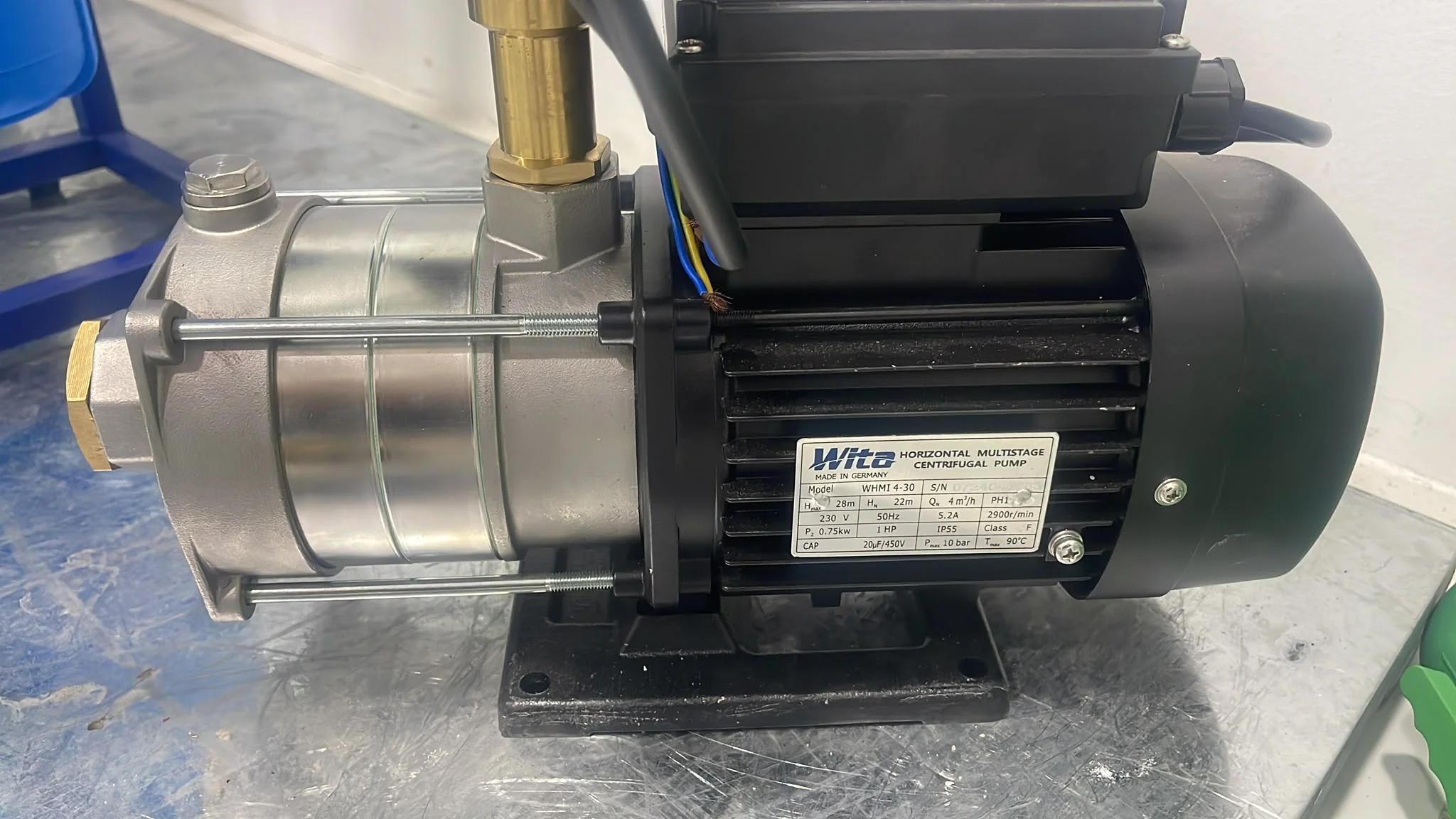
Installing a booster pump is not simply a matter of bringing in the pump, cutting a pipe, connecting electricity, and calling the job complete. Successful water booster pump installation begins before the unit itself is installed by checking the water source, existing network pressure, pipe capacity, tank location, highest point of use, electrical supply, drainage conditions, and the valves already installed in the system. Even an excellent pump can perform below expectations if it is connected to a restricted suction line, placed in the wrong location, or installed on a plumbing network with an existing bottleneck. Al Arabi Orchid 99346138 provides GRUNDFOS pump solutions for homes and villas in Kuwait and matches the pump with the appropriate pressure-system components instead of treating it as an isolated piece of equipment.
Water Booster Pump Installation
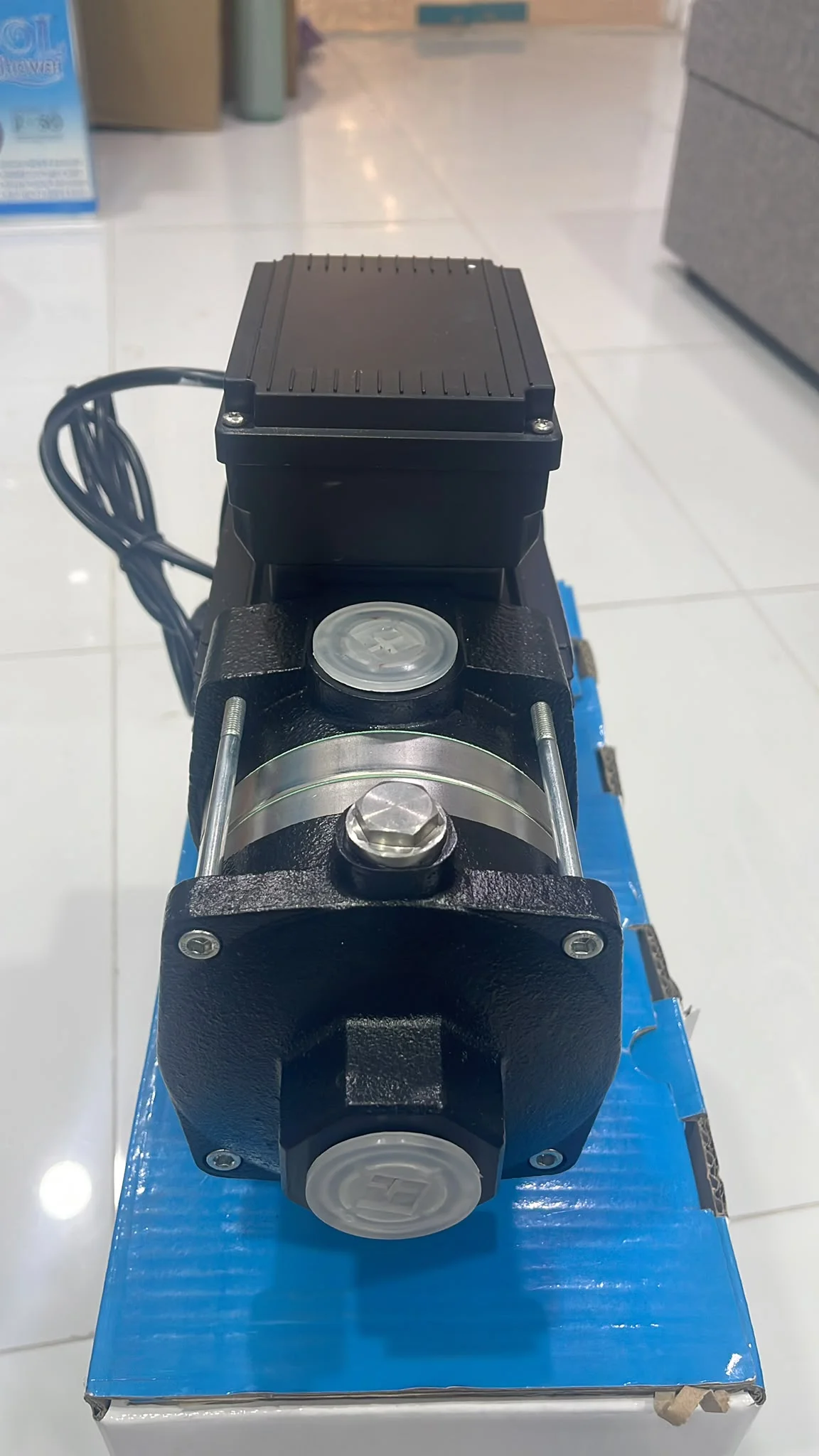
Water booster pump installation should begin by answering one simple but important question: what exactly is the pump expected to achieve after installation? Is the goal to improve pressure on one floor? Is the entire house suffering from pressure that is lower than comfortable? Is there a ground-level tank that needs to supply the internal network? Or is pressure already available but fluctuates significantly whenever several fixtures are opened? Defining the task before installation prevents the booster from becoming a general-purpose solution for a problem that has never been clearly identified.
The next step is understanding the water source. The technician needs to know whether the pump will receive water from a storage tank or from another supply line that already has positive pressure. This changes both the installation arrangement and the protection requirements. A pressure booster cannot compensate for a supply line that does not provide enough water volume in the first place. Raising pressure does not create additional flow if the source or main pipe diameter is already limiting the available water.
The diameter, length, and routing of the inlet line should then be inspected. A narrow, excessively long suction pipe with many elbows, valves, and filters can create significant losses before water even reaches the pump. The inlet route should be as unrestricted as reasonably possible, pipework should be supported independently rather than placing its weight on the pump body, and suitable filtration should be considered where sand or debris may be present in the water supply.
Electrical requirements should also be reviewed before the pump is fixed in position. The available supply must match the exact model, electrical protection should follow the manufacturer’s requirements, and there should be a safe means of isolating the unit during maintenance. Isolation valves, non-return valves, pressure tanks, and other control components should also be planned according to the booster design.
Finally comes commissioning. Installation is not complete simply because the motor can be heard running. The farthest fixture should be opened, actual pressure should be checked, water outlets should then be closed, and the pump should be observed to confirm normal stopping and restarting under several realistic household-use conditions.
-
Before installing the pump the exact problem being solved should be defined because whole-house pressure boosting is different from boosting one upper floor or supplying a property from a ground tank
-
The available water volume at the pump inlet must be sufficient because increased pressure cannot compensate for an undersized supply pipe or a source that cannot provide the required flow
-
The inlet route should contain as few unnecessary restrictions as possible so the pump does not begin its work while already losing performance on the suction side
-
Isolation valves non-return protection and low-water protection should be considered during the original installation design rather than being added only after the first operating problem appears
-
Installation success should be judged by pressure and flow at the farthest outlet and by stable start-and-stop operation under several usage conditions rather than merely by whether the motor rotates
Water Pump Installation Technician in Kuwait
Choosing a water pump installation technician in Kuwait matters because pump installation combines plumbing, electricity, control systems, and pressurized water in one job. A technician who knows how to connect two pipes but never measures the network pressure may get the equipment running, but that does not mean the complete system has been set up correctly. The opposite is also true: electrical knowledge alone is not enough if suction conditions, non-return valve orientation, or priming requirements are ignored.
A competent technician starts by inspecting the site before fixing the pump in place. The water source, tank position, pipe diameter, inlet and outlet routes, and future maintenance access should all be considered. Existing pressure should then be measured at appropriate points so the technician knows how much additional pressure the property actually needs.
The technician should also understand the exact type of pump being installed. A traditional pump working with a pressure switch and external pressure tank requires a different setup from a smart booster with integrated sensors, electronic controls, and possibly a built-in pressure vessel. Some smart systems require the pressure-vessel precharge to be adjusted according to the selected pressure setpoint rather than simply leaving the factory value unchanged.
Thermal expansion should also be considered when the booster is connected to a network containing a central water heater. Adding a non-return valve can effectively create a more closed hydraulic section, so the water-heating system must still have the correct method of handling thermal expansion and excessive pressure. The small vessel integrated into some booster pumps is not automatically a substitute for the expansion arrangement required by the water heater.
Al Arabi Orchid provides GRUNDFOS pressure pumps in different capacities together with automatic controls, pressure tanks, pressure-regulating components, and suitable valves in selected systems, as well as smart-pump solutions. The advantage of working with a technician who understands the complete installation is that the pump is not treated separately while the rest of the network remains mismatched.
-
A professional technician measures and inspects before installation because site conditions and network configuration influence the job more than the model name alone
-
Understanding the difference between a conventional pump and a smart booster prevents the use of incorrect settings or components with the installed control system
-
Checking the pressure tank and its precharge is part of correct installation rather than a minor detail left until the pump begins cycling incorrectly later
-
A central water heater in the same network requires proper consideration of thermal expansion and safety devices instead of installing a check valve and unintentionally creating a closed system
-
A good technician hands over a system tested under real demand and explains the basic operating settings rather than leaving the pump on factory defaults and walking away
Installing a Home Water Booster

Installing a home water booster is different from simply replacing an old pump with a new one. Household demand changes constantly. At one moment only one tap may be open, and a few minutes later a shower, kitchen tap, and washing machine may all be drawing water. The booster must therefore handle these changes without creating excessive pressure during light use or collapsing when demand increases.
The first step is identifying the water source. If the home is supplied from a storage tank, the installation should be designed around the tank level and suction route. If positive pressure already exists from another source, that pressure has to be included in the calculation because the final pressure is the combination of inlet pressure and the additional boost produced by the pump. Local requirements should also be checked before directly boosting from a public water main because direct boosting is not permitted in the same way in every location.
Noise is another important residential consideration. A pump installed beside a bedroom or behind a living-room wall is different from a pump located in a dedicated service room. A stable base, flexible connections, and a suitable location can reduce the transmission of vibration into pipes, walls, and floors.
Protection should also be planned. When the pump draws from a tank, low-water protection can prevent the motor from operating dry if the tank level becomes too low. Depending on the design, this may be provided by a float, integrated dry-run protection, sensor, or another control method.
The booster should then be tested in the scenario that matters to the household. Open the shower and then the kitchen tap, for example, and observe pressure behavior. Test the highest outlet and confirm that pressure remains comfortable. With a smart pump, the pressure setpoint should be adjusted according to actual household needs rather than simply being increased to the highest available value.
-
A residential booster must handle changing daily demand which means pressure stability is usually more important than chasing the highest possible bar value
-
Flexible connections and secure mounting help reduce vibration transfer into pipes and walls and can make the installation noticeably quieter inside occupied areas
-
If the pump draws from a storage tank low-water protection should be part of the design so the motor does not continue running dry when the tank level drops
-
Pressure should be adjusted according to comfort at the highest and farthest outlet rather than according to how powerful the tap beside the pump feels
-
Testing several fixtures together after installation confirms that the booster is suitable for real household demand and not merely capable of supplying one tap very well
Preparing for Water Pump Installation
Preparing for water pump installation begins before the equipment arrives. The installation area should have a clear location, planned pipe routing, a suitable electrical point, and isolation valves before and after the pump. Preparing the site properly reduces unnecessary cutting, improvised connections, and last-minute modifications while making future service considerably easier.
If the water contains sand, sediment, or other debris, a suitable inlet filter may help protect the pump depending on the exact model and water conditions. The filter must be sized correctly because a filter that is too small can become another restriction and reduce available flow.
Pipework should also be independently supported. The weight of long pipes should never be left hanging directly from the pump connections because mechanical stress can eventually cause leakage or damage. Sufficient clearance should also be left so a technician can reach the cover, non-return valve, priming point, filter, or service components without dismantling half the installation.
If a bypass arrangement is suitable for the system, planning it during the original installation can allow the pump to be isolated for maintenance while maintaining an alternative water route where the design allows it. This can be particularly useful where temporary water availability during maintenance is important.
Electrical access, drainage, ventilation, and safe service space should all be included in preparation rather than treated as secondary details after the pump has been fixed into position.
-
Preparing the installation area beforehand reduces emergency fittings and modifications that are only needed because the pump location was never properly planned
-
An inlet filter can be useful where the water source contains debris but it must be correctly sized so the filter itself does not become a new hydraulic bottleneck
-
Supporting pipework independently protects the pump connections from mechanical loads that can cause stress or leakage over time
-
Isolation valves before and after the unit make future maintenance easier without requiring the entire household network to be drained every time
-
Service clearance is part of proper preparation because a pump whose filter or valve cannot be accessed without removing pipework will cost more to maintain during every future visit
Checking Pressure Before Installing the Pump
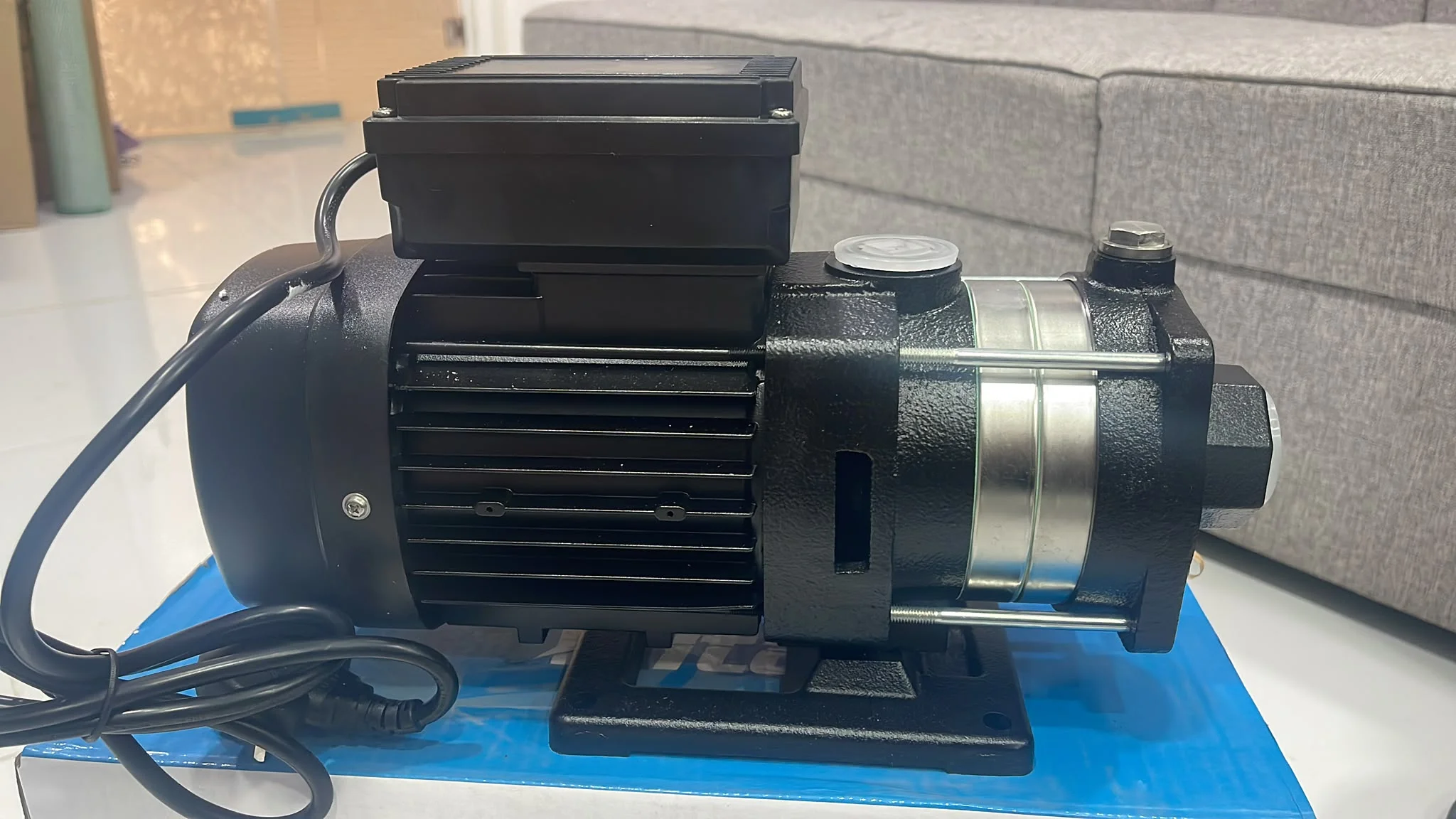
Checking pressure before installing the pump is not optional because without an actual reading there is no reliable way to know how much pressure is missing. Ideally, static pressure should first be measured while no water is flowing, and then dynamic pressure should be checked while fixtures are open. A plumbing network can show an acceptable static reading and still suffer a severe pressure drop as soon as demand increases.
If static pressure is relatively high but dynamic pressure falls dramatically, the technician should investigate whether the supply line can provide enough flow before installing a larger booster. An undersized meter, restricted supply line, clogged filter, or narrow pipe may be limiting volume. A booster can increase pressure, but it cannot create unlimited flow through a supply route that is physically too small.
Measurements should also be taken at more than one location where practical. A large difference between the first and last outlets can reveal pressure loss inside the plumbing network itself. This information may influence both pump selection and the final pressure setting.
After the booster is installed, pressure should be measured again under the same conditions so there is a genuine before-and-after comparison rather than relying only on the customer’s impression.
-
Static pressure provides an initial reference but pressure measured while water is flowing reveals how the network performs under real load
-
A major pressure drop as flow increases may indicate a supply-line capacity problem which means a larger booster alone may not solve the underlying restriction
-
Recording the pressure before installation establishes a clear baseline that can be compared with post-installation performance instead of relying only on subjective impressions
-
Measuring pressure at the highest point in the property is important because strong pressure on the ground floor does not prove that the installation goal has been achieved upstairs
-
Final pressure adjustment should follow measurement because increasing the setpoint beyond what the property needs can place unnecessary load on the plumbing network for very little practical benefit
Choosing the Water Booster Pump Location
Choosing the water booster pump location affects noise, service life, maintenance access, and equipment safety. The selected area should be stable, reasonably dry, adequately ventilated, and protected from conditions that could expose the electrical components to water.
The pump should not be installed where flooding or standing water is likely. At the same time, it should not be trapped behind stored items or inside an enclosure that prevents ventilation or blocks access to service panels.
Proximity to the water source can also matter, especially in suction applications. The more complicated and extended the suction route becomes, the greater the opportunity for pressure loss or air entry. Keeping the suction arrangement as direct and practical as possible can improve reliability.
Noise should also influence the location in a home. Installing a pump directly behind a bedroom wall may create unnecessary disturbance when a better service location is available. Flexible connections and vibration control can help, but good placement remains the first step.
Provision for drainage is also useful. A drain or suitable tray can reduce the consequences of condensation, minor maintenance water discharge, or accidental leakage.
-
Select a stable dry base because placing the pump where water can collect combines electricity and moisture in the least desirable possible way
-
Adequate ventilation around the unit helps keep its components cooler especially inside hot service rooms during Kuwait summer conditions
-
Easy maintenance access should be planned from the first day so cleaning a filter or servicing a valve does not require dismantling half of the plumbing network
-
Keeping the suction route short and uncomplicated can improve pump performance in applications where water is drawn from a storage tank
-
A reasonable distance from sleeping areas together with flexible connections can provide much better acoustic comfort than simply installing the pump in the nearest available corner
Installing a Water Pump Automatic Controller
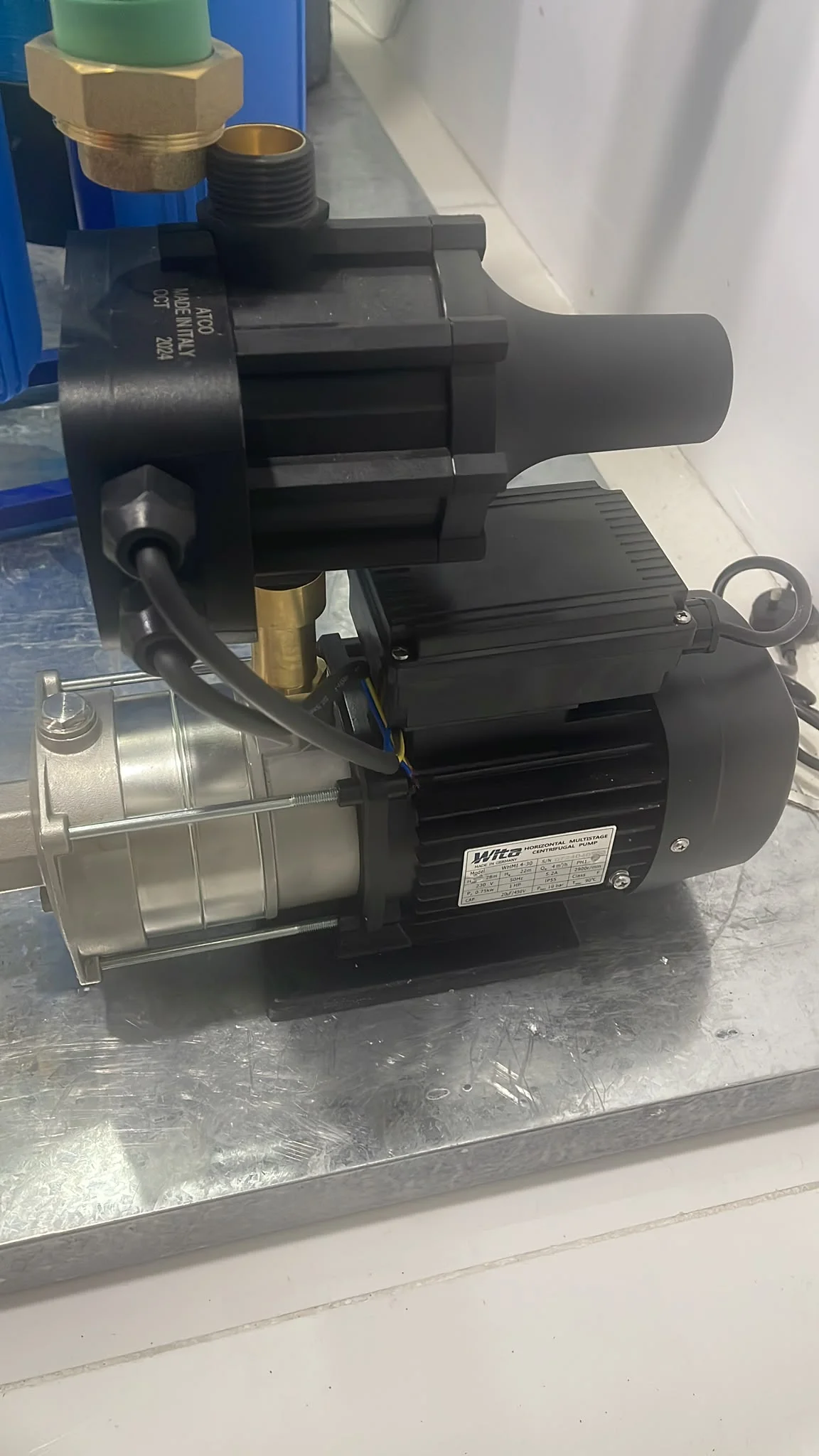
Installing a water pump automatic controller should be treated as part of pressure-system design rather than as a component that can be installed with any random setting. In a conventional system, the pressure switch determines when the pump starts and when it stops, and its operation is closely connected with the pressure tank. Incorrect cut-in and cut-out settings can create excessive cycling, unstable pressure, or operating pressure above or below what the property needs.
The pressure tank itself requires the correct air charge. In some integrated smart-pump systems, the manufacturer specifies precharge as a percentage of the pressure setpoint. This type of value should never be copied blindly to every external pressure tank because different systems have different operating requirements.
Electronic controllers can add other functions such as dry-run protection, leakage detection, alarms, and controlled restart depending on the model. These features can be particularly valuable when the pump receives water from a tank that may occasionally fall to a low level.
Electrical installation should also be protected appropriately and kept away from areas exposed to leakage or moisture. The controller should be installed where indicators can be seen and where safe access for service is possible.
Once settings are completed, several complete cycles should be tested. Open a tap, confirm pump start, close it, confirm normal stopping, and repeat the process several times to make sure the system does not short-cycle or continue operating abnormally.
-
The controller must match the way the pump operates because incorrect start and stop settings can make an otherwise excellent system behave poorly
-
Pressure-tank air charge should be adjusted according to the instructions for the specific system and measured with water pressure properly released where required
-
A controller with dry-run protection can add significant value when the water source is a storage tank whose level may occasionally become too low
-
Electrical connections for the controller should use suitable protection and be positioned away from water leakage and excessive moisture
-
After adjustment several complete opening and closing cycles should be tested to confirm that the pump starts and stops without short cycling or continuous abnormal operation
Installing a Villa Pressure Pump
Installing a villa pressure pump requires broader preparation because villas often have greater elevation, changing demand, longer pipe runs, and sometimes more than one water tank. Before installation, the highest fixture, most distant wing, and realistic peak-demand scenarios should all be identified.
A very large single pump is not automatically the best solution for a villa. Depending on the plumbing layout, a variable-speed booster, a multi-pump arrangement, or separate pressure zones may provide more balanced performance. The key factor is not the visual size of the building but the structure and hydraulic behavior of the water network.
If the villa has a central water heater and filtration equipment, component order should be considered carefully. A central filter that is undersized for the required flow can create significant pressure loss and force the booster to work harder. Non-return valves and thermal-expansion arrangements also need to be coordinated with the water-heating system.
Multiple tanks require particular attention. The technician should understand whether a ground tank feeds an upper tank, whether several tanks serve separate zones, or whether they are hydraulically connected. Pump placement without understanding these relationships can cause unintended transfer between tanks or unstable water levels.
Al Arabi Orchid provides GRUNDFOS pumps in several residential and larger-property categories together with Smart Pump solutions and integrated water-system configurations that can include pumps, filters, heaters, and related network components.
-
A villa should be tested at the highest fixture and the farthest wing because pressure measured beside the pump does not represent the performance of the entire property
-
Multiple tanks require a clear understanding of how they are connected before booster placement is decided so water is not unintentionally pumped between tanks
-
Central filters must be included in hydraulic calculations because they create pressure loss especially if their size is too small for the required flow
-
A villa with widely changing water demand can benefit from a control system that adapts to demand instead of running high fixed output under every condition
-
Installing a villa booster as part of a system containing a heater filter and tanks produces a better result when valves pressure control and component order are coordinated from the beginning
Water Booster Pump Installation Cost
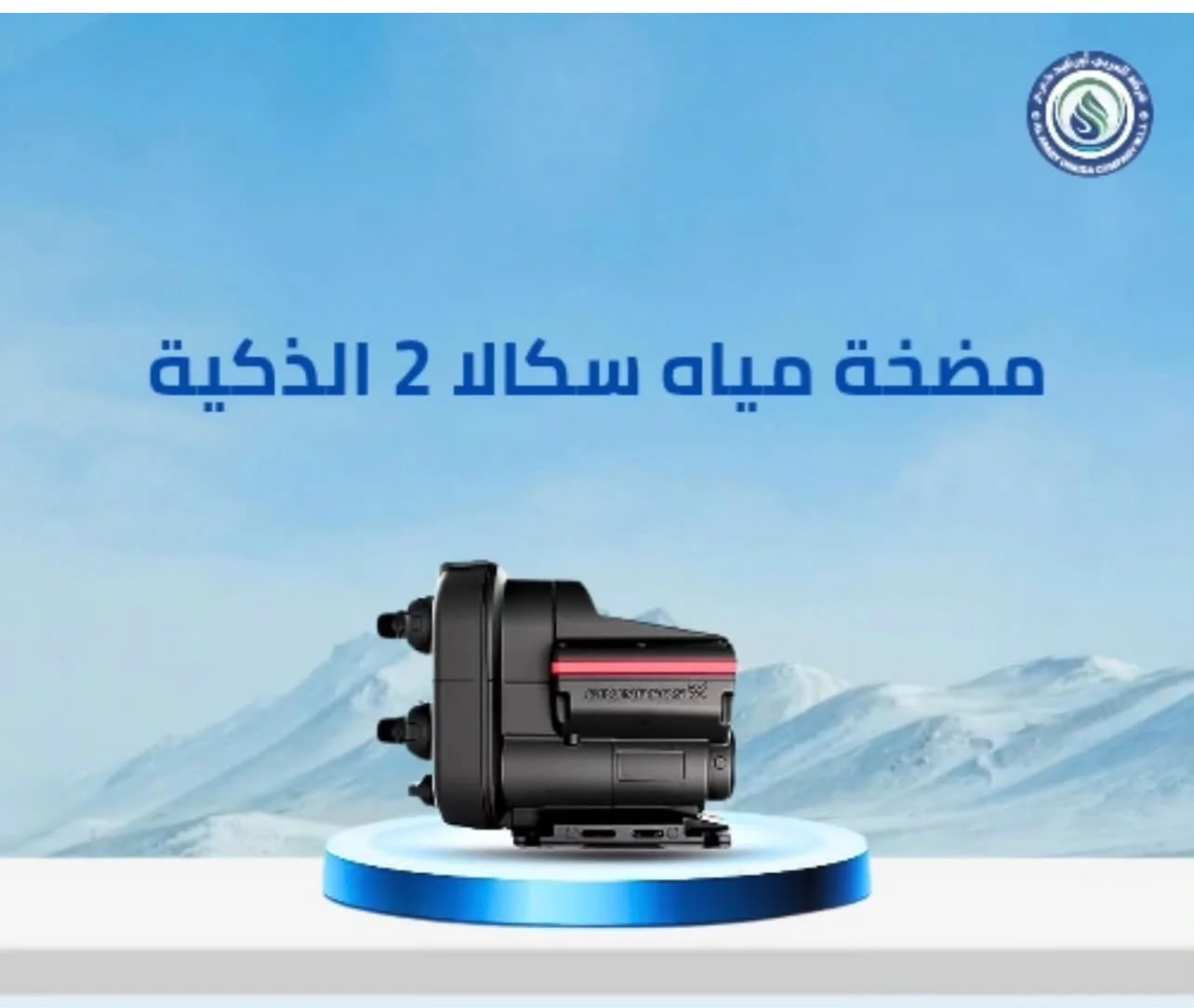
The water booster pump installation cost cannot fairly be represented by one fixed figure for every home because there is a major difference between replacing a pump on existing connections and building a completely new booster system with piping, a pressure tank, automatic controls, electrical work, and valves.
The first part of the cost is the pump type and capacity. The second part is the pressure-system equipment such as the pressure tank, controller, check valve, pressure regulator, filters, or protection devices. The third part is plumbing modification. The fourth is electrical preparation and mounting. The fifth includes any additional work required to reach a suitable location or redesign an unsuitable existing arrangement.
A currently advertised price for an individual GRUNDFOS Smart Pump, for example, should not automatically be treated as the full installed project cost. The final cost depends on what the property already has and which components must be added or modified.
Replacing an existing pump on prepared pipework may involve much less labor than installing a booster for the first time. A difficult location, long new pipe routes, additional electrical protection, or new valves can increase installation work even when the same pump model is used.
A good quotation should therefore separate the equipment from installation and additional network work clearly enough for the customer to understand exactly what is included.
-
Replacing an existing pump on ready connections costs differently from building a new pressure system that requires new piping electrical preparation and control components
-
The pump price alone does not represent the complete installation cost because valves pressure tanks controllers and plumbing work can form a significant part of the project
-
A difficult location or a pump position far from suitable water and electrical points increases the amount of installation work even when the equipment model remains unchanged
-
A good quotation clearly explains what is included and what is not rather than advertising a low pump price and adding the remaining work only after installation begins
-
Real savings come from installing the correct system the first time rather than purchasing the cheapest pump and later paying to correct pressure noise or repeated operating problems
Water Pump Installation Company
Choosing a water pump installation company should be based on its ability to deal with the complete water network. A company that only supplies the pump leaves the customer responsible for determining whether the valves, pressure tank, control system, and electrical installation are compatible. A company that inspects, supplies, installs, and commissions the equipment can take much clearer responsibility for the final result.
The site survey should cover current pressure, water source, piping route, proposed pump location, tank arrangement, and electrical supply. After installation, there should be actual commissioning rather than simply connecting the unit and leaving. The farthest outlet should be opened, pressure should be adjusted, all connections should be checked for leaks, and the pump should be observed through normal start-and-stop cycles.
A specialist company should also understand whether the property needs a traditional pump system or a smart variable-speed booster. It should be able to recommend appropriate pressure tanks, non-return valves, regulators, and other components according to the actual network instead of using the same package for every home.
Al Arabi Orchid provides installation and maintenance services for GRUNDFOS pumps and residential pressure systems in Kuwait, including several pump categories, smart-pump solutions, and complete pressure arrangements.
-
A specialized installation company evaluates the network before selling equipment so the customer does not end up with a pump that is too large or too small for the actual property conditions
-
Supplying the pump together with compatible pressure-system components reduces problems caused by mismatched controllers tanks and valves
-
Post-installation testing should include leakage pressure the highest outlet and simultaneous fixture use rather than ending with a photograph of the installed pump
-
Access to future maintenance matters because a pump is moving equipment and may eventually need pressure-tank adjustment filter cleaning or valve inspection
-
You can contact Al Arabi Orchid on 99346138 for inspection and installation of GRUNDFOS pumps for homes and villas in Kuwait after the actual network requirements have been identified
Conclusion
Successful water booster pump installation begins before the pump itself is mounted. The existing pressure, available water volume, water source, pipe diameter, tank position, and highest fixture should all be understood first. The installation location should then be prepared with a stable ventilated base, suitable electricity and protection, isolation valves, non-return control, and pressure-system components that match the chosen design.
A common mistake is selecting the pump first and then trying to force the plumbing network to work around it. The better approach is the opposite: understand the network first, then choose and install the equipment that suits it. Smart systems require attention to pressure setpoints, sensors, and protective functions, while conventional systems require correct pressure-switch and pressure-tank adjustment.
Al Arabi Orchid provides GRUNDFOS pumps and booster solutions for homes and villas in Kuwait. You can contact 99346138 to have the property checked before installation. The best installation is not the one that finishes fastest. It is the one where, after everything is completed, you can open the highest shower, open another tap at the same time, and still receive comfortable pressure while the pump operates quietly and stops normally as if the plumbing network had been designed for it from the beginning.
Frequently Asked Questions
What should be checked first before installing a booster pump?
Existing network pressure, water source, available flow, pipe diameter, tank position, and the highest point of use should all be checked before deciding the pump location and control arrangement.
Should pressure be measured before installing a booster?
Yes. Pressure measurement helps determine how much additional boost is actually required and can reveal whether the real problem is low pressure or a supply line that cannot provide enough water flow.
Can the booster pump be installed anywhere near the tank?
The preferred location should be stable, dry, well ventilated, easy to access for maintenance, and suitable for the suction route, electrical supply, and any drainage requirements.
Does a booster installation need a non-return valve?
Depending on the pump and system design, a non-return valve may be essential for preventing backflow and maintaining stable operation. It should always be installed according to the requirements of the exact pump and plumbing arrangement.
What is the purpose of a pressure tank with the pump?
A pressure tank helps stabilize certain booster systems and can reduce short start-stop cycles depending on the design. Its size and air precharge must be suitable for the control system.
Does a smart pump need an external automatic controller?
Some smart boosters already contain integrated sensors, electronic controls, and a small pressure vessel, so they are not installed with the same external components used for a conventional pump.
Will installing a stronger pump always solve weak water flow?
No. If the supply line or water source cannot provide enough water volume, increasing pressure alone cannot create additional flow through a physically limited source.
Is dry-run protection necessary?
It is especially important when the pump draws from a tank that may occasionally become empty because operating without water can damage the pump.
How much does water booster pump installation cost in Kuwait?
The cost depends on the pump type and capacity, control equipment, existing plumbing, electrical preparation, valves, pressure tank, and any additional installation work. An individual advertised pump price should not be treated as the complete installed project price without inspecting the site.
Who installs water booster pumps in Kuwait?
Al Arabi Orchid provides installation and maintenance services for GRUNDFOS pumps and residential pressure systems in Kuwait. You can contact 99346138 to have the network inspected and determine the appropriate pump and installation components.