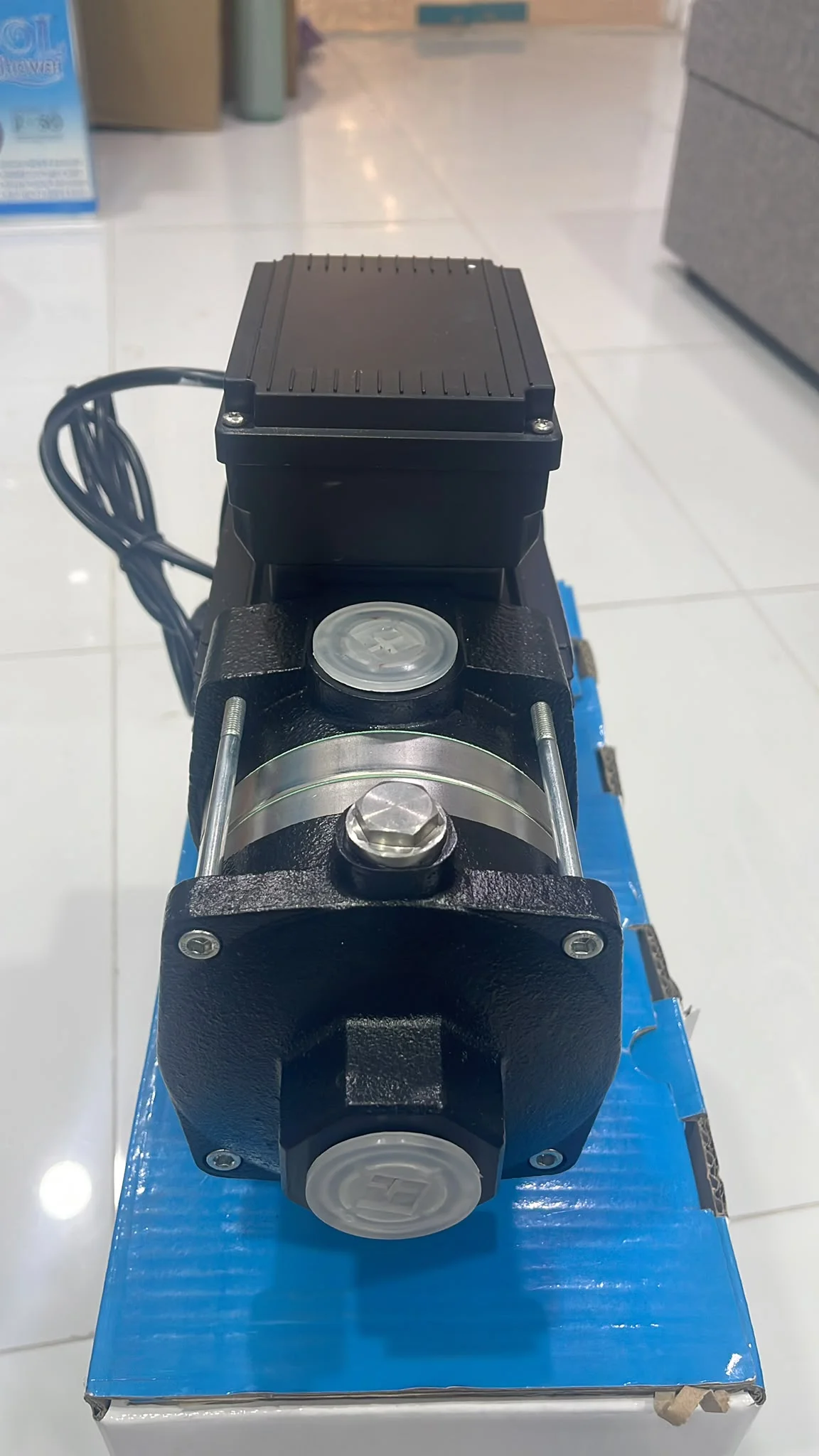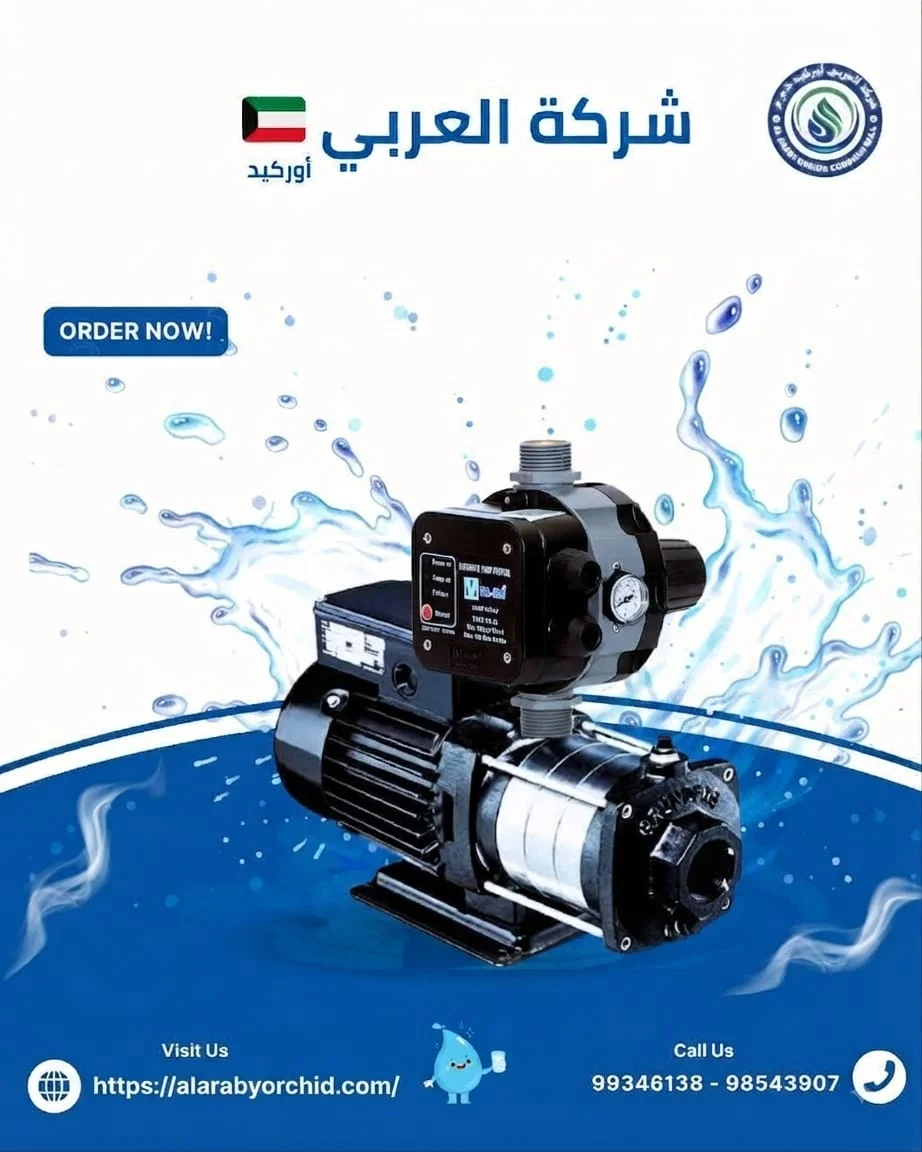
Choosing a villa booster pump should not follow a rule such as “a two-story villa needs one horsepower” or “three floors need two horsepower.” Motor power alone does not tell you whether the pump will deliver the pressure and flow required at the most distant bathroom. Proper selection starts with required flow, total head, available inlet pressure before the pump, the number of fixtures that may operate at the same time, and pressure losses through the piping system. Grundfos itself uses flow and head as key inputs in pump-selection tools rather than choosing a pump from horsepower alone. Al Arabi Orchid currently provides Grundfos pumps from half horsepower up to two horsepower, along with smart pumping solutions, but the correct size should be determined according to the actual villa before installation.
Villa Booster Pump
Choosing a villa booster pump begins by understanding the exact problem you are trying to solve. Is pressure weak only on the upper floor? Is pressure excellent when one faucet is open but drops when two bathrooms operate at the same time? Does the water come from a ground tank or a rooftop tank? Will the pump draw water directly from a tank, or will it boost pressure that already exists in the network? These questions can completely change the correct pump choice. Domestic pressure-boosting systems differ according to the water source, whether it is a mains supply, underground storage tank, rooftop tank, or another source, and the application itself is one of the first pieces of information required when selecting a booster system.
The first criterion is flow. A villa does not need pressure alone; it also needs enough water moving through the pipes. If two showers, a washbasin, and the kitchen operate at the same time, the pump should maintain sufficient flow for that simultaneous demand. This is why simply counting bathrooms is not enough. You may have six bathrooms but normally only two are used at the same time. Another villa may have only three bathrooms but much higher simultaneous demand because of large showers, garden irrigation, washing machines, and other service points.
The second criterion is head, which represents the amount of lift and pressure the pump needs to overcome. Head includes the vertical difference between the water source and the highest outlet, the pressure you want to remain at the fixture after the water reaches it, and friction losses through pipes, elbows, valves, and filters. This is why two pumps with exactly the same horsepower can have completely different pump curves and produce different results in the same villa.
The third criterion is inlet pressure. If useful pressure already exists before the pump, the booster has less work to do than a pump drawing from a low-level storage tank. If the rooftop tank is the source, gravity already contributes part of the pressure, so the final pressure needs to be controlled carefully to avoid creating unnecessary pressure on lower-floor piping and fixtures.
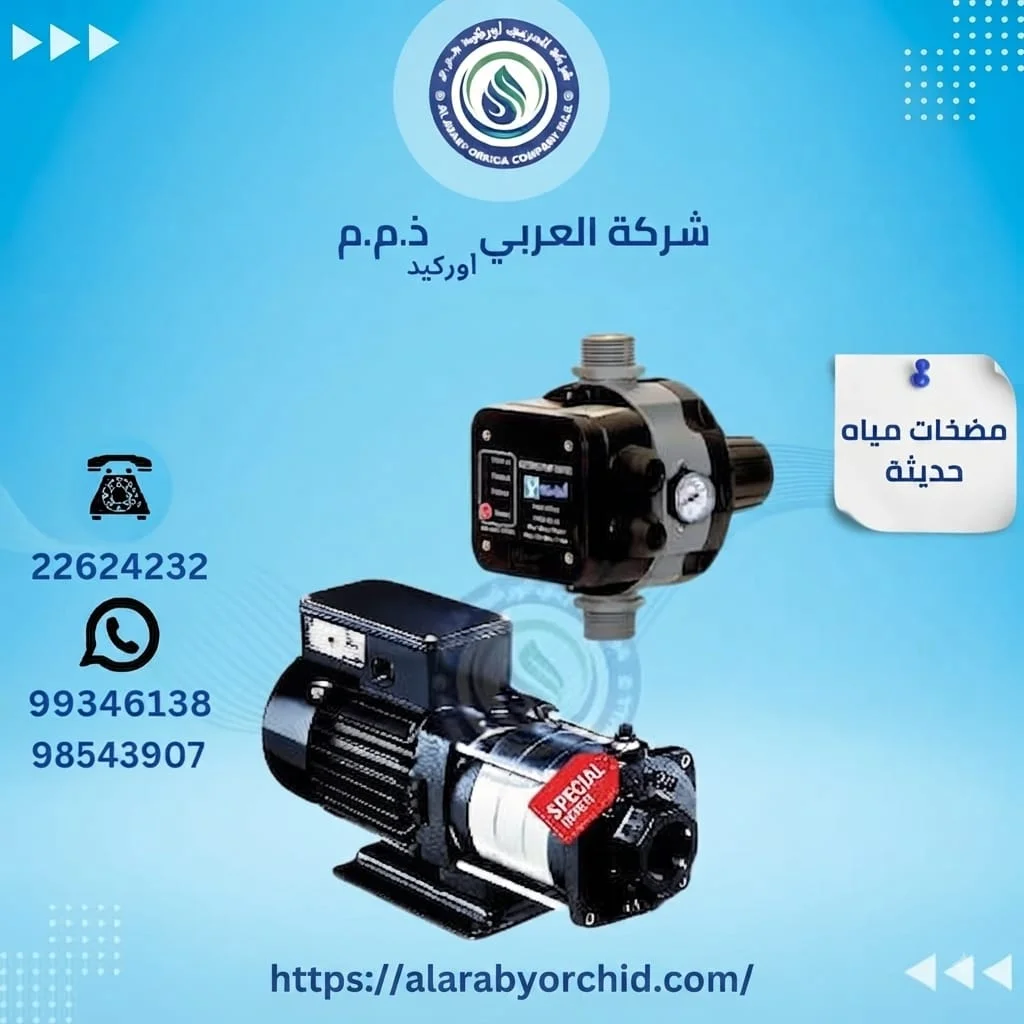
Al Arabi Orchid currently lists stainless-steel Grundfos pumps from half horsepower up to two horsepower, along with automatic controls, a 24-liter pressure tank, and pressure-reducing components depending on the system. This range represents available options, not a fixed chart assigning one horsepower value to every villa.
-
A villa booster pump should be selected according to flow and head together rather than number of floors or horsepower alone
-
The water source changes the calculation because a ground tank is different from a rooftop tank or a network that already has inlet pressure
-
Simultaneous usage matters more than the total number of faucets because the pump only faces the fixtures operating at the same time
-
Pipe filters valves and fittings consume part of the available pressure so vertical height alone is not enough
-
Before purchasing a pump send Al Arabi Orchid a simple description of the floors tanks and bathrooms on 99346138
Choosing Pump Capacity for a Villa
Choosing pump capacity for a villa correctly begins with the duty point, meaning how much flow is required and how much head the pump must provide at that flow. Grundfos pump-selection guidance uses flow and head to identify products capable of achieving the required duty point instead of relying on motor horsepower alone.
Suppose you have a three-story villa. You cannot immediately say, “it needs one and a half horsepower.” First, determine the vertical height between the pump and the highest point of use. If the vertical difference is approximately 9 meters, that is only one part of the required head. As a rough reference, every 10.2 meters of water column is approximately equal to 1 bar. If you still want comfortable pressure at the highest shower after the water reaches it, that outlet pressure must be added to the static lift, and then friction losses must also be included.
Next, estimate peak flow. You should not automatically assume every bathroom in the villa will operate at exactly the same time because that can lead to oversizing. Instead, use a realistic peak-use scenario such as two showers, one washbasin, and the kitchen operating together. Whenever possible, use the actual flow ratings of the fixtures instead of relying on one general number.
Fixture flow rates vary significantly by model and market. In one illustrative example for SCALA2, Grundfos uses an approximate average of 7.5 liters per minute while also noting that real values may vary from about 5 to 15 liters per minute. This means 7.5 liters per minute should not be treated as a universal rule for every shower and every villa.
Once flow and head are identified, review the pump curve. The required duty point should fall within a suitable operating range of the specific pump. A 0.6-horsepower variable-speed pump may perform very well in one application, while a conventional pump with higher horsepower may be less suitable for the same demand. This is why focusing only on horsepower hides the most important part of pump selection.
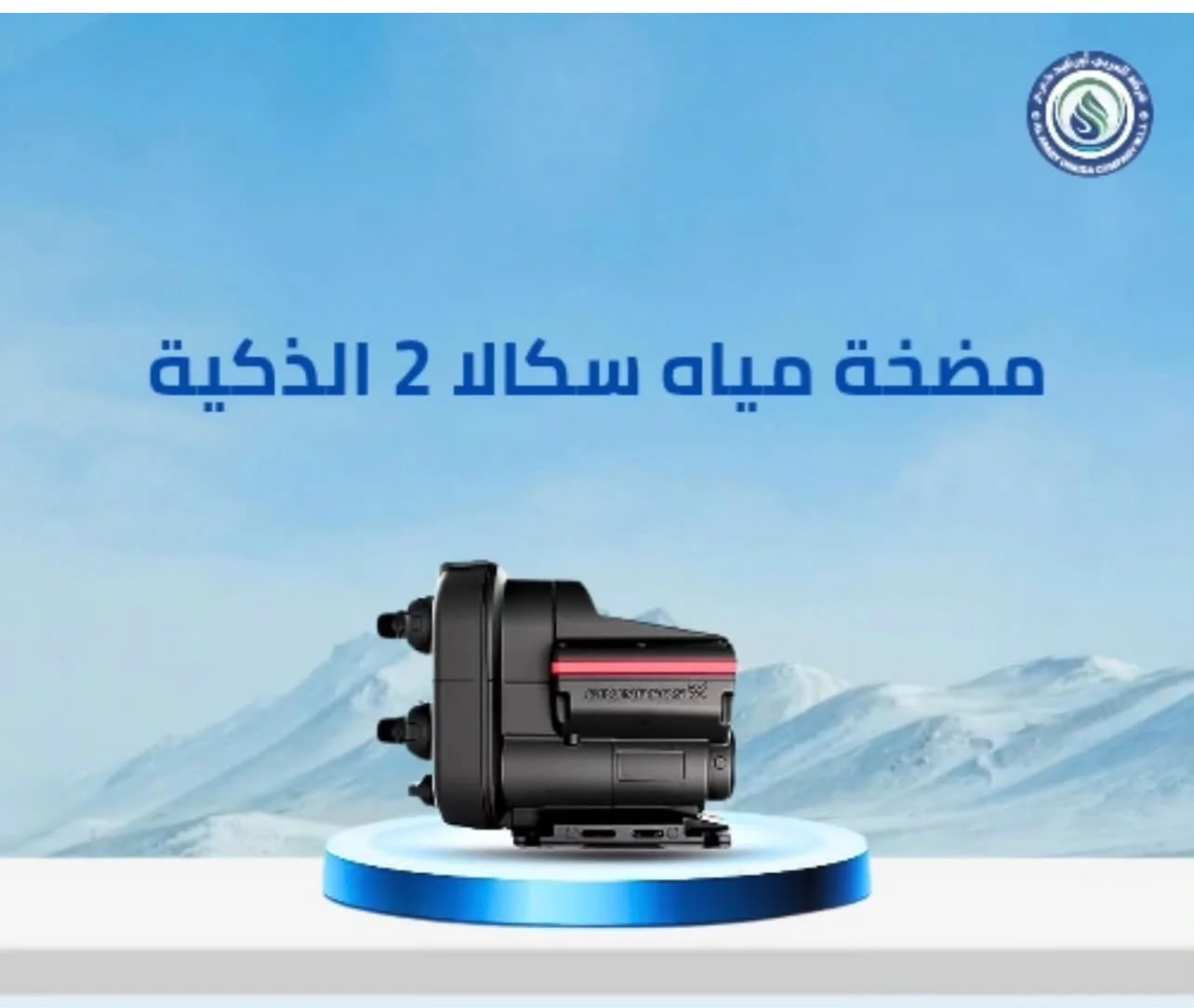
Control technology also matters. A traditional on/off pump runs at full speed and then stops, while some smart booster systems adjust speed according to actual demand to maintain more stable pressure. Grundfos SCALA2, for example, is an integrated variable-speed booster designed to adapt its performance according to demand within its specified residential application range.
-
Begin with a duty point that combines required flow and required pressure at the same time
-
Add vertical lift outlet pressure and network friction losses instead of calculating only the number of floors
-
Use actual shower and faucet flow rates whenever they are available because fixtures can vary significantly
-
The pump curve is more important than horsepower because it shows how much head the pump delivers at each flow rate
-
A variable-speed pump can respond to changing demand differently from an on/off pump even when its motor is smaller
How Much Horsepower Does a Villa Booster Pump Need?

The question how much horsepower does a villa booster pump need is one of the most common questions, but giving one number without information about the villa would only be a guess. Horsepower is a measurement of motor power; it is not a guarantee that the pump will deliver a certain pressure at every flow rate. Two pumps rated at 1 HP may have completely different curves, internal designs, and numbers of stages, so one may provide higher head while another may provide greater flow.
Al Arabi Orchid currently lists Grundfos booster pumps from half horsepower up to two horsepower. This is useful for understanding the available product range, but it does not mean half horsepower is automatically for a small villa and two horsepower is automatically for a large villa.
To determine whether half horsepower, one horsepower, one and a half horsepower, or two horsepower makes sense, you need at least five pieces of information:
The vertical height to the highest outlet
The number of fixtures expected to operate simultaneously
The required flow from those fixtures
Available inlet pressure
Approximate network pressure losses
The required duty point is then matched with the pump curve.
This is where one common mistake appears. A customer may say, “I want two horsepower so I never have a pressure problem.” Oversizing does not automatically provide more comfort. If the pump produces more pressure than the network needs, additional control or pressure reduction may be required, and the higher velocity can create more noise or less suitable system behavior. When boosting from a rooftop tank, total maximum pressure should also be considered because gravity and the booster pump act together.
The opposite mistake is choosing a smaller pump simply to reduce the purchase price. The pressure may feel excellent when only one faucet is open, but the system may collapse as soon as another shower starts.
SCALA2 provides a useful technical example, not a recommendation for every villa. Grundfos classifies it for residential applications up to 3 floors and 8 outlets within the product’s defined operating conditions. This shows why manufacturers describe operating ranges and performance instead of relying only on motor horsepower.
-
There is no single horsepower number that can be given for every villa without knowing height flow and inlet pressure
-
Horsepower describes motor power but does not replace the pump’s flow and head curve
-
Buying more horsepower as a safety margin can lead to oversizing and unnecessary pressure-control requirements
-
A pump that is too small may perform well with one outlet but fail during simultaneous demand
-
Ask for the model name and pump curve with the quotation instead of accepting “we will install one and a half horsepower” without calculations
Villa Booster Pump in Kuwait
A villa booster pump in Kuwait is intended to correct weak or unstable pressure inside the villa, but the first step is identifying where the pump will draw water from. Booster selection differs between a mains connection, a ground tank, and a rooftop tank because suction conditions, inlet pressure, and protection requirements are different.
Many homes in Kuwait rely on storage tanks, which makes pump location especially important. If the booster draws from a ground tank and pushes water upward through the villa, the static lift becomes an important part of the calculation. If the pump is located near a rooftop tank and pushes water down into the network, gravity already contributes pressure, and lower floors may receive much more pressure than upper floors if the system is not controlled properly.
When boosting from a rooftop tank, maximum final pressure should be considered carefully, and adjustable pressure control may be useful. Dry-run protection also becomes important because the rooftop tank can occasionally empty or fall below the safe level if consumption exceeds the refill rate.
The installation environment in Kuwait also matters. A pump installed on the roof faces heat, dust, and outdoor conditions that are harsher than those experienced by a pump in a protected service room. Rooftop installations therefore require equipment suitable for exterior conditions, while an indoor installation makes noise level and vibration transfer more important.
Smart booster systems can be useful when water demand changes significantly throughout the day. A villa may have heavy usage in the morning and then use only one outlet or none at all later. Variable-speed control can adjust pump performance according to demand instead of providing exactly the same output under every condition. Grundfos SCALA2 is one example of an integrated system containing the pump, motor, small pressure tank, sensor, controller, and check valve while delivering more stable pressure within its specified application range.
Al Arabi Orchid currently advertises both conventional and smart Grundfos booster systems in Kuwait.
-
Identify whether the booster will draw from a ground tank or rooftop tank because the source changes the required head
-
Dry-run protection is important especially when tank level can fall during periods of heavy consumption
-
Rooftop installation requires attention to heat dust and outdoor protection in addition to hydraulic performance
-
A pump installed inside the villa should also be evaluated for noise and vibration so it does not disturb residents
-
A smart booster can be more useful when water demand changes considerably throughout the day and stable pressure is important
Calculating Villa Water Pump Capacity
Calculating villa water pump capacity can be understood through a practical process without turning the subject into complicated engineering equations.
First, estimate the design flow. Write down the fixtures you realistically expect to operate at the same time, for example:
Main shower
Children’s shower
Washbasin
Kitchen faucet
Possibly light garden irrigation
Then use the actual flow rates of the fixtures whenever they are available. Do not add every faucet in the villa because it is usually unrealistic to assume all of them will operate simultaneously.
Second, calculate static head, which is approximately the vertical difference between the water level at the source and the highest or most difficult point of use. Every 10.2 meters of water column is approximately equal to 1 bar.
Third, add the required residual pressure at the shower or faucet. There is little benefit in pushing water to the third floor if almost no useful pressure remains when it reaches the fixture.
Fourth, add friction losses. Long pipes, small diameters, elbows, filters, valves, and pressure-reducing devices all create resistance. In general, friction losses increase as flow rises.
Fifth, account for available inlet pressure if the pump receives water under positive pressure. The pump only needs to add the difference required to reach the target pressure, while still staying within the limits of both the pump and the plumbing network.
Conceptually, the calculation can be written approximately as:
Total Required Head = Static Lift + Required Outlet Pressure + Friction Losses − Useful Inlet Pressure
Once the head is known, it is combined with the required flow and matched against pump performance curves. Pump sizing is fundamentally based on determining the required flow and head and choosing a unit that can provide that duty point.
For a simple example, suppose the highest point requires approximately 12 meters of lift and you want around 2 bar of usable pressure at that point. Two bar is approximately equivalent to 20.4 meters of water head, so you already need more than 32 meters of head before adding pipe friction and subtracting any useful inlet pressure. This shows why “three floors equals one horsepower” is not enough.
This is only an illustrative example and not a final design because pipe length, diameter, simultaneous flow, and actual inlet conditions can change the result.
-
Calculate flow from fixtures likely to operate simultaneously rather than adding every outlet in the villa
-
Static head represents vertical height only and does not include the pressure you still want at the highest fixture
-
Friction losses increase with pipe length flow rate and installed fittings so they need to be included
-
Useful inlet pressure reduces the amount of additional pressure the pump must provide but should be measured and monitored
-
After calculation choose a model whose required duty point falls within a suitable area of its pump curve
Booster Pump According to Number of Floors
Choosing a booster pump according to number of floors can be an initial guide, but it is not a complete design method. Two floors with unusually high ceiling heights are not the same as two shorter floors, and a pump installed in a basement has different requirements from a pump installed near a rooftop tank even if the building has the same number of floors.
The important information is not simply “three floors” but the actual vertical height in meters between the water source and the highest fixture.
Take two three-story villas. In the first, the pump is on the ground floor, the tank is nearby, and the highest shower is 9 meters above the pump. In the second, the villa has a basement and the pump is installed lower, producing a total vertical difference of 14 meters to the highest shower. Both villas have three floors, but their static head is clearly different.
You then need to add the required outlet pressure. Grundfos classifies SCALA2 for residential applications up to 3 floors and 8 outlets within the product’s defined operating conditions. However, that is a specification for one particular product and should not be converted into a general rule saying any pump of a similar horsepower will serve three floors.
The water source changes the calculation as well. With a rooftop tank, gravity contributes pressure to the lower floors. When a booster is added, total pressure can become significantly higher on the lower levels than near the tank, so final pressure must be reviewed carefully.
Another common mistake is selecting the pump only according to the top floor while ignoring simultaneous demand. Static pressure may look excellent when everything is closed, but once two showers operate, the flow rate increases and the pump’s operating point moves along its curve, causing available pressure to change.
-
Number of floors helps start the calculation but does not replace measuring actual vertical height in meters
-
Pump position relative to the tank can change static head even when two villas have the same number of floors
-
A statement such as “up to three floors” applies to a specific model and its conditions and should not be generalized to every pump with similar horsepower
-
When using a rooftop tank gravity pressure should be added to booster pressure especially on lower floors
-
Test the design under peak flow rather than judging it only when all faucets are closed because static pressure alone does not prove pump performance
Pressure Pump for a Large Villa
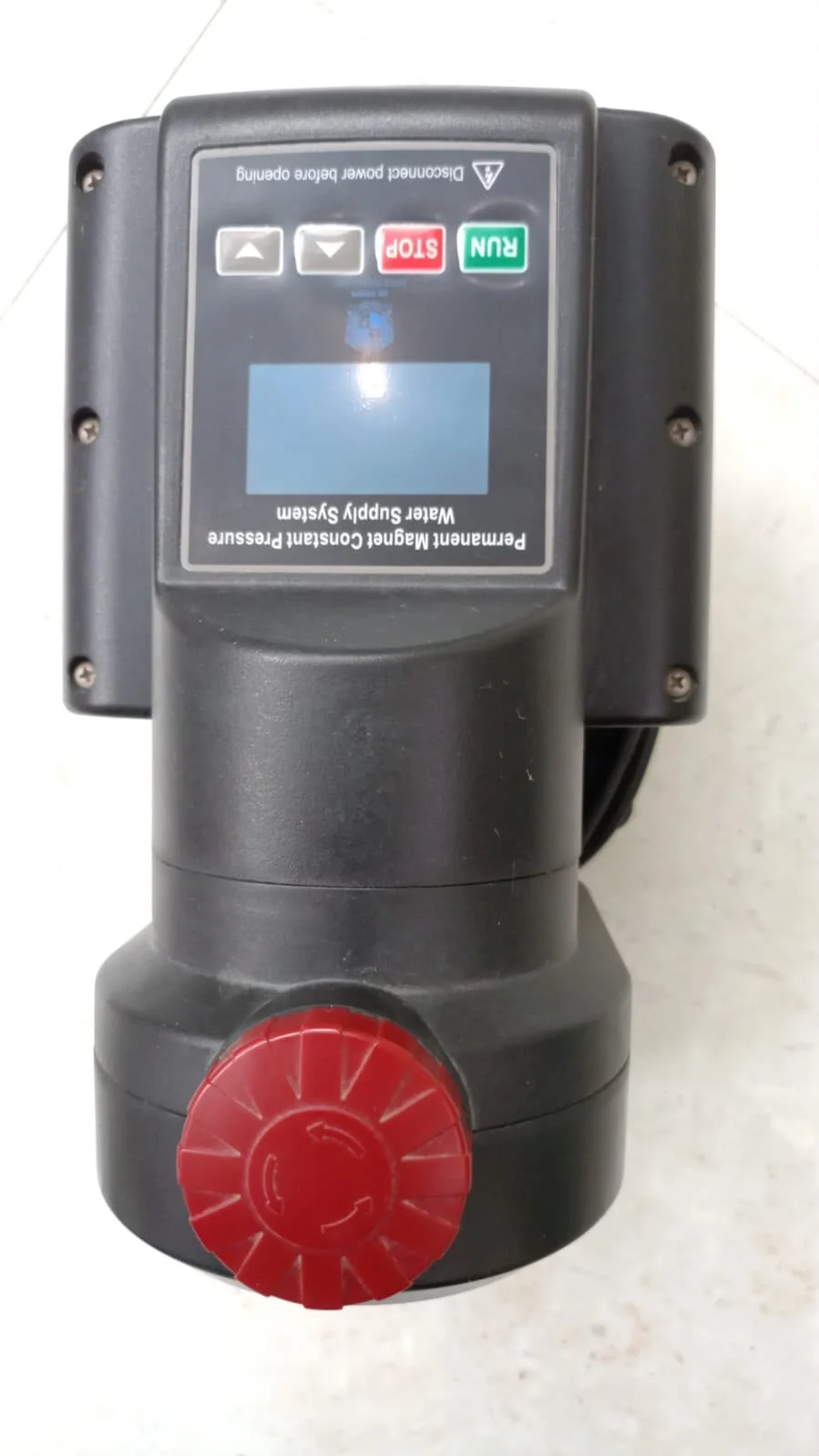
A pressure pump for a large villa requires more attention to varying loads because a large villa may include several wings, multiple floors, gardens, preparation kitchens, staff areas, and many bathrooms.
The issue is not only the number of outlets but also the changing load profile. At some times, consumption may be close to zero, while at other times several fixtures may operate together. Load profile matters in pressure-system design because operating a system that is much larger than necessary for most of the day can increase energy consumption without providing useful benefit.
Variable-speed systems become more relevant in these situations because they can adjust performance as demand changes instead of operating as a fixed on/off system. If the villa exceeds the range of one residential booster, the design may move toward a multi-pump booster set rather than forcing one small domestic pump to handle a load it was never designed for.
Manufacturers themselves distinguish between smaller integrated residential boosters and larger systems designed for higher demand. This shows that as villa demand increases, the correct solution may change from “a slightly larger pump” to a completely different system architecture.
Pressure zoning can also become important. In a very large villa, the pressure required to serve the upper floor may be too high for lower-floor fixtures if the whole building is treated as one pressure zone. Pressure-reducing valves or separate pressure zones may therefore be required depending on the design.
Al Arabi Orchid currently lists Grundfos pumps up to two horsepower and also uses pressure-reducing components in some installations, but a very large villa should not be designed only around the published horsepower range. It needs a hydraulic assessment.
-
A large villa should be assessed according to its load profile rather than assuming every outlet operates at full demand all day
-
Variable-speed systems can be useful when demand changes significantly from hour to hour
-
If demand exceeds the range of one domestic pump a booster set may be more appropriate than simply increasing horsepower
-
Large differences in floor elevation may require pressure zoning or reduction in some parts of the villa
-
For larger projects request a design showing flow head and duty point instead of accepting a quotation based only on “a strong two-horsepower pump”
Choosing a Pump According to Number of Bathrooms
Choosing a pump according to number of bathrooms becomes more accurate when you change the question from “I have six bathrooms” to “how many bathrooms and fixtures are likely to operate at the same time?”
The total number of bathrooms gives an idea of the size of the property but does not directly provide design flow. A villa may have eight bathrooms but only four residents, while another villa with four bathrooms may have a larger family and much higher simultaneous usage.
Fixture flow rates can vary widely. In one Grundfos SCALA2 example, an illustrative average of approximately 7.5 liters per minute is used to estimate the number of outlets, while the manufacturer also notes a broad approximate range from 5 to 15 liters per minute. This means a high-flow rain shower should not be treated exactly the same as a small washbasin faucet.
A simple fixture schedule can include:
Number of showers
Shower type and flow rate when available
Washbasins
Kitchens
Washing machine
Dishwasher
Garden irrigation
Any service outlets
Then identify a realistic peak-demand scenario.
Performance after installation should also be tested under actual demand. A useful test is opening several outlets on different floors rather than judging the whole system from one faucet close to the pump.
One common mistake is oversizing the pump simply because the villa contains ten bathrooms even though simultaneous demand is much lower. The opposite mistake is testing one washbasin after installation and declaring the pump perfect.
-
Bathroom count is only an initial indicator while simultaneous flow is closer to the real load on the pump
-
A large shower and a small basin should not be treated as identical outlets when their flow rates are different
-
Include garden irrigation kitchen use and appliances if they can operate during bathroom peak demand
-
Test pressure after installation with several outlets open on different floors rather than one nearby faucet
-
Avoid oversizing based on the assumption that every bathroom will operate at the same time unless real usage requires that scenario
Suitable Water Pump Motor Power for a Villa
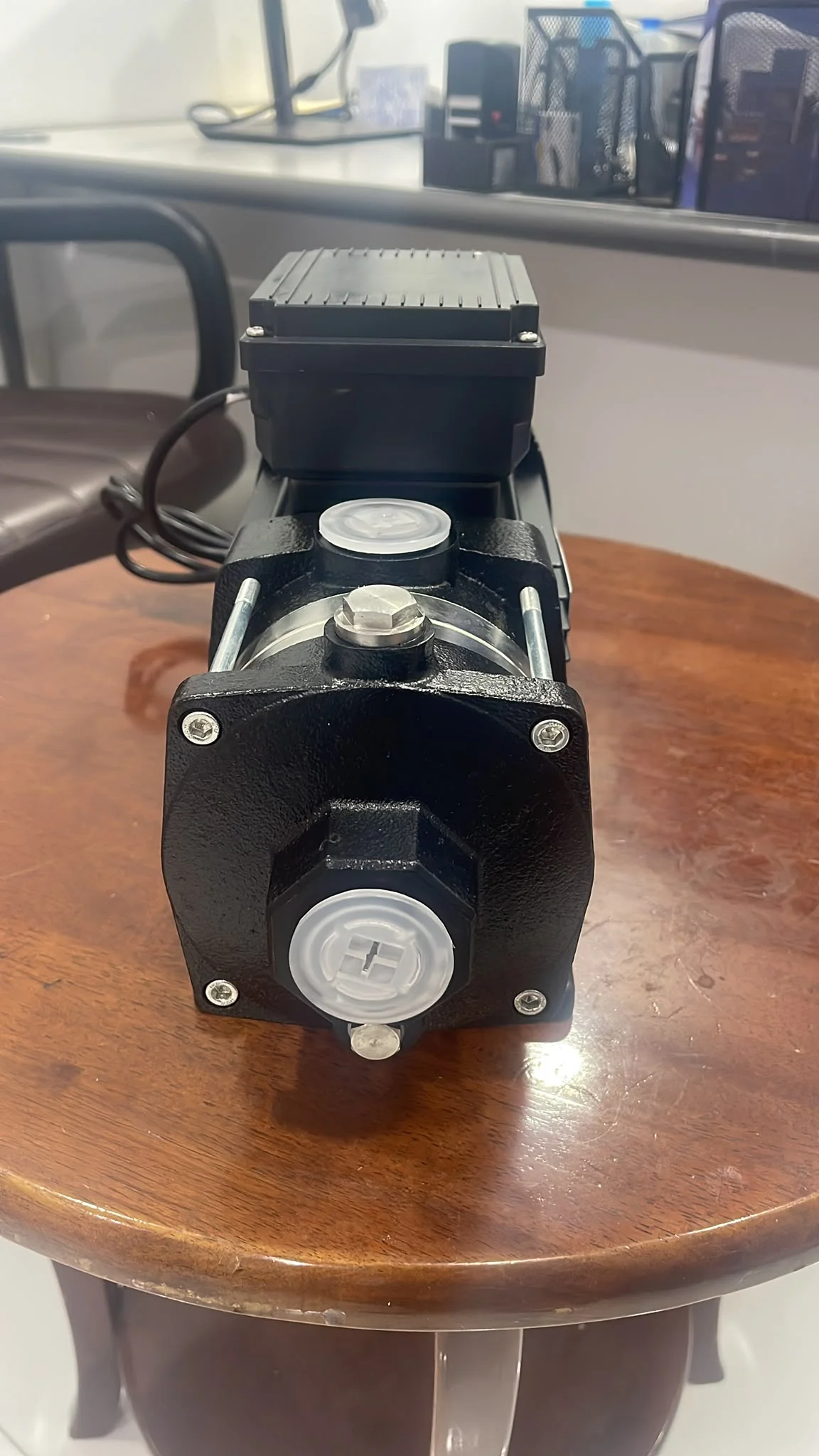
Suitable water pump motor power for a villa cannot be separated from hydraulic pump efficiency and the control method. A larger motor may be connected to a pump with an unsuitable performance curve, while a smaller motor in a variable-speed system may deliver the required duty point more effectively.
It is useful to separate:
Motor Power
and
Pump Hydraulic Performance
Motor power describes the motor’s power rating, while pump performance is evaluated on the head-versus-flow curve.
SCALA2 is a clear example. Grundfos presents it as a variable-speed booster that adjusts performance according to demand and maintains more stable pressure within its intended residential range. In other words, the product is sold as a complete pressure solution rather than simply as a higher-wattage or higher-horsepower motor.
So when comparing two quotations, do not say:
The first pump is one horsepower and the second is one and a half horsepower, therefore the second is better.
Instead ask:
How much flow does it deliver at the head we need?
What pressure will be set?
Is the control fixed-speed or variable-speed?
What is the maximum network pressure?
Does it include dry-run protection?
What is its noise level?
What installation conditions does it require?
Dry-run protection, outdoor suitability, noise level, and installation environment can all be important factors depending on whether the pump is connected to a rooftop tank or installed inside the villa.
Al Arabi Orchid currently lists conventional pumps from half horsepower up to two horsepower as well as a smart Grundfos pump that operates automatically according to pressure demand. These options can be compared, but each exact model should still be assessed from its curve and specifications.
-
Motor horsepower is important but it does not prove how much pressure and flow will reach the highest bathroom
-
Compare pumps at the same duty point so the comparison between different models is technically fair
-
Variable-speed control can improve pressure stability as the number of open fixtures changes
-
Dry-run protection noise level and installation location should be considered together with horsepower
-
Do not pay for a larger motor if a smaller model can achieve the required flow and head within its correct operating range
Grundfos Pump for a Villa
Choosing a Grundfos pump for a villa begins with the application and then the model, not simply with the Grundfos brand name. Grundfos offers different solutions because a house supplied from a rooftop tank has different requirements from one supplied from a ground tank or a mains network with fluctuating pressure.
For rooftop-tank boosting, Grundfos discusses several product types such as UPA, SCALA1, and SCALA2 depending on the application. SCALA2 provides pressure control and an adjustable setpoint together with functions such as dry-run protection.
SCALA2 in particular is an integrated booster containing the pump, motor, small tank, sensor, controller, and check valve. Grundfos describes it for residential applications up to 3 floors and 8 outlets within its intended operating range and uses variable-speed control to adapt performance to changing demand. These specifications belong to that specific model and should not be generalized to every Grundfos pump.
If the villa is larger than that application range or needs higher flow, SCALA2 should not automatically be selected just because it is smart. The required flow and head should be entered into a proper sizing process and the system that can achieve that duty point should be chosen.
Al Arabi Orchid currently advertises Grundfos stainless-steel pumps of German, Spanish, and Italian origin from half horsepower up to two horsepower, along with a smart pump and systems including automatic controls, pressure tanks, and pressure-reducing components.
The real value of the purchase is not simply choosing a well-known brand. The quotation should identify:
Full model number
Flow and head at the required duty point
Pump location
Water source type
Control method
Dry-run protection when required
Pressure setting after installation
After installation, the system should be tested under realistic conditions, such as opening several fixtures on different floors and confirming that pressure remains within the required level.
-
Choose the Grundfos model according to the application and duty point rather than buying the brand without specifying the exact product
-
SCALA2 has a defined residential application range and its specifications should not be generalized to every villa in Kuwait
-
A villa exceeding the range of one residential pump requires new sizing and may need a different system type
-
Ask the quotation to include the pump model flow head and pressure setpoint instead of horsepower alone
-
For an assessment before installation contact Al Arabi Orchid on 99346138 and provide the number of floors bathrooms water source and highest point of use
Conclusion
Choosing a villa booster pump and selecting the correct capacity before installation should not begin with the question “half horsepower or two horsepower?” The correct starting point is how much water the villa needs at peak demand and how much pressure must remain at the highest and most distant outlet.
The first value is flow, estimated from the fixtures likely to operate at the same time rather than the total number of faucets in the building.
The second value is head, made up of vertical lift, the pressure required at the point of use, pipe and fitting losses, and any useful inlet pressure already available.
This is the same basic approach used in professional pump-sizing methods: determine required flow and head and then select a pump capable of achieving that duty point. This is much more reliable than a simple rule linking the number of floors to horsepower.
The number of floors and bathrooms is still important, but only as input data. One three-story villa may need a completely different solution from another three-story villa because the height, water source, simultaneous demand, and pipe lengths are different.
Do not assume higher horsepower guarantees better performance. Oversizing can create more pressure than necessary and make the control system less suitable, while undersizing causes pressure to collapse during peak demand.
Grundfos classifies SCALA2, for example, for residential use up to 3 floors and 8 outlets within the product’s own conditions and uses variable-speed control. This is a clear example of a manufacturer defining an application range rather than relying only on motor horsepower.
Al Arabi Orchid currently offers Grundfos pumps from half horsepower to two horsepower, along with smart pumps and control systems, but the final choice should still follow the actual villa requirements.
Before installation, contact 99346138 and prepare:
Number of floors
Approximate vertical height
Number of bathrooms
Fixtures likely to operate simultaneously
Tank location
Pump location
Any current pressure problem
Ask the technician to explain the required flow, required head, exact pump model, duty point, and final pressure setting after installation. This way, you purchase calculated pump capacity instead of a motor that is larger than necessary or smaller than the actual demand.
Frequently Asked Questions
How much horsepower does a booster pump need for a two-story villa?
It cannot be determined from the two floors alone. You need the actual vertical height, water source, simultaneous flow, required outlet pressure, and network friction losses, and then the required flow and head should be matched with the pump curve.
Is a one-horsepower pump enough for a villa?
It may be enough for some villas and unsuitable for others. Horsepower alone does not define pump performance because pumps with the same motor power can have different flow and head curves.
Does the number of bathrooms determine villa pump capacity?
It helps, but it is not enough. The more important question is how many fixtures may operate at the same time and what the flow rate of each fixture is. Six bathrooms do not mean all six will use water simultaneously.
How do I calculate the required head for a villa pump?
Approximately add the vertical lift from the water source to the most difficult outlet, the required pressure at that outlet, and network friction losses, then subtract any useful inlet pressure. The pump is then selected according to the required flow at that head.
Is a larger-horsepower pump always better for a villa?
No. A pump larger than necessary can produce more pressure than the system needs and may operate less efficiently or require additional control. The better choice is the smallest suitable system capable of providing the required flow and head consistently.
Is the number of floors enough to choose a booster pump?
No. Floor count is only an indicator. Two villas with the same number of floors can have different total heights, pump and tank locations, pipe lengths, and simultaneous demand, so they may need different pumps.
What is the difference between a standard pump and a smart booster?
A conventional pump generally starts and stops according to its control arrangement, while a variable-speed smart booster adjusts performance according to demand in order to maintain more stable pressure. Exact behavior depends on the model.
Is SCALA2 suitable for every villa?
No. Grundfos classifies SCALA2 for residential buildings up to 3 floors and 8 outlets within the product’s intended range. If the villa requires higher flow or head, another solution should be selected after proper sizing.
Does Al Arabi Orchid provide Grundfos pumps for villas?
Yes. The current product range includes Grundfos booster pumps from half horsepower up to two horsepower, along with smart pumping solutions and systems using automatic controls, pressure tanks, and pressure-reducing components.
What information should I give the technician before installing a villa pump?
Provide the number of floors, approximate height, number of bathrooms, fixtures likely to operate simultaneously, tank location, pump location, and water source. Contact 99346138 and request selection according to required flow and head rather than horsepower alone.