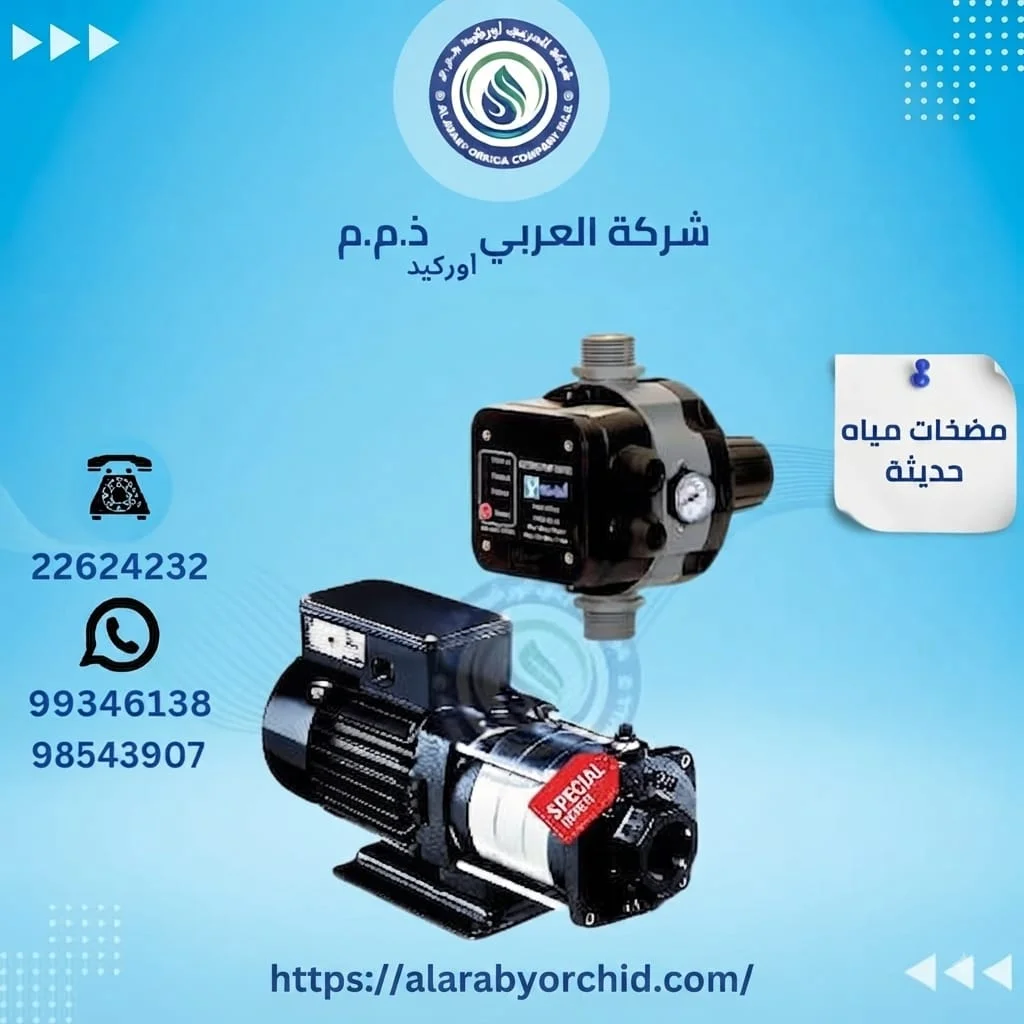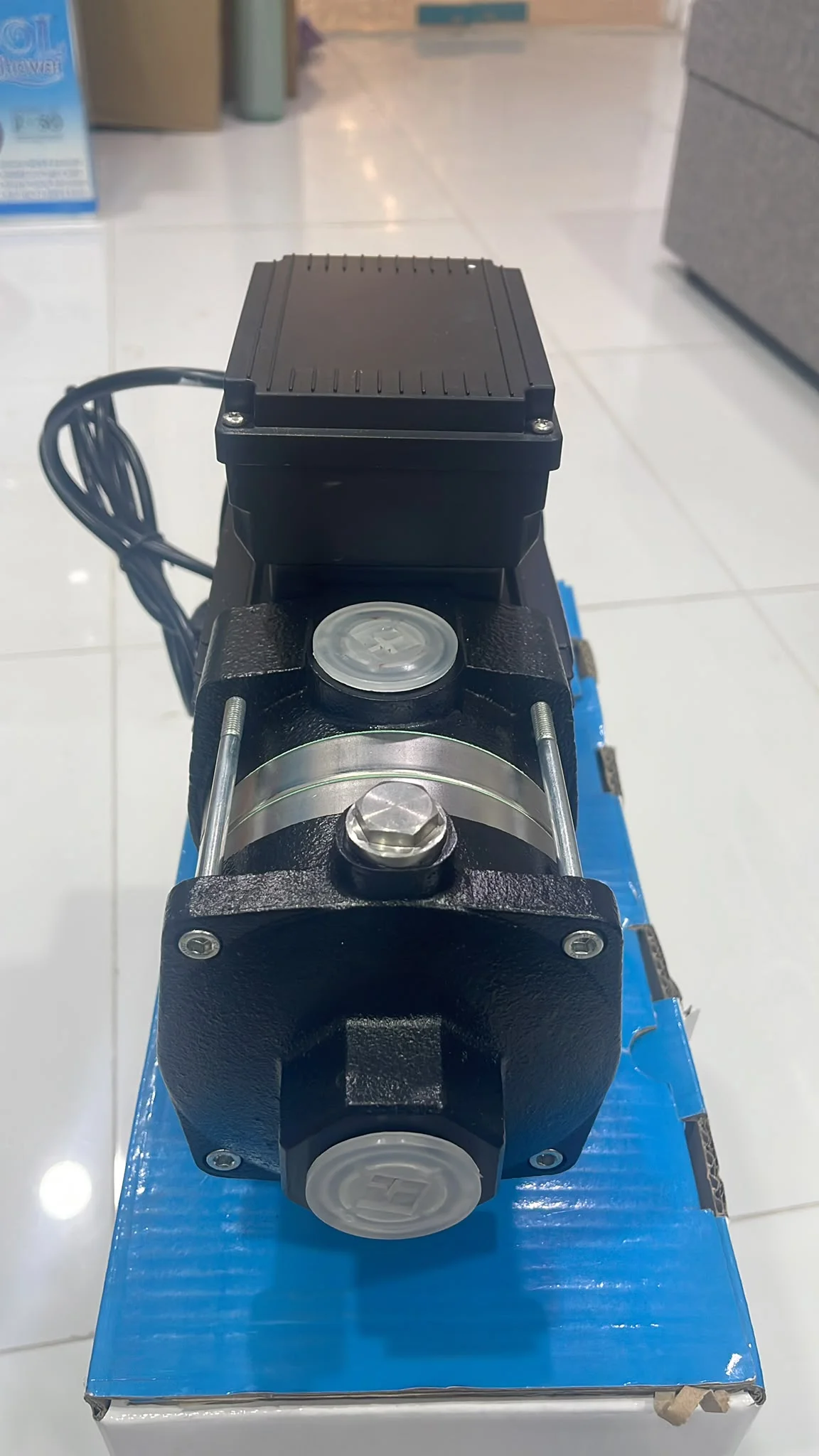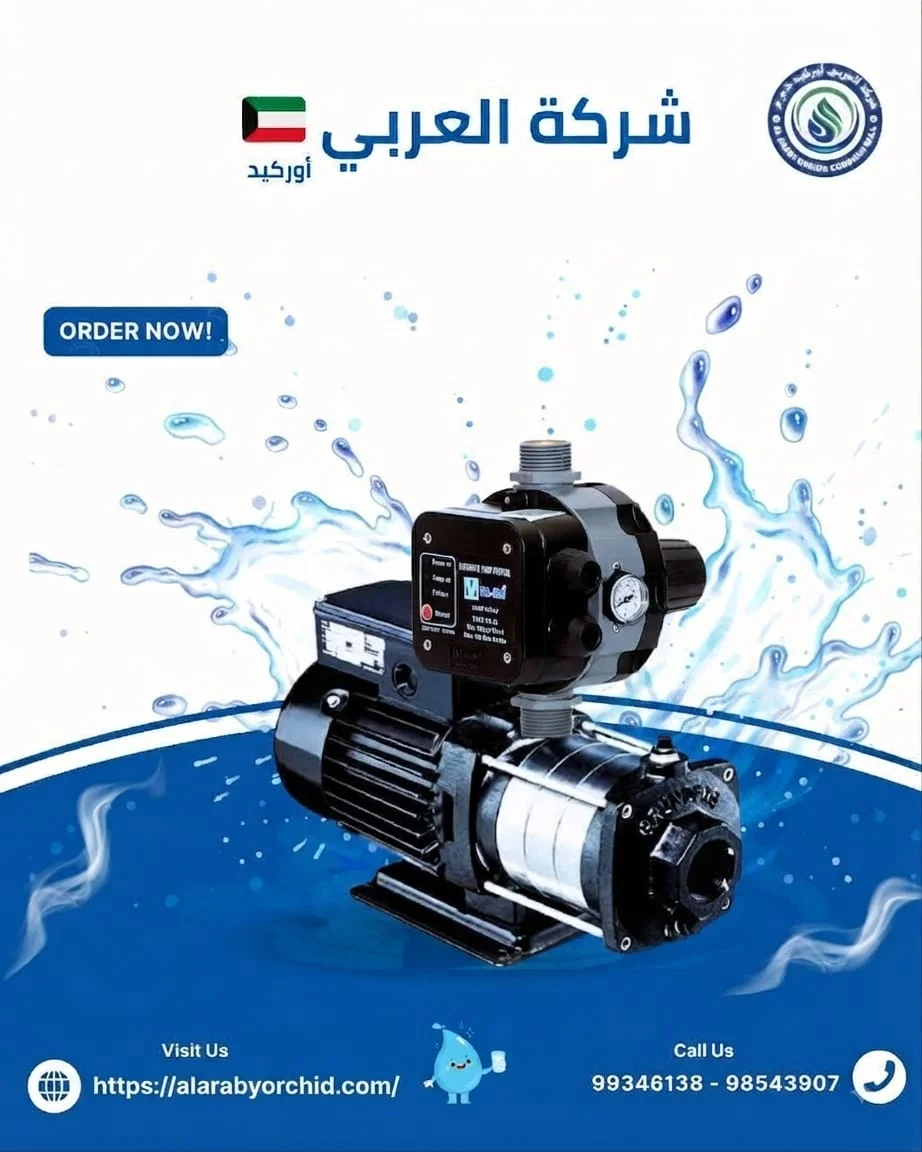
Choosing a water pump is not simply a matter of asking whether you need half a horsepower or one horsepower. Choosing the right water pump starts with the amount of water the property needs at the same time, the pressure required at the highest and farthest outlet, the vertical difference between the pump and the fixtures, and pressure losses through the piping network. This is why two houses with the same number of floors can require completely different pumps. A larger pump is not automatically better because excessive pressure can create noise, increase stress on fittings, and raise operating costs unnecessarily. Al Arabi Orchid 99346138 provides GRUNDFOS residential and smart pumps in different capacities according to the actual requirements of each site.
Choosing the Right Water Pump

Choosing the right water pump begins by determining the operating point that the house actually needs. In simple terms, this is the combination of flow rate and pressure or head required at the same time. Many people see a pump labeled one horsepower or one and a half horsepower and immediately assume that the higher number guarantees stronger shower pressure. In reality, a pump does not operate according to horsepower as an isolated number. Every model has a performance curve showing how much water it can deliver at a specific pressure or head. As the required pressure increases, the available flow from the same pump often decreases. This is why the correct model should be selected from its performance curve rather than from the motor label alone.
The first question is where the water comes from. Does the pump draw from a ground-level tank? Is the water supplied from an elevated tank? Is there already positive pressure at the pump inlet? This changes the calculation because existing inlet pressure reduces part of the pressure increase the pump needs to provide. Very poor suction conditions can also create problems if the selected pump and installation are not appropriate.
The next step is identifying the highest and farthest point of use. If the pump is installed on the ground floor and the highest shower is on the third floor, the pump first needs enough head to overcome the vertical elevation. After that, enough usable pressure must remain at the shower after accounting for losses through pipes, elbows, filters, valves, and other fittings. As a practical approximation, about 10.2 meters of water column corresponds to roughly one bar of pressure.
Then we consider how many outlets may realistically operate at the same time. A home with one bathroom and a kitchen is very different from a villa with several bathrooms, laundry equipment, kitchen use, and garden irrigation. The objective is not to assume every tap will be fully open at exactly the same moment, but to estimate a realistic peak-demand scenario.
This is why Al Arabi Orchid 99346138 should ideally recommend a pump based on flow, pressure, and elevation together, rather than simply asking the customer how much horsepower they want.
-
Pump selection should begin with the pressure required at the highest and farthest fixture because strong pressure beside the pump provides little value if most of it is lost before the water reaches the user
-
The water source and available inlet pressure should be identified because a pump drawing from a low tank operates under different conditions from one receiving water with positive inlet pressure
-
The number of bathrooms becomes meaningful only when it is connected to the number of outlets that may actually be used simultaneously rather than assuming every fixture operates at once
-
Pipe length diameter elbows filters and valves all contribute to pressure losses which explains why the same pump can perform differently in two houses of similar size
-
Horsepower should be the result of selecting the correct pump rather than the starting point because the real question is whether the pump curve covers the required flow and pressure at the actual operating point
Best Water Pump for a Home
When looking for the best water pump for a home, you usually need stable pressure, quiet operation, and convenient automatic control more than you need an extremely large pump. A medium-sized house may simply suffer from the shower pressure dropping whenever another tap is opened. In this situation, the best answer is not always to increase motor power as much as possible. It is often better to select a pump capable of responding smoothly as water demand changes from one outlet to several outlets.
Traditional fixed-speed booster systems can perform very well in many applications, especially when they are correctly matched with a pressure tank and suitable controls. A variable-speed or smart pump, however, can adjust its speed according to demand and maintain pressure much closer to a constant level. Instead of providing the same pressure increase all the time, the pump increases or decreases its output as household demand changes.
This difference becomes obvious during normal use. Imagine one person is showering and another opens the kitchen tap. In a properly selected system, the shower should not suddenly lose most of its pressure. If the household has simple demand and stable water supply, a conventional pump may be completely sufficient. If the customer values quieter operation and more stable pressure as the number of open fixtures changes, a smart pump may be the stronger option.
Al Arabi Orchid currently offers GRUNDFOS pumps in different residential categories, including smaller pumps for small and medium homes as well as GRUNDFOS Smart Pump options. These categories are useful starting points, but they should never be treated as a rule that every home automatically needs the same horsepower because building height, pipework, and required flow can change the answer.
Installation location should also be considered. If the pump is installed close to bedrooms or living areas, noise becomes an important part of the decision. The best water pump for a home is therefore not simply the pump that moves the most water. It is the one that provides the required pressure with control, sound level, and maintenance characteristics that suit the property.
-
The best home pump is usually the one that keeps pressure reasonably stable as household demand changes instead of producing an unnecessarily strong pressure surge whenever a tap is first opened
-
If the pump is installed near bedrooms or living spaces noise level should be included in the decision because residential comfort is not only about water pressure
-
A smart pump can be especially useful when the number of operating outlets changes frequently because it can adjust performance according to actual demand
-
A half-horsepower pump may suit certain small or medium homes but that figure should never be selected without checking elevation flow requirement and existing inlet conditions
-
A correctly sized pressure tank and properly adjusted controls in traditional systems can reduce frequent short cycling and make the water network operate more smoothly
Best Water Pump for a Villa
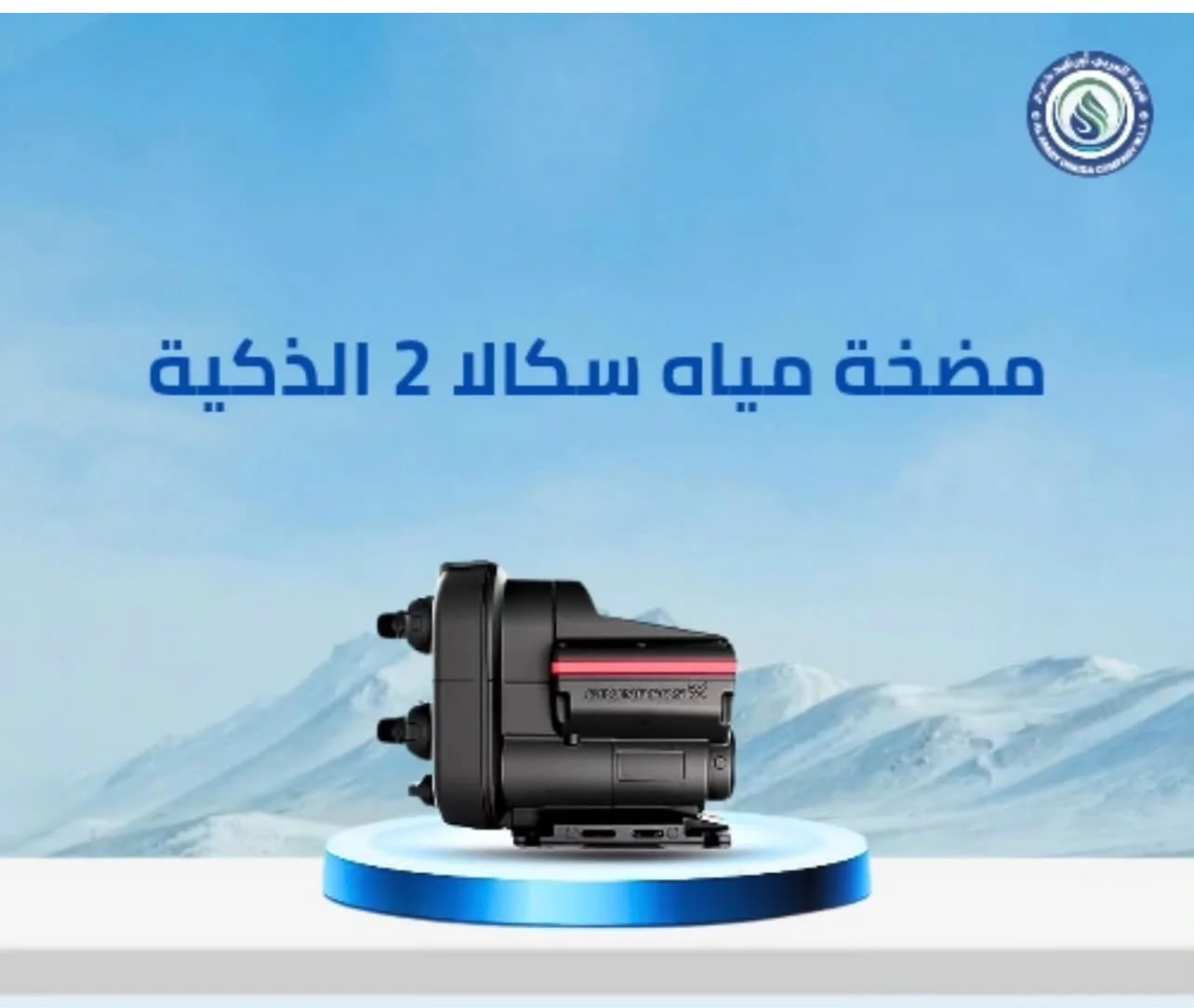
Choosing the best water pump for a villa is more demanding than selecting a pump for a small house because villas often have several floors, multiple bathrooms, longer pipe runs, and additional water uses such as a large kitchen, laundry room, or garden irrigation. One common issue is that a pump may provide excellent pressure on the ground floor but only marginal pressure at the top floor. The opposite problem can also occur: if the system is selected only to satisfy the highest floor without proper pressure control, lower floors may experience more pressure than necessary.
For a villa, the calculation starts at the highest point of use and works backward toward the pump. Vertical elevation forms a direct part of the required pressure. For example, if the highest fixture is approximately 10 meters above the pump, close to one bar of pressure is already needed just to overcome elevation before providing any comfortable pressure at the fixture or compensating for friction losses.
Peak simultaneous consumption should then be estimated. A villa with five bathrooms does not automatically mean all five showers operate at maximum flow throughout the day. A more realistic peak case could be two showers operating while the kitchen is also being used, or three separate water uses occurring together. This realistic peak demand is much more useful when selecting a booster system.
A villa may also benefit from a smart or variable-speed pump because the difference between using one tap and several fixtures at once can be substantial. A variable-speed system can reduce speed during light demand and increase it as demand rises, keeping the pressure closer to a selected setpoint.
Al Arabi Orchid currently provides GRUNDFOS pumps across different horsepower categories and also offers smart-pump options. Larger horsepower ranges may suit bigger homes and buildings, but these should be viewed as product categories rather than a fixed formula for every villa. A two-floor villa may not require the same pump as another villa with similar size but greater elevation, longer pipework, or much heavier peak usage.
-
The best villa pump should maintain acceptable pressure at the highest floor during realistic simultaneous use rather than being judged only by the strong flow at the tap closest to the pump
-
Longer pipe runs and additional filters valves and fittings create more pressure loss which means a villa network generally requires more careful calculation than a compact home
-
A smart pump can be a logical choice when water demand varies significantly because it adjusts performance instead of operating at one fixed output during every situation
-
Some large villas may benefit from a booster set or multiple pumps depending on required flow and reliability but this decision should come from calculation rather than visual property size
-
If satisfying the upper floors would create excessive pressure at lower levels pressure regulation or zoning may be more appropriate than simply increasing pump pressure throughout the entire network
Calculating Water Pump Power
Calculating water pump power should not begin with horsepower. It begins with flow rate Q and head H. Once the required operating point is known, the correct pump model can be selected from its performance curve, and only then does the motor horsepower associated with that model become meaningful.
The first part of total head is the vertical distance from the pump to the highest fixture. The second part is the pressure you want to have available at that fixture. The third part is the friction loss through pipes, elbows, filters, valves, and other components. If positive pressure is already available at the pump inlet, that should also be included instead of being ignored because it reduces the pressure increase the pump needs to provide.
Consider a simplified example. Suppose the pump is located at ground level and the highest shower is approximately 9 meters above it. The vertical elevation alone represents roughly 0.88 bar using the approximation of 10.2 meters per bar. If the goal is to maintain around 2 bar at the shower and the estimated network loss is about 0.4 bar, the pump may need to provide approximately 3.3 bar before considering any available inlet pressure. The required flow at that same pressure must then be estimated based on the number of outlets likely to operate simultaneously.
Horsepower comes later because two pumps with the same motor rating can have completely different hydraulic characteristics. One may be designed for higher head and lower flow, while another may provide higher flow at a lower pressure.
-
Calculate vertical elevation from the pump to the highest outlet because this is a fixed part of the required head that must be overcome before comfortable fixture pressure is considered
-
Add pipe friction losses because long or undersized piping can consume a significant part of available pump pressure especially when flow increases
-
Estimate required flow from realistic simultaneous water use rather than simply adding the maximum flow of every fixture installed in the house
-
If positive inlet pressure is available it should be included in the calculation because it reduces the pressure increase required from the booster pump
-
After the Q and H operating point has been established select the pump from the manufacturer’s performance curve and only then does the horsepower figure become practically meaningful
Choosing the Right Water Pump Size
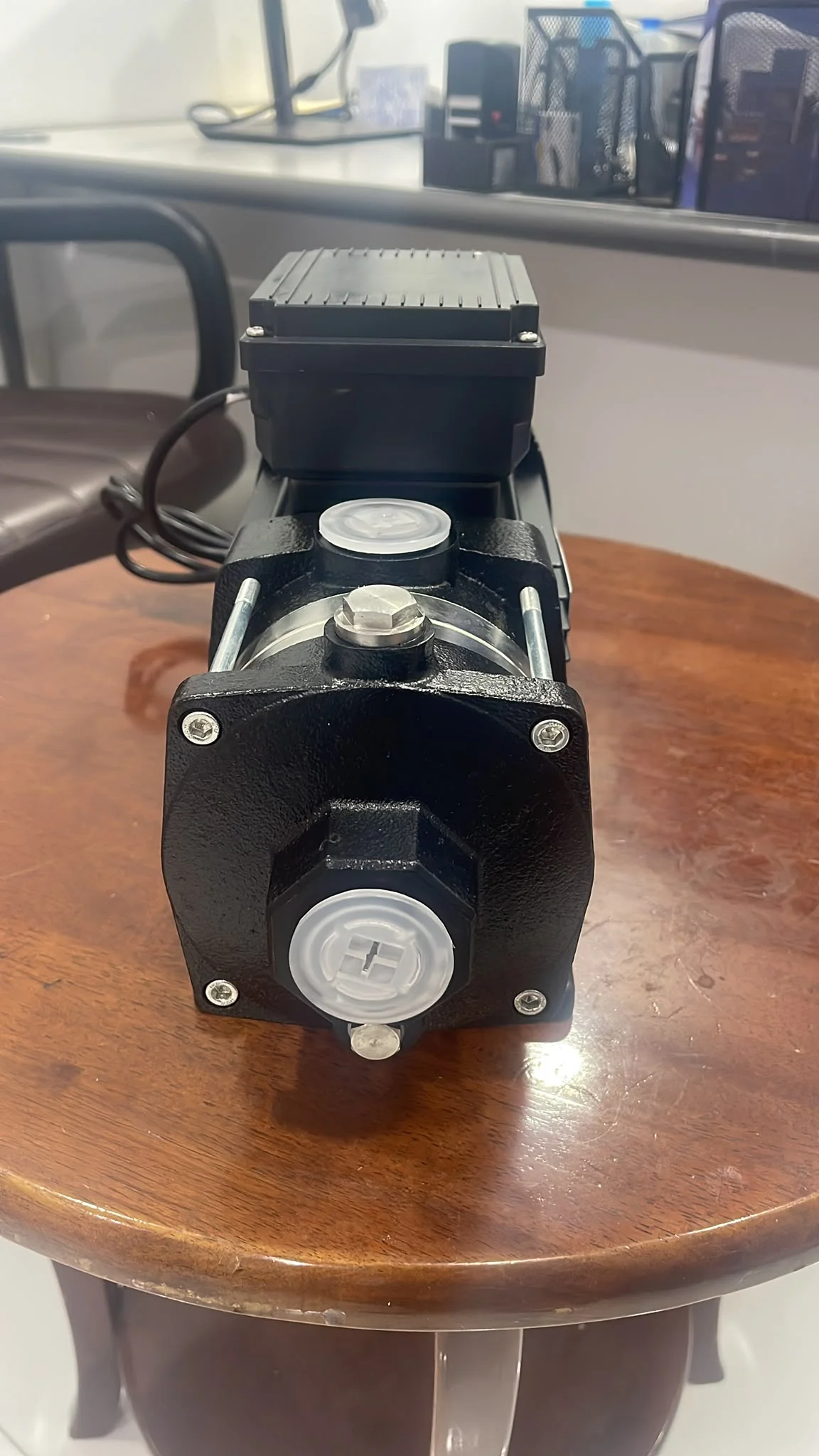
The right water pump size means selecting a pump that is neither too small for the demand nor significantly larger than necessary. An undersized pump may operate for long periods and still fail to maintain adequate pressure during peak use. A severely oversized pump may generate pressure beyond what the network needs, operate away from its most efficient range, and create uncomfortable system behavior depending on the control method.
Every centrifugal pump model has a flow-versus-head performance curve. This curve shows how much water the pump can deliver at different pressure levels. The term “size” therefore should not be understood only as motor horsepower or physical dimensions. It refers to the pump’s actual hydraulic operating range.
The operating system should also be considered. A fixed-speed pump combined with a properly sized pressure tank can be excellent for a property with predictable demand. A variable-speed pump can offer a wider operating range and better comfort when demand changes frequently. In many cases, a variable-speed solution is more sensible than deliberately oversizing a fixed-speed pump just to cover occasional peak demand.
-
The correct pump size covers the required operating point with a reasonable margin without creating unnecessarily high pressure or excessive motor capacity
-
An undersized pump usually reveals its limitation when several outlets are opened because pressure falls as the required flow increases
-
A pump that is far too large is not a free advantage because it can increase equipment electrical and control costs while placing additional stress on the water network
-
The performance curve is the primary reference when comparing pump sizes because horsepower alone does not tell you how much flow is available at the required pressure
-
A variable-speed system may be more appropriate than a larger fixed-speed pump when household demand changes significantly throughout the day
Choosing Water Pump Horsepower
Choosing water pump horsepower is one of the areas where residential pump selection is often oversimplified. People frequently hear formulas such as half a horsepower for a house, one horsepower for a villa, or two horsepower for three floors as if they were universal rules. These suggestions may happen to work in certain situations, but they are not a professional sizing method.
Horsepower describes motor power, but it does not independently tell you the delivered flow and pressure. Two 1 HP pumps can have very different performance curves because their impeller design, speed, hydraulic characteristics, and intended application are different. One may be designed for higher pressure with lower flow, while another may deliver more water at lower head.
Al Arabi Orchid currently provides GRUNDFOS pumps across several horsepower categories, including smaller pumps for residential applications and higher-capacity options for larger homes and buildings. This can be useful as an initial product classification, but the final selection should still be based on the actual flow and head requirement.
-
Do not select horsepower according to the number of bedrooms because bedrooms do not consume water while bathrooms elevation and required flow are the factors that create hydraulic demand
-
A half-horsepower pump may be excellent for one small home and too weak for another similar property when suction conditions elevation or pipe losses are different
-
Higher horsepower does not guarantee better pressure during peak demand if the pump curve itself does not match the required flow
-
Read the head and flow data together with horsepower so you understand what the pump actually delivers rather than purchasing a motor-rating number alone
-
If the calculation places the system between two nearby sizes compare their operating curves peak-demand conditions and control method before automatically selecting the larger one
Water Pump According to Number of Floors
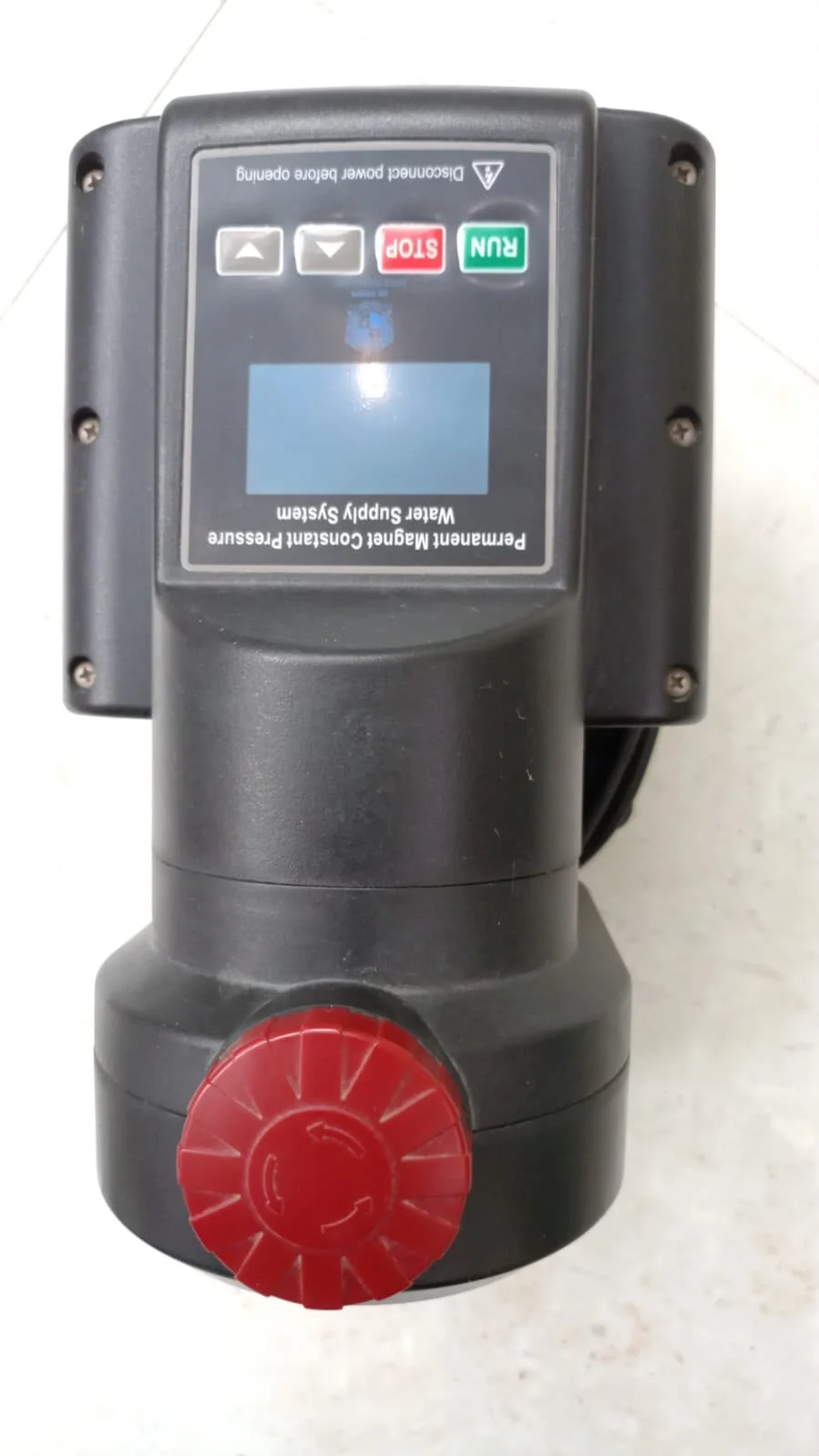
Selecting a water pump according to the number of floors can be useful as a first estimate, but it is not enough for a final decision. The number of floors gives an indication of vertical elevation, but it does not tell you the actual pipe length, the number of users, the required fixture pressure, or the pump location.
As the highest fixture rises farther above the pump, more pressure is required simply to overcome the elevation. Using the common approximation of around 10.2 meters of water column per bar, a vertical difference of approximately 20 meters consumes close to 2 bar before any usable fixture pressure or network friction is considered.
The height of each floor can also vary. One property may have floors around 2.7 meters high, while another villa may use ceiling heights closer to 3.5 meters. The pump may also be installed in a basement, beside a ground tank, or at another elevation. This is why saying “three floors” does not provide one universal head requirement.
-
Measure the actual vertical distance in meters rather than using the number of floors alone because floor heights and pump locations vary between properties
-
The highest fixture is the reference point because it requires the greatest available head from the water network rather than the outlet closest to the pump
-
After calculating elevation add the required fixture pressure and pipe losses so you do not end up with a pump that merely gets water upstairs but delivers weak pressure
-
Very tall villas may require pressure zoning instead of trying to operate the entire building at one unnecessarily high pressure level
-
The number of floors helps with initial estimation but it does not replace information about flow pipe length pipe diameter and actual household demand
Types of Residential Water Pumps
Types of residential water pumps differ according to water source, control method, and intended function. There are conventional booster pumps used to increase pressure, self-priming pumps suited to certain suction applications, smart variable-speed pumps designed to maintain more stable pressure, and submersible pumps when the water source or tank design requires the pump to operate inside the water.
A conventional booster can be an excellent option when the water supply is straightforward and the required pressure is known. A smart variable-speed pump becomes attractive when the customer wants pressure to remain more stable as household demand changes. A self-priming pump may be more appropriate where suction lift or priming conditions form part of the installation.
The key is to select the pump type according to the source and hydraulic conditions before looking at the brand or price. A pump designed primarily for boosting positive inlet pressure may not be the correct choice for an application that requires significant suction lift.
-
A conventional booster pump works well in many residential systems when required pressure is clear and the pressure tank and controls are correctly adjusted
-
A smart variable-speed pump is suitable for customers who want pressure closer to constant and smoother performance as the number of open outlets changes
-
A self-priming pump is useful in applications where suction conditions are part of the job and not every booster pump is automatically suitable for that arrangement
-
A submersible pump represents a different solution when the source tank or well requires the pump to operate inside the water itself
-
Pump type should be selected according to water source installation conditions and demand pattern before comparing brands and prices
Water Pump Suitable for Home Pressure
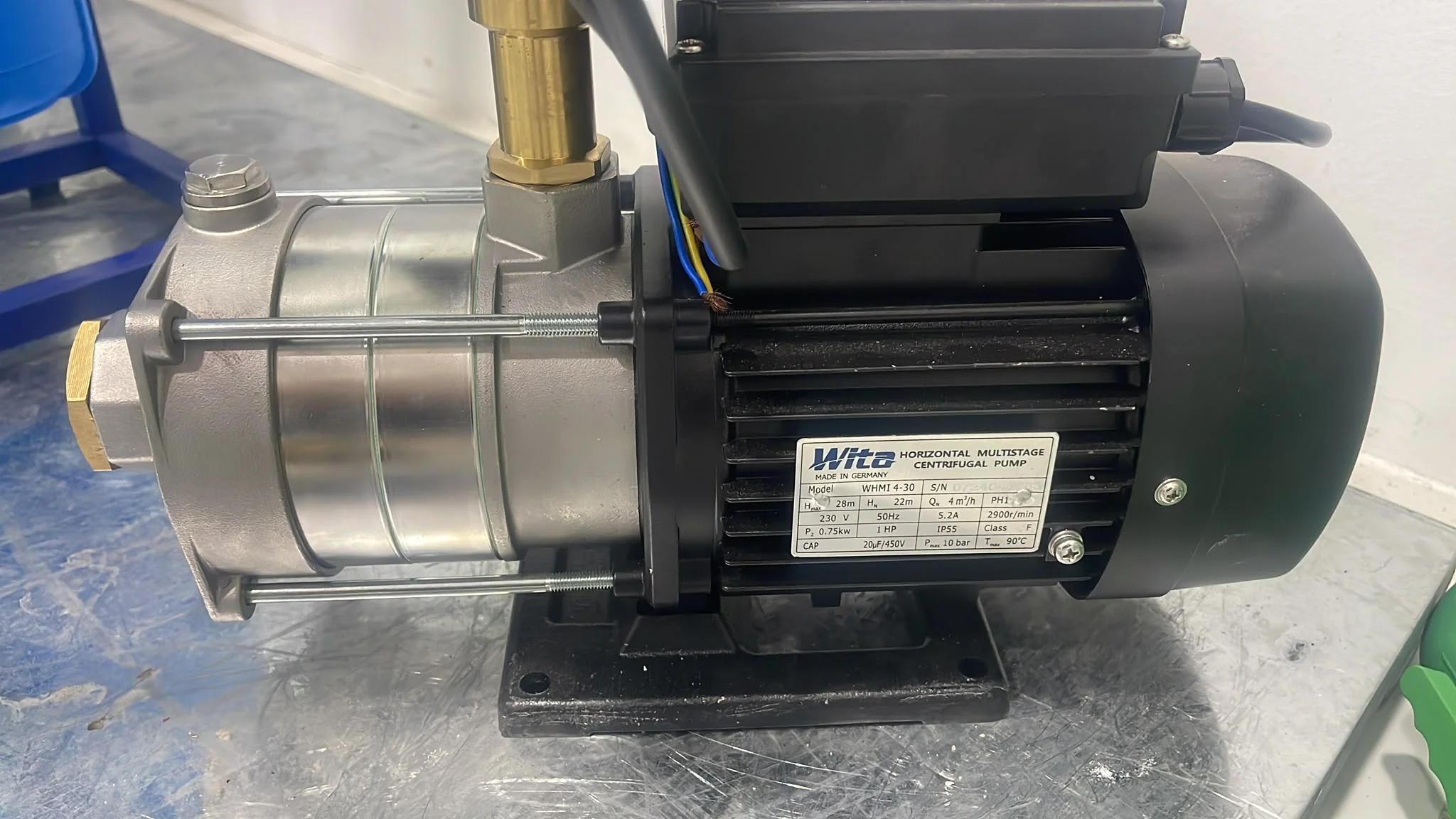
Choosing a water pump suitable for home pressure begins with deciding what pressure the property actually needs. The objective should not be the highest possible bar rating. Pressure above what the network requires can make fixtures uncomfortable and increase stress on hoses, valves, appliances, and connections.
The required pressure depends on the highest fixture and the equipment installed in the property. After that, vertical elevation and pipe losses are added. If a variable-speed system is used, a suitable pressure setpoint can be programmed so the pump adjusts speed to maintain pressure closer to that target as household demand changes.
In larger systems, it is also important to confirm that the water network itself can safely withstand the maximum possible pressure. If the pump can create pressure above acceptable limits, pressure-reducing valves or other control arrangements may be necessary.
-
Suitable pressure is the level that provides comfortable showers and taps at the highest fixture without subjecting the network to pressure above what it was designed to handle
-
A smart pump can help maintain pressure but the selected setpoint still needs to be appropriate rather than simply being adjusted to the maximum possible value
-
Existing inlet pressure should be included because the final network pressure can become higher than expected if incoming pressure and pump boost are added together
-
Older pipes weak hoses or worn fittings should be evaluated before increasing pressure because the first sign of excessive pressure may appear as leakage after a stronger pump is installed
-
Measuring pressure before and after installation provides a more accurate basis for adjustment than simply describing the water as strong or weak
Water Pump Buying Guide
A practical water pump buying guide starts by refusing to begin with price. Start instead with the problem you need to solve. Is the entire house suffering from weak pressure? Is the problem only on the top floor? Does pressure drop whenever two fixtures are opened? Once the problem is clear, identify the water source, tank position, vertical elevation, and maximum realistic simultaneous water demand.
The second step is to request the actual pump data rather than looking only at horsepower. Check the flow-and-head curve, maximum operating pressure, electrical requirements, noise level, control type, materials, and availability of maintenance.
The third step is to think about the complete installation. Al Arabi Orchid provides GRUNDFOS pumps in different residential categories and smart-pump options, along with accessories that may include pressure tanks, pressure controls, and non-return valves depending on the system. Correct accessories and professional installation can be just as important as the pump itself because a good pump connected to a poorly designed system will still give disappointing results.
The fourth step is testing after installation. The network should be checked under realistic demand by opening more than one outlet and confirming that the top floor still maintains acceptable pressure. The pump should also start and stop normally without unnecessary short cycling.
-
Before buying prepare information about tank capacity the height of the highest fixture the number of bathrooms and the outlets normally used at the same time
-
Ask for the performance curve of the exact model because that curve shows whether the pump can provide the required flow at the pressure your property actually needs
-
Review noise level and control type if the pump will be installed near occupied areas because quiet operation may be more valuable than a small difference in motor size
-
Do not forget network accessories such as non-return valves pressure tanks and pressure-control devices when required because they affect system behavior almost as much as the pump itself
-
After installation test the system under realistic peak demand because successful operation with only one open tap does not prove that the pump is correctly sized for the whole property
Conclusion
Choosing the right water pump for a home or villa cannot be decided from horsepower or the number of floors alone. The correct decision combines required flow, pressure at the highest fixture, vertical elevation, pipe losses, inlet pressure, and actual household usage patterns. Once these values are understood, the pump performance curve can be used to select a model that covers the operating point with a sensible margin.
In a medium-sized home, a smaller residential pump or compact smart system may be completely suitable depending on site conditions. In a larger villa, a higher-capacity pump or more advanced booster arrangement may be needed. These are product ranges rather than fixed rules because every water network has different hydraulic requirements.
Al Arabi Orchid provides GRUNDFOS residential and smart pumps for different home and villa applications. You can contact 99346138 and provide the number of floors, tank location, number of bathrooms, pump position, and highest fixture so the recommendation can be based on the actual network. The right pump is not the one that sounds more powerful when it starts. It is the one that lets you open the shower on the highest floor and still receive comfortable stable pressure without making the whole house feel like it has entered a water-pumping competition.
Frequently Asked Questions
How do I know which water pump is suitable for my house?
Start by identifying the tank location, height of the highest fixture, realistic simultaneous demand, and required pressure. Then choose the pump from its flow-and-head performance curve rather than relying on horsepower alone.
Is a half-horsepower pump enough for a home?
It can be suitable for some small and medium homes, but there is no universal rule because elevation, pipe length, number of bathrooms, water source, and required pressure can all change the answer.
Is a one-horsepower pump enough for a villa?
Sometimes yes and sometimes no. The required flow and pressure at the highest fixture should be calculated because villas can differ greatly in height, plumbing design, and simultaneous water demand.
Does more horsepower always mean better water pressure?
No. Motor horsepower alone does not determine pump performance. You need to know the available flow and head at the required operating point because two pumps with the same horsepower can produce very different results.
What is the difference between a regular pump and a smart pump?
A conventional pump generally operates using fixed-speed start-and-stop control, while a smart variable-speed pump can adjust its speed according to demand and maintain pressure closer to a selected setpoint.
How does the number of floors affect pump selection?
As the vertical distance between the pump and the highest fixture increases, more pressure is required just to overcome elevation before accounting for usable fixture pressure and network losses.
Does pipe diameter affect pump performance?
Yes. Long or narrow pipes create more friction loss, especially at higher flow rates. This is why the same pump can perform differently in two plumbing networks.
Can I install a larger pump just to be safe?
Not always. A pump that is significantly larger than necessary can increase pressure, purchase cost, and operating complexity while working outside its most suitable performance range. A correctly sized pump with a reasonable margin is usually the better choice.
What is the best type of pump for constant water pressure?
Variable-speed booster pumps designed for constant-pressure operation are often a strong option because they can adjust pump speed as household demand changes and maintain pressure closer to the selected setpoint.
Who can help me choose and install a water pump in Kuwait?
Al Arabi Orchid provides GRUNDFOS pumps and installation services for homes and villas in Kuwait. You can contact 99346138 and provide information about the number of floors, bathrooms, tank location, and pump position so the most suitable pump category can be selected.